
How to Clean Paint Chips From Your Lawn Safely and Effectively
You should protect yourself with gloves, an N100/P100 mask, and eye protection, then secure the area from people and pets. Hand‑pick large chips into sealable bags or containers, use a soft rake and a HEPA vacuum for smaller debris, and avoid leaf blowers or mowers. If lead is possible, test and treat waste as hazardous, contacting local disposal services. Wash cautiously with low‑pressure water only when appropriate, and continue below for detailed steps and tips.
Quick Answer How to Clean Paint Chips from Your Lawn Safely and Effectively
For a quick, safe cleanup, you should first wear gloves and a mask.
Gently scoop or rake chips into a sealable bag, and dispose of them according to local hazardous-waste rules.
If the paint contains lead, you’ll want a certified remediation pro to handle removal and testing.
Call a professional anytime the spill is large, the paint is old or suspected lead-based, or you’re unsure about disposal regulations.
Short summary of the safest, most effective method
Start by donning gloves and a mask, then pick up large paint chips by hand and collect smaller fragments with a stiff broom or leaf blower toward a tarp for easy scooping.
Then seal debris in heavy-duty bags, wipe the area with a damp cloth, dispose per local hazardous-waste rules, and monitor the lawn.
This is the safest, most effective way to handle how to clean paint chips from lawn.
When to call a professional
When should you call a professional? Call one if chips contain lead, cover a large area, or you suspect groundwater contamination.
Also hire pros if your DIY efforts can’t fully remove particles, if sensitive pets or children are exposed, or if local regulations require certified disposal.
A pro will test, remove, and dispose safely, ensuring compliance and reducing health risks.
Understanding the Problem
You’ll first want to know what paint chips are: flakes of old paint that can smother grass and introduce toxins into soil.
Different paints pose different risks — old lead-based paint can be toxic, while modern water‑based or latex paints are generally less hazardous but still unwanted.
Leaving chips on your lawn can harm plants, contaminate soil and pose health risks to kids, pets, and wildlife.
What are paint chips and why they’re a concern for lawns
Paint chips are tiny flakes of dried paint that come off buildings, fences, or playground equipment, and they can end up scattered across your lawn where they pose both aesthetic and health concerns.
You’ll spot discolored patches, harm to grass from physical smothering, and risk of pets or children ingesting fragments.
Removing chips preserves lawn appearance and reduces potential exposure.
Types of paint (lead-based vs. modern water/latex) and how risks differ
Although many exterior paints look similar once they peel, their chemistry and risks can be very different: older lead-based paints contain heavy metals that persist in soil and pose direct ingestion risks, especially to children and pets.
Modern water- or latex-based paints use less toxic pigments and binders; they break down more readily, but still add chemicals and particulates you should remove promptly to protect your lawn and household.
Environmental and health risks of leaving paint chips on grass
Knowing what’s in the paint helps explain why leaving chips on your lawn can create real problems. You risk contaminating soil and groundwater as toxic metals like lead leach, harming plants, pets, and wildlife.
Children can ingest chips, causing severe health issues. Even modern paints can contain chemicals that disrupt ecosystems.
Removing chips promptly reduces exposure, prevents spread, and protects community health.
Assessing the Situation
Start by walking the yard to estimate how much paint debris there’s and where it’s concentrated.
Check chips for signs of old lead-based paint—such as age of the house and flaky, chalky layers—and consider a test kit or professional sampling if you suspect lead.
Also note whether children, pets, or nearby water sources could be exposed and make a quick safety checklist before you begin cleanup.
How to inspect and estimate the scale of contamination
Before you touch a thing, walk the lawn and get a clear sense of where the paint chips are, how dense the patches look, and whether any are near play areas, water features, or drainage paths.
Note patch size, estimate total square footage, and mark hotspots.
Check down-slope and collection points, record photos, and plan containment and cleanup resources accordingly.
How to identify lead paint vs. non-lead paint
How can you tell whether the chips on your lawn contain lead? Use quick checks and tests:
- Check the building age—pre-1978 often used lead paint.
- Look for thick, chalky, or brightly colored layers.
- Use a certified lead test kit (follow instructions).
- If unsure, send a sample to a lab for confirmation.
Don’t assume—test to be certain.
Safety assessment checklist (children, pets, nearby water sources)
After you’ve checked whether the chips might contain lead, evaluate who and what could be exposed: kids who play barefoot or put things in their mouths, pets that roam and lick, and any nearby storm drains, ponds, or wells that could carry dust or fragments into water.
List exposed people and animals, mark contamination zones, note water pathways, restrict access, and plan protective gear and disposal steps.
Tools, Materials, and Personal Protective Equipment (PPE)
Gather the right tools—stiff broom, hand rake, dustpan, tarps, and a shop vacuum with a HEPA filter—so you can remove chips without spreading dust.
You’ll also want PPE like nitrile gloves, safety goggles, a NIOSH‑rated respirator, and disposable coveralls, with a note on why each protects you.
Finally, use sturdy, clearly labeled containers or heavy-duty bags for safe collection and disposal to prevent accidental exposure.
Essential tools for cleanup
You’ll need a handful of specific tools, materials, and PPE to clean paint chips safely and effectively.
- Sturdy gloves — protect hands from sharp flakes.
- Rigid dustpan and brush — sweep visible chips.
- HEPA vacuum — capture fine particles from turf.
- Heavy-duty trash bags and sealable containers — contain and dispose of debris properly.
Recommended PPE and why each item matters
Because paint chips can release fine dust and sharp fragments, wearing the right PPE is essential to protect your skin, lungs, and eyes while you work.
Use:
- NIOSH-rated respirator (filters dust and lead particles).
- Safety goggles (prevent eye irritation and scratches).
- Nitrile gloves (chemical and cut resistance).
- Long-sleeve clothing and sturdy shoes (skin protection and footing).
Safe disposal containers and labeling
Choose rigid, sealable containers—like heavy-duty plastic buckets with snap lids or metal cans with tight-fitting tops—and label them clearly for paint chips and contaminated debris so you can safely transport and store hazardous material without spills.
Use durable, chemical-resistant labels marked “Lead paint” or “Contaminated” with date, your contact, and handling instructions.
Keep containers upright, sealed, and away from children and pets.
Step-by-Step Cleanup Procedure
Start by securing the area and keeping people and pets away so you can work safely.
You’ll hand-pick large chips, then use a gentle rake and a HEPA vacuum for smaller fragments before washing any stained grass or soil where appropriate.
Finally, contain and transfer all collected material into sealed disposal bags for proper disposal.
Step 1 Secure the area and protect people and pets
Clear and cordon off the affected area so no one—especially children or pets—can wander into it while you work.
Put up temporary barriers or caution tape, post a visible sign, and keep curious animals indoors.
Wear gloves and a mask, and instruct household members to stay away until cleanup and disposal finish.
Monitor the perimeter until the site’s secured and decontaminated.
Step 2 Remove large paint chips by hand (technique and tools)
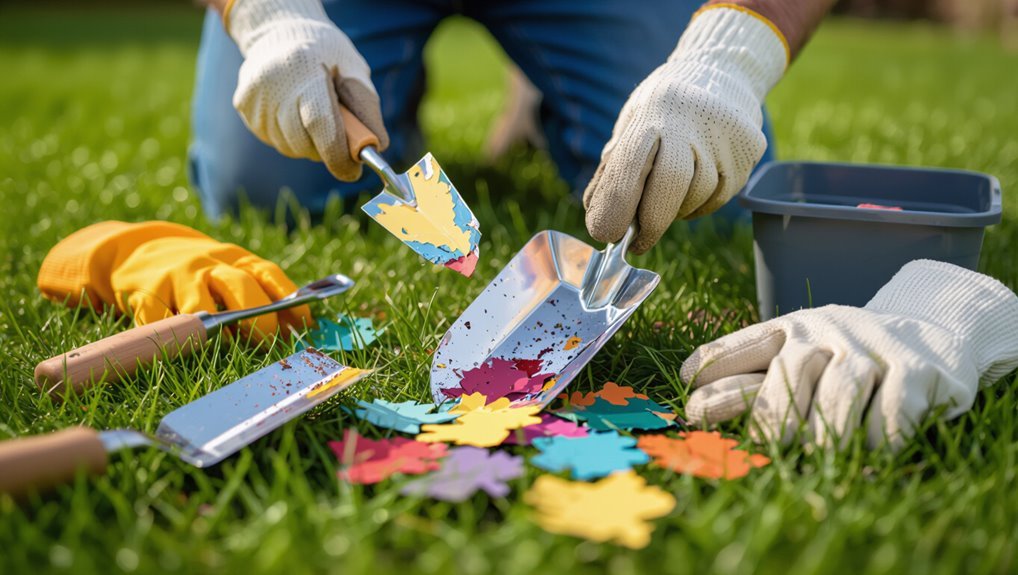
With the area secured, put on nitrile gloves, a disposable mask, and eye protection before you handle any chips.
Use tweezers or a small trowel to lift large fragments, avoiding crushing them. Place chips into a sealable, puncture-resistant container.
Work methodically in grid sections, checking grass blades for stuck pieces. Seal and label the container for proper disposal or testing.
Step 3 Use gentle raking and vacuuming (HEPA) to collect smaller fragments
Move slowly across the grid and use a soft-tined rake to loosen smaller paint fragments without shredding the grass; then follow up with a HEPA-filter vacuum to capture loosened chips and dust.
Work in overlapping passes, angling the rake gently.
Empty vacuum contents into a sealed bag, label it, and dispose of according to local hazardous-waste or municipal guidelines to prevent recontamination.
Step 4 Washing and rinsing techniques for stained grass or soil (when appropriate)
Because rinsing can spread contamination if it’s done too aggressively, you’ll want to decide first whether washing is appropriate for the area and the paint type; water-soluble or latex paints are often rinsable, while oil-based or lead-containing paints usually require professional handling.
If rinsing is suitable, use low-pressure water, mild detergent, and a soft brush; absorb runoff with clean towels and avoid directing water into drains or landscaped areas.
Step 5 Containing and transferring collected material to disposal bags
Start by donning gloves and a disposable mask, then carefully scoop or pick up the paint chips and any contaminated towels, paper, or soil into a rigid, puncture-resistant container or onto a stiff piece of cardboard for transfer.
Seal materials in heavy-duty, clearly labeled disposal bags, minimizing agitation.
Double-bag if needed, tape shut, and place bags in a secure, weatherproof bin until proper hazardous-waste disposal.
Step 6 Cleaning and decontaminating tools and PPE
Once you’ve sealed the waste, clean and decontaminate your tools and PPE methodically to prevent spreading contamination or re-exposing yourself.
Remove disposable items into sealed bags.
Wash reusable gloves, boots, and tools with detergent and hot water, then rinse.
Use a disinfectant appropriate for paint residues, following label dwell time.
Air-dry gear before storage and launder clothing separately.
Step 7 Post-cleanup testing (soil and surface swabs) and when to test
When should you test after cleaning?
Test soil and surface swabs 24–72 hours after decontamination to confirm removal.
Take samples from the cleaned zone, adjacent soil, and tool storage areas.
Use certified labs or kits that detect lead and paint-related contaminants.
If results exceed safety limits, repeat cleanup, remove contaminated soil, and retest until readings meet regulatory guidance.
Disposal and Legal Considerations
After you’ve collected the paint chips, bag them in sturdy, sealable plastic and clearly label the contents and date.
Check your local regulations and contact hazardous waste facilities to learn accepted drop‑off procedures and any special requirements.
If the chips contain lead or large quantities, you may be required to hire a licensed hazardous waste service for proper disposal.
How to bag, label, and dispose of paint chips safely
Start by gathering the paint chips carefully and placing them into heavy-duty, puncture-resistant bags—don’t overfill them and seal each bag tightly to prevent dust and fragments from escaping.
Label each bag with contents, date, and potential hazards, then store upright in a cool, dry area away from children and pets.
Transport sealed bags directly to an appropriate collection point for safe disposal.
Local regulations and hazardous waste facilities
Because paint chips—especially those from older homes—can contain lead and other hazardous materials, you’ll need to follow local regulations and use designated hazardous waste facilities for disposal.
- Check municipal rules online or call your local solid waste agency.
- Find approved drop-off locations for household hazardous waste.
- Follow packaging and labeling requirements.
- Keep records of disposal in case of inspections or resale disclosures.
When disposal may require a hazardous waste service
If the paint chips on your lawn contain significant quantities of lead, mercury, or other regulated contaminants—or if local rules classify them as hazardous—you’ll likely need to hire a licensed hazardous waste service to collect, transport, and dispose of the material safely and legally.
Contact your local environmental agency, get written disposal requirements, and request manifests and receipts to guarantee chain-of-custody and regulatory compliance.
Remediation for Contaminated Soil and Lawn Recovery
If paint has contaminated your lawn, you can start with short-term fixes like removing the topsoil, replacing it, and reseeding to restore grass quickly.
For persistent contamination, consider long-term remediation such as phytoremediation or soil amendments to reduce toxins and rebuild soil health.
Decide whether to hire professionals—who can test and treat safely—or tackle simpler repairs yourself based on contamination level and your comfort with the work.
Short-term fixes: removing topsoil, replacement, and reseeding
Start by removing the visibly contaminated topsoil and any paint chips you can pick up by hand. Then replace that layer with clean soil and reseed to jump-start recovery.
Work in small sections, bagging debris for proper disposal. Level and compact new soil, spread seed evenly, water gently, and protect the area from foot traffic.
Monitor germination and repeat spot-removal if necessary.
Long-term soil remediation options (phytoremediation, soil amendments)
Long-term soil remediation focuses on reducing contaminants and restoring soil health so your lawn can recover sustainably; two practical approaches are phytoremediation—using plants to uptake, stabilize, or break down pollutants—and targeted soil amendments that immobilize toxins, rebuild nutrients, and improve structure.
| Method | Benefit | Notes |
|---|---|---|
| Phytoremediation | Removes pollutants | Use hyperaccumulators safely |
| Compost/Charcoal | Immobilizes toxins | Improves cation exchange |
| Lime | Adjusts pH | Enhances nutrient availability |
Hiring professionals for soil remediation vs. DIY
While you can tackle some soil issues yourself, choosing between a pro and a DIY approach comes down to contamination level, your comfort with testing and treatment, and budget.
Professionals bring expertise, equipment, and liability coverage, while DIY lets you control costs and timing but can risk incomplete cleanup if you miss contaminants or proper disposal steps.
Decide based on testing results, workload, and safety; hire pros for heavy contamination.
Prevention and Best Practices
To keep paint chips from returning, you should use safe outdoor painting and scraping methods like drop cloths, containment barriers, and gentle hand-scraping instead of power tools when possible.
Store paints and scrapings in sealed containers and choose temperate, low-wind days for projects to avoid accidental spread.
Regularly inspect work areas and dispose of waste at proper hazardous-waste or recycling facilities to prevent future contamination.
How to prevent future paint chip contamination
If you want to keep paint chips off your lawn, start by addressing the source: identify peeling surfaces, secure loose trim, and plan regular maintenance so flakes never get a chance to scatter.
Check gutters, sheds, and fences seasonally, promptly repaint or strip failing areas, use caps on vents, store leftover paint sealed, and remove debris after storms to stop contamination before it starts.
Safe practices for painting and scraping outdoors
Preventing paint chips at the source includes adopting safe outdoor painting and scraping methods that keep flakes off your lawn.
Use drop cloths and tarps, secure edges, and work downhill from grass.
Wet-sand or mist surfaces to limit dust, contain debris with scrapers or vacuum attachments, and dispose of chips in sealed bags.
Wear PPE and clean tools before moving locations.
Seasonal timing and storage tips for paint and scrapings
Choose the right season and you’ll cut down on paint failures and stray scrapings from the start: plan exterior painting for mild, dry months when humidity is low and temperatures stay within the paint manufacturer’s recommended range.
Store unused cans and collected chips in a cool, dry place away from direct sunlight and freeze-thaw cycles so containers don’t swell, labels stay legible, and hazardous residues remain contained.
Rotate stock, seal lids tightly, and label dates.
Common Mistakes and How to Avoid Them
Don’t ignore the possibility of lead in old paint—you’ll need to treat suspected lead chips as hazardous.
Don’t misuse power washing, mix waste with garden debris, or skip proper disposal because that spreads contamination.
Always test the area after cleanup to confirm you’ve removed the hazard.
Mistake 1 Ignoring lead risk
Because older paint can still contain lead, ignoring chips on your lawn can expose kids, pets, and you to a serious toxin.
You should treat chips as hazardous: isolate the area, avoid sweeping that aerosolizes dust, wear gloves and a mask, and collect fragments with damp methods.
Test suspect paint or call a professional for sampling and safe disposal to prevent ongoing exposure.
Mistake 2 Using power washing incorrectly
After you’ve secured the area and handled any lead concerns, many people reach instinctively for a pressure washer to blast paint chips away — but using power washing incorrectly can make the problem worse.
Don’t spray indiscriminately; high pressure can grind chips into soil, spread fragments, damage turf, and aerosolize contaminants.
Use low pressure, targeted rinsing, and collect loosened debris immediately with a HEPA vacuum or wet-dry shop vacuum.
Mistake 3 Improper disposal or cross-contamination
When you toss paint chips, contaminated soil, or used cleanup materials into regular trash or compost, you risk spreading toxins across your yard and to waste handlers; improper disposal and cross-contamination are as dangerous as the original spill.
Bag hazardous debris separately in sturdy, labeled containers, avoid mixing with garden waste, and follow local hazardous-waste guidelines so you don’t recontaminate soil or expose others.
Mistake 4 Failing to test after cleanup
Throwing out contaminated materials properly is only part of the job—you still need to verify the cleanup worked.
You should test soil and surrounding plants for residue or discoloration, using home test kits or a lab for suspected lead-based paint.
Retest after rainfall or a week of growth. Document results, and if contamination persists, repeat remediation or call a professional for targeted treatment.
Tools and Product Recommendations (Buyer’s Quick Guide)
You’ll want the right gear before you start: a HEPA-rated vacuum and a proper respirator are must-haves for safe cleanup.
Test kits or certified lab services can confirm whether the chips contain lead and guide your disposal steps.
Use approved containment bags and disposal products to keep contaminated material sealed and handled correctly.
Best HEPA vacuums and respirators for cleanup
A high-quality HEPA vacuum and a proper respirator are the two non-negotiable tools you’ll want before starting paint-chip cleanup—HEPA filters trap fine particulate and respirators protect your lungs from dust and any lead particles.
- Choose a certified HEPA vac with sealed system.
- Pick an N100 or P100 respirator for best protection.
- Use disposable filter bags and replace often.
- Verify fit and follow manufacturer maintenance.
Recommended testing kits and lab services
One straightforward way to confirm whether paint chips contain lead is to use a combination of at-home test kits for quick screening and accredited lab analysis for definitive results.
You’ll want reliable options:
- EPA-recognized swab kits for spot checks.
- Digital XRF rental services for non-destructive scans.
- Certified environmental labs for paint-chip analysis.
- Local health department referrals for sampling guidance.
Disposal and containment products
Before you handle contaminated paint chips, get the right containment and disposal gear so you can control dust, prevent spread, and meet local waste rules.
Wear N95 or P100 respirator, nitrile gloves, and disposable coveralls.
Use heavy-duty plastic bags, labeled lead-waste containers, and HEPA vacuum or wet-cleaning supplies.
Check local hazardous-waste drop-off rules before disposal.
FAQs
You’ll want quick answers to common worries like whether paint chips can harm your pets and how fast you should act.
Check how to spot possible lead without lab tests, whether a mower or blower is safe for cleanup, and how long paint stays hazardous in soil.
Finally, we’ll cover when it’s time to call a certified hazardous-materials cleanup service.
Can paint chips harm my pets and how quickly should I act?
How quickly should you act if your pet finds paint chips? Act immediately: remove chips, keep your pet away, and check for mouthing or swallowing. If ingestion or excessive drooling, vomiting, lethargy, or tremors occur, contact your vet or poison control right away. Bring a sample of the chips if safe. Quick action reduces risk and helps your vet assess treatment needs.
How can I tell if paint chips contain lead without lab testing?
Wondering whether those paint chips contain lead without a lab test? You can’t confirm lead visually.
Look for old peeling paint on homes built before 1978, chalky residue, or multiple paint layers—these raise suspicion.
Use a store-bought lead test kit for homeowner screening; follow instructions precisely and treat any positive or uncertain result as hazardous.
When in doubt, assume risk.
Is it safe to use a lawn mower or leaf blower to collect paint chips?
Can you safely use a lawn mower or leaf blower to collect paint chips? You shouldn’t.
Mowers can shred chips, creating dust you’ll inhale or spread. Blowers disperse fragments across your yard and into neighbors’ spaces.
Instead, pick up chips by hand with gloves, use a stiff broom or vacuum with HEPA filter, and contain debris in sealed bags for disposal.
How long does paint in soil remain hazardous?
When will paint-contaminated soil stop posing a risk to you, your kids, and your pets?
It depends on paint type, weather, and soil chemistry. Lead-based paint can stay hazardous for decades, especially in dry, disturbed soil.
Modern latex paints degrade faster but may still pose short-term risks.
Test soil, limit exposure, remove contaminated topsoil, and follow local cleanup guidance to reduce danger.
When should I hire a certified hazardous-materials cleanup service?
How do you know it’s time to call a certified hazardous‑materials cleanup crew?
Hire pros if chips cover large areas, you suspect lead/PCB contamination, or children, pets, or a water source are at risk.
Also call them if paint is flaking from old structures, private testing confirms hazards, or local regulations require licensed removal.
They’ll contain, remove, and dispose safely.
