
Does Clear Coat Work on Wall Paint? What You Need to Know
Yes — clear coat can work well on wall paint if you pick the right product and prep the surface properly. It adds durability, stain resistance, and easier cleaning, though it may change sheen and slightly shift color. Match a compatible low‑VOC water‑based sealer to latex or acrylic paint, test a small patch, and apply thin coats with good ventilation. Keep in mind adhesion and future repainting issues; keep going to learn how to choose and apply it.
Quick Answer Does Clear Coat Work on Wall Paint?
Yes — a clear coat can work on wall paint.
It often adds durability and washability but can change sheen and sometimes alter color slightly, so results vary by paint type and application.
Test a small area first and expect better protection on latex or acrylic paints than on flat or unsealed finishes.
One-sentence direct answer
If you want extra durability and stain resistance, a clear coat can work over wall paint, though you should pick a compatible product and test a small area first.
Yes, there’s a clear coat for wall paint; you’ll choose water- or solvent-based varnish or acrylic sealer matched to your finish, apply thin even coats, and allow full cure before regular use.
Short summary of common outcomes and limitations
While a clear coat often boosts durability and stain resistance on painted walls, results vary by product, paint type, and prep work.
You’ll usually get better scuff resistance, easier cleaning, and slight color depth changes.
However, you might see sheen mismatch, yellowing with some varnishes, or adhesion failure on poorly prepped surfaces.
Test first and follow manufacturer instructions for best outcomes.
Basic Understanding What Is Clear Coat and Why Consider It for Walls?
Think of a clear coat as a transparent varnish—polyurethane or acrylic sealer—that you apply over paint to add sheen and extra protection.
Unlike paint finishes, clear coats focus on durability, adhesion, and gloss rather than color, and you’ll choose different formulations for interior versus exterior walls.
When comparing options, check adhesion, VOC levels, expected wear resistance, and the final gloss to match your needs.
Definition of clear coat (varnish, polyurethane, acrylic sealer)
A clear coat is a transparent protective finish you apply over painted walls to seal, harden, and sometimes change the sheen of the surface; common types include varnishes (alkyd or spar varnish), polyurethane (oil- or water-based), and acrylic sealers.
You’ll pick based on durability, yellowing risk, flexibility, and planned indoor use—each cures differently and offers varied abrasion and moisture resistance for painted walls.
How clear coats differ from wall paint finishes (sheen, protection)
Because clear coats sit on top of paint rather than replacing it, they change how a wall looks and performs in distinct ways: they raise or alter the sheen, add a tougher wear layer, and boost resistance to stains, scrubbing, and moisture.
You’ll notice glossier or muted finishes, better abrasion and chemical resistance, and easier cleaning, while the underlying paint color and texture remain intact.
Types of clear coats suitable for interior and exterior walls
Now that you know how clear coats change sheen and durability without covering color, you’ll want to pick the right type for interior or exterior walls.
You’ll choose based on exposure, finish, and maintenance needs. Consider these options:
- Water-based polyurethane for low-odor interior protection
- Acrylic clear coat for flexible, breathable finishes
- Exterior-grade varnish for UV resistance
- Polyurethane-acrylic hybrids for mixed-use areas
Key properties to evaluate (adhesion, VOCs, durability, gloss)
When you pick a clear coat, focus on four key properties—adhesion, VOCs, durability, and gloss—because they determine how well the finish performs, how safe it’s to apply, and how it will look over time.
Check adhesion for compatibility with your paint, choose low-VOC formulas for indoor air quality, assess durability against wear and moisture, and pick gloss level to match desired sheen.
When Clear Coat Helps Benefits and Use Cases
You’ll find clear coat most useful on high-traffic or washable walls because it adds durable protection and makes cleaning easier.
It also deepens color and sheen, and gives bathrooms or kitchens extra stain and moisture resistance.
Use it to seal murals, artwork, or textured finishes so they stay vivid and intact.
Protecting high-traffic or washable surfaces
If your walls see a lot of traffic, splashes, or frequent cleaning, adding a clear coat can make maintenance far easier and extend the paint’s life.
You’ll protect against scuffs, stains, and repeated washing without stripping color. Choose a durable, washable clear finish (satin or semi-gloss) and apply per instructions—this reduces touch-ups, preserves texture, and keeps high-use areas looking fresh longer.
Enhancing color depth and sheen
Although clear coats are often thought of as protection, they can also deepen color and boost sheen, making paints look richer and more vibrant without changing the hue.
You’ll notice improved contrast and a subtle gloss that enhances depth, especially on matte or eggshell finishes.
Apply thin, even layers to avoid puddling, and test first to match desired sheen and texture.
Stain and moisture resistance for bathrooms and kitchens
When you’re treating kitchen walls or bathroom surfaces, a clear coat can block stains and repel moisture so spills, splashes, and steam don’t soak into the paint or substrate.
You’ll find it eases cleaning, prevents mildew where humidity’s high, and protects semi-gloss or eggshell finishes.
Choose a water-resistant, mold-inhibiting clear coat and follow ventilation and curing recommendations for reliable, long-lasting results.
Sealing murals, artwork, or textured finishes

Because murals, hand-painted artwork, and textured finishes sit exposed to touching, sunlight, and airborne grime, you’ll want to seal them with a clear coat to lock in pigments, protect brushwork, and preserve surface relief.
Choose a UV-resistant, non-yellowing formula; test adhesion on a hidden spot; apply thin, even coats; and avoid glossy sheens that can flatten texture or alter color perception.
When Clear Coat Is Not Recommended Risks and Limitations
You shouldn’t assume a clear coat is always harmless—some formulations can yellow or change the sheen, especially over certain pigments.
It may not stick well to latex, chalky, or improperly prepared surfaces, and it can make future repainting and maintenance harder.
Also consider VOCs and ventilation, because some clear coats release fumes that require precautions.
Potential for altering color or sheen (yellowing, gloss change)
If you apply a clear coat over wall paint without checking compatibility, it can change the color or sheen—making whites look yellowed, deep tones appear dulled, or a matte finish turn subtly glossier.
You should test a small, inconspicuous area first; some clear coats amber over time or boost gloss unevenly, so a trial reveals shifts before you commit to whole‑room application.
Adhesion problems over certain paints (latex vs oil, chalky surfaces)
When a clear coat meets incompatible paint—like fresh latex over old oil or chalky, powdery surfaces—it often won’t stick and will peel, flake, or form bubbles.
You should test adhesion on a small area first. If paint powders, sands, or resists tape, don’t clear coat.
Instead, clean, scrape, prime with a compatible bonding primer, and use a clear product formulated for that substrate.
Difficulty in future repainting and maintenance
Because clear coats form a hard, nonporous film, they’ll often complicate future repainting and routine maintenance.
You’ll need more aggressive sanding or chemical stripping to abrade the surface for new paint, adding time and cost.
Touch-ups can look patchy because the finish reflects differently.
Plan ahead: reserve clear coat for areas where durability outweighs the extra prep and expense.
Health and ventilation concerns (VOCs)
Although clear coats give strong protection, they can release high levels of volatile organic compounds (VOCs) that pose health and ventilation problems during and after application.
You should work only in well-ventilated spaces, use respirators rated for organic vapors, and keep vulnerable people and pets away.
Consider low-VOC or water-based alternatives if ventilation is limited or you have sensitivity concerns.
How to Decide Matching Clear Coat to Your Wall Paint (Decision Steps)
First, you’ll identify the existing paint type—latex, acrylic, oil, chalky, or enamel—so you can pick a compatible clear coat chemistry, water‑ or solvent‑based.
Next, decide the sheen (matte, satin, semi‑gloss, or gloss) and test a small patch to check adhesion and appearance.
Finally, factor in ventilation, VOCs, and other safety or environmental concerns before you commit.
Step 1: Identify existing paint type (latex, acrylic, oil, chalky, enamel)
How can you be sure a clear coat will bond and look right on your wall? You’ll first identify the paint type—latex, acrylic, oil, chalky, or enamel—so you match adhesion and finish.
Check surface sheen, perform a solvent and scratch test, and note age and wear before proceeding.
- Look for glossy vs matte
- Rubbing alcohol test
- Fingernail scratch
- Age and flaking
Step 2: Choose appropriate clear coat chemistry (water-based vs solvent-based)
Now that you know what paint is on your wall, pick a clear coat chemistry that matches its base and your goals:
Water-based clears (acrylic/latex) blend with latex or acrylic paints, dry fast, and have lower odor, while solvent-based clears (alkyd/urethane) bond better to oil or enamel paints and resist wear and stains.
Choose water-based for easy cleanup and low VOCs; pick solvent-based for durability and stain resistance.
Step 3: Select sheen level based on desired look (matte, satin, semi-gloss, gloss)
For the finish, pick a sheen that matches the room’s function and your aesthetic:
matte hides imperfections and gives a soft, modern look;
satin offers a subtle, washable middle ground;
semi-gloss adds durable, slightly reflective strength ideal for trim and high-traffic walls;
and gloss gives a shiny, easy-to-clean surface that emphasizes color and texture.
Choose based on upkeep, light level, and how much surface detail you want to show.
Step 4: Test adhesion and appearance with a small patch
Before you commit to a full application, test a small, inconspicuous patch so you can confirm both adhesion and the final look.
Clean the area, apply the chosen clear coat exactly as planned, and let it fully cure.
Inspect for lifting, yellowing, texture change, and sheen match.
If it passes, you can proceed confidently; if not, reassess product or prep.
Step 5: Consider environmental and safety factors
If your test patch looks good, you’ll still want to weigh environmental and safety factors before rolling out the clear coat across the room.
Check ventilation, humidity, and temperature for proper curing. Use low-VOC or water-based clear coats if indoor air quality is a concern.
Wear a respirator, gloves, and eye protection. Dispose of rags and cans per local hazardous-waste rules to avoid fires and contamination.
How to Apply Clear Coat on Wall Paint Step-by-Step Process
Before you start, get the surface ready by cleaning, degreasing, and removing any loose paint.
Then sand or scuff smooth areas for better adhesion.
If the substrate needs it, apply the appropriate primer for your paint and clear coat type.
Choose the right tool—brush, roller, or sprayer—apply the recommended number of coats with proper drying times, and lightly sand between coats for a flawless finish.
Prep: Cleaning, degreasing, and removing loose paint
Start by giving the wall a thorough cleaning and degreasing so the clear coat can bond properly and look smooth.
Remove dust, cobwebs, and spills with a mild detergent solution, then rinse and let dry.
Scrape or chip away loose, flaking paint with a putty knife or scraper, and vacuum or wipe residue.
Patch holes and make certain the surface is stable before coating.
Prep: Sanding and scuffing for better adhesion
Lightly sand or scuff the painted surface to give the clear coat something to grip; smooth, glossy paint repels finishes, so you need to break the sheen without cutting through to bare drywall.
Use 220–320 grit sandpaper or a fine sanding sponge, sanding evenly in circular motions.
Wipe dust with a tack cloth and inspect for missed glossy spots before applying clear coat.
Prep: Priming when necessary (type and when to use)
If your wall has stains, repairs, drastic color changes, or a porous surface, you’ll want to prime before applying a clear coat so the finish adheres evenly and the topcoat looks true to color.
Use a stain-blocking primer for tannins, oil-based for glossy spots, bonding primer for slick surfaces, and white or tinted primer to even out bold colors.
- Stain-blocking primer
- Oil-based primer
- Bonding primer
- Tinted/white primer
Application: Tools and techniques (brush, roller, spray)
Choose the right tool and method for your surface and finish—brushes for edges and touch-ups, rollers for large flat areas, and sprayers for the smoothest, most consistent film.
Work in overlapping strokes, maintain a wet edge, and use long, even passes.
Keep tools clean, thin sprayer coats per manufacturer recommendations, and protect surrounding areas with tape and drop cloths.
Application: Number of coats, drying times, and sanding between coats
Most jobs need two thin clear-coat layers for good durability and even sheen, with a third only for high-traffic areas or to bury minor imperfections.
You’ll let each coat dry fully to the manufacturer’s recommended time, sand between coats with fine-grit (320–400) paper or a scuff pad to remove dust nibs and promote adhesion.
Then wipe away residue before applying the next coat. Apply thin, even passes.
Finishing: Curing time and final inspection
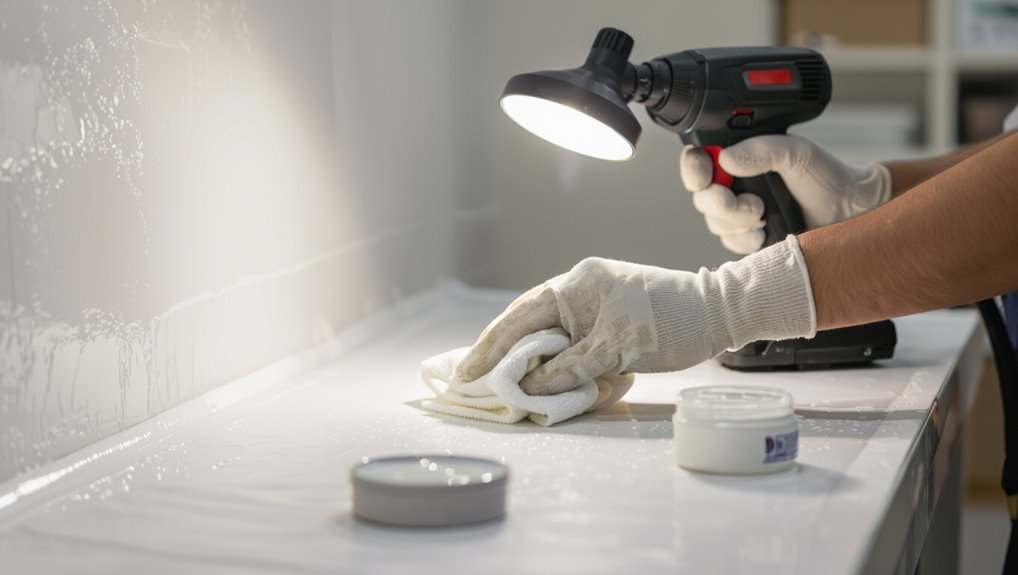
Once the final clear coat goes on, let it cure fully before you move furniture back or perform a detailed inspection — curing, not just surface drying, is what gives the film its hardness and chemical resistance.
Wait the manufacturer’s recommended cure time (often 24–72 hours or longer), keep ventilation steady, avoid contact, then inspect for texture, adhesion, runs, or dust nibs and spot-repair if needed.
Comparison Popular Clear Coat Options for Walls
You’ll want to weigh durability, yellowing, and ease of use when choosing between water- and oil-based polyurethanes, acrylics, polycrylic, conversion varnish, or spray finishes. Below is a quick comparison to help you see trade-offs at a glance before you test on sample boards. Use the notes to match each option to your wall’s paint type and desired sheen.
| Finish Type | Strengths | Drawbacks |
|---|---|---|
| Water-based polyurethane | Low odor, non-yellowing, fast drying | Less heat/solvent resistant than oil |
| Oil-based polyurethane | Tough, long-lasting finish | Yellowing over time, strong odor |
| Acrylic / Polycrylic | Good for light colors, easy cleanup | Less durable than conversion varnish |
| Conversion varnish | Extremely durable, chemical resistant | Requires professional application/spray |
| Spray clear coat | Fast, even coverage | Overspray, ventilation and masking needed |
Water-based polyurethane vs oil-based polyurethane
When choosing a clear coat for interior walls, you’ll want to weigh water-based polyurethane against oil-based polyurethane for their different looks, drying times, durability, and VOC profiles.
Water-based dries fast, stays clear, and has low odor but offers slightly less abrasion resistance.
Oil-based yellow a bit over time, cures tougher, and handles scuffs better, though it emits higher VOCs and takes longer to dry.
Acrylic clear coats vs polycrylic vs conversion varnish
If you liked weighing water- vs oil-based polyurethanes, you’ll want to compare acrylic clear coats, polycrylic, and conversion varnish next to match look, durability, and VOCs to your project.
Acrylics dry clear with low VOCs but moderate toughness.
Polycrylic is water-based, easy to clean, and resists yellowing.
Conversion varnish offers factory-level hardness and chemical resistance but has higher VOCs and cost.
Spray clear coat pros and cons
Although spray clear coats give you fast, even coverage and smooth finishes, they come with trade-offs you should weigh before choosing one for walls.
You’ll get quick application and thin, uniform films, but expect overspray, ventilation needs, and limited build per pass.
Sprays can accentuate texture, may require multiple coats, and aren’t ideal for spot repairs compared with brush-on products.
Common Mistakes and How to Avoid Them
Before you start, know the biggest mistakes: coating chalky or incompatible paint, skipping test patches, and using the wrong sheen or product for the job.
You should prep properly, follow manufacturer instructions, and guarantee good ventilation. Taking these steps prevents peeling, uneven finish, and safety hazards.
Applying over unsuitable paint or chalky surfaces
When you roll clear coat over paint that’s chalky, flaking, or incompatible, it won’t bond properly and will peel, haze, or trap moisture underneath.
You should inspect for powdery residue, blistering, or loose flakes.
Remove unstable paint, degrease, and sand to sound substrate.
Use compatible primers or adhesion-promoting products before clear coating to guarantee a durable, even finish.
Skipping test patches or inadequate surface prep
If you skip test patches or rush surface prep, you’ll often discover problems only after the clear coat’s applied—blushing, peeling, or uneven gloss that could’ve been prevented.
Always test a small area to confirm adhesion and finish compatibility. Clean, sand, and remove dust or contaminants, and let primers or repairs cure fully.
Proper prep saves time and avoids costly rework.
Using wrong sheen or product for intended use
You caught issues from poor prep; now pay the same attention to choosing the right sheen and product for the job.
Don’t pick a high-gloss clear coat for textured or flawed walls—you’ll highlight imperfections.
Match sheen to room use and light conditions, choose compatible formulas (water‑based over water‑based, solvent over solvent), and read product labels so finish, durability, and maintenance meet your needs.
Poor ventilation and ignoring manufacturer instructions
Because clear coats off-gas strong solvents and rely on airflow to cure properly, poor ventilation and skipping the manufacturer’s directions can turn a routine finish into a health risk and a ruined job.
You should ventilate, wear respirators, follow temperature, humidity, and recoat timing, and use recommended thinners and tools.
Ignoring instructions risks tacky finishes, yellowing, or failed adhesion—don’t shortcut safety.
Best Practices and Professional Tips
You’ll get the best results by choosing clear coats made for interior walls—look for water-based, low-VOC formulas and matte-preserving options.
I’ll cover how to protect matte finishes without adding sheen, plus simple cleaning and maintenance routines that keep clear-coated walls looking crisp.
Know when a job needs a pro—especially for large areas, complex textures, or stubborn stains—so you don’t waste time or materials.
Recommended products and formulations for interior walls
When picking a clear coat for interior walls, consider the room’s use, desired sheen, and durability needs so you choose a product that actually protects without changing the color or texture.
Choose water-based polyurethane for low odor and non-yellowing results, or acrylic clear coats for flexibility.
For high-traffic areas, select a satin or semi-gloss durable formula; always test a small patch first.
Tips for preserving matte finishes without adding sheen
If you want to keep a true matte look while protecting the surface, pick products and techniques that prioritize low sheen and minimal surface buildup.
Test any matte-specific clear coat on a hidden area first.
Roll thin, even coats and avoid spraying heavy mist.
Use breathable, water-based formulations, light sanding between coats, and limit additives that increase gloss to retain the flat appearance.
Maintenance and cleaning of clear-coated walls
Once you’ve protected matte walls with a clear coat that keeps sheen low, regular maintenance will keep that finish looking right without adding gloss.
Dust weekly with a microfiber cloth, spot-clean stains gently using diluted mild detergent, and rinse with clean water. Avoid abrasive pads and harsh chemicals.
Reapply a compatible clear coat touch-up if wear appears in high-traffic areas to preserve protection.
When to call a professional
Because clear-coated walls can hide damage until it spreads, call a professional as soon as you notice persistent peeling, large-area discoloration, bubbling, or structural cracks that touch the coating.
A pro will assess underlying moisture, mold, or substrate failure, recommend targeted repairs, and advise whether stripping, spot treatment, or reapplication is needed.
Don’t delay; minor issues escalate quickly.
Cost, Durability, and Longevity Considerations
You’ll want to weigh the upfront costs—materials and any labor—against the protection a clear coat provides.
Different products (waterborne, solvent-based, polyaspartic) give varying lifespans, so consider manufacturer estimates and typical real-world performance.
Also factor in things that shorten or extend durability, like surface prep, UV exposure, humidity, and traffic levels.
Estimated costs (materials and labor)
When you’re planning to apply a clear coat over wall paint, budget for both materials and labor so you avoid surprises: expect higher-grade polyurethane or water-based acrylic clear coats to run $25–$60 per gallon, plus primers, applicators, and masking supplies that can add $20–$100 depending on project size.
If you hire a pro, labor typically ranges from $1.50–$4.50 per square foot for rolling or brushing, and $2.50–$6.00 per square foot for spray applications, with specialty finishes or extensive prep increasing costs.
- DIY materials for a small room: $60–$200
- Pro basic roll/brush job: $200–$800
- Pro spray or specialty finish: $400–$2,000
- Expect higher costs for repairs or moisture issues
Expected lifespan of clear-coated walls by product type
Different clear-coat products give you varying lifespans, so match the finish to the room’s traffic and moisture levels; water-based acrylics usually last 5–10 years on interior walls with normal use.
Oil-based polyurethanes can hold up 8–15 years in low-moisture areas, and high-performance polyurethane or epoxy systems can protect surfaces for 10–20+ years in high-traffic or humid spaces.
Choose based on expected wear.
Factors that shorten or extend durability
A few key factors will shorten or extend how long a clear coat protects your wall: product chemistry, surface prep, application technique, room conditions, and maintenance habits.
You’ll get longer life choosing high-quality formulas, following prep and cure times, applying even coats, and controlling humidity and temperature.
Avoid harsh cleaners, abrasion, and UV exposure to prevent premature yellowing, cracking, or peeling.
Environmental, Health, and Safety Considerations
When choosing a clear coat, check VOC levels and consider low-VOC or water-based options to reduce indoor pollution.
Make sure you provide good ventilation and wear appropriate PPE—gloves, eye protection, and an N95 or respirator if recommended.
Dispose of rags, empty cans, and solvent waste according to local hazardous-waste rules and follow cleanup instructions on the product label.
VOC levels and low-VOC alternatives
Because most clear coats release volatile organic compounds (VOCs) as they cure, you’ll want to check labels and datasheets to compare their emissions and choose low-VOC options where possible.
Pick waterborne or acrylic urethane formulations labeled “low-VOC” or “zero-VOC” for interiors.
You’ll still weigh durability, sheen, and compatibility with your wall paint before selecting a trade-off that balances performance and lower emissions.
Proper ventilation and PPE recommendations
Low-VOC choices cut emissions, but you’ll still need good airflow and protective gear while applying clear coat.
Open windows and run fans to move fumes outdoors; consider a window exhaust fan for faster exchange.
Wear a respirator rated for organic vapors, chemical-resistant gloves, eye protection, and long sleeves.
Take breaks outside to reduce exposure and monitor for dizziness, headache, or irritation.
Disposal and cleanup guidelines
If you finish a clear coat job, dispose of leftovers and clean tools responsibly to protect your health and the environment.
Seal unused product in original containers, label them, and follow local hazardous-waste rules. Don’t pour solvents or paint down drains.
Use absorbent materials for spills and bag them for disposal. Clean brushes with appropriate solvent in a well-ventilated area, then store waste in sealed containers.
FAQs
You probably have quick questions like whether a clear coat will make your wall paint shiny or if it can be used over flat/matte finishes without changing appearance.
You’ll want to know if it’s necessary for drywall, how to remove or repaint over it, and whether it’s suitable for exterior walls.
Below are concise answers to those common concerns.
Will clear coat make my wall paint look shiny?
Curious whether a clear coat will make your wall paint shiny? It can—clear coats come in gloss, semi-gloss, satin, and matte sheens, and they’ll alter reflectivity accordingly.
If you want more sheen, choose gloss or semi-gloss; pick satin for mild luster.
Matte clear coats minimize shine but still slightly deepen color.
Test a small area first to confirm the finish.
Can I apply clear coat over flat/matte paint without changing appearance?
Wondering whether a clear coat will keep flat or matte paint looking the same? You can, but choose a matte or ultra-matte clear specifically labeled for low sheen.
Test a small, inconspicuous patch first—some formulations subtly raise sheen or darken color.
Apply thin, even coats and let each dry fully. Proper product selection and testing prevent unwanted gloss or color shift.
Is clear coat necessary for painted drywall?
Do you need a clear coat on painted drywall? Generally no — standard latex or acrylic wall paint forms a durable finish for normal rooms.
You might add clear coat in high-traffic, moisture-prone, or washable areas to boost stain resistance and scrub durability.
If you do, choose compatible clear finishes and test a small area to guarantee adhesion and appearance remain acceptable.
How do I remove or repaint over a clear-coated wall?
If a clear coat is already on your wall, you can usually repaint over it once you prepare the surface properly: clean thoroughly, sand or degloss to promote adhesion, patch any damage, and prime with a product suited to the clear finish before applying new paint.
For removal, strip with chemical remover or sand to bare substrate, then clean, repair, prime, and repaint using compatible products.
Can I use clear coat outdoors on exterior wall paint?
Can you use a clear coat outdoors on exterior wall paint? Yes — but choose a product labeled for exterior use with UV protection and flexibility.
Prep surfaces: clean, dry, and repair cracks.
Test compatibility on a small area to avoid adhesion problems or discoloration.
Apply per instructions, in appropriate weather.
Expect periodic recoats for long-term protection and color retention.
Conclusion Practical Recommendations and Next Steps
Before you decide, run through a quick checklist to weigh whether a clear coat fits your room’s wear level, finish preference, and ventilation limits.
Try a small test patch with one or two shortlisted products to confirm adhesion and appearance, and note curing time and odor.
If the patch looks good, follow the suggested test plan and pick a product from the shortlist that matched your needs.
Quick checklist: Should you clear coat your walls?
Wondering whether you should clear coat your walls? Check: Is the paint fully cured, high-traffic, or prone to stains?
Do you want added sheen, durability, or easier cleaning?
Avoid clear coat over low-adhesion or textured finishes.
Test compatibility in an inconspicuous spot.
If unsure, delay until you can trial products and confirm finish, adhesion, and appearance before coating whole walls.
Suggested test plan and product shortlist
Since clear-coating walls can change appearance and performance, you should run a focused, small-scale test plan before treating entire rooms.
Test on hidden panels, note sheen, adhesion, and color shift over a week.
Try recommended products on scrap:
- Water-based polyurethane (low VOC)
- Acrylic clear coat (matte option)
- Wax-based sealer (for textures)
- Test kit with swatches and labels
