
What Causes Latex Paint to Bubble and How to Prevent It
Latex paint bubbles when moisture, heat, poor surface prep, or trapped solvents cause the film to lift or form blisters. You’ll often see pinholes from solvent outgassing, foam from application air, or blisters where water or leaks pushed the coating off the substrate. Prevent it by cleaning, drying, and priming surfaces, avoiding painting in high humidity or heat, and applying thin, even coats with proper ventilation. Keep going for specific diagnosis, prevention steps, and repair instructions.
What Causes Latex Paint to Bubble Quick Answer
You’ll usually see latex paint bubble because moisture, heat, or poor surface prep trapped air or water under the film.
Old paint, painting over dirty or glossy surfaces, or applying paint too thick or in high humidity also causes bubbling.
Fixing the underlying moisture or properly prepping and applying the paint prevents most problems.
Direct, concise explanation of the most common causes
If latex paint starts bubbling, it’s usually because moisture, heat, or poor surface prep trapped air or water beneath the film; common causes are painting on a damp surface, applying paint in high humidity or direct sun, painting over oil-based paint without proper bonding, or using dirty or peeling underlying coatings.
You should address what causes latex paint to bubble:
- Moisture intrusion
- Heat/humidity during application
- Poor adhesion from contaminants
How Paint Bubbles Form Basic Understanding
When you see paint bubbling (also called blistering), tiny pockets of gas or liquid have pushed the coating away from the surface.
Chemical reactions (like solvent evaporation or moisture reacting with the film) and physical forces (heat, trapped air, or poor adhesion) create those pockets.
Different bubble types—pinholes, larger blisters, and foamy texture—tell you whether the issue is surface contamination, underneath moisture/heat, or improper mixing/application.
What is bubbling (blistering) in latex paint
Bubbling, also called blistering, happens when trapped moisture or solvents push the latex paint film away from the surface, forming raised pockets or bubbles.
You’ll see dome-shaped blisters, paint lifting, or flaking as the bond fails. Bubbles vary in size, may be soft or brittle, and often reveal underlying moisture or contamination.
Addressing them early prevents wider paint failure and substrate damage.
Chemical and physical mechanisms behind bubbles
Having seen how trapped moisture or solvents lift the paint film, it helps to understand the chemical and physical forces that cause those pockets to form.
You get gas generation from solvent evaporation and moisture vapor pressure; differential adhesion and film elasticity let the coating detach locally.
Thermal expansion, substrate outgassing, and rapid curing create stress concentrations, so weak interfaces give way and bubbles nucleate.
Types of bubbles and what each indicates (pinholes, blisters, foam)
If you look closely, you’ll see three common bubble types—pinholes, blisters, and foam—and each points to a different underlying problem in the paint system. You’ll spot pinholes from solvent release, blisters from moisture or adhesion loss, and foam from trapped air during application. Use proper surface prep, dry conditions, and correct thinning to prevent them.
| Type | Cause |
|---|---|
| Pinholes | Solvent outgassing |
| Blisters | Moisture/poor adhesion |
| Foam | Air entrapment |
Common Causes of Latex Paint Bubbling Detailed Breakdown
Now we’ll look at the specific causes that make latex paint bubble so you can spot and prevent them.
You’ll learn how trapped moisture, extreme surface temperatures, poor prep, incompatible coatings, and overly thick or sloppy application each create problems.
Understanding these will help you choose the right fixes and techniques.
Trapped moisture (humidity, wet substrates, condensation)
When moisture gets trapped beneath a latex paint film—whether from high indoor humidity, painting over damp surfaces, or condensation on cold walls—the water tries to escape and forces the paint to blister or bubble.
You should verify surfaces are dry, use moisture meters, improve ventilation, and wait for proper drying after rain or cleaning.
Promptly remove and recoat affected areas once dry.
Painting over surfaces that are too hot or too cold
Because extreme surface temperatures interfere with paint adhesion and film formation, painting onto a substrate that’s too hot or too cold often causes bubbling and blisters.
You should wait for recommended temperature ranges, shade hot surfaces, and avoid painting in direct midday sun or freezing conditions.
Temperature extremes speed skin formation or prevent coalescence, trapping solvents and air that form bubbles as the film cures.
Poor surface preparation (dirt, grease, loose paint)
If you skip proper cleaning and sanding, dirt, grease, or loose paint will keep new latex from bonding to the substrate and lead to bubbling as the film cures.
You should remove contaminants, degrease oily areas, and scrape or sand away flaky paint.
Prime bare spots, let surfaces dry fully, and only apply paint to a clean, sound base to prevent adhesion failures and bubbles.
Incompatible previous coatings and paint
Although old coatings might look intact, they can react with new latex and cause bubbling by preventing proper adhesion or by chemically breaking down the fresh film.
You should identify incompatible bases—oil, shellac, or certain alkyds—and strip or prime them appropriately.
Test adhesion with a tape pull, use a compatible primer, and replace glossy or contaminated layers before repainting to prevent failure.
Applying paint too thickly or with improper technique
When you lay latex paint on too thickly or use the wrong technique, the surface can trap solvents and dry unevenly, causing bubbles or blisters as moisture and air try to escape.
You should apply thin, even coats, maintain a wet edge, and use appropriate brushes or rollers.
Allow proper drying between coats and thin paint slightly if it resists leveling to prevent bubbling.
Solvent entrapment and rapid drying (high temperatures, strong airflow)
Because solvents need time to escape as paint dries, forcing latex paint to set too quickly—by painting in high heat, direct sun, or under strong fans—can trap those solvents beneath a skin of cured film and lead to bubbling or blistering.
To prevent this, work in moderate temperatures, avoid direct sunlight, reduce airflow, apply thinner coats, and allow adequate drying time between layers.
Paint quality and expired or improperly stored paint
If you use low-quality paint or paint that’s past its prime, you’re much more likely to see bubbling and poor adhesion.
Old or improperly stored latex separates, thickens, and loses binder strength, so it won’t form a stable film.
You should check dates, stir and strain, follow storage guidelines, and discard paint with foul odor, excessive clumps, or persistent phase separation.
Structural issues (roof leaks, plumbing, substrate deterioration)
Although you might blame the paint, structural problems like roof leaks, plumbing failures, or deteriorating substrates are often the real cause of bubbling; they introduce moisture, salts, or movement that break paint adhesion and create blisters.
You should inspect for leaks, repair flashing or pipes, replace rotten sheathing, and dry surfaces fully before repainting so bubbles won’t recur.
Diagnosing the Problem How to Identify the Root Cause
Start by scanning for visual clues and patterns—location, size, and timing of bubbles tell you a lot.
You can run simple moisture tests and perform a scrape or solvent test to check adhesion and compatibility.
If results point to structural moisture, widespread adhesion failure, or you’re unsure of the cause, call a professional.
Visual clues and patterns to look for
When you walk a room looking for paint bubbling, focus on patterns and context: isolated bubbles near trim or windows often indicate trapped moisture or poor adhesion at edges, while widespread, patchy blisters across exterior walls usually suggest moisture intrusion or high humidity behind the film.
Raised, glossy bubbles that pop to reveal wet substrate indicate ongoing water entry, whereas dry, powdery flakes denote poor surface preparation or incompatible coatings.
Check edges, seams, color changes, and whether bubbles follow underlying boards, joints, or fasteners to pinpoint causes.
Simple moisture tests for walls and ceilings
How can you quickly tell if bubbling comes from moisture? Use a moisture meter on multiple spots; readings above 15–20% indicate dampness.
Tape a small plastic sheet to the wall for 24–48 hours; surface condensation means high humidity or vapor drive.
Smell musty odors, check nearby plumbing, roof, or exterior drainage.
Repeat tests after repairs to confirm dryness before repainting.
Testing adhesion and compatibility (scrape test, solvent test)
Before you repaint, confirm the old finish is sound and compatible with your new paint by doing simple adhesion and solvent tests; they’ll tell you whether bubbling comes from poor bond, an incompatible topcoat, or surface contamination.
Do a scrape test with a utility knife and tape to see if paint peels.
Use denatured alcohol or mineral spirits on a cloth to check for softening or lifting.
When to call a professional
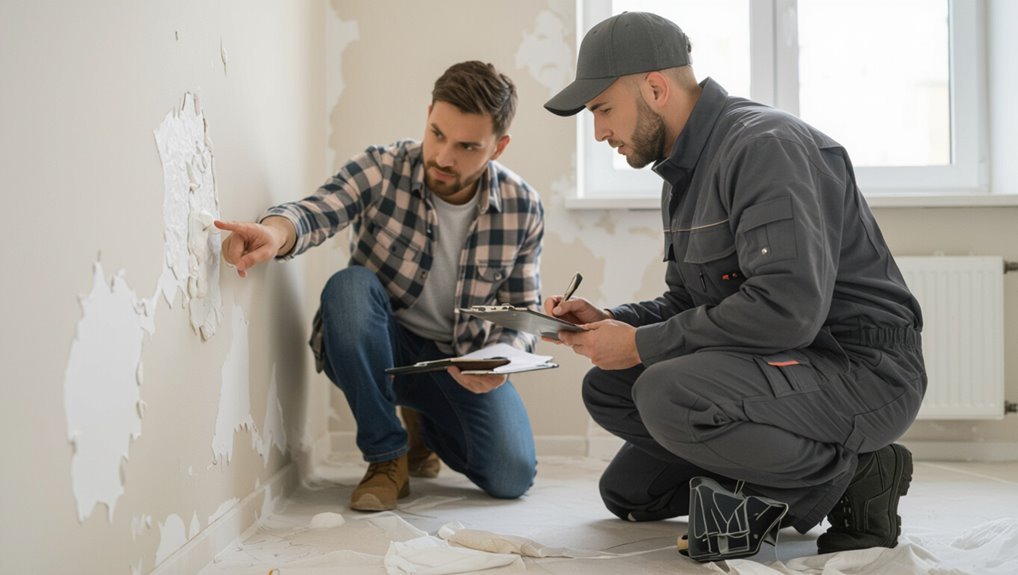
If your scrape and solvent tests don’t pinpoint the cause or the bubbling keeps returning, it’s time to contemplate professional help for diagnosis.
Call a paint contractor or restoration specialist when bubbling spans large areas, involves multiple layers, shows mold or moisture stains, or follows leaks.
A pro will use moisture meters, infrared scans, and substrate checks to identify root causes and recommend targeted repairs.
Preventing Latex Paint Bubbles Step-by-Step Guide
Before you pick up a brush, check the jobsite conditions—temperature, humidity, and ventilation—to make sure the environment won’t trap moisture under the finish.
Then prep the surface thoroughly (clean, sand, repair) and allow proper drying times so moisture’s out before you prime with compatible products.
Finally, use the right primer/paint combos and proven application techniques (correct brush, roller nap, or spray tip) to minimize bubbling.
Step 1: Assess environmental conditions (temperature, humidity, ventilation)
When you’re preparing to paint, check the room’s temperature, humidity, and airflow so the latex can cure evenly and stick properly.
Aim for manufacturer-recommended temperatures (usually 50–85°F) and relative humidity below about 70%.
Improve ventilation with fans or open windows, avoid painting during rain or extreme heat, and pause if conditions fluctuate—stable, moderate conditions prevent bubbling during drying.
Step 2: Proper surface preparation (cleaning, sanding, repair)
Because paint only sticks to a sound, clean surface, you should remove dirt, grease, loose paint, and mildew, then sand glossy areas and repair cracks or holes before rolling or brushing.
Use a degreaser, scrub with a nylon brush, and rinse.
Sand feathered edges, fill gaps with appropriate filler, sand smooth, and wipe dust away so the new paint bonds evenly and won’t trap contaminants.
Step 3: Drying times and moisture control before painting
If surfaces stay damp or you rush painting, trapped moisture will create bubbles and cause the finish to fail.
So always verify substrates are fully dry and ambient humidity is controlled before you open a can.
Check moisture with a meter, wait recommended cure times after washing or repairs, paint in 40–70% humidity and 50–85°F, and guarantee good ventilation during drying.
Step 4: Choosing compatible primers and paints
Although it’s tempting to grab any paint on sale, choosing primers and latex paints that match the substrate and each other is essential to prevent bubbling and peeling.
Pick a primer formulated for your surface—wood, metal, drywall—and a latex topcoat labeled compatible.
Match sheen and chemical base when specified, follow manufacturer pairing recommendations, and avoid mixing alkyd primers with water-based finishes unless noted.
Step 5: Recommended application techniques (brush, roller, spray tips)
Step 5 covers the exact application techniques you should use to minimize bubbling: brush strokes for edges and detail, the right roller nap and pressure for smooth coverage, and spray settings for even atomization.
Work wet edges, use light consistent pressure, avoid overworking the paint, and choose a synthetic brush for latex.
For spraying, keep nozzle size, PSI, and overlap consistent for uniform film.
Step 6: Correct paint thinning and avoiding overly thick coats
When you thin latex paint correctly and apply thinner, even coats, you’ll cut the chance of trapped solvents and surface tension that cause bubbling.
Use manufacturer-recommended thinner and small amounts—stir thoroughly and test consistency.
Apply multiple thin layers, letting each level set until tack-free. Thick applications trap moisture and solvent; thinning and controlled layering give a smooth, bubble-free finish.
Step 7: Proper curing time and post-application care
Because paint keeps changing even after the brush leaves the wall, you need to give each coat proper curing time and follow simple post-application care to prevent bubbling.
Wait recommended hours between coats, avoid humidity and drafts, and keep temperatures steady.
Don’t rush furniture placement or cleaning; gentle handling and full cure (often 7–30 days) guarantee adhesion and reduce trapped moisture that causes bubbles.
Best Products and Tools to Prevent Bubbling
To prevent bubbling, you’ll want the right primer—use latex for fresh drywall, oil-based for stained or glossy surfaces, and bonding primers when adhesion is a concern.
Pick durable paint finishes and formulations for trouble spots, such as semi-gloss for trim or mildew-resistant acrylics in damp areas.
Use quality rollers, a properly tuned sprayer, and de-aerating additives to guarantee smooth application and minimize trapped air.
Primer types and when to use them (latex vs. oil-based vs. bonding primers)
Choosing the right primer can stop latex paint bubbling before it starts, so you’ll want to match primer type to surface and problem:
Use latex primers on drywall and already-painted latex surfaces for flexibility and breathability.
Choose oil-based primers for stain blocking, tannins, or raw wood.
Use bonding primers on slick, glossy, or difficult surfaces to guarantee adhesion and prevent future lifting.
Recommended paint finishes and formulations for problem areas
For problem areas that have caused bubbling in the past, pick finishes and formulations that prioritize adhesion, flexibility, and moisture resistance.
Use high-quality acrylic latex or 100% acrylic paints with mild elastomeric properties for exterior trim and damp-prone walls.
Choose satin to semi-gloss for washability and durability.
Opt for low-VOC, mildew-resistant formulas and follow manufacturer prep and drying recommendations for best results.
Tools that improve application and reduce entrapment (rollers, sprayers, de-aerating additives)
After you pick the right finish and formulation, the tools you use will make or break the application—poor equipment traps air, sprays unevenly, and turns a well‑chosen paint into a bubbling problem.
You should choose quality rollers, adjustable sprayers, and additives that reduce foam.
Use:
- Dense microfiber roller covers.
- HVLP or airless sprayer with fine tips.
- De‑aerating additives as directed.
Common Mistakes That Lead to Bubbling and How to Avoid Them
When you paint in bad weather or with poor ventilation, skip primer, or use the wrong one, the finish can trap moisture and bubble.
Overworking the surface or recoating too soon also prevents proper drying and invites blistering. Using low-quality or old paint compounds these problems, so always use fresh, appropriate products and follow recommended drying times.
Painting in bad weather or poor ventilation
Although you might rush to paint before a storm clears or in a poorly ventilated room, doing so greatly raises the risk of bubbling because temperature, humidity, and airflow affect how latex paint dries and adheres.
Wait for mild, dry conditions or improve ventilation with fans and open windows.
Drying too slowly traps moisture; too quickly causes skinning and blisters—both lead to bubbles.
Skipping primer or using the wrong primer
If you skip primer or pick the wrong type, paint won’t bond properly and you’re inviting bubbling down the line.
Use a primer matched to the surface—stain-blocking for tannin-rich woods, bonding primer for glossy or slick substrates, and mildew-resistant for damp areas.
Proper priming seals pores and evens absorption so the latex topcoat adheres uniformly, reducing trapped moisture and bubbles.
Overworking or re-coating too soon
Proper priming helps the paint stick, but you can still create bubbles by overworking the finish or re-coating too soon.
If you keep brushing, rolling, or going back over tacky paint, you trap air and disturb drying. Wait recommended dry times, test a small patch, and sand lightly between coats only when fully dry.
Work steadily, not repeatedly, for a smooth, bubble-free surface.
Using low-quality or old paint
When you use low-quality or old latex paint, you’re inviting bubbling because the binders and additives that hold the film together have broken down or were never strong enough to begin with.
You should inspect age and brand, test adhesion, and discard compromised cans.
Follow these steps to avoid problems:
- Check manufacture date and consistency.
- Do a small adhesion test.
- Buy reputable, fresh paint.
How to Repair Bubbling Latex Paint Step-by-Step Fixes
You’ll learn when a quick spot repair will do versus when you need a permanent fix or full strip-and-repaint.
For small bubbles you’ll scrape, sand, spot-prime, and repaint, while larger areas may require removal, substrate repair, or special treatment for mold, recurring moisture, or exterior siding.
Follow the right steps for the problem so the bubbling doesn’t come back.
Temporary vs. permanent fixes: when each is appropriate
Even though a quick patch can hide bubbling for a season, it’s important to know whether you need a temporary bandage or a permanent repair; the choice affects how long the fix lasts and how much work you’ll put in.
Use temporary fixes for cosmetic, low-risk areas or until underlying moisture issues are solved.
Choose permanent repairs when bubbles indicate adhesion failure, recurring moisture, or extensive damage.
Small-area repair (scrape, sand, spot-prime, repaint)
Start by removing loose paint and damaged substrate so the new coat can bond properly; scrape away bubbles with a putty knife, sand feathered edges smooth, spot-prime bare spots, then repaint with matching latex for a durable, invisible repair.
Work in small sections, clean and dry surfaces, use light coats, allow proper dry time, and blend edges to hide changes for a seamless finish.
Large-area repair or full strip and repaint (removal methods, substrate repair)
When bubbling affects whole walls or large areas, you’ll need to remove all loose paint and repair the substrate before repainting; this prevents recurring blisters and guarantees a lasting finish.
Strip remaining paint by scraping, heat, or chemical stripper.
Inspect and fix plaster or drywall—replace damaged sections, dry thoroughly, patch, sand, and prime with a high-quality primer before applying new latex paint.
Special cases: mold/mildew, recurring moisture, exterior siding
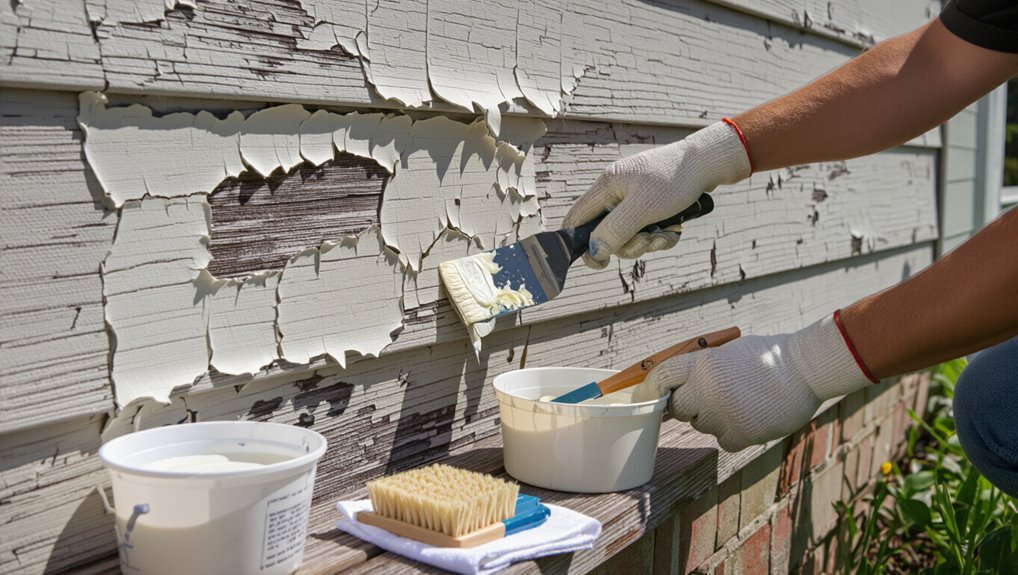
After you’ve stripped and repaired large damaged areas, address special cases that need different actions: mold or mildew, persistent moisture sources, and exterior siding failures each demand tailored fixes.
- Kill and remove mold, rinse, dry, treat with fungicide, prime with mold-resistant primer.
- Find leaks, improve ventilation, replace wet sheathing.
- For siding, repair flashing, use breathable paints and proper back-priming.
Prevention Checklist Quick Reference Before You Paint
Before you open a can, run a quick pre-paint environmental checklist to confirm temperature, humidity, and ventilation are within safe ranges.
Then follow a surface-prep checklist to clean, sand, and prime any areas that could trap moisture or prevent adhesion.
Finally, use an application checklist to pick the right tools, mix and thin correctly, and apply recommended coats and drying times.
Pre-paint environmental checklist
Although you’re keen to start, take a moment to verify the room’s environmental conditions so your latex paint bonds properly and won’t bubble later.
Check temperature (ideal 50–85°F/10–29°C), humidity below 60%, and avoid painting during rain or high moisture.
Confirm good ventilation and stable airflow, close exterior windows, use dehumidifiers or heaters if needed, and wait for drywall or plaster to fully dry.
Surface-prep checklist
Now that the room’s conditions are right, turn your attention to the surface itself—proper prep prevents most bubbling problems.
Clean grease, dust, and mildew with appropriate cleaners, rinse, and let dry.
Scrape loose paint, sand glossy areas, and repair cracks or holes with patching compound.
Prime bare or stained spots with a compatible primer before painting.
Application checklist
When you’re ready to paint, run through this short application checklist to stop bubbling before it starts:
- Stir paint gently, avoid shaking; strain to remove skin and lumps.
- Apply thin, even coats; let each coat dry fully per label instructions.
- Maintain recommended temperature and humidity; ventilate to speed curing and prevent trapped moisture.
FAQ Frequently Asked Questions
You probably have specific questions like why bubbling showed up only in spots, whether you can paint over small bubbles, or how long to wait after fixing moisture before repainting.
You might also wonder about warranty coverage and whether heat guns or blowers can safely remove bubbles. Below are clear answers to those common concerns.
Why did paint bubble only in certain spots and not everywhere?
Why did paint bubble only in certain spots?
You likely had localized issues: trapped moisture behind the paint, heat from direct sunlight, poor adhesion on glossy or contaminated areas, or variations in substrate porosity.
Small surface defects, previous coatings, or patch repairs can create weak spots.
Inspect affected areas to identify the culprit before choosing the appropriate repair and prevention steps.
Can I paint over small bubbles or do I need to remove them first?
Can you paint over small bubbles? You shouldn’t. Painting over them hides the problem and leads to more peeling later.
Scrape or sand the blisters, remove loose paint, and feather the edges.
Prime bare spots with a compatible primer, let it dry, then repaint.
Address underlying causes—moisture or adhesion—before finishing to guarantee a durable, smooth result.
How long should I wait after fixing moisture issues before repainting?
After you’ve removed bubbles and fixed the moisture source, wait until the substrate and surrounding materials are fully dry before priming and repainting.
Generally that means 24–72 hours for surface dampness in warm, ventilated conditions, but up to several days or a week for plaster, drywall, or cold, humid environments.
Use a moisture meter or visual checks to confirm dryness before proceeding.
Is bubbling covered by paint manufacturer warranties?
Who covers the cost when your latex paint bubbles?
Warranties vary: manufacturers may cover formulation defects but usually exclude damage from moisture, improper prep, or application errors.
Check your product’s warranty terms, retain receipts and photos, and contact the manufacturer promptly.
If they accept a claim, they often offer replacement paint or credit, rarely full labor reimbursement.
Follow their claim process exactly.
Can heat guns or blowers remove bubbles without damaging the surface?
If you try using a heat gun or a high‑speed blower to pop or smooth latex paint bubbles, proceed cautiously because those tools can fix some surface blisters but also cause scorching, blistering, or new damage if misused.
Test a small inconspicuous area, keep the heat low and movement constant, and stop if paint softens, discolors, or emits fumes; sanding and proper repair are safer long-term.
Appendix Troubleshooting Scenarios and Quick Remedies
You’ll find quick, targeted fixes for common bubbling situations in this appendix, starting with high-humidity spots like bathrooms and kitchens where ventilation and moisture barriers matter most.
For exterior siding that bubbles after rain, you’ll get step-by-step inspection and repair checks to pinpoint leaks and trapped moisture.
And for new construction or plaster bubbling, you’ll see recommended contractor actions and when to call a pro.
Scenario: Bathroom/kitchen high-humidity bubbling targeted solutions
Bathrooms and kitchens are the most common places latex paint bubbles because recurring steam and poor ventilation keep surfaces wet long enough for paint to lose adhesion and trap moisture.
Fix the problem by controlling humidity, improving airflow, and using correct surface prep and moisture-resistant products.
Use exhaust fans, dehumidifiers, wipe surfaces before painting, strip damaged paint, prime with a mildew-resistant primer, and apply high-quality bathroom/kitchen latex paint.
Scenario: Exterior siding bubbling after rain inspection steps
Kitchen and bathroom humidity can teach you a lot about paint failures on the outside of your home—moisture is still the main culprit when siding bubbles after a heavy rain.
Inspect for roof, gutter, and flashing leaks; check siding seams, caulking, and vents; probe for soft or swollen boards.
Dry thoroughly, replace damaged sections, improve drainage, and repaint with exterior-grade primer and paint.
Scenario: New construction or plaster bubbling recommended contractor actions
When new construction or interior plaster shows bubbling, act quickly to prevent hidden moisture and adhesion problems from getting worse.
Inspect substrate, test moisture content, and remove loose plaster or paint.
Identify leaks or drying issues, then repair and allow proper cure.
Reprime with a high-bond primer and repaint using breathable latex.
Document findings, communicate timelines, and warranty corrective work.
