
How to Get Rid of Mold on Painted Bathroom Walls Before It Spreads
You can stop mold on painted bathroom walls fast by isolating the area, wearing gloves, an N95, and goggles, and ventilating the room. Scrub spots with vinegar or a 1:10 bleach solution on nonporous paint, rinse, and dry thoroughly to prevent regrowth. Use gentler tools on flat paint and repeat treatment if needed. Address humidity with an exhaust fan or dehumidifier and fix leaks. Keep going to learn step-by-step prevention and repair tips.
Quick Answer How to Stop Mold on Painted Bathroom Walls Now
Start by wearing gloves and a mask, then scrub the painted area with a solution of water and mild detergent or a 1:10 bleach-to-water mix.
Rinse, and dry thoroughly to stop mold now.
If the mold is widespread, keeps returning, or the paint is bubbling and musty odors persist, stop and call a professional.
Acting quickly limits damage and helps you avoid costly repairs.
One-paragraph direct steps to remove mold immediately
Wear gloves and a mask, ventilate the room, then scrub the moldy spots with a stiff brush and a solution of one part bleach to ten parts water (or undiluted white vinegar for painted surfaces you don’t want to risk bleaching).
Act quickly to stop mold on painted bathroom walls:
- Remove loose mold.
- Apply cleaner.
- Scrub and rinse.
- Dry thoroughly.
When to call a professional
If the mold covers more than a few square feet, keeps returning despite your cleaning, or you notice mold inside walls or near HVAC vents, call a professional — these signs mean the problem may be structural, hidden, or extensive and needs specialist testing and remediation.
You should also call if you or family have allergies, smell musty odors, or see water damage; pros will assess, test, and remediate safely.
What Causes Mold on Painted Bathroom Walls
Mold shows up when your bathroom stays damp for long periods, so excess moisture from showers or leaks is the main trigger.
Poor ventilation and humid air let spores settle and grow, and some paint types—especially flat, non-mildew-resistant paints—hold moisture and organic matter that feed mold.
Check common hotspots like grout lines, ceiling corners, behind the shower curtain, and around the sink where moisture and poor airflow meet.
How moisture, ventilation, and paint type contribute
Because bathrooms are humid by design, trapped moisture becomes the main fuel for mold on painted walls. Poor ventilation lets that humidity linger, and certain paints let spores take hold more easily.
You should reduce surface moisture after showers, run fans or open windows, and choose mold-resistant or semi-gloss paints that repel water.
Fix leaks promptly and dry damp areas to prevent colonies from starting.
Common hotspots in bathrooms
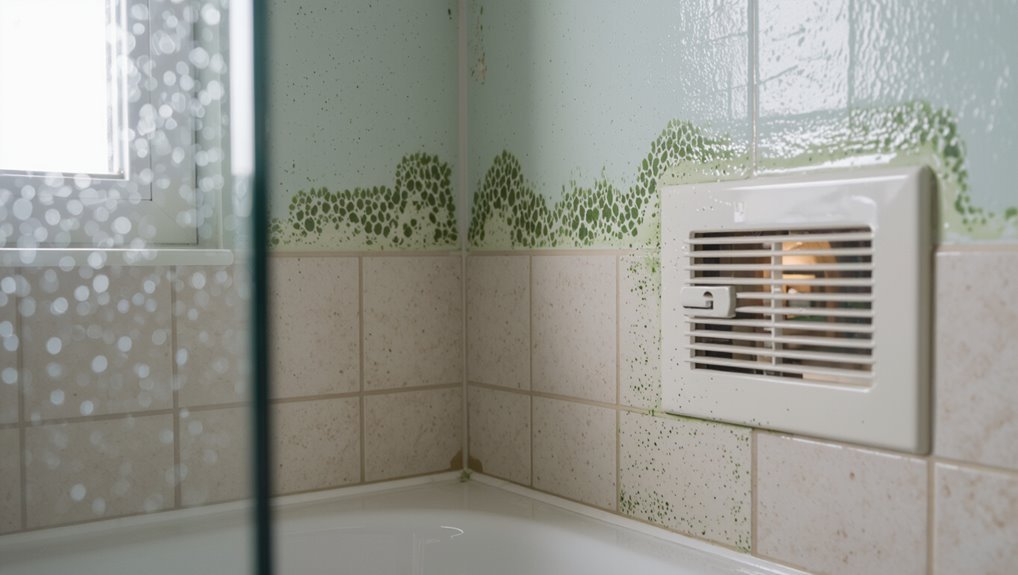
After you control humidity and pick the right paint, check specific trouble spots where moisture and poor airflow concentrate.
Inspect around the shower, bathtub edges, grout lines, and ceiling above the tub.
Look near windows, behind towel racks, under sinks, and in corners with peeling paint.
Fix leaks, improve ventilation, and clean these areas promptly to stop mold before it spreads.
Safety First Personal Protective Equipment and Precautions
Before you start cleaning, put on proper PPE—gloves, an N95 respirator, and goggles—to protect your skin, lungs, and eyes from spores and cleaners.
Open windows and run a fan to keep fresh air flowing, and turn off any open flames or pilot lights when using bleach or strong cleaners.
These steps cut your exposure and make the job safer and more effective.
Recommended PPE and why it matters
While you can tackle small mold spots with basic cleaning, you should always wear proper personal protective equipment to protect your skin, eyes, and lungs from spores and cleaning chemicals.
You’ll minimize exposure and irritation by choosing the right gear:
- N95 or higher respirator
- Chemical-resistant gloves
- Safety goggles
- Long sleeves and pants
Ventilation and household safety steps before cleaning
Because mold spores and cleaning fumes can spread quickly, make ventilation your first step: open windows and doors, run an exhaust fan or a portable fan aimed out a window, and seal off the rest of the house with plastic sheeting to keep spores contained.
Wear an N95, gloves, and goggles, turn off HVAC to avoid spreading spores, and keep pets and kids out until surfaces dry.
Materials and Tools You’ll Need
Next you’ll see which cleaners work best—commercial mold removers and simple DIY options like diluted bleach or vinegar—and when to pick each.
You’ll also get a concise checklist of tools and supplies (scrub brush, scrub pads, spray bottle, gloves, mask, plastic sheeting) so you can tackle the job efficiently.
Follow these recommendations to avoid wasting time or making the problem worse.
Effective cleaners and alternatives (commercial vs DIY)
You’ll need the right cleaners and a few basic tools to remove mold safely and effectively; commercial products like bleach-based sprays and oxygen bleach can kill mold quickly, while DIY solutions such as diluted bleach, hydrogen peroxide, or a vinegar-and-water mix offer lower-cost alternatives.
| Type | Pros | Cons |
|---|---|---|
| Bleach spray | Fast kill | Fumes |
| Oxygen bleach | Gentler | Cost |
| Vinegar mix | Cheap | Less potent |
Tools and supplies checklist
Grab a few key items before you start: gloves, goggles, a mask (N95 or better), scrub brushes or sponges, spray bottle, bucket, rags, and the cleaner you chose—commercial bleach or oxygen-based product, diluted bleach, hydrogen peroxide, or vinegar solution.
You’ll also need good ventilation and trash bags.
- Protective gear
- Cleaning tools
- Chosen cleaner
- Disposal supplies
Step-by-Step: How to Remove Mold from Painted Bathroom Walls
Before you start, clear and protect the area so water and cleaners won’t damage fixtures or floors.
Check the paint for stability, then apply a suitable cleaner and scrub with the right technique and dwell time.
Rinse, dry, assess the results, and decide whether to repeat treatment or replace the paint.
Step 1 Prepare the area and protect surfaces
Safety first: clear the bathroom of towels, rugs, and toiletries so you’re working in an open, dry space.
Then turn on the exhaust fan or open a window to improve ventilation.
Put on gloves, goggles, and an N95 mask.
Cover fixtures, floors, and nearby surfaces with plastic sheeting and tape.
Use a bucket and cloths set aside for mold removal only.
Step 2 Test paint for stability and adhesion
With the area prepped and protected, check whether the paint can withstand cleaning so you don’t strip more than necessary.
Gently rub a hidden spot with a damp cloth and cleaner, then inspect for lifting, peeling, or color loss.
If paint softens or flakes, stop and consider testing a gentler cleaner or patching and repainting after mold removal to preserve finish.
Step 3 Apply cleaner and scrub safely (technique + dwell time)

Once you’ve confirmed the paint won’t lift, apply your chosen cleaner in small sections.
Let it sit for the recommended dwell time (usually 5–15 minutes for mold cleaners or a diluted bleach solution), then scrub gently with a soft brush or non-abrasive sponge to lift the mold without damaging the finish.
Work top-to-bottom, use steady pressure, reapply cleaner for stubborn spots, and avoid over-scrubbing.
Step 4 Rinse, dry, and assess results
After scrubbing, rinse the wall thoroughly to remove cleaner residue and loosened mold—work in the same small sections and use a clean sponge or a spray bottle of plain water to avoid streaks.
Blot excess moisture with microfiber cloths, then ventilate the room and run a fan until completely dry.
Inspect for remaining stains or damage and note areas needing follow-up.
Step 5 When to repeat treatment versus replace paint
If the mold spots lifted cleanly and the paint shows no peeling, you can usually stop after one thorough treatment and keep monitoring the area for return growth.
However, if stains persist, paint is bubbling or flaking, or the drywall feels soft, you’ll need to plan for repainting and possibly replacing compromised material.
If regrowth appears within weeks, repeat treatment once; persistent or structural damage requires repainting and drywall repair.
Choosing the Right Cleaner: Comparison and Recommendations
You’ll compare bleach, hydrogen peroxide, vinegar, and commercial mold removers to see which works best for your situation.
Consider eco-friendly and non-toxic options if you’re sensitive to fumes or have kids and pets.
Match the cleaner to your paint type and the mold’s severity to avoid damage and get reliable results.
Bleach vs hydrogen peroxide vs vinegar vs commercial mold removers
When choosing between bleach, hydrogen peroxide, vinegar, or a commercial remover, think about what kind of mold you’re dealing with, the surface you’re treating, and safety concerns like fumes and ventilation. Pick bleach for nonporous, peroxide for porous paint-safe spots, vinegar for mild stains, and commercial products for persistent growth—always ventilate, test a patch, and wear protection.
| Cleaner | Best use | Caution |
|---|---|---|
| Bleach | Nonporous tiles | Fumes, discoloration |
| Peroxide | Painted porous areas | Oxidizer, test first |
| Commercial | Stubborn mold | Follow label |
Eco-friendly and non-toxic options
Besides effectiveness and surface compatibility, many people prefer cleaners that won’t add harsh fumes or toxic residues to a small, often poorly ventilated space like a bathroom.
Choose castile soap with warm water for light growth, tea tree oil diluted in water for prevention, or baking soda paste to scrub and neutralize odors.
Rinse, dry, and improve ventilation to stop recurrence.
Which cleaner suits which paint types and mold severity
1 clear rule will guide your choice: match the cleaner to the paint’s finish and the mold’s severity.
For glossy or semi-gloss paint, use mild bleach solutions or commercial mold cleaners for stubborn stains.
For flat or matte finishes, choose gentler enzyme or vinegar-based cleaners to avoid damage.
For light surface mold, scrub gently; for deep or recurring growth, use stronger, targeted fungicides and consider repainting.
Common Mistakes That Make Mold Worse
Don’t grab a strong cleaner that eats paint — it can strip finishes and make things worse.
Don’t scrub so hard that you damage the paint, because roughing up the surface lets mold hold on more easily.
And don’t ignore leaks or poor ventilation, since the mold will just come back until the moisture problem’s fixed.
Using the wrong cleaner for painted surfaces
If you grab a harsh cleaner meant for grout or bare tile, you can strip paint and leave the surface more porous—creating new hiding places for mold.
Use mild, paint-safe cleaners or a diluted bleach solution recommended for painted surfaces. Test a small area first, follow manufacturer guidelines, and rinse thoroughly so residue doesn’t feed regrowth or discolor the finish.
Over-scrubbing or damaging paint
Even when you’re careful about cleaners, scrubbing too hard or using abrasive tools can strip paint, roughen the surface, and create tiny crevices where mold can reestablish.
Instead, gently blot or use a soft-bristle brush, test a small area first, and avoid wire pads or heavy pressure.
Preserve the finish so mold-removal treatments work and repaint only with mold-resistant paint if needed.
Ignoring underlying moisture sources
When you tackle visible mold but leave the moisture that feeds it, you’ll see stains and spores return quickly; fix leaks, improve ventilation, and address condensation so treatments actually stick.
If you don’t, mold keeps coming back. Check plumbing, rooflines, and grout, run exhaust fans, and use dehumidifiers.
Treat the source first, then clean, so your efforts last.
Prevent Mold from Returning Long-Term Fixes and Best Practices
To keep mold from coming back, you should control humidity with exhaust fans, open windows when possible, or use a dehumidifier.
Choose mildew-resistant paints and mold-inhibiting coatings for walls and ceilings.
Finally, set a simple routine for cleaning and inspecting grout, corners, and vents so small problems don’t become big ones.
Improve ventilation and humidity control (fans, windows, dehumidifiers)
If your bathroom stays damp, mold will keep coming back, so you need to control humidity and move moist air out.
Use exhaust fans during and after showers, open windows when possible, run a dehumidifier for basements or poorly ventilated spaces, and dry surfaces quickly.
- Run fan 20–30 minutes
- Crack window
- Set dehumidifier to 50%
- Wipe walls promptly
Paint and coating choices to resist mold (mildew-resistant paints)
Choose paints and coatings that actively resist mildew so you don’t just clean mold away repeatedly.
Pick high-quality mildew-resistant latex or bathroom-specific enamel with antimicrobial additives.
Prime bare or patched areas with a mold-blocking primer.
Apply two coats per manufacturer instructions and guarantee proper drying.
Repaint if finish deteriorates.
These choices create a surface that’s harder for mold to colonize long-term.
Routine cleaning and inspection schedule
Set a simple schedule you can stick with—weekly quick cleans and monthly inspections—to keep mold from coming back.
Wipe surfaces, grout, and vents with a mildew cleaner or vinegar solution, dry thoroughly, and check caulk and paint for cracking.
Note trouble spots, repair or re-seal promptly, and improve ventilation.
Keep a log to track problem areas and actions taken.
When Mold Damage Requires Repair or Repainting
If the paint is peeling, bubbling, stained, or the drywall feels soft, you’ll need to replace those materials rather than just clean them.
After removing mold, you’ll prep the surface by drying, treating with a mold-killing primer, patching or replacing damaged drywall, then repainting with mold-resistant products.
Decide whether to hire a contractor for extensive damage or handle small repairs yourself based on your skill level, time, and the extent of contamination.
Signs paint or drywall must be replaced
When mold has stained, bubbled, or softened paint and drywall beyond simple surface growth, you’ll need to remove and replace those materials rather than just clean them.
Visible black or rust-colored staining that soaks into paint, bulging or crumbling drywall, or a persistent musty smell after cleaning are clear signs the substrate’s compromised and repairs are required.
Also replace if paint flakes away, drywall feels spongy, seams separate, or mold returns despite thorough cleaning—these show deep infestation or structural weakening.
Proper steps to prep and repaint after mold removal
Start by making the area safe and dry: clear loose debris, run a HEPA vacuum, and guarantee the surface is completely dry before you touch repairs.
Cut out damaged drywall, patch with mold-resistant compound, sand smooth, and prime with a mildew-blocking primer.
Repaint using a bathroom-grade paint with anti-microbial additives. Ventilate while curing and inspect regularly for recurrence.
Hiring a contractor vs DIY
Decide whether to tackle repairs yourself or hire a contractor based on the scope of damage, your skill level, and local regulations.
If mold was superficial and you’re comfortable sealing drywall, patching, sanding, priming with mold-resistant products, you can DIY and save money.
Hire a licensed pro for extensive rot, hidden contamination, or when permits, structural fixes, or specialized remediation are needed for safety.
Quick Troubleshooting Scenarios (Case-Based)
If mold keeps coming back after cleaning, you’ll need to check for hidden moisture sources and consider stronger treatments or repairs.
For textured or glossy paint, you’ll have to use gentler scrubbing tools and paint-specific cleaners or, in some cases, strip and repaint.
Treat tiny spots with spot-cleaning and monitoring, but call a pro or follow containment and removal protocols for widespread contamination.
Persistent mold despite cleaning likely causes and fixes
When mold keeps coming back after you scrub it away, it’s usually a sign of an unresolved moisture or ventilation problem, missed spores in grout or behind tiles, or recurring contamination from an unseen source.
The following quick case-based scenarios will help you pinpoint the likely cause and apply the right fix.
Case A: poor ventilation — install/exhaust fan.
Case B: grout hidden spores — reseal.
Case C: plumbing leak — repair.
Mold on textured or glossy paint adapted approaches
Those persistent moisture issues or hidden leaks can affect how mold clings to different wall finishes, so you’ll need slightly different tactics for textured or glossy paint.
For textured surfaces, use a soft-bristled brush and a mildew cleaner, rinse thoroughly, then dry with a dehumidifier.
For glossy paint, wipe gently with a nonabrasive cleaner to avoid scuffs, dry, and improve ventilation to prevent recurrence.
Small spots vs widespread contamination different strategies
Because the scale of contamination changes how you act, you’ll take a very different approach to a single mold spot than to widespread growth.
For one spot, clean with detergent and a diluted bleach or vinegar solution, dry, and repaint with mold-resistant paint.
For widespread contamination, stop, assess extent, improve ventilation, consider professional remediation, and replace affected drywall if staining or persistent odor remains.
FAQ Common Questions About Bathroom Wall Mold
You probably have a few quick questions like whether bleach is safe on painted walls, how long mold will come back if you only clean it, and whether repainting hides the problem for good.
You’ll also want to know if mold can harm your health or home and how to tell if it’s the dangerous “black mold.”
We’ll answer each of these clearly so you can choose the right next step.
Can I use bleach on painted walls safely?
Wondering whether bleach is safe for painted bathroom walls? You can use diluted bleach on non-porous, gloss or semi-gloss paint to remove surface mold, but it can fade or damage flat/matte finishes.
Test a small hidden spot first, ventilate, wear gloves and eye protection, and rinse thoroughly.
For porous paint or recurring mold, consider safer alternatives or professional help.
How long until mold returns if I only clean it?
How long will mold come back if you only clean it?
If you just wipe visible mold without fixing moisture, it can return in days to weeks. Cleaning removes spores on the surface but not those in porous paint, grout, or behind walls.
To delay or prevent recurrence, eliminate humidity, repair leaks, improve ventilation, and use mold-resistant paints or sealants where needed.
Is mold harmful to my health or home?
Why should you care about mold on your bathroom walls?
It can trigger allergies, asthma, coughs, and irritation, especially if you’re sensitive.
Mold also eats organic paint binders and drywall paper, weakening surfaces and causing stains and odors.
Small patches can spread, increasing repair costs and indoor air issues.
Prompt removal and moisture control protect your health and home.
Will repainting cover up mold forever?
Will repainting hide mold permanently? No. Painting over active mold only masks stains; spores remain and will regrow, peeling paint and creating recurring problems.
You should remove mold, dry the area, and treat surfaces with an appropriate cleaner or fungicide before priming.
Use a mold-killing primer and moisture-resistant paint, and address ventilation or leaks to prevent future outbreaks.
How do I know if mold is black mold and dangerous?
You can’t rely on color alone to identify dangerous “black mold.”
While Stachybotrys chartarum is the species people mean by that term and often appears dark greenish-black, many harmless molds look similar.
Check for musty odors, water damage, and persistent growth after cleaning.
If symptoms occur, growth is extensive, or you’re unsure, get a professional inspection or lab testing for proper identification and remediation.
