
What to Do With Paint Chips: Creative Uses and Safe Disposal Tips
If you find paint chips, first check their age and test for lead before handling; wear gloves and a mask and keep kids and pets away. If they’re safe, repurpose them as labels, bookmarks, collages, jewelry or colorful coasters, seal projects with resin or UV spray, and photograph pieces well for selling. If contaminated, seal and dispose via local hazardous‑waste programs. Keep going to learn testing tips, kid‑friendly crafts, preservation tricks and disposal steps.
Quick Safety Steps for Paint Chips Now
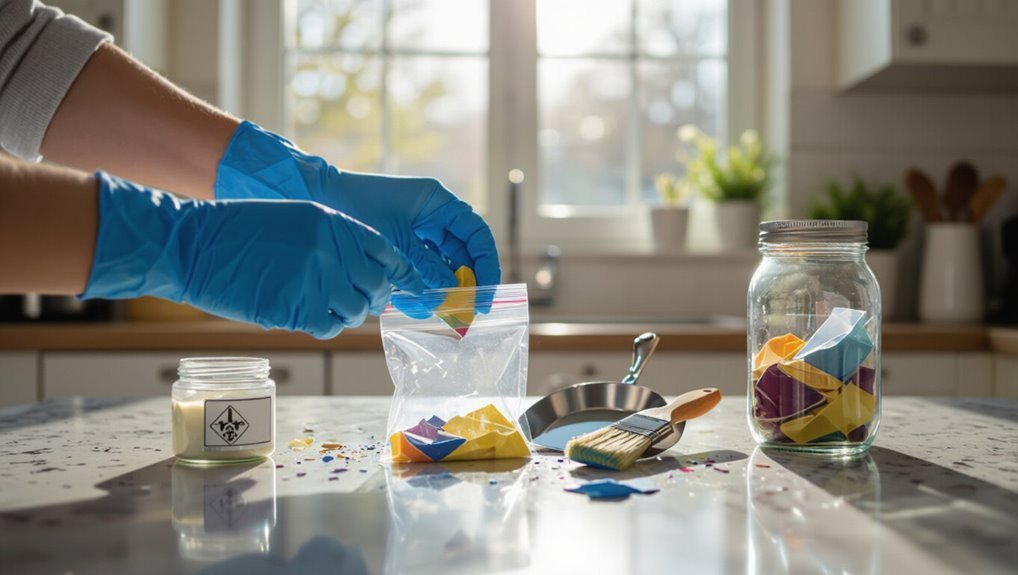
Before you start saving or crafting with paint chips, make safety your first step: check labels or contact the manufacturer to confirm the chips are lead-free, wear gloves and a mask if the chips are old or flaking, and keep kids and pets away while you clean up any dust or loose pieces with a damp cloth or wet vacuum.
Follow safety guidelines and paint chip precautions: bag waste, label containers, and store sealed.
Check Whether Paint Chips Contain Lead
After you’ve taken immediate safety steps, determine if your paint chips contain lead before handling or repurposing them. You should use certified lead testing kits or professional services to confirm contamination. Prioritize paint safety: wear gloves, minimize dust, and seal samples for testing. Results guide safe disposal or creative reuse only if lead-free.
| Test Type | Action |
|---|---|
| DIY kit | Quick, at-home |
| Lab test | Definitive result |
| Professional | On-site evaluation |
| Cost | Varies |
| Time | Hours–days |
When to Stop and Test Chips for Toxins
If the paint is older—especially from before the late 1970s—you should pause and consider testing because older formulas often contain lead.
Look for visible signs of lead-based paint or any chipping from high-traffic areas, and choose a quick home test or a professional lab test depending on the risk.
Test promptly if you suspect contamination so you can decide whether to discard, seal, or safely repurpose the chips.
Age Of The Paint
Paint age matters: once you’re dealing with surfaces painted before 1978, stop and test chips for lead before you proceed.
Check paint age records or layers; older finishes often show diminished paint longevity and flaking. If age suggests deterioration, don’t repurpose chips.
Use proper testing kits or send samples to a lab, then follow disposal or creative-use guidance based on results and safety precautions.
Presence Of Lead-Based Paint
Before you repurpose any paint chips, stop and confirm they don’t contain lead — it’s a health risk you can’t see or smell.
If your home predates modern historical regulations, assume higher risk and don’t handle chips casually.
Wear gloves, limit dust, and keep chips away from children and pets to reduce chances of lead poisoning while you arrange professional testing and safe disposal.
Testing Methods And Timing
When you’re handling paint chips, stop as soon as you find flakes from old or multiple layers and assume they could contain harmful toxins until tests prove otherwise; get samples tested promptly rather than guessing. You should prioritize testing accuracy and follow timing considerations: test immediately, avoid disturbing more, use certified labs, and wait for results before repurposing or disposing.
| Step | Action |
|---|---|
| 1 | Stop work |
| 2 | Sample |
| 3 | Send to lab |
| 4 | Wait results |
| 5 | Act accordingly |
Where to Buy an Affordable Lead Test Kit
You can buy affordable lead test kits at hardware stores, home improvement chains, online marketplaces, and some community health centers.
Compare swab-based kits and lab-sent tests for accuracy, ease of use, and what each detects.
Check prices, shipping, and local availability so you get a reliable kit that fits your budget.
Where To Buy
Anyone can pick up an affordable lead test kit from several reliable sources: big-box home centers, hardware stores, online marketplaces like Amazon, and specialty environmental supply sites.
You’ll also find kits at paint chip retailers and through eco-friendly brands.
Compare prices, read recent reviews, and choose sellers with clear return policies.
Buy from trusted sources to guarantee accurate, safe testing.
Compare Test Kit Types
Although different lead test kits target various detection methods and budgets, you’ll want to compare types before buying to match accuracy, ease of use, and cost.
Look at test kit comparisons that show sensitivity, false positives, and sample prep. Choose kits with clear instructions and solid reviews for lead testing.
Prioritize ones approved by regulators or validated in independent lab tests.
Cost And Accessibility
Finding an affordable lead test kit is easier than you might think—options range from DIY swabs at big-box stores to more sensitive digital or lab-validated kits sold online, and prices typically span from about $10 to $100 depending on accuracy and features.
You can shop pharmacies, hardware stores, or reputable online sellers.
Consider cost effective alternatives and check accessibility concerns like shipping, returns, and certified accuracy.
If a Test Is Positive: Immediate Next Steps
When a paint chip test comes back positive for lead, act immediately to protect people and prevent further exposure: keep kids and pregnant people away from the area, avoid dry sweeping or sanding, and wet-clean floors and surfaces to remove dust.
For paint chip safety, seal the area with heavy-duty plastic, use PPE, limit access, and contact a certified abatement professional to assess lead exposure and remediation options.
Safe Handling Before Repurposing or Disposal
After you’ve isolated a contaminated area and contacted a professional, handle any recovered paint chips with care before deciding to repurpose or toss them.
Once isolated and professionals contacted, carefully handle recovered paint chips before deciding to repurpose or discard them.
Wear gloves and a mask, avoid crushing chips, and place them in a sealed container for safe storage.
Add proper labeling with date, location, and test results.
Follow local disposal rules or await professional guidance.
Safer Short-Term Storage for Suspect Chips
If you’re not ready to dispose of suspect paint chips, keep them sealed in a sturdy, airtight container to limit exposure.
Label the container clearly with the contents and date so anyone who handles it knows what’s inside.
Store the sealed package away from heat and direct sunlight to prevent fumes or deterioration.
Keep Chips Sealed
Seal suspect paint chips immediately to limit exposure and preserve any coatings for later analysis.
You should use airtight containers or zip bags and remove excess air to prevent contamination.
For paint chip storage, keep items cool and out of direct sunlight.
Proper paint chip sealing reduces dust release and helps maintain sample integrity until you can arrange testing or safe disposal.
Label Contents Clearly
Clear labels save time and reduce risk, so mark each container with the date, location found, and any visible characteristics of the paint chip.
You should note suspected hazards and planned short-term use. Labeling helps you track samples for testing or future paint chip art projects and supports creative repurposing while preventing mix-ups.
Keep labels legible, waterproof, and affixed securely to each sealed container.
Store Away From Heat
Because heat can accelerate off-gassing and degrade binders, store suspect paint chips in a cool, well-ventilated spot away from radiators, direct sunlight, ovens, or vehicle trunks.
You should seal chips in labeled, airtight containers and keep them off heat sources.
Monitor temperature control nearby, move containers if rooms warm, and avoid basements or attics that experience extreme fluctuations.
How to Package Paint Chips for Hazardous Disposal
Handle paint chips with care when preparing them for hazardous disposal. You’ll follow paint chip safety and disposal guidelines: wear gloves, double-bag rigid containers, label contents, and seal lids. Keep chips dry and avoid mixing with regular trash. Deliver to approved hazardous collection—don’t attempt home burning or sewer disposal.
| Step | Action |
|---|---|
| 1 | Gloves |
| 2 | Double-bag |
| 3 | Label |
| 4 | Seal |
Local Disposal Options and HHW Events
When you’re ready to get rid of leftover paint chips, check your local Household Hazardous Waste (HHW) program for accepted materials and drop-off rules.
Many towns host HHW events where you can safely hand over paint chips and related supplies. If your area doesn’t have an event, look for designated paint drop-off locations at transfer stations or paint retailers that accept leftovers.
Local Household Hazardous Waste
If you’ve got leftover paint chips or samples you can’t reuse, check your local household hazardous waste (HHW) options so they don’t end up contaminating soil or water.
Contact municipal programs or community resources for scheduled collection events, drop-off guidelines, and prep instructions.
You’ll learn proper containment, labeling, and transport for hazardous waste, keeping your neighborhood safe and compliant with local regulations.
Paint Drop-Off Locations
Although it might seem easier to toss small paint chips in the trash, you should use designated paint drop-off sites and HHW events to dispose of samples safely.
These local options accept leftover paint, stains, and small containers so they don’t contaminate landfills or waterways. Check municipal websites for paint chip recycling locations and event schedules.
You’ll find eco friendly alternatives and proper handling instructions.
How to Find Hazardous‑Waste Rules Near You
To locate hazardous‑waste rules near you, start with your state environmental agency’s website and your local county or city government pages—these sites usually publish current regulations, permits, and contact info. Use community resources, call listed contacts, and check event calendars for collection days. Markdown table for quick reference:
| Agency | Phone | Website |
|---|---|---|
| State | 123 | example |
| Local | 456 | example |
What Not to Do: Common Disposal Mistakes
Don’t burn paint chips — burning can release toxic fumes that harm you and the environment.
You shouldn’t toss them in the regular trash either, since landfills and collectors may not accept hazardous fragments.
And never pour paint or rinse water down drains or onto the ground, because it can contaminate water supplies.
Do Not Burn
Never burn paint chips or swatches in your fireplace, grill, or backyard fire pit—doing so can release toxic fumes and heavy metals that harm your health and the environment.
You should follow safety precautions: store chips sealed, wear gloves when handling, and take them to hazardous waste collection.
Burning worsens environmental impact and exposes you and neighbors to airborne toxins—don’t risk it.
Avoid Trash Disposal
After you handle paint chips safely and avoid burning them, be careful not to toss them in the regular trash.
You should consider proper recycling options and using eco-friendly materials for reuse.
Don’t assume curbside pickup accepts them.
Think about:
- Hazard bins
- Paint take-back programs
- Local recycling centers
- Community hazardous waste events
Don’t Pour Down Drains
1 simple action can cause big problems: pouring paint chips or leftover paint down your drains lets harmful chemicals enter your plumbing, septic systems, and local waterways.
Don’t do it. Instead, follow safe disposal steps: dry small amounts, seal containers, and take paint to hazardous waste sites or community collection events.
Choose eco friendly alternatives like water-based paints and recycling programs to prevent pollution.
When to Recycle Whole Paint Samples and Chips
Paint chips and full paint samples should be recycled when you won’t use them again or when they’ve outlived their usefulness—like faded, separated, or contaminated paints that can’t be safely stored or reused.
Recycle paint chips and samples you no longer need or that are faded, separated, or contaminated.
You should seek eco friendly disposal and paint sample recycling at local programs.
Consider recycling when:
- Labels are missing
- Odor is strong
- Texture is lumpy
- You’re clearing clutter
Eco‑Friendly Reuse and Recycling Options
If you’ve got leftover paint chips or sample pots, don’t toss them—look for eco‑friendly ways to reuse or recycle them so they don’t end up in landfill.
You can donate sealed samples to community centers, use chips as labels or color swatches, and combine dried slivers into collage art with sustainable materials.
Local recycling centers may accept empty pots—ask about creative recycling programs.
Simple Decor Projects Using Full Paint Chips
You can take those full paint chips beyond swatches and turn them into quick, stylish decor pieces for your home.
Use paint chip art to craft small accents and explore color palette ideas.
Try these projects:
- Mini gallery grid
- Framed ombré strips
- DIY lampshade trim
- Wrapped vase bands
Each is fast, affordable, and visually impactful.
Make Color‑Block Coasters From Paint Chips
Grab a few paint chips, scissors or a craft knife, glue, and a sealant so you’ve got the materials you’ll need.
Cut the chips into shapes and arrange them into color‑block patterns on cork or tile, adjusting pieces until the layout looks balanced.
Finish by sealing the top and edges with a clear coat to protect the design and make the coasters durable.
Materials You’ll Need
Tools and supplies are simple and affordable—just a few paint chips, sturdy backing (like cork or thick cardstock), craft glue, a clear sealant, a utility knife or scissors, and optional felt pads.
Gather items that support creative storage and spark artistic inspiration.
- Paint chips
- Backing (cork/cardstock)
- Glue & sealant
- Cutting tool & felt pads
Cutting And Arranging
Start by trimming your paint chips into precise shapes—strips, squares, or triangles—so they’ll fit cleanly on your coaster backing; a sharp utility knife and metal ruler will keep edges straight and consistent. Use simple cutting techniques and arranging methods to plan color blocks before gluing.
| Shape | Size | Placement |
|---|---|---|
| Square | 2″ | Center |
| Triangle | 1.5″ | Corner |
| Strip | 0.5″ | Edge |
| Mosaic | varied | Full |
Sealing And Finishing
Sealing the paint-chip coaster keeps colors vibrant and protects the pieces from moisture and wear, so you’ll want to choose a clear sealer that’s compatible with paper and your backing material.
Use proper sealing techniques and finishing touches to last.
- Brush on matte varnish
- Spray clear coat
- Apply epoxy resin
- Add felt pads
Creative Paint‑Chip Collages and Mosaics
When you arrange paint chips into collages or mosaics, you can turn swatches meant for picking colors into striking art pieces that highlight color relationships and texture.
Think geometric patterns, gradients, or playful scenes built entirely from rectangles and squares. You’ll explore color theory while cutting, layering, and adhering chips to a substrate, expressing artistic expression through scale, contrast, and repetition for gallery-ready or casual decor.
Seasonal Garlands and Banners From Paint Strips
If you enjoyed assembling paint-chip collages, you can repurpose those same strips into festive garlands and banners that celebrate holidays and changing seasons.
You’ll make seasonal decorations and creative displays by cutting, folding, and stringing strips.
Try patterns like:
- Triangles for bunting
- Circles for mobiles
- Layered tassels
- Color-blocked pennants
Hang indoors or on porches for quick, reusable flair.
Gift Tags, Bookmarks, and Stationery Accents
Small, sturdy, and colorful, paint chips make perfect gift tags, bookmarks, and stationery accents that you can customize in minutes.
Punch a hole, add twine, and label for quick gift wrapping flair. Cut into bookmarks, laminate or corner-reinforce for durability.
Use small shapes as decorative accents on cards, envelopes, or notebook covers to personalize correspondence and gifts without much time or expense.
Functional Labels and Tabs for Home Organization
Anyone can turn paint chips into smart, low-cost labels and tabs that keep your home organized.
You’ll cut chips into tabs, write contents, and stick them on bins, jars, and files.
Try these organizational hacks and simple labeling systems:
- Pantry spice jars
- Craft storage bins
- Filing folders
- Drawer dividers
They’re cheap, colorful, and easy to update.
Upcycled Framed Wall Art From Paint Chips
When you arrange paint chips into a grid, collage, or geometric pattern and frame them, you get bold, inexpensive wall art that brightens any room. You can mix gradients, complementary hues, or quirky palettes to match your decor.
Choose paint color palettes that echo furniture, vary sizes for rhythm, and let art style inspiration (minimalist, midcentury, or abstract) guide layout and matting for a polished, upcycled piece.
Jewelry and Accessories Made With Paint Chips
Transform paint chips into wearable art by cutting, layering, and sealing them into lightweight earrings, pendants, bracelets, and keychains.
You can make chic paint chip jewelry and explore accessory design with simple tools and resin.
Try these ideas:
- Geometric earrings
- Color-blocked pendants
- Wrapped bangle inlays
- Keychain mosaics
Wear or gift vibrant, affordable pieces that showcase color.
Kid‑Friendly Paint‑Chip Crafts and Classroom Uses
Kids love the bright squares, and paint chips make easy, low-cost materials for classroom projects and at-home crafts you can supervise or hand off.
You can cut shapes for mosaics, make color-sorting stations, design bookmarks, or build simple puzzles. Use paint chip games for matching, memory, or color-mixing demos.
These classroom activities encourage fine motor skills, creativity, cooperative play, and budget-friendly teaching aids.
Tips for Photographing Paint‑Chip Art to Sell
After you’ve enjoyed using paint chips for classroom crafts, you can turn those same skills into marketable art by photographing your pieces so they look professional online.
Use these paint chip photography art selling tips:
Use these paint chip photography art selling tips to make your pieces look professional and ready to sell online.
- Soft natural light
- Neutral background
- Multiple angles
- Edit minimally for true color
Present clean compositions, show scale, and write clear listings to sell.
How to Preserve Paint‑Chip Projects for Durability
Seal your paint‑chip projects to protect them from fading, bending, and moisture so they last for years.
Use archival adhesive, acid‑free backing, and UV‑protective spray or clear resin to lock colors. Frame with spacers or laminate thin pieces.
For long-term paint chip preservation, follow durable craft techniques: reinforce edges, avoid direct sunlight, and store flat in a cool, dry place.
Reduce Future Paint‑Chip Waste When You Paint
When you plan your painting project with waste in mind, you’ll cut down on leftover chips and scraps before they ever accumulate.
Use sustainable painting habits and eco friendly supplies to minimize waste.
Adopt sustainable painting practices and eco-friendly supplies to significantly reduce waste and leftover materials.
Consider:
- Buy exact quantities.
- Stagger small batches.
- Reuse trays and stir sticks.
- Store leftover paint airtight for touchups.
Frequently Asked Questions
Can Paint Chips Be Composted or Used in Garden Soil Safely?
Absolutely not — you’d avoid composting paint chips like they were radioactive snow; most contain lead or toxic pigments. For paint chip recycling and eco friendly alternatives, use hazardous waste disposal or specialty recycling programs instead.
How Long Do Paint Chips Remain Hazardous if Stored Unopened?
Unopened paint chips remain hazardous for years; you’ll treat them as potentially unsafe indefinitely. For paint chip safety, assume long storage duration risks—store sealed, labeled, and follow local hazardous-waste disposal guidelines to minimize exposure.
Are There Legal Penalties for Improperly Disposing Paint Chips?
Like a messenger with a quill, you can face fines or prosecution if you ignore disposal regulations; you’re legally responsible for following local rules, so know your legal responsibilities and don’t dump hazardous paint chips carelessly.
Can Paint Chips Be Shipped Through Regular Mail to a Lab?
Yes — you can usually mail paint chips, but you’ll need to follow shipping regulations and the lab requirements. Check hazardous material rules, package securely, label contents, and confirm the lab accepts mailed samples before sending.
Do Insurance Policies Cover Cleanup of Toxic Paint Chip Contamination?
Absolutely — insurance coverage can sometimes pay for lead paint cleanup, but you’ll rarely get everything covered; policies vary, exclusions apply, and you’ll need proof, remediation plans, and possibly endorsements or professional abatement documentation.
