
30 Minimalist Japanese Bedroom Ideas for a Peaceful Retreat
Create a calm, sleep-focused retreat by choosing a low-profile futon or slim platform bed, grounding the room with tatami or warm wood, and keeping lines simple and uncluttered. Use a wabi-sabi palette of muted ochres, greys, and faded greens with one soft accent color, layered linens, and minimal furniture. Add shoji-style screens and concealed storage to hide clutter, soft warm lighting for evening, and seasonal textiles for comfort—keep going to see practical layouts, DIY tips, and lighting scenes.
Why Minimalist Japanese Bedrooms Create Calm Spaces
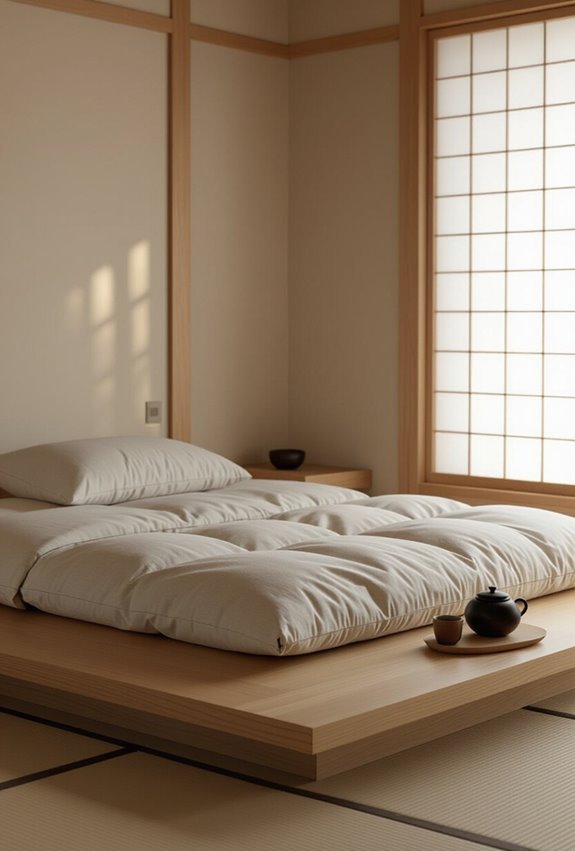
Because they strip away distractions and emphasize essentials, minimalist Japanese bedrooms help you relax and sleep more deeply.
You’ll feel calmer as sensory reduction clears visual clutter and soothes your nervous system.
Simple lines, neutral tones, and soft textures guide focus inward.
Create small meditation corners with a tatami mat or cushion, low lighting, and a single plant to anchor rest and clarity.
Choosing a Low-Profile Futon or Platform Bed
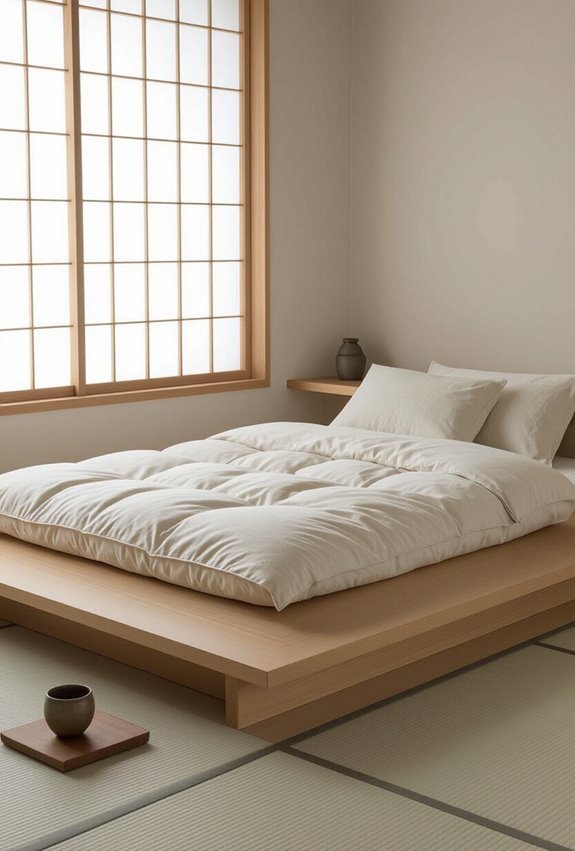
Once you’ve pared the room down and created a quiet corner, your bed becomes the focal point for rest and rhythm.
Choose a low profile futon or slim platform bed to keep sightlines open. A floor mattress suits flexible layouts and is tatami compatible when breathable.
Pick natural fabrics, simple lines, and storage-free frames so your space stays calm and uncluttered.
How Tatami Mats Change Floor-to-Ceiling Balance
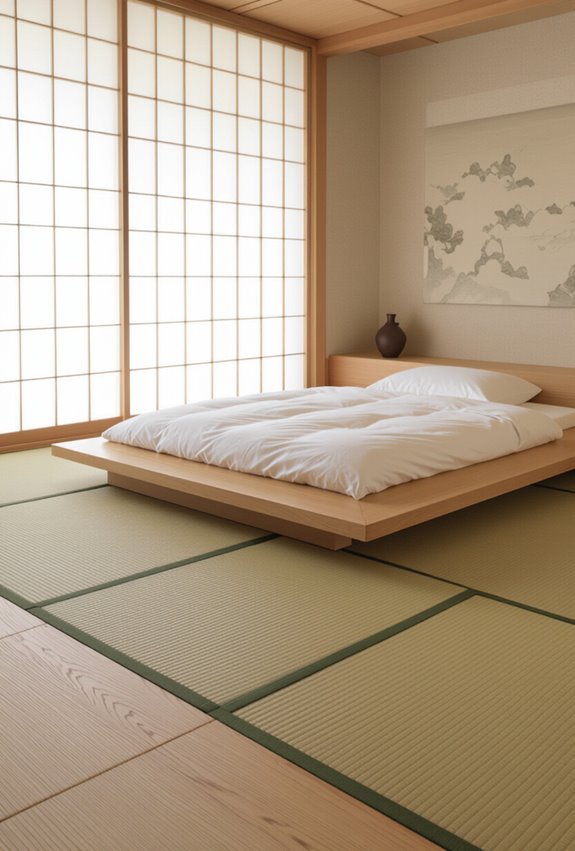
When you lay tatami mats across the floor, they immediately change how the room feels vertically by grounding the space and lowering its visual center; their woven texture and muted tones draw the eye downward, making ceilings seem higher and the room airier.
You can pair them with an elevated platform or keep floor-level sleeping; tatami acoustics soften footsteps and deepen the room’s calm.
Simple Shoji Screens for Light and Privacy
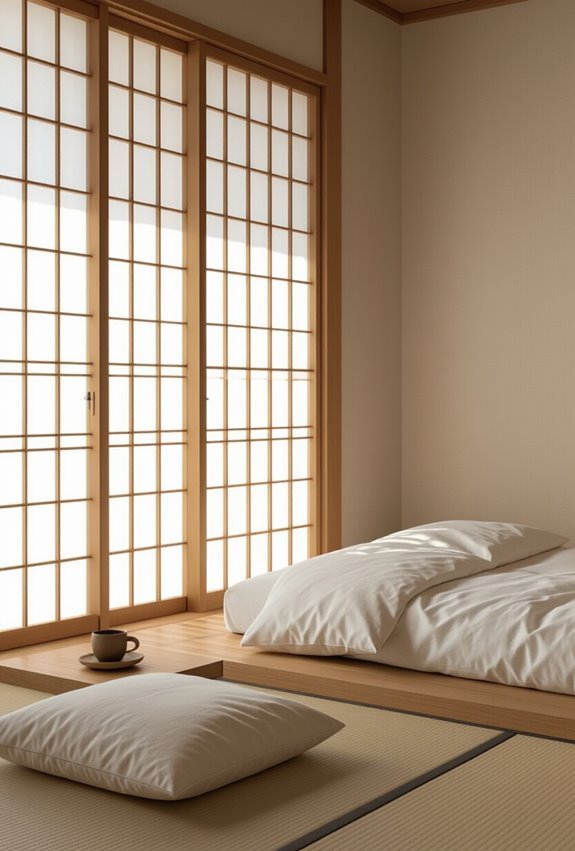
If you want soft, diffuse light without sacrificing privacy, simple shoji screens are an elegant solution—their rice-paper panels filter sunlight into a warm, even glow while the timber frames keep sightlines discreet.
You’ll place screens to define zones, pair them with paper lanterns for layered illumination, and choose recycled ricepaper to reduce waste while maintaining translucency and a subtle, natural texture throughout your room.
Neutral Color Palettes Inspired by Wabi-Sabi
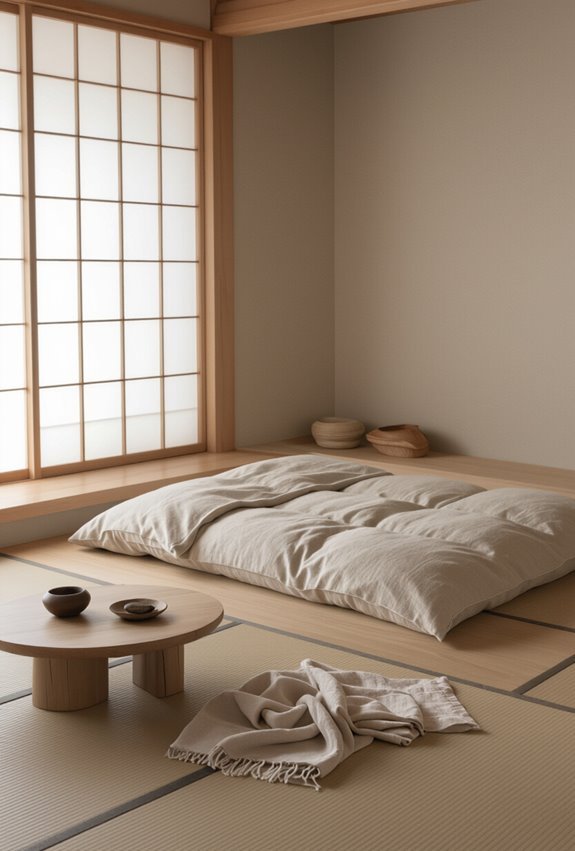
Because wabi-sabi celebrates imperfection and natural aging, choose a neutral palette of muted ochres, soft greys, warm taupes, and faded greens to create a calm, grounded bedroom.
You’ll pair earthy neutrals with layered linens, linen-woven cushions, and muted textures like matte plaster walls and raw cotton throws.
Keep contrast low, let subtle variations and patina provide quiet interest and restful balance.
Using Natural Wood Tones for Warmth
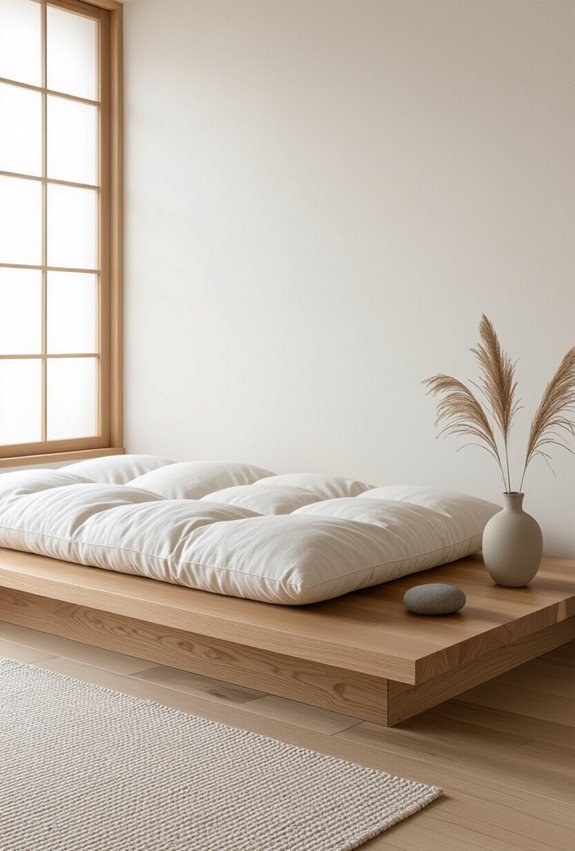
Drawing on simple, honest materials, natural wood tones bring warmth and tactile depth to a minimalist Japanese bedroom without overwhelming its calm.
You’ll favor unfinished joinery and honest edges, letting the honeyed grain read as quiet ornament.
Choose light timbers, matte finishes, and sparse accent pieces so wood’s texture anchors the room, invites touch, and preserves serenity without clutter.
Sliding Doors to Maximize Space and Flow
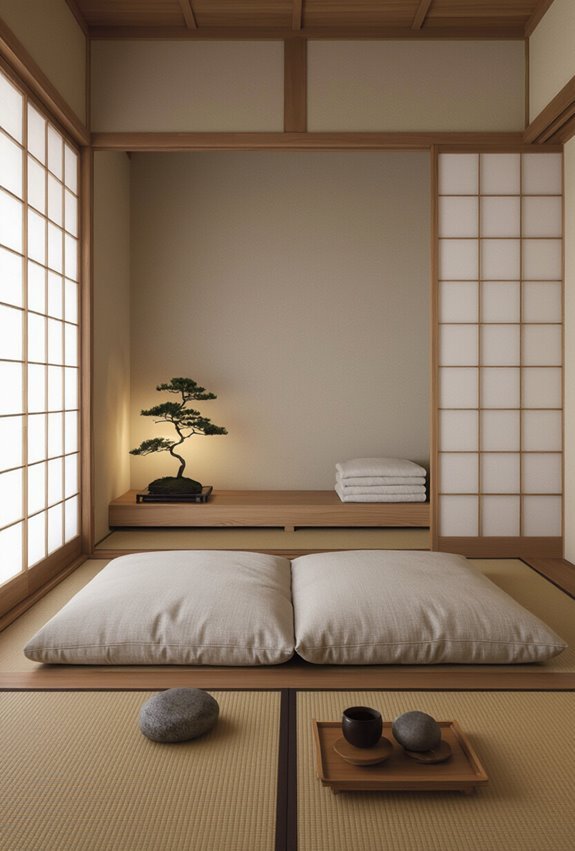
Hidden storage blends into walls; sliding doors do the same for movement and light, letting you reclaim floor space while keeping sightlines clean.
You choose shōji-style panels, barn door alternatives, or sleek pocket partitions to separate zones without bulky swing clearance. They streamline circulation, frame views, and offer subtle privacy. Install soft-close hardware and minimal tracks so shifts feel deliberate and calm.
Minimalist Lighting: Paper Lanterns and Warm LEDs
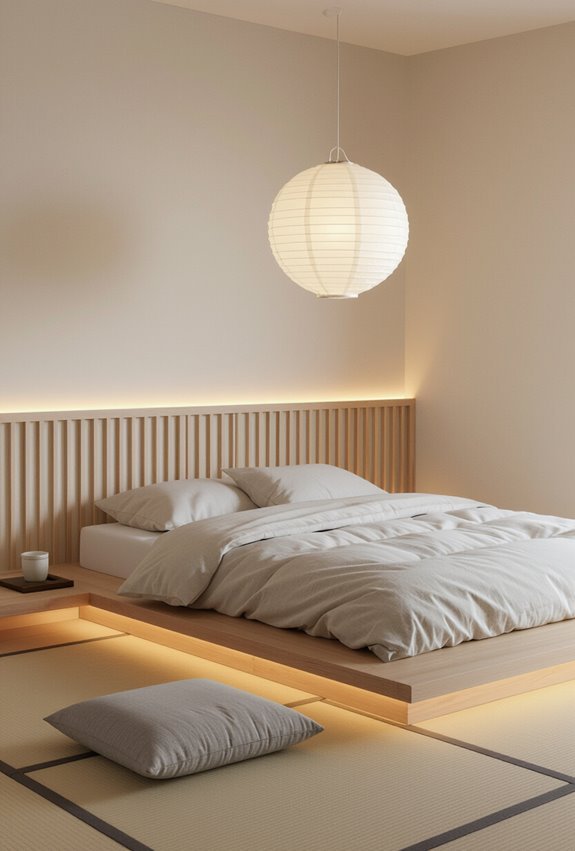
You’ll often rely on soft, layered light to set the minimalist mood: paper lanterns diffuse a gentle glow while warm LEDs provide adjustable, energy-efficient accents.
Choose rice paper shades for texture and muted warmth, position fixtures to wash walls and floors, and install dimmable bulbs to control atmosphere.
You’ll keep fixtures simple, uncluttered, and focused on calm, restorative illumination.
Incorporating a Small Tokonoma Alcove
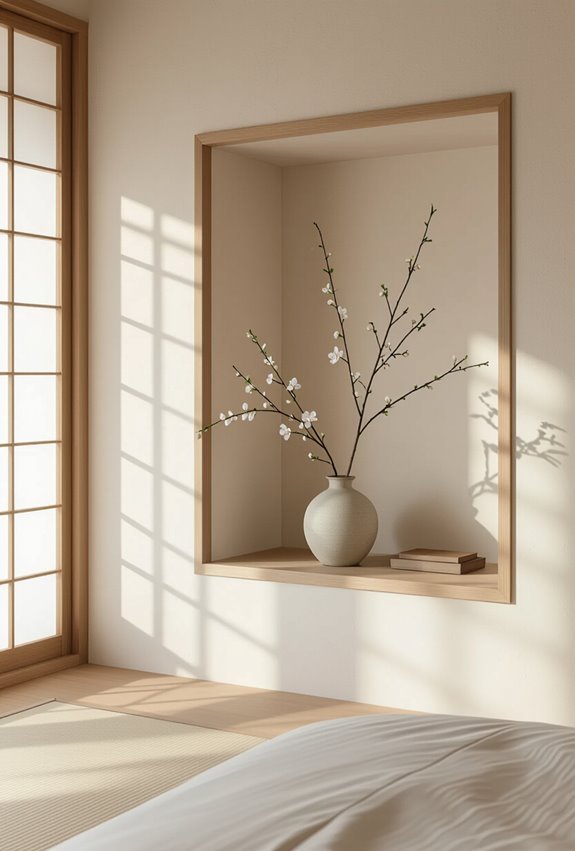
Add a small tokonoma alcove to anchor your minimalist Japanese bedroom and give a calm focal point for the room.
Place a single art piece or ikebana, use subtle tokonoma lighting to highlight it, and keep surrounding surfaces uncluttered.
Rotate accents for a seasonal tokonoma—a branch in spring, a small ceramic in winter—so the alcove reflects nature and intentional simplicity.
Choosing Textiles: Linen, Cotton, and Muted Patterns
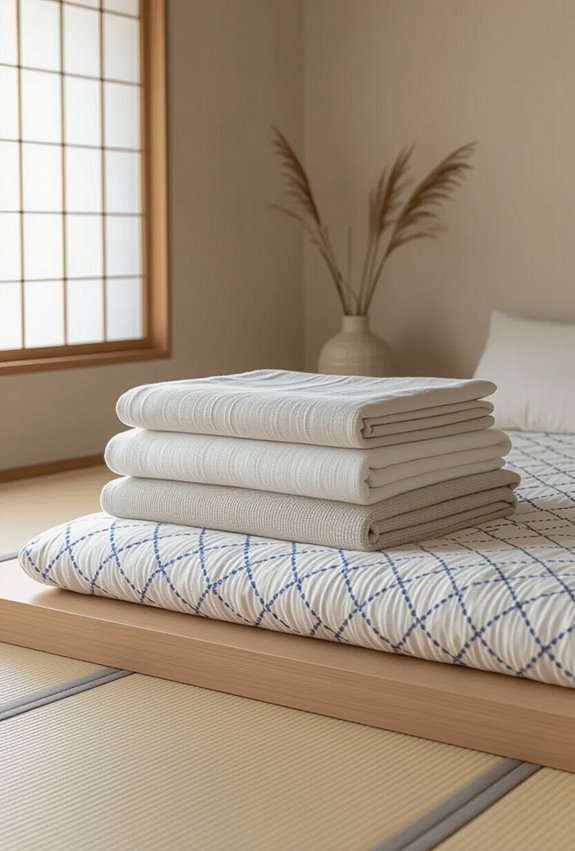
Choose linens, cottons, and muted patterns that feel tactile and calm—lightweight linen for bedding and drapes, crisp cotton for sheets and pillowcases, and subtle geometrics or tone-on-tone stripes for throws and cushions.
You’ll favor breathable linen and textured cotton in natural tones, introduce subtle ikat accents sparingly, and keep muted stripes understated so each piece supports quiet, comfortable cohesion without visual clutter.
Decluttering Rituals to Keep the Bedroom Serene
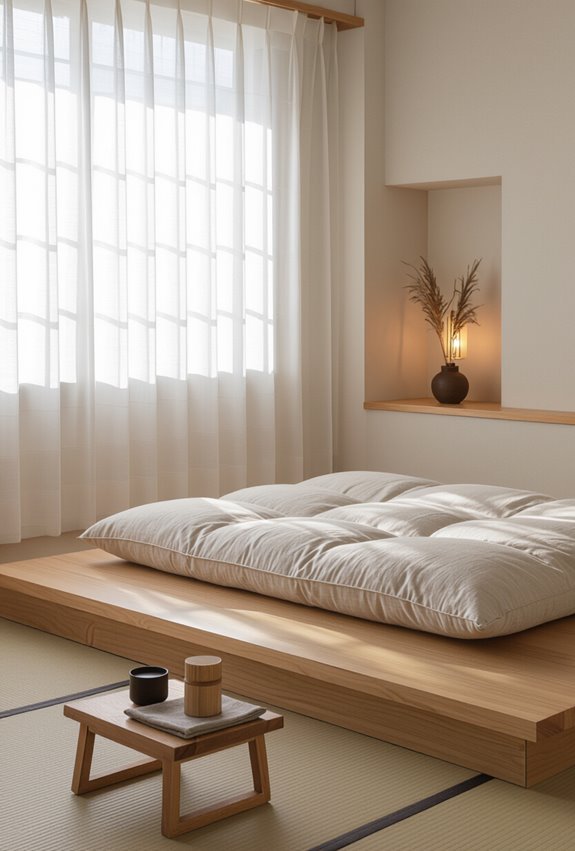
Regularly clear surfaces and limit what stays in the bedroom, so you can keep the space feeling calm and intentional.
Do short bedtime purges nightly: remove dishes, fold throws, and set out only essentials.
Use mindful sorting weekly to decide what supports rest; donate or store extras.
Create simple routines—five minutes before bed—to maintain serenity and reduce visual noise.
Bringing Nature Inside With Bonsai and Ikebana
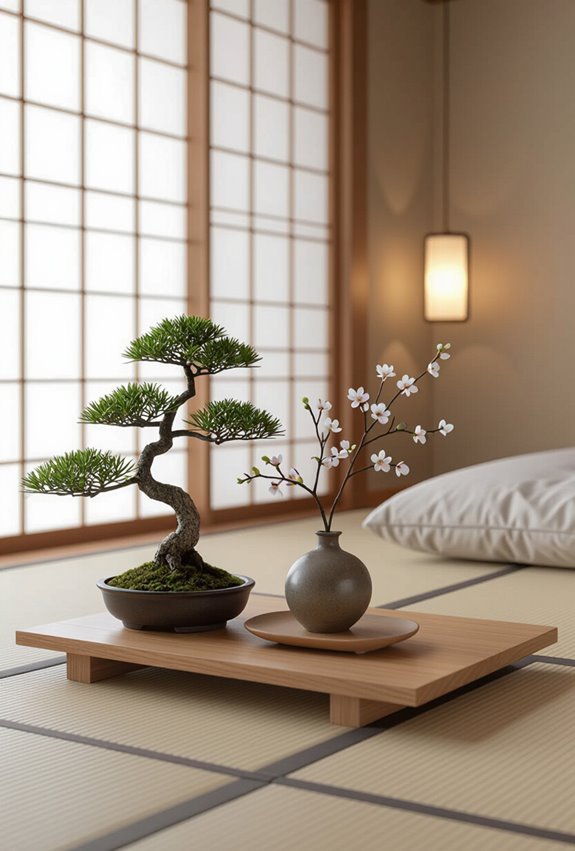
Bringing bonsai and ikebana into your bedroom lets you connect with nature without cluttering your minimalist aesthetic.
You’ll choose bonsai placement for balance—near a window or on a low shelf—and keep arrangements simple.
Rotate ikebana seasons motifs to reflect nature’s cycle, using sparse branches or single blooms.
Care routines stay minimal: water, light, and gentle pruning to maintain calm.
Low Nightstands and Bedside Organization
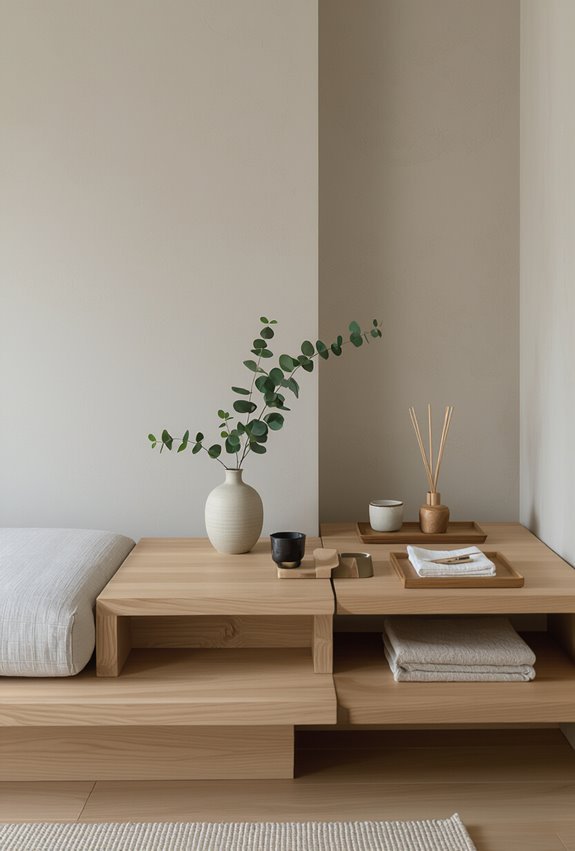
When you choose a low nightstand, prioritize slim profiles and hidden storage so your bedside stays calm and uncluttered; the closer-to-floor height keeps visual lines horizontal and echoes traditional Japanese tatami layouts.
Select pieces that match low tables or float slightly off the floor. Use simple trays, baskets, and discreet cord management to keep essentials accessible while preserving a serene, minimal atmosphere.
Window Treatments for Soft, Diffused Light
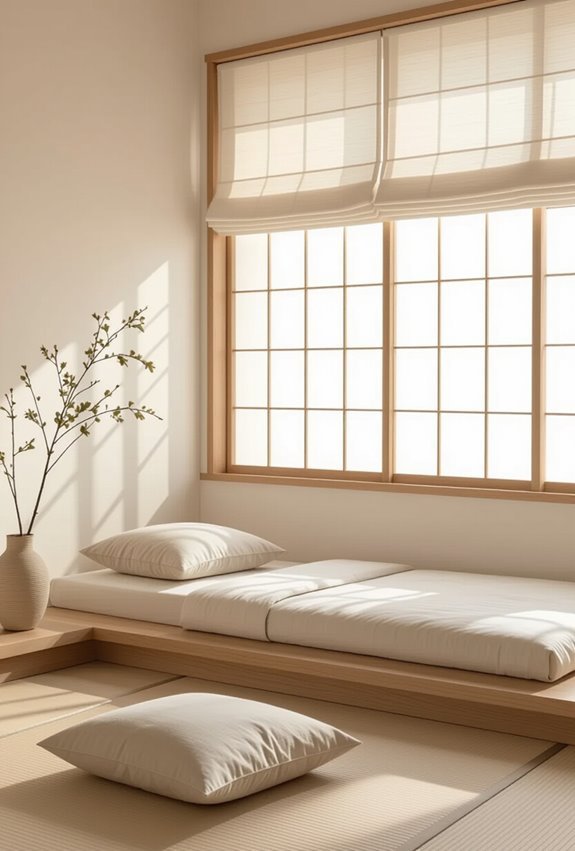
Although you want privacy, soft, diffused light is essential to a minimalist Japanese bedroom because it preserves calm, reveals texture, and keeps contrast low.
Use a sheer noren to filter daylight while framing the view, and pair it with bamboo blinds for adjustable shade and natural warmth.
Mount simple hardware, keep lines clean, and let gentle light set a tranquil mood.
Minimalist Wall Art and Calligraphy Accents
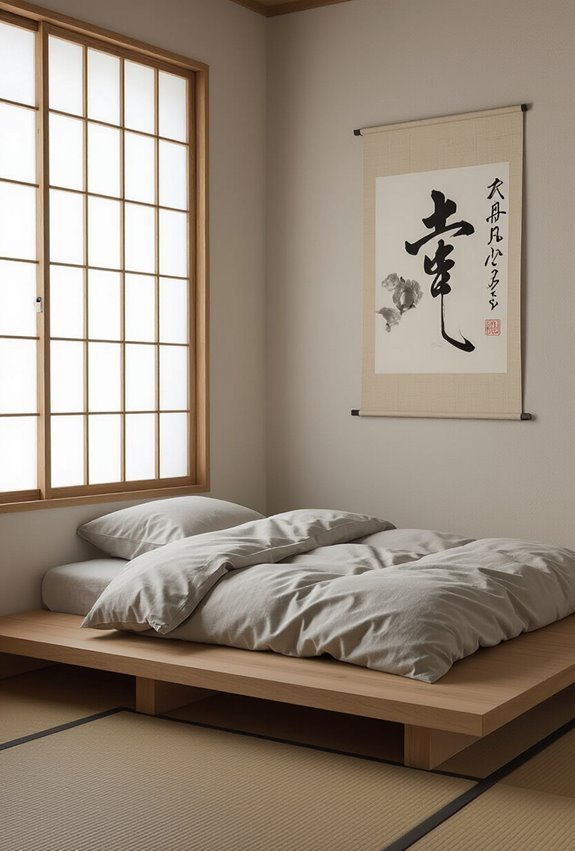
How do you add personality without disrupting the room’s calm? Choose a single framed piece: a bold brush stroke or subtle ink landscapes on rice paper. Hang it off-center above a low headboard or lean it against the wall for relaxed symmetry.
Keep mats wide, frames thin, and palette neutral so the art whispers rather than shouts, reinforcing tranquility and focus.
Flooring Options Beyond Tatami: Wood and Rugs
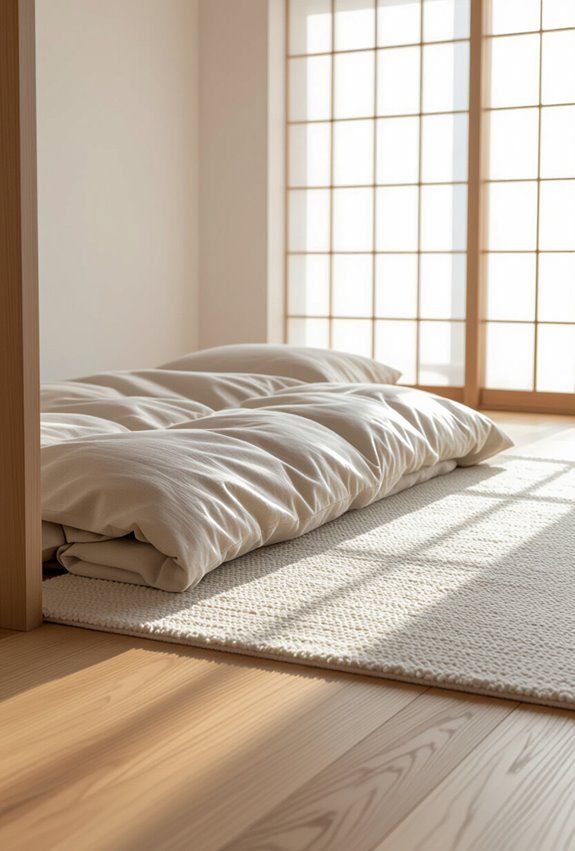
Consider swapping tatami for warm hardwood or layered rugs to maintain minimalist calm while adding texture and comfort.
You can choose cork flooring for its softness and insulation, pairing it with low-profile sisal rugs to define zones and add natural fiber warmth.
Keep colors muted, patterns minimal, and furniture low to preserve openness while enjoying a cozy, tactile floorscape.
Creating a Sleep-First Layout for Better Rest
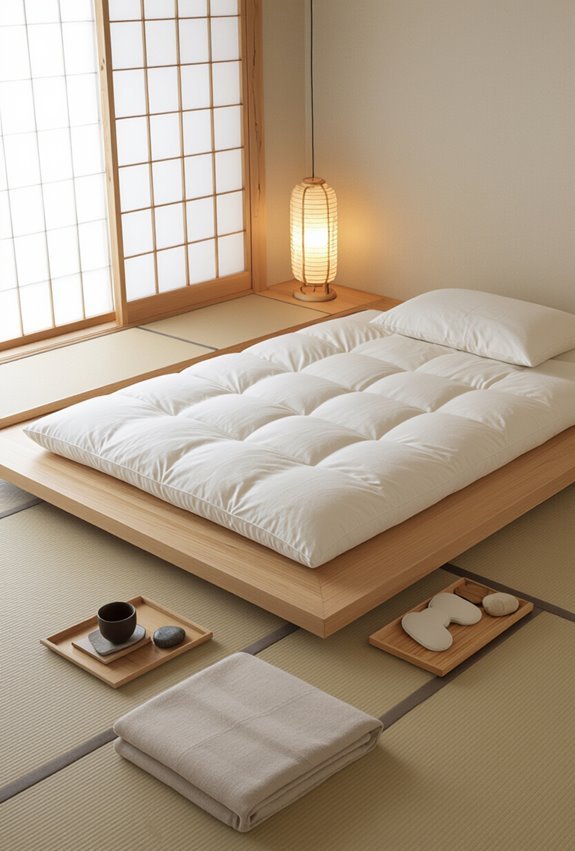
When you arrange the room around sleep, every choice — bed placement, lighting, and pathways — supports deeper rest and quicker wind-downs; place the mattress where noise and light are minimal, leave clear space around it for movement, and orient sightlines away from clutter so your brain reads the room as calm and restorative.
Set soft lighting, schedule bedtime rituals, and align windows and lamps for circadian alignment to ease sleep.
Small-Space Hacks for Apartments and Studios
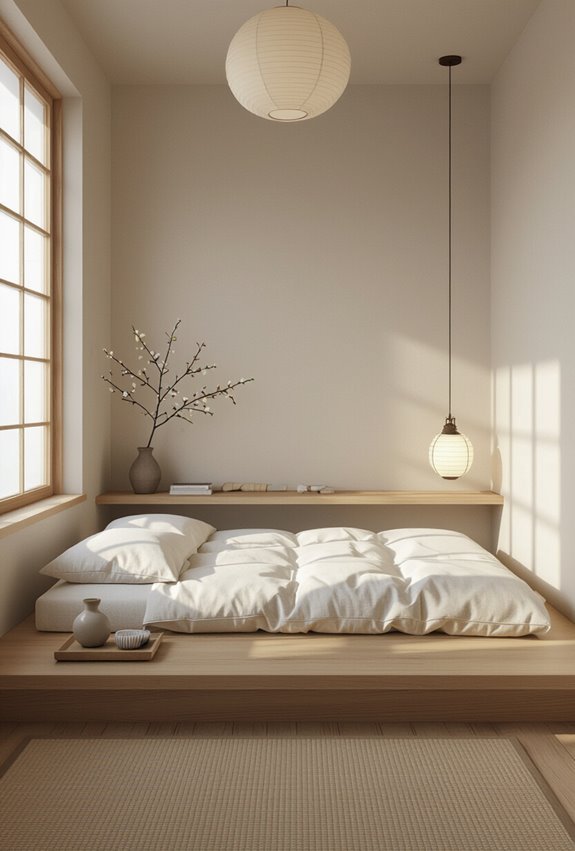
Maximize every square foot by prioritizing multipurpose pieces and vertical storage: a low-profile platform bed with built-in drawers, a fold-down desk that doubles as a nightstand, and wall-mounted shelves keep floor space clear and sightlines calm.
Choose a lofted futon to free ground area, use vertical storage for clothing and books, tuck baskets under furniture, and keep surfaces minimal for calm, functional living.
Layering Textures Without Visual Clutter
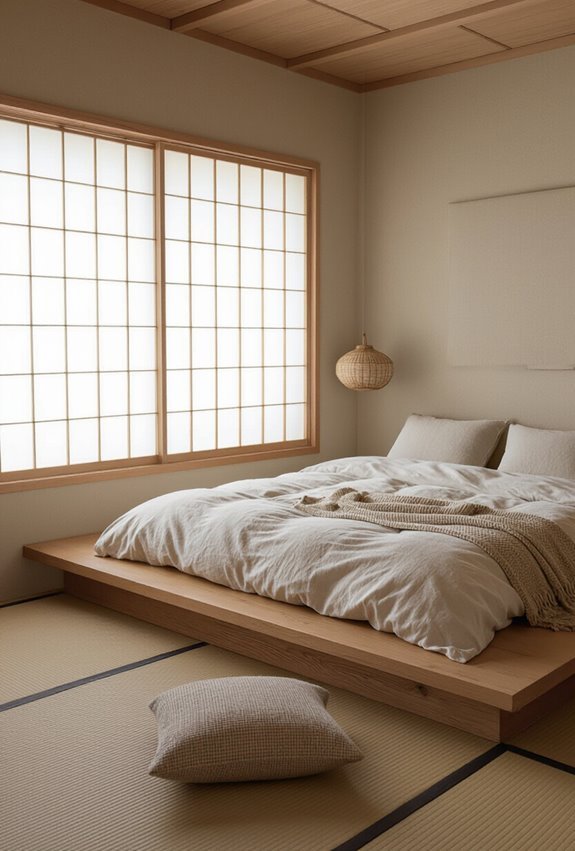
After clearing floor space and choosing multifunctional furniture, you can enrich the room by layering textures that add warmth without cluttering the eye.
Introduce woven neutrals in rugs and baskets, pair with matte linens on bedding, and limit patterns to one focal piece.
Keep color muted, balance tactile variety with negative space, and rotate accessories seasonally to maintain calm.
Neutralizing Electronic Distractions
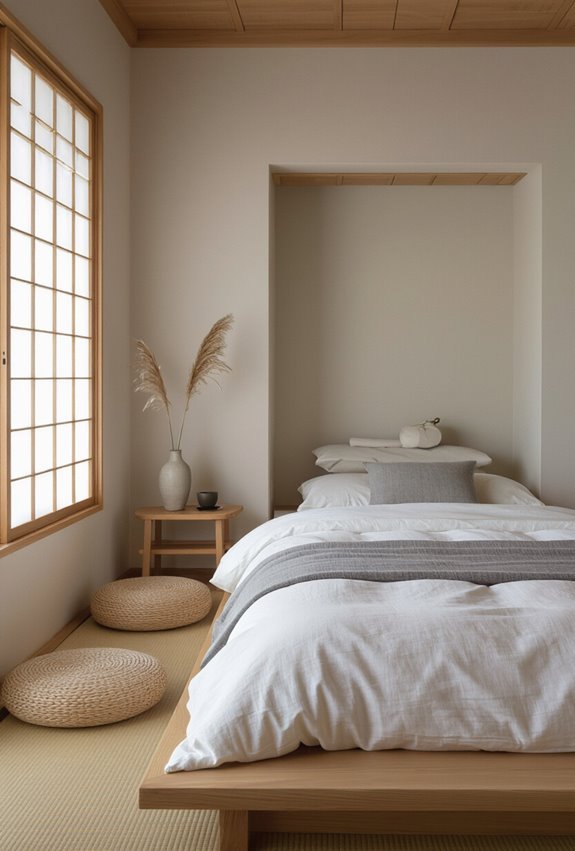
Although electronics are useful, they can easily undo a minimalist bedroom’s calm, so designate tech-free zones and habits that keep devices from dominating your space.
You’ll commit to a digital detox routine: charge outside the room, create gadget free zones, choose sleep friendly tech like dimmable alarms, and store extras in signal blocking pouches.
These steps restore focus and improve rest.
Color Pops and Accent Pieces That Stay Minimal
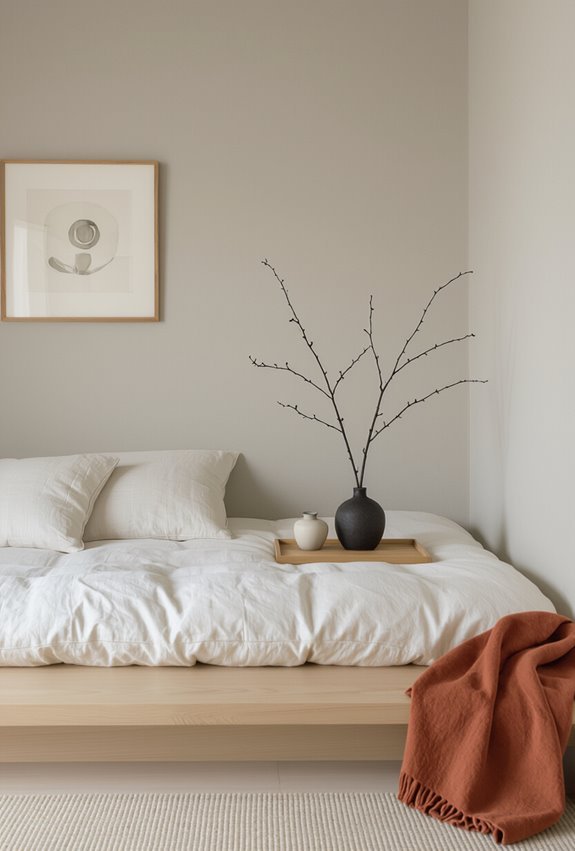
Now that you’ve tamed tech to preserve calm, bring a single well-chosen color and a few streamlined accents to lift the room without cluttering it.
Choose muted accents—sage, indigo, or terracotta—and repeat the hue sparingly: a pillow, throw, or vase. Favor textured ceramics and simple shapes to add warmth and tactility while keeping surfaces clean and composition intentional.
Combining Scandinavian and Japanese Minimalism (Japandi)
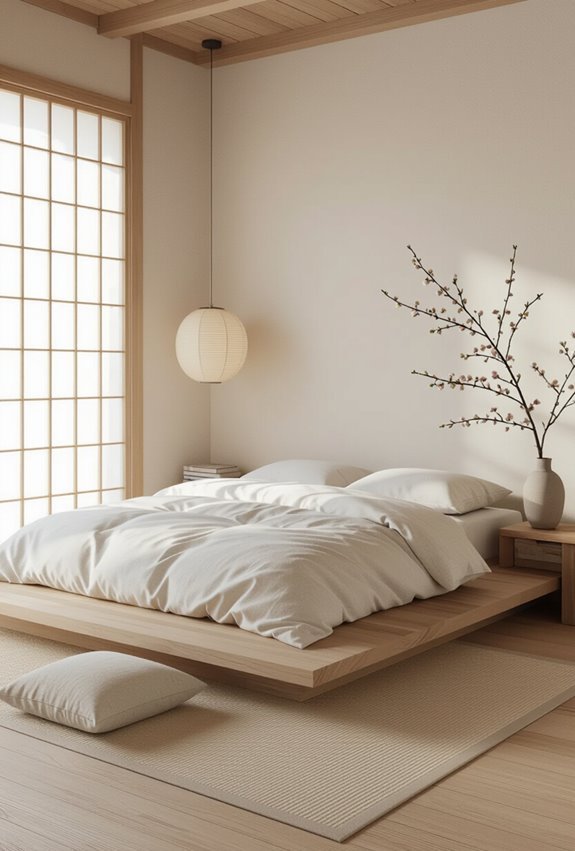
When you blend Scandinavian functionality with Japanese restraint, you get Japandi: a warm, pared-back aesthetic that balances clean lines with natural textures.
You’ll apply Japandi principles by choosing simple furniture, muted tones, and purposeful layouts.
Emphasize Texture layering with wool throws, linen curtains, and matte wood surfaces to create calm contrast without clutter, keeping the room serene and intentional.
Eco-Friendly Materials and Sustainable Choices
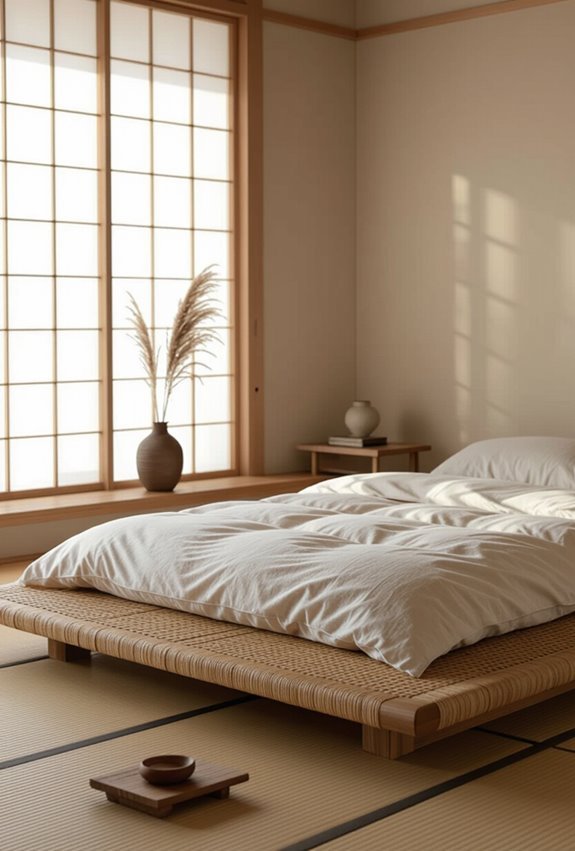
Japandi’s emphasis on natural textures and purposeful choices makes sustainability a natural next step: pick materials that age gracefully and have low environmental impact.
You’ll choose bamboo bedding for breathability, reclaimed teak for durable furniture, hemp curtains for breathable privacy, and cork flooring for warmth and resilience.
Limit finishes, favor non-toxic sealants, and source local craftsmen to reduce transport and support ethical production.
Seasonal Tweaks for a Comfortable Year-Round Room
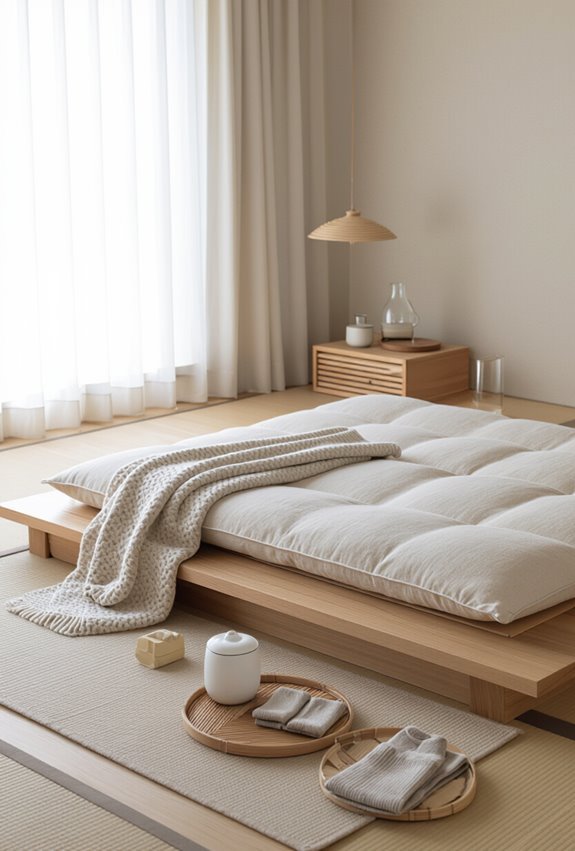
Although your minimalist Japanese bedroom leans on timeless pieces, small seasonal tweaks keep it comfortable year-round: swap lightweight linen duvet covers for a breathable wool blanket in winter, add a low-pile rug for warmth, and trade heavy drapery for sheer hemp panels in summer to boost airflow while keeping privacy.
You’ll use temp regulation textiles and a seasonal bedding rotation to maintain comfort and calm.
Budget-Friendly Ways to Get the Look
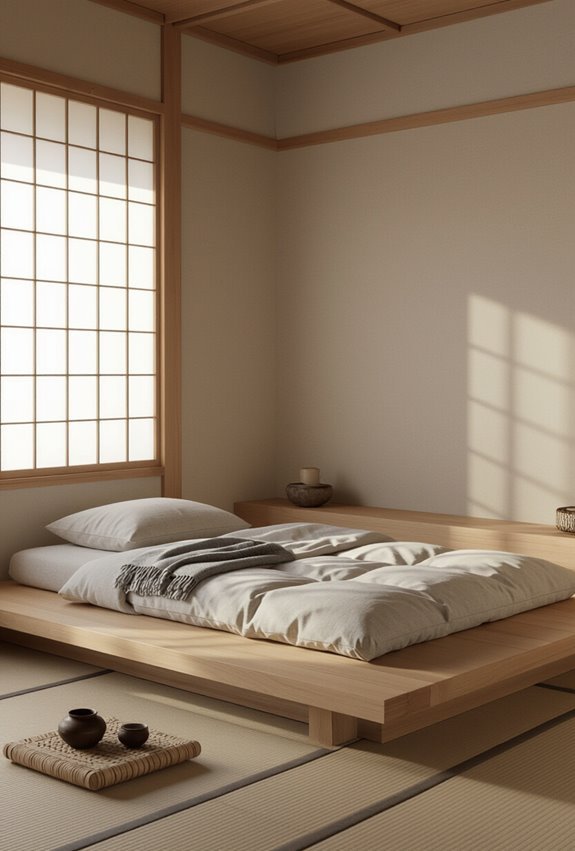
Seasonal swaps are easy to do on a budget, and the rest of a minimalist Japanese bedroom is, too: focus on a few affordable changes that copy the look without overspending.
Hunt thrift store finds for low-profile furniture, swap textiles for muted colors, and use paint sample testing on small wall patches.
Choose simple bamboo accents, declutter ruthlessly, and prioritize quality over quantity.
Custom Touches: Handmade Screens and Furniture
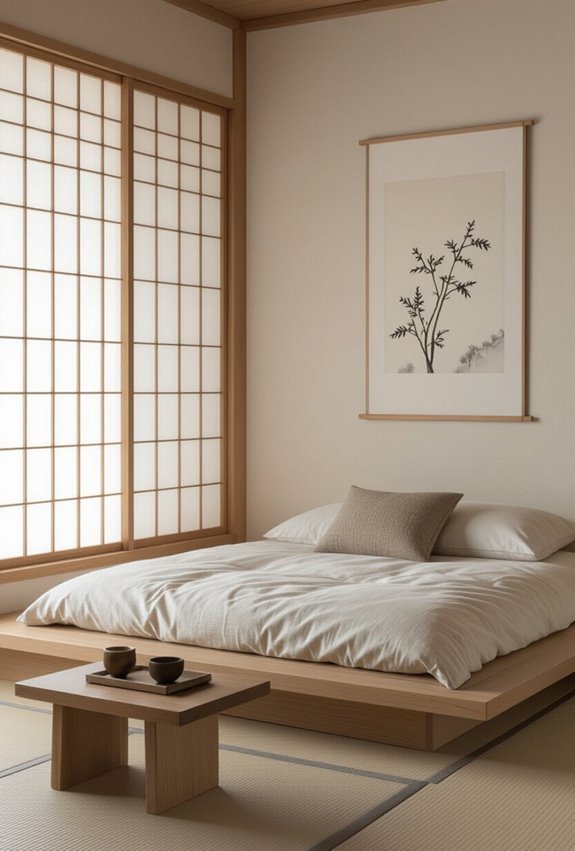
Craft handmade shoji-style screens or a simple low table to give your minimalist Japanese bedroom a personal, artisanal touch without disrupting the calm palette.
You’ll favor hand carved screens for subtle texture and bespoke joinery for clean, enduring connections.
Choose local woods, muted stains, and restrained proportions so each piece feels intentional, functional, and quietly sculptural within your serene retreat.
Lighting Scenes: Morning, Evening, and Sleep Modes
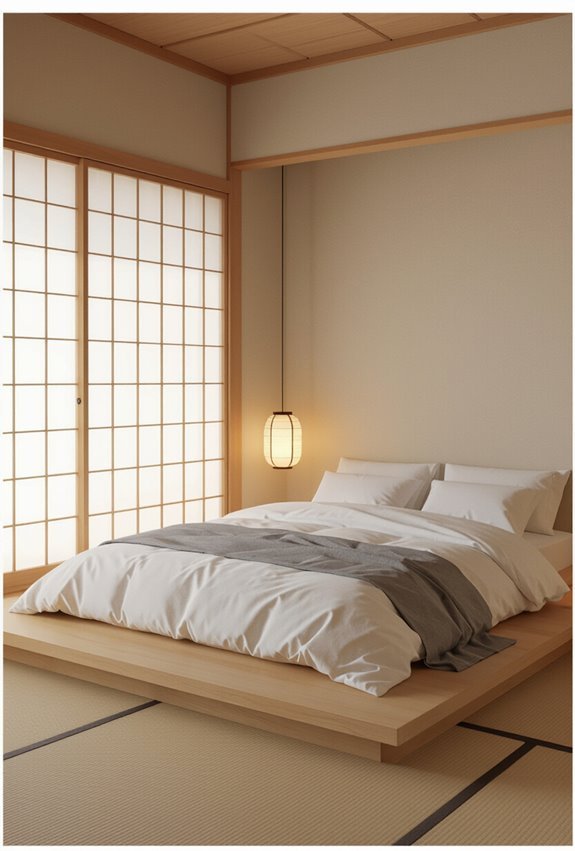
When you adjust lighting intentionally, your minimalist Japanese bedroom shifts from crisp morning clarity to warm evening calm and finally to a sleep-ready cocoon.
Use dawn dimmers for gentle wake-ups, layered circadian lighting to match daily rhythms, and soft paper lamps for evening ambiance.
Program evening warm tones and minimal blue light for sleep mode, keeping fixtures simple and uncluttered to preserve serenity.
How to Adapt Japanese Minimalism to a Masculine Rustic Style
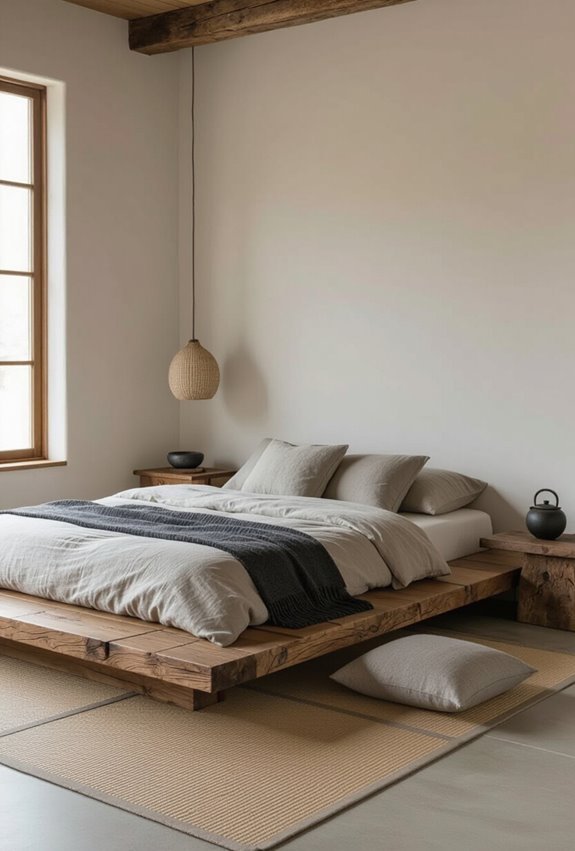
Balance Japanese minimalism with masculine rustic elements by pairing clean lines and empty space with textured woods, metal accents, and a restrained color palette.
You’ll choose low-profile futons or platform beds, muted linens, and a statement chair in weathered leather. Add iron accents for contrast, simple storage, and natural fiber rugs. Keep clutter hidden to maintain calm, rugged elegance.
Nature-Inspired Decor
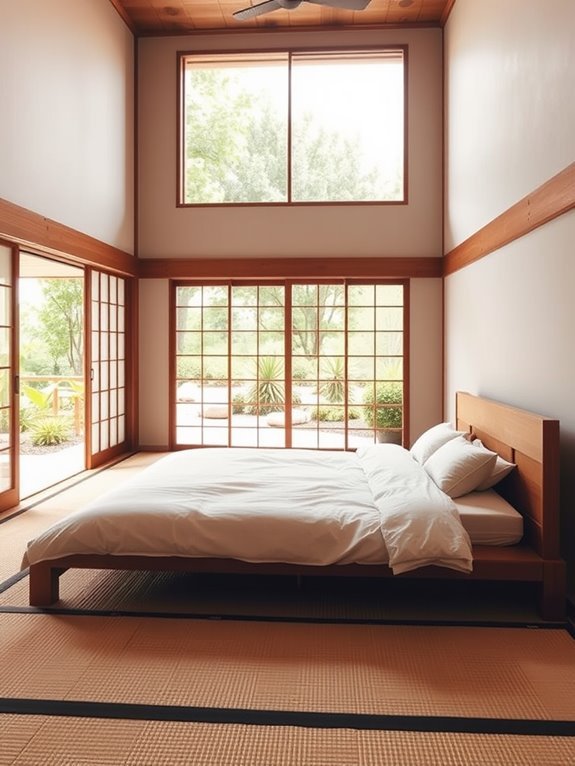
As you design your minimalist Japanese bedroom, embracing nature-inspired decor can transform the space into a serene retreat.
Incorporate elements like bamboo, stone, and wood to create a calming atmosphere. Use potted plants or bonsai trees to bring life indoors, while natural fabrics in your bedding and curtains enhance the organic feel.
This connection to nature fosters tranquility and peace in your personal sanctuary.
Neutral Color Palettes
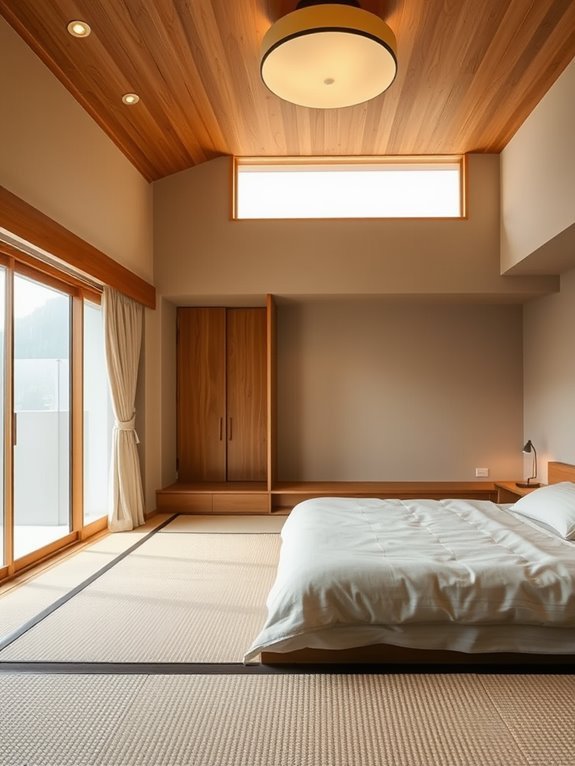
To enhance the serene ambiance of your minimalist Japanese bedroom, a neutral color palette plays an essential role.
Soft shades of white, beige, and light gray create a calming environment that promotes relaxation. These colors allow natural light to bounce around, making the space feel airy and open.
Minimalist Furniture Choices
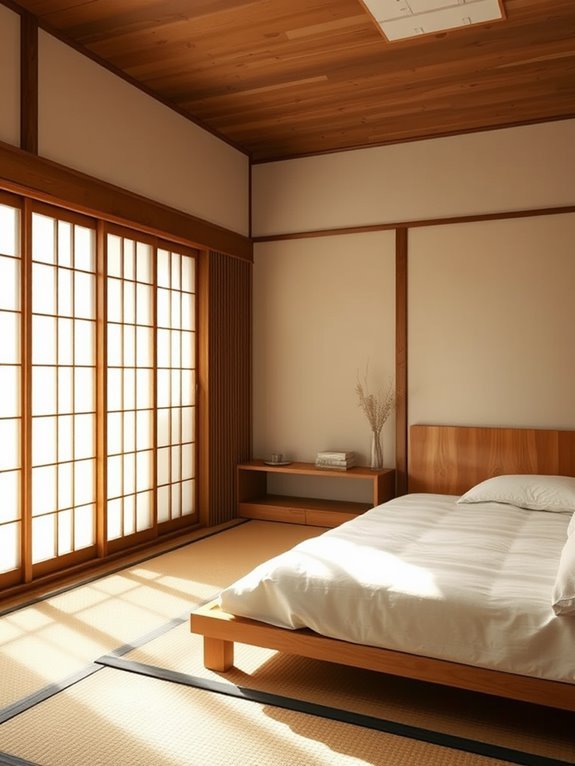
Choosing minimalist furniture for your Japanese bedroom not only maximizes space but also enhances the overall tranquility of the room.
Opt for low-profile beds, simple wooden nightstands, and streamlined storage solutions. Natural materials like bamboo and light-colored wood create a calming atmosphere.
Avoid excessive decorations; instead, focus on functional pieces that contribute to a serene environment, promoting relaxation and peace.
Low-Profile Bed Frames
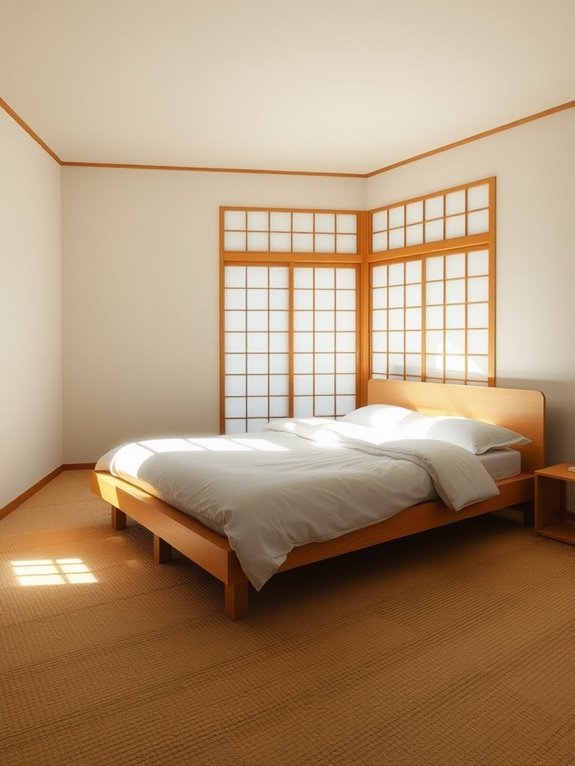
Natural light sets the stage for a peaceful ambiance in your minimalist Japanese bedroom, and low-profile bed frames enhance this serene atmosphere.
These beds sit closer to the ground, promoting a sense of openness and tranquility. Their sleek design encourages simplicity, allowing the beauty of natural materials to shine.
You’ll find comfort and relaxation as you enjoy your thoughtfully curated space.
Wabi-Sabi Aesthetic
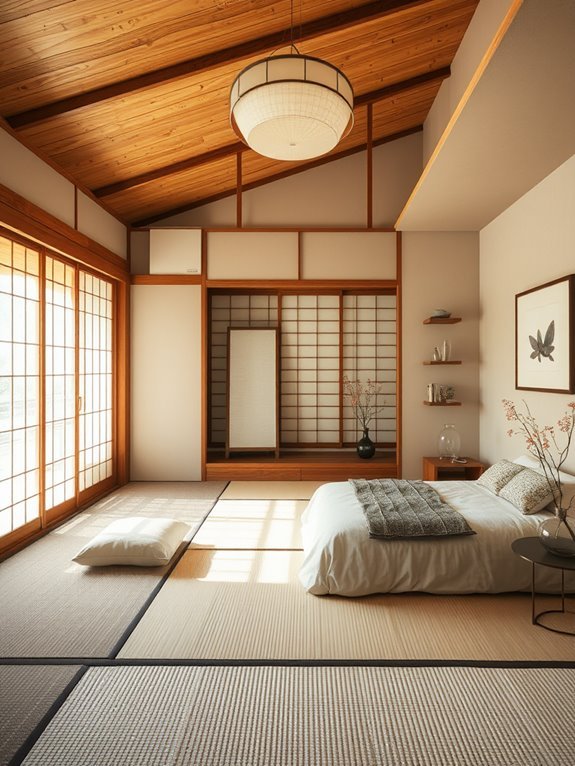
Embracing the beauty of imperfection, the Wabi-Sabi aesthetic invites you to find serenity in simplicity.
This philosophy encourages you to appreciate the natural wear and tear of objects, celebrating their unique histories.
By incorporating organic materials and muted colors, you create a calming environment.
Allow the gentle imperfections in your space to foster mindfulness, reminding you that beauty lies in authenticity.
Conclusion
Embracing minimalist Japanese bedroom designs can transform your space into a serene sanctuary that feels like a slice of heaven on Earth. By incorporating elements like tatami mats, futons, and nature-inspired decor, you’ll create a peaceful retreat that invites tranquility into your life. Remember, simplicity is key—every detail matters. So, take a moment to infuse your bedroom with these calming aesthetics, and you’ll discover a newfound sense of harmony that revitalizes your spirit daily.
