
Best Paint for Bedroom Walls: Finish, Color, and Formula Explained
For bedroom walls, you’ll want a low‑VOC acrylic latex in an eggshell finish. It gives you that soft, cozy look while staying easy to wipe for everyday fingerprints and light scuffs. If you’ve got strong light or want maximum hiding, matte can work, but it’s less forgiving. For higher durability near doors or higher traffic, satin is a great step up. Prep well, plan for two coats, and blend touch‑ups so they dry seamless—then keep going for more specifics.
Pick the Best Bedroom Paint Finish
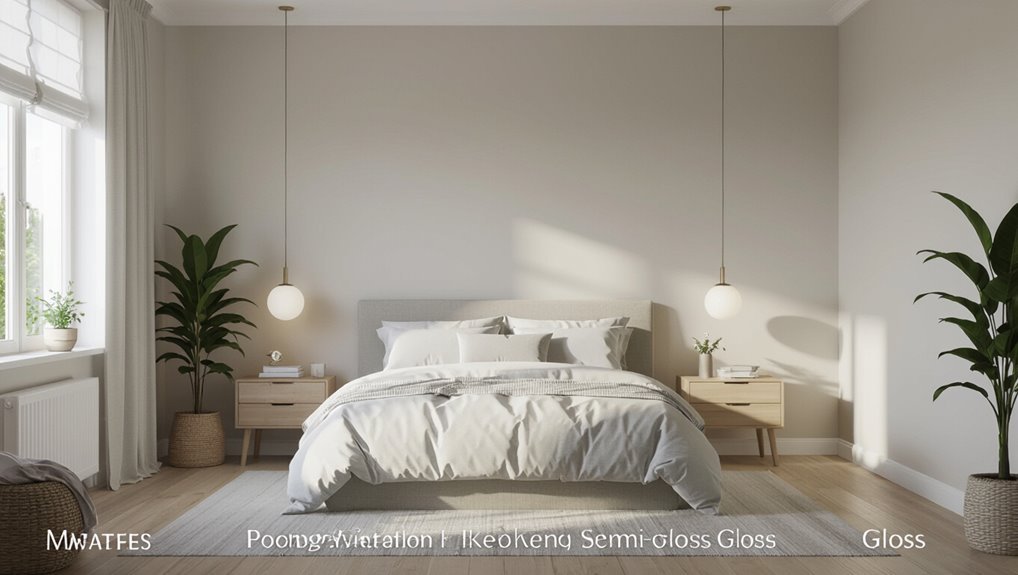
Which finish should you choose for your bedroom walls? Start by thinking about how you live: light touch means you can use softer options, while busy households need tougher paint.
Explore common paint finish types—flat/matte hide flaws and reduce glare, eggshell stays smooth with mild washability, satin resists scuffs for doors and trim, and semi-gloss works best in high-moisture zones like bathrooms.
Match your choice to finish durability and expected wear. If you want easy wipe-downs, prioritize satin or eggshell. If you want maximum wall concealment, pick matte.
Match Sheen Level to Your Bedroom Lighting
Match your bedroom paint sheen to your lighting so the walls look smooth instead of shiny or dull. Use sheen selection to control reflective qualities and light absorption, shaping lighting effects from lamps to daylight. In warm evening light, higher sheen can boost color harmony but may amplify glare. In bright rooms, choose a lower sheen to reduce harsh highlights and support ambiance creation.
| Lighting type | What to aim for |
|---|---|
| Daylight | Softer reflections |
| Warm lamps | Balanced glow |
| Dim corners | Gentle light absorption |
Do finish comparison first; then decide based on mood enhancement and the look of the walls.
Choose Matte for Soft, Modern Bedroom Walls
Choose a matte finish to give your bedroom walls a soft, modern look. You’ll reduce shine, which helps light feel even and calming.
Matte hides small flaws, so your surfaces look smoother without heavy visual contrast. Pick colors using color psychology: warm whites and muted greige can make you feel grounded, while gentle greens or dusty blues encourage relaxation.
To elevate the effect, pair matte paint with soft textures like linen curtains and a plush rug. You’ll create a quiet, lived-in atmosphere that stays inviting night after night.
Go Eggshell for Easy Cleaning and Balance
Eggshell sheen gives you the best balance between a soft look and everyday practicality, so your bedroom stays inviting without feeling dull.
You’ll enjoy eggshell benefits because the finish hides minor imperfections while resisting scuffs better than flat paint. For easy upkeep, use gentle cleaning tips: wipe spots quickly, avoid harsh scrubbing, and let stains lift with warm water.
- Soft glow under bedside lamps
- Tougher skin against smudges
- Easy wipe-down with damp cloth
- Subtle texture that forgives flaws
- Balanced reflectivity for calm colors
Use Satin for Washable Bedroom Walls
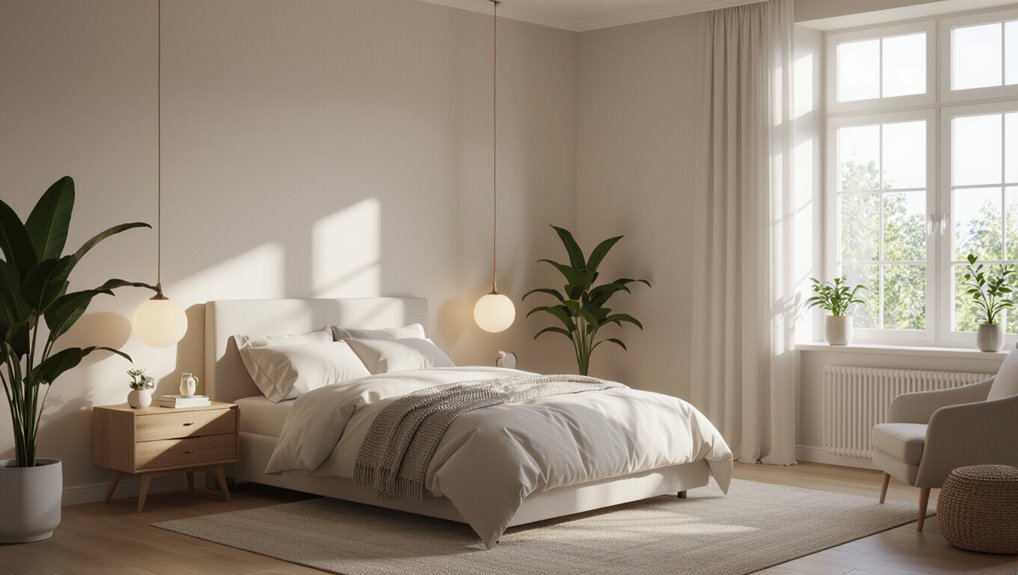
Satin paint gives you a more washable finish than egg shell, so your bedroom stays looking fresh even with daily life.
Choose satin when you want satin advantages without the glare of glossier paints. You’ll get durable, easy-to-wipe washable surfaces that handle fingerprints, smudges, and light scuffs from doors, kids, or pets.
Apply satin with a quality brush or roller so coverage stays smooth and consistent. If you need to spot-clean, use a damp cloth and mild soap, then dry promptly.
Satin holds up well, so you can refresh walls faster between repainting.
Select Semi-Gloss for Doorways and Trim
Choose semi-gloss paint for your trim because it resists scuffs and holds up to daily cleaning.
For doorways, pick a durable semi-gloss sheen so high-touch areas stay smooth and wipeable without dulling.
You’ll get a crisp contrast against your satin wall finish, and your trim will look sharp for longer.
Best Semi-Gloss For Trim
Semi-gloss paint gives your doorways and trim the durability you need without looking overly shiny. You’ll want a finish that handles daily scuffs and wipe-downs, then still frames your room with clean trim color.
For best results, choose a semi-gloss formula made for trim surfaces, not flat walls. Lightly sand, remove dust, and prime bare spots so the coat bonds evenly.
- Smooth brush marks for crisp edges
- Washable, scuff-resistant topcoat
- True sheen that reflects modest light
- Even coverage around corners
- Compatible primer for semi gloss durability
Durable Doorway Sheen Selection
Pick a semi-gloss sheen for doorways and trim because it stands up to daily bumps, fingerprints, and cleaning without turning streaky. You’ll benefit from better durability factors, since semi-gloss resists scuffs and wipes clean with less effort.
When you compare sheen varieties, choose semi-gloss over eggshell for high-touch edges, especially near doorknobs. Apply it with smooth technique, keeping a consistent wet edge to prevent lap marks.
If you have glossy old paint, you can match or lightly sand first for adhesion. For best results, use a quality bonding primer and finish coat.
Avoid Flat Paint If You Have Pets
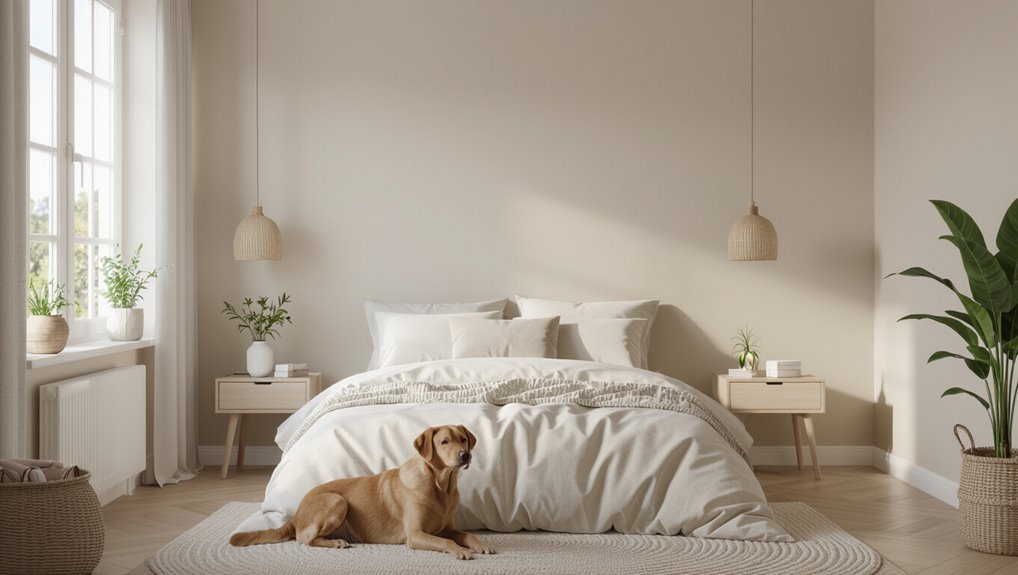
If you have pets, don’t choose flat paint—it stains and scuffs too easily.
Pick a scrubbable eggshell finish and prioritize stain-resistant formulas so paw prints and smudges wipe clean. You’ll keep your bedroom looking fresh without constant repainting.
Choose Scrubbable Eggshell
When you have pets, you’ll want to choose scrubbable eggshell for your bedroom walls, not flat paint. Eggshell gives you a soft glow while still standing up to daily life.
You’ll like how scrubbable surfaces handle nose boops, paw marks, and accidental scuffs without looking dull. Aim for a finish that wipes clean with minimal effort, so you get easy maintenance instead of constant touch-ups.
- Smooth, low-sheen walls that resist smudges
- Quick wipe-down with a damp cloth
- Touch-up-friendly texture that hides minor flaws
- Less glare than satin, more durability than matte
- A cozy look that stays fresh longer
Prioritize Stain-Resistant Formulas
Beyond the finish, you’ll get better results by prioritizing stain-resistant formulas, especially if you share the room with pets.
Choose interior paints labeled high stain resistance so paw marks, hair, and accidental smudges wipe away without permanent shadows. When you pick the right formula, you also make your weekly routine easier.
Use gentle cleaning tips: test a small spot, then wipe with a soft cloth and mild soap solution. Avoid soaking the wall. If you spot drips, blot fast, don’t rub.
Stain-resistant paint gives you more forgiving coverage between full repainting cycles.
Know Coverage, Hiding, and Paint Film
To choose the best bedroom wall paint, you first need to understand coverage, hiding, and film thickness, since they determine how many coats you’ll need and how evenly your walls will look.
Understand coverage, hiding, and paint film thickness first—then you’ll know how many coats you need for even, bedroom-ready walls.
You should read labels for spreading rate, watch for strong hiding properties over dark spots, and remember paint film builds with each coat. Match colors carefully so new layers blend, and don’t skip surface preparation, because dust and sheen reduce adhesion.
Plan coverage techniques with the right application methods, keeping edges wet for uniform brush marks and smooth roller laydown.
Consider these factors:
- Coverage per coat in sq ft
- Hiding properties over stains
- Paint film thickness feel
- Finish durability after dry
- Texture options for disguise
Estimate How Many Gallons You’ll Need
Measure your bedroom wall square footage carefully, then use the paint label’s coverage rate to estimate how many gallons you need.
Plan your total based on coats and account for hiding so you don’t come up short. Add a little extra margin for cutting in, touch-ups, and slight coverage variation across the walls.
Measure Wall Square Footage
Before you buy paint, you need a quick, accurate wall measurement so you can estimate how many gallons you’ll need. Measure each wall, then calculate dimensions by multiplying height by width.
Add totals across rooms, and write everything down so you can estimate costs confidently. Don’t forget to note door and window openings on your sheet, even though you won’t adjust for coverage yet.
- Measure height from floor to ceiling
- Measure width wall-to-wall
- Repeat for every wall corner
- Sum all wall areas in square feet
- Record notes to double-check later
Account For Paint Coverage
Once you have your total wall square footage, estimate gallons by dividing that number by the coverage per gallon your paint provides—most interior paints cover about 350–400 sq. ft. per gallon.
Check the label for the exact range, since your surface texture and paint opacity can lower effective coverage. If you’re painting over darker colors or patchy repairs, you’ll likely need more coats to reach even color.
Before calculating again, consider primer types: a stain-blocking primer often improves hide and reduces the number of finish coats you’ll buy.
Plan Gallons And Extra Margin
Plan to buy enough paint for two coats, then add a safety buffer so you don’t run short mid-project. First, calculate paint quantity using your wall area plus any cut-ins and ceilings you’ll paint. Check the label’s coverage per gallon for your sheen, then multiply by your total square footage and round up.
Next, add a margin allowance of about 10–20% to cover roller thickness, uneven surfaces, and touch-ups.
- Measure wall height and length, then add up totals
- Factor in door/window openings but keep extra for trim
- Choose primer if walls are patchy or dark
- Account for textured surfaces reducing coverage
- Keep leftover for future spot repairs
Choose Bedroom Paint Colors for the Mood
Choosing bedroom paint colors isn’t just about looks; it shapes how calm or energized you feel when you walk in. Use color psychology to guide your choices, aiming for mood enhancement through soothing tones that help you unwind.
If you want energy for mornings, select subtle, brighter shades but keep them balanced with deeper shadows. You control ambiance creation, so don’t ignore personal preference—choose what feels right at night and in daylight.
Add vibrant accents sparingly, like on trim or a headboard wall, to spark focus without overwhelming rest.
Pick Warm Neutrals for Cozy, Relaxed Vibes
Pick cozy warm neutrals like greige, creamy beige, or soft taupe so your bedroom feels inviting.
As you choose, balance the undertones—aim for gentle peachy or golden warmth and avoid overly pink or ashy shades.
You’ll get a calmer backdrop that helps you unwind without fighting the rest of your decor.
Choose Cozy Warm Neutrals
Warm neutrals set the tone for a cozy bedroom, because they soften light and make the space feel grounded instead of stark.
When you choose cozy color palettes, you’ll instantly feel more relaxed. Start with warm undertone selection: look for creamy whites, honey beiges, and greige that leans tawny, not icy.
Pair them with warm wood and soft textiles so everything ties together.
- Creamy ivory on walls
- Honey beige accents
- Soft greige with golden hints
- Matte finish for calm depth
- Layered linens in oatmeal tones
Balance Undertones For Calm
Balancing undertones keeps your warm neutrals from turning too yellow or too pink, so your bedroom stays calm and inviting.
You start by choosing beige, greige, or soft ivory with the right tint: a slight red-brown warmth for coziness, but not enough to read “dated.”
Use color psychology to guide you—cooler gray undertones feel steadier, while warmer tan undertones feel friendlier.
Test two samples on opposite walls, then view them morning and night. Aim for calming hues that shift subtly, not dramatically.
When in doubt, pick an eggshell or satin for softer perception.
Select Cool Grays for a Clean, Calm Feel
Cool grays create a clean, calm backdrop because they absorb harsh contrast and keep the room feeling quiet and cohesive.
Cool grays act like a quiet canvas, absorbing harsh contrast for a clean, calm, cohesive feel.
When you choose cool gray palettes, look for blue or neutral undertones that won’t tilt green. Pick finishes thoughtfully: eggshell hides wall flaws while still reflecting light softly.
Then, add calming accents in crisp white trim, light linens, and brushed metal hardware to prevent the space from feeling flat.
- Choose blue-leaning cool gray
- Aim for matte or eggshell sheen
- Pair with warm-off-white bedding
- Use soft charcoal for subtle contrast
- Match trim to your brightest highlights
Create Depth With Greige and Soft Beiges
Greige and soft beiges add instant depth to your bedroom without the starkness that can come with pure whites or overly gray tones.
Choose a paint with warm greige undertones so the walls shift gently from morning to night. You’ll build color layering by pairing the base soft beige with subtle accent hues in textiles, trim, or framed art.
For texture contrast, mix matte walls with a lightly sheen ceiling or linen-look bedding.
Watch the light reflection: greige and beige bounce glow instead of swallowing it, creating cozy ambiance and palette harmony throughout.
Go Bold With Accent Walls That Still Feel Calm
Why not anchor your room with an accent wall that adds personality without making the whole space feel loud?
Choose bold color schemes, then soften the look with calming textures and a matte or eggshell finish. You get visual impact, not chaos.
Paint the wall behind your bed or a reading nook, and balance it with quiet surrounding shades so everything breathes.
Add subtle contrast using textiles and art, not more wall color.
- Deep teal or muted navy with gentle lighting
- Warm terracotta with linen drapes
- Charcoal accents paired with creamy neutrals
- Accent-free ceiling to reduce visual noise
- Textured roller effects for calming textures
Match Wall Color With Trim, Floors, and Bedding
When you pick a wall color, coordinate it with your window trim so everything looks intentional.
Next, blend the paint with your floors and bedding by matching undertones—warm with warm, cool with cool.
Do this, and your room will feel cohesive instead of mismatched.
Coordinate With Window Trim
Coordinating your bedroom paint with the window trim helps everything look intentional, not accidental.
Start by matching trim colors to the sheen and temperature of your wall paint, so your window styles and architectural details read cleanly. Use paint contrast sparingly: a slightly deeper wall tone can make trim materials pop without feeling harsh.
If you’re unsure, test samples right beside the molding in daylight, then choose a finish that hides unevenness.
- Cream walls with warm white trim
- Cool gray walls with charcoal trim
- Keep caulk lines crisp near sashes
- Echo hardware in decorative accents
- Aim for cohesive design and color harmony
Blend With Floors And Bedding
After you match the wall to your window trim, carry that same color harmony into the room by blending with your floors and bedding. Choose wall tones that echo undertones in flooring, then control flooring contrast with light grays, warm beiges, or soft greens. Coordinate bedding by repeating one accent color and one neutral, so bedding coordination feels intentional. Keep texture balance: pair matte walls with woven bedding and a satin or low-sheen duvet. This supports style consistency and aesthetic flow, making everything look planned, not patched.
| Element | Match With | Goal |
|---|---|---|
| Walls | Trim undertone | Color harmony |
| Floors | Wall neutral | Controlled contrast |
| Bedding | Accent + neutral | Bedding coordination |
Test Samples in Daylight and Night Lighting
Before you commit to a color, test your paint samples in both daylight and nighttime conditions. You need daylight testing to see the true undertone under morning and afternoon light. Then you need night lighting to judge how it shifts when lamps and dimmers kick in.
Put samples on the wall, not cardboard, and let each coat cure fully before judging.
- Tape sample boxes beside real trim and furniture colors
- Photograph each at morning, evening, and bedtime
- Check shadows; they change perceived warmth
- Compare sheen under light angles
- Move back and forth to spot undertone drift
Choose Low-VOC Bedroom Paint for Cleaner Air
When you pick bedroom paint, you should look for low VOC levels to cut down on lingering odors and fumes.
If you want the cleanest option, choose zero VOC paint and look for GREENGUARD certification.
You’ll breathe easier because these choices help keep your indoor air healthier.
Look For Low VOC Levels
Choosing low-VOC bedroom paint helps you breathe easier, because fewer volatile organic compounds mean less harsh odor and cleaner air as the paint cures.
When you shop, you should check the label for low-VOC levels and aim for eco friendly options that protect your indoor air quality.
- Look for a low-VOC or “zero VOC” claim on the can
- Compare VOC numbers, not just marketing words
- Choose water-based formulas for easier cleanup
- Pick reputable brands with transparent testing
- Ventilate lightly, but don’t overdo it after coating
Choose Zero VOC Or GREENGUARD
You’ll get the cleanest indoor air when you pick paint labeled “zero VOC” or backed by GREENGUARD certification, because both signal lower emissions while the coating cures.
Use Zero VOC Benefits as your baseline: fewer odors, less lingering chemical smell, and better comfort for kids, pets, or sensitive sleepers.
If you don’t find true zero, choose a product with Greenguard Certification to support strict indoor-air standards.
Read the label, confirm it’s for interior walls, and follow cure and ventilation times.
Then you’ll paint with confidence and breathe easier.
Compare Water-Based vs. Oil-Based Bedroom Paint
Water-based and oil-based paints each deliver a distinct set of benefits for bedroom walls, so your choice should match how the room gets used and how you want it to feel.
For a paint durability comparison, water-based usually resists scuffs well and cleans up easily, while oil-based levels smoothly but can yellow over time in warm light.
You’ll also pick application techniques: water-based sprays or rolls fast, with lower odor; oil-based needs longer dry and careful ventilation.
Consider these cues:
- Fast dry for quick recoat days
- Low odor, easy soap-and-water cleanup
- Tougher leveling on trims and doors
- Strong adhesion for glossy surfaces
- Patience: longer cure for oil-based
Pick Acrylic Latex for Most Bedroom Walls
You’ll usually get the best results with an acrylic latex formula because it’s durable, low-odor, and easy to clean up.
Next, pick a satin or eggshell finish to keep the walls looking smooth while hiding minor imperfections.
Match your sheen to your lighting so your bedroom feels warm, not harsh.
Choose Acrylic Latex Formula
Pick an acrylic latex paint for most bedroom walls because it delivers strong adhesion, easy soap-and-water cleanup, and durable coverage with low odor.
Choose the formula that matches your conditions: opt for zero-VOC if you’re sensitive to fumes, and select mold-resistant options if humidity lingers.
Acrylic benefits show up in how well the film sticks and resists everyday scuffs, supporting latex durability. You’ll get smoother touch-ups because acrylic latex blends well over prior coats.
- Smooth roll-on, even sheen
- Washable walls with mild soap
- Fast drying between coats
- Better stain blocking coverage
- Flexible film that won’t crack
Match Satin Or Eggshell Finish
Satin and eggshell finishes give bedroom walls the sweet spot between durability and softness, and you’ll notice their low-sheen look helps hide minor imperfections.
You should match either finish to how you live: choose satin for higher-traffic rooms where walls get touched often, and pick eggshell for calmer spaces.
Both work well with acrylic latex, because the acrylic helps the coat level smoothly.
When you select your sheen, you also shape color psychology—darker tones absorb light and feel cozier, while lighter shades stay airy.
Pay attention to surface texture too; flatter walls can take sheen better than rough patches.
Use Alkyd or Oil Paint When Extra Durability Matters
If your bedroom walls take a beating from scuffs, moving furniture, or frequent cleaning, alkyd or oil-based paint offers the durability you need. You should choose it when you want tough, washable surfaces that resist everyday wear.
Look for durable finishes that handle fingerprints and scrapes without quickly dulling. Use oil paint to create a harder film that stands up to abrasion.
Consider these signs you’re a fit:
- Frequent wipe-downs and spot cleaning
- Kids, pets, or heavy foot traffic
- Furniture drag and door contact
- You want scrubbable sheen retention
- You’re repainting high-use areas
Plan for Odor, Dry Time, and Cure Time
Before you roll on a single coat, plan around odor, dry time, and cure time so you don’t trap fumes or mess up the finish.
Start odor management: open windows, run fans, and use ventilation tips to move air outward, not around.
Prioritize paint safety by wearing a mask if needed and keeping pets away until safe air quality returns.
For drying techniques, follow the label’s recoat window and avoid closing doors too soon.
For the curing process, give extra time before heavy use or warm temperatures.
Consider odorless options or quick dry products to shorten downtime.
Choose Mold-Resistant Formulas for Humid Rooms
For humid rooms, choose mold-resistant formulas so you protect your bedroom walls from mildew before it takes hold.
You should look for paint labeled for high moisture areas and prioritize mold prevention built into the resin. Pair the finish with solid ventilation and humidity control, since paint alone can’t fight heavy condensation.
If your walls have past mildew, don’t just repaint—treat the cause first, then coat with an appropriate mildew-blocking system.
- Antimicrobial paint film that resists spores
- Breathable coverage that limits trapped moisture
- Quick-drying performance to reduce wet time
- Easy cleanup that won’t encourage lingering grime
- Tintable options for steady color under humidity
Use Stain-Blocking Primer for Tough Marks
After you’ve addressed moisture control in your humid bedroom, focus on the marks that still bleed through paint. You should apply a stain-blocking primer before you roll on color.
First, clean and dry the wall, then spot-prime any water stains, tannin streaks, or nicotine spots. Choose stain resistant options that match the severity of the blotch, since thicker, higher-build primers hide better.
First, clean and dry the wall, then spot-prime water stains, tannin streaks, or nicotine spots with a high-build stain-blocking primer.
You’ll get clear primer benefits: they seal the surface, block odors and discoloration, and help your topcoat look uniform.
Let the primer cure fully, then lightly sand glossy spots for best adhesion.
Know When You Need Primer vs. No-Primer
Before you paint, check your existing wall condition—peeling, stains, or repairs usually mean you need primer.
Make sure the primer and paint system are compatible so the finish sticks and cures right.
If you’re covering fresh patches, bold marks, or uneven sheen, use primer; if the wall is clean, sound, and properly prepared, you may be able to skip it.
Check Existing Wall Condition
Start by checking your existing wall condition, because the surface decides whether you need primer or you can paint right over.
Do a quick Wall Assessment before you buy anything, and treat Surface Preparation as nonnegotiable.
Look closely at the wall finish, then decide if spot-priming or full priming will prevent flashing, peeling, and stains from bleeding through.
- Test for chalkiness by rubbing with a dry cloth
- Check for cracks, gaps, and loose drywall edges
- Spot test stains: water marks, smoke, or grease
- Inspect for blistering, peeling, or flaking paint
- Feel for smoothness; rough spots need sanding and cleanup
Match Paint System Compatibility
Once you’ve assessed the wall, you can match the right paint system and avoid problems like flashing and peeling.
Next, focus on paint brand compatibility and paint type selection. You’ll want to follow the manufacturer’s guidance for primers, topcoats, and sheen levels as a complete system.
If you’re switching paint brands, stick to compatible product lines and verify that the chemistry matches the substrate.
Choose the correct paint type—eggshell, satin, or matte—for your bedroom’s wear and scrub resistance.
When the system matches, color lays evenly, bonds reliably, and finishes look consistent across the wall.
Use Primer When Needed
You’ll get the best, most even finish when you prime only where it’s needed. Before you roll, assess the wall: rough spots, stains, fresh drywall, or glossy patches usually demand primer benefits to stop bleed-through and improve adhesion.
Skip primer when the surface is clean, dry, and evenly painted with a compatible sheen.
- Fresh drywall sucks up paint like a sponge
- Water stains bleed unless sealed
- Glossy trim repels paint without bonding primer
- Patchwork shows edges without leveling basecoat
- Bare wood needs stain-blocking primer
Choose from primer types like stain-blocking, bonding, or all-purpose, then paint.
Select Washable Bedroom Paint for Kids and Pets
When you pick a washable bedroom paint for kids and pets, prioritize durability over aesthetics alone. Choose washable formulas that resist stains and repeated scrubbing without fading.
Look for pet safe options and low-odor formulas so your room stays comfortable after you paint. Pick kid friendly colors that hide marks and still match your style, like soft neutrals or playful muted tones.
Confirm the paint supports easy cleanup—grease, fingerprints, and crayon smudges should wipe away with mild soap and water. Test a small area first, then apply evenly for the most consistent washability.
Prevent Scuffs With the Right Sheen and Additives
Choosing the right sheen and additives helps you prevent scuffs before they happen.
Choose the right sheen and scuff-resistant additives to help prevent scuffs before they happen—keeping walls looking clean and durable.
Start with sheen selection tips: use eggshell for most bedrooms so walls wipe clean without looking glossy. If you expect lots of contact, consider a satin finish on high-traffic areas.
Then add scuff resistant additives that harden the surface and improve cleanability. You’ll feel the difference when shoes, furniture, and bags brush by.
- Choose eggshell on general walls
- Apply satin only where wear happens
- Add scuff resistant additives for durability
- Use proper primer for adhesion
- Avoid over-thinning the paint
Plan Touch-Ups So They Blend After Drying
Even with the right sheen and scuff-resistant additives, you’ll need a smart touch-up plan so repaired spots disappear after they dry.
Before you start, label each wall area and keep a small sealed sample of your exact batch. Let touch-ups cure fully, then inspect under bright light at a low angle.
Use paint blending techniques: feather outward in thin passes, then stop before you see ridges.
For color matching tips, compare against the wall after drying, not wet paint, and mix gradually until the undertone matches.
Store leftover paint for future spot repairs.
Avoid These Common Bedroom Paint Finish Mistakes
Before you roll on your final coat, watch out for the finish mistakes that make bedroom walls look patchy or dull. You can prevent paint finish mistakes by thinking ahead: choose sheen wisely, test in your room, and respect drying time.
Don’t fall for sheen selection errors, like going too glossy in bright light. Avoid color matching blunders by using the same batch and stirring thoroughly.
Don’t choose too-glossy a sheen in bright light—match finishes by using the same paint batch and stirring thoroughly.
Steer clear of application technique pitfalls—keep a wet edge and consistent strokes. Skip primer neglect issues, and don’t trust durability misconceptions.
- Uneven sheen glare
- Tape ridges that show
- Dry roller streaks
- Flash-dry patches
- Mismatched undertones in corners
Get a Smooth Wall Finish With Proper Prep
To get a truly smooth finish, prep your walls like you mean it: clean away dust and grease, then patch holes and dents and sand everything until it feels uniform.
Next, scrape off loose paint, then vacuum and wipe again so no debris ruins adhesion.
Check for uneven wall texture under bright light, and spot-sand high spots before you prime.
Use a quality primer to seal repairs and reduce flashing.
Choose paint brands that match your primer and sheens, then apply the first coat carefully to avoid lap marks.
Let each step dry fully.
Choose the Best Value Bedroom Paint for Your Budget
Finding the best value bedroom paint comes down to matching the product to your walls and your timeline—without overpaying for features you won’t use. You’ll save money when you pick budget friendly options with solid coverage, then validate durability.
Do paint quality comparisons before you buy: check scrubbability, stain resistance, and opacity. Choose a reputable brand if reviews back it up, not just glossy labels. If you’re tackling textured drywall, prioritize thicker solids for fewer coats.
- Calculations for square footage and coat count
- Dry time that fits your schedule
- Primer included or needed
- Low-odor formulas for faster reentry
- Sheen level matched to traffic and light
Frequently Asked Questions
How Do I Prevent Lap Marks and Streaks Between Paint Batches?
To prevent lap marks and streaks between paint batches, use consistent paint application techniques: keep a wet edge, back-roll lightly, and blend overlaps. Work in small sections with proper agitation, and paint under ideal drying conditions.
Should I Remove Wallpaper or Paint Over It in a Bedroom?
Should you paint over wallpaper or remove it? If the wallpaper’s peeling, you won’t get strong paint adhesion—so remove it. If it’s tight, clean, and smooth, you can paint over it, using primer first. Otherwise, you’ll regret it.
What Causes Paint to Peel or Blister After Drying?
Paint peels or blisters after drying when paint adhesion fails or moisture issues creep under the coating. You may have dirt, dust, poor surface prep, or humidity trapped in walls, causing swelling and lifting.
Can I Paint Over Previously Painted Walls Without Sanding?
Yes, you can sometimes paint over previously painted walls without sanding if the surface’s clean, dry, and sound. Use bonding paint types, prime glossy areas, and do proper wall preparation; otherwise peeling may return, so fix cracks or peeling first.
How Long Should I Wait Before Sleeping on Freshly Painted Bedroom Walls?
Wait at least 24 hours before sleeping on freshly painted bedroom walls; most paints dry within drying time. If it still feels tacky or smells strong, wait longer for odor reduction and full cure—often 3–7 days.
Conclusion
When you pick the right bedroom paint finish, you’re basically choosing the mood of the room. Go matte for a velvety, calm look, eggshell for an “easy-going” clean, and satin if you want walls that can take everyday life in stride. After you prep well, let touch-ups dry, and avoid finish slip-ups, your walls will look smoother and kinder in every kind of light—like a quiet exhale at bedtime.
