
32 Buffet Dining Room Ideas for a Stylish Serving Station
You can create a stylish buffet by matching scale to your wall and traffic flow, choosing a style that fits—midcentury teak, modern flat-front, or rustic reclaimed wood—and zoning it for platter, drink, and dessert stations so service stays smooth. Use two-tone finishes, mirrored backs, or quartz tops for durability, add pull-out trays and dividers for organization, and keep centerpieces low for clear sightlines. Keep going to see specific layouts, kid-friendly tweaks, and makeover tips.
How to Choose the Right Buffet for Your Dining Room
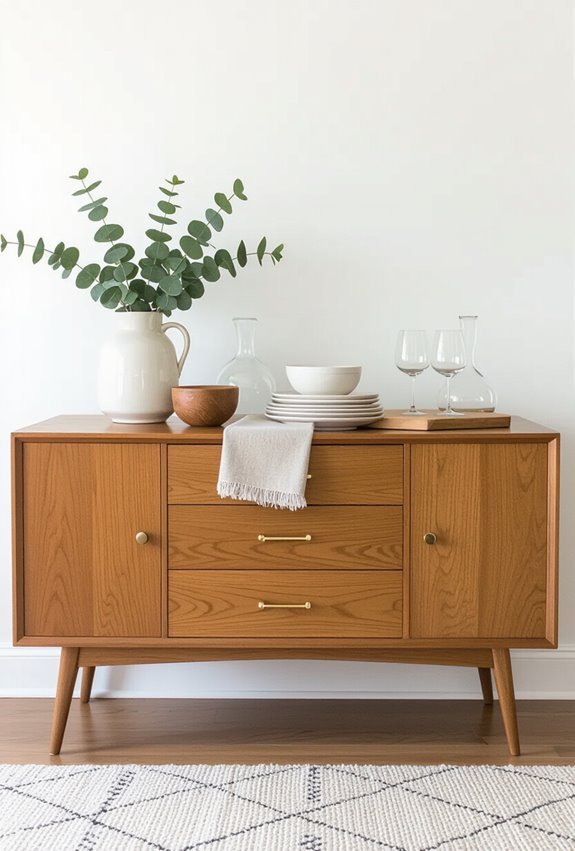
When choosing a buffet for your dining room, focus on scale, storage, and style to make sure it fits both the space and your needs.
You’ll measure wall length and clearance, prioritize scale selection to balance proportions, and choose finishes for durability.
Consider material considerations like hardwood versus veneer, assess drawer capacity, and pick hardware that complements existing decor for cohesive function.
Midcentury Buffet Ideas for a Timeless Look
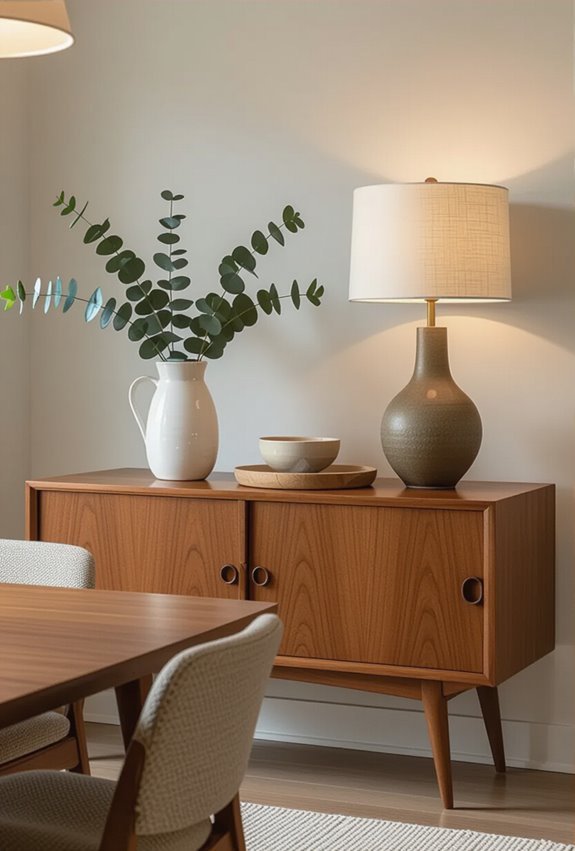
If you loved the balance of scale and storage in the previous section, a midcentury buffet brings that same practical focus with iconic clean lines and warm wood tones that age gracefully.
You’ll choose a teak credenza for durable warmth, pair it with subtle atomic lighting for focal drama, and favor tapered legs and streamlined hardware to keep the look timeless and functional.
Modern Minimalist Buffet Styles for a Sleek Station
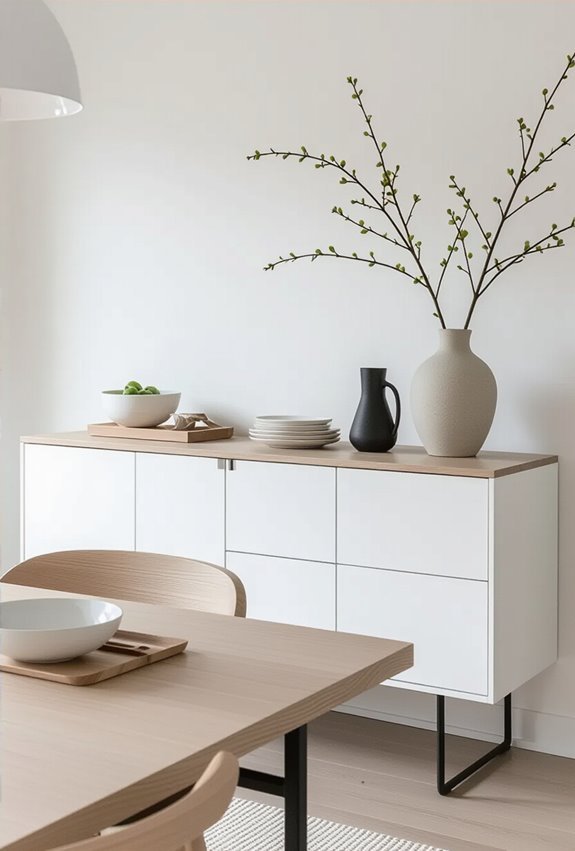
Because clean surfaces and purposeful storage make a room feel calmer, a modern minimalist buffet gives you a sleek station that’s both functional and unfussy.
You’ll favor flat-front cabinetry, hidden pulls, and neutral palettes that emphasize Scandinavian simplicity. Add monochrome accents—black handles, white ceramics—for contrast.
Keep styling minimal: one sculptural lamp, a tray for essentials, and ample negative space for a refined, efficient serving area.
Rustic Farmhouse Buffets That Add Warmth
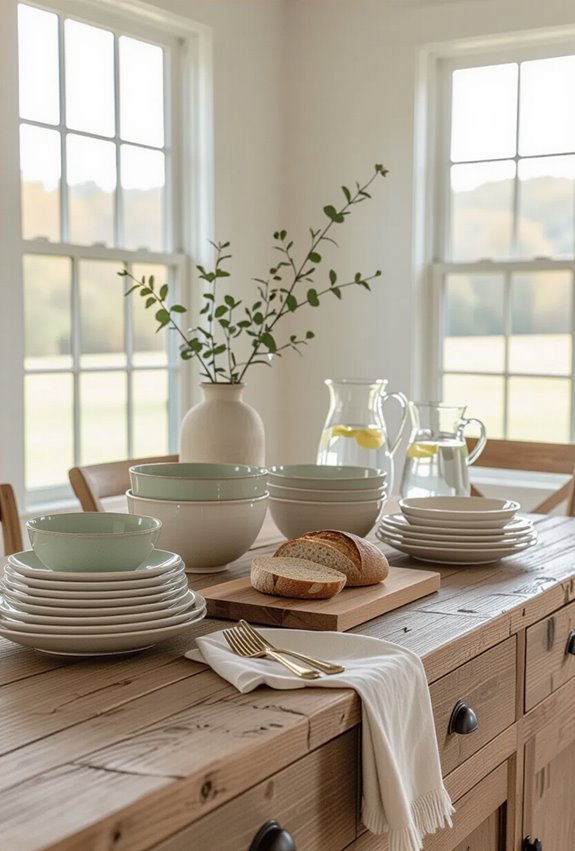
Bring in reclaimed wood, distressed finishes, and open shelving to anchor your dining space with rustic farmhouse warmth.
You’ll layer textured textiles, enamelware, and vintage lighting to create a welcoming buffet focal point.
Choose a sturdy sideboard with reclaimed wood panels, muted paint, and metal hardware.
Arrange practical decor, seasonal greenery, and serving pieces so the station feels lived-in yet organized.
Small-Space Buffet Solutions for Compact Dining Rooms
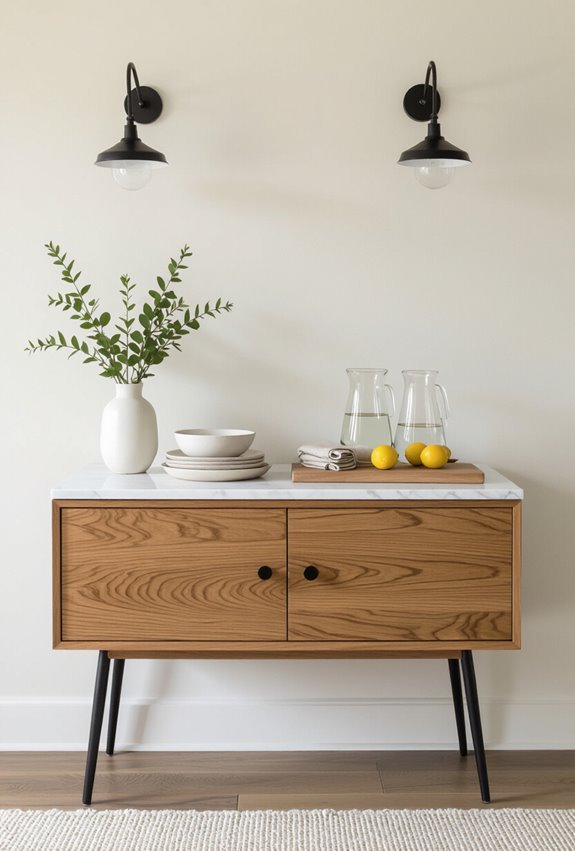
For tight dining nooks, choose a slim, multifunctional buffet that maximizes storage without crowding the room.
You’ll pick a slim console with drawers and open shelving to hold dishes, glassware, and linens.
Add a fold away table for occasional extra prep or seating, and use vertical organizers and baskets to keep surfaces clear while maintaining a streamlined, practical serving station.
Floating Buffet Units to Save Floor Space
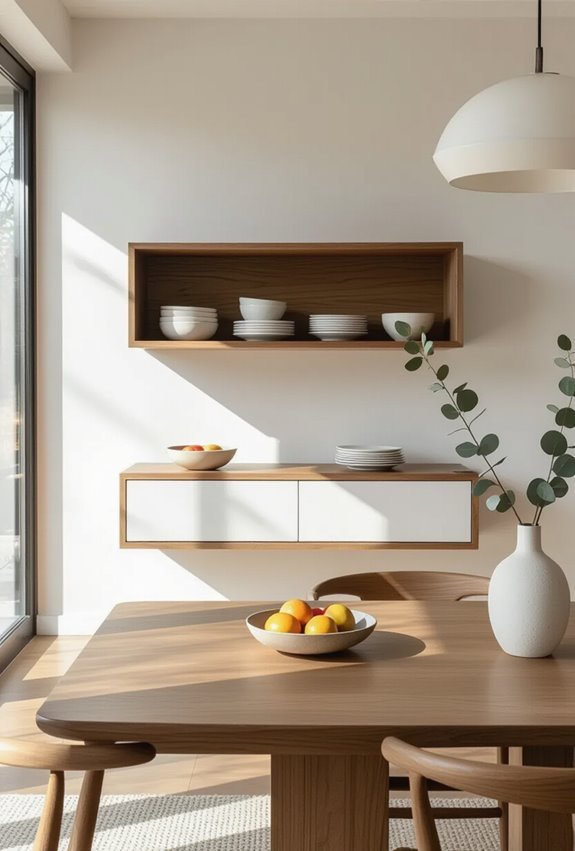
When you mount a buffet to the wall, it frees up floor space and instantly makes a compact dining area feel more open and organized.
Choose sleek wall mounted consoles or suspended credenzas for streamlined storage, easy cleaning, and a modern look. You’ll gain countertop space for serving and decor while keeping traffic flow clear—ideal for small gatherings and multifunctional dining rooms.
Mirrored Buffet Designs to Brighten the Room
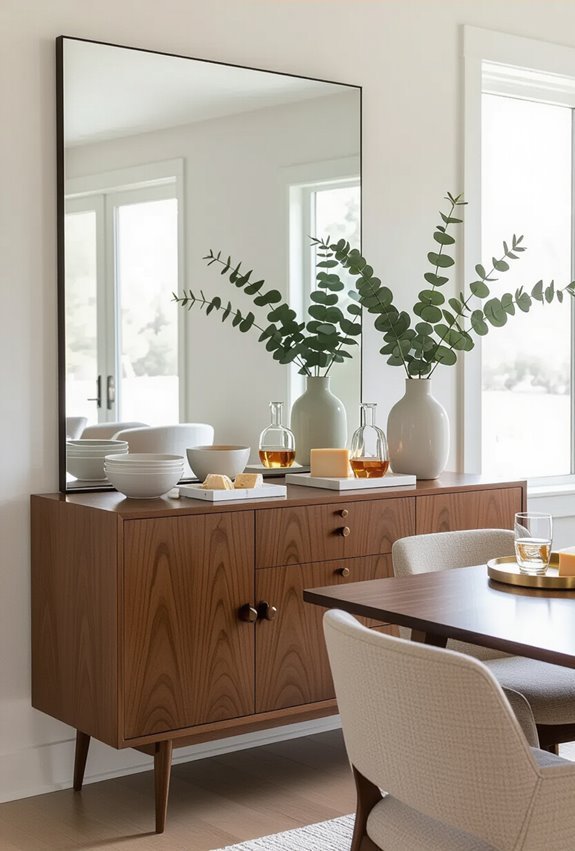
If you’ve freed up floor space with a floating buffet, consider mirrored fronts to amplify that openness and bounce light around the room.
You’ll love antique mirrored finishes for vintage character, or modern sleek glass for clean reflection. Add subtle backlit panels behind glass or within shelving to create depth and highlight servingware, making the buffet both practical and luminous.
Two-Tone Buffet Color Combinations That Pop
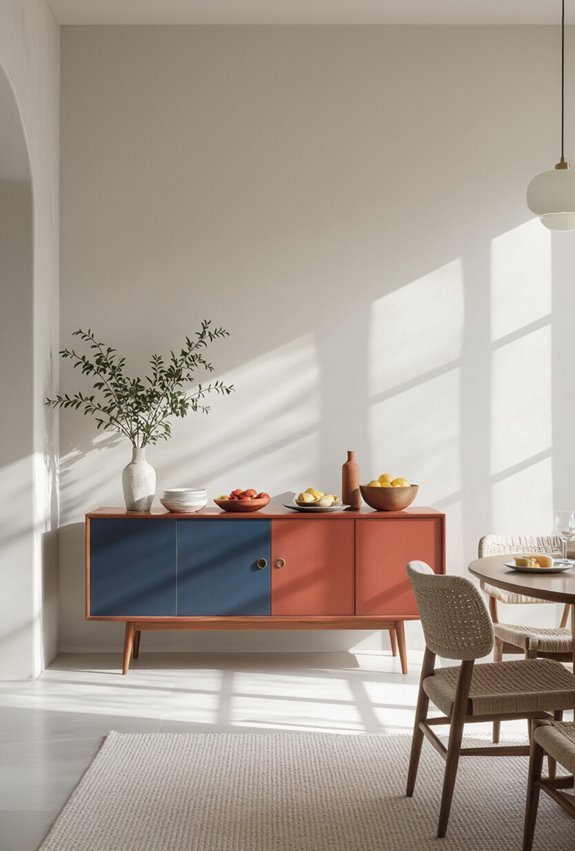
Color contrast instantly gives your buffet personality and helps it anchor the room, so pick two tones that play off each other — think matte navy with warm oak or soft sage paired with creamy white.
You can emphasize high contrast cabinetry by painting doors and leaving drawer faces neutral, or add an accent rail trim in a metallic or bold hue to define profiles and guide the eye.
Built-In Buffet Cabinetry for Seamless Integration
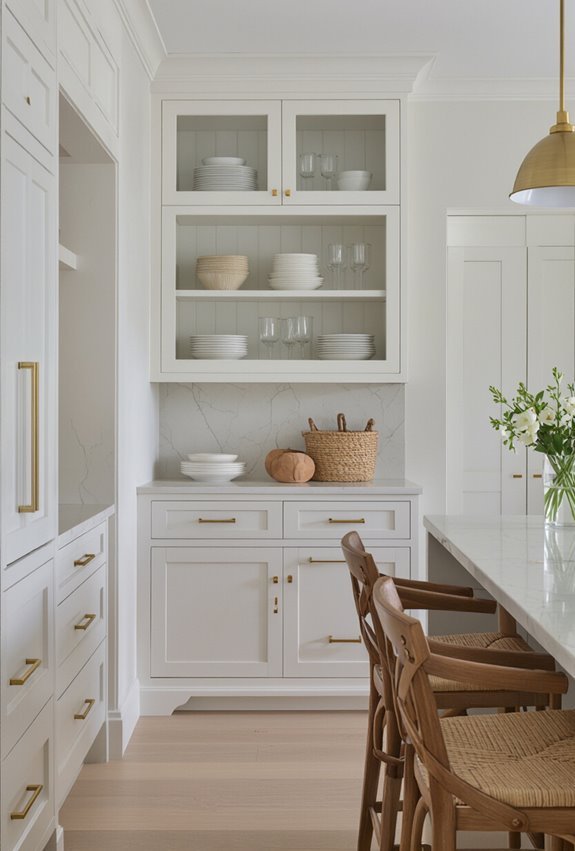
Because built-in buffet cabinetry ties storage, display, and architecture together, it’s the easiest way to make your dining room feel intentional and custom without losing floor space.
You’ll gain custom storage configured for linens, dishes, and a hidden appliance, keeping counters clear.
Choose finishes that achieve seamless integration with moldings and wall treatments so the buffet reads like original architecture rather than added furniture.
Glass-Front Buffet Ideas for Display and Storage
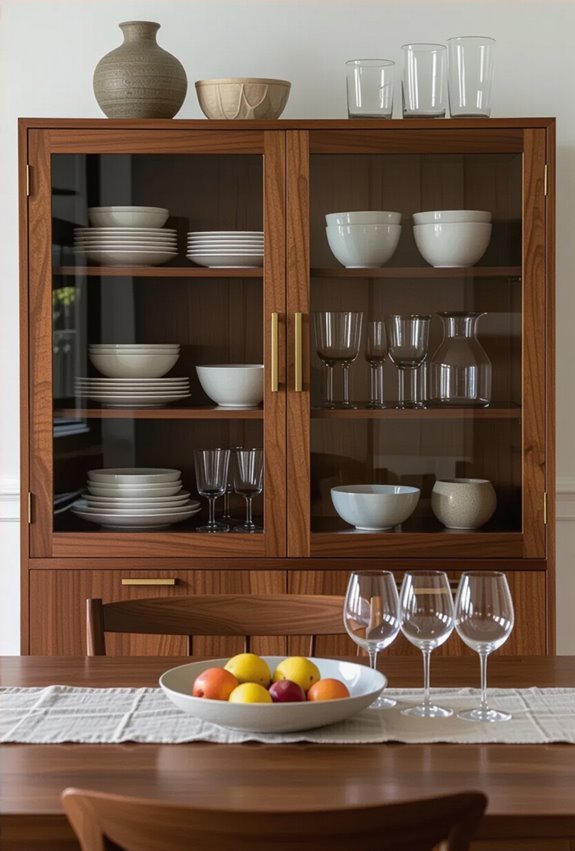
While built-in buffet cabinetry hides clutter and blends with architecture, glass-front buffets let you show off what you own while keeping it organized.
Choose a glass door cabinet to protect pieces, arrange curated vignettes on backlit shelves, and use dedicated stemware organization for safety and display.
Mix servingware and decorative items, rotate seasonally, and keep lighting subtle for elegance.
Open-Shelf Buffet Styling for Easy Access
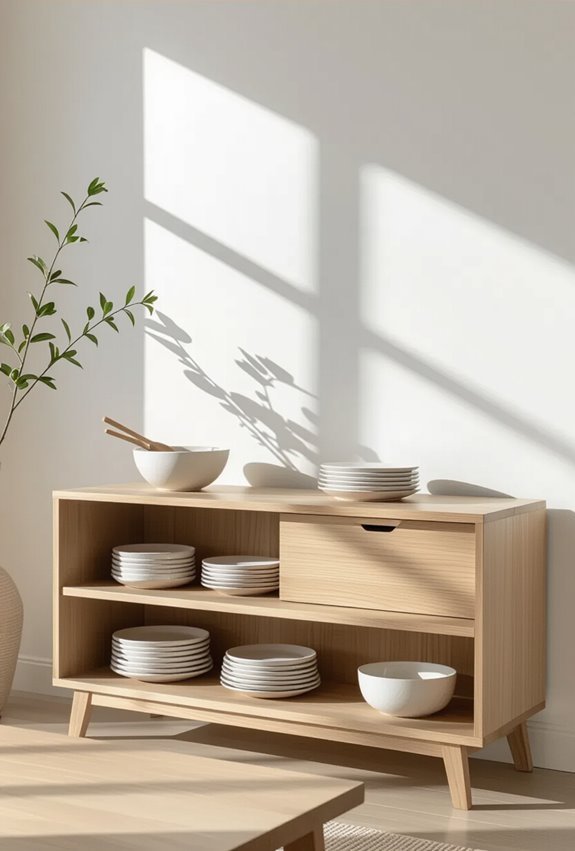
If you want instant access to everyday dishes and a chance to style as you go, open-shelf buffets put everything within reach and on display.
You’ll arrange open shelving for easy access, grouping plates, bowls, and a ceramic display for texture.
Use tiered trays to maximize vertical space, corral small items, and keep serving pieces ready without cluttering countertops or hiding favorites.
Vintage and Antique Buffet Finds to Shop For
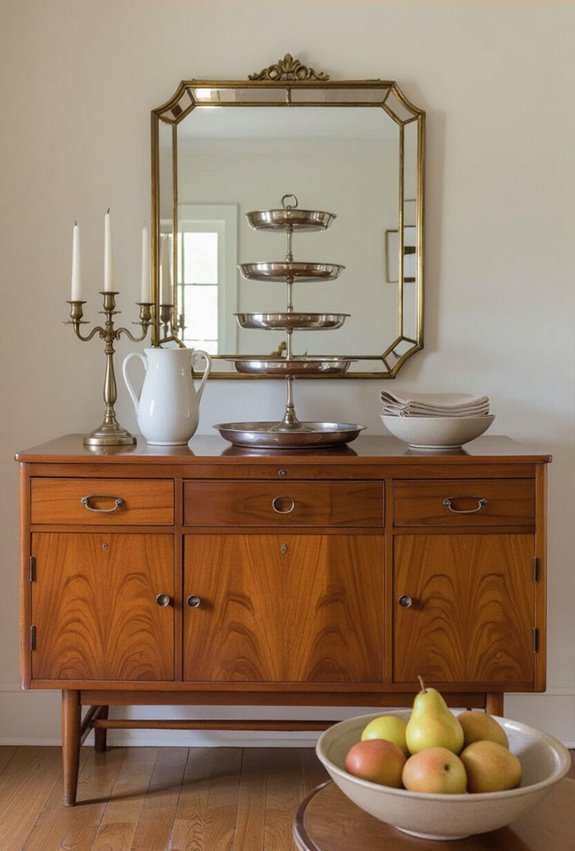
When you hunt for vintage and antique buffet pieces, focus on quality craftsmanship and stories—solid-wood construction, dovetailed drawers, and original hardware tell you more than brand names.
Prioritize patina preservation, do provenance research before buying, and budget for porcelain restoration if needed.
Inspect joints and finishes, and plan brass polishing to revive hardware without stripping character. Trust your instincts.
Give an old dresser a new life as a buffet by stripping unnecessary parts, reinforcing the carcass, and swapping drawer fronts or knobs to match your style.
You can convert an upcycled dresser into a practical serving station, add shelving or wine racks, or pair reclaimed wood with metal legs.
A simple pallet console works too—sand, seal, and mount it to create affordable, rustic storage and display.
Buffet Tops: Best Materials for Durability and Style
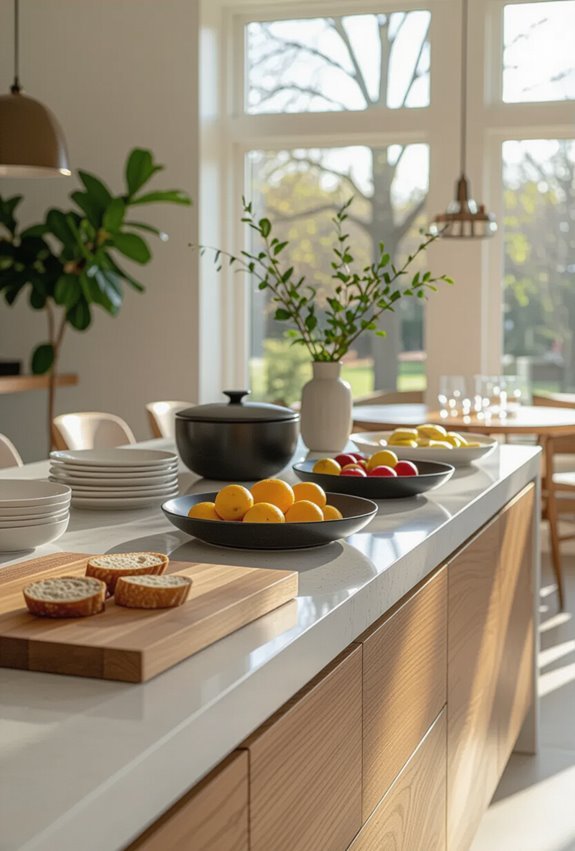
Choosing the right buffet top matters because it affects durability, maintenance, and the overall look of your dining space; you’ll want materials that stand up to serving wear while complementing your style.
Opt for quartz countertops for low upkeep and stain resistance, or reclaimed timber for warmth and character.
Mix materials—metal trim or stone accents—to balance practicality and aesthetic without overwhelming the room.
Lighting Options to Spotlight Your Serving Station
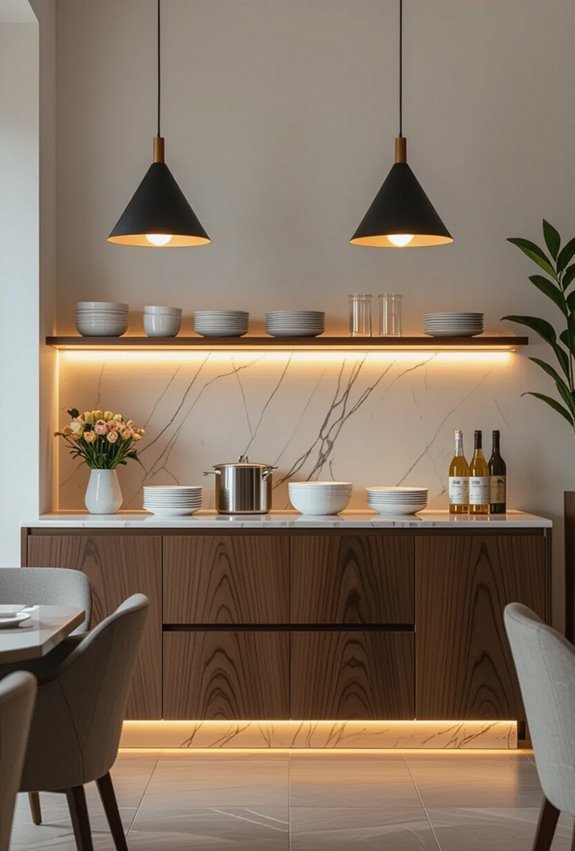
Highlighting your buffet with the right lighting turns it from a functional surface into a focal point, and you’ll want fixtures that balance visibility, ambiance, and style.
Use adjustable track fixtures to direct light onto platters, and install soft under-cabinet accent lighting to wash the surface.
Combine dimmers with warm LEDs to control mood, prevent glare, and showcase textures without overpowering the room.
Hardware and Pulls That Elevate Buffet Design
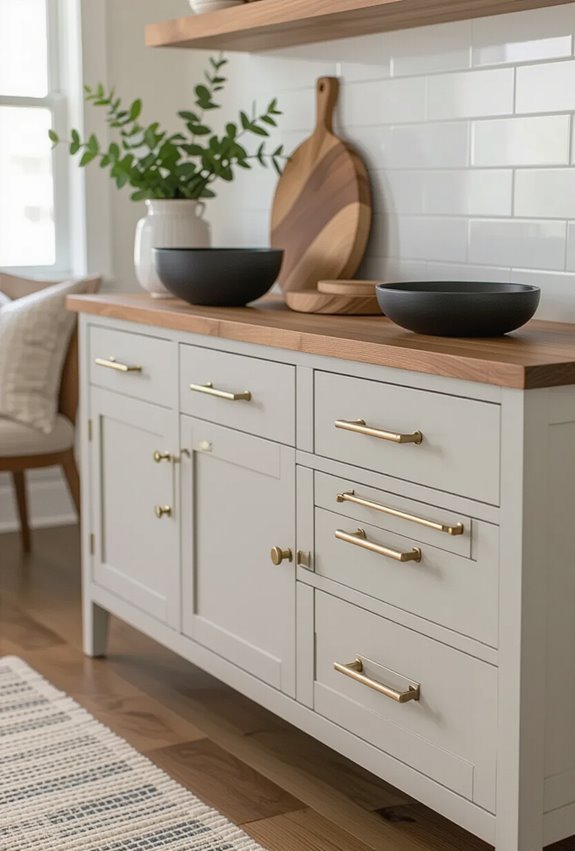
After you set the lighting to flatter platters and finishes, pick hardware that complements that glow and completes the buffet’s look. Choose brass knobs for warmth and vintage charm, or leather pulls for tactile contrast and modern edge.
Mix finishes sparingly, match scale to cabinet proportions, and guarantee smooth operation—small details that elevate function and style without overpowering your dining room.
How to Style a Buffet for Everyday Use
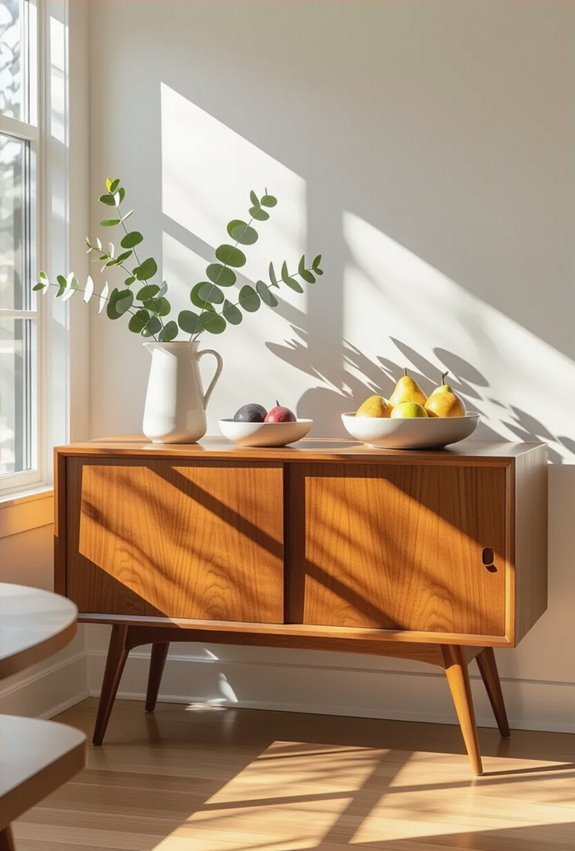
When you set up your buffet for daily use, think function first: keep everyday dishes, glassware, and serving utensils within easy reach while reserving decorative pieces for higher shelves.
Arrange practical zones—plates, bowls, casual flatware, and napkins—so you grab what you need.
Create simple everyday vignettes with a small plant or tray to add warmth without clutter, and rotate items seasonally.
Buffet Styling for Holiday and Party Serving
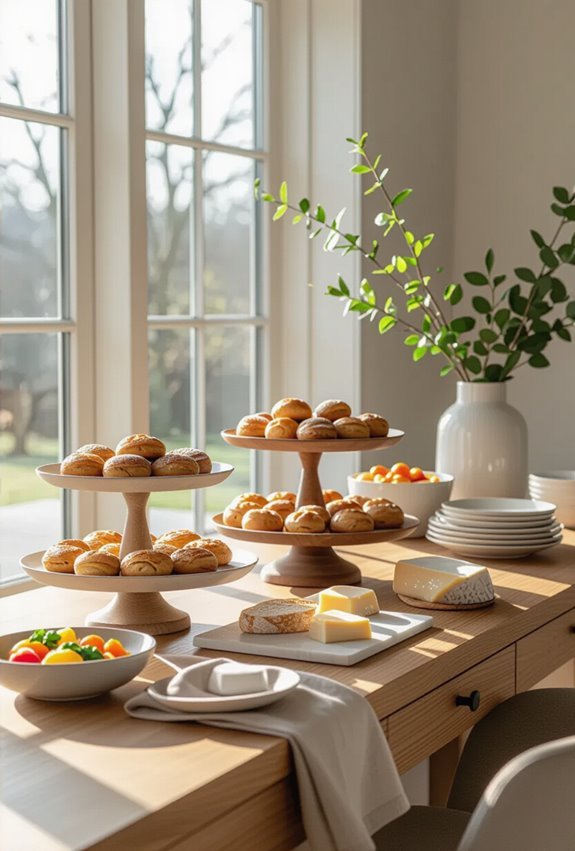
Everyday setup gives you a functional backbone you can adapt for festive occasions, so start by clearing a little extra surface and grouping items by purpose—platter station, drink area, and dessert corner—so guests can move smoothly.
Add seasonal centerpieces that don’t block sightlines, label dishes, set heights for visual interest, and plan buffet choreography so guests flow naturally and servers refill without disruption.
Creating a Drink Station on Your Buffet
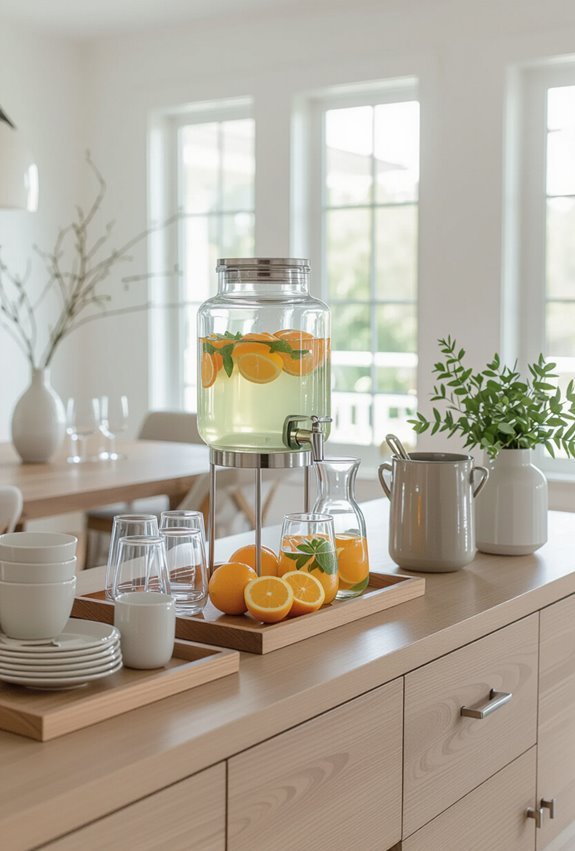
If you want guests to help themselves without congestion, dedicate one end of the buffet to a clearly organized drink station that keeps glassware, mixers, and ice within easy reach.
Label a Beverage Bar area, arrange a neat Glassware Display, provide tongs and napkins, and group mixers by type.
Keep a pitcher or dispenser for water and one for a signature nonalcoholic option.
Using a Buffet as a Bar: Essentials and Layout
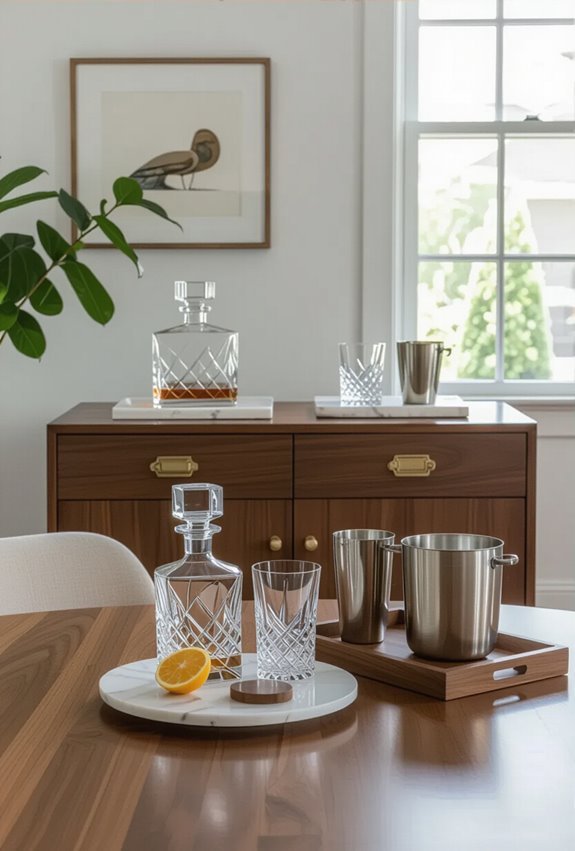
Because a buffet offers space and flow, you can turn one into a functional bar that keeps guests moving and drinks flowing smoothly.
Arrange spirit decanters at one end, cocktail tools nearby, andasting glassware neatly stacked. Add a portable icebox under the counter, a tray for mixers, and clear signage for self-serve versus bartender service to maintain order and style.
Kid-Friendly Buffet Setups for Family Meals
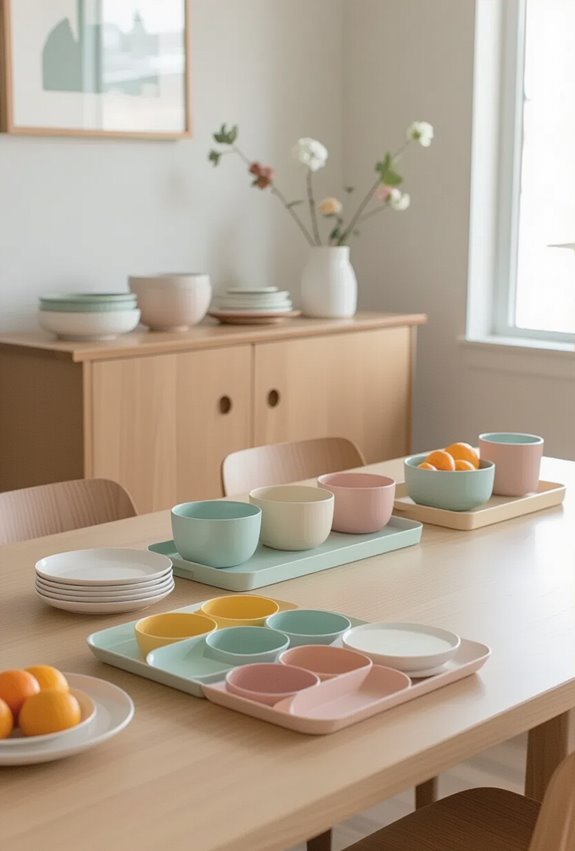
Often you’ll find that a kid-friendly buffet works best when it’s low, simple, and predictable.
You set dishes within kids’ reach, use child friendly serveware, and separate hot, cold, and snack zones.
Label choices and rotate favorites.
Add spill proof placemats, easy-to-grab utensils, and small trays so kids serve themselves safely and you keep mealtime calm and efficient.
Storing Dinnerware and Linens Efficiently in a Buffet
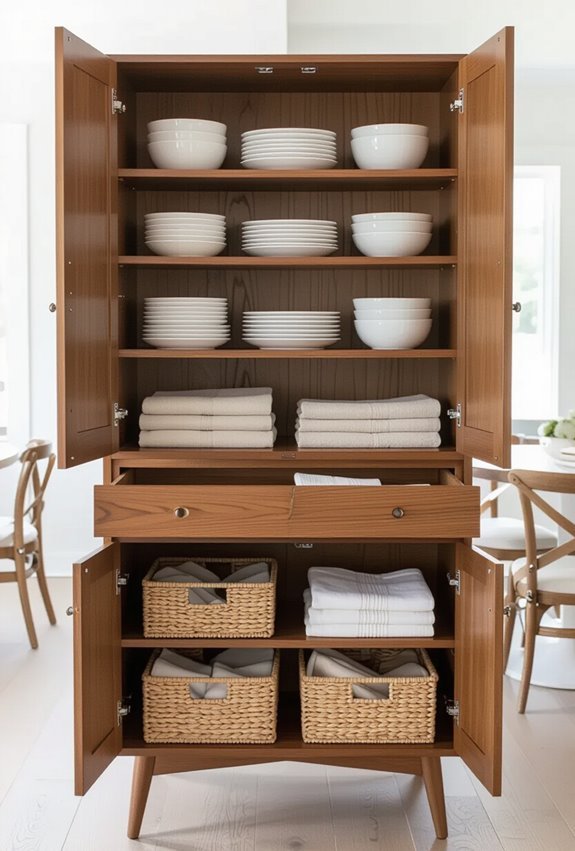
After setting up a kid-friendly buffet that’s reachable and tidy, you’ll want storage that keeps dinnerware and linens organized and easy to grab.
Use stackable chargers on lower shelves to save space and protect plates. Fold napkins neatly in labeled baskets, and install drawer dividers for flatware and placemats. Keep everyday items accessible and seasonal pieces higher or tucked away.
Integrating a Buffet With Your Dining Table Layout
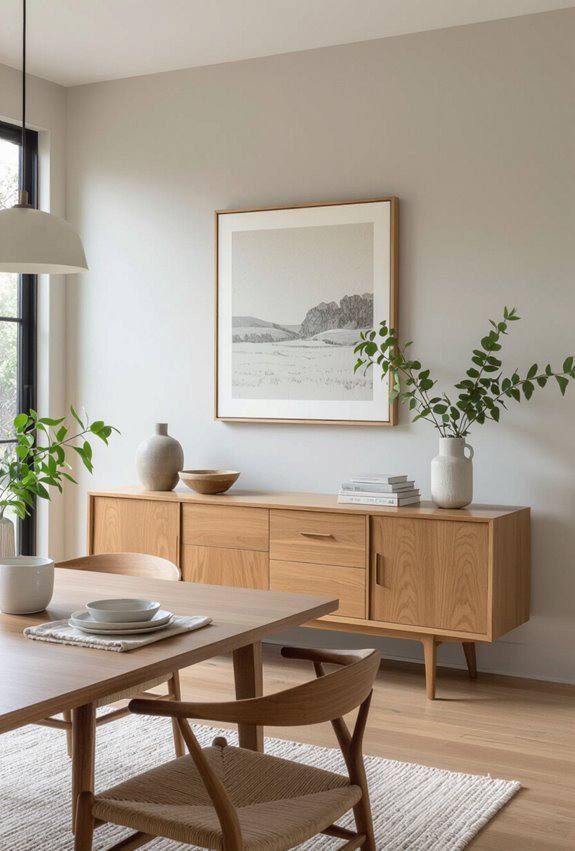
Once you’ve cleared countertops and organized drawers for smooth service, think about how the buffet sits in relation to your dining table—placement affects flow, sightlines, and how guests circulate during meals.
Position the buffet to support traffic flow without blocking sightlines; allow proper seating clearance so chairs move freely. Use angled placement or a short gap to create intuitive paths and easy serving access.
Flooring and Rug Choices That Suit a Buffet Area
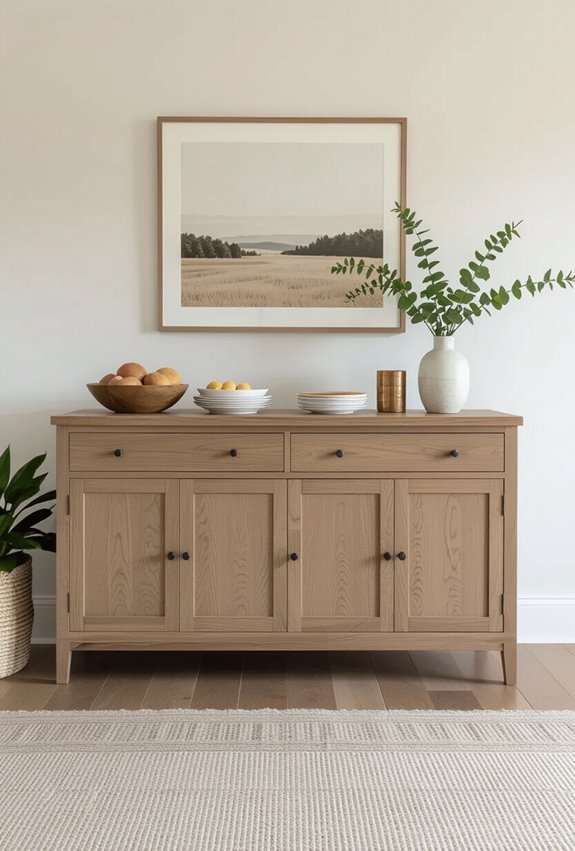
When choosing flooring and rugs for a buffet area, think about durability and traffic patterns first so your surfaces stand up to trays, spills, and constant movement.
Choose hardwearing materials—tile, sealed hardwood, or waterproof vinyl—and place low-pile rugs with quality rug padding to prevent slips.
Consider heated flooring under tiles for comfort, and opt for stain-resistant fibers that’re easy to clean and maintain.
Wall Art and Mirrors to Frame Your Buffet Station
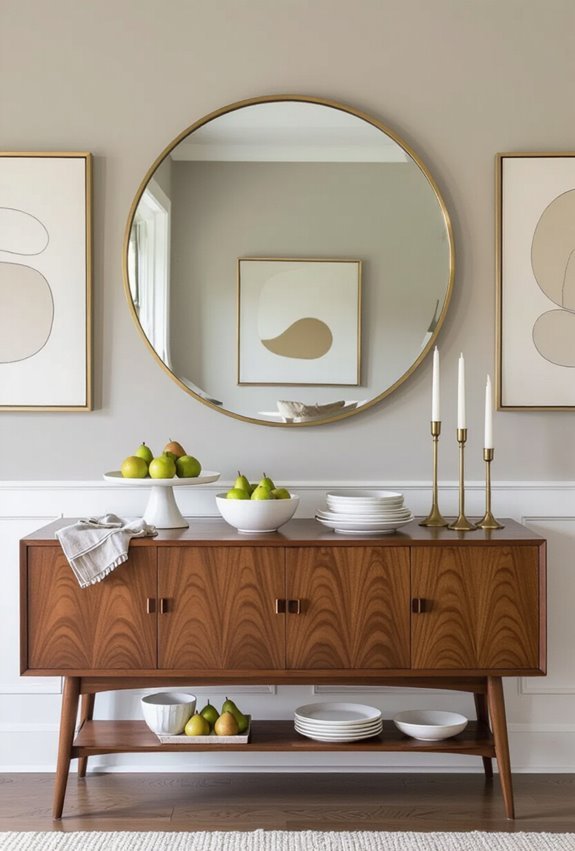
Framing your buffet with thoughtfully chosen wall art and mirrors draws the eye, defines the serving zone, and boosts both style and function—so pick pieces that balance scale, reflect light, and resist kitchen wear.
You’ll create a cohesive look with a framed gallery at varying heights, mixing artwork and reflective accents to expand space visually and highlight your serving station without competing with tabletop displays.
Greenery and Centerpiece Ideas for Buffet Tops
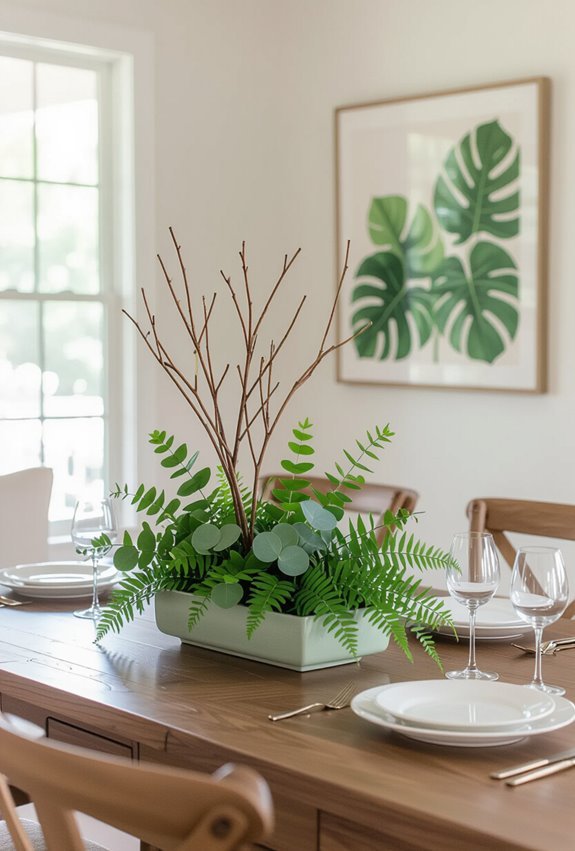
A single lush arrangement or a cluster of low, spread-out succulents can instantly warm a buffet top and keep traffic flowing, so choose pieces that suit your room’s scale and maintenance tolerance.
Mix potted herbs for scent and utility, add short vases or floral runners for seasonal color, and keep centerpieces low and removable so you can serve and circulate without obstruction.
Color Palette Pairings for Cohesive Dining Zones
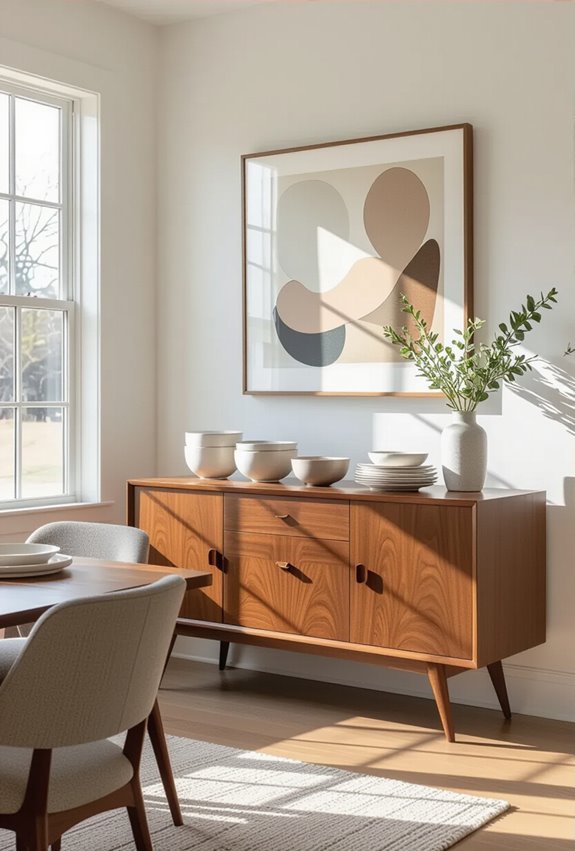
If you want a dining zone that feels deliberately connected to the rest of the room, pick two to three coordinating hues and repeat them across walls, linens, and buffet accents.
Choose complimentary neutrals as a base, then add one bold shade for interest.
Use monochromatic accents—varying tones of that bold color—to tie artwork, dishes, and textiles together for a unified, intentional look.
Budget-Friendly Buffet Makeovers and Paint Hacks
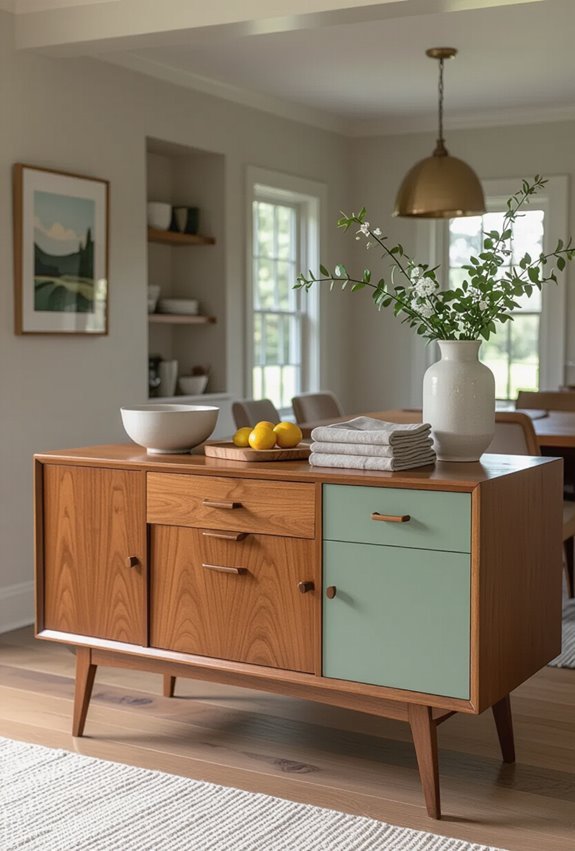
Give your buffet a fresh look without draining your wallet by focusing on simple paint hacks and small swaps that deliver big impact. You can use paint transformations like two-tone finishes, stencils, or distressing to modernize pieces.
Add hardware swaps, mirrored backs, and thrifted revamps for charm. These affordable moves refresh style quickly, letting you update the room without costly renovations.
High-End Upgrades: Marble, Brass, and Custom Millwork
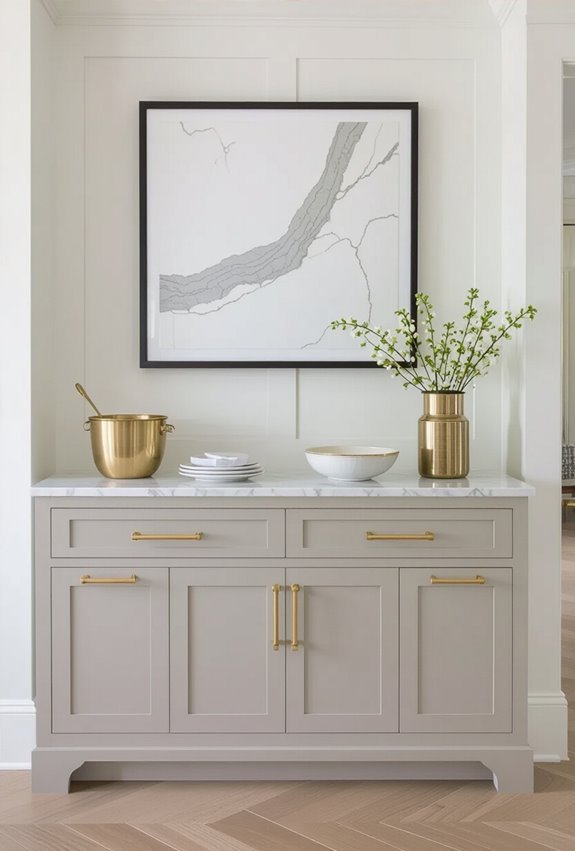
Elevate your buffet by introducing luxe materials—think honed marble tops, warm brass accents, and tailored millwork—that instantly shift the room from casual to curated.
You’ll choose slab cuts that showcase striking marble veining, add brass accents on hardware and legs, and commission fitted millwork for concealed storage and display.
The result feels bespoke, cohesive, and effortlessly elegant without excess ornamentation.
Maintenance Tips to Keep Your Buffet Looking New
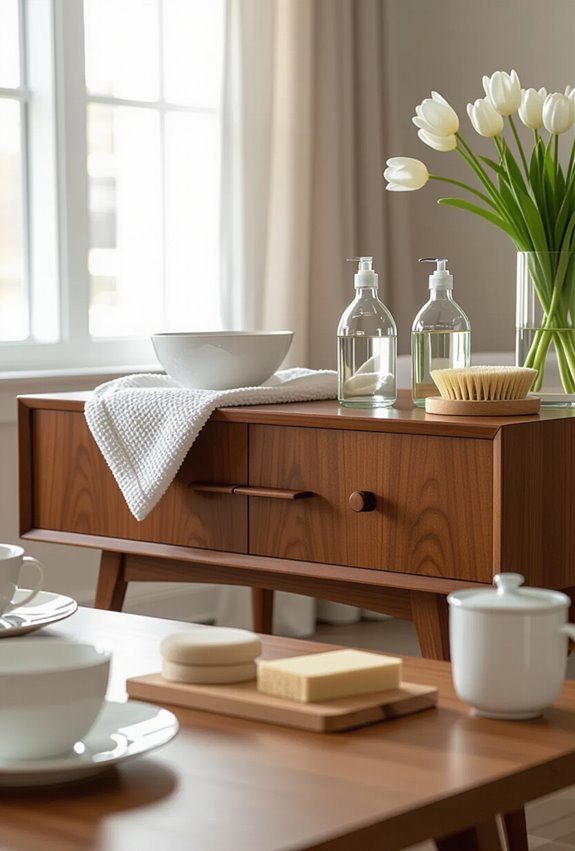
Regularly wipe surfaces with a soft, lint-free cloth and a gentle cleaner tailored to the material—wood-safe polish for stained cabinetry, pH-neutral stone cleaner for marble, and a mild soap solution for brass—so grime doesn’t dull finishes or etch surfaces.
You’ll also schedule daily polishing for high-touch areas, use coasters and liners, manage humidity control with a dehumidifier or humidifier, and promptly address spills and scratches.
How to Measure and Plan Before Buying a Buffet
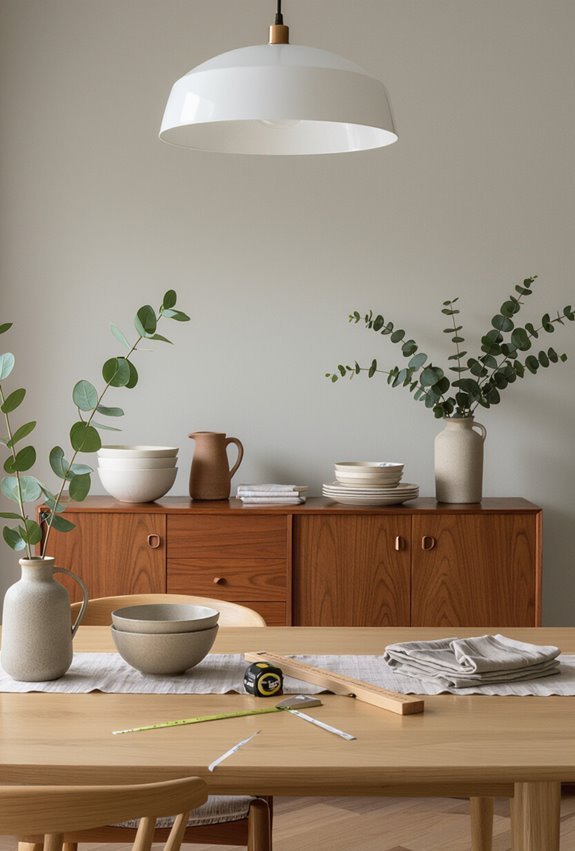
Before you shop, measure the space and map how the buffet will function so you avoid returns and layout headaches.
Use a measurement checklist, note doorways and sightlines, and do placement mapping on a floor plan.
Consider traffic flow for serving and access, perform a scale study with tape and cardboard, and confirm clearance for drawers and styles before buying.
Open Concept Buffet Dining Space
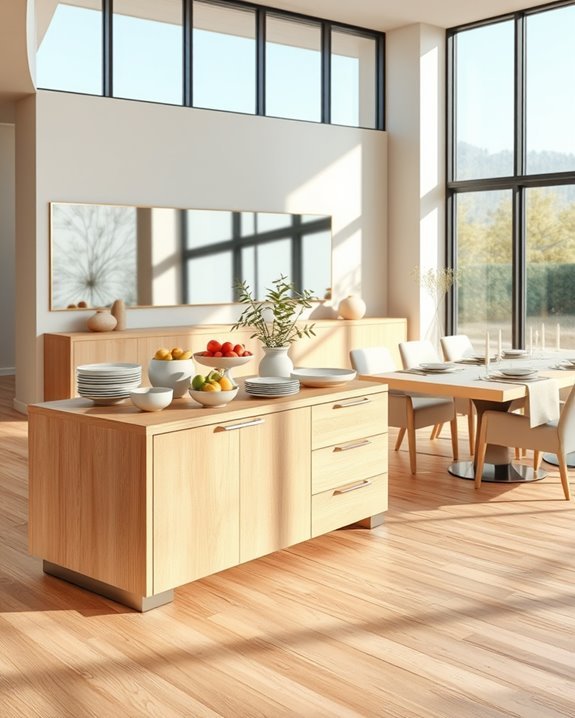
When you design an open concept buffet dining space, you enhance both the flow and interaction among guests.
Emphasizing buffet seating allows everyone to mingle freely while enjoying their meals. Use a central serving station to create a focal point, encouraging movement and conversation.
Incorporate comfortable seating arrangements around the area, ensuring a welcoming atmosphere that invites guests to linger and connect.
Scandinavian Style Serving Area
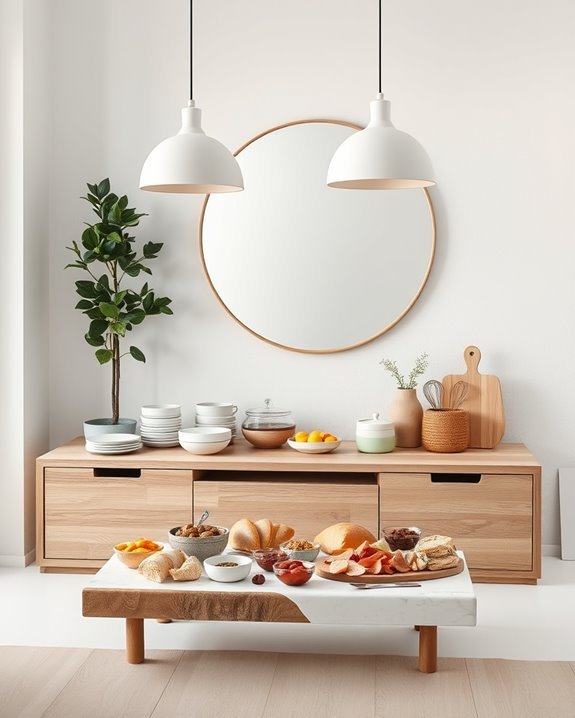
As you design a Scandinavian style serving area, prioritize simplicity and functionality to create a warm, inviting space.
Embrace Scandinavian minimalist principles by using light colors, natural materials, and clean lines. Incorporate elements of Nordic design, such as a wooden serving table and simple dishware.
This approach not only enhances aesthetics but also fosters a cozy atmosphere for your buffet dining experience.
Elegant Buffet With Floral Accents
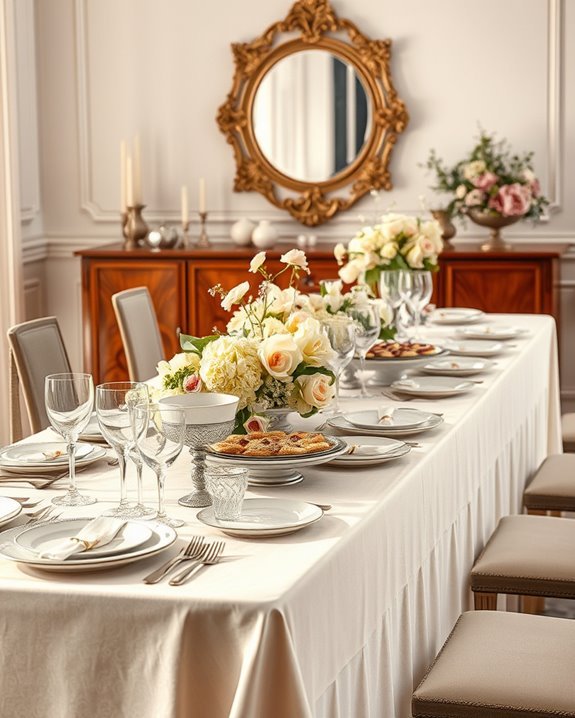
To elevate your dining experience, consider incorporating floral accents into your buffet setup.
Use vibrant floral tablecloths to create a stunning base, setting the mood for your gathering. Pair these with elegant centerpieces, like fresh blooms in beautiful vases, to draw guests’ attention.
This combination not only enhances the visual appeal but also adds a touch of sophistication to your buffet.
Serene Zen Inspired Dining Space
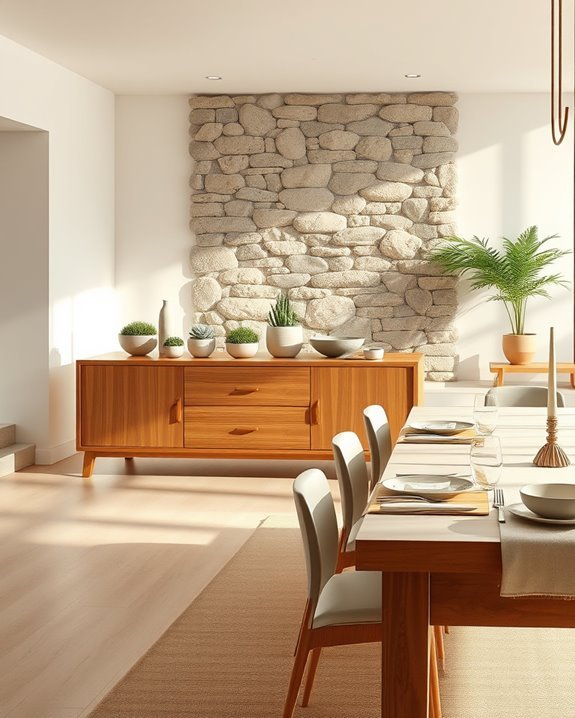
As you design a serene Zen-inspired dining space, the focus should be on simplicity and tranquility.
Choose natural materials, like bamboo and stone, to create a calming atmosphere. Incorporate zen decor, such as minimalist centerpieces and soft lighting, to enhance the tranquil ambiance.
Keep the layout open and uncluttered, allowing for a peaceful flow during meals and gatherings.
Conclusion
No matter your style, creating a buffet dining room that reflects your personality is totally achievable. You might think it’s too complicated or costly, but with a little creativity and resourcefulness, you can craft a stunning setup that impresses your guests without breaking the bank. Imagine the joy on their faces as they admire your unique serving station! Embrace the possibilities and transform your dining space into a warm, inviting experience that everyone will cherish.
