
Can Latex Paint Be Thrown in the Trash? Safe Disposal Explained
You usually can’t just throw latex paint in the trash. First, check the can’s disposal label for “household trash” or “household hazardous waste.” Make sure it’s actually latex (water cleanup); oil-based needs special handling. If it’s leftover latex, dry it completely with kitty litter or paint hardener, seal the can, and dispose only per local rules. Don’t pour it down drains. If you’ve got multiple cans, plan your route—there’s more to it.
Can You Throw Latex Paint in the Trash?
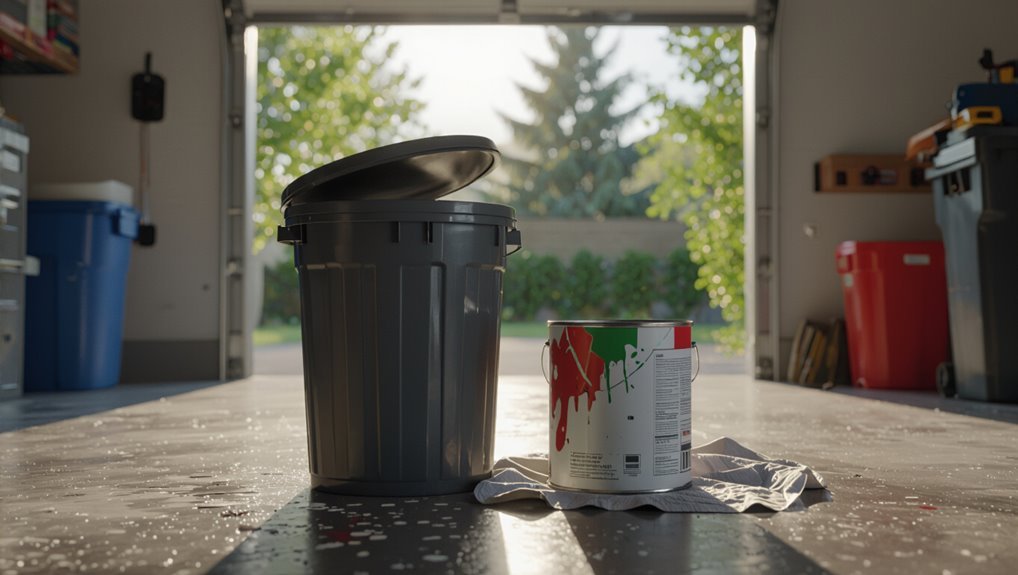
Can you throw latex paint in the trash? You usually shouldn’t, even if it looks harmless.
For proper latex paint disposal, you first check whether your local rules allow sealed, dry trash. If allowed, you dry leftover paint using absorbent kitty litter or paint hardener, then seal the can tightly and place it in the designated trash area.
Never dump liquid paint down drains or open it just to “use it up” faster.
If you want safe painting, keep containers closed, label lids, and store leftovers until you can take them to a household hazardous waste drop-off.
Start Here: Check the Can’s Disposal Label
Before you toss anything, check the disposal label on the can—what you do next depends on what it says.
Look for clear instructions like “household trash,” “household hazardous waste,” or “return to retailer.” If the label directs you to solidify, follow the listed method exactly.
If it says to take it to a drop-off site, don’t gamble with paint disposal methods at home. Misreading the label can increase spills, contaminate landfill materials, and worsen environmental impact.
When in doubt, keep the can sealed, store it safely, and contact your local waste program for confirmation.
Latex vs Oil-Based: Know What You Have
First, you need to identify the paint type, because latex and oil-based coatings often require different disposal paths.
Before you plan disposal methods, look at the can and confirm whether you’re dealing with latex paint types or an oil-based product. Small differences matter: latex usually cleans up with water and may dry to solid for proper trash only if allowed; oil-based often needs special handling due to solvents.
Inspect the can for latex or oil-based paint, since water cleanup and disposal rules differ—oil may require special solvent handling.
- Check ingredient labels and cleanup guidance
- Separate latex and oil-based cans
- Cap and store leftovers for pickup rules
- Keep lids sealed to prevent leaks
- Follow local disposal methods precisely
Is Your Paint Hazardous? Quick Checklist
Before you toss anything, check for oil-based resins that can make the paint hazardous.
Look for toxic chemical labels and safety warnings on the can, then verify what your local disposal requirements require.
If you see hazardous markings or aren’t sure, treat it as hazardous and follow your area’s drop-off or household hazardous waste rules.
Check For Oil-Based Resins
When you check your latex paint, look for signs of oil-based resins—because that mix can make disposal rules stricter than you expect.
Start by assuming it’s hazardous until you confirm. Oil based paints and resin-like additives can change how facilities handle it, so you need safe disposal planning.
- Check the can label for “oil-based,” “alkyd,” or resin modifiers
- Look for a glossy finish that stays tacky after drying
- Stir: if it won’t blend evenly, suspect mixed materials
- Smell: strong solvent odor can indicate oil components
- Keep it separate from regular trash until classified
Look For Toxic Chemical Labels
Wondering if your latex paint counts as hazardous waste? Don’t guess—inspect the can for toxic chemical labels.
Look for terms like “flammable,” “corrosive,” “toxic,” or “harmful,” and check for symbols on the label. Pay close attention to any warnings about fumes, skin irritation, or eye damage, since those often point to toxic ingredients in the formula.
If you see phrases such as VOCs, solvent-based additives, or special handling instructions, you should treat the paint as hazardous.
Follow safety precautions: keep it sealed, store it upright, and avoid breathing vapors while you read the label.
Verify Local Disposal Requirements
Could your latex paint end up in the wrong bin? Before you toss anything, verify local regulations for household hazardous waste and latex disposal.
Start by checking the can’s label, then confirm whether your city requires drop-off at specific disposal facilities. Don’t guess—policies vary by county, and dried or liquid paint may have different rules.
Use this quick checklist:
- Look up your municipality’s paint rules online
- Call your waste department if labels are unclear
- Keep lids sealed until you’re instructed otherwise
- Separate solids from liquids only if local rules say so
- Use approved disposal facilities, not curbside trash
If Not Hazardous, Trash Disposal Usually Fits
If your latex paint is truly non-hazardous, you can usually dispose of it with regular trash—but only after you prep it the right way.
You follow your local community guidelines for waste management and eco friendly disposal, because disposal affects environmental impact.
First, check the can for a dried seal and let leftovers cure fully; you can use absorbent kitty litter.
Check the can for a dried seal, then let leftovers cure fully—absorbent kitty litter can help.
Then place the solidified remains in a sealed bag.
If there’s usable paint, consider paint donation or paint recycling at centers.
Store leftovers tightly, keep lids clean, and weigh paint alternatives to reduce future waste.
When Local HHW Rules Apply to Latex Paint
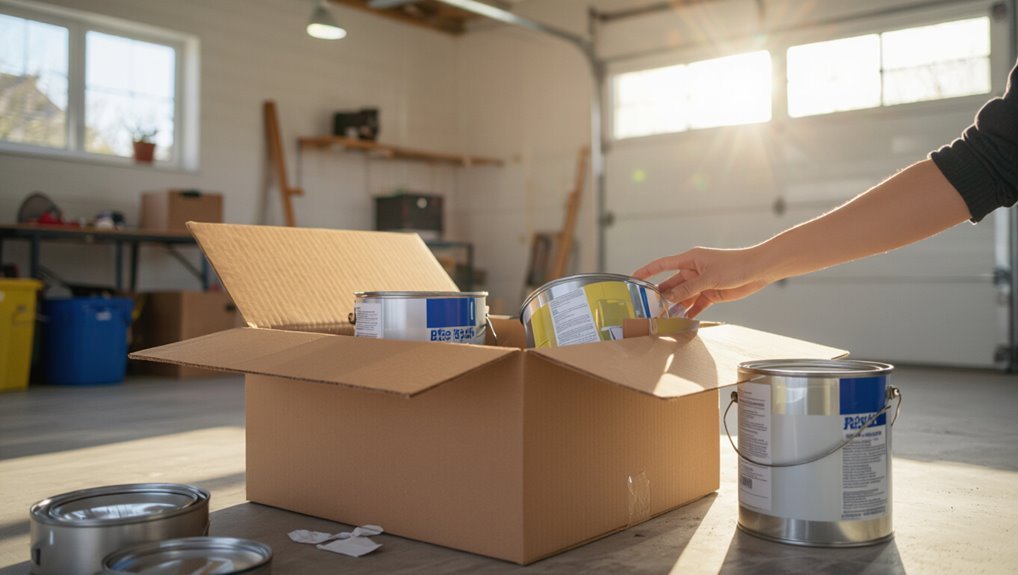
Even when latex paint sounds harmless, local rules can still require you to treat it as household hazardous waste (HHW) when the paint won’t dry completely or contains significant contaminants.
Check your local regulations before tossing cans, and follow safe practices to protect people and waterways. You should also keep lids sealed and avoid pouring anything down drains, even if you think it’s “mostly water-based.”
Watch for these common triggers:
- Paint that stays wet or won’t dry
- Strong odors or unknown additives
- Oil-based or mixed coatings in the can
- Heavy contamination from solvents or cleaners
- Leaking, bulging, or damaged containers
Dried Latex Paint Is Safer for Disposal
Let your latex paint dry completely before you toss it.
Once it’s solid, mix it with kitty litter to help it fully harden, then seal it in a bag.
You can usually put the sealed, dried paint in the regular trash.
Dry It Completely First
Before you toss latex paint, dry it completely first—so it becomes a safer, solid waste rather than a spill-prone liquid. You reduce risk by letting the paint finish paint drying before you consider disposal methods.
Keep it open to air, but out of reach of kids and pets, and away from drains. To make drying faster and cleaner, follow these steps:
- Remove the lid and place the container in a ventilated area
- Add absorbent material if needed to speed paint drying
- Let it dry until fully hardened, not tacky
- Check local rules for acceptable trash handling
- Seal the hardened residue in a bag before putting it out
Solidify With Kitty Litter
Solidify dried latex paint by mixing it with kitty litter until it turns into a thick, crumbly mass you can’t spill.
Choose kitty litter methods that absorb fast: pour in enough litter, stir thoroughly, and let the paint drying finish until the mixture holds shape. If the paint still looks wet or spreads, add more litter and mix again.
Wear gloves, keep the lid closed between steps, and avoid adding water or thinner.
Once it’s uniformly solid, break up large chunks so it won’t leak. Then store it briefly away from heat and kids.
Seal And Bag For Trash
After your latex paint dries into a uniformly solid, seal it in a sturdy trash bag to prevent leaks and keep fumes contained.
You should treat dried latex like a non-liquid waste, so focus on handling and safe storage. Use paint disposal tips to reduce mess:
- Double-bag for extra protection
- Press out air before tying
- Label the bag “dried paint”
- Keep it away from heat and kids
- Store until pickup if your area allows
Seal the container too, if any residue remains.
Dry Latex Paint Faster With Kitty Litter
You can dry out leftover latex paint faster by mixing it with kitty litter, which absorbs moisture and speeds up the curing process.
For effective paint drying techniques, spread the paint in a shallow container, then stir in enough litter until it thickens into crumbly solids. Let it sit uncovered until fully dry, stirring once if needed.
Wear gloves and keep it away from kids and pets. This method supports eco friendly alternatives by reducing liquid waste, so it’s easier to bag and dispose according to local rules.
Don’t seal until it’s completely hardened.
Dry Paint Without Spills or Strong Odors
To dry latex paint with fewer spills and less odor, work in a well-ventilated area and keep the container on a stable, covered surface.
You should avoid sloshing by pouring small amounts onto an absorbent material, then let it sit undisturbed. This reduces odor so you don’t trap fumes indoors and supports dry paint benefits.
For better environmental impact, choose cleanup materials you can dispose of safely.
Use these tips:
- Stir gently, then stop before splashing
- Spread thin layers for faster drying
- Use absorbent pads or cardboard as a drip tray
- Keep lids loosely closed between checks
- Wipe spills immediately with dry absorbent cloth
Keep the Lid On Until Fully Dry
Keep the lid on while your latex paint dries so it doesn’t spill or off-gas more than it needs to.
Check it regularly and don’t let a skin form—if it starts, scrape it off before continuing.
Only dispose of the leftover paint or brushes once the material is fully dry and solid.
Leave Lid On While Drying
While latex paint dries, leave the lid on the can so fumes don’t escape and the paint stays protected from dust and skinning.
You can use smart drying techniques while keeping lid benefits working for you:
- Seal the can tightly between coats
- Place it in a cool, ventilated area
- Let it dry undisturbed until fully cured
- Don’t tip or open early to check texture
- Keep it away from kids, pets, and ignition sources
If you move the can, do it gently, and keep the lid on to avoid spills and slowed curing.
Prevent Skin From Forming
Once the paint starts to set, leave the lid on and don’t open the can to “check” it—air exposure triggers a surface skin that you’ll fight later.
You protect your project by maintaining consistent drying conditions. While the coating cures, keep the area ventilated but avoid stirring or scraping the forming film.
Wear proper skin protection when handling any wet paint, even if it looks mostly dry; drips can still slip.
If you plan paint layering, only add the next coat after the first coat is fully cured, not when skin begins to form.
Dispose Only When Fully Dry
When latex paint forms a skin, you don’t want to disturb it—so don’t rush disposal. Keep the lid on and let the paint finish drying in its container. This prevents spills and keeps fumes down, so your disposal methods stay safer.
Check daily; once the paint is fully cured into a solid, you can handle disposal options properly.
- Keep lid sealed until fully dry
- Don’t add water to speed curing
- Let it dry in a ventilated area
- Use absorbent kitty litter if needed
- Dispose once solid, not tacky
Never Pour Latex Paint Into Drains
Never pour latex paint into your drains, because it can clog plumbing, contaminate local waterways, and make wastewater treatment harder.
When you handle latex paint disposal, you should treat every batch like a hazardous mess, even if it looks water-based. Pouring paint down a sink or toilet isn’t safe disposal; the solids don’t disappear, and the colorants and additives can linger in storm drains and sewers.
Instead, collect leftovers in a sealed container, let them dry only as allowed by your local rules, and dispose through approved household-hazardous-waste programs.
Don’t Store Half-Full Cans for Long
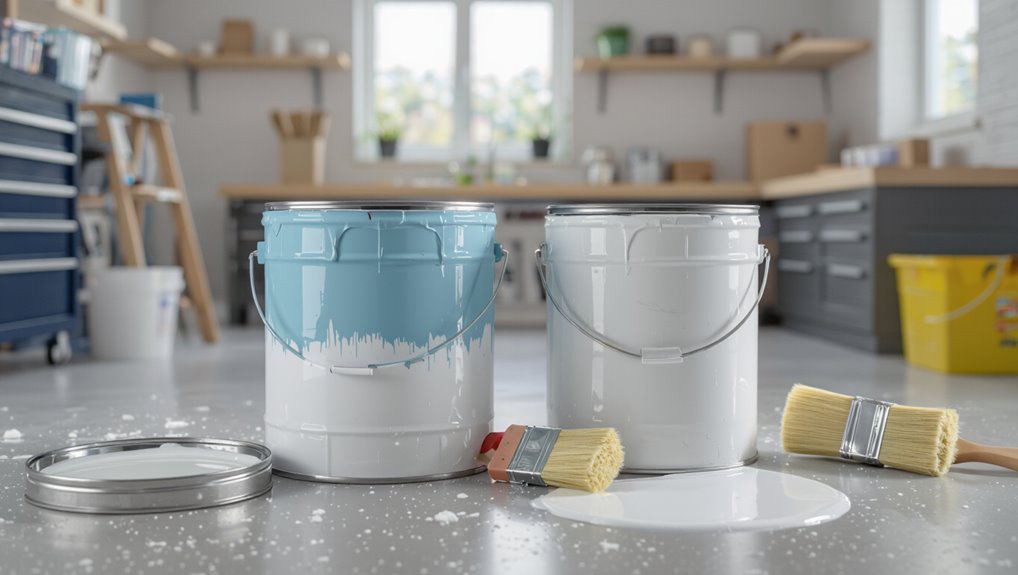
Letting half-full latex paint cans sit for months invites drying, skinning, and separation, which can ruin the batch and waste your money. You should rethink paint storage by planning how long you’ll keep leftovers and using proper sealing every time you close the lid.
- Scrape and clean rims before resealing to prevent dried leaks
- Store cans upright in a cool, dry area away from sun
- Tighten lids firmly and wipe excess before storage
- Label the date so you don’t forget old batches
- Test stir consistency; if thick or stringy, don’t rely on it
Dispose of a Small Latex Paint Can
If you have a small latex paint can to get rid of, treat it like hazardous waste even if it’s water-based: you can’t pour it down the drain or dump it in the trash in most areas. For safe paint can disposal after small projects, let the paint skin over, then cap tightly. If you can’t dry it fully, store upright in a sealed plastic bag and label “latex paint.” Check your city’s household hazardous waste drop-off. Use these quick options:
| Situation | Best move | Where |
|---|---|---|
| Still liquid | Secure, don’t drain | HHW |
| Skinned | Solidify further | HHW |
| Empty can | Dry residue | Recycling |
Dispose of Large Batches Safely
Before you toss a large batch, check your local hazard rules and follow any collection guidelines.
If you’ve got unused latex paint, you should seal the containers tightly and label them clearly.
For what’s dried or residue-filled, you should dispose of it as solid waste according to those same rules.
Check Local Hazard Rules
Check your local hazardous-waste rules before you dispose of large latex paint batches, since disposal requirements vary by city, county, and state.
Don’t assume trash pickup is okay for hazardous materials or that dried paint is always acceptable. You should confirm drop-off schedules and any volume limits.
- Search your county’s hazardous-waste website for latex paint guidance
- Call your local sanitation line and ask about large-batch limits
- Use permitted facilities, not storm drains or bulk trash
- Ask if recycling options exist for leftover latex
- Follow any transport instructions for sealed containers
Seal And Label Unused Paint
Seal your unused latex paint in its original can or a compatible, tightly closing container, and wipe off any drips around the rim to prevent leaks.
Then store it upright in a cool, dry place away from heat and freezing, so your paint storage stays stable.
Before you stack or move cans, do paint labeling: write the brand, color, finish, and the date you sealed it, plus any mix info.
If the lid won’t fully seal, transfer the paint to a new container and re-label it.
Keep lids clean and tight for safe handling.
Dispose Of Dried Residue
For large batches of latex paint, let the leftover residue dry fully, then contain it so it won’t blow around or soak into the soil. You’re dealing with paint residue, so you need controlled drying techniques and safe handling.
Pour off excess into a sealable container, or spread residue thinly on cardboard outdoors away from storm drains until hard.
- Allow complete dry cure before disposal
- Mix in absorbent kitty litter for thicker residue
- Scrape dried bits into a rigid, lidded bin
- Keep away from rain, pets, and kids
- Check local rules for trash vs. hazardous options
Wear Gloves and Ventilate During Drying
When you let latex paint dry, wear nitrile or rubber gloves and keep the area well-ventilated to limit skin contact and inhaling fumes.
During paint drying, you should open windows, run fans outward, and avoid breathing directly over wet surfaces.
Open windows, run fans outward, and avoid breathing directly over wet surfaces for safer, faster latex paint drying.
You also need safety precautions: wear long sleeves, consider eye protection, and keep pets and kids away until the finish cures.
If you feel dizziness or throat irritation, step outside immediately and increase airflow.
Let the paint dry fully before touching it again.
Dispose of Used Rags and Paint Brushes
Once your latex paint work is done, you need to dispose of used rags and paint brushes safely. Don’t leave oily-looking cloths loose; you can create fire risk.
Bag rags while they’re dry, then seal them for trash only if local rules allow. For brushes, you should clean first, dry thoroughly, and store tools in safe storage until reuse. If you can’t reuse, wrap them and take them to a local collection site.
- Let rags air-dry flat
- Seal in a plastic bag
- Label “paint-soaked”
- Clean brushes completely
- Ask about paint recycling options
Latex Thinner or Solvents: Handle Separately
You should treat latex thinner and other solvents as separate waste, not like regular latex paint.
Check the label for ingredients like mineral spirits or glycol ethers, because that determines how hazardous the solvent is.
Then follow your local solvent disposal rules or use a household hazardous waste drop-off so you handle it correctly.
Identify Latex Thinner Ingredients
Latex thinner often contains a mix of solvents and additives that you shouldn’t treat as one uniform material, so you’ll need to identify what’s actually in the can.
Check the label and SDS to spot specific chemicals, then treat each component accordingly for solvent safety and waste management, considering environmental impact.
- Look for mineral spirits, alcohols, or glycol ethers
- Confirm additives like surfactants or stabilizers
- Note any “combustible” or “toxic” warnings
- Keep proper labeling and date you opened it
- Use storage tips: sealed, cool, away from flames, with safety precautions
If you can’t identify it, contact the manufacturer before disposal.
Follow Local Solvent Disposal Rules
Even though latex thinner and other solvents can look similar, you must follow local disposal rules and treat each solvent type separately—especially if the SDS or label says different hazards apply. Check local regulations before you choose disposal methods; never mix solvents. Keep paint storage sealed, labeled, and away from heat while you plan. Then follow disposal timelines and paint safety steps. Take leftover thinner to community resources like hazardous waste drop-off or paint recycling events to reduce environmental impact. Use safe practices: wear gloves, ventilate, and containerize.
| Solvent | Waste stream | Action |
|---|---|---|
| Latex thinner | hazardous waste | drop-off |
| Mineral spirits | hazardous waste | follow SDS |
| Cleaner mix | unknown | don’t combine |
Recycle Empty Metal Cans After Proper Draining
Before you recycle empty metal cans, drain and rinse them thoroughly so leftover paint residue doesn’t contaminate other materials. This step supports metal can recycling and improves paint can safety for everyone handling bins.
After you’ve removed the bulk of latex, do these quick checks:
- Let can lids and rims dry completely
- Remove labels if local rules require it
- Shake out lingering drips into a sealed waste container
- Use warm water for a brief rinse, then dry
- Inspect for hardened paint before sorting
When they’re clean and dry, you can place the cans in the recycling stream.
If Still Wet, Wait Before Putting in Trash
If the paint can still feels wet or tacky, don’t toss it right away—set it aside until it fully cures.
You should check the surface and lid each day, because paint consistency changes as it dries. Once the top feels firm and no residue transfers to your finger, you can follow your local disposal guidelines.
Check the surface and lid daily; once the top feels firm and no residue transfers to your finger, follow local disposal guidelines.
Keep the lid off while it cures in a well-ventilated area away from pets and kids. Don’t pour it down drains, and don’t seal in a leaking container.
After curing, bag hardened paint and dispose as directed by your city or county.
What If Latex Paint Won’t Dry?
Latex paint usually dries on its own, but sometimes it won’t cure because of cold temperatures, high humidity, or too much paint thickness. If you’re dealing with this, assume paint drying causes are at play and adjust fast.
Check these common issues, then use paint storage tips to prevent repeats:
- The room is too cold, slowing evaporation
- Humidity stays high, trapping moisture
- You applied thick coats without waiting
- Paint was stored improperly and separated
- The can is sealed too tightly, limiting airflow
Stir, thin if needed, and give it longer in a drier, warmer space.
Solidify Latex Paint for Regular Trash
To dispose of latex paint in regular trash, you should solidify it with an absorbent material like cat litter or commercial paint hardener.
Let the paint dry completely—don’t throw it away while it’s still wet.
Once it’s solid, seal the container or bag the hardened paint and put it in your regular trash.
Solidify With Absorbent Material
Start by pouring enough absorbent material—like kitty litter, sawdust, or commercial paint hardener—into the container with your leftover latex paint.
Use solidification techniques that mix well, because absorbent materials help lock the paint into a non-liquid mass. Stir thoroughly until you see no wet spots, then let the mixture become firm enough to handle.
- Measure paint volume before adding solids
- Add absorbent materials gradually, not all at once
- Stir with a disposable stick for even coverage
- Stop when the mixture thickens and won’t pour
- Seal the hardened residue in a lined trash bag
Wait Until Completely Dry
After you’ve mixed in the absorbent material and stirred out all wet spots, let the container sit undisturbed until the latex paint becomes fully dry and solid enough to handle. Keep lids on loosely; you want evaporation, not spills. Use drying techniques like warm, ventilated airflow and placing the container on cardboard to prevent surface transfer. Check firmness by gently tapping the dried mass with a stick—if it dents like wet putty, wait longer. When it’s rock-solid, you can package it for eco friendly options.
| Check | Sign | Action |
|---|---|---|
| Hour 1 | Skin forms | Don’t move |
| Hour 4 | Thickening | Vent more |
| Hour 8 | Cracks appear | Still wait |
| Day 1 | No smear | Ready soon |
| Day 2 | Hard chunks | Proceed |
Dispose In Regular Trash
Once the latex paint turns fully solid and no longer smears, you can dispose of it in regular trash.
Follow disposal methods that protect workers and prevent leaks while you finish paint drying.
Before throwing it out, do these steps:
- Use an absorbent material like kitty litter or sawdust
- Seal the hardened container with the lid tight
- Keep it upright in a plastic bag
- Wrap drips with newspaper or cardboard
- Check your local rules for any household waste limits
If the paint is still soft, don’t toss it yet. Let it dry longer first.
Use a Lined Bag Only for Controlled Drying
Use a lined bag only to control drying and keep paint residue contained. You do this by placing small latex paint amounts into a sturdy container or on absorbent material, then sealing them inside a liner you can manage safely.
This lined bag helps you achieve controlled drying: the paint skins over and hardens without spilling drips. Tie the bag closed, set it on a protected surface away from kids and pets, and keep it outdoors or in a well-ventilated area until fully dry.
Don’t add thinner or water—just let it cure.
Where to Take Latex Paint for Recycling
Where can you take your leftover, fully dried latex paint for recycling? You can’t toss it in the trash, but you can still support paint recycling with eco friendly disposal.
Check these options and call first:
- Local household waste program drop-off sites
- City or county recycling centers that accept paint
- Some hardware stores with paint recycling partnerships
- Community “paint exchange” events or reuse stores
- Contractors’ or facilities’ take-back programs (for small batches)
When you arrive, keep lids on tight, label contents, and transport containers upright.
Find Household Hazardous Waste Drop-Offs
You should locate your local household hazardous waste drop-off by checking your city or county website.
Before you go, confirm the latex paint disposal rules for that site so you don’t bring it the wrong way.
Then pack the paint safely and follow their accepted container and labeling requirements.
Locate Local Hazardous Waste Drop-Off
Finding a nearby Household Hazardous Waste (HHW) drop-off makes latex paint disposal easy and responsible. You’ll keep hazardous waste out of landfills by targeting local facilities that accept paint.
Start by checking your city or county website, then call to confirm latex paint rules and hours. Look for seasonal collection days if drop-offs aren’t constant.
Use these quick steps:
- Search “HHW drop-off” plus your ZIP code
- Check local waste authority schedules
- Ask if they offer recycling options for coatings
- Confirm accepted container sizes and limits
- Bring paint labeled, capped, and upright
Check Latex Paint Disposal Rules
Before you drop off latex paint, check your local Household Hazardous Waste (HHW) rules so you bring it to the right place and in the right condition.
Many sites accept only full, unopened cans or require you to dry or solidify small amounts first. You should read whether the facility limits volume, paint type, or container condition.
Search your city or county HHW website for drop-off days, locations, and proof of residency needs. If your local program offers paint recycling, follow their sorting instructions.
Doing this supports eco friendly disposal and keeps toxic leaks out of landfills.
Use Community Paint Recycling Events When Offered
When community paint recycling events are available, take advantage of them to keep leftover latex paint out of landfills and reduce waste. You’ll support community awareness while gaining real recycling benefits through proper processing.
Before you go, call ahead or check details so you bring eligible materials and follow drop-off rules. Pack cans securely to prevent leaks, and label any containers clearly.
Look for events at local government sites, hardware stores, or household hazardous waste partners.
- Confirm accepted paint types
- Bring sealed, labeled containers
- Transport upright, safely packed
- Ask about sorting and limits
- Use event dates, not last-minute disposal
Can You Donate Leftover Latex Paint Safely?
Yes, you can donate leftover latex paint in many cases—but only if it’s safe and usable.
Before paint donation, check that the can is sealed, not rusted, and the paint has no mold, thick clumps, or sour smell. Confirm it hasn’t frozen or separated beyond easy mixing.
Use proper containers so you don’t spill during transport. Then contact local charities, shelters, or community programs that accept usable paint.
If your paint is old, contaminated, or you can’t verify quality, don’t donate—ask the organizer about alternatives or recycling options.
Label Cans Clearly for Reuse or Donation
Label each can with the paint type and color so you and others know what you’re reusing or donating.
Clearly mark the can as “Reuse” or “Donation” before you store it or drop it off.
If the label is missing or illegible, re-check the batch details and relabel right away.
Label Paint Type And Color
Clear labels make latex paint disposal safer and more useful. You should label the paint container with its type and exact color so helpers and handlers know what they’re dealing with.
Use color coding to match the label to the can’s contents, and include the finish if you know it (flat, satin, gloss). Keep the writing readable and water-resistant; nobody wants guesswork at pickup time.
- Write “latex” or “acrylic latex” on the lid
- Note the paint color name and shade
- Mark sheen level, if available
- Add room location or project tag
- Use color coding dots that match the label
Mark Cans For Reuse Or Donation
Mark your usable latex paint containers so they can go to the right place after you finish your project. If the paint is still good, label each can clearly “For Reuse” or “For Donation.” Include the type, color, and an approximate date opened.
Then check local reuse options first: some household programs take sealed, unspoiled paint. If you donate, follow donation guidelines from shelters, community centers, or paint banks—call ahead and ask about container condition and minimum volume.
Use tape labels, not handwritten smears. Keep lids tightly closed and transport upright to prevent leaks.
Universal Waste: Rare Case for Some Coatings
Even though many leftover coatings fall under universal waste rules, you shouldn’t assume every situation qualifies. You need to weigh the universal waste implications before you toss or store anything.
Start by checking the label and safety data sheet, because some products trigger special handling. Use these coatings disposal guidelines to decide what to do next:
- Aerosols, solvents, or stains with hazardous listings
- Containers leaking, bulging, or heavily contaminated
- Unknown mixtures from contractors or rentals
- Materials stored with other chemicals
- Paints used in industrial applications
If your product fits universal waste, follow local drop-off instructions; otherwise, use regular hazardous waste channels.
Watch for Additives That Change Disposal Needs
Some coatings look like universal waste at first, but additives can change what the rules require. You should practice additive awareness before you toss anything.
Check the label, SDS, or can code for anything beyond plain latex—like oil/solvent blends, epoxy, rust inhibitors, biocides, or antimildew agents. Those additives can make the paint hazardous, flammable, or regulated as industrial waste.
Then follow disposal guidelines for the specific chemistry, not the “water-based” name. If you find unknown ingredients, treat the can as special waste, keep it sealed, and contact your local hazardous waste program for the correct drop-off instructions.
Rental Property Paint: Follow Landlord/City Rules
Before you dispose of rental property paint, follow your landlord’s instructions and your city’s hazardous-waste rules, because disposal requirements can vary by product and local program.
You need to treat paint like a regulated waste item, especially if it’s leftover from maintenance. Check your rental agreements for any cleanup or removal steps you must complete, since tenant responsibilities can include proper drop-off.
Don’t dump paint in drains, trash, or storm systems—use the designated method.
- Confirm product label guidance
- Ask your landlord where to take it
- Use approved household hazardous waste sites
- Keep lids secured and containers upright
- Document dates per your lease
Renovation Paint: Safe Disposal Steps
Check your local disposal rules before you do anything, since guidelines vary by area.
Dry out the remaining renovation latex paint using kitty litter or let it air-dry fully in a sealed container, then dispose of it with your solid waste.
If you can’t dry it out or it’s restricted where you live, follow your city’s household hazardous waste instructions.
Check Local Disposal Rules
Where you live matters, so start by confirming your local hazardous-waste rules before you toss renovation paint.
Check your city or county website, because local regulations decide whether you can drop off cans, take mixed containers, or use a special pickup.
Follow community guidelines at the site, and keep lids on unless instructions say otherwise.
Also, look for paint recycling options if the product is usable; that supports eco friendly disposal and better waste management.
- Find your nearest household hazardous waste drop-off
- Review required container size and labeling
- Ask about latex versus other coatings
- Follow community guidelines for accepted materials
- Use paint recycling programs when available
Dry Out Remaining Paint
Once you’ve confirmed you can’t reuse the remaining latex paint, dry it out safely so it won’t spill or leach.
Pour a small amount into a disposable container, then open the lid to expose it to air.
Use paint drying techniques like stirring in absorbent cat litter, sawdust, or sand until it thickens, and keep it in a well-ventilated area away from kids and pets.
Let it harden fully, then seal the dried chunks in a plastic bag.
This reduces liquid risk and lowers environmental impact from leaks and runoff.
Dispose With Solid Waste
Seal the hardened latex paint and dispose of it with your solid waste only when your local rules allow it. You should never toss wet paint. Bag it securely, then keep lids tight on empty containers. This simple step prevents leaks in landfills and protects workers during pickup.
- Let the can fully cure before disposal
- Remove or label any residue clearly
- Double-bag sealed solids to stop drips
- Follow local landfill or household hazardous waste rules
- Look for paint recycling drop-offs or eco friendly options
When in doubt, choose approved disposal sites instead of curbside trash.
Apartment Move-Outs: Dispose of Leftovers Properly
As you pack up for move-out day, you should handle your leftover latex paint responsibly rather than leaving it to linger in closets or on the balcony.
Check your apartment policies first—some buildings require sealed, labeled containers for drop-off. If paint is still wet, open the lid slightly and let it dry where permitted, or mix in an absorbent like kitty litter until it becomes solid.
Never pour leftover paint down drains. Once fully dry and hardened, bag the solid waste for regular disposal if allowed.
Use eco friendly alternatives next time—water-based low VOC formulas and small-batch purchases help you waste less.
Cleanouts and Estate Sales: Handle Paint Responsibly
When you’re cleaning out an apartment or preparing for an estate sale, separate any leftover latex paint from household waste right away.
If a can is still usable and properly sealed, you should donate it through the sale so it doesn’t end up in the trash.
For anything dried out or leaking, you’ll need to handle it as hazardous waste instead of mixing it with regular refuse.
Separate Paint From Household Waste
Before you toss anything out during a cleanout or estate sale, separate leftover latex paint from regular household waste. You keep paint safety in mind by preventing leaks and fumes from contaminating trash.
First, check each can, then bag or cover it so it won’t mix with food scraps or cleaners. Make sure you also follow good paint storage habits as you sort.
- Seal lids tightly or bag cans
- Keep paint separate from trash bags
- Label “latex” and the date
- Store upright during sorting
- Wipe drips before disposal
Donate Usable Cans At Estate Sales
After you’ve separated latex paint from regular household waste, you can often keep usable cans out of the trash by donating them at estate sales and cleanouts.
Check the paint condition first: lids sealed, no thick skins, and no strong odor or leaks. Then follow local donation guidelines—some organizers only accept unopened or clearly labeled cans.
Bring cans in a sturdy bag, and wipe drips so they don’t stain floors. Ask the venue whether they’ll test or store partially used paint.
Protect Kids and Pets During Drying
While latex paint cures, treat it like a lingering hazard—keep kids and pets away from the drying area. You should plan ahead so kid safety and pet safety stay intact while the paint dries and releases lingering fumes.
- Seal lids tightly on any closed containers
- Set painted items on stable, out-of-reach surfaces
- Block doorways with baby gates or temporary barriers
- Ventilate the room with fans and open windows
- Keep pets on a leash if they must be nearby briefly
Prevent Leaks in the Trash or Shed
Before you toss or store anything, seal paint cans tightly so leaks don’t escape in the trash or shed.
Let any leftover latex dry out completely before disposal, and keep lids up while you clean and pour to prevent drips.
With a firm seal and fully dried residue, you reduce mess and help protect your space.
Seal Paint Cans Securely
To keep latex paint from leaking in your trash or shed, seal each can tightly before you move it. You’ll improve paint can storage and support secure paint disposal by taking simple steps right now:
- Wipe the rim and lid threads so the seal stays clean
- Tighten the lid firmly, using a rag for grip if needed
- Add plastic wrap or a rubber band around the lid for extra hold
- Store cans upright in a sturdy box or bin, away from heat
- Keep lids sealed until pickup and check for any drips before you close up.
Dry Out Residual Paint
Once your latex paint cans are sealed tight, you can prevent leaks in the trash or shed by drying out any leftover paint.
Leave the can slightly open in a well-ventilated area, letting paint drying begin until it thickens and becomes unusable. Stir occasionally to speed curing, but don’t splatter.
For small amounts, pour residual paint onto cardboard or absorbent kitty litter in a lined container, then wait until fully solid. Once solid, bag it securely for disposal.
If you want fewer messes, choose eco friendly alternatives like reusable paint pads or water-based cleaners for cleanup.
Store Lids Up During Cleanup
During cleanup, keep the lids upright and stored on top of the can or in a separate tray so you don’t trap drips around the rim. This simple habit boosts cleanup safety and supports proper paint storage, especially when you’re moving cans in a shed or garage.
- Set lids in a small tray, not on countertops
- Keep the rim clean before reseating a lid
- Wipe drips immediately with a disposable rag
- Keep cans level when you carry them
- Store upside-free until fully closed and dry
Seal Containers to Avoid Spills and Fumes
Before you dispose of latex paint, seal the containers tightly so you don’t spill leftover liquid or release strong fumes. Focus on spill prevention by pressing lids down firmly and wiping drips from rims before closing.
Use container sealing techniques like replacing warped lids, tightening caps until snug, and securing the lid with tape if it won’t hold otherwise. Keep containers upright in a sealed bag or secondary bin for fume containment, especially in a garage or car trunk.
Handle only small amounts, and store them away from heat sources to support paint safety. Then you’re ready for proper disposal.
What Happens If You Trash Wet Latex Paint?
If you throw away wet latex paint as-is, you risk leaks, mess, and even safety hazards during pickup and handling.
Wet paint can spill in bins, stain floors, and create slip risks for workers. It also worsens environmental impact when it escapes to drains or soil, raising hazardous materials concerns.
Your best disposal methods should follow local regulations and waste management rules.
Consider these safer steps:
- Keep containers upright to limit wet paint drips
- Use approved disposal methods via your city’s drop-off
- Store for paint recycling if allowed
- Prevent leaks to address safety concerns
- Don’t assume it’s trash-friendly for disposal
Clean Up Latex Spills Before Disposal
Clean up latex spills before you dispose of anything to prevent leaks, stains, and slip hazards.
Act fast: blot small puddles with absorbent rags or paper towels, then scrape residue with a plastic putty knife.
Use cleanup techniques like warm soapy water for washable surfaces, and rinse thoroughly.
For spills on porous areas, remove contaminated material and seal it in a bag or container.
Keep spill prevention in mind: set the lid firmly, place containers in a secondary tray, and keep absorbent nearby.
Never dump slop onto drains; package waste securely for proper disposal.
Transport Dried Latex Paint Without Leaks
Once the latex paint is dry and you’ve handled any spills, focus on how you move it so it doesn’t leak in transit. For reliable paint transport and leak prevention, treat every can like it’s pressurized. Keep lids fully tightened, then set each container upright in a sturdy box or bucket.
After spills dry, transport latex paint upright with tightly sealed lids—treat each can like it’s pressurized to prevent leaks.
Line the box with plastic sheeting or absorbent pads in case of tiny drips.
- Wrap cans in towels or bubble wrap
- Use a leakproof secondary bin
- Don’t stack heavy items on top
- Keep the box level during loading
- Secure the bin in your trunk or truck bed
What If the Can Is Bulging or Damaged?
Even if the paint seems “just a little off,” treat a bulging or damaged latex paint can as a warning sign right away.
You should stop using it and avoid shaking it, since pressure or leaks can worsen. Set the can upright on a stable surface in a ventilated area, away from flames or heat.
If you see swelling, dents, rust, or seepage, place the can in a plastic tub lined with absorbent material.
For a leaking bulging can, you can cap it carefully and contain the drips for hazardous waste pickup.
Never toss it loose in household trash.
Store Leftover Latex Paint Until You Use It
When you still have usable latex paint, store it so it stays stable and safe until your next project. Focus on proper paint storage with smart paint organization: keep lids tight, remove drips, and use proven storage solutions. You’ll get better paint preservation by controlling conditions.
- Use correct container types and keep rims clean
- Practice paint labeling with date and room color
- Maintain air circulation around stored cans
- Apply temperature control; avoid freezing or heat spikes
- Watch humidity effects to protect shelf life
Shake thoroughly before reuse, and monitor for thickening or skinning. If it’s stable, you’re good to go.
Alternative Disposal: Use a Local Recycler
If you’ve got latex paint you can’t use up, use a local paint recycler instead of throwing it away.
Search online or call your city service to find a nearby drop-off location that accepts leftover latex. Before you go, check the local guidelines for container condition, labeling, and accepted amounts, and follow their recycling options exactly.
Many recyclers process paint into reusable product or approved materials, reducing landfill waste. If the paint is still liquid, keep it sealed in its original can.
If you have multiple colors, ask whether they want them sorted.
Trash vs HHW vs Recycling: Pick the Right Option
Choosing the right disposal path for leftover latex paint keeps it out of landfills and protects your community.
To decide fast, sort by how much paint remains and whether it’s fully dry. Use these disposal options to avoid spills and pollution:
- If it’s dry, solidify and discard in trash (sealed).
- If it’s wet or usable, plan paint recycling through a local program.
- If you can’t find recycling, ask your hauler about special collection.
- If the can is pressurized or labeled hazardous, treat it as HHW.
- Never pour paint down drains, even “small amounts.”
Pick the right option.
Plan a Disposal Route for Multiple Paint Cans
Before you toss anything, map a disposal route for every paint can so they all end up in the right place.
Start by grouping cans by condition: fully dry, partially full, and labeled hazardous or unknown. If lids seal and paint is dry, you can consolidate for disposal per local rules.
If paint is wet or only slightly dried, plan a drop-off at your local HHW site to reduce environmental impact.
For intact, clean, labeled latex that’s accepted, choose recycling benefits by bringing it to a program that takes usable paint.
Keep cans upright, transport carefully, and never mix wastes.
Frequently Asked Questions
Can I Put Latex Paint in My Curbside Recycling Bin?
No, you can’t put latex paint in your curbside recycling bin. Follow local curbside guidelines for paint recycling; some accept dried, empty cans, others require household hazardous waste drop-off. Check your city’s rules before disposal to avoid contamination.
How Do I Dispose of Latex Paint if the Can Has No Label?
If your can has no label, treat it as unlabeled paint. Don’t guess—check local waste rules. Call your city or hazardous waste program. Seal it tightly, keep it upright, and use approved disposal options.
Is Tinted Latex Paint Disposal Different From Plain White Latex Paint?
Yes, tinted latex paint disposal can differ slightly, mainly because pigments vary. You still follow the same disposal methods: let it dry, follow local hazardous rules for liquid remains, and recycle eligible cans.
What’s the Safest Method for Drying Latex Paint Indoors?
Dry latex paint indoors by spreading it thinly, adding absorbent kitty litter, and waiting until solid. Keep indoor ventilation running, open windows, and use fans. You can also dry it in a covered, disposable tray to contain drips.
Can I Mix Leftover Latex Paint Colors Before Disposal?
Yes, but only if you’ll let it dry first. You can mix leftover latex paint colors for easy color blending, then spread it thin or add absorbent until solid. Don’t mix unknown chemicals; keep it sealed for safe disposal.
Conclusion
Before you toss that can, check the disposal label—last year, I almost dumped a dried-out latex can, then realized it still had a few wet inches and should’ve gone to HHW instead. Quick rule: if it’s fully dry with no hazardous warning, trash is usually okay. If it’s labeled hazardous, don’t risk it—track your local recycling or HHW drop-off and plan a route for all your cans.
