
Can You Mix Flat and Semi Gloss Paint? What Happens If You Do
Yes — you can mix flat and semi-gloss paint, but expect trade-offs: the resulting sheen will sit between matte and shine and can behave unevenly on different surfaces. Durability and stain resistance may improve slightly over flat but won’t match true semi-gloss, and adhesion can be unpredictable on smooth or chalky areas without proper prep. Test a small patch, keep mix ratios consistent, and use primer or sanding where needed — keep going and you’ll learn practical tips and safer alternatives.
Quick Verdict: Can You Mix Flat and Semi-Gloss?
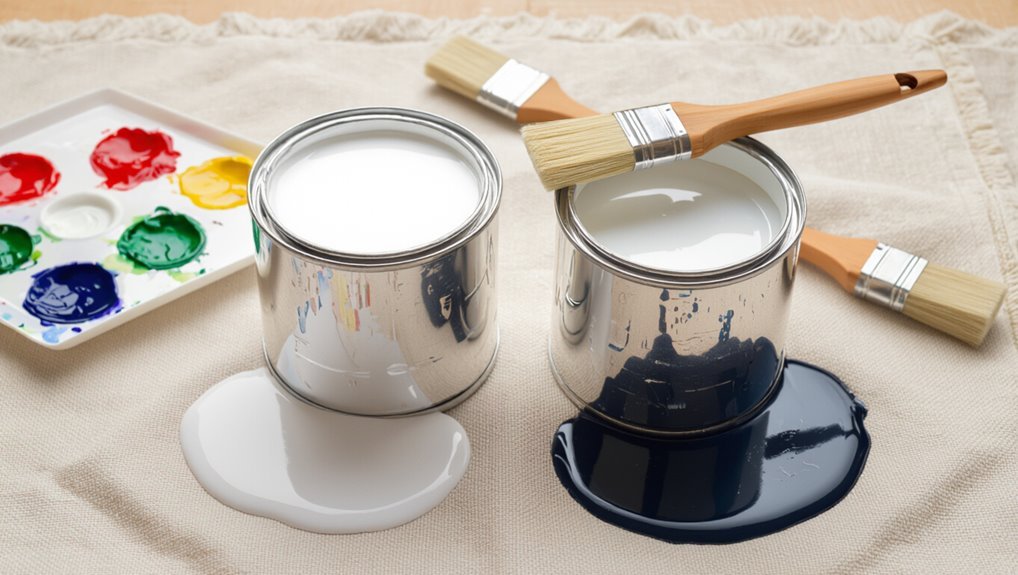
Can you mix flat and semi-gloss paint? You can, but you should weigh trade-offs:
Mixing Techniques may alter adhesion and durability, while Sheen Effects will shift unpredictably across surfaces.
Test small patches first, match base formulas, and thin sparingly.
Expect a finish that’s neither fully matte nor high-gloss; use this deliberately for changing areas, not where uniformity matters.
What This Guide Covers
Mixing flat and semi-gloss can work in some situations, but before you try it you’ll want a clear plan for when and how to do it.
This guide covers practical steps: comparing paint types, matching sheen levels, prepping surfaces, blending or layering strategies, touch-up tips, and when to avoid mixing.
You’ll get concise, actionable advice to achieve consistent, durable finishes.
Why Flat and Semi-Gloss Behave Differently
You’ll notice flat and semi-gloss paints look different because they reflect light differently—flat scatters light while semi-gloss bounces it more directly.
That happens because semi-gloss contains more resin and fewer pigments, creating a smoother, shinier film.
Understanding those resin and pigment differences helps you predict finish, durability, and touch-up behavior.
Surface Light Reflection
Because their binders and pigment loading differ, flat and semi-gloss paints reflect light in distinct ways that change how surfaces look.
You’ll notice flat finishes scatter light, increasing light diffusion and hiding imperfections, while semi-gloss directs more light, boosting contrast and sheen variation.
When you mix them, expect uneven highlights and altered texture perception, so test first to predict visual effects.
Resin And Pigment Differences
Resin and pigment formulation drives the core differences between flat and semi-gloss paints: flat finishes use higher pigment-to-binder ratios and matting agents that scatter light, while semi-gloss contains more resin and fewer light-scattering additives, producing a smoother film that reflects light directly.
You’ll notice resin types affect durability and sheen, while pigment properties influence hiding, tinting strength, and surface texture.
How Mixing Changes Sheen and Light Reflection
When you blend flat and semi-gloss paints, the combined sheen lands between the two and alters how light bounces off the surface.
You’ll notice subtle sheen variations across walls, trim, or cabinetry depending on ratios. Those shifts change light dynamics, revealing texture more or less and modifying perceived depth.
Plan mixes to control highlights without surprising glare.
How Mixing Affects Durability and Wear
Sheen changes don’t just affect appearance — they also change how a surface stands up to scuffs, moisture, and cleaning. When you mix flat and semi-gloss, durability factors shift: you may gain slightly better wear resistance than flat but lose some stain resistance of semi-gloss. Expect uneven performance across surfaces; test first.
| Property | Effect |
|---|---|
| Scuffing | Moderate |
| Moisture | Variable |
| Cleaning | Reduced |
| Longevity | Mixed |
| Finish uniformity | Inconsistent |
Will a Mixed Batch Stick? Adhesion and Compatibility
You’ll want to check whether the mixed finish bonds to the substrate, since flat and semi-gloss formulas can respond differently to porous or previously painted surfaces.
Test adhesion on a small area to see if the blend cures properly and resists peeling or chipping.
If you notice poor bonding or slow cure, don’t proceed without sanding, priming, or using a compatible product.
Surface Compatibility Issues
1 key question to answer is whether your mixed flat and semi-gloss paint will actually stick to the surface—adhesion depends less on sheen and more on surface prep, existing coatings, and formulation compatibility. Check surface texture and adjust application techniques; rough, glossy, or chalky substrates need sanding, deglossing, or primer to guarantee bonding.
| Surface | Issue | Fix |
|---|---|---|
| Smooth gloss | Poor bite | Sand |
| Chalky | Powdering | Prime |
| Porous | Absorbs | Seal |
| Textured | Uneven | Brush/roll |
Adhesion And Cure
Although mixing flat and semi-gloss paints can alter drying behavior, what really determines whether the blend will stick is chemistry and prep:
make sure the existing coating is sound, clean, and properly abraded, and use a compatible primer when switching finish levels or paint types.
You’ll improve adhesion with proper adhesion techniques, respect manufacturer cure times, and test a small area to verify bonding before full application.
How Mixing Changes Color and Tinting
When you mix flat and semi-gloss paints, the finish alters how light reflects and that subtle change can shift the perceived color and tint; a glossy binder pulls pigments into a slightly deeper, cooler-looking tone while a flat binder scatters light and can make the same pigment appear softer and warmer.
You’ll notice color perception shifts and tint variations across mixes, so test samples before committing.
When Mixing Flat and Semi-Gloss Is OK
If you’re matching sheen across a single wall or blending trim and walls for a changeover look, mixing flat and semi-gloss can be fine as long as you test small patches first.
You’ll get flat finish benefits like hiding imperfections while using semi gloss advantages for durability where needed.
Test adhesion, guarantee proper primers, and accept slight sheen variation before committing.
When You Should Avoid Mixing Them
You should avoid mixing flat and semi-gloss in high-moisture areas because flat finishes can trap moisture and lead to mildew.
Don’t mix them on trim, since trim needs a more durable, washable semi-gloss for wear and cleaning.
When in doubt, keep ceilings and walls flat and reserve semi-gloss for trim and high-use surfaces.
Avoid High-Moisture Areas
Because moisture amplifies differences in sheen and durability, don’t mix flat and semi-gloss in bathrooms, laundry rooms, or other damp spaces. You’ll compromise moisture resistance and uneven wear in high-humidity paint applications. Choose one finish per area for consistent performance.
| Area | Recommendation |
|---|---|
| Bathroom | Use semi-gloss |
| Laundry | Use semi-gloss |
| Shower | Avoid mixing |
| Basement | Prefer moisture-resistant finishes |
Don’t Mix On Trim
1 clear rule: don’t mix flat and semi-gloss on the same trim, since the sheen contrast will highlight imperfections and look inconsistent.
You’ll damage trim aesthetics and undermine finish consistency. Use one sheen for continuous lines to preserve paint durability and avoid odd sheen variations.
If you need contrast, separate surfaces—walls versus trim—so changes stay intentional and clean.
Step-by-Step Test for a Mixed Batch
Start by preparing a small test panel so you can evaluate color, sheen, and adhesion before committing to a full wall.
Measure your planned mixing ratios, mix a small batch, and apply with the same brush or roller you’ll use on the job.
Measure your mixing ratios, make a small batch, and test with the same brush or roller you’ll use.
Note drying time, appearance, and adhesion.
Record testing methods, results, and adjustments before scaling up to larger volumes.
Common Mixing Ratios Pros Use
When pros mix flat and semi-gloss, they usually stick to simple, repeatable ratios—common blends are 75/25, 50/50, and 25/75 (flat/semi-gloss)—so you can predict sheen and performance while keeping formulas easy to replicate.
You’ll choose a ratio based on desired sheen, durability, and washability.
These mixing ratios reflect professional techniques that balance appearance with function for specific surfaces.
Tools and Techniques for an Even Mixed Finish
Before you mix, prep the surface by cleaning, sanding glossy areas, and priming any bare spots so the blend adheres evenly.
Use a good-quality roller for large areas and a brush for edges, and keep a small test panel to confirm the sheen and texture.
Work in thin, consistent coats and maintain a wet edge to avoid lap marks.
Surface Preparation Steps
1 key to a seamless flat-to-semi-gloss changeover is thorough surface prep: you’ll gather the right tools, clean and sand each area, and feather edges so the two sheens blend without obvious ridges or texture differences.
Next, remove dust, degrease glossy spots, fill imperfections, and sand smooth.
Match paint types and respect sheen levels to guarantee adhesion and consistent appearance before priming.
Tools And Application
Gather the right tools and you’ll make blending flat and semi-gloss straightforward: a quality angled brush for cutting in, a short-nap roller for semi-gloss areas, a slightly thicker nap roller for flat surfaces, sanding sponges, tack cloths, and a good-quality paint tray and liners.
You’ll use proper brush selection and roller types, feathering edges and working wet-to-wet for seamless shifts.
- Angled brush for cutting in
- Short-nap roller for semi-gloss
- Thicker-nap roller for flat
- Sanding and tack prep
Troubleshooting Common Problems After Mixing
If your blended flat and semi-gloss mix looks off after application, don’t panic — most issues have straightforward fixes you can try. Check mixing techniques and paint compatibility first. Re-stir, sand glossy spots, thin small runs, or recoat after drying. Test on scrap.
| Problem | Fix |
|---|---|
| Streaks | Re-stir, use consistent strokes |
| Drip | Thin, smooth, sand |
| Patchy sheen | Sand, recoat |
| Blush | Improve ventilation |
| Poor adhesion | Check compatibility |
Safer Alternatives: Primers, Topcoats, and Touch-Up Tricks
When mixing finishes doesn’t give the look or durability you want, consider safer alternatives like primers, topcoats, and targeted touch-up techniques to get professional results without redoing the whole job.
You can adjust surface prep and use appropriate primer types, understand topcoat benefits, apply precise touch up techniques, and respect mixing ratios for small blends.
- Choose primer types by surface
- Pick topcoat benefits needed
- Practice touch up techniques
- Follow mixing ratios strictly
Costs, Time, and Aesthetic Trade-Offs
Balancing costs, time, and aesthetics means weighing immediate expense against long-term satisfaction: you can save money by blending flat and semi-gloss or by skimping on prep, but that often increases labor later for touch-ups or refinishing and can leave visible inconsistencies that bother you.
Do a brief cost analysis up front, factor time for fixes, and consider the aesthetic impact on room cohesion.
Quick Checklist: Should You Mix Flat and Semi-Gloss?
You’ve weighed costs, time, and aesthetics, so now ask a few quick, practical questions to decide whether mixing flat and semi-gloss will work for your project.
Consider surface, durability, and desired finish types and sheen levels before proceeding.
- Is the surface high-traffic or decorative?
- Will light highlight mismatched sheen levels?
- Can you spot-test first?
- Are you okay with touch-up inconsistencies?
Frequently Asked Questions
Can Mixing Flat and Semi-Gloss Affect Indoor Air Quality or VOC Levels?
Yes — mixing finishes can change VOC emissions and indoor air quality; you’ll notice different paint fumes and potential health effects like headaches or irritation, so you should ventilate well, use low‑VOC products, and limit exposure.
Will Pets or Children Be More Affected by a Mixed-Sheen Finish?
Yes — you’ll notice pets and children aren’t chemically more at risk, but sheen durability and texture differences mean surfaces clean differently, so you’ll manage stains and wear more, which can affect hygiene and interaction frequency.
Can You Use a Mixing Calculator App for Precise Sheen Ratios?
I recommend using a mixing calculator app; I once matched coffee blends by ratio, proving precision helps. You’ll get consistent sheen compatibility, follow mixing techniques, and avoid surprises—apps give repeatable, accurate sheen ratios every time.
Does Mixing Sheens Impact Paint Drying Time in High Humidity?
Yes — humidity effects slow drying times when you mix sheens; you’ll notice longer tack times and extended cure, especially with flatter components, so you’ll need more ventilation and patience to achieve proper film formation and hardness.
Will a Mixed Batch Behave Differently Under Different Lighting Types?
About 65% of viewers notice sheen shifts; you’ll see color variation and texture differences under warm, cool, or directional light, so mixed batches will reveal uneven gloss and subtle hue changes as lighting changes.
Conclusion
In short, you can blend flat and semi-gloss, but expect a compromise: a kinder, less flashy finish that nods to both durability and subtlety. It won’t be perfect—think of it as a tasteful truce rather than a marriage—but it can rescue a project when you’re between cans. If you want consistency and longevity, use primers or proper topcoats; otherwise, gently proceed and accept the charmingly imperfect result.
