
Can You Paint Kitchen Wall Tiles? Step-By-Step Guide
Yes—you can paint kitchen wall tiles if you prep properly and pick the right products. You’ll clean and degrease, sand or scuff glossy surfaces, repair grout or chips, then apply a high‑bond primer and thin coats of epoxy or tile‑specific paint. Finish with a moisture‑resistant clear sealer and let everything cure fully for durability. This’s a budget‑friendly DIY for confident beginners, and if you keep going you’ll get step‑by‑step guidance on tools, timing, and tips.
Can You Paint Kitchen Wall Tiles? (Short Answer)
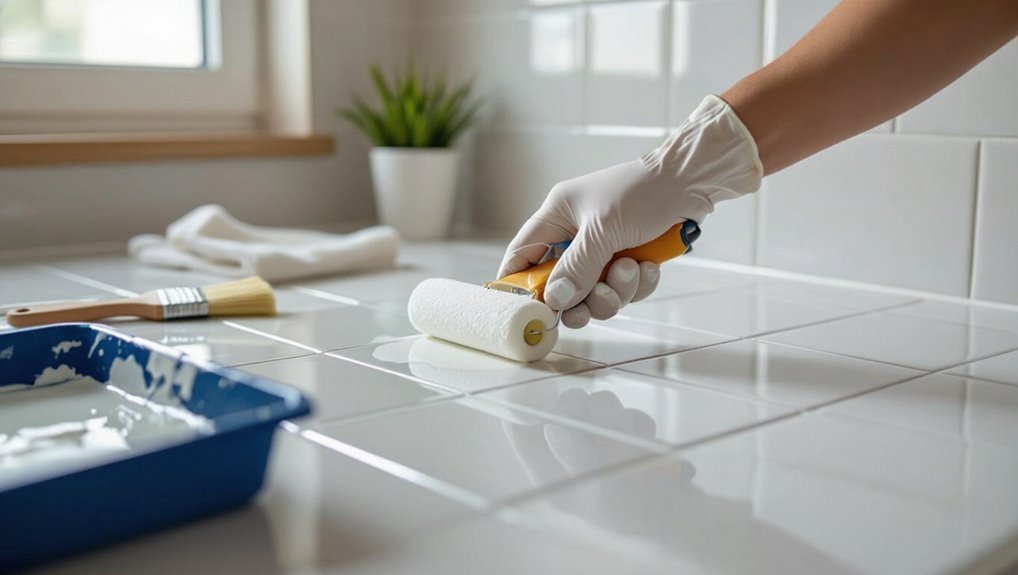
Although you’ll get better, longer-lasting results with proper prep and the right products, yes—you can paint kitchen wall tiles.
You can transform grout lines, refresh color, and improve kitchen aesthetics with durable primers and paints designed for tiles.
Tile painting works well for cosmetic updates, saves money, and gives quick results if you clean, sand, prime, and use the right topcoat for moisture resistance.
Who This Guide Is For and How to Use It
This guide is for homeowners, renters with landlord approval, and DIYers who want to refresh kitchen wall tiles without a full remodel.
You’ll need basic to intermediate DIY skills—comfort with sanding, priming, and using a brush or roller—to get good, lasting results.
Follow the step-by-step sections in order and check the tips for tricky spots and required materials.
Who Should Paint Tiles
If you’re tackling outdated or damaged kitchen tiles but want a budget-friendly update without a full replacement, this guide is for you.
You’ll learn tile painting considerations and basic project planning to decide if painting fits your goals, timeframe, and budget.
- You want a quick aesthetic refresh
- You’re on a tight budget
- You can handle prep work
- You’ll follow maintenance tips
Skill Level Needed
Now that you know when painting tiles makes sense, let’s look at who should tackle the job and how to use this guide.
You’ll need basic DIY skills: steady hands, patience, and attention to detail. The guide suits confident beginners and intermediate DIYers.
It covers tile preparation steps and painting techniques clearly, so you can follow sequencing, safety tips, and troubleshoot common issues without professional help.
How To Use Guide
Start by reading the overview to confirm the project fits your situation and skill level. Then follow each step in order—prepping, priming, painting, and sealing—to get consistent results.
This guide suits DIYers wanting reliable tile painting techniques and clear surface preparation tips. Follow steps sequentially, work safely, and test finishes.
- Gather tools and materials
- Review safety precautions
- Practice on a spare tile
- Schedule curing time
Which Tile Types Take Paint Well : And Which Don’t
You’ll find that porous tiles, like unglazed terracotta or quarry tiles, accept paint and primers much more readily because they soak up adhesion.
Nonporous surfaces — especially glazed ceramic — resist paint unless you roughen or etch them and use a bonding primer.
Keep in mind glazed ceramic has more limitations and often needs extra prep to get a durable finish.
Porous Tiles vs Nonporous
Tile porosity matters because it determines how well paint will bond: porous tiles like unglazed ceramic, quarry, or terracotta absorb primer and paint, giving you better adhesion.
In contrast, nonporous surfaces—glazed ceramic, porcelain, and glass—repel coatings and usually need sanding, etching primer, or a bonding agent for reliable results.
- Recognize tile material differences for best results.
- Prioritize surface preparation importance.
- Test adhesion in a hidden spot.
- Choose primers matched to porosity.
Glazed Ceramic Limitations
If your tiles are glazed ceramic, expect more preparation and limits on paint longevity compared with porous options.
You’ll need thorough cleaning, sanding, and a high-quality primer to address glazed durability concerns. Even then, ceramic paint compatibility varies; choose products labeled for nonporous surfaces and follow manufacturer instructions.
Expect higher risk of chipping and more frequent touch-ups than with porous tiles.
When to Paint Tiles Vs Replace Them
When should you repaint kitchen wall tiles and when should you replace them? Decide based on condition, budget, and longevity.
Painting suits minor wear; tile painting cons include reduced durability. Replacement offers fresh layout and durability—tile replacement pros outweigh painting if tiles are cracked or moldy.
- Minor chips or faded glaze: paint
- Cracked or loose tiles: replace
- Budget short-term fixes: paint
- Long-term value: replace
Best Paint and Primer for Kitchen Tiles
You’ll want to choose a paint made for tile or high-bond surfaces, plus a primer that bonds to glossy ceramic or porcelain.
Consider epoxy or polyurethane paints for durability and semi-gloss to satin finishes for easy cleaning.
Match primer type to your tile surface—etching or bonding primers for smooth tile—to guarantee the finish lasts.
Best Tile Paint Options
Choosing the right paint and primer for kitchen tiles makes the difference between a durable, professional-looking finish and one that chips or peels within months.
You’ll want trusted tile paint brands, excellent adhesion, and thoughtful color selection to match style and light.
- Durable epoxy or enamel tile paints
- Water-based acrylics for easy cleanup
- High-adhesion specialty formulas
- Satin or semi-gloss finishes
Primer Types For Tiles
After picking the right tile paint, the primer you use will determine how well that finish sticks and lasts.
Choose a bonding primer for smooth ceramic, an epoxy primer for high-moisture areas, or a shellac-based primer for stain blocking.
Focus on tile surface preparation—cleaning and etching—and use proper primer application techniques: thin, even coats, light sanding between coats, and full cure before painting.
Durability And Finish Choices
While tile paint can transform your kitchen, its longevity depends on matching finish and primer to use and to the room’s wear and moisture.
Pick durable, washable paints and primers that bond to smooth ceramic or resist humidity, and you’ll cut down on chipping, staining, and frequent touch-ups.
Consider durability factors and finish options:
- Use a bonding primer for slick tiles
- Choose semi-gloss for cleanability
- Consider epoxy for heavy wear
- Matte for low-traffic, decorative areas
How to Estimate Time, Cost, and Materials
Estimate time, cost, and materials by first measuring the tiled area and listing tasks: cleaning, sanding, priming, painting, and sealing.
For accurate time estimation, create a timeline breakdown per task.
Do a cost analysis including primer, paint, sealant, brushes, and tape.
Use material selection to match tile type.
Combine project planning with budget considerations so you buy enough supplies and schedule work efficiently.
How to Test Paint Adhesion on Your Tiles
Before you start painting, make sure the tiles are spotless by scrubbing with a de-greaser so dirt and oils won’t block adhesion.
Then do a small adhesion patch: apply primer and paint to an inconspicuous tile, let it cure, and try a firm tape pull or scratch test.
If the paint stays put, you can proceed confidently; if it flakes or lifts, address surface prep or consider a different product.
Surface Cleanliness Check
A quick surface cleanliness check tells you whether paint will stick to your kitchen tiles or just peel off later.
You’ll test small areas after using surface preparation techniques and tile cleaning methods to remove grease and grime. Check for residue, soap film, or wax before priming.
- Rinse thoroughly
- Dab with alcohol
- Check for beading
- Let fully dry
Paint Adhesion Patch
Once your tiles are clean and dry, test a small, inconspicuous area to see if paint will actually stick. Perform an adhesion test: apply primer, paint, let dry, then score and peel. This confirms Tile preparation and prevents wasted work. Use this quick patch to evaluate bonding before committing to full coverage.
| Step | Action |
|---|---|
| 1 | Clean |
| 2 | Prime |
| 3 | Paint |
| 4 | Dry |
| 5 | Score/Peel |
How to Clean and De-Grease Tile Surfaces
Scrub the tiles with a degreasing cleaner to remove oil and cooking residue so paint will stick properly; you’ll want to focus on grout lines and any glossy spots where grease accumulates.
Use tile cleaning techniques and surface preparation tips to guarantee adhesion.
- Rinse thoroughly with warm water
- Wipe with microfiber cloth
- Use a soft brush on grout
- Dry completely before priming
How to Sand and Scuff Tiles Safely
Now that your tiles are clean and grease-free, you’ll need to lightly sand or scuff the surface so primer and paint will bond.
Use gentle sanding techniques: 220–320 grit sandpaper or a non-woven scuff pad.
Wear goggles, a dust mask, and gloves.
Choose safe materials—low-dust pads and disposable cloths—and wipe residue with a damp microfiber cloth before priming to guarantee adhesion.
How to Repair Cracked Grout and Chipped Tiles
Repairing cracked grout and chipped tiles fixes more than looks—you’ll also prevent moisture damage and guarantee paint or primer adheres evenly.
Tackle grout repair and tile restoration methodically: remove loose grout, clean, apply new grout or epoxy, and replace or fill chips. Seal grout after curing to protect.
Follow these steps:
- Remove damaged grout and debris
- Clean with a mildew-safe cleaner
- Apply matching grout or epoxy
- Fill or replace chipped tiles
How to Prime Tiles for Long-Lasting Adhesion
Before you prime, make certain the tile surface is completely clean, dry, and free of grease or silicone so the primer can bond properly.
After cleaning, sand glossy tiles lightly and remove dust.
Sand glossy tiles lightly after cleaning, then thoroughly remove all dust before priming.
Choose a high-quality bonding primer designed for ceramics.
Apply evenly, follow manufacturer drying times, and use proper tile preparation and adhesion techniques to guarantee primer cures fully before any topcoat.
How to Paint Tiles: Tools and Step-by-Step Technique
Gather your tools and set up a clean, well-ventilated workspace—painting tiles requires the right supplies and a methodical approach to get durable, professional-looking results.
You’ll follow tile painting techniques and project preparation steps:
- Degrease and sand tiles
- Mask surrounding areas
- Apply primer and allow to cure
- Use thin, even coats of tile-specific paint and finish with a sealer
Getting Clean Edges Around Outlets, Trim, and Counters
1 simple trick to get crisp lines is to mask precisely and work from the painted tile toward the trim and outlets, not the other way around.
Use delicate edge taping techniques: press tape firmly, fold around corners, remove at a 45° angle while paint’s tacky.
For outlet protection methods, remove plates, cover openings with painter’s tape or plastic, and patch any stray paint immediately.
How to Seal Painted Tiles and Which Sealers to Use
After the paint cures, you’ll want to protect your work with a clear sealer that matches the tile’s location and traffic level.
Choose sealer types and sealing techniques based on moisture and wear. Apply thin, even coats and allow full cure between layers.
- Water-based polyurethane for low-moisture walls
- Durable acrylic for moderate traffic
- Epoxy for high-moisture zones
- Matte or gloss finish options
How to Maintain and Clean Painted Kitchen Wall Tiles
Keep your painted kitchen wall tiles looking fresh by wiping spills promptly and using gentle, nonabrasive cleaners; this prevents stains and preserves the sealer.
For routine tile care, dust or dry-mop, then clean with a mild detergent and soft cloth. Avoid bleach, abrasive pads, and harsh chemicals.
Reseal high-use areas yearly and spot-test cleaners first to protect finish and color.
Common Mistakes and When to Call a Pro
While DIY tile painting can save time and money, common mistakes—like skipping proper cleaning, using the wrong primer, or applying too-thick coats—can ruin adhesion and finish.
While DIY tile painting saves time and money, poor prep, wrong primer, or heavy coats ruin adhesion and finish.
So, you’ll want to correct small errors quickly and call a pro if you see persistent peeling, large-area bubbling, or uneven grout damage that won’t sand or fill.
- Check for adhesion failures early
- Avoid incompatible paints
- Refinish only small areas yourself
- Seek professional help for widespread tile painting pitfalls
Frequently Asked Questions
Can Painted Tiles Emit Harmful Fumes After Curing?
Yes — if low-VOC products and proper curing aren’t used, paints can off-gas briefly; you’ll minimize fume safety risks by ventilating, choosing suitable coatings, and ensuring full cure, which also preserves tile durability long-term.
Will Painted Tiles Tolerate High-Heat Near Stoves?
They’ll tolerate moderate heat if you use heat-resistant paint and proper prep, but they won’t withstand direct high temperatures. You’ll need ongoing tile maintenance, avoiding extreme heat exposure and regularly inspecting for blistering or finish breakdown.
Can I Paint Patterned or Textured Tiles Without Losing Design?
Yes — you can paint patterned or textured tiles without losing design if you use tile painting techniques focused on thin coats, flexible primers, and careful sanding; design preservation tips include testing, masking raised areas, and sealing with clear topcoat.
How Long Before I Can Hang Pictures on Painted Tiles?
You can hang pictures after about 7 days of curing for maximum adhesion, though light hanging’s fine after 48–72 hours; guarantee tile preparation was thorough, use proper hanging frames anchors, and avoid heavy loads until fully cured.
Does Painting Tiles Affect Home Resale Value?
Will it hurt resale value? You’ll influence tile aesthetics and resale trends: tasteful, well-prepped painted tiles can boost appeal, but sloppy jobs deter buyers, so invest in quality finishes and neutral colors to protect home value.
Conclusion
Think of your kitchen like an old sailboat: repainting the tiles is a smart patch that keeps her seaworthy without rebuilding the hull. You’ll sand, prime, and paint carefully, like tightening rigging, and seal the work so the spray and spills don’t sneak belowdecks. If the tiles are too cracked or glazed, it’s time for new planks. With patience and the right materials, you’ll keep your galley bright and ready for many voyages.
