
Can You Paint Oil Based Paint Over Latex Paint – Compatibility Guide and Expert Tips
You can paint oil-based paint over latex, but only with proper prep to prevent adhesion failure. You’ll need to clean, degloss, sand, and spot-prime with an oil- or shellac-based or bonding primer so the oil paint can grab. Use natural-bristle brushes, thin coats, and appropriate temperatures and humidity, sanding between coats. Avoid painting over chalky, flaking, or incompatible surfaces—strip those to bare substrate. Keep going for step-by-step prep, primer choices, and troubleshooting tips.
Can You Put Oil-Based Paint Over Latex?
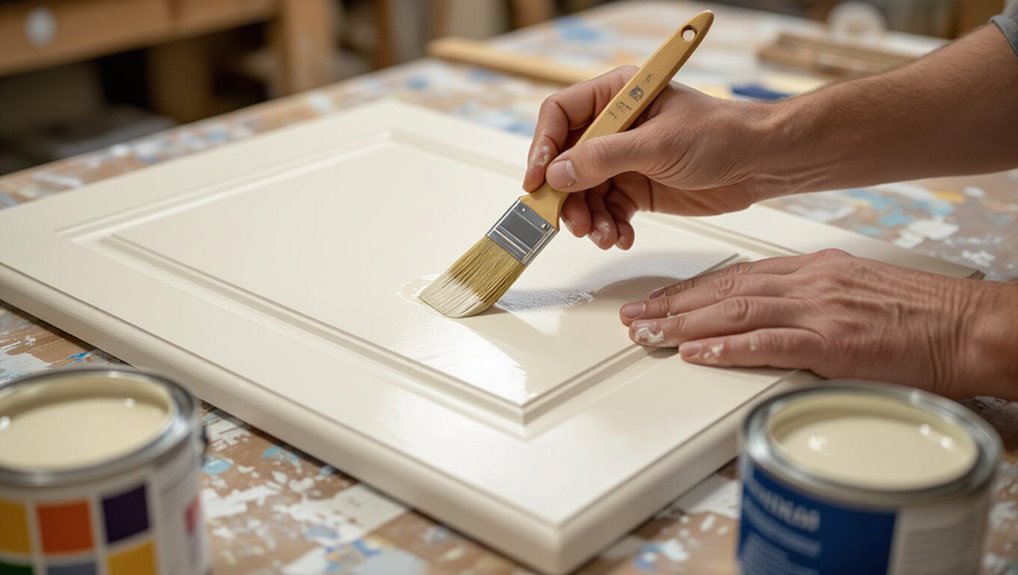
Yes — but you’ll need to prepare the surface properly.
Yes — but sand, clean, and prime the latex first to ensure oil paint bonds and won’t lift.
You’ll sand and clean the latex to promote oil paint adhesion, wipe away dust, and use a high-quality bonding primer designed for latex paint compatibility.
If you skip prep, the oil topcoat can lift or blister.
Follow manufacturer instructions, test a small area, and allow full curing between each step for reliable results.
Why It Fails: Adhesion & Coating Chemistry
You’ll often see oil paint fail on latex because the two systems don’t play well at the surface—latex has higher surface tension and can repel the oil’s binders.
Their film formation mechanisms are different, so the oil layer may not interlock or cure properly over the flexible latex film.
Any residues or contaminants left on latex also act as a barrier, preventing good adhesion and causing peeling or flaking.
Surface Tension Differences
Because oil-based coatings and latex paints have different surface tensions, the oil may bead up instead of spreading evenly over the latex.
As a result, it won’t wet the surface and form a strong bond. You’ll need to scuff, degloss, or use a primer/adhesion promoter to adjust surface energy.
Addressing surface tension is key for paint compatibility and reliable adhesion.
Film Formation Mismatch
When oil-based paint goes over latex, their film-forming chemistries clash: latex dries by water evaporation and polymer coalescence into a flexible film, while oil alkyds cure through oxidative crosslinking that hardens over time.
As a result, the two systems don’t intermix or bond at a molecular level. You’ll see poor adhesion when film thickness differs and incompatible curing time prevents proper interfacial bonding, causing delamination.
Contaminant Barrier Effects
Beyond incompatible curing mechanisms, surface contaminants create another major barrier to oil over latex adhesion.
You must identify contaminant types and address their barrier properties before painting. Clean, abrade, or prime to restore bonding.
- Oil, wax, grease: repel solvents
- Dust and chalk: block mechanical keying
- Silicone and mold: prevent wetting and cure
When Oil Over Latex Is Acceptable (Quick Decision Rules)
If you’re deciding whether to put oil-based paint over existing latex, follow a few quick rules to avoid adhesion or finish problems:
guarantee the latex is fully cured, scuff-sand glossy surfaces, remove contaminants, and prime with a bonding primer.
Use oil when you need oil paint advantages like durability and smooth leveling despite known latex paint drawbacks; test a small area first.
Surfaces to Avoid Painting Oil Over Latex
Because some surfaces won’t tolerate the bonding and flexibility differences, you should avoid applying oil paint over latex on substrates that are slick, chalky, or prone to movement—think glossy vinyl, exterior chalky siding, flexible plastics, and poorly adhered latex that flakes or powder.
You’ll face compatibility issues with these surface types; don’t risk adhesion failures.
- Vinyl and glossy plastics
- Chalky exterior siding
- Flaking or powdering latex
Prep Checklist: Clean, Degloss, Sand, and Spot-Prime
Now you’ll prepare the surface so the oil paint can stick and last: Clean with mild detergent, degloss glossy latex, sand to feather edges, and spot-prime problem areas. Consider spray technique for even coats and match finish types for consistency.
| Step | Action |
|---|---|
| 1 | Clean |
| 2 | Degloss |
| 3 | Sand |
| 4 | Spot-prime |
| 5 | Inspect |
Best Primers and Bonding Agents for Oil Over Latex
To get reliable adhesion when going oil over latex, you’ll want a primer or bonding agent designed for cross-compatibility.
Choose a high-quality oil-based or shellac primer for stubborn glossy latex, or a specialized bonding primer if the surface is problematic.
We’ll cover how each type promotes proper surface bonding and which to pick for common situations.
Proper Surface Bonding
When you want oil paint to stick over latex, the right primer or bonding agent makes all the difference; it creates a compatible surface that prevents peeling and secures even coverage.
You’ll focus on surface cleaning and proven adhesion techniques before priming. Choose a bonding primer, confirm full deglossing, and allow proper cure times.
- Scotch-Brite scuffing
- TSP cleaning
- Bonding primer application
Primer Selection Guide
Although oil paint can bond to properly prepped latex, choosing the right primer or bonding agent is what confirms long-term adhesion and a smooth finish.
You’ll pick between oil-based, shellac, and high-bond acrylic primers; each primer type suits different surfaces.
Check surface compatibility—porous, glossy, or stained—and follow manufacturer instructions.
Proper choice prevents peeling and confirms a durable oil-over-latex finish.
Tools and Conditions: Brushes, Rollers, Temperature, and Humidity
If you’re switching to oil-based paint over existing latex, pick the right tools and watch the conditions: natural-bristle brushes and solvent-compatible rollers give the smoothest finish, while painting in moderate temperatures (50–85°F or 10–29°C) and low humidity prevents poor adhesion and long dry times.
Consider:
- brush selection: choose high-quality natural bristles
- roller types: solvent-resistant nap
- work when humidity is low and stable
Step-by-Step: Applying Oil Paint Over Latex
First, you’ll prep the surface by cleaning, sanding glossy spots, and repairing any flaws so the oil will stick.
Next, you’ll apply a suitable bonding primer to guarantee proper adhesion between the latex and the oil paint.
Finally, you’ll roll or brush the oil-based paint in thin, even coats, allowing proper drying time between coats.
Surface Preparation Steps
1. You’ll prep the latex surface carefully using surface cleaning techniques and deglossing methods before any paint goes on.
Do these steps:
- Clean with a mild detergent, rinse, and dry thoroughly.
- Sand glossy areas and apply deglosser where sanding’s impractical.
- Remove dust with a tack cloth and guarantee the surface is completely dry and debris-free before proceeding.
Priming For Adhesion
Now that the surface is clean, sanded, and dust-free, prepare to prime so the oil paint will stick and perform well.
Choose a high-quality bonding primer compatible with both paint types to bridge surfaces. Apply thin, even coats per manufacturer instructions, allowing full cure between layers.
Use recommended adhesion methods—tack-free sanding and solvent wipe—so the oil topcoat bonds reliably.
Oil Paint Application
Begin by confirming the primed surface is fully cured, clean, and dust-free.
You’ll work methodically: stir oil paint, load brush or roller, apply thin even coats. Expect longer dry times but superior finish—oil paint advantages over latex shine through despite latex paint disadvantages like poor adhesion without primer.
- Thin coats
- Light sanding between coats
- Allow full cure before use
Troubleshooting Peeling, Lifting, and Uneven Finish
If your oil-over-latex job starts to peel, lift, or look uneven, don’t panic—you can usually fix it without stripping everything down.
Inspect for peeling causes like poor adhesion, contaminants, or incompatible primers.
Sand glossy areas, clean thoroughly, and feather edges.
Use adhesion-promoting primer and allow full cure between coats.
For lifting solutions, spot-sand and re-prime before repainting.
When to Strip to Bare Substrate Instead of Painting Over
When the existing paint is flaking, chalking, or has multiple layers of incompatible coatings, you should strip to the bare substrate rather than try to paint over it; painting on a compromised surface only delays failure and wastes time.
You’ll assess substrate types, pick stripping techniques, and proceed safely. Consider:
- Wood: chemical or heat stripping
- Metal: abrasive blasting
- Masonry: power washing and mechanical removal
Frequently Asked Questions
Can I Use Oil Paint Over Exterior Latex Without Sanding?
No, you shouldn’t; oil paint compatibility over exterior latex without sanding is risky. You’ll face exterior paint concerns like poor adhesion and peeling. You’ll need proper surface preparation, deglossing, or a suitable primer for success.
Will Oil Over Latex Affect Indoor Air Quality or VOC Levels?
Yes — you’ll increase indoor air quality concerns because oil over latex raises VOC emissions; you’ll smell solvents longer, need ventilation, and might use low‑VOC or sealers to reduce exposure and protect occupants’ health.
Can I Mix a Small Amount of Oil Paint Into Latex to Improve Adhesion?
No — you shouldn’t mix oil paint into latex; studies show improper blends fail up to 60% faster. You’ll harm adhesion techniques and negate oil paint properties; instead use proper primers or compatible adhesion promoters for reliable results.
Does Oil Over Latex Change Fire Resistance of the Painted Surface?
No, applying oil over latex doesn’t meaningfully change fire resistance; it mainly affects paint adhesion, so you’ll need proper surface prep and primers to guarantee bonding, but fire performance stays governed by substrate and coating fire ratings.
How Long Should I Wait Before Repainting Oil Over Latex With Latex?
Want to avoid problems? You should wait at least 24–48 hours for oil to dry to the touch, but ideally 7–14 days for full curing; guarantee proper surface preparation and sanding before repainting with latex.
Conclusion
Yes — you can put oil-based paint over latex, but only when you prep properly and choose the right situations. If you’re worried it’ll peel, degloss, sand, and scuff to give the oil something to bite, then prime with a bonding or shellac primer; don’t skip this step. Avoid flexible or chalky surfaces, and follow temperature/humidity guidelines. When done carefully, oil over latex gives durable, even coverage and the classic oil sheen you want.
