
Can You Paint Stained Concrete? Best Methods Explained
Yes — you can paint stained concrete, but you’ll need to test adhesion, prep thoroughly, and pick the right primer and paint for the stain and traffic. Clean, etch, and confirm there’s no sealer or moisture; strip or prime sealed areas. Use masonry primers with acrylic for light use or epoxy for heavy wear, and finish with an appropriate sealer. Follow patch tests and cure times, and keep going to learn inspection, prep, and maintenance steps.
Can You Paint Stained Concrete? Short Answer and Decision Checklist
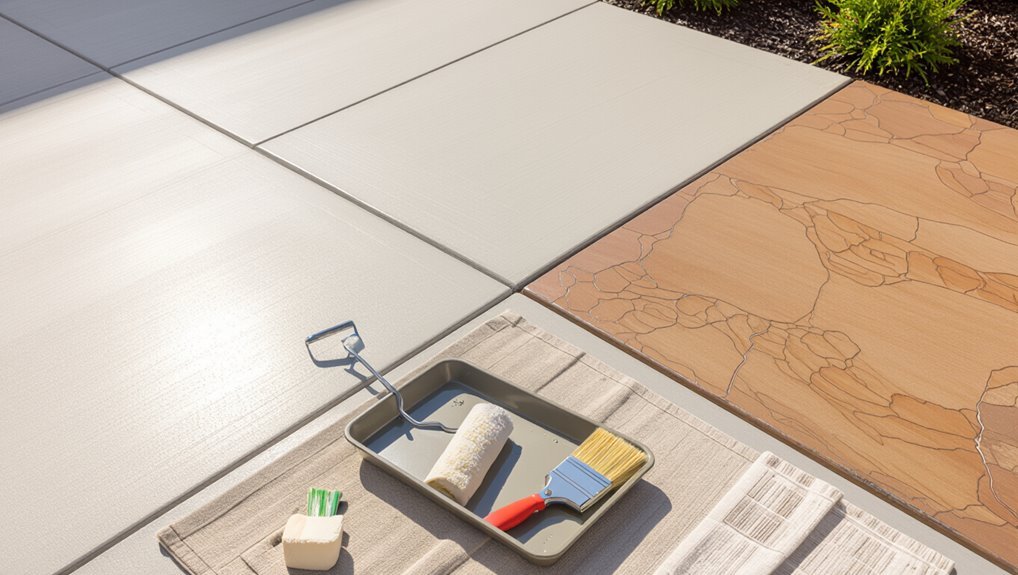
Wondering whether you can paint stained concrete? Yes—you can, but decide based on condition, stain type, and desired look.
Test adhesion first: clean, etch, and dry the surface, then try a small patch to check paint adhesion.
Test adhesion first — clean, etch, dry the area, then try a small patch to confirm paint will stick.
If the stain’s sealed or deeply absorbed, you may need stripping or primer.
Choose suitable concrete paint and follow manufacturer prep instructions.
How Stained Concrete Differs From Painted Concrete
If you decide to paint over stained concrete, keep in mind that stained and painted concrete behave very differently.
You’ll notice stained benefits like depth, permanence, and breathable finish that soaks into pores, while paint forms a surface film that can peel and hide texture.
You’ll weigh stained benefits against painted drawbacks such as maintenance, adhesion issues, and potential color loss.
When Not to Paint Stained Concrete
When the stained finish still looks good or the concrete needs to breathe, don’t paint it—painting can trap moisture, hide the character you paid for, and create peeling or adhesion problems down the line. If you value original patina, aren’t sure about painting techniques, or worry about color selection, leave stain exposed.
| Reason | Action |
|---|---|
| Good finish | Preserve stain |
| Moisture risk | Don’t paint |
| Patina valued | Keep exposed |
| Uncertain techniques | Consult pro |
Inspecting the Slab: What to Look For First
Before you roll on paint, walk the slab and look closely: check for hairline and structural cracks, spalling or flaking, efflorescence (white powder), oil or paint residues, and areas of previous repair.
You’ll perform a quick surface assessment, noting texture, adhesion problems, and contamination.
Prioritize thorough crack inspection to decide if repairs are needed before prepping and priming the concrete.
Check for Moisture, Efflorescence, and Alkali
Because trapped moisture, efflorescence, and alkali can ruin paint adhesion and finish, you need to test the slab for dampness and salt deposits before priming.
Perform moisture testing with a meter or tape method, do a careful surface inspection, and treat visible salts via efflorescence removal.
Neutralize high pH and select alkali resistance primers so paint bonds and lasts.
How Previous Sealers Affect Paint Adhesion
Testing for moisture and salts is only part of the prep—what’s already on the slab matters just as much. You’ll identify sealer types (penetrating, film-forming, acrylic) because they change adhesion factors. Remove incompatible sealers or abrade film-formers. Use primers for stubborn coatings. Compare options:
| Sealer | Effect on Paint | Prep |
|---|---|---|
| Penetrating | Minimal impact | Clean |
| Film-forming | Reduces adhesion | Abrade/strip |
Adhesion Test: Simple Tape and Pull Tests
When you’re ready to confirm paint will stick, perform simple tape-and-pull tests across several spots on the slab: press quality masking tape firmly, rub to engage adhesion mechanisms, then pull sharply.
Check for coating or sealer removal and note tape strength used. Repeat on stained and unpainted areas.
Use results to decide if cleaning, etching, or primer are needed before painting.
Repair Cracks, Spalls, and Surface Defects Before Painting
Before you paint stained concrete, assess crack severity so you know whether to seal, stitch, or replace sections.
Patch spalled areas with a compatible repair mortar and follow manufacturer cure times.
Smooth surface imperfections with a skim coat or grinder so the finish adheres evenly.
Assess Crack Severity
Start by inspecting each crack and spall to determine how deep and active the damage is, because that decides whether you can patch it or need professional repair.
You’ll perform a crack assessment: measure width, probe for movement, and note moisture.
Use severity evaluation to categorize hairline, structural, or active cracks, then prioritize repairs or consult a contractor for significant or expanding defects.
Patch Spalled Areas
Tackle spalled areas by removing loose concrete, cleaning the cavity, and choosing the right repair mortar so the patched surface bonds and sheds water.
You’ll tackle spalled area repair and concrete patching like a pro:
- Chip out loose material.
- Clean and dampen the area.
- Apply bonding primer.
- Trowel repair mortar flush, cure per instructions.
Smooth Surface Imperfections
While paint can hide color variations, it won’t fix structural flaws, so you should repair cracks, spalls, and other surface defects to guarantee a smooth, durable finish.
Start by cleaning and drying the area, then use appropriate surface fillers for hairline cracks and larger voids.
Apply smoothing techniques—trowel, sanding, and feathering—until changes are seamless, then prime before painting.
Match Prep to Surface Texture and Porosity
Because concrete’s texture and porosity determine how coatings adhere and look, you should tailor surface prep to the specific substrate before you paint stained concrete.
You’ll focus on surface preparation and texture compatibility to guarantee durability.
Follow these steps:
- Inspect porosity and roughness.
- Match primer type to porosity.
- Profile smooth surfaces mechanically.
- Use breathable primers for high porosity.
Removing Old Sealers and Contaminants Safely
Before you paint, remove old sealers and contaminants so your new coating can bond properly and last.
Use a proper sealer removal product or mechanical methods, following label instructions. Test a small area, wear PPE, and guarantee ventilation.
Clean residues with a pH-neutral cleaner and rinse thoroughly.
Prioritize contaminant safety to prevent coating failure and protect your health.
Etching and Profiling Stained Concrete for Paint
Before etching, you should assess the surface condition to spot stains, laitance, or uneven texture that affect adhesion.
Pick an etchant suited to your concrete and stain type—acid, alkaline, or mechanical—and follow manufacturer instructions.
Finally, measure the profile depth you create so the paint has the proper tooth for long-term bonding.
Assess Surface Condition
Start by inspecting the stained concrete for surface contaminants, coatings, and the existing profile so you know exactly what prep is required; paint needs a clean, porous surface to bond to, so etching or mechanical profiling is often necessary if the stain left a smooth or sealed finish.
- Surface assessment: check for residue and sealers.
- Condition evaluation: note cracks and spalling.
- Test adhesion with tape or primer.
- Plan mechanical or chemical prep accordingly.
Choose Proper Etchant
When you’re ready to etch stained concrete for paint, pick an etchant that matches the stain type and the surface’s current profile so you create the right porosity without damaging the slab; muriatic acid works fast on dense, sealed concrete, while a buffered concrete cleaner or alkaline etcher is safer for acid-sensitive dyes or decorative overlays.
You’ll choose etchant types and follow etching techniques to test, neutralize, rinse, and dry before priming.
Measure Profile Depth
Measure the surface profile with a depth gauge or ASTM-compliant replica tape so you know how much etching the stained concrete needs before paint.
You’ll perform profile analysis, measure depth across zones, and record results to guide etchant choice and sanding.
Follow steps:
- Clean area
- Use replica tape
- Read gauge
- Log measurements and adjust etching accordingly
Primers That Bond to Stained Concrete
Choosing the right primer matters for painted stained concrete because it creates the bond that keeps your finish from peeling or flaking.
You should use priming techniques that match stain type and surface porosity, applying compatible bonding agents to improve adhesion.
Clean, etch, and dry the surface first, then roll or spray a high-penetration masonry primer for consistent coverage and long-lasting hold.
Best Paint Types for Stained Concrete: Acrylic vs Epoxy vs Elastomeric
You’ll want to compare acrylic, epoxy, and elastomeric options to match performance with your concrete’s needs.
Acrylic paints are easy to apply, breathable, and great for low-traffic areas, while epoxy offers hard, chemical-resistant protection for garages and workshops.
Elastomeric membranes flex and seal hairline cracks, so they’re ideal where waterproofing and movement resistance matter.
Acrylic Paint Pros
Although acrylics aren’t as chemically tough as epoxy, they’re a great choice if you want fast-drying, breathable color that’s easy to apply and touch up on stained concrete.
You’ll get good acrylic durability and solid color retention for light-traffic areas.
Consider benefits:
- Quick drying
- Breathable finish
- Easy touch-ups
- Low odor
Epoxy Coating Benefits
When you need maximum durability and chemical resistance, epoxy coatings are the go-to for stained concrete—they form a hard, protective layer that stands up to heavy foot traffic, spills, and abrasion.
You’ll get excellent epoxy durability and enhanced epoxy aesthetics, with glossy or matte finishes that highlight stain patterns.
Apply on a properly prepped surface for long-lasting protection and easy maintenance.
Elastomeric Membrane Uses
If you need extreme flexibility and crack-bridging capability for exterior stained concrete, elastomeric membranes are worth considering.
You’ll get elastomeric benefits like waterproofing and UV resistance. Follow proper application techniques for adhesion and thickness.
Consider:
- Surface prep is critical.
- Use primer as recommended.
- Apply multiple thin coats.
- Allow full cure before traffic.
Choosing Finish and Color Over a Stained Base
Which finish suits your stained concrete best depends on the look and durability you want: you’ll weigh color selection and finish options to match style and traffic. Pick satin for subtle sheen, gloss for vibrancy, matte for natural look, or textured for slip resistance. Decide based on exposure, maintenance, and desired contrast with the stain.
| Finish | Look | Use |
|---|---|---|
| Satin | Soft sheen | Moderate traffic |
| Gloss | High shine | Low traffic |
| Matte | Natural | High traffic |
| Textured | Grip | Wet areas |
Translucent Coatings to Preserve Stained Look
Because you want the stained depth to show through, translucent coatings are the go-to choice: they seal and protect while letting color, veining, and texture remain visible.
You’ll use translucent finishes for subtle color enhancement without hiding details.
Choose:
- Penetrating sealer
- Acrylic topical
- Epoxy semi-gloss
- Urethane clearcoat
Apply thin, even coats and cure fully.
Decorative Effects: Stencils, Stripes, and Overlays
Want to add pattern and personality without covering the stain? You can use stencil techniques to apply motifs with translucent or semi-opaque coatings, keeping the base visible.
For clean results, tape edges, work from center outward, and remove templates before full cure.
Stripe patterns suit edges and walkways—measure, chalk lines, and use low-build overlays for crisp, durable contrast.
Calculating Coverage and Coats Needed
After laying out stencils or stripes, you’ll need to figure how much product and how many coats your project will require.
Do quick coverage calculations: estimate square footage, check manufacturer spread rate, allow waste for texture, and plan coat recommendations based on opacity.
Do quick coverage calculations: estimate square footage, check spread rate, add texture waste, and plan coats.
- Measure area.
- Consult label.
- Add 10–15% waste.
- Decide 1–3 coats.
How to Apply Primer for Best Adhesion
When you’re ready to prime, make sure the concrete is clean, dry, and free of efflorescence or dust so the primer can bond properly; patch any cracks and etch smooth slabs per the primer instructions.
Then use a roller or low-pressure sprayer to apply an even, thin coat following the manufacturer’s recommended spread rate.
Choose primer types for porosity, test adhesion, allow full cure, and follow application techniques for uniform coverage.
Paint Application: Rollers, Brushes, and Sprayers
Now that your primer’s cured and the surface prep is done, pick the right tools for applying your paint: rollers for large, flat areas; brushes for edges, corners, and touch-ups; and sprayers for fast, even coverage on textured or extensive surfaces.
- Use proper roller techniques for smooth, even coats.
- Load brushes lightly for crisp edges.
- Follow sprayer tips to avoid runs.
- Blend overlaps for consistent finish.
Dry Times: Between Coats and Before Traffic
You’ll usually wait 1–4 hours between coats depending on the paint and humidity, so check the manufacturer’s recommendation before applying more.
Walk on the surface only after it’s dry to the touch—typically several hours—but keep heavy foot or vehicle traffic off until the coating reaches full cure.
Remember that “dry” and “fully cured” aren’t the same: a tack-free surface can still need days to weeks to achieve full hardness.
Dry Time Between Coats
Although concrete paint can feel dry to the touch within a few hours, you should wait the manufacturer’s recommended interval between coats to confirm proper adhesion and finish.
Use proper drying techniques and maintain ideal conditions. Follow these steps:
- Check label times.
- Verify temperature/humidity specs.
- Use fans for airflow.
- Avoid dust settling before recoating.
Wait Before Foot Traffic
If you want the paint to hold up underfoot, resist walking on stained concrete until the manufacturer’s recommended cure time has passed—this is usually longer than the dry-to-touch interval and depends on temperature, humidity, and paint type.
Use proper drying techniques like controlled ventilation and moderate heat to speed safe curing.
Wait the full interval before exposing the surface to foot traffic to avoid scuffs and adhesion failure.
Full Cure Versus Tack
When you’re painting stained concrete, distinguish between tack (dry-to-touch) times and full cure times: tack tells you when you can lightly handle or recoat without disturbing the film, while full cure is when the coating reaches its rated hardness and chemical resistance and can take regular foot traffic or cleaning.
- Check tack time on the label.
- Wait between coats accordingly.
- Allow full cure before traffic.
- Test before heavy use.
Sealers for Painted Stained Concrete: What to Use
Because a sealer locks in color, protects paint from abrasion, and eases cleaning, choosing the right one is just as important as proper surface prep. You should weigh sealant types and application techniques: water-based for UV clarity, solvent-based for hardness, polyurethane for traffic, and acrylic for easy recoat. Choose based on wear, sheen, and ventilation.
| Type | Best Use |
|---|---|
| Water-based | UV clarity |
| Solvent-based | High durability |
| Polyurethane | Heavy traffic |
| Acrylic | Easy recoating |
| Penetrating | Matte protection |
Maintenance Routine to Extend Painted Life
To keep painted stained concrete looking its best, you should set a regular cleaning schedule using mild detergent and a soft broom or pressure washer on low.
Check the finish yearly to determine when sealant reapplication is needed, usually every 1–3 years depending on traffic and exposure.
For chips or wear spots, tackle spot repairs promptly—clean, sand, touch up paint, and reseal the area to prevent larger failures.
Regular Cleaning Schedule
If you want your painted stained concrete to last, set a simple cleaning schedule and stick to it:
- Sweep daily to remove grit and prevent abrasion.
- Mop weekly with pH-neutral cleaner; this balances cleaning frequency and surface care.
- Spot-clean spills immediately to avoid staining.
- Inspect monthly for wear and follow maintenance tips, documenting problems so you can address them promptly.
Sealant Reapplication Timing
Keeping that cleaning routine will help you spot wear early, but reapplying sealant at the right intervals is what actually extends the painted surface’s life.
Check annually and after harsh weather; high-traffic areas may need recoat sooner. Track sealant longevity by noting gloss loss, water beading, and abrasion.
Establish an application frequency based on exposure so you don’t over- or under-seal.
Spot Repair Procedures
Several simple spot repairs can keep painted stained concrete looking fresh without a full recoating. You’ll inspect for chips, clean the area, and perform targeted fixes quickly.
Follow this routine:
- Remove loose paint and debris.
- Clean and etch for proper surface preparation.
- Apply compatible primer and paint.
- Re-seal patched spots and blend edges for uniformity.
How to Refresh or Repaint Worn Areas
When a stained concrete surface shows wear—faded spots, scuffs, or peeling in high-traffic areas—you can restore appearance without stripping the entire stain.
When stained concrete shows wear in high-traffic areas, you can refresh its look without full stripping.
Clean and degrease, perform targeted stain removal where contaminants remain, lightly abrade worn zones, and feather edges.
Apply a compatible stain or tinted sealer after careful color matching.
Finish with a protective sealer and allow proper curing before use.
Troubleshooting Peeling, Blistering, and Bubbling
If your stained concrete is peeling, blistering, or bubbling, start by identifying the root cause—moisture intrusion, poor adhesion, or incompatible products are the usual suspects.
Then follow targeted steps:
- Test moisture and improve surface preparation.
- Strip loose coating; use peeling solutions.
- Sand and prime to enhance adhesion for blistering prevention.
- Repair voids and apply appropriate bubbling fixes.
Fixing Discoloration and Blotchy Coverage
Because uneven color usually comes from application errors, substrate issues, or inconsistent stain absorption, you’ll want to diagnose the specific cause before repainting.
If staining absorbed unevenly, neutralize or strip problem areas, then feather new stain using color blending techniques and proper application tools—rollers for even laydown, brushes for edges.
Test small sections, let them dry, and adjust dilution or technique until coverage looks uniform.
Environmental and Safety Considerations During Prep and Painting
Although prep and painting might seem straightforward, you’ll need to control dust, fumes, and runoff to protect yourself and the environment:
Although painting seems simple, control dust, fumes, and runoff to protect yourself and the environment.
- Wear respirators and gloves, follow safety protocols.
- Use low-VOC paints to reduce environmental impact.
- Contain and sweep debris; avoid letting wash water enter drains.
- Ventilate spaces and dispose of solvents per local hazardous-waste rules.
Budgeting a DIY vs. Pro Paint Job for Stained Concrete
Now that you’ve handled safety and cleanup, you’ll want to set a realistic budget before choosing whether to DIY or hire a pro for painting stained concrete.
Compare DIY budgeting—materials, tools, sealers, time—with professional pricing including labor, prep, and warranty.
Use clear cost comparisons during project planning to decide if savings justify effort or if consistent, faster results warrant hiring a contractor.
Hiring Tips: Questions to Vet Stained-Concrete Contractors
How do you separate a capable stained‑concrete contractor from an overpromising bidder?
Ask focused questions about contractor qualifications, references, warranty scope, and realistic project timelines.
Verify licenses and insurance, see past jobs, and get written estimates.
- Licenses/insurance
- Portfolio/references
- Warranty/cleanup
- Detailed timeline and payment schedule
Common Mistakes That Cause Paint Failure : And How to Avoid Them
Don’t skip prepping the surface — if the concrete’s dirty, flaky, or still has old stain residues, the paint won’t bond and will peel.
Check for moisture and lingering stains first, because damp concrete or oil/chemical staining will cause bubbling and color bleed-through.
Fix these issues by cleaning, etching, and testing for moisture before you paint.
Poor Surface Preparation
If you skip proper surface preparation, even the best paint won’t stick or last on stained concrete. You must do surface cleaning, etch or scuff, and guarantee proper ventilation while work’s underway.
Follow these steps:
- Sweep and degrease thoroughly.
- Etch or sand glossy areas.
- Repair cracks and fill pores.
- Rinse, dry fully, then prime.
Moisture And Stain Issues
Because moisture and old stains can lurk beneath the surface, they’ll undermine paint adhesion and cause blotchy discoloration or peeling over time.
You should test for moisture before painting, remove oil or dye stains, and choose primers with proven stain compatibility.
Install proper moisture barriers where needed, or use vapor-permeable coatings.
Skipping these steps guarantees premature failure and costly rework.
Cost-Benefit Checklist: Paint Over Stain or Restore the Stain
When weighing whether to paint over stained concrete or restore the stain, you should compare upfront costs, long-term maintenance, and the look you want to keep.
Painting can be cheaper and quicker now, but restoring preserves the original character and often costs less over time if durability matters.
- Cost analysis: immediate vs lifecycle.
- Aesthetic impact: original vs painted.
- Maintenance frequency.
- Resale and environmental factors.
Frequently Asked Questions
Can You Paint Stained Concrete Outdoors in Freeze-Thaw Climates?
Yes — you can, but you’ll need weather considerations and thorough surface preparation; you’ll choose breathable, flexible coatings, fix cracks, remove loose material, and apply during stable temperatures to prevent peeling, flaking, and freeze-thaw damage.
Will Painted Stained Concrete Withstand Vehicle Oil and Gasoline Spills?
Painted stained concrete can resist vehicle oil and gasoline spills if you use oil resistance coatings and sealers; you’ll get good spill protection, but prompt cleanup and periodic resealing are essential to maintain long-term performance.
Can You Apply Topical Paint Over Acid-Stained Concrete Without Neutralizing?
Would you skip neutralizing acid stain and just paint? You shouldn’t — if you apply topical paint over acid-stained concrete without neutralizing, it won’t adhere well; you’ll need neutralization, cleaning, and proper primers for durability.
How Long Does Painted Stained Concrete Retain Warranty Coverage?
Typically your painted stained concrete’s warranty lasts one to five years, though terms vary; check warranty details and follow maintenance tips like regular cleaning and resealing to keep coverage valid and extend the finish’s lifespan.
Do Painted Stained Concrete Floors Affect Indoor Air Quality Long-Term?
Yes — if you prepare concrete properly and use low-VOC coatings, painted stained concrete rarely harms indoor air quality; long term effects depend on paint durability, maintenance, and ventilation, so you’ll monitor and reseal as needed.
Conclusion
You can paint stained concrete, but don’t rush—think like an art restorer, not a house painter. Inspect for moisture, efflorescence, cracks, and adhesion; prep thoroughly, choose compatible paint or sealer, and budget wisely or hire a vetted pro. When it’s right, paint refreshes; when it’s wrong, it peels like an old fresco. Decide whether to revive the stain or give the floor a new coat, and proceed with care.
