
Can You Paint Walls on Different Days? Planning Your Project
Yes — you can paint walls on different days if you plan drying windows, batch consistency, and prep. Split work by wall, coat, or room to match available time and energy, and note each paint’s recoat window so you don’t trap tacky edges. Clean, repair, and prime problem areas on day one to avoid visible seams, keep temperature and humidity steady, and wrap tools to save time. Keep going and you’ll find tips for timing, tools, and touch-ups.
Can You Paint Walls on Different Days? (Yes : When and How)
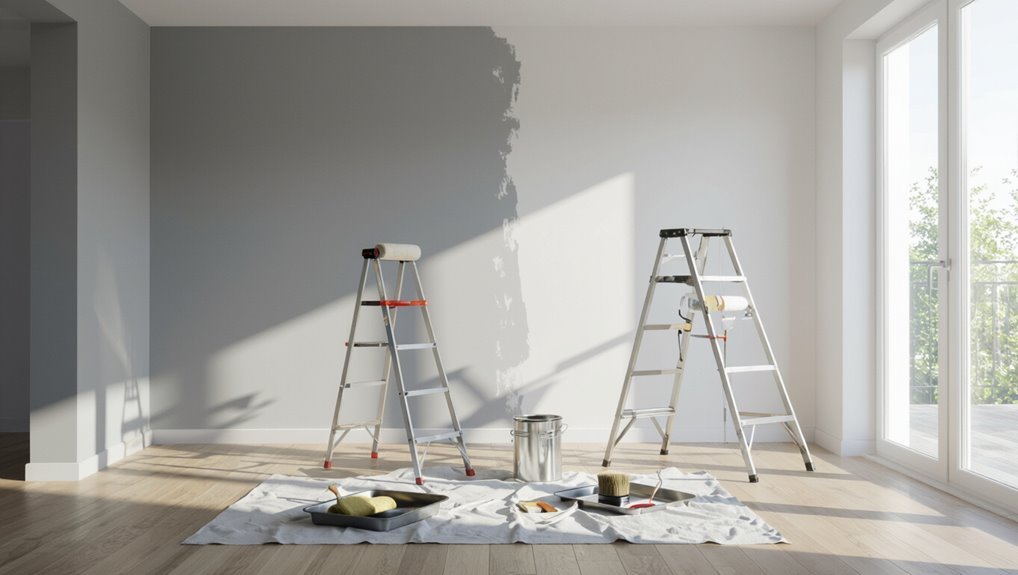
Yes—you can paint walls on different days, and doing so often makes projects more manageable.
You’ll keep paint organization tidy, label cans, and store brushes between sessions.
Use clear day planning: schedule drying times, tackle one wall or coat at a time, and prep surfaces in advance.
That way you’ll avoid rushing, maintain finish consistency, and finish efficiently without wasting materials or energy.
When to Split a Painting Job Across Days: Key Criteria
When you’re deciding whether to split a painting job across days, weigh factors like room size, paint drying times, and your available time and energy.
Balance your paint schedule and project timeline to maintain consistency checks and color matching.
Consider paint types, surface preparation, drying conditions, and weather considerations.
- Plan daily scope
- Check drying windows
- Inspect joins for matches
- Note surface readiness
How Paint Type Changes Multi-Day Plans
Different paints dry at very different rates, so you’ll need to plan your multi-day schedule around each product’s dry time.
Pay attention to the recoat window—some paints let you repaint within hours while others require a full day or more. Knowing those limits prevents tacky finishes and keeps your timeline realistic.
Dry Time Differences
Because the type of paint you choose affects how long you’ll wait between coats and before moving furniture, plan your multi-day painting schedule around dry times.
You’ll consider drying techniques, environmental factors, paint adhesion, and scheduling flexibility to keep progress steady.
Adjust equipment choices, monitor weather considerations, maintain workspace organization, and verify color matching before final steps.
- Use dehumidifiers or fans
- Track humidity and temp
- Choose compatible primers
- Stage furniture strategically
Recoat Window
Although paint type dramatically alters your recoat window, you can plan multi-day work reliably by knowing each product’s timing and conditions.
Check manufacturer recoat timing for latex, oil, and specialty paints. You’ll schedule paint layering to avoid tackiness or poor adhesion.
Adjust for humidity and temperature, and allow longer intervals when venting is limited. Test a small section before continuing.
Drying and Recoat Times: What to Know Before Pausing
Before you pause between coats, know how long paint needs to dry and when you can safely recoat — wet paint can trap solvents, cause poor adhesion, or show lap marks if you hurry.
Before pausing between coats, confirm paint is dry — rushing can trap solvents, ruin adhesion, or cause lap marks.
You should check drying conditions and plan paint layering to avoid problems. Consider:
- Temperature and humidity affect cure time.
- Touch test versus tack-free.
- Manufacturer recoat window.
- Ventilation speeds drying.
Surface Prep on Day One to Prevent Seams Later
Start by cleaning and degreasing the walls so paint will stick evenly.
Patch and sand any dents or cracks until the surface feels smooth.
Then prime the repaired areas to guarantee consistent absorption and prevent visible seams when you paint on different days.
Clean And Degrease Surfaces
Clean and degrease every wall you’ll be painting on day one so paint adheres evenly and you avoid visible seams later.
For effective surface preparation, use appropriate cleaning materials, a degreaser, and soft cloths; rinse and let dry fully. Target grease, dirt, and nicotine before priming.
- Use a mild detergent solution
- Apply trisodium phosphate for heavy grease
- Rinse thoroughly
- Dry completely
Repair And Smooth Imperfections
Anyone can miss small dings and cracks, but repairing and smoothing every imperfection on day one stops visible seams when you paint.
You’ll perform a quick flaw assessment, choose repair methods and leveling techniques, and use smoothing techniques and texture application to match surroundings.
Focus wall preparation on surface quality, finishing touches and paint adhesion so repairs blend and stay durable.
Prime For Consistent Absorption
Someone who’s done a lot of painting knows that priming right away evens out how the wall soaks up paint, preventing darker or shinier seams later.
You’ll prime for consistent application and check surface compatibility so later coats match. Do the prep on day one, let the primer cure, then paint confidently without visible joins.
- Choose the right primer
- Patch and sand first
- Follow cure times
- Test a small area
How to Prime If You’ll Paint on a Later Day
If you’ll wait a few days before painting, apply a high-quality primer that’s compatible with your paint and let it fully cure—this seals porous surfaces, evens absorption, and gives the topcoat something to bond to.
Use proven priming techniques: roll for coverage, cut edges, and back-roll glossy spots.
Check paint compatibility, label dry times, and protect the primed surface from dirt and moisture until you return.
Planning Cutting‑In Across Multiple Days
Plan which edges you’ll cut each day so you always leave a clean, paint-ready boundary for the next session: prioritize high-visibility or hard-to-roll areas first, work in consistent sections (like one wall or one side of a room), and note where wet edges end so you can restart without lap marks.
Plan daily cut-ins: mark start/stop points, tackle visible or hard-to-roll areas first, and work consistent sections to avoid lap marks.
Use cutting in techniques and multi day strategies.
- Mark start/stop points
- Cut high-visibility first
- Work one section at a time
- Keep tools and paint organized
Blending Wet and Dry Edges Without Brush Marks
When you come back to a partially painted wall, feather the edge of the fresh coat with a light, overlapping stroke to blur the seam.
Match the drying times by using the same paint batch, sheen, and ambient conditions so the new paint levels the same as the old.
If you work quickly and keep a wet edge, you’ll avoid visible brush marks.
Feathering The Edge
Because paint dries at different rates, you’ll need to blend wet and dry edges quickly to avoid visible seams; feathering softens the shift so the wall looks seamless.
Use feathering techniques and careful edge blending:
- Lightly drag a dry brush over the wet edge
- Work from wet into dry, not the reverse
- Remove excess paint from the brush
- Keep strokes short and consistent
Match Drying Times
If you want wet and dry edges to disappear, make their drying times match so you can blend without leaving brush marks; adjust room temperature, humidity, and paint consistency to keep both surfaces workable.
When you return, assess drying conditions and slightly re-wet the dry edge or thin fresh paint for seamless paint layering.
Work quickly, use light strokes, and avoid overworking the joint.
Match Sheen and Color Across Painting Sessions
To keep your touch-ups invisible, match both the paint color and the finish exactly before you start. You’ll control paint sheen and color consistency by using identical cans, consistent surface treatment, and careful preparation steps.
Use blending techniques at edges and plan finishing touches for visual uniformity. Monitor drying conditions only as needed for application timing.
- Use same batch
- Prep edges
- Feather strokes
- Match finish
How Temperature and Humidity Affect Multi‑Day Painting
You’ll want to keep paint within its ideal temperature range—usually between about 50–85°F—to get consistent results.
High humidity slows drying and can cause milky finishes or adhesion problems, while very dry or hot conditions speed drying and can lead to brush marks or poor leveling.
Plan your multi‑day work around cooler, low‑humidity periods or use dehumidifiers and heaters to keep conditions steady.
Ideal Temperature Range
When you’re planning multi‑day painting, keep temperature and humidity in mind because they directly control drying time and adhesion; you should aim for a steady 50–85°F, avoid rapid swings, and monitor surfaces to guarantee proper cure.
Balance temperature effects with ventilation and follow product specs; humidity considerations matter but will be covered later.
- Aim for 50–85°F
- Avoid rapid swings
- Monitor surface temperature
- Follow product specs
Humidity’s Impact Drying
Although humidity often feels like a background detail, it directly controls paint drying speed and film formation.
So you should track both relative humidity and surface moisture during multi‑day jobs. You’ll monitor humidity levels and indoor climate to manage drying conditions, reduce drying variance, and optimize paint performance.
Good moisture control minimizes weather impact and humidity effects so coats cure evenly and bond properly.
Cold And Hot Weather
Because temperature and humidity together set the chemistry of drying, you need to plan multi‑day painting around both cold snaps and heat waves so each coat cures and bonds properly.
You’ll monitor temperature effects and adjust timing, ventilation, and product choice for reliable results.
- Delay in freezing temps
- Fast skinning in heat
- Control humidity indoors
- Choose seasonal primers and paints
Tools and Materials to Keep Between Painting Days
Gather the few tools and materials you’ll need overnight to keep your project tidy and ready to resume: cover remaining paint cans, wrap brushes and rollers to stay moist, and secure drop cloths and taped edges.
Focus on paint storage and brush maintenance. Use foil or airtight lids for roller care, note color matching details, keep equipment organization tight, and tidy your workspace setup for quick restart.
Protecting Partially Painted Rooms Overnight
Now that you’ve stored paint and wrapped brushes, turn your attention to guarding the room itself overnight.
You’ll want simple steps for overnight protection and moisture control so wet edges don’t tack, dust won’t settle, and humidity won’t ruin finishes.
- Cover floors and furniture securely
- Create airflow without drafts
- Block door gaps and vents as needed
- Check humidity with a gauge
Sequence Rooms: A Practical Day‑by‑Day Schedule
Start by mapping the house into manageable zones and plan each day around one or two contiguous rooms so you can move furniture, tools, and air movers efficiently. This keeps wet edges consistent, minimizes cross‑contamination of dust, and makes cleanup predictable.
Then create a simple room sequencing list tied to a realistic project timeline. Allocate prep/paint/dry windows, and schedule buffer days for touchups.
Handling Trim and Ceilings When Working on Different Days
Because trim and ceilings often require different tools, coatings, and dry times than walls, plan their workdays separately so you won’t bottleneck progress or recontaminate finished surfaces.
You’ll schedule trim techniques earlier or later than wall coats and address ceiling considerations for spray or roller methods. Coordinate drying, protect surfaces, and stagger tasks.
- Protect floors
- Mask edges
- Sequence coats
- Allow full cure
Common Mistakes When Splitting Painting Over Time
When you paint a room on different days, you can end up with visible color differences where sections meet if the batches or mixing aren’t matched.
You might also notice inconsistent paint sheen between coats applied at different times, which makes patchwork obvious.
Addressing batch consistency and sheen level before you start will save you from these common headaches.
Visible Color Differences
If you split a wall painting project across days without controlling materials and conditions, you’ll often notice visible color differences where the sections meet.
You must prioritize color matching and visual continuity by using the same batch, mixing cans, and keeping lighting consistent.
Avoid partial coats and note drying times to prevent hard-to-blend edges.
- Same batch and mix
- Consistent lighting
- Full coverage each session
- Track drying time
Inconsistent Paint Sheen
Along with matching color and coverage, sheen differences can ruin a seamless finish: gloss levels reflect light differently, so areas painted on different days may look mismatched even if the color and thickness are identical.
You should keep sheen consistency by using the same paint batch, sheen level, and application method; touch up immediately and feather edges to preserve finish uniformity across sessions.
Quick Fixes for Visible Seams and Lap Marks
Because seams and lap marks catch the eye, you’ll want quick, targeted fixes that blend paint and texture without redoing an entire wall.
Use seam visibility checks, lap mark solutions, paint blending and edge feathering. Match color and texture consistency, apply smart drying techniques, and follow simple repair strategies.
- Feather edges with a damp brush
- Blend wet into dry
- Spot color match
- Light texture skim
Touch Up vs. Repaint: When to Redo a Section
Decide whether to touch up or repaint by evaluating the size, visibility, and cause of the flaw: minor scuffs, small nail holes, or isolated lap marks usually need only a targeted touch-up, while widespread color shifts, patchy texture, or multiple repaired seams call for repainting the whole section so the finish looks uniform. Use touch up techniques and repaint strategies.
| Issue | Action |
|---|---|
| Scuff | Touch up |
| Nail hole | Touch up |
| Lap mark | Touch up |
| Patchy texture | Repaint |
| Color shift | Repaint |
Cost and Time Trade‑Offs for Phased Painting Projects
Phasing a paint job can stretch out your timeline and shift your budget, so weigh what you’ll save now against what you might pay later.
Phasing a paint job may save upfront costs but can extend timelines and increase long‑term expenses.
You’ll do cost analysis on labor expenses, paint selection and resource allocation, balancing project timeline with planning flexibility and time management to avoid scheduling conflicts.
- Budget considerations vs efficiency strategies
- Staggered labor costs
- Material waste risk
- Timeline checkpoints
Pro Tips From Painters for Successful Multi‑Day Jobs
When you split a painting job across multiple days, plan each session with the same care as a single‑day project so you won’t waste time or materials. Pros recommend scheduling work by drying times, grouping tasks (prep, cut‑in, roll), and laying out exactly what tools and paint you’ll need each day.
Use planning strategies that address project timeline, weather considerations, room layout, surface types, paint finishes, color matching, paint application, tool maintenance, and budget management.
Simple Checklist for Painting Across Multiple Days
You’ve planned the big picture—now make each painting day predictable with a short checklist you can follow from start to finish.
Use color selection tied to finish types, confirm project timeline and scheduling strategy, and note weather considerations for drying.
Keep surface preparation consistent, maintain tool organization, and label paint storage between sessions.
- Confirm color swatches and finish types
- Check project timeline and weather
- Prep surfaces and organize tools
- Secure and label paint storage
Frequently Asked Questions
Can I Legally Paint a Historic Home’s Exterior in Phases?
Yes — you can, but you’ll need to follow historic preservation rules and secure any required painting permits; check local preservation commissions, get approvals, document phases, and coordinate contractors so your phased exterior work stays compliant and protected.
Will Painting Across Days Affect Home Resale Disclosures?
Yes — you’ll need to disclose repainting; inconsistencies can hint at patchwork. You’ll want paint color consistency to avoid buyer distrust, since visible differences may affect resale value impact and prompt questions during inspections.
Can I Use Leftover Paint for Future Touch-Ups Years Later?
Yes — you can save leftover paint for future touch-ups if you store it properly. Seal cans, label mix details, keep paint storage cool and dry, and test color matching before full repairs to avoid noticeable differences.
Does Multi‑Day Painting Impact Indoor Air Quality Long Term?
Yes — multi‑day painting can affect indoor air quality long term, but you can minimize risks. You’ll use ventilation strategies, pick low‑VOC paint choice, schedule curing between coats, and keep occupants away until odors dissipate.
Should I Notify Neighbors if Exterior Painting Spans Weeks?
Yes — think of your painting as a boat docking: you’ll signal before arrival. You should notify neighbors, practice neighbor courtesy, and manage noise considerations so everyone stays comfortable while your crew paints over several weeks.
Conclusion
Yes — you can paint walls on different days, though your inner perfectionist will judge you. Split jobs when rooms, coats, or drying times demand it; match paint type, stir cans, and feather edges so seams don’t sneak in like passive‑aggressive comments. Prep thoroughly on day one, touch up rather than redo unless the patch screams for attention, and weigh cost versus convenience. Follow pros’ tips, keep a checklist, and pretend the uneven weekend schedule was intentional design.
