
Can You Use Murphy’s Oil Soap on Painted Walls Without Damage?
You can usually use diluted Murphy’s Oil Soap on washable painted walls like satin or semi‑gloss without harm, but you shouldn’t use it full strength or on flat/matte finishes. Test a hidden spot first, wipe gently with a well‑wrung cloth, rinse thoroughly, and avoid heavy scrubbing to keep the sheen intact. It’s gentle on sealed surfaces but can dull or soften paint if overused, and the rest of the guide shows safe steps and troubleshooting.
Quick Answer Can You Use Murphy’s Oil Soap on Painted Walls?
Yes — you can use Murphy’s Oil Soap on most painted walls if you dilute it properly and rinse well.
It’s safe on washable latex and oil-based paints for routine cleaning, but avoid it on flat/matte finishes, unsealed or delicate paints, and any textured surfaces that trap residue.
Test a small hidden spot first and skip it if the finish softens, fades, or becomes tacky.
Direct one-sentence verdict
If your paint is in good condition, you can use Murphy’s Oil Soap on painted walls sparingly and diluted, but avoid soaking.
Test a small area first, and skip it on flat or delicate finishes.
For a direct verdict: yes, you can use Murphy’s Oil Soap on painted walls cautiously—dilute it, use a soft cloth, rinse lightly, and stop if you see any softening, streaks, or dulling.
When it’s safe and when to avoid it
When your paint is in good condition and has a semi-gloss or satin finish, you can safely use diluted Murphy’s Oil Soap for light cleaning; avoid it on fresh, flat, chalky, or water-sensitive finishes and always test a hidden spot first, because soaking or using full-strength product can soften, streak, or dull the paint.
Use minimal water, soft cloths, and rinse quickly to prevent damage.
What Is Murphy’s Oil Soap and How It Works
Murphy’s Oil Soap is a liquid cleaner made from natural fatty acids and mild surfactants, so you’ll get grease-cutting action without harsh solvents. It’s slightly alkaline to neutral in pH and formulated to be gentle on finished wood and other sealed surfaces. Originally marketed for wood floors and furniture, it’s designed for finished, sealed surfaces rather than raw or unsealed paint.
Key ingredients and cleaning action
Because it’s a gentle, oil-based cleanser, Murphy’s Oil Soap uses a mix of biodegradable surfactants and light vegetable oils to lift dirt without stripping paint or finishes.
You’ll find mild solvents and conditioning agents that dissolve grime, suspend particles, and help rinse them away. That combo cleans effectively while leaving a subtle protective film that reduces streaking and restores surface sheen.
pH level and formulation characteristics
Although it looks and smells like a traditional oil-based cleaner, the product is formulated around mild, slightly alkaline surfactants and light vegetable-derived oils that lift soils without aggressively attacking paint finishes.
You’ll find a pH near neutral to mildly alkaline, which helps emulsify grease while minimizing etching.
Because concentrations and additives vary, you should dilute per label instructions and test a discreet spot first.
Intended surfaces and original use cases
That mild, slightly alkaline formula makes the cleaner safe for a range of household surfaces beyond wood floors.
You’ll find Murphy’s originally marketed for wood and finished surfaces—furniture, trim, and sealed cabinets—but people also use it on vinyl, tile, and some painted surfaces.
You should test first: it’s gentle, but finishes and paint types vary, so patch-check before full application.
How Painted Walls Differ Paint Types and Finishes
You’ll want to treat painted surfaces differently depending on the paint type and finish, since latex paints come in flat, eggshell, satin, and semi-gloss sheens that handle cleaning differently.
Oil-based paints are tougher but can be more susceptible to solvents and yellowing, while specialty coatings like chalk paint, textured finishes, enamel, and washable paints each need specific care.
Knowing these distinctions helps you choose the right cleaning method and avoid damage.
Water-based (latex) paints: flat, eggshell, satin, semi-gloss
Water-based (latex) paints come in four common sheens—flat, eggshell, satin, and semi-gloss—each balancing appearance, durability, and cleanability for different rooms and needs.
You’ll find flat hides imperfections but cleans poorly; eggshell offers mild durability; satin resists scuffs and wipes well; semi-gloss tolerates frequent cleaning and moisture.
Choose sheen based on room traffic and how often you’ll clean walls.
Oil-based paints: properties and vulnerabilities
Although oil-based paints dry slower than latex, they create a hard, durable film that resists stains and repeated scrubbing. This makes them ideal for trim, doors, and high-traffic areas.
You’ll find they’re less porous, hold glossy finishes, and tolerate harsher cleaners. However, they can yellow over time, crack if applied thickly, and soften with strong solvents—so clean gently.
Specialty coatings: chalk paint, textured, enamel, washable paints
When you pick specialty coatings like chalk paint, textured finishes, enamel, or washable paints, you’re choosing surfaces that behave very differently from standard latex or oil formulations; each brings unique porosity, durability, and cleaning needs that affect how you clean and maintain them.
| Coating | Sensitivity | Cleaning tip |
|---|---|---|
| Chalk paint | High porosity | Dry dust, spot test |
| Textured | Traps dirt | Soft brush then wipe |
| Enamel/washable | Durable | Diluted soap, rinse |
Compatibility Analysis Murphy’s Oil Soap vs Paint Types
You’ll want to match Murphy’s Oil Soap to your paint type before cleaning to avoid problems.
For latex and oil-based paints, test a small area first and use a diluted solution so you avoid stripping or softening the surface.
Matte and flat finishes are most at risk of sheen loss or discoloration, while semi-gloss and high-gloss finishes usually tolerate mild cleaning with minimal risk.
Latex paints: likely effects and precautions
If your walls are painted with modern latex paint, Murphy’s Oil Soap is generally safe for routine cleaning but you’ll want to take a few precautions to avoid dulling or removing the finish.
Test a hidden area first, dilute per label, use a soft cloth or sponge, rinse with clean water, and avoid heavy scrubbing or concentrated solutions that can strip sheen or lift older, poorly cured latex paint.
Oil-based paints: likely effects and precautions
Because oil-based paints form a harder, more alkyd-rich film than latex, Murphy’s Oil Soap is generally less likely to soften or lift them, but you should still proceed with care.
Test a small hidden area first, dilute the soap per directions, use a soft cloth, rinse thoroughly, and avoid prolonged scrubbing.
Stop if you notice any gloss change or tackiness.
Matte/flat finishes: risks of sheen loss and discoloration
While oil-based paints tend to withstand Murphy’s Oil Soap better, matte and flat finishes behave differently and need more caution.
You’ll risk dulling or uneven sheen, since low-luster binders are sensitive to cleaners. Test a hidden spot first; use minimal soap, dilute well, and blot gently.
Avoid heavy scrubbing—discoloration and permanent sheen loss can occur quickly.
High-gloss and semi-gloss: expected results and safety
When you clean high-gloss or semi-gloss painted surfaces with Murphy’s Oil Soap, expect a generally safe result because these finishes have harder, more durable binders and smoother surfaces that resist penetration and abrasion; you can use a mildly diluted solution and soft cloths or a sponge without worrying as much about sheen loss, though you should still avoid abrasive pads and heavy scrubbing to prevent micro-scratches or streaking.
| Surface | Dilution | Tip |
|---|---|---|
| High-gloss | Mild | Test first |
| Semi-gloss | Mild | Soft cloth |
| Trim | Mild | Rinse well |
How to Safely Use Murphy’s Oil Soap on Painted Walls Step-by-Step
Before you start, gather the right supplies and mix Murphy’s Oil Soap to the recommended dilution so you’re prepared.
Test a small, inconspicuous patch to confirm the solution and technique won’t harm the paint.
Then use gentle tools and motions, rinse and dry thoroughly, and repeat only as needed based on residue and soil level.
Step 1 Gather supplies and dilution guidelines
Since you’ll be working with a concentrated cleaner, gather everything you’ll need before you start: Murphy’s Oil Soap (original or one specifically labeled for painted surfaces), a clean bucket, warm water, a soft microfiber cloth or sponge, a second bucket for rinsing, and a few clean towels for drying.
Dilute per label—typically 1–2 tablespoons per gallon—mix gently, and keep dilution consistent.
Step 2 Perform a patch test (where and how)
Choose a discreet spot—like inside a closet door, behind a piece of furniture, or near a baseboard—and apply the diluted Murphy’s Oil Soap with a soft cloth or sponge using a small circular motion; wait 15–30 minutes, blot dry with a clean towel, and inspect for color change, softening, or finish dulling before proceeding to larger areas.
If no damage appears, test a second spot with the same paint sheen.
Step 3 Proper application technique (tools, motion, pressure)
Gather the right tools—a soft microfiber cloth or non-abrasive sponge, a bucket of the diluted Murphy’s Oil Soap solution, and a second clean towel for drying—and work in small sections so you can control pressure and rinse as needed.
Dip the cloth, wring thoroughly, wipe gently in horizontal strokes, avoid scrubbing, apply light even pressure, and re-fold the cloth to a clean face as it soils.
Step 4 Rinsing and drying procedure
After you’ve wiped a section with the Murphy’s solution, rinse it promptly with clean water to remove any residue that could dull the paint or attract dirt.
Use a clean sponge or microfiber cloth and change rinse water often.
Blot excess moisture with a dry microfiber towel and let the wall air-dry fully before touching furniture or rehanging artwork.
Step 5 When to repeat and how often
How often you repeat cleaning with Murphy’s Oil Soap depends on the room and the level of soil—typically every 3–6 months for general upkeep, more often in high-traffic areas like kitchens and hallways, and only as needed for spot cleaning.
You should monitor finish condition and scent; stop if paint softens.
- Monthly for heavy-use zones
- Quarterly elsewhere
- Spot-clean anytime
Alternative Cleaning Options for Painted Walls
Besides Murphy’s Oil Soap, you can often get great results with mild soap-and-water mixtures or commercial cleaners made for painted surfaces.
You can also use simple homemade options like diluted vinegar or a baking-soda paste for gentle scrubbing, but test a hidden spot first and avoid abrasive scrubbing.
Reserve specialty products—magic erasers, targeted degreasers, or stain removers—for stubborn marks and follow the product instructions and safety precautions.
Mild soap and water mixes
When you’re tackling routine grime or fingerprints, a mild soap-and-water mix is often the simplest, safest option for painted walls.
Use a few drops of gentle dish soap in warm water, wipe with a soft sponge, and rinse with a clean damp cloth.
Test a hidden spot first, work gently, and avoid oversaturating flat or matte finishes to prevent damage.
Commercial wall cleaners formulated for painted surfaces
If you want a faster, more consistent clean than mild soap delivers, consider commercial wall cleaners formulated for painted surfaces; they’re designed to remove grease, scuffs, and stains without stripping paint or leaving residue.
You’ll follow label instructions, test an inconspicuous patch, use a soft sponge or microfiber, rinse if directed, and avoid abrasive pads or heavy scrubbing that can dull or damage finish.
Homemade gentle cleaners (vinegar, baking soda) and safety notes
Although commercial cleaners work well, you can often tackle everyday grime with simple homemade solutions that are gentler on paint.
White vinegar diluted in water removes light grease and fingerprints, while a paste of baking soda and water lifts scuffs without scratching.
Test a hidden spot first, use soft cloths, rinse with clean water, and avoid prolonged soaking to protect paint and trim.
When to use specialty products for stains (magic eraser, degreasers)
Wondering whether a specialty product is worth pulling out for a tough spot?
Use a Magic Eraser sparingly on semi-gloss or gloss paint for scuffs—test hidden area first.
Reach for degreasers for kitchen grime, diluted per label, and rinse thoroughly.
Avoid aggressive chemicals on flat or chalky finishes.
When in doubt, start with gentle soap and escalate progressively.
Common Problems and Mistakes When Cleaning Painted Walls
When cleaning painted walls, don’t use undiluted Murphy’s Oil Soap or overly strong solutions, since they can soften or strip finish.
You should avoid excessive scrubbing that abrades paint and always test in an inconspicuous spot first.
Finish by rinsing thoroughly to prevent residue and streaks.
Using too-strong solutions or undiluted Murphy’s Oil Soap
If you pour Murphy’s Oil Soap too strong or use it undiluted, you’ll likely strip paint finish, leave cloudy residue, or cause streaks that are hard to remove.
You should dilute per label instructions, test an inconspicuous spot, and apply gently with a soft cloth or sponge.
Rinse thoroughly with clean water and dry to prevent film buildup and uneven sheen.
Excessive scrubbing and abrasion that removes paint
Scrub gently—rubbing too hard or using abrasive pads can wear away paint, especially on older or flat finishes.
You should use soft cloths or microfiber and light pressure, working in small sections. Avoid steel wool, rough sponges, or aggressive circular scrubbing that thins or strips pigment.
Rinse frequently, check progress, and stop if paint starts to dull, lift, or flake.
Not testing in an inconspicuous area
After you’ve learned to be gentle with scrubbing, don’t skip a simple spot-check before cleaning the whole wall.
Test Murphy’s Oil Soap diluted as directed on an out-of-sight patch—near a trim corner or behind furniture.
Wait for full drying to spot color change, sheen loss, or softening. If any issue appears, stop and choose a milder cleaner or consult paint manufacturer guidance.
Rinsing failures that leave residue or streaks
Rinsing improperly can leave a cloudy film or streaks that make freshly cleaned walls look worse than before; you’ll want to rinse thoroughly with clean water and a soft cloth or sponge to remove all soap residue.
Work top to bottom, change rinse water when it gets cloudy, and blot rather than rub to avoid streaks.
Finish with a dry microfiber cloth for uniform sheen.
Prevention and Best Practices for Maintaining Painted Walls
You can keep painted walls looking fresh by sticking to a regular light-cleaning routine with gentle methods like diluted Murphy’s Oil Soap and a soft cloth.
When spots appear—grease, crayon, scuffs, or mildew—treat them promptly with targeted techniques to avoid spreading or damaging the paint.
And before high-traffic events or projects, protect walls with drop cloths, corner guards, or temporary barriers to prevent new marks.
Regular light cleaning schedule and methods
When you clean lightly and regularly, painted walls stay fresh and need fewer deep cleanings; aim for a quick wipe-down every 1–2 weeks in high-traffic areas and once a month elsewhere.
Use a soft microfiber cloth and mild cleaner diluted per label instructions, rinse with plain water, and dry.
Work top-to-bottom, sections at a time, to avoid streaks and missed spots.
Spot-treatment techniques for grease, crayon, scuffs, and mildew
Keeping up with light, regular cleanings makes spot treatments faster and less frequent, but stains and marks will still happen in high-use areas.
For grease, dab Murphy’s diluted solution then rinse.
For crayon, try a magic eraser gently or baking soda paste.
For scuffs, use a pencil eraser.
For mildew, apply diluted bleach briefly, rinse, and dry; always test first.
Protecting walls during high-traffic activities
Because high-traffic activities increase the chance of dings, scuffs, and stains, take simple protective steps so your painted walls stay looking fresh longer.
You can prevent damage with barriers, mindful placement, and quick cleanup routines. Protect trim during projects and train family or workers to avoid contact.
- Use washable chair rails or temporary runners
- Place furniture pads and bumper guards
- Keep a microfiber cloth and Murphy’s-ready cleaner nearby
Troubleshooting If Damage or Streaking Occurs
If you notice residue or streaking after cleaning, start by gently rinsing the area with clean water and blotting dry to restore an even finish.
If marks persist or the paint looks uneven, you’ll want to decide whether a touch-up will blend or a full repaint is necessary.
For stubborn damage, peeling, or large affected areas, call a professional painter or restoration specialist to assess and repair.
How to remove residue and restore uniform appearance
Start by evaluating the streaks or tacky feel to determine whether you’re dealing with leftover soap, stripped finish, or watermarks.
If it’s soap residue, rinse with clean water using a microfiber cloth and dry immediately.
For watermarks, blot then wipe with a 50/50 vinegar and water solution, rinse, and dry.
Repeat gently until the finish looks uniform.
When to repaint vs. when to touch up
Once you’ve rinsed away residue and tried spot-cleaning watermarks, assess the damage to decide whether a full repaint or a touch-up will fix things.
If staining or sheen loss is localized and paint matches, touch up small areas after scuffing and priming.
Choose repaint when streaking spans large sections, color shifts occur, or texture and sheen differ noticeably across the wall.
Professional repair options and when to call a pro
When damage or persistent streaking won’t respond to rinsing and spot fixes, call a pro to assess structural issues, surface contamination, or finish problems that need specialized techniques or equipment.
They’ll recommend repairs, paint matching, or refinishing so you don’t make things worse.
Consider these professional options:
- Surface cleaning/decontamination with commercial agents.
- Spot repair and color-match repainting.
- Refinish or full repaint with proper primers.
FAQ Common Questions About Murphy’s Oil Soap on Painted Walls
You’ll find answers to common concerns about Murphy’s Oil Soap here, like whether it can remove paint or alter a wall’s sheen.
You’ll learn which washable or scrubbable paints are safe, how to tackle grease or nicotine stains without harming finish, and whether it’s suitable for trim, baseboards, and doors.
If you’re unsure about a surface, test a small hidden spot first.
Will Murphy’s Oil Soap remove paint?
Wondering if Murphy’s Oil Soap will strip your paint? You won’t usually see paint removal with proper use: dilute the soap per directions, test a hidden spot, and avoid prolonged scrubbing.
It’s safe on most cured, well-adhered paints, but it can loosen poorly bonded, flaking, or fresh paint. If paint peels during testing, stop and choose a gentler cleaner or consult a pro.
Can Murphy’s Oil Soap change the sheen of my wall?
Could Murphy’s Oil Soap alter your wall’s sheen? Yes—if overused or left on, it can temporarily dull glossy or semi-gloss finishes by leaving a residue or breaking down topical polish.
You can avoid this by diluting properly, wiping with a damp cloth afterward, and testing an inconspicuous spot first.
Regular, light cleaning won’t usually change sheen if rinsed well.
Is Murphy’s Oil Soap safe for washable or scrubbable paints?
If you rinse off Murphy’s Oil Soap and avoid overuse to protect sheen, you’ll also reduce the risk to washable or scrubbable paints.
You can safely use diluted soap on most scrubbable or washable finishes, testing a small hidden area first. Use a soft cloth or sponge, gentle pressure, and rinse thoroughly.
Don’t soak surfaces or scrub aggressively to prevent finish wear.
How do I clean grease or nicotine stains without harming paint?
How should you tackle stubborn grease or nicotine stains without stripping paint? Start by testing a hidden area.
Mix a few drops of mild dish soap or Murphy’s Oil Soap with warm water, apply gently with a microfiber cloth, and blot—don’t scrub.
Rinse with clean water and pat dry.
For persistent residue, repeat gently or use a dedicated cleaner rated safe for painted surfaces.
Can I use Murphy’s Oil Soap on trim, baseboards, and doors?
Wondering whether Murphy’s Oil Soap is safe for trim, baseboards, and doors? You can use it on painted woodwork, but dilute per label and test a hidden spot first.
Wipe gently with a soft cloth, avoid soaking edges or seams, and rinse or dry promptly to prevent residue.
For glossy or oil-based finishes, use milder cleaner or spot-test thoroughly.
Visual Guide and Quick Reference
You’ll find a simple patch test checklist to confirm paint compatibility before you clean.
Refer to the quick dilution and application cheat sheet for exact Murphy’s Oil Soap ratios and recommended tools.
Keep both handy so you can test, mix, and clean with confidence.
Patch test checklist
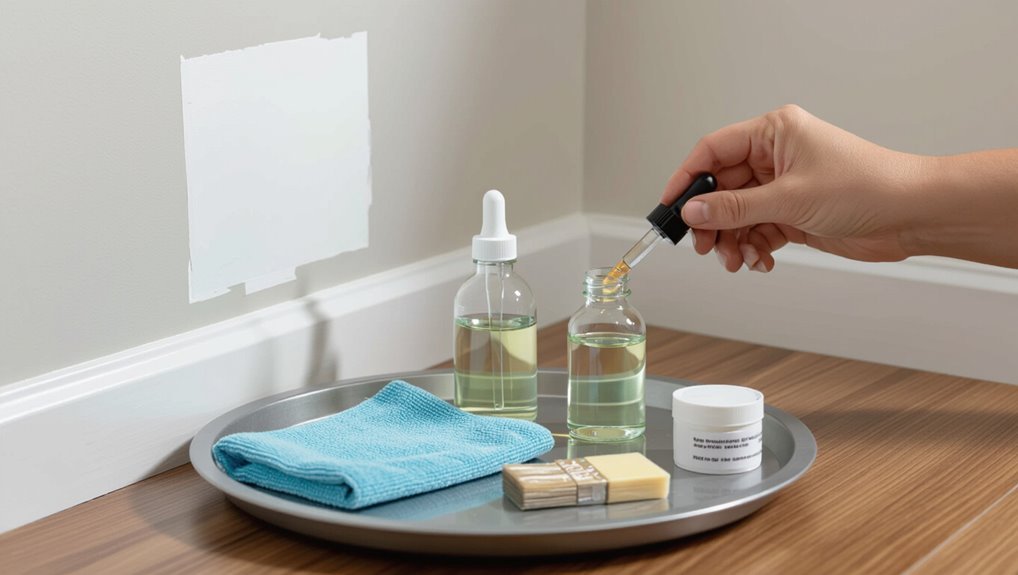
Before you start cleaning a whole wall, do a small patch test so you can see how Murphy’s Oil Soap interacts with the paint.
Choose an inconspicuous spot, use recommended dilution, apply gently with a soft cloth, wait 10–15 minutes, check for color loss, sheen change, or softening.
Rinse, dry, and inspect again after 24 hours before proceeding.
Quick dilution and application cheat sheet
If your patch test shows the paint holds up, here’s a compact cheat sheet to get your Murphy’s Oil Soap mix and application right every time. Mix 1–2 teaspoons per quart of warm water for light cleaning; 1 tablespoon for tougher grime. Use a soft cloth, rinse with clean water, dry immediately. Avoid soaking edges.
| Action | Recommendation |
|---|---|
| Dilution | 1–2 tsp/qt light |
| Heavy dirt | 1 tbsp/qt |
| Tool | Soft cloth/sponge |
| Finish | Rinse & dry quickly |
