
Can You Use Wall Paint on Wood: What You Need to Know
You can use wall paint on smooth, indoor wood if you prep it properly—clean, sand, and prime with a bonding or stain‑blocking primer so the paint adheres and doesn’t bleed. Wall paint’s fine for low‑traffic decorative pieces and quick budget jobs, but it’s less flexible and durable than wood‑specific coatings, so expect cracking or chipping on floors, trim, or exterior surfaces. Keep coats thin and sand between; scroll on for tips and pitfalls.
Quick Answer: Can You Use Wall Paint on Wood?
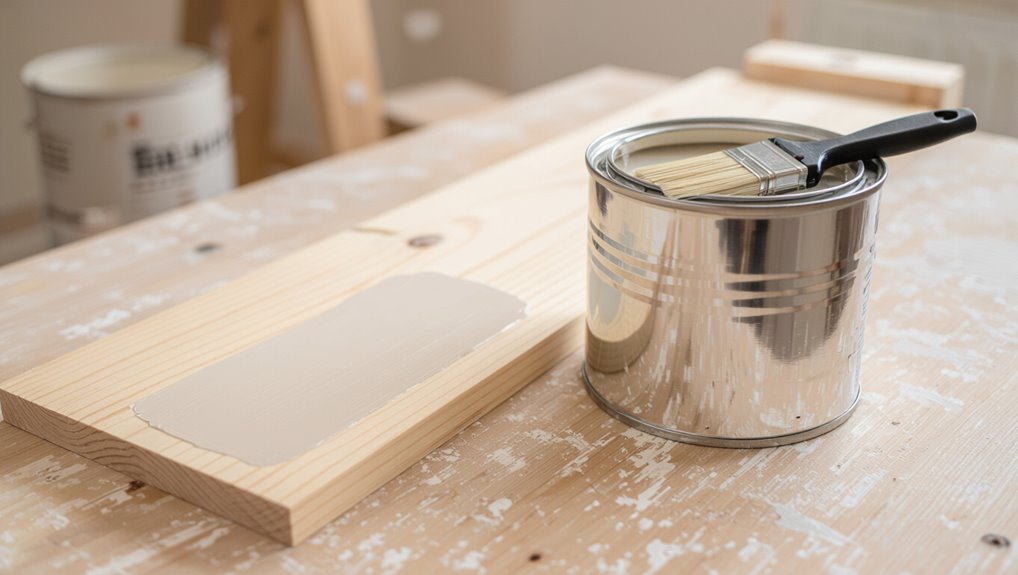
Wondering if you can use wall paint on wood? You can, with caveats: wall paint applications often work for indoor, smooth wood if you clean, sand, and prime first.
Use wood painting tips like choosing a bonding primer, thin coats, and light sanding between layers.
For high-traffic or exterior pieces, consider specialized products instead of relying solely on wall paint.
Wall Paint vs. Wood Paint: Adhesion, Flexibility, Durability
When you paint wood with wall paint, surface prep matters more than you might expect — sanding and a primer improve adhesion.
Wall paints are usually less flexible and abrasion-resistant than formulæ made for wood, so they’ll show wear sooner on trim and floors.
Compare the two by testing adhesion and flex before committing to a full coat.
Adhesion And Surface Prep
Because wall paint is formulated for porous, stationary surfaces, it often won’t bond or flex like a proper wood paint, so you’ll need to prep and prime wood differently to get durable results. Use adhesion techniques and thorough surface preparation: sand, clean, and apply a bonding primer.
| Step | Purpose |
|---|---|
| Sand | Key for tooth |
| Prime | Seal and bond |
| Clean | Remove oils |
Flexibility And Wear Resistance
Although wall paints can look fine on wood at first, they rarely offer the same flexibility or abrasion resistance as formulations made for wood.
So you’ll see cracking, chipping, or premature wear where the surface moves or gets scuffed.
- Consider flexibility factors: wood expands, walls don’t.
- Choose coatings rated for movement.
- Expect different results in wear testing.
- Use wood primer and durable topcoats.
When Wall Paint Works: Best Use Cases
You can use wall paint on low-traffic decorative wood pieces like picture frames or shelving that won’t face heavy wear.
It works best when the wood is properly primed or sealed to improve adhesion and prevent tannin bleed-through.
Wall paint is also a practical, budget-friendly choice for temporary projects or quick makeovers where long-term durability isn’t required.
Low-Traffic Decorative Pieces
Small decorative items—think picture frames, wooden signs, or shelf accents—are perfect candidates for wall paint because they won’t get heavy wear and you’ll often be content with a softer finish.
You can experiment with decorative finishes and paint textures to suit style.
Try these:
- Matte single-color
- Washed vintage look
- Stenciled patterns
- Light distressing for character
Primed Or Sealed Wood
Decorative pieces give you a low-risk way to try wall paint, but for larger or more handled wood items you’ll want a properly primed or sealed surface first.
If you sand, clean, and apply a compatible primer, primed wood accepts wall paint evenly and resists peeling.
Sealed wood prevents stains and tannin bleed.
Finish with a protective topcoat for durability.
Temporary Or Budget Projects
When you need a quick, low-cost refresh or plan to toss the piece soon, wall paint’s simplicity and wide color range make it a practical choice for temporary or budget projects.
You can use it for:
- temporary solutions on thrifted furniture
- budget friendly options for event decor
- quick fixes for scuffs and chips
- easy DIY projects with minimal prep
When Wall Paint Won’t Cut It: Risky Projects
Although wall paint can handle a lot of tasks, it’s not the right choice for high-wear or structural wood projects like floors, stair treads, and outdoor surfaces.
You’ll need durable paint types or better project alternatives—marine, porch, or floor finishes—or stain and polyurethane.
Don’t use interior wall paint where moisture, abrasion, or load-bearing demands exist; it’ll chip, peel, or fail prematurely.
What to Check on Your Wood Before Painting
Before you start, check the wood’s surface for damage, rough spots, or peeling so you know what prep it needs.
You’ll also want to identify any existing finish—varnish, oil, or previous paint—as that affects adhesion and the type of primer to use.
Fixing flaws and matching your approach to the old finish will save time and give a better result.
Check Surface Condition
Anyone can skip surface checks and regret it later, so take a few minutes to inspect the wood carefully.
Perform a surface evaluation and condition assessment to guarantee paint adhesion.
Check for:
- Dirt, grease, or mildew — clean thoroughly.
- Loose or flaking fibers — sand smooth.
- Cracks or holes — fill and sand.
- Warping or rot — repair or replace before painting.
Identify Previous Finish
After you’ve checked the wood for damage and cleanliness, identify what finish is already on it so you can choose the right prep and paint.
Look for sheen, thickness, and penetration to distinguish varnish, lacquer, shellac, or oil—different finish types need different sanding, deglossing, or strippers.
Do a surface analysis with a solvent test and scrape to confirm before priming.
Preparing Wood: Cleaning & Sanding
When you’re ready to paint, start by thoroughly cleaning and sanding the wood so the wall paint will stick evenly and last.
When you’re ready to paint, thoroughly clean and sand the wood so wall paint adheres evenly and lasts.
Consider wood types and paint compatibility before you begin.
Follow a simple prep routine:
- Remove dirt, grease, and old flaking finish.
- Fill holes and let compounds dry.
- Sand with progressive grits for smoothness.
- Wipe dust thoroughly before painting.
Best Primer for Wall Paint on Wood
Which primer you choose will determine how well wall paint bonds to and hides wood imperfections.
Pick primer types based on wood condition: oil-based for tannin-rich or knotty wood, shellac for stain blocking, and latex for general use.
Check surface compatibility—smooth, porous, or previously finished—so adhesion and durability meet expectations.
Apply per manufacturer instructions for best results.
Choosing the Right Wall Paint Finish for Wood
Because wood surfaces see different levels of wear and show texture differently, you’ll want to match paint finish to the piece’s use and desired look: flat or matte hides imperfections, eggshell and satin offer a balance of low sheen and wipeability for trim and doors, semi-gloss gives durable, easy-to-clean protection for high-contact areas, and gloss maximizes durability and highlights grain—so pick the finish that suits both function and appearance.
- Flat/matte: hides flaws, good for low-use.
- Eggshell/satin: versatile, balances wipeability and subtle sheen.
- Semi-gloss: durable, resists scuffs for contact points.
- Gloss: highlights grain, needs careful finishing techniques and aesthetic considerations.
Brushes, Rollers, and Application Techniques
Now that you’ve picked a finish, choosing the right tools and techniques will determine how that finish actually looks and lasts on wood. You’ll focus on brush selection, roller technique, application speed, coverage efficiency, and finish consistency while planning the clean up process.
| Tool | Tip | Result |
|---|---|---|
| Brush | Nylon, angle | Smooth edges |
| Roller | Short nap | Even coverage |
| Cloth | Microfiber | Tidy clean up process |
How Many Coats You’ll Need: and Drying Times
When you’re deciding how many coats to apply, consider the paint type, wood species, and the level of wear the surface will see; latex usually needs two thin coats for good coverage, while oil-based finishes often reach durability with one to two coats but may need sanding between coats for adhesion.
- Assess porosity for coats needed.
- Apply thin, even layers.
- Respect manufacturer drying times.
- Lightly sand between coats for best adhesion.
Do You Need a Sealer or Topcoat?
You’ll want to know when a sealer’s actually necessary versus when paint alone will hold up on wood.
I’ll cover how to pick the right topcoat—polyurethane, water-based, or wax—based on wear and finish.
Then you’ll get practical tips for applying and drying those coatings for a durable result.
When A Sealer’s Needed
Although paint alone can look fine on many interior wood surfaces, you’ll need a sealer or topcoat whenever the piece will face wear, moisture, or heavy cleaning. Sealers protect against scuffs, stains, and water while helping paint adhere and last longer.
- High-traffic furniture needs durable sealer types.
- Wet areas require moisture-resistant choices.
- Outdoor or garage wood always needs protection.
- Follow proper application techniques and curing times.
Choosing The Right Topcoat
If your painted wood will see traffic, moisture, or heavy cleaning, pick a topcoat that matches the use—clear water-based poly for indoor furniture, oil-based or spar urethane for high-wear floors, and marine or exterior poly for outdoor pieces.
You’ll choose topcoat options based on durability, sheen, and compatibility with wall paint. Consider recommended application techniques and test a small area before finishing.
Application And Drying Tips
When painting wood with wall paint, consider whether the surface needs a sealer or topcoat based on exposure and desired finish; a good sealer can improve adhesion and prevent blotchy absorption, while a topcoat adds durability and moisture resistance.
- Prep: sand, clean, choose sealer for porous wood.
- Application techniques: thin coats, brush grain, maintain wet edge.
- Mind drying times between coats; use warm, ventilated space.
- Finish: test sheen, add topcoat for high-traffic items.
Using Wall Paint on Exterior Wood: Extra Precautions
Because exterior wood faces harsher weather and UV than interior surfaces, you’ll need to take extra precautions before using wall paint outdoors. Check exterior paint compatibility and address moisture resistance concerns: prime, seal gaps, choose high-quality acrylic wall paint, and add a topcoat for UV and water protection.
| Step | Action |
|---|---|
| 1 | Prime surface |
| 2 | Seal seams |
| 3 | Choose compatible paint |
| 4 | Apply protective topcoat |
Common Problems and Fixes (Peeling, Brush Marks)
Expect a few common issues like peeling and visible brush marks when you use wall paint on wood, but most are fixable with the right prep and techniques.
- Sand to remove loose peeling paint.
- Clean and degrease surfaces.
- Prime with a bonding primer to reduce brush marks.
- Use thin, even coats and proper brushes for a smooth finish.
Cost & Time: Wall Paint vs. Wood-Specific Paint
If you’re watching your budget and timeline, wall paint often looks cheaper up front but can cost you more in time and rework compared with wood-specific paint.
Do a clear cost comparison: wall paint may save money initially, but plan for extra coats, sanding, sealing, and fixes.
Your time investment rises; wood paint costs more up front but usually reduces rework and long-term labor.
Quick Decision Checklist: Use Wall Paint or Buy Wood Paint?
Wondering whether to grab leftover wall paint or buy a wood-specific formula? Do a quick comparison and smart project analysis to decide fast.
- Surface: raw or sealed?
- Use: indoor trim or outdoor deck?
- Durability: high-traffic or decorative?
- Finish: satin, gloss, or matte?
If needs lean toward durability or exposure, choose wood paint; otherwise wall paint can work with proper prep.
Real Projects: Success Stories and Cautionary Tales
Real projects show you what works — and what doesn’t — when you use wall paint on wood.
You’ll read DIY projects and paint experiments that delivered both artistic expressions and unexpected outcomes.
Use project inspirations and creative repurposing ideas, try unique techniques cautiously, and learn from budget friendly solutions.
These success stories and cautionary tales help you decide when to proceed or opt for proper wood paint.
Frequently Asked Questions
Can Wall Paint Be Used on Painted MDF or Laminate Furniture?
Yes — you can, but you’ll need proper prep. You’ll sand, clean, prime, and choose durable paint to improve paint adhesion and furniture durability. Otherwise, chips and peeling will ruin the finish quickly.
Will Wall Paint Hide Wood Knots and Sap Streaks Effectively?
Yes—you can improve knot coverage and sap concealment, but don’t expect perfection; you’ll need stain-blocking primer, sanding, and possibly two coats of quality wall paint to mask knots and sap streaks effectively.
Can I Mix Wall Paint With Wood Stain for a Tinted Finish?
You shouldn’t mix wall paint with wood stain directly; it won’t penetrate properly. Instead, use tinted finishes or glazing techniques, testing mixing techniques on scraps so you’ll achieve color control, adhesion, and the look you want.
How Long Before You Can Reattach Hardware After Painting Wood?
You should wait at least 24–48 hours for drying time, though full cure can take up to 7 days; check hardware compatibility with the finish, and don’t reinstall if paint still dents or adheres to screws.
Are There VOC or Odor Differences When Using Wall Paint on Wood Indoors?
Yes — you’ll notice VOC levels and odor persistence can differ when using wall paint on wood; proper surface preparation and application technique reduce fumes, shorten odor duration, and improve adhesion, so ventilate and choose low‑VOC formulas.
Conclusion
Think of wood as a living page and paint as the story you choose to tell it. You can use wall paint for quiet chapters—sealed, indoor pieces that won’t flex—but for heirlooms or weather-facing tales, pick a tougher narrator. Inspect, sand, prime, and test first; smooth starts make strong endings. Choose wisely so your finished piece doesn’t whisper regrets but stands proud, its color committed to memory rather than flaking like a forgotten line.
