
Do Paints Dry Darker or Lighter – Color Change Explained With Examples
Paints can go either way as they dry: you’ll often see jewel tones and many earth colors deepen, while pale pastels and thin washes usually lighten. Higher pigment and thicker coats hold true color and opacity; diluted or translucent layers reveal the substrate and look paler. Glossy finishes also appear richer than matt ones because of reflection. Test swatches under your actual lighting and wait for full curing—keep going and you’ll learn how to predict and prevent surprises.
Do Paints Usually Dry Darker or Lighter?
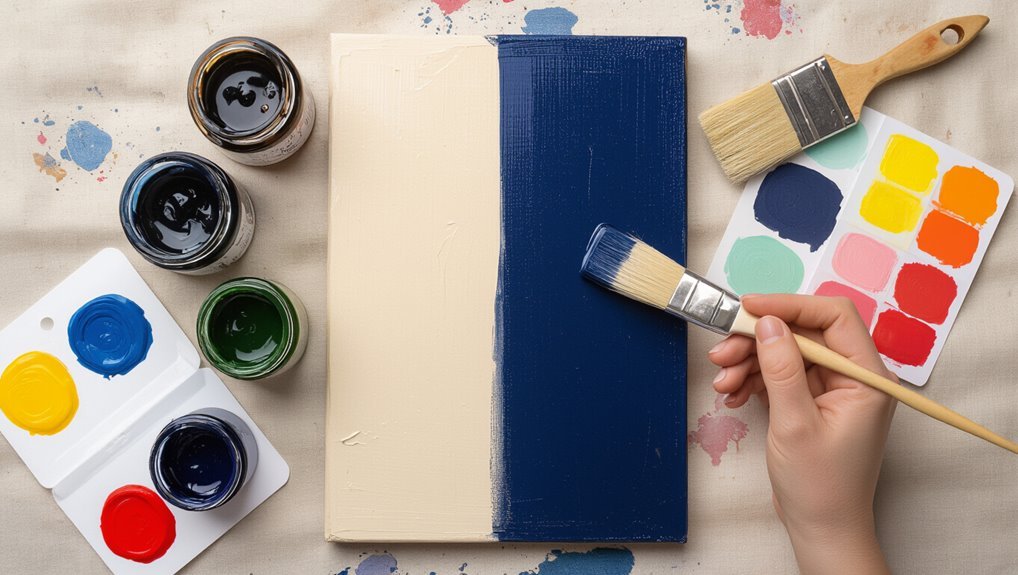
Do paints usually dry darker or lighter? You’ll usually see a slight darkening as solvents evaporate and pigments settle, though behavior varies with color theory factors and binder chemistry.
In paint application you’ll notice glossier finishes often appear darker; thin washes dry lighter.
Test swatches on your surface to judge final tone before committing, since lighting and substrate also shift perception.
How Pigment Concentration and Opacity Change Paint Color
When you increase pigment concentration, the paint usually gets more opaque and its color reads stronger and truer to the pigment’s hue; dilute the pigment and the binder and underlying surface start to show through, muting saturation and shifting value.
You’ll notice opacity effects control how light interacts with layers, so heavier loads preserve hue while thin washes lighten and desaturate.
How Binders and Solvents Alter Wet vs. Dry Appearance
Notice how the binder leaves a glossy film as it dries, which can make wet paint look richer than the same color once the surface dulls.
You’ll also see solvents evaporating and temporarily increasing contrast and saturation while the paint is wet.
Together, film gloss and solvent evaporation explain much of the shift between wet and dry appearance.
Binder Film Gloss
Because the binder forms the continuous film that holds pigment and fills surface pores, its chemistry and the solvents used greatly change how paint looks wet versus dry.
You’ll notice binder properties and gloss levels shift perception as the film cures:
- Film smoothness affects reflectance
- Crosslinking alters sheen
- Polymer refractive index matters
- Additives modify surface tension
- Surface porosity changes final gloss
Solvent Evaporation Contrast
Although the wet coat often looks richer, solvent evaporation drives rapid changes in refractive index, pigment dispersion, and surface texture that make paint appear lighter or darker as it cures. You’ll notice solvent types and evaporation rates shift gloss and opacity, so adjust formulation and drying conditions to control contrast.
| Solvent | Rate | Effect |
|---|---|---|
| Water | Slow | Matte |
| Acetone | Fast | Gloss |
| Mineral | Medium | Balanced |
| Alcohol | Fast | Film shrink |
How Sheen and Gloss Affect Paint Color After Drying
When you pick a sheen, you’re also shaping how a color reads because glossier finishes reflect more light and make hues look brighter.
Matte surfaces scatter light, so colors often appear richer and a touch darker.
Also remember that surface texture interacts with sheen—smoother, glossier areas show more reflection while textured, flat finishes mute the tone.
Sheen Changes Perception
If you pick a paint finish without thinking about sheen, you might be surprised at how much it changes the way a color looks once it’s dry.
You’ll notice sheen perception alters depth and tone; gloss effects can make colors punchier or flatter.
Consider these points:
- Higher sheen intensifies color
- Matte softens contrast
- Semi-gloss balances shine
- Texture shows differently
- Touch-up visibility varies
Light Reflection Differences
Because sheen controls how light bounces off a surface, it directly changes the color you see after paint dries.
You’ll notice higher gloss reflects more specular light, reducing apparent light absorption and making hues look brighter.
Matte finishes scatter light, increasing perceived depth and slightly muting tones.
Understanding sheen helps you predict color perception and choose the finish that matches your intent.
Surface Texture Impact
Although sheen and gloss might seem like finish choices only, they actually change how texture interacts with light and alter the color you perceive after paint dries.
You’ll notice sheen and texture variations influence tone via surface porosity and gloss level.
- Gloss highlights imperfections
- Satin softens texture
- Matte masks porosity
- High gloss deepens color
- Eggshell balances sheen
How Lighting and Surface Texture Shift Perceived Color
How does the same paint color look so different in two rooms? You notice lighting effects and texture influence: natural light warms tones, cool LED shifts them, and rough textures scatter light while satin sheens reflect it. Consider examples:
| Room Type | Perceived Change |
|---|---|
| North-facing | Cooler |
| South-facing | Warmer |
| Matte wall | Softer |
| Glossy trim | Brighter |
Colors That Typically Dry Darker : Examples and Reasons
You’ll notice some colors consistently deepen as they dry, especially earthy browns and terracotta tones that pick up richer, deeper values.
Jewel-like shades such as emerald, sapphire, and burgundy also tend to darken slightly as solvents evaporate and pigments settle.
Warm neutrals—think ochres and warm grays—often finish a shade darker, so you should test samples before committing.
Deepening Earth Tones
When you apply earth tones—like raw umber, burnt sienna, and deep ochre—they often darken as they dry because their pigments and binders change appearance with reduced sheen and increased pigment concentration.
You’ll notice deepening hues and added earthy richness that enhance warmth.
Tips:
- Test small swatches
- Note solvent and binder
- Expect satin to matt shift
- Thin coats lighten
- Layering intensifies
Rich Jewel Hues
1 clear rule helps with jewel tones: deep blues, emeralds, and royal purples usually dry darker because their rich pigments and binders lose surface sheen and reveal greater pigment concentration as solvents evaporate.
You’ll notice color saturation increases as layers thin and light scatters less.
Test samples, use translucency-friendly primers, and adjust glazing or tinting to match final depth before committing.
Warm Neutrals Darken
Although they can seem forgiving on a wall, warm neutrals—like beige, taupe, and warm gray—often dry a shade or two darker as solvents evaporate and pigments settle.
You’ll notice this with warm undertones and subtle shifts from color mixing.
Consider causes and fixes:
- Pigment concentration
- Sheen variation
- Primer influence
- Lighting changes
- Multiple coats
Colors That Typically Dry Lighter : Examples and Reasons
Because pigments and binders interact differently as they cure, some colors usually dry lighter than they look wet.
You’ll see pale pastels, light blues, and many whites shift as solvent evaporates and the drying process alters sheen.
In color mixing, adding white or extender increases this effect.
Expect subtle lifts in tint strength; plan layers and samples accordingly.
Quick Tests to Predict Final Paint Color Before You Paint
Want to know how your paint will look when it’s fully dry?
Do quick tests with a color swatch and small samples to see drying effects.
Do quick swatch tests and small sample patches to observe how the color and sheen change as they dry.
Try these steps before you paint:
- Apply swatch on the actual wall
- Test glossy vs. matte finishes
- Use thin and thick coats
- Check samples under different lights
- Photograph samples after 24–48 hours
Practical Fixes to Prevent Unwanted Color Shifts
How can you stop paint from drying a different shade than you expected?
Use consistent lighting when color matching, apply primer to even out substrate absorbency, and stir paint thoroughly.
Do small paint testing patches on the actual wall, wait full drying time, and compare.
Adjust tint or sheen rather than recoat blindly, and document successful mixes for future reference.
When to Call a Pro or Switch Products for Accurate Color
If your test patches still look off after proper priming, consistent lighting, and full drying, it’s time to contemplate calling a professional or switching products.
You should act when color matching fails, paint samples mislead, or substrate issues persist.
Consider:
- Poor adhesion
- Visible undertones
- Inconsistent sheens
- Repeated sample failures
- Time or skill limits
Frequently Asked Questions
Do Paints’ Drying Time Affect VOC Emissions and Indoor Air Quality?
Yes — drying time affects VOC emissions and indoor air: slower drying from low drying temperature, high humidity levels, poor air circulation, thick paint, textured surfaces, or certain primer types prolongs off-gassing and worsens indoor air quality.
Can Primers Themselves Change Final Paint Hue?
Yes — primers can shift final hue; studies show up to 15% perceived color variance. You’ll consider primer types, color base, application techniques, and surface texture, since they alter undertone, coverage, and light reflection.
Do Metallic or Pearlescent Paints Shift Color Differently?
Yes — you’ll see metallic or pearlescent paints shift differently: metallic sheen emphasizes highlights and can read lighter, while pearlescent layers change color depth with viewing angle, so reflections and basecoat alter perceived hue.
Will Repainting Over Old Paint Alter the Expected Dry Color?
About 70% of repaints reveal subtle shifts, and yes—you’ll often see altered dry color. You’ll prevent surprises by using proper surface preparation and mindful color layering, testing samples to confirm final appearance.
How Do Colorants in Manufacturer-Mixed Paints Vary Batch-To-Batch?
They can differ: you’ll notice colorant consistency isn’t perfect, so manufacturer-mixed paints show batch variations in pigment concentration and dispersal. You’ll get slight shade shifts between batches, especially with deep or complex colors.
Conclusion
You’ll probably notice paint drying differently than it looked wet — sometimes darker, sometimes lighter — and that’s no accident: pigment load, binder, sheen, and lighting all conspire. If your sample dried lighter, coincidence? It’s likely higher titanium white or thinner pigment at play; if darker, more binder or lower sheen can be the culprit. Test swatches, adjust formulas, or call a pro before rolling to avoid surprises and get the color you actually wanted.
