
Do You Need to Undercoat Already Painted Walls? Expert Advice
You don’t usually need an undercoat if the painted surface is sound and compatible with your new paint, but you’ll want one for stains, nicotine or water marks, strong color changes, poor adhesion or mixed paint types. Clean, sand and spot-prime scuffs or glossy spots to often avoid full priming. Use a stain-blocking or bonding primer when in doubt to guarantee coverage and durability. Keep going for tests, primer types and a quick decision checklist to help.
Do You Need an Undercoat? Bottom-Line Answer
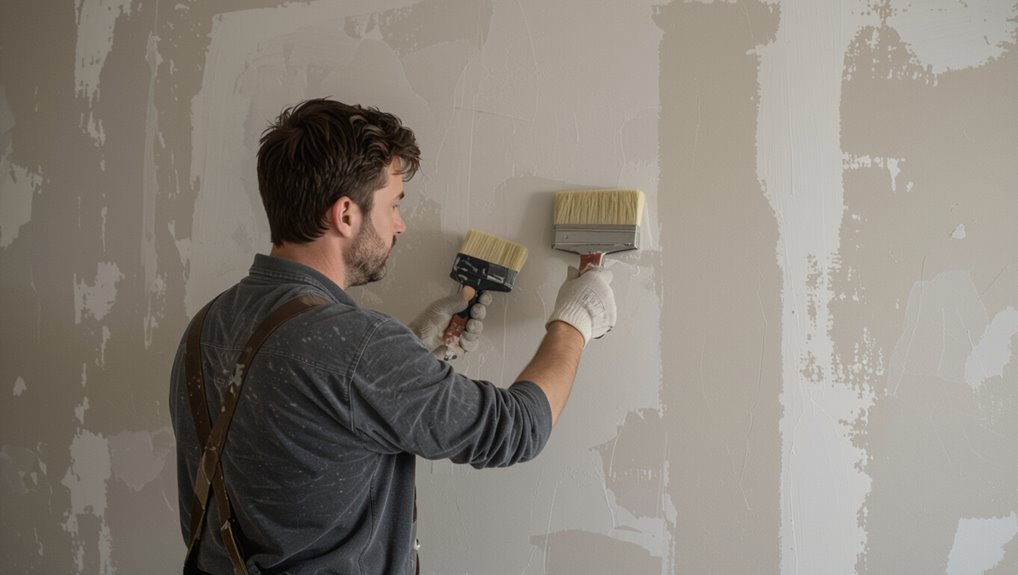
Wondering whether you need an undercoat? You usually don’t if the existing surface is sound and paint compatibility is good, like similar sheen and type.
You should use an undercoat when stains, strong color changes, poor adhesion, or mixed paint types appear.
Assess risks: skip undercoat for clean, compatible finishes; choose one when coverage, durability, or uniformity matter.
How to Tell Your Existing Paint Finish and Whether It Needs Primer
If you decided an undercoat might be needed, the next step is identifying the existing finish so you know what primer (if any) to use.
You’ll inspect sheen, adhesion, and staining to judge primer necessity and compatibility with your paint finish.
- Check sheen: glossy often needs deglossing.
- Test adhesion: tape pull test.
- Look for stains: spot-priming helps.
Prep Steps That Can Replace or Reduce Undercoating Needs
Before committing to a full undercoat, you can often save time by tackling a few key prep steps.
Clean the surface thoroughly, fix scuffs and chips, and spot-apply primer only where adhesion or coverage is poor.
These targeted actions can reduce or even replace the need for a full undercoating.
Surface Cleaning
One straightforward way to cut down on undercoating is to clean and prep the painted surface thoroughly so paint can adhere and seal on its own.
You should focus on surface preparation and proven cleaning techniques to remove grease, dust, and mildew so new paint bonds well.
- Degrease with mild detergent.
- Rinse and dry completely.
- Sand glossy spots lightly.
Paint Scuff Repair
You’ve cleaned and sanded the surface; now address scuffs so you can skip or minimize undercoating.
Inspect for gouges and light abrasion, then apply scuff repair techniques: fill small dents, sand feathered edges, and wipe clean.
Use matching paint touch ups with a fine brush or roller, blending edges carefully.
Properly repaired scuffs often eliminate the need for full undercoating.
Primer Spot-Application
Start by identifying areas where primer will actually change adhesion or hide stains—think repaired gouges, exposed drywall, patched areas, and stubborn stains that bleed through paint.
You can often skip full undercoating by targeted primer spot application. Prioritize spots for primer durability, then:
- Seal stains
- Prime patched drywall
- Reinforce sanded edges
Finish with topcoat.
Stains, Marks, and Odors That Require Primer
Because stains, marks, and lingering odors can bleed through new paint, you’ll want to seal them with the right primer before repainting.
Use a stain-blocking primer for nicotine, water rings, ink, and smoke; it helps stain removal and odor elimination.
Spot-prime affected areas after cleaning, let primer cure fully, then repaint for consistent coverage and long-term protection.
Painting Dark-to-Light or Bold Color Changes: Primer Rules
When you’re switching from a dark shade to a light one or choosing a bold new color, you’ll usually need a primer to block the old pigment and guarantee even coverage.
Pick a stain-blocking or high-hide primer—tinted primers can cut down on topcoat coats needed.
Also consider adhesion and surface type when choosing oil-, latex-, or bonding primers to get reliable results.
When To Prime
Wondering if you need primer when going from a dark color to a light one or switching to a bold shade?
You should prime when previous color shows through, surfaces are stained, or you’re changing finishes. Good priming techniques deliver even coverage and primer benefits like improved adhesion and fewer coats.
- Cover visible bleed-through
- Seal stains or repairs
- Uniform surface for bold colors
Choosing Primer Types
Which primer should you pick for a dark-to-light or bold color shift?
You’ll want a high-hide, stain-blocking primer with strong adhesion—those primer characteristics prevent bleed-through and reduce required topcoats.
Match primer base to your paint compatibility (oil to oil, water to water) unless using a universal bonding primer.
Spot-test for coverage; choose tinted primer when shifting several shades for best results.
Repainting the Same Color or a Similar Shade (When You Can Skip Primer)
If you’re repainting a wall the exact same color or a very close shade, you can often skip a primer as long as the surface is clean, sound, and the existing paint is in good condition.
You’ll preserve color consistency and support paint longevity by prepping the surface and using matching sheens.
- Clean and scuff.
- Use quality paint.
- Apply thin, even coats.
How Surface Damage Affects the Need for Primer
If you’ve got visible cracks or holes, you’ll usually need primer to seal and create an even base before repainting.
Deep damage or exposed substrate can bleed through a new coat if you skip undercoating.
Likewise, stubborn stains or surface contamination call for a stain-blocking primer so the flaws don’t reappear.
Visible Cracks And Holes
When you spot visible cracks and holes in painted walls, they change how much prep and primer you’ll need because these imperfections expose raw substrate and can trap moisture or stains.
You’ll want to handle crack repair and hole filling before priming. Consider:
- Assess depth and width for proper patching.
- Use suitable filler and sand smooth.
- Prime patched areas to seal and bond.
Surface Stains And Contamination
After repairing cracks and holes, check painted surfaces for stains and contamination that can undermine primer adhesion and final finish.
You’ll identify contamination types like grease, nicotine, mold, or tannin bleed.
Use surface preparation techniques—cleaning, degreasing, mild sanding, and stain-blocking primer—so new paint bonds and hides defects.
Skip primer only if surface is pristine and contamination-free.
Primer Types: Bonding, Stain‑Blocking, and Tinted Options
Because the right primer sets the stage for a durable, professional finish, you’ll want to choose one that matches the problem you’re solving—bonding primers for slick or glossy surfaces, stain‑blocking primers for tannin, smoke, or water marks, and tinted primers to improve color coverage on dark or bold topcoats.
- Bonding primers: grip glossy finishes.
- Stain‑blocking primers: seal tannin and water stains.
- Tinted primers: boost coverage, reduce topcoat coats.
Which Primers Work Best Over Oil Vs. Latex Paint
Wondering which primer to pick for oil versus latex paint?
You’ll want a solvent‑based bonding primer over oil to guarantee oil paint compatibility and prevent peeling.
For latex surfaces, use an acrylic or latex primer formulated for latex paint adhesion and flexible topcoats.
If switching between types, choose a universal primer designed for cross‑compatibility and follow manufacturer curing times carefully.
Three Fast Tests to Check Primer Adhesion and Hiding
When you’re ready to judge a primer’s performance, run three quick, practical tests that reveal adhesion strength and hiding power without special tools: the tape pull to check bond, a crosshatch or scrape to spot weak areas, and a small spot-coverage test to verify opacity and coverage on the actual substrate.
- Tape pull — assess adhesion testing.
- Crosshatch/scrape — find poor bonding.
- Spot coverage — confirm paint compatibility.
Primer vs. Extra Finish Coats: Time, Cost, Performance
If you want a smooth, durable result without wasting time or money, decide whether a proper primer or just extra finish coats will actually solve your problem. Primer often wins on long-term adhesion and coverage; extra coats can seem cheaper short-term. Consider cost comparison and performance benefits before choosing.
| Option | Time | Cost |
|---|---|---|
| Primer | Moderate | Moderate |
| Finish coats | Faster | Lower |
| Long-term | Better | Savings trade-off |
Common Mistakes People Make When Skipping an Undercoat
Because skipping an undercoat might seem like a time-saver, many people don’t realize the specific problems they’re inviting until it’s too late.
Skipping an undercoat may save time now but invites hidden problems you’ll regret later.
You’ll face avoidable issues from primer misconceptions and miss key undercoat benefits.
Common mistakes include:
- Uneven coverage revealing old stains.
- Poor adhesion causing peeling.
- Color bleed and extra coats needed.
Products, Quick Picks, and a One-Page Decision Checklist
To choose the right undercoat product for your painted walls, start by matching the primer’s purpose to the job—stain-blocking, adhesion promotion, or color-tinting—and pick a formula designed for your surface (drywall, plaster, wood, or previously painted finishes).
Use product recommendations for latex and oil-based primers.
Keep quick tips: spot-test, sand glossy areas, thin coats, and allow full cure before topcoat.
Frequently Asked Questions
Can I Undercoat Exterior Painted Walls Previously Coated With Masonry Paint?
Yes — you can undercoat exterior painted walls previously coated with masonry paint if you assess masonry paint compatibility and complete exterior wall preparation: clean, repair, remove loose paint, and use a suitable primer to guarantee adhesion and durability.
Will Undercoating Reduce Future Paint Peeling in Humid Climates?
Studies show humid climates cause up to 60% higher paint failure; yes, undercoating helps—by blocking moisture, it improves paint adhesion and mitigates humidity effects, so you’ll reduce future peeling if you prep and use a proper primer.
How Long Should I Wait After Priming Before Applying Finish Coats?
You should wait until the primer’s drying time finishes—usually 1–4 hours for latex, 24 hours for oil-based—checking manufacturer instructions; some primer types need longer cure before finish coats, especially in high humidity or low temperatures.
Does Undercoating Affect VOC Levels and Indoor Air Quality?
Absolutely — you’ll dramatically cut VOC emissions and indoor pollutants by choosing low‑VOC undercoats; they boost paint adhesion, reduce health impacts and environmental effects, and combined with proper air circulation, they’ll markedly improve indoor air quality.
Can I Use Undercoat When Switching to Washable or Scrubbable Paint?
Yes — you can use an undercoat when switching to washable or scrubbable paint; it improves paint adhesion and guarantees proper surface preparation, so you’ll get a durable, even finish that resists cleaning without compromising coverage.
Conclusion
So do you need an undercoat? Sometimes—unless you enjoy patchy walls, surprise stains, or the thrilling gamble of paint that simply won’t stick. If your finish is glossy, stained, or you’re going from drama to dainty, primer’s your boring superhero. Prep can help, but don’t skip science for optimism. Use primer when advised; it’s cheaper than redo therapy. Embrace the undercoat: your future self will thank you, probably politely.
