
How Is Ceiling Paint Different? Key Differences Explained
You’ll want ceiling paint because it’s made differently than wall paint: it’s thicker, has a very flat sheen, and includes additives to reduce drips, hide imperfections, and give better one-coat coverage overhead. That thicker body helps block stains and keeps roller marks and glare to a minimum, while mildew-resistant and low-VOC options protect humidity-prone rooms. Use the right roller nap and light loading to avoid splatter — keep going and you’ll learn practical tips, pitfalls, and pro vs. DIY guidance.
Quick Answer: Can You Use Wall Paint on a Ceiling?
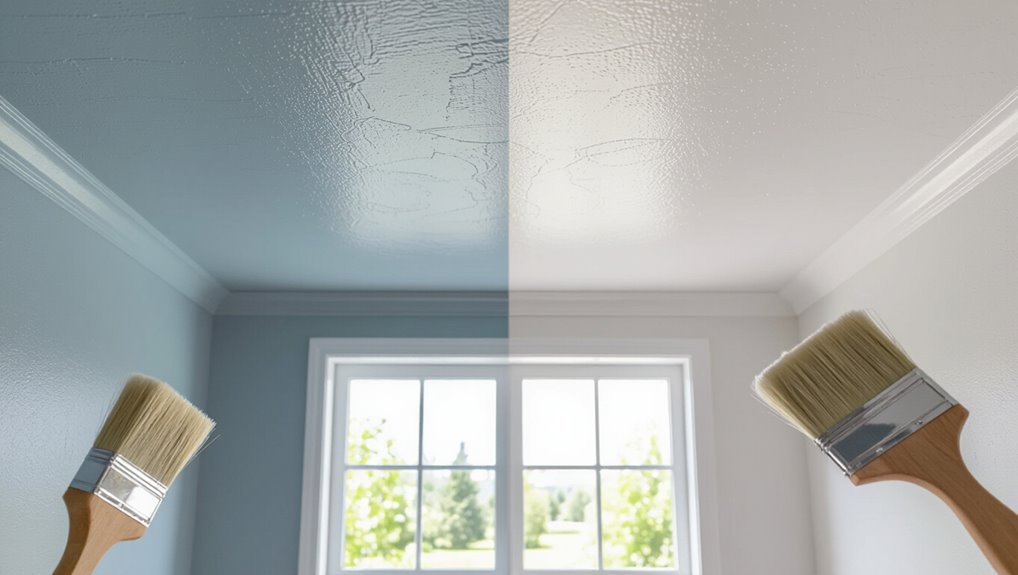
Wondering if you can use wall paint on a ceiling? You can, but expect trade-offs.
Wall paint often differs in sheen and spatter resistance, so your paint application might require extra coats and careful technique to avoid drips.
For small rooms or temporary fixes, it’s fine, yet choosing ceiling-specific formulas maximizes ceiling benefits like reduced splatter, flatter finish, and better coverage.
Why Ceiling Paint Exists (Who Benefits)
Because ceilings face different light, distance, and drip challenges than walls, manufacturers make ceiling-specific paint to address those needs. You get quieter rooms, fewer drips, and even coverage. The ceiling paint purpose is to reduce glare and hide imperfections; ceiling paint benefits mean easier application and better finish for overhead work.
| You | Feel |
|---|---|
| Calm | Safe |
| Relief | Pride |
Key Differences: Ceiling Paint vs. Wall Paint
When you’re choosing paint, remember ceilings usually use flatter sheens to hide imperfections while walls can handle glossier finishes.
Ceiling formulas are thicker and designed to reduce splatter and improve coverage from overhead, so you’ll often need fewer coats than with wall paint.
Knowing these differences helps you pick the right product and save time on application.
Finish And Sheen
1 key difference between ceiling and wall paint is the level of sheen: ceilings almost always use flat or matte finishes to hide imperfections and reduce glare, while walls can handle eggshell, satin, or semi-gloss sheens that boost durability and washability.
You’ll pick finish types based on room use and light; sheen levels affect reflectivity, touch-up visibility, and cleaning needs.
Formula And Coverage
Although ceiling paint and wall paint may look similar in the can, their formulas and recommended coverages are tuned for different jobs: ceiling formulas are thicker and flatter to minimize drips and hide imperfections from below, while wall paints often contain binders and additives that improve flow, durability, and washability for vertical surfaces. You’ll notice differences in paint consistency, application methods, coverage rates, drying times, opacity levels, color selection, finish types, and roller techniques.
| Feature | Impact |
|---|---|
| Consistency | Controls drips |
| Coverage rates | Fewer coats needed |
Why Ceiling Paint Is Thicker and What That Does
Think of ceiling paint as a thicker, creamier cousin to wall paint: manufacturers add more binder and pigment so it covers uneven textures and hides roller marks better.
You’ll notice the thicker consistency yields enhanced coverage, reducing the number of coats you need and masking imperfections.
It also minimizes visible lap lines and reflects light evenly, so ceilings look smooth without frequent touch-ups.
Preventing Drips and Splatter on Ceilings
Those thicker formulations help hide texture, but they can also increase the risk of drips and splatter if you use too much paint or the wrong tools.
You’ll prevent problems by loading rollers lightly, using nap suited to texture, keeping a wet edge, and working in small sections.
For drip prevention and splatter control, use quality shields, drop cloths, and slower brush strokes to minimize rebound.
Why Ceilings Use a Flat Finish
Because ceilings sit above eye level and often show imperfections, painters choose a flat finish to hide texture and flaws while minimizing glare. You’ll get flat finish benefits like reduced sheen, uniform look, and easier touch-ups during ceiling paint application.
| Benefit | Effect |
|---|---|
| Hides flaws | Masks texture |
| Low glare | Softer light |
| Touch-up ease | Seamless patches |
| Matte look | Subtle finish |
How Ceiling Paint Hides Roller Marks and Lap Lines
You’ll notice how sheen and surface texture help disguise roller marks by scattering light and reducing contrast where the coat overlaps.
The paint’s formula and opacity matter too—higher-hide ceiling paints mask underlying strokes and even out coverage.
With a few application tricks, like consistent pressure, proper loading, and working wet edges, you’ll minimize lap lines altogether.
Paint Sheen And Texture
Texture matters as much as color when you’re trying to hide roller marks and lap lines on a ceiling.
You’ll choose between sheen variations—flat, matte, low‑sheen—to minimize reflections that highlight imperfections. Pair those with texture options like light stipple or knockdown to mask lines further.
Apply consistent technique and overlap wet edges to reinforce uniform appearance and reduce visible seams.
Formula And Opacity
Sheen and texture affect how light plays across your ceiling, but the paint’s formula and opacity determine how well it actually covers imperfections like roller marks and lap lines.
You’ll choose products with higher opacity levels and tighter formula variations to mask seams and uneven coverage. Thicker binders, higher pigment load, and reduced sheen combine so your ceiling hides flaws without extra coats.
Application Technique Tricks
Start by loading your roller evenly and working in consistent, overlapping passes so each stroke blends into the last; this minimizes lap lines and prevents the roller from flicking excess paint that leaves marks.
Use proper paint loading, roller selection, and application tools.
Combine surface preparation, overhead strategies, drip control, texture techniques, roller methods, technique variations, and mindful work around ceiling angles.
Pigment Load and Ceiling Coverage
Often, you’ll find that pigment load directly determines how well a ceiling paint hides imperfections and covers in fewer coats. You’ll notice pigment density affects opacity and coverage uniformity, so you’ll need fewer passes and less touch-up. Choose higher pigment content for stained or darker ceilings; lighter tasks can use lower density.
| Type | Pigment Density | Coats Needed |
|---|---|---|
| Standard | Medium | 2 |
| Premium | High | 1 |
| Economy | Low | 3 |
| Stain-blocking | Very High | 1 |
Sheen Choices: When to Pick Flat for Ceilings
When you want a ceiling to hide flaws, flat sheen is a smart choice because it masks bumps and patchwork better than glossier finishes.
It also cuts down on glare by minimizing light reflection, keeping the room feeling softer and more even.
Use flat where surface flaws or strong overhead lighting would make sheen more noticeable.
Hides Imperfections Better
If you want your ceiling to look smooth and minimize dings, stains, and texture inconsistencies, pick a flat or matte sheen. You’ll get superior imperfection concealment and subtle texture enhancement, so flaws vanish without gloss drawing attention. Choose flat for older or uneven surfaces; it masks repairs and creates uniform appearance.
| Benefit | When to use |
|---|---|
| Masking | Older ceilings |
| Repairs | Patching visibility |
| Uniformity | Textured finishes |
| Cost | Affordable option |
Minimizes Light Reflection
Because ceilings catch and scatter overhead light, choosing a flat sheen keeps reflections down and rooms looking more consistent; you’ll avoid glare from fixtures and windows and preserve a soft, even glow across the surface.
When you pick flat, you enhance light diffusion and simplify color selection—matte hides sheen variations, maintains uniform appearance, and lets your chosen hue read truer under varied lighting.
Stain-Blocking Additives Explained
Although you mightn’t see them once the ceiling’s painted, stain-blocking additives play an essential role in preventing stains from bleeding through the finish.
You’ll choose formulas with stain resistant properties to stop water, smoke, or nicotine marks. These additive benefits seal pores and bind discolorants, letting you repaint less often and keep a uniform, clean-looking ceiling without masking underlying damage with multiple coats.
Mildew Resistance for Kitchens and Bathrooms
When you’re choosing ceiling paint for kitchens and bathrooms, pick formulas made to stand up to high humidity without peeling or yellowing.
Look for products that include mold and mildew inhibitors so microbial stains and odors don’t take hold.
Those features’ll help your ceiling stay cleaner and last longer in damp rooms.
High Humidity Durability
If you’re painting a kitchen or bathroom, pick a ceiling paint that resists mildew and holds up to frequent steam and moisture; otherwise you’ll deal with unsightly stains and repeated touch-ups.
Choose formulations with proven moisture resistance suited to your ceiling types, follow recommended application conditions, and use simple maintenance tips like ventilation and quick wipe-downs to prolong finish and prevent damage.
Mold And Mildew Inhibitors
Beyond moisture resistance, you’ll want ceiling paints that actively inhibit mold and mildew growth in kitchens and bathrooms.
Choose formulations with fungicides and antimicrobial additives so you get reliable mildew resistance and ongoing mold prevention.
Apply proper priming and maintain ventilation; the right paint helps but won’t replace good airflow and cleaning.
Inspect periodically and touch up any compromised areas promptly to prevent recurrence.
Low‑Odor and Low‑VOC Ceiling Paint Options
Want a fresh, clean ceiling without the headache of strong fumes? You can choose low‑odor options that cut smell and let you use rooms sooner.
Look for products meeting VOC regulations to limit emissions and indoor air risks. Low‑VOC formulas still perform well—they dry fast, resist yellowing, and give you durable coverage without sacrificing safety or comfort.
How Ceiling Paint Reduces Glare and Hides Flaws
When you pick the right ceiling paint, it softens light and makes imperfections fade into the background; its flat or matte finish scatters incoming light rather than reflecting it straight back, which cuts glare and creates a more even-looking surface.
- Choose matte for glare reduction and subtle visual uniformity.
- Use light tones to aid flaw concealment without darkening the room.
- Apply even coats to maximize hiding power.
Smooth vs. Textured Ceilings (Popcorn, Knockdown)
If you prefer a clean, modern look, a smooth ceiling finish gives you a sleek surface that’s easy to paint and maintain.
If your ceiling has popcorn or knockdown texture, you’ll need different prep and paint techniques to get even coverage without losing the texture’s character.
Consider how each type affects paint choice, application method, and visual impact before you start.
Smooth Ceiling Finish
Smooth ceilings give rooms a clean, modern look and make lighting and fixtures sit flush without shadows or uneven highlights.
You’ll prefer a smooth surface for easier cleaning, simpler touch-ups, and a crisp paint finish that shows true color without ceiling texture interference.
- Easier maintenance
- Cleaner lines
- Subtle reflection control
Textured Ceiling Types
You’ve seen how a smooth ceiling offers a clean, modern look and easier upkeep; now let’s compare that to common textured options like popcorn and knockdown.
You’ll weigh textured finishes vs smooth surfaces: popcorn ceilings hide flaws but collect dust, knockdown texture adds subtle ceiling patterns and depth, and various finish types shift ceiling aesthetics.
Choose ceiling styles based on maintenance and visual impact.
Primer Choices for Ceilings vs. Walls
When choosing a primer for ceilings versus walls, consider the different demands each surface places on adhesion, coverage, and stain blocking.
You’ll pick based on ceiling texture and substrate porosity; different primer types handle stains, glossy patches, and drywall differently.
Choose one designed for overhead use to minimize splatter and drips.
- Stain-blocking primer
- High-build primer for texture
- Bonding primer
When Wall Paint Is Acceptable for Ceilings
Although ceilings often demand specialty products, you can use wall paint in many situations—especially flat or matte finishes on smooth, primed drywall—so long as the paint has good hide, low splatter, and adequate durability for overhead application. Consider ceiling color psychology and proper paint application techniques to avoid glare or patchiness.
| Surface | Finish | Tip |
|---|---|---|
| Drywall | Flat | Prime |
| Smooth | Matte | Roll |
When You Must Use Dedicated Ceiling Paint
If your ceiling has lots of flaws, you shouldn’t use a high-gloss or shiny paint because it will draw attention to imperfections.
You’ll also want a paint formulated for texture and drip control to get even coverage without runs.
And when you need a low-reflective finish to minimize glare, use dedicated ceiling paint designed for that purpose.
High-Gloss Hides Imperfections
High-gloss paint reflects light so strongly that it can actually make small bumps and texture stand out rather than hiding them.
You’ll choose high gloss benefits when you need durable, washable surfaces, but expect limited imperfection concealment.
Consider these points before using it:
- Shines flaws under direct light.
- Cleans easily, ideal for kitchens.
- Shows prep quality—prime and smooth first.
Texture And Drip Control
When you need a smooth, drip-free ceiling finish, dedicated ceiling paints make the job easier than broad-use or high-gloss options. You’ll get texture benefits and superior drip prevention so you can work overhead with less mess and fewer touch-ups.
| Feature | Benefit | Use |
|---|---|---|
| Viscosity | Better coverage | Ceilings |
| Texture | Hides flaws | Overhead |
| Drip control | Less mess | Rollers |
| Dry time | Fast recoats | Rooms |
Low-Reflective Finish Needed
Because ceilings catch and scatter light differently than walls, you’ll want a truly low-reflective paint whenever glare or uneven sheen would highlight imperfections or distract in a room.
You’ll see low reflective benefits in softened glare and uniform ceiling aesthetics.
Choose dedicated ceiling paint when you need:
- Matte finish to hide flaws
- Minimal sheen under bright lights
- Smooth, consistent coverage
Tools That Work Best for Ceiling Paint (Rollers, Poles)
Grab the right roller and pole, and you’ll cut ceiling painting time and mess dramatically.
Choose roller types that offer even coverage and minimal splatter, and match pole lengths to reach comfortably without overextending.
Use a sturdy extension pole, a threaded adapter, and a swivel or locking mechanism.
Keep a small brush for edges; work methodically to maintain wet edges and consistent application.
Roller Nap Selection for Ceiling Surfaces
When you pick a roller nap, remember the length matters for how much paint it holds and how smooth the finish will be.
Match shorter naps (3/16″–1/4″) to smooth ceilings and longer naps (3/8″–1/2″ or more) to textured surfaces so you don’t miss crevices or leave stipple.
Choosing the right nap saves time and gives a more even coat.
Nap Length Matters
Although ceilings might look uniform, the nap length of your roller makes a big difference in coverage and finish. You’ll choose nap density and roller types based on ceiling textures and paint thickness to control surface compatibility and drying times.
Adjust application methods and roller techniques for even lay-in.
- Short nap: smooth ceilings, finer finish.
- Medium nap: slight texture, balanced pickup.
- Long nap: heavy texture, deep coverage.
Surface Texture Match
Because different ceiling textures hold and show paint differently, match your roller nap to the surface to get consistent coverage and the right finish.
You should assess texture compatibility during surface preparation, choosing short naps for smooth ceilings and medium to long naps for popcorn or heavily textured surfaces.
That choice reduces splatter, improves coverage, and prevents uneven sheen.
Viscosity and How It Affects Overhead Painting
If you’ve ever tried painting a ceiling and watched drips run or the roller skip, viscosity is usually the culprit: it’s the paint’s thickness and flow behavior, and it determines how well the coating stays on the ceiling, levels out, and resists sagging.
You’ll pick viscosity levels to address overhead challenges; thicker stops drips, thinner improves leveling.
- Sag resistance
- Roller pickup
- Coverage uniformity
How to Thin or Thicken Ceiling Paint Safely
Now that you know how viscosity affects sagging, roller pickup, and coverage, you’ll sometimes need to adjust paint thickness to get the job right.
Use thinning techniques sparingly: add small amounts of water (latex) or manufacturer-recommended reducer, mix thoroughly, and test.
Use thinning sparingly — add small amounts of water (latex) or recommended reducer, mix thoroughly, and test.
For thickening methods, add paint thickener or allow partial evaporation, stirring to uniformity.
Always follow label instructions and test before full application.
Application Tips to Avoid Drips and Streaks
Start by loading your roller with a moderate, even amount of paint so you don’t overload and cause drips.
Hold the roller at a slight angle and use steady, overlapping strokes to spread paint smoothly without leaving streaks.
If you spot excess paint, back-roll lightly to even it out before it runs.
Proper Roller Technique
Roll evenly and deliberately across the ceiling, keeping a light, consistent pressure on the roller to prevent excess paint from pooling and causing drips. Work in manageable sections and reload the roller before it gets dry to maintain an even nap saturation and avoid streaks.
- Keep overlapping passes for uniform paint application and smooth finish.
- Angle the roller to feather edges and blend.
- Pause to inspect for thin spots and adjust roller technique.
Controlled Paint Loading
Controlled paint loading means you put just the right amount of paint on the roller so it spreads smoothly without dripping or leaving streaks.
You’ll dip lightly, roll off excess on the tray, and apply even pressure for consistent paint application.
Match roller nap to the ceiling’s texture for proper texture matching, pause to reload before heavy buildup forms, and keep a wet edge.
Coverage Expectations: Coats Needed for Ceilings
Most ceilings need two coats of paint to achieve even, durable coverage; you’ll sometimes get away with one if you’re using a high-hide, primer-plus-paint product over a uniformly colored surface.
You should consider coverage rates and application methods to predict coats needed and material costs.
- Surface porosity
- Color contrast
- Roller nap and technique
Dry Times and Recoat Windows for Ceilings
When you’re planning ceiling paint, remember that humidity and temperature strongly affect dry times—higher humidity slows drying and can extend tackiness.
Check the manufacturer’s recommended recoat window so you don’t apply another coat too soon or wait so long that adhesion suffers.
Timing your recoats within that window will help you get a smooth, durable finish.
Dry Time vs. Humidity
Because humidity slows evaporation, you’ll notice paint takes longer to dry on muggy days than on dry ones, and that directly widens the recoat window for ceilings.
You should track dry time factors and humidity effects so you schedule work confidently.
- High humidity delays curing.
- Temperature plus airflow matter.
- Use dehumidifiers or fans to speed drying.
Recoat Window Timing
If you want a smooth, durable finish on ceilings, plan your recoat window around both the paint’s specified dry time and the room’s conditions; humidity, temperature, and airflow all change how long you should wait before applying the next coat.
You’ll check manufacturer recoat timing, then adjust for drying conditions—wait longer in cool, humid rooms and shorter in warm, well-ventilated spaces.
Cleanup and Maintenance for Ceiling Finishes
Though ceilings often stay out of sight, you’ll still need a clear plan for cleanup and maintenance to keep finishes looking good and lasting longer.
Use gentle cleaning techniques, spot-test cleaners, and avoid soaking paint. Follow simple maintenance tips to inspect for stains, touch up nicks, and control humidity.
- Dust weekly with a soft broom.
- Spot-clean with mild detergent.
- Inspect and touch up annually.
Fixing Drips, Runs, and Roller Marks on Ceilings
1 common ceiling flaw—drips, runs, and roller marks—can make a freshly painted room look unfinished, but you can fix them without repainting the whole surface.
Let drips dry, sand gently, then feather edges with fine sandpaper.
Use targeted touch-ups and thin coats, practice proper drip control and refined roller techniques to blend texture and sheen, and inspect under good light for seamless repair.
How Often to Repaint a Ceiling
When you’re deciding how often to repaint a ceiling, consider its finish, traffic, and exposure to moisture and smoke; flat ceilings in low-traffic rooms often go 8–10 years, while bathrooms, kitchens, or ceilings with stains may need attention every 3–5 years.
- Inspect yearly for stains, peeling, or discoloration.
- Use ceiling maintenance tips to spot issues early.
- Adjust repaint frequency based on use and humidity.
Cost Comparison: Ceiling Paint vs. Wall Paint
Because ceiling paint is formulated differently and applied under distinct conditions, you’ll usually pay a bit more per job than for walls—even if the per-gallon price looks similar.
For a clear cost analysis, factor in primer, higher-coverage formulas, and extra labor for overhead work.
You’ll weigh budget considerations against longevity and reduced touch-ups to decide the smarter investment.
Budget vs. Professional-Grade Ceiling Paints
If you’re weighing budget cans against professional-grade ceiling paints, focus on performance differences that affect time and total cost—not just the sticker price.
You’ll choose budget choices for small, low-traffic rooms but pick professional options for smoother coverage, fewer coats, and better stain blocking.
Consider these trade-offs:
- Drying time and recoat speed
- Coverage per gallon
- Stain resistance and durability
Best Ceiling Paints by Room Type
Although ceiling paint needs overlap, you’ll pick different formulations depending on the room’s humidity, traffic, and lighting.
For kitchens and bathrooms, choose moisture-resistant, washable finishes; for living rooms and bedrooms, use matte or flat to hide imperfections and balance ceiling colors with walls.
High-traffic halls benefit from durable, scrubbable formulas.
Adjust paint application method—roller or sprayer—based on texture and finish.
Eco-Friendly and Low‑Odor Ceiling Paint Choices
Want to keep your indoor air clean while still getting great coverage?
You’ll find eco friendly options that cut VOCs and deliver low odor benefits so you can paint sooner without lingering smell.
Choose based on finish and durability.
Consider these picks:
- Zero-VOC matte ceiling paint
- Plant-based primer and paint system
- Low-VOC mildew-resistant formula
Common Ceiling Painting Mistakes to Avoid
Choosing low‑odor, eco‑friendly paints helps reduce fumes, but you’ll still face common ceiling‑painting pitfalls that can ruin the final look.
Avoid skimping on primer, overloading your roller, and painting in poor light. Use proper brushes, maintain wet edges, and let coats dry fully.
These precautions prevent drips, uneven coverage, and other common errors with ceiling paint.
Hiring a Pro vs. DIY: When to Call a Painter
If you’re comfortable with ladders, prepping surfaces, and spending a weekend on a steady ladder, you can save money by tackling a ceiling paint job yourself; but call a pro when ceilings are high, textured, water‑damaged, or you need a flawless finish quickly.
Do a quick cost analysis and compare project timeline expectations.
- Safety risks
- Quality demands
- Time constraints
Quick Checklist for a Flawless Ceiling Paint Job
Before you paint, gather the right tools, inspect and prep the surface, and plan your workflow so the job goes smoothly; a few minutes of setup prevents most common mistakes and saves time on touch‑ups.
Check for cracks, patch and sand, clean dust, and use proper ceiling preparation techniques.
Tape edges, protect floors, choose paint color selection wisely, and work in even, overlapping strokes.
Buying Guide: What to Look for in Ceiling Paint
Now that your ceiling’s prepped and taped, the next step is picking the right paint so your work shows off properly.
Choose among ceiling paint types for flat finish, stain-blocking, or washable formulas.
Consider ideal ceiling colors to hide imperfections or brighten rooms.
Prioritize coverage, low splatter, and mildew resistance.
- Coverage and finish
- Durability and washability
- Color and lighting effects
Frequently Asked Questions
Can Ceiling Paint Improve Room Acoustics?
Yes — ceiling paint can slightly improve room acoustics by altering acoustic properties; you’ll get modest sound absorption from specialty, textured, or thicker acoustic paints, but for significant reduction you’ll need dedicated acoustic panels or treatments.
Is Ceiling Paint Safe for Use Over Lead-Painted Surfaces?
No, you shouldn’t assume ceiling paint is safe over lead paint; you’ll need safety precautions, proper application techniques, and specific paint types (encapsulating primers or certified sealers). You’ll wear protection and follow lead-abatement guidelines strictly.
How Does Ceiling Paint Affect Indoor Air Quality Long-Term?
Like a slow drip, ceiling paint’s VOC emissions can raise indoor pollutants over time; you’ll notice long term effects on air quality, though choosing low-VOC formulas improves paint durability and minimizes persistent indoor pollutant burdens.
Are There Ceiling Paints Formulated for Vaulted or Cathedral Ceilings?
Yes — you can find ceiling paints formulated for vaulted or cathedral ceilings; manufacturers offer different formulations and application techniques, so you’ll choose products and rollers suited for high angles, longer drying, and reduced splatter during painting.
Can You Spray Ceiling Paint From a Standard HVLP Sprayer?
Yes, you can spray ceiling paint with a standard HVLP sprayer, but you’ll adjust spray technique and thin for proper paint viscosity, work in even passes, and keep tip size and pressure suited to avoid runs and overspray.
Conclusion
When you grab a can, remember ceiling paint’s your secret weapon — it’s thicker, flatter, and forgiving, like a soft sponge that hides imperfections and won’t drip like runaway rain. You’ll see fewer splatters, fewer touch-ups, and a smoother, more even finish that reads clean from below. Whether you DIY or hire help, treat the ceiling as its own canvas and let the right paint do the heavy lifting for a flawless overhead view.
