
How Do I Clean Oil Based Paint Brushes: Step-By-Step Cleaning Guide
You’ll want to clean oil-based paint brushes right after use: wipe excess paint on a rag, then work mineral spirits or odorless turpentine through the bristles in a jar until the solvent runs clear, repeating with fresh solvent if needed. Wash with warm soapy water, reshape the bristles, and air-dry flat or hanging bristles down. Wear gloves and ventilate the area, recycle solvents when possible, and keep brushes stored upright so they stay ready—more step-by-step tips follow.
Quick Method: Clean Oil Paint Brushes Fast
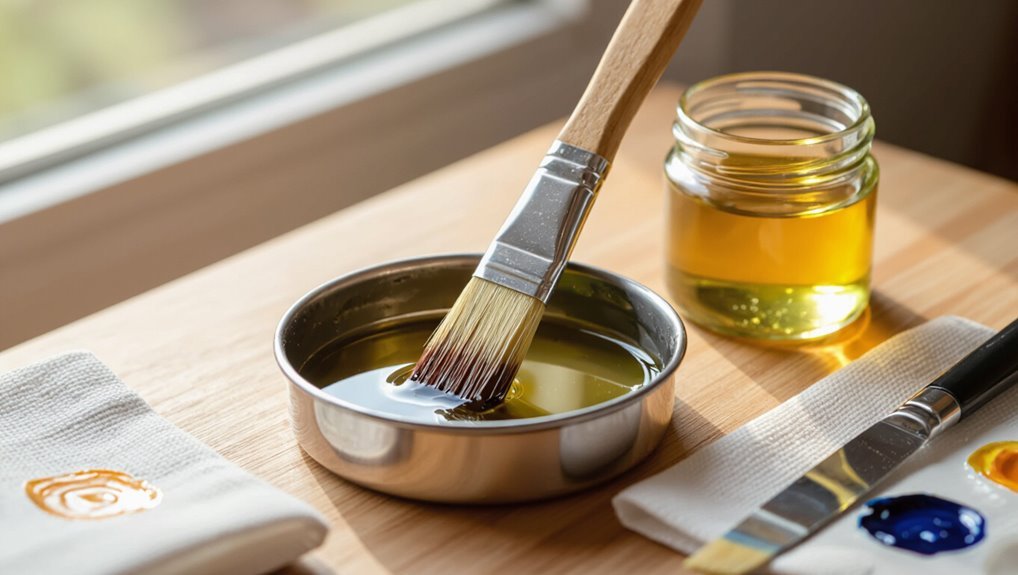
If you’re short on time, you can remove most oil paint from brushes quickly by working solvents through the bristles immediately after use; rinse, repeat, then wipe excess on a rag.
You’ll follow quick tips: don’t soak too long, work from ferrule to tip, and restore shape.
These effective techniques speed cleaning and extend brush life while keeping bristles aligned.
What You’ll Need to Get Started
Before you start cleaning, gather the essential supplies like solvent, brush combs, rags, and a container for waste.
Put on protective gear—chemical-resistant gloves and eye protection—and work in a well-ventilated area or outdoors.
Set up a stable workspace with paper or plastic to catch drips and keep solvents away from children and pets.
Essential Cleaning Supplies
You’ll need a few specific supplies to clean oil-based paint brushes effectively: a solvent (like mineral spirits or odorless turpentine), a container for soaking, disposable gloves, rags or paper towels, a brush comb or old fork, mild soap (dish soap or brush cleaner), and a jar for storing used solvent.
Keep items organized to support brush maintenance and match cleaning frequency to paint type.
Protective Gear & Setup
Now that you’ve gathered the supplies, set up a safe workspace and put on protective gear to keep solvents and paint off your skin and out of your lungs.
Follow safety guidelines: wear gloves, goggles, and a respirator for solvent handling.
Arrange cleaning techniques and brush maintenance tools within reach.
Prioritize personal protection, workspace organization, and safety precautions to prevent spills and inhalation.
Set Up a Safe Brush-Cleaning Station
1 clear workspace makes cleaning oil-based paint brushes safer and faster: choose a well-ventilated area (outdoors or near an open window with a fan), cover the surface with disposable drop cloths or a tray, and keep all solvents, rags, and used brushes contained to prevent spills and fumes from spreading.
- brush cleaning kit
- workspace organization tips
- safety protocols checklist
- solvent storage guidance
- paint disposal steps
Protect Surfaces and Yourself
Before you start rinsing brushes, shield yourself and surrounding surfaces with proper PPE and barriers: wear chemical-resistant gloves and eye protection, put on an apron or old clothes, and lay down heavy-duty drop cloths or a plastic tray to catch drips.
Keep lids closed on solvent containers, ventilate the area, and place used rags in a metal container.
These brush care maintenance tips prevent spills and injuries.
Choose the Right Solvent: Overview
When you’re ready to clean oil-based paint brushes, pick a solvent that matches the paint type and your cleanup method: mineral spirits or paint thinner for standard oil-based enamels, naphtha for faster evaporation, and lacquer thinner only for lacquer-based coatings.
- Know common solvent types and hazards.
- Match solvent to paint before cleaning.
- Use ventilation and gloves.
- Test on a single brush first.
- Combine proper cleaning techniques and disposal.
Mineral Spirits vs. Paint Thinner: Quick Compare
Although they’re often used interchangeably, mineral spirits and paint thinner aren’t exactly the same, and knowing the differences helps you pick the safer, more effective cleaner for your brushes.
You’ll find mineral spirits benefits include lower odor, gentler action, and better brush care.
Paint thinner drawbacks are stronger fumes and harsher solvents that can damage bristles and finish—use caution and ventilation.
When to Use Turpentine Safely
If you choose turpentine for cleaning oil-based brushes, do it only when you need a powerful solvent for stubborn paint and when you can work in a well-ventilated area with proper PPE.
You should follow turpentine safety and know solvent alternatives.
- Wear gloves and eye protection
- Guarantee cross-ventilation
- Use small amounts
- Store sealed containers
- Dispose rags safely
Using Odorless Mineral Spirits With Low Fumes
Because odorless mineral spirits give you the cleaning power of traditional solvents with far less smell, you can use them indoors with fewer ventilation demands—though you should still keep windows open and wear gloves.
Use small jars to swish brushes, tap out excess, then comb bristles and repeat until clean.
Note odorless benefits and follow safety tips: gloves, eye protection, and proper disposal.
Household Solvents That Dissolve Oil Paint
You can keep using mineral spirits for most oil-based paint cleanup because they break down oils quickly and rinse out brushes effectively.
If you prefer a gentler option, citrus-based solvents can work well and smell much better, though they may act a bit slower.
Try both on a small brush to see which balances cleaning power and odor control for you.
Mineral Spirits Use
Reach for mineral spirits when you need a reliable household solvent to dissolve oil-based paint from brushes, rollers, and hardware.
You’ll get fast cleaning, reduced sticky residue, and brush restoration. Use gloves and ventilation. Consider mineral spirits alternatives if you want lower odor or greener options.
- quick degreasing
- restores bristles
- manageable fumes
- reusable solvent
- pairs with soap for finish
Citrus Solvent Options
If mineral spirits feel too harsh or you want a lower-odor, more natural option, citrus-based solvents offer a strong household alternative for dissolving oil paint.
You can soak brushes briefly, agitate bristles, then rinse with mild soap and warm water.
Enjoy citrus solvent benefits like gentler scent and easier cleanup. They’re popular eco friendly alternatives, though still use gloves and ventilate.
Remove Excess Oil Paint Immediately
Blot the bristles on a rag or paper towel as soon as you finish painting to lift excess oil paint before it starts to set. For immediate removal, act fast to prevent drying and simplify paint removal:
- Use a clean, absorbent rag
- Press, don’t rub aggressively
- Rotate the brush while blotting
- Work from ferrule to tip
- Replace rag when saturated
Swirl and Work Solvent Through Bristles
Grab a jar of mineral spirits or brush cleaner and plunge the brush tip-first, then swirl it gently so solvent penetrates from ferrule to tip; work the bristles against the jar’s sides and flex them repeatedly to dislodge paint trapped near the ferrule.
Rotate and tamp the brush, checking bristle maintenance as you go. Choose solvent selection wisely, using fresh solvent until paint loosens.
How Many Rinses Do Oil Brushes Need?
Start by doing two to three thorough solvent rinses until the solvent runs clear and no paint comes out of the bristles.
Then give the brush a couple of final water-and-soap rinses to remove any leftover solvent and soften the bristles.
Stop rinsing once both the solvent and water run clear and the brush feels tack-free and springy.
Number Of Solvent Rinses
How many rinses your oil brushes need depends on how saturated they’re and how clean you want them to be; usually three solvent rinses will remove most of the paint, but heavily loaded brushes may need more.
Use proper brush cleaning techniques and note solvent effectiveness:
- Start with the dirtiest solvent
- Work bristles gently
- Check for color transfer
- Repeat until mostly clear
- Finish with shaping bristles
Final Water Rinses
After you’ve removed most of the paint with solvents, give your brushes two to three final water rinses to remove solvent residue and any remaining loosened pigments.
Use lukewarm water, gently splay and massage bristles until water runs clear.
Shake excess water, reshape the bristles, and let them air dry flat or hang with bristles down to guarantee proper final rinsing and thorough brush drying.
When Rinsing Is Enough
Once your final water rinses run clear, you’ll want to judge whether the brushes are truly clean or need another cycle.
You’ll base that on feel, smell, and appearance, using proper rinse techniques as part of routine brush maintenance.
- No paint residue visible
- Bristles move freely
- No oily smell
- Keeps shape after drying
- Feels soft, not tacky
When Is a Brush Solvent-Cleaned Enough?
Want to know when solvent cleaning is enough? You’re done when solvent runs clear, bristles flex without stickiness, and no paint residue remains near the ferrule.
For good brush maintenance, inspect edges and test a swipe on scrap wood. Increase cleaning frequency after heavy or colored jobs.
If stubborn paint persists, repeat solvent rinses until brushes perform like new.
Wash Brushes With Dish Soap After Solvents
Now that the solvents have removed the bulk of the paint, wash your brushes with warm water and a few drops of dish soap to remove remaining solvent and oils. This boosts dish soap effectiveness and aids ongoing brush maintenance.
- Work soap into bristles
- Rinse until water runs clear
- Repeat if greasy
- Gently reshape bristles
- Dry flat away from heat
Use Brush Cleaner or Mild Detergent Effectively
After rinsing away solvents and soap, switch to a dedicated brush cleaner or a mild detergent to finish removing oil and restore the bristles’ flexibility.
Work cleaner into the bristles gently, rinsing and repeating until water runs clear.
Follow recommended cleaning frequency based on use, and employ proper brush cleaning techniques to prevent stiffening.
Squeeze out excess, reshape, and let brushes air dry flat.
Remove Paint From Ferrules and Handles
After you’ve cleaned the bristles, wipe or scrape any paint from the handle using a cloth and a bit of solvent so it won’t harden.
For stubborn spots on wooden or plastic handles, gently sand or use a small brush with solvent.
Then focus on the ferrule—work solvent and a stiff brush into the metal seam to dislodge trapped paint.
Remove Paint From Handles
If you’ve got paint on the ferrule or handle, tackle it before it hardens so you won’t have to chip or sand later.
For handle maintenance and brush aesthetics, remove smears quickly.
- Wipe with mineral spirits
- Use a soft rag
- Scrape gently with a plastic card
- Clean grooves with a toothbrush
- Finish with a light oil to preserve wood
You’ll keep brushes neat and usable.
Clean Paint From Ferrules
Tackle the ferrule next—it’s where paint buildup can stiffen bristles and ruin a brush’s balance—so remove fresh drips before they dry.
Use a solvent-soaked cloth and a small brass or nylon brush to lift oil paint from metal, twisting gently to protect bristles.
Rinse, reshape, and dry upright.
These ferrule cleaning techniques are essential brush maintenance tips to extend tool life.
Dissolve Stubborn Dried Oil Paint Safely
When dried oil paint won’t budge, you can soften and dissolve it without harming the bristles by choosing the right solvent, working gently, and protecting yourself with gloves and good ventilation.
- Use mineral spirits or odorless solvent for safe paint removal techniques.
- Test solvent on a small area.
- Soak briefly; don’t scrub hard.
- Rinse thoroughly with solvent then soap.
- Follow brush care tips and dry flat.
Revive Stiff Oil Paint Brushes
If your oil brush has gone stiff, start by soaking the bristles in an appropriate solvent to loosen the paint.
Then gently work the bristles with your fingers or a brush comb to separate and remove softened paint.
Finally, reshape the tip, rinse, and let the brush dry flat or hanging to retain its form.
Soak In Solvent
Soak your stiff oil paint brushes in a suitable solvent to loosen dried paint and restore flexibility; choose mineral spirits, turpentine, or a commercial brush cleaner depending on the paint and ventilation, and always work in a well-ventilated area while wearing gloves.
- Pick solvent selection wisely for safety
- Submerge ferrule and bristles only
- Time the soak per label
- Dispose used solvent properly
- Note brush maintenance frequency
Gently Work Bristles
Gently flex and comb the bristles with your fingers or a brush comb to loosen remaining paint and restore their shape; work from the ferrule toward the tip in short, controlled strokes, being careful not to pull or splay the hairs.
Rinse, repeating flexing until water runs clear.
Focus on bristle care to remove trapped particles and preserve brush longevity by avoiding harsh twisting or excessive force.
Reshape And Dry
- Reshape And Dry: After cleaning, you’ll restore form and prevent damage with simple brush maintenance and bristle care.
- Gently squeeze excess solvent with a cloth.
- Comb bristles straight with your fingers.
- Pinch tip to original shape.
- Hang or lay flat to dry, ferrule elevated.
- Store wrapped in paper until fully dry to keep form.
Condition Brushes to Restore Suppleness
After you’ve removed the paint and solvent, condition the bristles to restore their suppleness and prevent brittleness.
Apply a small amount of brush conditioning oil or mild hair conditioner, work it gently through the bristle maintenance from ferrule to tip. Leave for a few minutes, then rinse thoroughly.
Pat dry, comb bristles with your fingers, and store flat or hanging to keep them soft.
Reshape Wet Brushes for Perfect Points
While the brush is still wet, gently comb the bristles with a fine-tooth brush or an old fork to remove tangles and align the hairs.
Then use your fingers to form a smooth taper toward the tip, keeping pressure light and even.
Let the brush sit upright or hang to preserve the point as it dries.
Gently Comb Bristles
Gently comb the wet bristles with a metal or nylon brush comb to remove remaining paint and realign the hairs into their original shape.
Use gentle strokes, focusing on bristle care and proven comb techniques.
- Start at the ferrule, comb outward
- Work in small sections
- Rinse comb frequently
- Don’t pull or twist hairs
- Pat dry and store flat
Form A Taper
Once the bristles are aligned, shape the tip while they’re still wet to create a precise taper.
Use your thumb and forefinger to gently pull the bristles into a point, rotating the brush to maintain symmetry. This taper technique lets you control edge definition.
Finish with light brush shaping against the palm to lock the form, then hang to dry bristle-down.
Dry Oil Paint Brushes Without Damage
After you’ve removed as much solvent and paint as you can, let the brushes air-dry flat or hanging with the bristles pointing down so water or solvent won’t pool in the ferrule and loosen the glue.
Use proper drying techniques and regular brush maintenance to extend life.
- Remove excess solvent with a rag
- Reshape bristles gently
- Avoid heat sources
- Keep ferrule tilted down
- Store bristles protected
Short-Term Storage for Cleaned Brushes
Once your brushes are clean and mostly dry, wrap the bristles loosely in clean paper to keep their shape and stop dust from settling.
Store them upright with the bristles facing up or resting on a rack so they don’t get crushed.
This short-term setup keeps brushes ready for your next use without risking damage.
Wrap In Paper
Wrap a cleaned oil brush in plain paper to keep the bristles aligned and prevent dust from settling while you take a short break between coats. You’ll protect tip shape and preserve brush care for oil paint.
Do this when brushes are dry to the touch.
- Use plain kraft or butcher paper
- Wrap snugly, not tight
- Fold to cover ferrule
- Label if needed
- Short-term only
Keep Upright
Stand your cleaned brushes upright in a jar or container so the bristles keep their shape and any remaining solvent drains away from the ferrule.
You’ll prevent deforming and corrosion while they dry. Use this short-term storage as part of your cleaning techniques routine, then inspect and comb bristles before reuse.
Regular brush maintenance prolongs life and guarantees consistent paint application.
Long-Term Storage and Transport Tips
If you want your oil-based paint brushes to stay in good shape between jobs, clean and condition them thoroughly, then store them in a cool, dry place where the bristles can keep their shape.
Follow these long term storage and transport tips to protect bristles and ferrules:
Follow these long-term storage and transport tips to protect your brushes’ bristles and ferrules.
- Use breathable cases
- Wrap tips in paper
- Avoid crushing brushes
- Separate by size
- Secure during travel
Keep Natural-Hair and Synthetic Brushes Separate
Because natural-hair and synthetic brushes absorb and release oil differently, you should keep them separate to avoid cross-contamination and uneven performance. For proper brush care, store and label compartments, and use tailored cleaning techniques so each retains shape and function.
| Type | Best Use | Care Tip |
|---|---|---|
| Natural | Oil paints | Gentle solvent |
| Synthetic | Alkyds/latex | Stronger detergent |
| Storage | Organization | Separate tubes |
Clean Foam and Specialty Applicators
Treat foam rollers, sponge brushes, and other specialty applicators gently but thoroughly: rinse them immediately after use with the appropriate solvent (mineral spirits or paint thinner for oil-based products), work the solvent through the foam to dissolve trapped paint, then repeat with clean solvent until the rinse runs clear.
Rinse foam rollers and sponge brushes immediately with the right solvent, working until the rinse runs clear and then air-dry upright.
- Squeeze gently, don’t tear foam applicators
- Use small containers for specialty tools
- Change solvent often
- Rinse until clear
- Let air-dry upright
Clean Angled and Sash Brushes Properly
When cleaning angled and sash brushes, pick a solvent that matches the paint—mineral spirits for oil-based paints work well.
Rinse and reshape the bristles after washing to keep the edge and angle intact.
Let the brush dry upright so any remaining solvent drains away and the bristles keep their form.
Choose Appropriate Solvent
1 key choice you’ll make is the solvent — pick one that dissolves your specific oil-based paint without damaging the brush’s ferrule or handle.
You should consider solvent safety and match solvent strength to brush types. Use gloves, ventilate, and avoid soaking wooden handles.
- mineral spirits
- turpentine
- citrus solvent
- odorless thinner
- specialized brush cleaner
Maintain Bristle Shape
Keep angled and sash brushes in proper shape by cleaning them gently and reshaping the bristles before they dry.
After solvent rinses, comb filaments with a brush comb or wide-tooth comb, aligning the angle and sash profile.
Use mild soap, rinse, squeeze excess solvent, and reform the tip with your fingers.
These bristle maintenance tips guarantee effective brush shape preservation and longer tool life.
Store Upright Drying
After reshaping and rinsing, stand angled and sash brushes upright to dry so the bristles retain their profile and solvent drains away from the ferrule.
- Use a ventilated spot for proper drying techniques.
- Keep handles down, bristles up to prevent deformation.
- Separate brushes to avoid touching tips.
- Store in a breathable container for ideal brush storage.
- Check dryness before capping or shelving to prevent mildew.
Clean Large Brushes and Rollers Used With Oil
Tackle large brushes and rollers the same way you’d smaller tools, but expect to use more solvent and a bit more elbow grease; their size traps extra paint and oil.
Use large brush techniques: soak, agitate, and comb bristles, repeating with fresh solvent until clear.
For roller maintenance, rinse thoroughly, spin out excess solvent, and let items dry upright on a protected surface to prevent deformation.
Speed-Clean Brushes for Quick Color Changes
When you need to switch colors quickly, speed-cleaning lets you remove most oil paint from brushes in minutes so you can move on without a full deep clean.
Use these speed clean techniques and basic brush maintenance steps to stay efficient:
- Wipe excess paint on a rag
- Swirl in solvent briefly
- Comb bristles with a brush comb
- Rinse and blot
- Store upright to dry
Clean Brushes on Job Sites or While Traveling
When you’re working on a job site or traveling, keep a small container of a portable solvent (like odorless mineral spirits) for quick cleaning.
Use sealed onsite storage or a brush comb sleeve to protect bristles between coats.
For fast maintenance, flush bristles with solvent and wipe them on a rag before sealing the container.
Portable Solvent Options
On the road or on a job site, you’ll want compact, effective solvent options that don’t leak, smell excessively, or violate transport rules.
Choose portable solvent types and consider eco friendly solvents when possible. Pack sealed containers and dispose legally.
Useful options:
- Disposable solvent pots
- Mini mineral spirits cans
- Water-reducible cleaner kits
- Citrus-based wipes
- Portable solvent recycling bottle
Onsite Brush Storage
After you pick compact solvent options and pack sealed containers, plan how you’ll store clean brushes at the site or while traveling.
Use labeled, ventilated cases or plastic tubes to protect bristles and keep brushes upright. Assign slots for each size to maintain brush organization.
For travel storage, secure brushes to prevent movement and separate soaked replacements from dry tools to avoid contamination.
Quick Bristle Flushing
If you need to rinse brushes quickly between coats or while traveling, set up a compact flushing station with a small jar of solvent and a disposable rag or paper towels nearby.
You’ll protect bristle care and control cleaning frequency with quick steps:
- Dip and swirl briefly
- Wipe on rag
- Repeat until solvent runs clear
- Shake excess solvent
- Store upright to dry
Build a Brush-Care Schedule to Extend Lifespan
A simple, consistent care schedule will keep your oil-based brushes performing longer and save you money over time.
Plan quick post-use rinses, regular conditioning, and proper drying after every session.
Track brush maintenance tasks on a checklist—cleaning steps, solvent changes, and storage checks—to guarantee lifespan extension.
Stick to the routine, adjust for heavy use, and replace brushes only when performance truly declines.
How Often to Deep-Clean Oil Paint Brushes?
Once you’ve stuck to a regular care routine, schedule deeper cleanings to prevent solvent buildup and bristle damage.
Frequency recommendations vary by use; deep-clean more often for heavy projects.
Follow these Maintenance tips:
- After every major project
- Monthly for moderate use
- Quarterly for light hobby use
- Before long storage
- If paint smells or feels tacky
Tell When a Brush Is Beyond Saving
When bristles stay splayed, feel stiff despite thorough cleaning, or shed excessively, you’re looking at a brush that’s probably beyond saving.
You should judge by persistent misshaping, metal corrosion, or a foul odor that won’t dissipate.
Accept that brush lifespan ends here; expensive restoration techniques won’t help.
Replace the tool and document failure causes to improve maintenance next time.
Repair Split Ends and Minor Bristle Damage
If the brush isn’t irreparably damaged, you can often fix split ends and minor bristle wear yourself.
You’ll need patience and basic brush maintenance skills.
Try these steps for bristle care:
- Trim split tips with sharp scissors
- Soak in conditioner briefly, then rinse
- Reshape with fingers while damp
- Dry flat, bristles over edge
- Store upright in a cover
Clean Brushes After Alkyds and Enamels
After working with alkyds or enamels, wipe off as much excess paint as you can before it hardens.
Reach for the proper solvent—mineral spirits or brush cleaner—working it through the bristles until paint breaks free.
Rinse and reshape the brush, then let it dry flat or hanging so the ferrule stays intact.
Remove Excess Paint
Because alkyds and enamels dry slowly and cling to bristles, you should start by removing as much wet paint as possible before reaching for solvents.
Use these paint removal techniques and brush maintenance tips to protect bristles:
- Wipe on rag or paper towel
- Tap handle to shake loose drips
- Comb bristles with old fork
- Roll bristles on cardboard
- Pinch base to push paint out
Use Appropriate Solvent
Once you’ve knocked off as much paint as you can, reach for a solvent that’s made for alkyds and enamels—mineral spirits or paint thinner—so you can dissolve the remaining film without wrecking the bristles.
Work in a ventilated area, use gloves and eye protection, and follow solvent safety guidelines.
If you’re sensitive, consider solvent alternatives like citrus-based cleaners or odorless mineral spirits.
Restore Brush Shape
Reshape the bristles while they’re still slightly damp so they dry in the right form: gently comb them with your fingers or a fine-tooth brush, align the tips into a smooth fan or point depending on the brush, and use a paper towel or cloth to squeeze out excess solvent without splaying the hairs.
- Comb gently
- Align tips precisely
- Remove excess solvent
- Tape or sleeve to hold shape
- Store upright for drying
Practice brush care and bristle maintenance to extend life.
Clean After Oil-Based Primers and Stains
Start by removing as much excess primer or stain from the brush as you can with a clean rag or paper towel, working the bristles toward the ferrule so you don’t push product deeper into the handle.
Use mineral spirits for oil paint removal, swirling and squeezing until clear.
Rinse in clean solvent, reshape bristles, and store upright for proper brush maintenance.
Avoid Common Cleaning Mistakes That Ruin Brushes
Don’t let simple habits wreck your brushes—rinse them promptly after use to stop paint from hardening.
Don’t dunk bristles in boiling or very hot solvent, which can soften glue and loosen the ferrule.
Store brushes hanging or flat with bristles straight to keep their shape and extend their life.
Rinse Immediately After Use
Rinse your brush right after you finish painting—oil paint hardens fast, and waiting even a few minutes makes cleaning much harder.
Use proper rinse techniques for effective brush maintenance and long life.
Quick steps:
- Wipe excess on rag
- Rinse in solvent jar
- Work bristles gently
- Repeat until clear
- Comb and reshape bristles before drying
Avoid Hot Solvent Dips
While it might seem faster, dipping your brushes into hot solvent can warp the bristles, loosen the ferrule, and shorten the brush’s life.
Don’t use heated chemicals; they break adhesives and damage natural and synthetic hairs.
For proper brush care, stick to room-temperature solvents, gentle agitation, and quick rinses.
These maintenance tips preserve shape and performance without risking irreversible harm.
Store Bristles Properly
If you want your brushes to last, store their bristles suspended or reshaped immediately after cleaning so they dry straight and retain their profile.
You should practice proper bristle care and choose smart storage solutions to avoid splayed or misshapen brushes.
Tips:
- Hang brushes by the ferrule
- Lay flat to reshape
- Use protective guards
- Avoid upright drying
- Store in a breathable case
Protect Against Solvent-Related Fire Hazards
Because solvents for oil-based paints are highly flammable, you need to handle, store, and dispose of them with care to prevent fires. Follow fire safety rules: keep solvents in labeled metal containers, store outdoors or in ventilated areas, keep sparks away, and have a fire extinguisher nearby.
| Action | Tip |
|---|---|
| Storage | Metal, labeled |
| Ventilation | Outdoors/vented |
| Ignition control | No sparks |
| Equipment | Fire extinguisher nearby |
Dispose of Used Solvents and Paint Legally
Check your local hazardous waste rules before you toss used solvents or paint, since many communities require special drop-off or collection events.
Follow proper disposal methods—seal containers, label them, and never pour solvents down drains or into regular trash.
If you’re unsure, contact your local waste authority for specific instructions and approved facilities.
Local Hazardous Waste
One clear step you must take after cleaning oil-based brushes is to dispose of used solvents and leftover paint through your local hazardous waste program.
You should follow hazardous waste disposal guidelines, contact your facility, and prep materials properly. Check hours and rules, and never pour solvents down drains.
- Locate local site
- Confirm accepted items
- Use sealed containers
- Label containers
- Follow drop-off rules
Proper Disposal Methods
1 clear rule governs legal disposal of used solvents and leftover oil-based paint: don’t dump them in drains, trash, or onto the ground. You should use eco friendly methods: let solvents separate, reuse, or take waste to community disposal sites. Follow local rules and label containers.
| Item | Action | Where |
|---|---|---|
| Solvent | Recycle | HHW |
| Paint | Drop-off | Transfer station |
Set Up a Simple Solvent-Recycling Routine
When you’re cleaning oil-based paint brushes, set up a simple solvent-recycling routine so you save money, reduce waste, and keep your workspace safer.
Use solvent safety practices and basic recycling techniques:
Practice solvent safety and simple recycling: two jars, settle solids, siphon clear solvent, label and store securely.
- Use two jars (wash, rinse)
- Let solids settle in rinse jar
- Siphon clear solvent back to wash jar
- Label jars and cap tightly
- Store used solvent safely
Use Biodegradable Solvents for Greener Cleanup
If you want a greener cleanup without sacrificing performance, switch to biodegradable solvents made for oil-based paints.
You’ll find biodegradable alternatives that dissolve paint effectively, reduce toxic runoff, and comply with eco friendly practices.
Rinse brushes in small batches, strain and store used solvent for proper disposal or recycling, and label containers.
This minimizes environmental impact while keeping brushes usable.
Choose Brush-Friendly Solvents for Sensitive Skin
If you have sensitive skin, pick solvent alternatives like odorless mineral spirits or citrus-based cleaners that are gentler than harsh solvents.
Wear nitrile gloves and work in a well-ventilated area to minimize contact and fumes.
Test a small amount on your inner wrist if you’re unsure, and replace gloves at the first sign of irritation.
Skin-Safe Solvent Options
Because your skin’s sensitivity matters, pick solvents that clean effectively without causing irritation—like low-odor mineral spirits, citrus-based cleaners labeled for paint brushes, or specially formulated brush restorers.
You should favor eco friendly options and respect skin sensitivity when selecting products.
- Low-odor mineral spirits
- Citrus-based brush cleaners
- Biodegradable solvent blends
- Water-emulsifiable brush restorers
- Mild, labeled brush detergents
Protective Gear Recommendations
Choosing gentler solvents for your skin is only part of the safety equation—you still need proper protective gear to keep irritation and absorption to a minimum.
Wear chemical-resistant protective gloves and safety goggles, and cover exposed skin.
Use ventilation tips: open windows, run fans, or use respirators for poor airflow.
Label and secure solvent storage containers, keep lids tight, and store away from heat and children.
Clean Brushes When You Have Little Solvent
When you’ve only a small amount of solvent on hand, work smart: scrape excess paint from the bristles with a putty knife or the brush’s ferrule, then swish the brush in the solvent just long enough to loosen remaining paint.
Use these brush maintenance cleaning techniques:
- Work quickly
- Rotate bristles to loosen paint
- Rinse in fresh solvent sparingly
- Wipe with rag
- Store upright to dry
Test a Cleaned Brush Before a New Project
Ready to be sure your brush is truly clean? Dip the tip in clear solvent or water (depending on paint) and stroke on scrap material to check for streaks, tackiness, or color transfer.
Perform simple brush testing to confirm filaments separate and lay flat. Only when strokes are consistent and residue-free should you consider project readiness and start your new work.
Label and Organize Cleaned Brushes by Color/Use
If you want to keep your brushes working like new, label and organize them by color or use right after they’re dry so you don’t mix oils or contaminate future projects.
Use simple brush labeling and color coding to speed selection and support usage tracking. Organization tips and storage solutions aid brush maintenance and inventory management; keep cleaning records.
- Label size and color
- Group by use
- Track hours used
- Note last clean
- Log projects
Store Brushes in Transport Without Misshaping
Anyone transporting brushes should protect their bristles from bending or crushing by using rigid cases or tube-style holders that keep each brush separated and supported.
You’ll snap lids, use foam inserts, or wrap ferrules with paper to prevent contact.
Choose compact brush storage that fits your vehicle and pick transport methods minimizing movement and pressure so shapes stay intact and ready for use.
Teach Helpers or Kids to Clean Brushes Safely
When teaching helpers or kids to clean oil-based paint brushes, show them step-by-step what to do and supervise until they’re confident—demonstrate proper ventilation, how to handle solvents safely, and the exact motions for rinsing and reshaping bristles so mistakes don’t become habits.
- Use child friendly supplies and clear teaching methods.
- Emphasize brush safety and safe practices.
- Practice cleaning techniques with supervision tips.
- Offer hands on learning and engaging activities.
- Try creative cleaning and teamwork exercises.
Track Brush Condition Over Time
After you’re comfortable teaching safe cleaning, start tracking each brush’s condition so you know when to repair or replace it.
Note bristle splay, handle wear, and ferrule loosening after each use. Log cleaning frequency and any solvent types.
Use simple labels or a spreadsheet to spot decline trends. Apply brush maintenance tips early to extend life and schedule repairs before performance drops.
How Much Does Professional Brush Cleaning Cost?
Curious what it’ll cost to have your oil‑based paint brushes cleaned professionally? You’ll find prices vary by service and brush size; professional cleaning services often charge per brush or by batch.
Consider factors and compare options:
- Small brushes: lower fee
- Large/expensive brushes: higher fee
- Deep restorations: premium
- Turnaround time affects price
- Local shop vs. mobile service
Ask about brush cleaning techniques.
Buy Brushes That Are Easiest to Clean
Although no brush is completely maintenance‑free, you can cut cleaning time dramatically by choosing ones designed for easy care.
Pick easy to clean brushes with smooth ferrules and stain‑resistant handles.
Opt for synthetic brush benefits: they resist oil absorption, hold shape, and rinse cleaner than natural bristles.
Choose synthetic brushes—they resist oil, keep their shape, and rinse far cleaner than natural bristles.
You’ll spend less solvent, finish faster, and extend brush life with smart choices.
Troubleshoot Lingering Paint or Odors in Brushes
Even with brushes chosen for easy cleanup, you may still run into stubborn paint buildup or lingering solvent smells; don’t ignore these signs because they’ll degrade bristle performance and room air quality.
- Rinse thoroughly to remove paint residues.
- Use mineral spirits plus gentle scrubbing.
- Apply brush cleaner for deep cleaning.
- Air dry outside to speed odor elimination.
- Replace or refurbish badly clogged brushes.
Frequently Asked Questions
Can I Wash Oil Paint Brushes in a Washing Machine or Dishwasher?
No, you shouldn’t — washing machines or dishwashers will ruin bristles and spread oil paint residue. For safe brush cleaning, you’ll hand-wash with solvent, comb bristles, then rinse and reshape before drying properly.
Will Brush-Cleaning Solvents Damage Paint-Stained Clothing?
Yes — solvents can damage paint-stained clothing; they’ll dissolve fibers or spread stains. You should wear gloves and use clothing protection, treat paint stain removal promptly, blot gently, and launder according to garment care instructions.
Can I Use the Same Brushes for Oils and Water-Mixable Oils Interchangeably?
Yes — but don’t assume perfect results: you’ll need strict cleaning techniques between uses. You can use brushes interchangeably for oils and water-mixable oils if you follow proper cleaning, check brush compatibility, and avoid cross-contamination.
How Do I Sterilize Brushes Used With Oil-Based Mediums and Mediums?
You sterilize brushes used with oil-based mediums by following brush care cleaning techniques: wipe excess, flush with mineral spirits, wash with soap and hot water, rinse thoroughly, then soak briefly in isopropyl alcohol and air-dry upright.
Are There Specific Insurance or Liability Concerns When Cleaning Brushes at a Workplace?
Of course not—you’ll love unexpected lawsuits. You should check liability insurance, follow workplace safety rules, use proper disposal and ventilation, label solvents, and document procedures so your employer and you aren’t left paying for preventable harm.
Conclusion
Cleaning oil-based paint brushes isn’t just about tools — it’s about keeping them usable. Did you know the average brush lasts only 3–5 years for casual painters, but proper cleaning can double that lifespan? By setting up a safe station, using the right solvent, and tracking brush condition, you’ll save time and money and cut waste. Follow these steps, buy easier-to-clean brushes, and you’ll keep your brushes reliable for years.
