
How Do You Get Latex Paint Out of Clothes: Simple Removal Techniques
Act fast: blot or gently scrape off excess latex paint, then rinse the stain from the back under cold running water to push paint out. Apply a bit of dish soap, laundry pre-treater, or rubbing alcohol and gently work it in with your fingers or a soft brush, rinse, and repeat until the paint loosens. Avoid heat, bleach, and aggressive scrubbing that can set the stain or damage fabric. Keep going for more step-by-step tips and fabric-specific advice.
What Readers Want: Fast Help for Latex Paint on Clothes
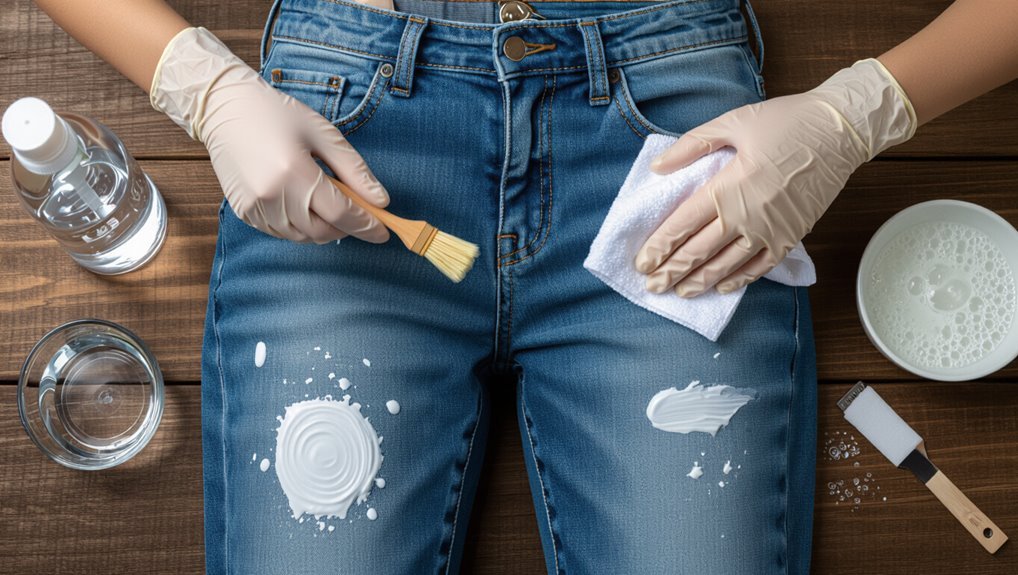
Want to get paint out fast? You need clear paint prevention tips and fabric protection advice before mishaps.
Start by wearing old clothes or disposable coveralls, use a barrier like tape or aprons, and keep wipes and a plastic bag handy for immediate blotting.
Acting quickly reduces staining and gives you better odds when you tackle removal steps later.
Quick Fix: Remove Fresh Latex Paint Fast
Act fast: if the latex paint is still wet, blot excess with a clean cloth or paper towel, then rinse the area under cold running water from the back of the fabric to push paint out instead of deeper in. Use mild detergent, dab with rubbing alcohol if needed, and keep emergency supplies handy. Quick paint removal techniques table:
| Step | Tool | Time |
|---|---|---|
| Blot | Cloth | 1–2 min |
| Rinse | Water | 2–3 min |
| Treat | Alcohol | 5 min |
Identify Fresh vs. Dried Latex Paint
If the quick fixes didn’t fully remove the spill, you’ll need to tell whether the paint’s still fresh or already dried so you can pick the right next step.
For fresh paint identification, check for tackiness, transfer to a paper towel, and vibrant color.
Dried paint characteristics include a stiff, crusty feel, cracking, and no transfer when you press—that dictates tougher removal.
Check Fabric, Colorfastness, and Care Label First
Before you start treating a stain, check the garment’s fabric type because delicate fibers like silk or wool need gentler methods than cotton or denim.
Test a hidden area for colorfastness to make sure your cleaner or solvent won’t fade or bleed dyes.
Finally, read the care label for temperature limits and warnings so you don’t damage the item while removing paint.
Fabric Type Matter
Different fabrics react very differently to paint and cleaning, so check the garment’s care label and test a hidden spot for colorfastness before you start treating a stain.
You should consider fabric composition and how it affects stain longevity. Decide treatment by type:
- Cotton
- Polyester
- Wool
- Silk
Handle delicate weaves gently and act quickly to limit permanent damage.
Label Care Instructions
Want to know how hard a stain fight will be? Check the care tag first; label importance matters. You’ll assess fabric care, colorfastness, and washing limits before treating paint. If unsure, test a hidden seam. Visualize choices:
| Fabric | Colorfast | Care |
|---|---|---|
| Cotton | Usually yes | Machine |
| Silk | Often no | Hand |
Immediate Steps for Fresh Drips: Blot, Scrape, Rinse
If you catch fresh latex on your clothes, act quickly to prevent it from setting.
Blot the excess with a clean cloth, then gently scrape any thicker drops with a dull edge.
Rinse the area under cold running water before treating further.
Act Quickly, Blot
Act fast when latex paint lands on your clothes: blot away excess with a clean cloth or paper towel, then gently scrape any thicker spots with a dull edge to avoid pressing paint deeper into the fabric.
- Use gentle blotting techniques to lift wet paint.
- Work from edges inward.
- Replace soiled cloths frequently.
- Prioritize fabric preservation by avoiding rubbing and heat.
Scrape Gently, Rinse
After blotting up as much wet paint as you can, gently scrape away thicker bits with a dull knife or the edge of a credit card to lift paint without driving it deeper into the fibers.
Work outward from the center, use careful scraping techniques, then hold the stain under cold running water.
Repeat targeted rinsing methods until excess loosens, then proceed to stain treatment.
Household Cleaners That Safely Remove Fresh Latex Paint
When you catch fresh latex paint early, common household cleaners can lift it quickly without harming fabric—so you don’t need specialty solvents right away.
Try these safe options and test a seam first:
- Vinegar solution: dilute 1:1 with water, blot gently.
- Rubbing alcohol: dab small spots, rinse.
- Dish soap: suds and rinse.
- Laundry detergent: pre-treat, launder as usual.
Remove Dried Latex Paint With Rubbing Alcohol
Before you use rubbing alcohol on dried latex paint, test a hidden fabric spot to make sure it won’t damage or fade.
If the fabric’s safe, blot the stained area with a cloth soaked in rubbing alcohol to lift loosened paint.
Once the paint softens, gently scrape away residue with a dull edge and repeat blotting until it’s gone.
Test Fabric First
Start by testing a hidden area of the garment to make sure the rubbing alcohol won’t harm the fabric or fade colors.
You’ll do quick fabric testing and a color assessment before treating stains. Follow these steps:
- Dampen a cotton swab with alcohol.
- Apply to a seam or hem.
- Wait five minutes.
- Check for damage or color loss.
Blot, Then Scrape
If the fabric handled the alcohol test, move on to lifting the paint.
Dampen a clean cloth with rubbing alcohol and use gentle blot techniques to loosen dried latex, working from the outside inward.
Once softened, use a dull knife or credit card for careful scraping methods to lift residue.
Repeat blotting and scraping until the stain’s gone, then launder as usual.
Use Commercial Paint Removers and Stain Sticks Safely
When store-bought paint removers or stain sticks are your best bet, read the label and test a hidden seam first so you’ll avoid fabric damage or color loss.
You’ll focus on paint remover safety and stain stick effectiveness.
Follow steps:
- Wear gloves and ventilate.
- Apply sparingly.
- Blot, don’t rub.
- Rinse and launder promptly.
Treat Delicate Fabrics (Silk, Wool, Rayon) Gently
Handle delicate fabrics with extra care: silk, wool, and rayon can stain or distort easily, so treat spots promptly.
Work from the fabric’s underside, and avoid harsh scrubbing or strong solvents that can weaken fibers or strip dyes.
Use mild detergent or diluted dish soap, blot gently, rinse with cool water, and air dry flat.
Consider professional cleaning for stubborn stains.
Handle Heavy Spills on Cotton and Denim
If you get a heavy latex spill on cotton or denim, act quickly to prevent the paint from setting.
Blot gently to lift excess without rubbing it deeper into the fibers.
Then pre-treat the stained area with liquid detergent before washing as usual.
Act Quickly, Blot Gently
Act fast and blot—don’t scrub—so the paint doesn’t set into cotton or denim fibers. Use careful blotting techniques to limit paint absorption and lift fresh latex before it dries.
Follow steps:
- Remove excess with a dull knife.
- Blot with a clean cloth.
- Flip fabric to blot through.
- Repeat with fresh cloths until transfer stops.
Pre-Treat With Detergent
Soak the stained area with a small amount of liquid laundry detergent and gently work it into the fibers with your fingers or a soft-bristled brush—this helps break up thick latex on cotton and denim before washing.
Let it sit 10–15 minutes, then blot and rinse. These pre-treatment methods improve detergent effectiveness; repeat for stubborn spots and launder promptly on the hottest safe setting.
Spot Treatment vs. Laundry Pre‑Wash: When to Use Each
When you catch a fresh latex paint drip, treat the spot directly right away; for older or larger stains, a pre‑wash cycle with a targeted detergent will usually work better.
Catch fresh latex drips immediately; for older or larger stains, run a prewash with a targeted detergent.
Use spot treatment techniques for small, wet spots; choose laundry pre wash for set or widespread stains.
- Assess size
- Blot or scrape
- Apply detergent
- Rewash as needed
Tools and Supplies to Keep for Paint Emergencies
If you want to handle paint mishaps quickly, keep a small emergency kit stocked and accessible: rubber gloves, a plastic scraper or old credit card, paper towels, clean rags, spray bottle with water, mild liquid detergent, rubbing alcohol or hand sanitizer, and a stain-removing laundry pre-treatment.
Store items in a zip bag near work areas, label contents, replace used supplies, and keep instructions for paint removal handy.
If Stain Remains: Escalation Steps and Repeat Options
Although you’ve followed the basic steps, persistent latex stains sometimes need stronger measures, so start by re-treating the spot with a laundry pre-treatment and laundering on the warmest safe setting indicated on the garment tag.
- Apply enzyme or oxygen cleaner.
- Gently agitate with a soft brush.
- Repeat wash cycles for stain persistence.
- Try targeted solvent spot tests for removal challenges, then launder.
What Not to Do: Prevent Permanent Damage
Because solvents, heat, and scrubbing can make a stain permanent, don’t rush into aggressive treatments—take measured steps to protect the fabric.
Don’t use bleach, hot water, or harsh brushes that set latex. Avoid DIY solvent mixes unless labeled for textiles.
Follow paint prevention tips: blot gently, test cleaners on a hidden seam, and prioritize fabric protection to prevent irreversible damage.
Drying and Laundering Tips to Avoid Setting Stains
Once you’ve followed the gentle stain-removal steps above, take care during drying and laundering so you don’t lock any residue into the fabric.
Use careful drying techniques and follow laundering advice to prevent stains from setting.
- Air-dry; avoid heat.
- Recheck stains before washing.
- Use stain-fighting detergent.
- Repeat treatment if needed; don’t tumble until clean.
When to Accept Loss or Consult a Professional Cleaner
If the stain hasn’t budged after repeated spot treatments or the fabric’s delicate or labeled dry-clean only, accept that DIY fixes may do more harm than good and consider a pro.
You’ll know when to stop: persistent, set-in paint, fragile fibers, or high-value garments.
Opt for professional cleaning rather than risking further damage, and practice loss acceptance for irreparable items.
Quick Checklist: Save Clothes After a Paint Mishap
Keep this short and follow the steps in order: act fast, scrape excess wet paint gently with a dull knife or spoon, blot (don’t rub) with a clean cloth, pre-treat the stain with dish soap or laundry detergent, rinse from the back of the fabric, and launder per the care label; stop and consult a pro for delicate or dry-clean-only items or when paint won’t budge.
- Isolate garment
- Remove excess
- Pretreat stain
- Launder promptly
Pack an emergency kit with soap, cloths, and stain prevention tips so you can act immediately.
Frequently Asked Questions
Can Latex Paint Ruin Clothing Beyond Repair?
Yes — latex paint can ruin clothing beyond repair if it dries and bonds with fibers, especially on delicate fabrics. You’ll need prompt fabric care and proper solvent treatment to minimize permanent damage.
How to Remove Paint From Shoes or Sneakers?
You can remove paint from shoes by identifying paint types, scraping dried spots, using rubbing alcohol or mild detergent for water-based paints, acetone for stubborn oil-based stains, then rinse, pat dry, and follow sneaker care to protect finishes.
Will Paint Removal Methods Affect Fabric Flame Retardancy?
“Better safe than sorry.” You shouldn’t assume paint removal won’t alter fabric safety; chemicals and paint composition can degrade flame-retardant finishes, so you should test, use mild solvents, and consult manufacturers before treating treated garments.
Can Paint Transfer to Skin During Treatment?
Yes—you can get paint transfer to skin during treatment, so you should use skin protection like gloves and barrier cream, avoid rubbing, clean spills promptly with soap and water, and wash thoroughly afterward to prevent irritation.
Are There Eco-Friendly Paint Remover Alternatives?
Yes — you can use biodegradable solvents and natural cleaners; try citrus-based degreasers, soy solvents, or vinegar and baking soda mixes. You’ll test effectiveness, then choose gentle, eco-friendly options that actually break paint down safely.
Conclusion
You’ve got this — act fast, treat fresh drips like spills, and don’t let dried paint set the scene. Think of your fabric as a rescue mission: blot, gently scrape, rinse, pre-treat, then launder with care. Test first, avoid heat, and know when to cut losses or call a pro. With calm, quick moves and patience, even a paint mishap can fade into the background like a smudge on a well-worn canvas.
