
How Long Do Oil Paints Take to Dry: Full Timeline Explained
Oil paint can feel dry to the touch in 24–72 hours, but it often takes months to years to fully cure depending on pigment, binder, layer thickness and conditions. Thin lean layers and fast oils like linseed dry quicker; poppy or safflower oils and thick impasto slow curing. High heat and airflow speed drying, high humidity slows it and risks bloom. Follow proper layering and ventilation, and keep checking; more practical tips and timelines follow.
Quick Answer: Oil Paint Drying Timeline at a Glance
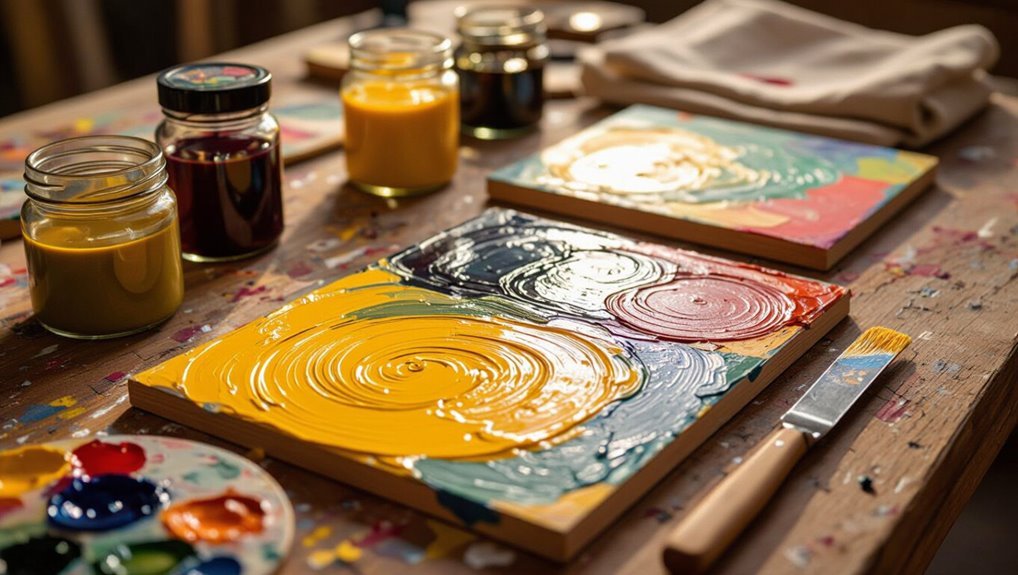
Drying times for oil paint vary, but you can expect surface drying within 24–72 hours and full curing to take months to years depending on the thickness of the paint, the type of oil, and environmental conditions.
You’ll judge timing by oil paint consistency and layer thickness; use drying techniques like thin layers, proper ventilation, and regulated temperature to speed safe drying without cracking or yellowing.
How Oil Paint Actually Dries (Oxidation vs Evaporation)
You’re likely thinking of paint drying the way water evaporates, but oil paint mainly cures through a chemical reaction called oxidation rather than simple evaporation. You’ll notice oxidation process dominates; evaporation role is minor. Drying factors include binder types, pigment properties, drying agents, moisture control, and environmental influences shaping drying stages and overall curing timeline.
| Emotion | Tension | Hope |
|---|---|---|
| Thick | Slow | Patience |
| Gloss | Fragile | Reward |
Pigment Chemistry: Why Some Paints Dry Faster
You’ll notice some colors dry faster because different pigments soak up oil at different rates, changing how much binder is left to oxidize.
Some pigments, like umbers or ochres, have higher oil absorption and can feel drier sooner, while others stay oily longer.
Also remember that pigments often contain metallic driers (lead, cobalt, manganese) that chemically speed up oxidation and shorten drying time.
Pigment Oil Absorption
Because pigments differ in surface area, porosity, and chemical makeup, they soak up oil at different rates and change how fast a paint film forms.
You’ll notice pigment interaction affects oil viscosity and drying speed; binder influence and pigment formulation determine color stability.
Consider drying conditions, application techniques, environmental impact, and your artist preferences to balance absorption and finish.
Metallic Drier Presence
Metallic driers—usually compounds of cobalt, manganese, and iron—speed up oxidation by catalyzing the cross-linking of oil molecules, so your paint film sets faster.
You’ll notice metallic drier benefits in reduced tack time and stronger surface film.
Choose based on pigment compatibility and safety; a drying agents comparison shows cobalt excels for fast drying, manganese for mid-speed, iron for mild acceleration.
Metal/Lead vs Non‑Lead Pigments and Drying
You’ll notice that traditional lead-based pigments speed drying because they act as strong siccatives, promoting faster film formation.
In contrast, modern non‑lead alternatives are formulated to mimic that effect without the toxicity, though they may dry a bit slower or need added driers.
Let’s compare how lead’s fast skinning and non‑lead trade-offs affect handling and longevity.
Lead-Based Pigment Effects
Curious how pigmented additives change drying? You’ll notice lead-based pigments speed drying due to metal-catalyzed oxidation, affecting pigment stability and finish.
Given historical usage, regulatory changes addressed lead toxicity, artist safety, environmental impact, and health implications. You should handle legacy paints cautiously, follow safety protocols, and consider alternative sources to minimize exposure while evaluating drying behavior and long-term film integrity.
Modern Non‑Lead Alternatives
Shifting away from lead-based pigments has pushed manufacturers to develop a range of non-lead alternatives that change how oil paints dry and age.
You’ll find non-toxic alternatives and eco-friendly options with new pigment formulations boosting drying efficiency while meeting safety standards.
Market trends show artists shifting by artist preferences toward these mixes, balancing paint longevity against faster drying and safer studios.
How Oil Binder Type Affects Dry Time
Because the binder is the film-forming component, it largely controls how fast an oil paint dries.
Because the binder forms the film, it chiefly determines how quickly an oil paint will dry.
So choosing linseed, walnut, poppy, or safflower oil will change drying time and paint behavior.
You’ll adjust oil viscosity, oil ratios, and medium enhancements; binder interactions with drying agents and drying accelerators plus environmental factors affect the curing process and drying techniques.
- Linseed: fast
- Walnut: moderate
- Poppy: slow
- Safflower: slowest
- Additives: tweak speed
Paint Thickness: Skin Formation and Cure Depth
Now that you’ve seen how binder choice changes drying behavior, consider how paint thickness creates two different drying regimes: surface skin formation and slower cure deep down. You’ll notice paint texture and layer thickness alter surface tension and paint viscosity, affecting the curing process. Application technique and drying conditions plus environmental factors and paint formulation drive drying variability.
| Layer | Surface | Depth |
|---|---|---|
| Thin | Fast | Shallow |
| Medium | Moderate | Moderate |
| Thick | Skin | Slow |
| Very Thick | Skin | Very Slow |
Ground and Primer: Effects on Drying and Adhesion
Your ground’s absorbency controls how quickly oil is drawn from the paint film, so a very absorbent ground will speed surface drying and can thin the paint layer.
Using a suitable primer improves adhesion and creates a more uniform absorption, which helps prevent cracking and uneven cure.
Check your ground and primer choice to balance drying rate and long-term stability.
Ground Absorbency Effects
While the paint film cures on the surface, the ground or primer you choose controls how much oil the canvas or panel soaks up, and that absorption directly changes drying time and adhesion.
You’ll notice ground texture and absorbency impact drying variations; surface treatment and primer types alter oil consistency, medium selection, underpainting effects, canvas preparation, and behavior on absorbent materials.
- Ground texture
- Absorbency impact
- Primer types
- Medium selection
- Canvas preparation
Primer Adhesion Benefits
Because a primer bonds your paint layer to the support, it’s the single most effective step you can take to improve adhesion and control drying behavior.
You should choose primer types based on surface preparation and oil compatibility, use proper application methods and adhesion techniques, and consider texture impact.
These decisions boost bonding strength, primer durability, and predictable drying factors across painting surfaces.
Surface Absorbency: Canvas, Panel, and Primed Boards
Although the type of support you choose might seem like a small decision, surface absorbency directly affects how quickly oil paint skins over and bonds to the ground.
You’ll notice canvas types and panel priming change surface textures and absorbency levels, altering paint adhesion, oil interaction, substrate properties, surface preparation, and application techniques.
Consider:
- Raw canvas: high absorbency
- Primed canvas: moderated
- Gessoed panel: low absorbency
- Oil-primed board: slower
- Sanded panel: improved adhesion
Temperature: How Heat Speeds or Slows Drying
When you raise the room temperature, chemical reactions in oil paint speed up and solvents evaporate faster, so films skin over and cure more quickly; cooler conditions slow those processes and can keep paint tacky for days or weeks.
You’ll monitor temperature effects and heat sources to control drying rate, seek an ideal temperature for paint consistency, and balance thermal impact with studio conditions and other environmental factors to avoid drying dilemmas.
Humidity: When Moisture Stalls Curing
High humidity slows the oxidation process that cures oil paint, so you’ll notice tacky or consistently soft surfaces in damp conditions.
In very humid rooms, drying times can stretch from days into weeks or even months depending on the paint thickness and medium.
To manage this, you’ll want to control moisture or adjust your technique to avoid prolonged tackiness.
High Humidity Effects
If moisture hangs in the air, it can seriously slow an oil painting’s curing because the solvent and drying oils react less efficiently. You’ll notice longer tackiness, delayed skin formation, and a greater chance of smudging or bloom.
You’ll learn how humidity impacts paint behavior: moisture absorption causes drying variability, so consider climate considerations, temperature influence, air circulation, and studio conditions.
- Increased tackiness
- Bloom risk
- Slower cure
- Uneven finish
- Mold potential
Drying Time Variations
Because moisture slows the chemical reactions that harden oil paint, you’ll see drying times stretch out noticeably in humid conditions. You should monitor drying speed factors and environmental influences, adjust paint formulation variations, and use artist techniques to compensate.
| Humidity | Effect | Tip |
|---|---|---|
| High | Slows | Use dryers |
| Moderate | Variable | Ventilate |
| Low | Faster | Thin layers |
Airflow and Ventilation: Drying With Circulation
When you increase airflow around a painting, solvents evaporate faster and the surface tack reduces sooner, speeding through the early stages of drying. Good ventilation doesn’t cure oil paint instantly, but it helps the top layer set more evenly and prevents trapped fumes from lingering in your workspace.
You should manage air circulation, temperature control, humidity control, ventilation systems, and workspace organization.
- Use fans for airflow management
- Position vents for even air circulation
- Monitor air quality and humidity control
- Adjust temperature control to aid drying techniques
- Optimize studio setup and ventilation systems
Season and Climate: Planning Your Studio Calendar
Although climate won’t change the chemistry of oil paint, it controls how fast solvents evaporate and how oils oxidize, so you should plan projects around seasonal conditions.
You’ll make seasonal adjustments using climate considerations for studio scheduling: humidity management, temperature control, and ventilation strategies.
Adjust oil selection and drying techniques, organize workspace organization, and adapt painting habits to keep timelines predictable and efficient.
How Solvents Change Surface Drying
If you add a solvent to your oil paint, it won’t change the chemical curing of the oil but it will speed how fast the surface feels dry by thinning the film and promoting faster solvent evaporation.
You’ll control surface tension, oil viscosity, and drying conditions via solvent types, solvent ratios, drying mediums, drying agents, and awareness of environmental factors and paint chemistry.
Control surface tension, oil viscosity, and drying by choosing solvents, ratios, mediums, agents, and accounting for conditions.
- Balance solvents and ratios
- Mind surface tension
- Select drying methods
- Watch oil viscosity
- Adjust for conditions
Using Drying Oils and Modifiers Safely
Thinning paint and speeding surface dry with solvents alters how the oil film behaves, but adding drying oils and chemical modifiers brings a different set of effects and risks you should know. You should follow safety precautions, use drying modifiers and drying agents sparingly, maintain ventilation practices, monitor workspace conditions, and guarantee proper storage to reduce health risks when working with oil paint.
| Item | Action |
|---|---|
| Safety | Ventilate, PPE |
| Modifiers | Use minimal |
| Storage | Seal, label |
| Risks | Avoid skin/contact |
Alkyds and Fast‑Drying Media: When to Choose Them
If you need noticeably faster drying times, consider alkyds or other fast-drying media that can cut drying from days or weeks to hours or a couple of days.
Check solvent compatibility and ventilation, since they often require specific thinners and behave differently than traditional oils.
Also decide what surface finish you want—alkyds can give smoother, more durable films or glossier results depending on the formulation.
Faster Drying Time
Speed matters when you need shorter wait times between layers or faster turnaround on commissions, and that’s where alkyds and other fast‑drying media come in.
You’ll use alkyds and specific oil mediums to employ fast drying techniques, thin layers, and controlled heat or airflow to shorten drying.
Consider advantages and limitations:
- Quicker layering
- Less yellowing
- Stronger film
- Easier varnishing
- Good for commissions
Solvent Compatibility
1 key consideration when choosing alkyds or other fast‑drying oil media is solvent compatibility: you’ll want to match solvents and mediums so paint films cure predictably and layers adhere properly.
Check solvent types and solvent effects, adjust solvent ratios for drying mediums, and follow safe usage guidelines.
Consider odor considerations, application methods, and potential health impacts to minimize risks and guarantee reliable results.
Surface Finish Options
When you need a durable, low‑maintenance finish that dries quickly between layers, alkyds and other fast‑drying oil media are a strong choice.
You can control surface texture techniques, finish variations and gloss levels while managing matte effects and drying effects.
Consider oil absorbency and layering strategies before final varnish options.
- Faster build
- Less yellowing
- Thin glazes
- Reduced tack
- Compatible solvents
Comparing Brands: Pigment Load, Binder, and Claims
Choosing between brands comes down to three practical factors: pigment load, the type and amount of binder, and the manufacturer’s drying claims.
When you compare pigment performance and binder composition, drying claims aren’t always consistent. Brand comparisons reveal color consistency, texture differences, price variations, and varying artist preferences.
Test tubes side-by-side to judge real-world drying behavior, feel, and hue before committing.
Common Pigments: Touch‑Dry Times to Expect
After you’ve compared pigment load and binder differences between brands, you’ll want to know how individual pigments actually behave as they dry.
After comparing pigment load and binders, consider how each pigment’s drying behavior actually affects your paint layers.
You’ll notice pigment properties and pigment blending affect drying variability; oil viscosity, binder interaction, paint formulation, drying agents, color saturation, environmental factors, and layer thickness all matter.
- Lead white: fast
- Titanium white: moderate
- Earth pigments: slow
- Cadmiums: moderate-fast
- Phthalo: slow
Common Pigments: Handleable Times (Safe to Move)
When you need to move a painting, different pigments require different handle times. Lead white often becomes safe to lift sooner than many colors, while ultramarine blue can stay tacky longer depending on your medium.
Cadmium reds generally handle well after a few days to a week, but always test a corner before transferring the work.
Lead White Handle Time
Because lead white has a high oil absorption and forms a relatively quick-drying film, you’ll usually be able to handle paintings with this pigment sooner than with many earths or fuller-bodied whites.
You should note lead white’s drying characteristics, historical usage, safety concerns, application techniques, alternative pigments, environmental impact, and studio practices.
- Handle gently early
- Thin layers dry faster
- Ventilate for safety
- Consider zinc/titanium
- Monitor curing time
Ultramarine Blue Drying
How soon can you safely move a panel painted with ultramarine blue? You’ll usually wait 24–48 hours for surface dry using ultramarine blue pigment; full cure takes longer.
Consider ultramarine blue properties, ultramarine blue opacity and undertones, and ultramarine blue variations when planning.
Adjust for ultramarine blue mixing, ultramarine blue applications, and ultramarine blue usage to control ultramarine blue effects; recall ultramarine blue history.
Cadmium Reds Movement
If you’re moving a panel painted with cadmium red, you can usually handle it for light transport after about 24–72 hours—surface dry comes relatively quickly, but the paint will still be soft beneath.
You’ll consider pigment stability, aesthetic effects, artistic applications and color mixing, plus historical significance, production methods and health concerns when planning movement.
- Avoid heavy pressure
- Support edges
- Minimize vibration
- Keep upright
- Label fragile
Common Pigments: Fully Cured Times (Varnish Timing)
When planning varnish timing, know that different pigments reach full cure at very different rates, so you shouldn’t rely on surface dryness alone.
You should consider pigment properties, pigment variations and paint formulation alongside drying conditions, oil absorption and curing processes.
Use appropriate drying agents and drying techniques, and monitor environmental factors and material interactions to decide when varnish won’t trap ongoing curing.
The Four Drying Stages and How to Recognize Them
Although oil paint can feel dry quickly, its curing actually goes through four distinct stages you should learn to recognize, because each stage affects handling, varnishing, and overpainting.
You’ll watch tacky, skinning, firm, then fully cured phases influenced by drying conditions, oil types, drying mediums, humidity control, and environmental factors.
Adjust painting methods, drying techniques, and paint storage accordingly.
- Tacky
- Skinning
- Firm
- Cured
- Monitoring
Layering Rules: When to Glaze and When to Scumble
Now that you can read the paint’s four drying stages, you’ll know how long to wait before building layers—glazing and scumbling demand different underlying tack and firmness. You’ll use glaze techniques for color depth and paint transparency; scumble effects add texture control and finish variations. Choose medium selection and drying mediums wisely; follow clear layering strategies and layering order.
| Technique | Purpose | Drying time |
|---|---|---|
| Glaze | Color depth | Weeks |
| Scumble | Texture control | Days |
| Mix | Finish variations | Variable |
The Fat‑Over‑Lean Rule Explained and Applied
Because oil paint layers dry by oxidation, you’ll want to apply each successive layer with more oil (fat) than the one beneath it to prevent cracking and delamination.
Because oil paints dry by oxidation, each new layer should be progressively fattier to avoid cracking and delamination
You’ll control fat consistency and avoid overly lean application by adjusting oil mixtures and paint mediums. Use mindful paint layering and drying techniques to manage drying effects.
- Start lean
- Increase fat
- Track oils
- Test layers
- Note effects
How to Test If a Layer Is Ready to Paint Over
Once you’ve built your layers following fat‑over‑lean, you’ll want a reliable way to tell when a layer has cured enough to support the next one without risking cracking or tackiness.
Use drying tests: perform a gentle touch assessment and pressure test at regular time intervals.
Note visual cues and surface texture; check layer integrity while accounting for environmental factors that slow or speed cure.
Speed Drying Safely: Methods That Don’t Harm Paint
While you can’t force oil paint to cure overnight, you can speed surface drying safely by controlling temperature, airflow, and humidity and by choosing appropriate additives and supports.
Use tested speed drying techniques and safe methods to avoid cracking or yellowing. Follow gentle steps:
- warm, ventilated room
- moderate heat source
- dehumidify space
- thin layers, lean-to-fat
- use approved siccatives
Slow Drying Intentionally: Retain Working Time
If you want more time to blend and adjust, you can extend working time by using slow-drying mediums like walnut or poppy oil.
These oils slow oxidation without overly yellowing the paint, so your colors stay truer while you work.
Use them sparingly and test mixes to find the balance between open time and drying speed that suits your technique.
Extend Working Time
When you want more time to blend, build layers, or rethink a section, slowing oil paint’s drying is a practical choice—use retarders, alkali-free mediums, or cooler, humid conditions to keep the surface workable longer.
You’ll rely on extended techniques, controlled environments, medium selection, and moisture management to adjust your painting pace and layering techniques for deliberate drying adjustments.
- Plan drying strategies
- Use ventilated humidity
- Thin layers strategically
- Time your sessions
- Monitor temperature
Use Slow-Drying Mediums
Because you want more time to refine strokes and blends, choose slow-drying mediums that deliberately lengthen oil paint’s open time.
Your medium selection and drying oils determine working time and blending time, so learn slow drying techniques and compare paint mediums.
Controlled medium effects give drying control, improving paint manipulation and artistic flexibility while you refine edges, glazes, and subtle shifts without rushing the process.
Drying Agents: Cobalt, Zirconium – Pros and Cons
While you can’t force oil paint to dry instantly, adding drying agents like cobalt or zirconium will speed up the process by catalyzing oxidation and polymerization of the oils.
You’ll weigh cobalt advantages (fast drying, strong drying speed) against zirconium disadvantages (slower, less toxic).
Consider toxicity concerns, paint stability, color influence, and artist preferences.
- drying agents
- cobalt advantages
- zirconium disadvantages
- toxicity concerns
- paint stability
Safe Dosing: Using Siccatives and Dryers Correctly
Now that you’ve weighed cobalt’s fast action against zirconium’s milder profile, you need to handle any siccative with care: these dryers speed oxidation but can ruin a painting if overused.
When choosing siccative selection, follow dosage guidelines, mixing ratios, and oil compatibility.
Learn drying agents’ performance comparison, drier effectiveness, application techniques, safety precautions, and safe storage to protect color and film integrity.
Using Solvents to Accelerate Surface Drying (How‑To)
If you want to speed surface drying, choose fast‑evaporating solvents and apply them carefully so you don’t soften underlying layers or disturb pigment and binder.
Use correct solvent types and application methods, mindful of oil ratios and drying mediums. Prioritize surface preparation, ventilation tips, safety measures, and environmental factors to guarantee effective accelerated drying.
- Read product labels
- Test a small area
- Thin sparingly
- Keep airflow steady
- Dispose waste safely
Using Alkyd Mediums for Faster Completions
If you want quicker drying without sacrificing oil paint handling, try alkyd mediums.
They speed drying considerably—often cutting drying times from days to hours—while keeping a workable feel.
You’ll get faster completions and smoother layering when you adjust ratios to suit your workflow.
Alkyd Medium Benefits
Because alkyd mediums speed up drying without sacrificing oil paint’s richness, you’ll finish layers and entire paintings much sooner than with traditional oils.
They offer alkyd properties like enhanced gloss, drying speed, medium compatibility, paint flexibility, improved surface texture, color retention, and precise drying control.
- Faster workflow
- Smoother surface
- Stronger film
- Consistent sheen
- Blending window preserved
Drying Time Reduction
When you add an alkyd medium to your oil paint, you’ll cut drying times dramatically so you can glaze, varnish, or rework areas in days rather than weeks; this speed-up keeps your workflow moving without forcing you to sacrifice handling or color depth. You’ll optimize drying techniques, oil mediums, paint additives, environmental factors, drying strategies, time management, surface treatments, drying conditions, studio setup, and artist experiences.
| Benefit | Note |
|---|---|
| Faster layers | Better time management |
| Smooth glazes | Compatible with oil mediums |
| Reduced tack | Improved drying conditions |
| Fewer waits | Practical drying techniques |
| Consistent finish | Surface treatments matter |
Preventing Cracks When Forcing Fast Drying
Although speeding up oil paint drying can save time, you’ll need to take steps to prevent cracking by controlling how fast the surface hardens versus the lower layers.
Use crack prevention techniques alongside fast drying methods, and follow careful application and monitoring to avoid surface stress.
- Thin, even layers
- Use compatible mediums
- Allow tack before heat
- Avoid excessive heat
- Test small areas
Storage for Works‑in‑Progress to Control Drying
To control drying on works-in-progress, you’ll want to manage room humidity so paint cures evenly and predictably.
Store canvases flat for wet, tacky layers or vertical for firmer surfaces, depending on how the paint feels.
Keep pieces covered or in a dust-free cabinet to prevent particulates from settling.
Control Room Humidity
A controlled humidity space can make a big difference for works-in-progress, letting you slow or speed oil paint drying without risking tackiness or cracking.
You’ll manage humidity control and moisture management to shape the drying environment with temperature regulation and air circulation.
Monitor humidity effects, avoid damp conditions, and stabilize your studio climate to take into account environmental factors for drying stability.
- Set target RH
- Use a dehumidifier
- Add a humidifier
- Guarantee gentle airflow
- Monitor with sensors
Store Flat Or Vertical
When you’re storing works-in-progress, decide whether to lay them flat or stand them vertically based on paint thickness and support type so you can control drying and avoid surface damage.
Lay thinly painted panels flat to prevent sagging; prop canvases vertically with good support to promote air movement.
Match oil paint storage method to drying environments and handling needs to reduce cracking and pooling.
Isolate From Dust
You’ve considered orientation and support, now make sure your work is protected from airborne dust that can mar wet oil paint.
Isolate paintings in a clean drying space, use protective covering, and maintain studio cleanliness. Balance ventilation strategies to limit dust particles while preventing stale air.
Prioritize dust control for artwork protection.
- Clean surfaces regularly
- Cover with breathable cloth
- Use dust-free racks
- Limit foot traffic
- Control airflow
Best Dry Setup for Small Studios
Because small studios need efficient solutions, set up a compact drying area that controls airflow, light, and temperature so your oil paintings dry predictably without taking over the room.
Use adjustable studio lighting, stackable drying racks, and dedicated paint storage.
Optimize space organization, ventilation systems, temperature control, and moisture management.
Arrange by surface types to prevent contact and speed safe curing.
Best Setup for Plein‑Air and Travel Painting
Moving your practice outdoors means trading the controlled setup of a small studio for a compact, mobile system that keeps paint handling, drying, and storage manageable on the go.
You’ll choose plein air essentials and travel tools: a portable easel, compact palette, travel friendly supplies, quick sketches kit, and an outdoor setup mindful of weather considerations and shifting light conditions for nature inspiration.
- Portable easel
- Compact palette
- Travel friendly supplies
- Quick sketches kit
- Weather considerations
Transporting Semi‑Dry Oil Paintings Safely
When transporting semi-dry oil paintings, take extra care to prevent smudging, cracking, or tacky layers from sticking together; secure each piece with breathable separation, firm support, and minimal movement so the paint can finish curing undisturbed. Use safe handling, protective coverings, transport logistics, travel considerations, painting supports, environmental factors, cushioning materials, temperature regulation, moisture control, and securing artworks.
| Item | Purpose | Tip |
|---|---|---|
| Cover | Protect surface | Breathable |
| Support | Prevent flex | Rigid board |
| Cushion | Absorb shock | Foam wrap |
When and How to Varnish Based on Cure Stage
You should wait until the paint has cured enough to avoid trapping solvents—typically several months to a year for thin layers, longer for thick impasto.
Choose a varnish type based on cure stage: removable synthetic varnishes for earlier protection and traditional damar or natural resins only when fully cured.
Test a small area first and apply thin, even coats to avoid cloudy or tacky finishes.
Varnish Timing Guidelines
Although varnishing might seem like a final, straightforward step, timing it to the paint’s cure stage is essential to protect the surface without causing clouding or adhesion problems.
You should wait until the paint’s surface is dry to the touch and partly cured before varnish application. Consider varnish compatibility and layering, benefits, maintenance, and removal.
- Wait 6–12 months for lean layers
- Test small areas first
- Avoid varnishing flexible impasto early
- Clean before varnishing
- Use proper storage and maintenance
Varnish Types Explained
Varnish choice matters because different formulations suit specific cure stages and painting styles, so pick one that matches how dry and flexible your oil layers are. You’ll consider varnish types, varnish selection, varnish compatibility and varnish sheen; weigh varnish benefits versus varnish drawbacks. For varnish application, removal, longevity and varnish safety, choose accordingly.
| Type | Best cure stage |
|---|---|
| Natural resin | Fully cured |
| Synthetic | Semi-cured |
| Retouching | Early touch-ups |
| Removable | Conservation use |
Identifying and Fixing Tacky or Undercured Paint
How can you tell if oil paint is tacky or undercured? Check drying time indicators and perform paint texture evaluation and surface texture analysis.
Consider environmental factors and drying conditions assessment. Use layer inspection techniques and review paint application methods to identify issues.
Consider environmental factors and drying conditions; inspect layers and application methods to identify paint curing issues.
For tacky paint solutions and undercured paint fixes, try these quick checks:
- Feel for stickiness
- Smell for solvent
- Tap for tack
- Light cure test
- Thickness review
Dealing With Bloom and Surface Weeping
Watch for a grayish, oily haze forming on your painting early—that’s bloom, and spotting it quickly helps you address it before it worsens.
Surface weeping often comes from excess oil or humid conditions, so check your medium and storage environment to identify the cause.
To prevent or remove bloom, use leaner mixes, improve ventilation, and gently wipe affected areas with a soft cloth and solvent if needed.
Identifying Bloom Early
Spot bloom as soon as it appears by checking your painting in consistent, diffused light—look for a grayish, greasy sheen or tiny beads of oily moisture on the surface that don’t match the paint’s normal finish.
You’ll use bloom identification and bloom monitoring to note bloom characteristics, compare bloom comparison, then choose bloom remedies or bloom treatment for bloom prevention.
- Inspect daily
- Use soft light
- Photograph changes
- Isolate affected area
- Apply conservative treatment
Causes Of Surface Weeping
When solvents, excess oil, or moisture migrate to the surface of a drying oil painting, you’ll see a greasy sheen or tiny beads of liquid—this surface weeping (often called bloom) happens because volatile components separate out faster than the paint film can set.
Common weeping causes include surface moisture from humidity effects, oil interaction with pigment type, drying agents, paint layering, temperature fluctuations, environmental factors, and improper storage.
Preventing And Removing Bloom
To prevent and remove bloom, you should control the painting environment, tailor your materials and layering, and act quickly when you spot early signs of weeping.
Balance humidity control and ventilation; choose appropriate oil types and drying agents; adjust paint formulation and application techniques; and use gentle surface treatment to remove bloom.
- Monitor environmental factors
- Use tested oil types
- Adjust paint formulation
- Apply correct techniques
- Employ safe treatments
Restoring Slow‑Drying Historic Oils: Artist Tips
If you’re tackling a historic oil painting that’s still tacky decades later, start by evaluating the surface and documentation before touching a brush: note varnish discoloration, craquelure patterns, and any past restorations so you can choose solvents and consolidants that won’t harm original layers.
Then plan restoration techniques addressing drying challenges of historical oils, pigment preservation, surface treatments, aging effects, environmental factors, application methods, restoration materials, conservation practices.
Mixed Media: Estimating Drying With Acrylic/Oil Mixes
Having assessed old oil layers and surface history, you’ll also want to contemplate how introducing acrylics changes drying behavior in mixed-media work.
You’ll face drying challenges from acrylic interactions with oil layering, texture variations, and differing drying mediums.
Adjust blending methods, color combinations, surface treatments, and application styles to prevent adhesion issues and uneven cure.
- mixed media techniques
- drying challenges
- acrylic interactions
- oil layering
- texture variations
Color Choice and Long‑Term Stability (Yellowing Risk)
While you might pick colors for hue and harmony, think equally about their long‑term stability—some pigments and oils yellow or fade as they age, altering your desired color balance.
You’ll weigh color stability, lightfastness ratings and formulation choices to reduce yellowing.
Consider archival quality brands, pigment longevity and paint durability; these artist concerns guide yellowing prevention and guarantee work remains true over decades.
How Different Seasons Change Your Schedule
Because temperature and humidity shift with the seasons, you’ll need to adjust your oil‑painting schedule to match changing drying speeds and tackiness.
Use seasonal adjustments, climate considerations, and temperature effects to refine your planning schedules and painting workflow.
Adapt planning and workflow seasonally—account for climate and temperature shifts to match drying rates and tackiness.
Update studio setup, humidity control, ventilation strategies, and drying techniques for outdoor factors.
- Monitor humidity control
- Adjust ventilation strategies
- Modify drying techniques
- Note temperature effects
- Revise planning schedules
Weekly Timeline Example for a Single Painting
Start your week by checking daily drying stages so you know which areas are tacky, touch-dry, or still soft.
Plan each day’s layer work—thin underpainting first, slightly thicker mid-layers, and finishing glazes toward the end of the week.
Adjust the schedule based on how quickly your paint skins over and how warm or humid your studio is.
Daily Drying Stages
If you follow a simple daily checklist, you’ll see how a typical oil painting moves from tacky to touch-dry over a week:
You’ll monitor daily drying techniques and typical drying conditions, noting oil paint interactions and drying time factors. Track environmental influences, paint texture effects, layering strategies, drying environment tweaks, drying agents usage, and early drying challenges.
- Check surface tackiness
- Note humidity/temperature
- Inspect layer firmness
- Adjust airflow/light
- Record drying progress
Weekly Layer Plan
Having tracked daily tackiness, environmental notes, and layer firmness, you can map out a simple weekly layer plan that shows when to add paint, when to wait, and when to tweak conditions.
Use layering techniques and application methods tailored to oil types and paint mediums, adjust thickness impacts, adopt drying strategies and curing practices, monitor studio environment and environmental considerations, and account for speed factors.
Timeline Example for a Series or Commission
A clear timeline helps you and your client set expectations for a series or commission, so outline key milestones: concept approval, underpainting, successive glaze or drying stages, final details, and delivery.
Use clear commission scheduling and project timelines, apply appropriate drying techniques and methods, and follow layering strategies for oil paint to keep progress predictable.
- Concept approval
- Underpainting
- Glaze/dry cycles
- Final details
- Delivery
Common Mistakes That Delay Drying or Ruin Layers
Now that you’ve planned milestones like underpainting and glaze stages, watch for mistakes that can slow drying or wreck layers. You’ll avoid heavy impasto, incompatible oil paint mediums, or uneven surface preparation.
Control paint application, color mixing, drying agents and drying conditions. Match layering techniques to your painting schedule and monitor environmental factors so the curing process proceeds predictably and your layers remain stable.
Quick Checklist: Ready to Layer, Frame, or Ship
Before you move a painting, run this quick checklist so you know whether it’s safe to layer, frame, or ship:
- Confirm drying conditions and absence of tackiness to protect layering techniques.
- Verify compatible drying mediums or drying agents were used.
- Follow framing tips: spacer, acid-free backing, ventilation.
- Review shipping precautions and paint storage for temperature/humidity.
- Make certain varnishing methods complete; practice careful artwork handling and oil paint care.
Tools and Tests to Monitor Drying at Home
When you want to know whether a painting’s surface is truly dry, rely on simple tools and hands-on tests you can do at home to get accurate clues without risking damage.
Use drying tests like tack paper or toothpick probe, and monitoring tools such as a hygrometer to track temperature effects, humidity levels and airflow impact.
Consider surface preparation, drying agents, oil types, absorbency factors and pigment interactions.
FAQs Artists Ask About Drying Oil Paint
Curious about how long oil paint really takes to dry? You’ll want clear answers on oil paint curing, tack-free times, and layering.
Use artist drying techniques to speed safe curing without yellowing.
- When is paint tack-free?
- How long before varnish?
- Can heat speed curing?
- Which mediums help?
- How to avoid cracking?
Key Takeaways and Practical Next Steps
If you want reliable results, focus on a few essentials: let oil layers dry to the appropriate tack-free stage before overpainting, choose fast-drying alkyds or siccatives sparingly to speed curing, and reserve heat or lamps for controlled, short bursts only to avoid yellowing or cracking.
| Tip | Benefit | Priority |
|---|---|---|
| canvas preparation | better adhesion | high |
| drying techniques | faster curing | medium |
| studio organization | work efficiency | medium |
| medium selection | layering strategies | high |
Frequently Asked Questions
Can Oil Paintings Be Refrigerated to Slow Curing?
Yes — you can refrigerate oil paintings to slow curing; refrigeration effects reduce oxidation and solvent evaporation, so you’ll extend wet time and potentially improve control, but it can also alter oil paint lifespan and condensation risks, so be cautious.
How Does Canvas Tension Affect Long‑Term Paint Stability?
Canvas tension directly affects paint stability: if you properly prepare the canvas and control moisture, you’ll prevent cracking and warping; uneven tension or poor canvas preparation plus fluctuating moisture will stress paint layers and cause long‑term damage.
Are Certain Varnishes Reversible Without Affecting Old Oil Layers?
About 70% of conservators report success reversing natural resin varnishes; you’ll usually remove them without harming old oil layers if you choose appropriate varnish types and control varnish application, solvent, and testing before full treatment.
Do UV Lamps Accelerate Full Polymerization of Oil Paint?
No — you won’t fully polymerize oil paint with UV lamps; UV effects can speed surface curing but won’t change deep curing. You’ll see faster curing speeds on thin layers, affected by paint consistency and overall drying times.
How Do Museum Conservation Practices Differ From Studio Drying Methods?
You’ll use conservation techniques focused on preservation—controlled drying environments, humidity and temperature stabilization, and minimal intervention—while studio drying methods speed work with heat, solvents, or varnishes, prioritizing practicality over long-term preventive care.
Conclusion
By now you know oil paint doesn’t hurry; it breathes, hardens, and reveals its secrets in layers. Trust the slow alchemy—pigments, binders, and time working like seasons in miniature. Let your pieces rest until they’re tough enough to handle framing or shipping, but gentle enough to keep their glow. Be patient: your patience is the kiln that turns color into memory, and every finished canvas is proof that waiting can be beautiful.
