
How to Add Texture to a Wall: Creative Design Ideas
You can transform a room by adding texture that fits your style and budget—think limewash on brick, knockdown plaster, textured paint techniques like rag-rolling, or peel-and-stick textured wallpaper. Start by evaluating and repairing the wall, gather quality tools and PPE, test samples, then apply thin, layered compounds or paint effects and seal or finish for durability. Mix materials carefully for accents and keep samples to verify light and scale; keep going to explore step‑by‑step options.
What Textured Wall Fits Your Room and Budget?
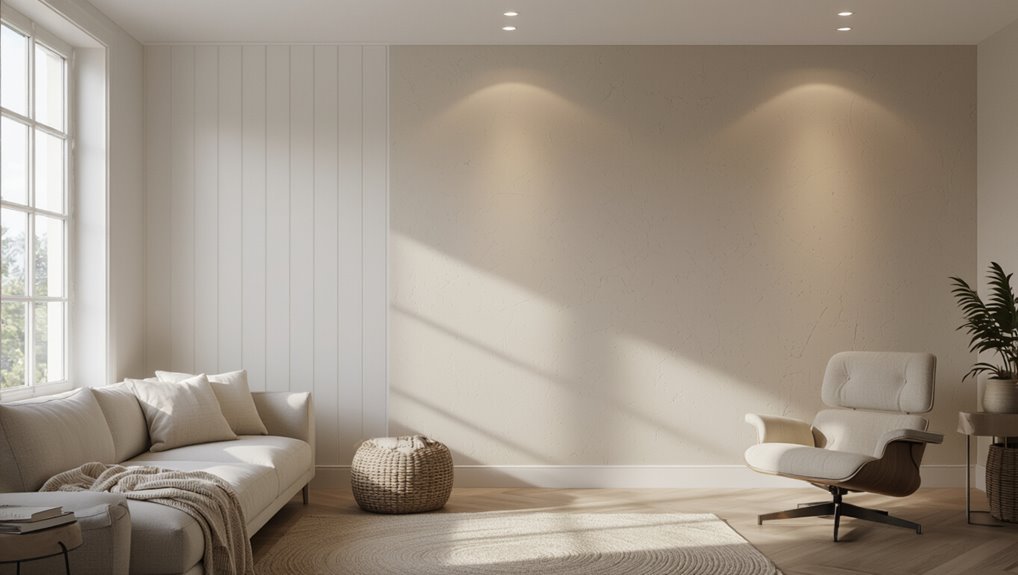
Start by matching texture style to the room’s purpose and your budget: smoother, subtle textures like eggshell or light knockdown work well in living areas and cost little, while heavy stucco or Venetian plaster add drama but require more time and money.
You’ll choose budget friendly options and cost effective materials, weighing texture principles, wall types, room suitability, design trends, color coordination, stylish combinations, and personal tastes.
Evaluating Your Wall Surface Before Texturing
Before you apply any texture, inspect the wall for damage, moisture, and substrate type so you know what fixes are required and whether the surface can hold the finish.
Check wall condition: repair cracks, mold, or loose plaster.
Inspect and fix cracks, mold, or loose plaster before texturing to ensure a sound, lasting surface
Test for dampness and confirm substrate (drywall, plaster, masonry).
Match texture compatibility to surface strength and moisture levels before starting your project.
Quick Tool Kit and Supplies for Textured‑Wall Projects
Now that you’ve confirmed the wall’s condition and substrate, gather the right tools so the job goes smoothly and the finish lasts.
You’ll need brushes, rollers, hawk, trowels, knockdown knives, texture brushes, and a variety of textured materials.
Add joint compound, patching supplies, primers, sanding tools, drop cloths, painter’s tape, buckets, and mixing paddles to support efficient wall preparation and application.
Safety Tips for DIY Texture Work
When tackling texture work, protect yourself with the right PPE—safety glasses, a dust mask or respirator rated for fine particles, and gloves—and keep your workspace well‑ventilated to avoid inhaling drywall dust, spray, or chemical fumes.
Use safety gear, follow ventilation importance, apply protective measures for electrical safety, observe dust precautions and chemical handling, secure tools, prevent accidents, and guarantee children safety for injury prevention.
Essential Prep Steps for a Smooth Textured Finish
1 key to a smooth textured finish is thorough prep: clean the wall, repair holes and cracks with joint compound, sand seams flush, and remove dust so the texture adheres evenly.
You’ll perform a careful wall surface assessment and follow texture preparation tips to guarantee uniform application.
- Check for moisture and loose paint
- Sand and dust thoroughly
- Protect floors and trim
How to Patch and Prime Drywall for Textured Finishes
After you’ve cleaned, repaired, and sanded the surface, tackle any remaining drywall imperfections before texturing so the finish looks intentional and uniform.
Inspect for dents, nail pops, and seams; perform drywall repair with lightweight compound, let it cure, then sand flush.
Wipe dust, apply a quality primer to seal patched areas, and guarantee even surface preparation so your texture adheres consistently.
Using Joint Compound for Simple Texture Effects
You’ll gather basic tools and materials—joint compound, trowels, hawk, brushes, and texture rollers—before you start.
You’ll use simple application techniques like knockdown, swirl, or skip trowel to build the pattern, adjusting compound consistency and tool pressure as you go.
When the texture’s dry, you’ll sand or knock down high spots, then seal with primer and paint so the finish lasts.
Tools And Materials
Tools and materials for simple joint compound textures are straightforward: a bag or bucket of all-purpose joint compound, a hawk or mud pan, a variety of trowels and knives (6–12-inch taping knives plus a narrow finishing knife), a texture brush or roller, sandpaper or sanding screens, and drop cloths and painter’s tape to protect floors and trim.
You’ll focus on texture tools, material selection, surface preparation, texture finishes, design inspiration, budget considerations, and DIY tips.
- Choose quality tools for consistent texture techniques.
- Prep surfaces thoroughly before applying compound.
- Pick finishes that match design goals and budget.
Application Techniques
Now that you’ve prepped the surface and gathered your materials, it’s time to apply the joint compound and create the texture you want.
You’ll experiment with texture techniques—trowel, sponge, or brush—to achieve different texture styles.
Vary pressure and direction for texture contrast and texture effects.
Layer thin coats for texture layering, try varied texture applications, and inspect before moving to texture finishes.
Finishing And Sealing
After your texture’s fully dry, it’s time to sand, seal, and protect it so the effect lasts and looks polished.
You’ll refine edges, choose finishing techniques, and pick sealing methods that suit paint or clear coats. Work steadily, test a small area, and avoid overworking the joint compound.
- Sand lightly for smooth shifts
- Apply primer or clear sealer
- Paint or finish as desired
How to Create Knockdown Texture With Joint Compound
Start by thinning joint compound to the right consistency so it sprays and spreads easily without running.
Load a hopper gun or trowel, apply random droplets, then wait minutes until peaks set.
Knockdown technique requires a wide knife dragged gently to flatten peaks, creating subtle texture variation.
Sand lightly if needed, then prime and paint to seal and highlight the finish.
How to Apply Orange‑Peel Texture Like a Pro
When you want a durable, professional-looking finish, orange‑peel texture delivers a subtle, dimpled surface that hides imperfections and stands up to wear.
You’ll focus on drywall preparation, select texture tools, and follow application tips for consistent spray patterns.
Consider color combinations, finish options, and layering effects for style choices and design inspiration; prioritize texture maintenance and proven texture techniques.
- Prep, spray, feather
- Blend, finish, inspect
- Seal, paint, maintain
How to Produce Skip‑Trowel Texture on Drywall
Choose the right joint compound and a good-quality trowel, because skip-trowel texture hinges on tool control and material consistency.
For skip trowel techniques, thin compound slightly, load the trowel sparsely, and drag at varied angles to leave isolated swaths.
Focus on drywall preparation: sand, clean, and prime so compound adheres.
Practice on scrap drywall to refine pressure and rhythm.
How to Apply Venetian Plaster for a Polished Finish
Apply Venetian plaster with steady, deliberate strokes to build thin, even layers that you’ll burnish for a marble-like sheen.
You use Venetian techniques to achieve polished aesthetics, control application consistency, and layer color variations for subtle shifts.
Focus on texture depth without overworking. Finish by sealing to protect the surface.
- Layer thin coats
- Burnish glossy finish
- Vary hue subtly
How to Make a Faux Concrete Textured Wall With Plaster
Create a faux concrete textured wall by layering tinted plaster and manipulating it with trowels and sponges to mimic real cement’s irregularities.
You’ll apply base coats, add darker glazes for depth, and feather edges for subtle variation.
Work in small sections, sand lightly between layers, and seal with a matte sealer.
Work in small sections, lightly sand between layers, and finish with a matte sealer for subtle, durable texture.
This faux finishes technique enhances modern wall aesthetics with industrial character.
Using Limewash for Soft, Breathable Texture
When you want a soft, breathable texture that ages gracefully, limewash is a great choice because it soaks into masonry and leaves a matte, variegated finish instead of sitting on the surface like paint.
You’ll enjoy limewash applications on brick or lime plaster, subtle color variations, and an easy patina that refreshes with time.
- Apply thin, layered coats
- Test color variations
- Seal sparingly for durability
Paint‑Only Textured Techniques (No Drywall Work)
If you want textured walls without tearing into drywall, paint-only techniques give you quick, low-mess options that rely on tools and layering rather than construction.
You can glaze, rag-roll, or dry-brush to create depth, using textured paint techniques with subtle sheen.
Mix creative color combinations for contrast, work in small sections, and finish with a clear sealer to protect the effect.
Using Stippling Brushes and Rollers for Wall Texture
Grab a stippling brush or a textured roller and you’ll quickly add durable, visible depth to a flat wall without ripping out drywall.
You’ll combine stippling techniques and roller methods to craft subtle or bold texture variations. Choose brush types wisely, follow application tips, and test finish options on a scrap.
- Light stipple for soft texture
- Cross-roll for even coverage
- Heavy roll for dramatic effect
Creating Raised Designs With Texture Additives and Mediums
Although it takes a bit more prep, you can build pronounced, raised designs by mixing texture additives or premixed texture mediums into paint and applying them with trowels, knives, or molds.
You’ll explore creative mediums and application techniques to shape ridges, swirls, or geometric forms.
Start small, test mixtures, and use design inspiration from tiles, nature, or textiles to refine scale and depth.
How to Stencil a Textured Pattern on Plaster or Paint
Stenciling a textured pattern on fresh plaster or painted walls gives you crisp, repeatable motifs with tactile depth. Start by choosing a stencil material and a texture medium that match your surface and desired relief.
You’ll apply texture paste sparingly, peel carefully, and finish with strategic color combinations to enhance relief, using stenciling techniques and pattern selection inspired by design inspiration.
- Prep and align
- Apply and remove
- Highlight and seal
Using Textured Wallpaper for Tactile Pattern and Depth
If you liked the crisp motifs you can get with stenciling, textured wallpaper offers another way to add repeatable, tactile patterns with less hands-on finishing—it’s preformed, so you apply full sheets instead of building relief by hand.
You’ll appreciate textured wallpaper benefits like instant depth, hiding wall flaws, and easy pattern consistency.
Explore popular wallpaper styles—grasscloth, embossed, and geometric vinyl—to match your room’s mood.
Choosing Pre‑Pasted, Removable, or Vinyl Textured Wallpaper
When you’re picking textured wallpaper, decide up front how permanent and hands-on you want the installation to be: choose pre pasted patterns for quicker work, weigh removable options for flexibility, or pick vinyl textures for durability and washability.
Consider wallpaper benefits, installation tips, and design considerations to match room use and style.
- Pre pasted patterns for speed
- Removable options for renters
- Vinyl textures for durability
Applying Peel‑and‑Stick Wood Panels for Textured Walls
Peel-and-stick wood panels make it easy to add real texture and warmth to a room without nails or messy adhesives, and you can install them yourself in a few hours. You’ll enjoy peel and stick benefits: quick prep, removable backing, minimal tools. Choose among wood panel styles for color and grain to match mood.
| Pattern | Finish | Size |
|---|---|---|
| Plank | Matte | 4×8 |
| Chevron | Stained | 2×6 |
| Reclaimed | Whitewash | 1×4 |
Install Shiplap & Tongue‑and‑Groove for Textured Walls
Start by choosing between shiplap and tongue‑and‑groove boards based on the look and fit you want: shiplap gives a subtle shadow line with a rustic feel, while tongue‑and‑groove creates a tighter, seamless surface.
Choose shiplap for rustic shadow lines or tongue‑and‑groove for a tighter, seamless finish.
You’ll plan layout, prep walls, and follow shiplap installation and tongue and groove techniques carefully.
- Measure and mark stud locations
- Stagger end joints
- Nail and finish seams promptly
Build a Reclaimed Wood Accent Wall on a Budget
If you liked the warmth of shiplap or the clean lines of tongue‑and‑groove, reclaimed wood gives you a richer, characterful look without blowing your budget.
You can source pallet boards and salvaged planks, prep and seal them, then mount horizontally or in a chevron.
Focus on reclaimed wood aesthetics, staggered seams, and budget friendly materials to create a textured focal wall quickly and affordably.
Using Beadboard and Wainscoting for Subtle Texture
Beadboard and wainscoting add quiet, classic texture that makes a room feel finished without overwhelming the space.
You can mix beadboard styles and wainscoting finishes to suit traditional or modern schemes, and you’ll get durable, low-profile interest.
- Use vertical beadboard for height and rhythm.
- Paint wainscoting finishes to coordinate or contrast.
- Combine chair rail with slim panels for subtle depth.
Installing 3D Wall Panels for Modern Textured Effects
While beadboard and wainscoting lend classic charm, 3D wall panels give you a bolder, modern texture that plays with light and shadow. You’ll explore 3D panel design, installation techniques, material choices, and maintenance tips. Use texture options for wall transformations, enjoy modern aesthetics and visual impact, and try DIY inspiration for creative applications.
| Tip | Benefit |
|---|---|
| Panel layout | Depth |
| Adhesive choice | Durability |
| Finish options | Style |
| Sealing | Longevity |
Acoustic Textured Coverings: Cork and Fabric Options
Because sound and style often go hand in hand, acoustic textured coverings like cork and fabric let you improve a room’s acoustics without sacrificing design.
You’ll weigh cork benefits against fabric options, balancing sound absorption, design aesthetics, color variations, texture combinations, installation methods, and maintenance tips.
- Cork panels: natural warmth, easy installation methods.
- Fabric panels: varied fabric options, high sound absorption.
- Mix textures for tailored design aesthetics.
Designing a Gallery‑Style Accent Wall With Mixed Textures
Start by layering contrasting materials—wood, metal, fabric, and textured paper—to give each piece its own tactile voice.
Arrange frames in a balanced grid or salon-style cluster so the mix of sizes and textures reads as intentional, not chaotic.
Use directional lighting to sculpt shadows and highlight texture, changing the mood as light shifts.
Layered Material Contrast
When you mix materials—wood, metal, fabric, and plaster—you give an accent wall depth and personality that paint alone can’t achieve.
You layer elements to highlight texture, using layered wood panels beside contrasting fabrics and sleek metal accents for variety. Balance tactile shifts and color.
Choose scale and repeat patterns sparingly to keep cohesion.
- Vary thickness
- Repeat motifs
- Limit color palette
Balanced Frame Arrangement
A well-balanced gallery wall mixes frames, textures, and spacing so each piece complements the others and the room feels cohesive. You’ll arrange mixed media and frames to achieve balanced color and visual harmony, grouping by tone and texture, varying scale, and keeping consistent spacing so the wall reads as one curated composition.
| Frame Type | Texture |
|---|---|
| Wood | Woven |
| Metal | Canvas |
| Mixed | Paper |
Lighting And Shadow Play
Now that you’ve balanced frames and textures, think about how light and shadow will animate that arrangement.
You’ll use lighting techniques to highlight texture, guide sightlines, and add depth. Aim for adjustable fixtures and layered sources so shadow effects change with mood.
- Use directional spotlights for focal texture.
- Add soft ambient lights for overall depth.
- Include dimmers to vary contrast.
Using Wallpaper Murals to Combine Texture and Imagery
One way to give a flat wall instant depth and personality is to install a wallpaper mural that pairs tactile finishes—like grasscloth or embossed vinyl—with bold imagery, so you get both touchable texture and visual storytelling in one surface.
You can use wall mural inspiration to layer scale, color, and tactility, exploring texture imagery combinations that reinforce mood without overwhelming the room.
Creating a Textured Geometric Feature Wall
When you map out a geometric feature wall, think regarding planes and contrast so each shape reads clearly and feels deliberate. Textured finishes—like plaster, wood slats, or tiled relief—turn those flat forms into tactile focal points that catch light and invite touch.
You’ll use geometric patterns and color contrasts to guide placement and scale.
- Balance scale and rhythm
- Vary texture for depth
- Anchor with lighting
Layering Paint Colors to Enhance Texture Depth
If you want the texture to read as rich and dimensional, layer paint colors so highlights and shadows play across the relief; start with a midtone base, glaze in darker washes into crevices, and lift the peaks with a lighter dry brush.
You’ll use layering techniques and subtle color blending to emphasize form, working thin layers, building contrast, and stepping back to judge balance as you refine depth.
Using Glaze to Accentuate Texture Details
Now that you’ve built depth with layered paints, glazing will sharpen those details and unify the surface without covering the texture.
You’ll control sheen and shadow with careful glaze application, brushing thin layers into crevices for subtle texture enhancement. Work in small sections, wipe excess, and let each coat cure before judging depth.
- Glaze thinly
- Wipe strategically
- Layer sparingly
Color Choices That Make Textured Walls Pop
Because texture catches light and shadow, choose colors that emphasize those contrasts so your wall reads as intentional rather than accidental.
You’ll pick bold color palettes or subtle warm neutrals and cool tones to boost ridges and valleys.
Try contrasting hues for drama, monochromatic schemes for refinement, playful pastels for charm, or deep shades for mood.
Use accent walls sparingly to highlight texture without overwhelming space.
How Lighting Changes the Appearance of Texture
How does light change the way your textured wall reads? You’ll notice lighting effects sculpt shadows and highlights, shifting texture perception across the day. Aim fixtures to emphasize ridges or soften them for subtlety.
- Angle light to deepen shadows and reveal detail.
- Use diffused light to minimize contrast and calm texture.
- Combine layers for adaptable mood and visual interest.
Choosing Finishes: Matte, Satin, or Gloss for Texture
Lighting choices shape how texture looks, and your finish will either amplify or soften those effects.
You’ll weigh matte finishes for subtlety, satin sheen for balanced light reflection, or gloss effects for drama.
Consider surface durability, color impact, maintenance needs, application techniques, style coherence, and design versatility so the finish complements texture, room lighting, and practical use without overwhelming the space.
Budget Ideas for Textured Walls Under $100
When you’re on a tight budget but want real tactile impact, several low-cost techniques deliver textured walls for under $100 without sacrificing style.
You can use DIY texture techniques and affordable materials to refresh a room—try simple, quick projects that need minimal tools and paint.
- Sponge or rag glazing
- Joint compound skimming
- Peel-and-stick textured panels
Mid‑Range Textured Wall Projects Under $500
If you’ve got up to $500 to spend, you can move beyond quick fixes and create lasting, professional-looking texture with higher-quality materials and a bit more skill—think Venetian plaster, custom stenciling with skim coat accents, or professionally installed beadboard and shiplap.
You’ll follow textured wall trends while using budget friendly materials like pre-mixed plasters, quality primers, and durable sealers for polished results.
High‑End Textured Finishes Worth Splurging On
You’ve seen what quality materials can do on a mid‑range budget, and now you can push further with luxurious techniques that deliver museum‑grade results.
Go for luxury plaster and hand troweled texture, combine artisan finishes with metallic sheen, or layer designer wallpaper over textured ceramics.
Choose premium materials, decorative moldings, custom designs, and high gloss finish to make walls unmistakably refined.
- Luxury plaster, hand troweled texture
- Metallic sheen, high gloss finish
- Designer wallpaper, textured ceramics, decorative moldings
When to Hire a Pro for Complex Textured Walls
Because complex textured walls demand precise technique and specialized tools, call in a pro when the finish involves multiple layers, custom molds, delicate plaster work, or finishes that must match existing architecturally significant details.
You should seek texture pros for professional consultation to evaluate design complexity, site conditions, and materials.
Prioritize hiring considerations like portfolio, references, insurance, and clear scope before you commit.
Timeline Estimates for Common Textured‑Wall Projects
After you’ve decided whether to hire a pro, the next practical question is how long different textured-wall jobs take so you can schedule work, supplies, and living arrangements.
Use a clear texture installation timeline and realistic project duration estimates to plan. Consider scope, drying time, and prep for each job:
- Small accent wall: 1–2 days
- Whole room skim: 3–5 days
- Decorative plaster: 4–7 days
Common Mistakes That Ruin Textured Walls (And Fixes)
When textures go wrong, it’s usually from skipping prep, rushing drying times, or using the wrong materials—mistakes that are fixable if you catch them early.
You’ll face textured wall pitfalls like poor adhesion, uneven patterns, and visible seams.
Prevent texture application errors by cleaning, priming, testing technique, and using correct tools and products.
Stop and correct issues before paint.
How to Repair Damage on Textured Surfaces
Start by evaluating the damage closely so you know what you’re dealing with—small chips, gouges, or water stains each need different fixes.
You’ll follow surface preparation tips, choose matching compounds, and apply texture repair techniques carefully. Match pattern, sand lightly, and prime before paint.
- Assess and document
- Repair and texture
- Prime and repaint
Maintaining and Cleaning Different Textured Materials
1 key rule for keeping textured walls looking their best is to clean gently and match your method to the material—knowing whether you’re dealing with popcorn, knockdown, Venetian plaster, or faux finishes will determine the tools and cleaners you use.
You’ll use specific cleaning techniques, prioritize texture maintenance, and choose cleaners that protect material durability to extend texture lifespan without damaging finish.
How to Safely Remove Old Textured Finishes
Now that you know how to care for different textures, you’ll want to approach stripping old finishes with equal care to avoid damaging the substrate.
Start with texture assessment and wall preparation, then plan removing popcorn and old paint using proper scraping techniques and safety equipment.
Consider patching methods and disposal options afterward.
- Assess texture and prep walls
- Use safe scraping techniques
- Plan patches and disposal
Eco‑Friendly, Low‑VOC Options for Textured Walls
When you want textured walls without the toxins, choose low‑VOC paints and primers that cut odors and indoor pollution.
You can also create texture with natural materials like lime plaster, clay, or recycled wood and cork panels. These options keep air quality better while still giving you durable, attractive finishes.
Low‑VOC Paint Choices
Because textured walls hold more surface area and can trap odors and particles, choosing low‑VOC paint helps keep indoor air healthier without sacrificing finish or durability.
You’ll find eco friendly options with durable binders and broad color selection; test samples on texture.
Consider:
- Breathable, low‑VOC acrylics for longevity
- Washable matte or eggshell finishes
- Primer-sealer designed for textured surfaces
Natural Texture Materials
Natural materials give textured walls character while keeping indoor air healthier than synthetic additives, and you can choose options that are low‑VOC and durable.
You can mix natural stone, reclaimed wood, bamboo panels, cork tiles and woven grass for layered depth.
Use textured fabrics, plaster finishes or clay render to highlight earth tones.
Choose ecological materials to create a sustainable, tactile focal wall.
How to Test a Small Textured Sample Before Committing
Want to be sure a texture will look right in your space? Test a small area first: cut a sample with appropriate sample size, try texture variations, and view in different light.
Follow steps to evaluate adhesion, color shift, and scale before committing.
Test adhesion, color shift, and scale with a sample patch before committing to the full texture.
- Apply sample patch on an inconspicuous wall
- Inspect under natural and artificial light
- Live with it for a week to judge wear and feel
Styling Tips: Furniture and Decor for Textured Walls
1 smart styling move is to let your textured wall be the room’s focal point and choose furniture and decor that complement—not compete with—it.
You’ll plan furniture placement for space functionality, pick decor styles with color coordination and texture harmony, add lighting accents to highlight details, use material contrasts sparingly, guarantee theme consistency, rotate seasonal decor, and make careful art selection to enhance, not overwhelm, the textured surface.
Using Texture to Define Zones in Open‑Plan Spaces
When you’re working with an open‑plan space, texture becomes a subtle but powerful tool to define separate zones without building walls. Varying wall finishes, area rugs, and tactile furnishings signal shifts between living, dining, and workspace areas while keeping sightlines open.
Use zoning techniques and texture contrasts to guide movement and function:
- Layer rugs and wall panels for visual separation
- Mix matte and glossy finishes to cue purpose
- Position furniture to emphasize textured boundaries
Mixing Multiple Textured Walls Without Overdoing It
When you mix textured walls, balance the scale and focus so one surface doesn’t overpower the room.
Coordinate the material palette—think complementary tones and tactile contrasts—to keep the look cohesive.
Limit patterns and finishes to a few deliberate choices so the space feels layered, not cluttered.
Balance Scale And Focus
Because textured walls draw the eye, balance the scale and focus across a room so no single surface overwhelms the rest.
You’ll use texture balance and arrange focal points so sightlines move naturally. Combine large, subtle, and small accents; keep color muted where texture’s bold.
- Place dominant texture opposite open space
- Repeat modest texture to unify
- Let focal points breathe
Coordinate Material Palette
If you’re mixing multiple textured walls, coordinate the material palette so each surface complements rather than competes with the others. You’ll use material selection to tie textures through shared undertones and prioritize color harmony across samples. Keep one texture dominant, vary scale, and test swatches in different light before committing.
| Texture | Tone | Placement |
|---|---|---|
| Wood | Warm | Accent |
| Plaster | Neutral | Field |
| Stone | Cool | Focal |
Limit Patterns And Finishes
Although varied textures add depth, keep patterns and finishes restrained so your walls don’t fight for attention.
You’ll balance pattern diversity and finish variations by choosing one focal texture, supporting accents, and consistent color tone. Limit bold prints, match sheen levels, and repeat a motif to unify the space.
- Pick one dominant textured wall
- Use subtle secondary accents
- Repeat a motif sparingly
Before‑and‑After Textured Wall Project Ideas
Seeing a textured wall transform a room can be surprisingly motivating. These before-and-after project ideas will show you practical, achievable ways to add depth and character to your space.
You’ll see textured wall benefits in small updates: accent stripes, faux brick panels, or subtle plaster finishes.
Try popular textures like Venetian plaster, shiplap, or grasscloth to compare light, feel, and visual impact quickly.
Final Checklist: Planning, Buying, and Executing Texture Work
When you’re ready to start, the final checklist will keep planning, shopping, and execution on track so your textured wall looks professional and lasts—confirm measurements, pick compatible materials and finishes, budget for tools and labor, and schedule work around drying times and daily routines.
Use texture planning, material selection, budget considerations, and execution strategies to guide purchases and timing.
- Confirm measurements and surfaces
- List materials and tools
- Schedule labor and drying times
Frequently Asked Questions
Can Textured Walls Hide Electrical Outlets and Switches Without Modification?
Yes — you can partially hide outlets and switches with textured finishes, but you’ll need outlet concealment strategies and switch coverage solutions that keep devices accessible and code-compliant, like decorative plates, paintable covers, or recessed frames.
Will Textured Finishes Affect Home Insurance or Resale Appraisal?
Yes — textured finishes usually won’t affect insurance coverage, but you’ll want documented quality work; they can influence appraisal value if styles are extreme or poor. You should keep receipts, photos, and contractor details for proof.
Can Pets Damage Textured Wall Materials and How to Prevent It?
Like Odysseus guarding his ship, you can prevent pet damage: pets can harm textured finishes, so use pet proofing strategies, pick high wall material durability, install trim guards, train pets, and use washable, impact-resistant coatings.
Do Textured Walls Impact Indoor Air Quality or Allergen Accumulation?
Yes — textured walls can trap allergens and reduce air circulation, so you’ll need regular cleaning like vacuuming with a brush attachment, wiping with damp cloths, and improving ventilation to limit allergen accumulation and maintain healthier air.
How Do Textured Walls Behave in High‑Humidity Bathrooms or Basements?
They can trap moisture and promote mold if untreated, so you’ll choose humidity resistance materials and coatings; maintain ventilation, use waterproof primers, caulk seams, and follow maintenance tips like regular cleaning and inspections to prevent damage.
Conclusion
You’ve got plenty of options to add texture that match your room, budget and skill level—just prep well, pick tools wisely and test samples first. Don’t forget safety and zoning: textured accent walls can define open spaces without overwhelming them. One striking stat: 72% of homeowners say textured walls made a room feel more inviting, so your effort can really pay off. Ready to start? Plan, buy smart, and enjoy the transformation.
