
How to Fix Crack in Wall Before Painting Properly
Before painting, inspect the crack to see if it’s hairline, small, or structural, and fix any moisture or movement first. Clean and undercut loose edges, then press spackle, joint compound, or plaster into the gap and embed mesh or paper tape for wider cracks. Let it dry fully, sand smooth with fine grit, prime the patch, and match the wall texture before topcoating. Follow dry times and safety steps, and keep going to learn thorough tips and timing.
Quick Repair Overview: When To Fix Cracks Before Painting
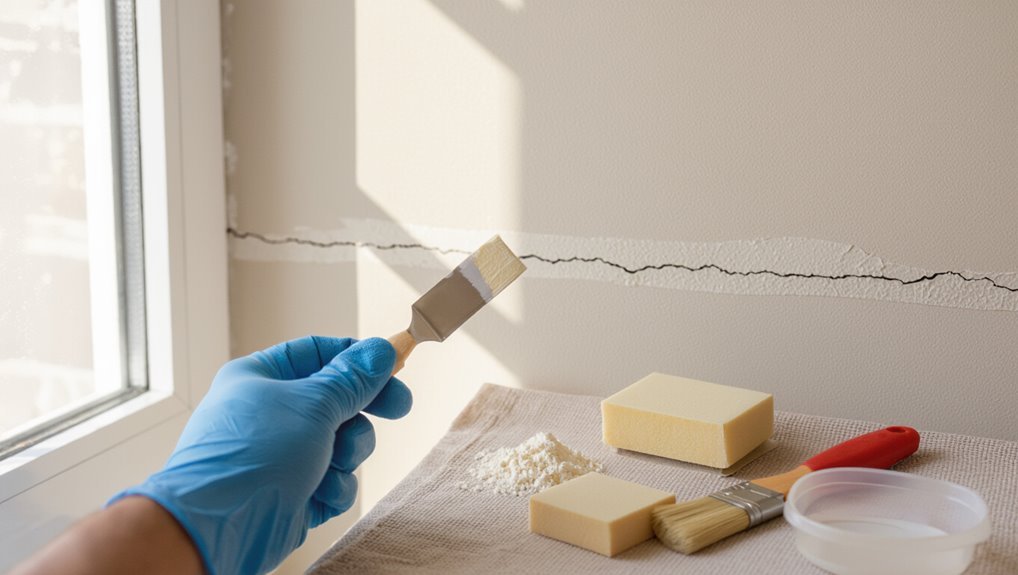
If you’re planning to paint, fix any cracks that are visible, wider than about 1/8 inch, or run through plaster or drywall seams—these can telegraph through new paint and ruin a smooth finish.
You’ll assess crack causes—settling, moisture, or drywall movement—and decide repair timing: urgent for spreading or leaking cracks, routine for narrow, stable hairlines.
Prioritize safety and substrate stability.
Quick Fix: How To Repair A Wall Crack Before Painting
Before you pick up a brush, you’ll want to assess the crack to determine if it’s hairline, wider than 1/8 inch, or structural.
Clean and roughen the surface so filler bonds, then apply a suitable patching compound and smooth it flush with the wall.
Once dry, sand lightly and spot-prime so paint hides the repair seamlessly.
Assess Crack Size
Start by measuring the crack’s length and width so you know whether it’s a minor hairline or something that needs more than a quick patch.
You’ll classify cracks for proper crack identification: hairline, small, or structural.
Match size to repair methods—tiny cracks get filler, wider ones need joint compound or mesh.
Note patterns and movement to decide if pro inspection’s required.
Prepare Surface Properly
Once you’ve assessed the crack, clean and prep the area so the repair will bond and look seamless.
You’ll focus on surface cleaning: remove dust, loose paint, and debris with a stiff brush or vacuum. Wipe with a damp cloth, let dry, and undercut any friable edges.
Document your crack assessment notes so you know how much prep was needed before filling.
Fill And Smooth Seamlessly
Grab your patching materials and a putty knife, and apply a thin layer of spackling or joint compound into the crack, pressing firmly so the filler bonds to the sides.
Smooth with the knife, feathering edges for a seamless finish. Let dry, sand lightly with fine-grit paper, and repeat fill techniques for deeper gaps.
Prime before painting to guarantee uniform texture and adhesion.
Inspect First: When You Must Repair Cracks Before Painting
Before you grab a brush, walk the room and note every crack—where it runs, how wide it is, and whether it changes over time—because some cracks need structural fixes, not just paint touch-ups.
You’ll assess crack causes, check for active movement, and decide repair timing. If cracks recur or widen, stop and consult a pro; otherwise plan patching before priming and painting.
Hairline Vs. Structural Cracks: How To Tell?
How can you tell a harmless hairline crack from a structural one? You’ll use hairline identification by noting width, straightness, and surface-only paint flaking.
Combine that with basic structural assessment—movement, offset, and recurring widening—to judge severity.
Pair hairline checks with structural cues—movement, misalignment, and recurring widening—to assess how serious a crack is.
- Thin, hairlike, surface-only
- Jagged, offset, runs deep
- Reappearing after repair or widening over time
Inspecting Cracks: Signs Of Deeper Damage
When you inspect a crack, look beyond its surface appearance for clues of deeper damage: check for widening or new hairline offshoots, masonry or plaster that’s crumbling around the crack, and any displacement or stair-stepping in brick or block joints that suggests movement. Use focused inspection techniques to identify underlying issues and decide if professional assessment is needed.
| Sign | Cause | Action |
|---|---|---|
| Widening | Movement | Monitor |
| Crumbling | Decay | Repair |
| Stair-step | Settlement | Assess |
| Moisture staining | Leak | Investigate |
Tools You Need To Fix Wall Cracks
Once you’ve identified the type and severity of the crack, gather the right tools to make a proper repair.
This tools overview helps you assemble essential equipment to work efficiently and safely. You’ll need hand tools and safety gear ready so you can prep, open, and finish cracks cleanly.
- Utility knife, scraper, sanding block
- Putty knife, hawk, trowel
- Safety glasses, gloves, dust mask
Materials And Fillers Explained: Spackle, Joint Compound, Plaster
You’ll choose different fillers depending on crack size and surface: use spackle for small holes, joint compound for larger drywall repairs, and plaster when matching older walls.
You’ll learn how joint compound compares to spackle in drying time, sanding, and strength.
Then you’ll see when plaster is the right choice and how its application differs.
Spackle: Best Uses
Spackle is a lightweight, fast-drying filler designed for small holes and surface blemishes, and you’ll want it when repairing nail holes, shallow cracks, and dents in drywall.
You’ll choose among spackle types for quick fixes; learn spackle applications to pick the right formula.
Imagine using it on:
- Tiny nail holes, barely visible.
- Shallow surface cracks, sandable smooth.
- Small dents, paint-ready in minutes.
Joint Compound Versus
1 clear difference separates joint compound from spackle: joint compound is formulated for broader drywall seams, embedding tape, and feathering large repairs, while spackle’s for quick, small fixes.
You’ll choose based on scope: joint compound benefits include sanding smooth and blending wide areas, while spackle applications suit tiny holes and quick touch-ups.
Use each material for its designated scale.
Plaster: When Appropriate
When you’re repairing older homes, historic features, or walls with significant texture, plaster is often the right choice because it bonds differently and cures harder than modern compounds.
You’ll choose plaster types and master plaster application for lasting repairs.
Picture the process:
- Wet scratch coat bonding to lath.
- Smooth brown coat building thickness.
- Fine finish coat ready for paint.
Caulk Vs. Filler: Which To Use For Wall Cracks?
Which should you reach for when a crack appears: caulk or filler?
You’ll pick caulk for hairline gaps and joints where movement occurs — consider caulk types like silicone or acrylic-latex.
Use filler options (spackling or joint compound) for static, wider cracks that need sanding and paintability.
Match product flexibility and drying time to the crack’s size and expected movement.
Choosing Sandpaper Grit And Sanding Tools
Because sanding preps your repair for a seamless finish, pick grits and tools that match the compound and the crack size.
You’ll use different sandpaper types and sanding techniques:
- Coarse (80–120) for heavy filler removal with a sanding block.
- Medium (150–180) to level filler edges with a sponge sander.
- Fine (220–320) for final smoothing before priming with a handpad.
Protecting Floors And Furniture During Repairs
Start by clearing a workspace and covering the floor and nearby furniture with drop cloths or plastic sheeting so dust and debris don’t settle on surfaces.
Start by clearing the workspace and covering floors and nearby furniture to keep dust and debris off surfaces.
Tape edges, secure with weights, and use proper floor protection in high-traffic zones.
Drape furniture covers over sofas and tables, seal seams, and keep tools on a tarp.
Clean up daily to prevent tracked dust and damage.
Safety Gear And Precautions For Wall Repairs
Before you pick up the tools, put on the right safety gear: safety goggles to protect your eyes from dust and flying debris, a NIOSH-rated dust mask or respirator when sanding or working with plaster, work gloves to guard against cuts and skin irritation, and sturdy shoes to protect your feet from dropped tools.
You’ll also use personal protective habits: keep ventilation, secure ladders, and pause if unsure.
- Dust cloud rising
- Gloved hands steadying a scraper
- Stable ladder at work
Preparing The Wall Surface Before Repair
Start by scraping away loose plaster, paint, and dust so the repair material can bond properly.
Check the crack and surrounding area for dampness—moisture will prevent fillers from setting and can mean a bigger problem.
If the wall is wet, fix the source of moisture and let it dry completely before you proceed.
Remove Loose Debris
Knock away loose plaster, paint flakes, and dust with a stiff brush or putty knife so the repair material can bond properly to the wall.
Use debris removal techniques and simple wall cleaning methods to guarantee a solid surface.
Then:
- Scrape stubborn flakes until edges are firm.
- Brush out dust into a tray.
- Vacuum cracks to lift remaining grit.
Assess Wall Moisture
How wet is the wall?
You’ll perform a quick wall inspection to spot damp patches, peeling paint, or efflorescence.
Use moisture detection tools—a moisture meter or damp tester—or the simple touch test to confirm.
If moisture’s present, find and fix leaks or ventilation issues before repairing cracks.
Drying thoroughly prevents failed repairs and paint problems later.
Cleaning Cracks: Removing Dust And Loose Material
Brush away dust and loose particles from the crack so your repair material will adhere properly; use a stiff brush, a vacuum with a nozzle, or compressed air to clear out debris.
Then run your fingers along the gap to feel for any remaining flaking material you’ll need to remove.
Use dust removal techniques and loose material identification while you:
- Scrub with a stiff brush.
- Vacuum the cavity.
- Pick out flakes by hand.
Widening And Undercutting Hairline Cracks Correctly
Before you fill a hairline crack, you’ll want to widen the edges slightly so the patching material can grip.
Then undercut the crack by angling the tool inward to create a mechanical key.
These simple steps improve bonding and prevent the repair from popping out later.
Widen Crack Edges
Start by widening the crack edges just enough to remove loose paint and weak plaster so the filler can bond; you want a clean V-shaped groove about 1/8 to 1/4 inch deep for hairline cracks.
Use gentle widening techniques and solid edge preparation so the filler grips.
- Tool: utility knife scraping
- Shape: V-groove visual
- Clean: dust-free channel
Undercut For Bonding
When you undercut a hairline crack, you’re creating a slightly wider, inward-angled channel so the filler mechanically locks in rather than just sitting on the surface.
Use a sharp blade or V-gouge and apply controlled undercut techniques to avoid weakening surrounding plaster.
Clean dust, swipe bonding agents into the groove, then pack appropriate filler.
Smooth, cure, and sand before priming and painting.
Filling Hairline Cracks Step-By-Step
Although hairline cracks look minor, you can’t ignore them if you want smooth, durable walls; follow these concise steps to prepare, fill, and finish them so they disappear and won’t reopen.
Address hairline crack causes to prevent recurrence and avoid paint adhesion issues by ensuring a clean, stable surface.
- Clean and widen slightly.
- Apply flexible filler.
- Sand, prime, paint.
Repairing Plaster Cracks: Techniques That Stick
Repairing plaster cracks means more than slapping on filler; you need methods that bond, move with the surface, and restore strength.
You’ll remove loose plaster, widen hairline faults slightly, apply bonding primer, and embed fiberglass tape or mesh.
Use flexible patching compound for consistent plaster adhesion.
These repair techniques prevent recurrence and leave a stable, paint-ready surface.
Fix Drywall Cracks And Taped Joints Before Painting
Before you paint, assess how deep and long each drywall crack is so you know whether you’ll need simple patching or a fuller repair.
Clean and roughen the joint surfaces, then apply tape and joint compound in thin, smooth layers, letting each coat dry and sanding between them.
Do a final feathered skim and inspect for hollows or ridges so your paint will lay flat and look professional.
Assess Crack Severity
When you’re preparing to paint, take a close look at each crack to judge whether it’s surface-level or structural, because that determines how you’ll fix it.
Small hairline cracks in the paint or drywall paper usually need simple sanding and filler, while wider gaps, recurring splits at taped seams, or cracks that run through the drywall likely signal underlying movement or failed tape.
These require proper tape removal and re-taping before painting. Assess crack identification and choose repair techniques accordingly.
- Faint hairline in paint
- Gap at taped seam
- Deep crack through drywall
Prepare Joint Surfaces
If a crack runs along a taped joint or through the drywall, you’ll need to expose and clean the seam so the new tape and compound can bond properly.
Remove loose paper and debris, sand edges lightly, and wipe dust away.
Inspect backing and fasteners.
For reliable joint surface preparation use a primer or bonding agent and proven adhesion techniques to guarantee a durable repair.
Tape And Mud Properly
Now that the seam is clean and backed properly, you can tape and mud to create a smooth, paint-ready surface.
Apply tape tightly, press out bubbles, and feather edges with a knife. Mix mud consistency thin enough to spread, thick enough to build. Sand between coats.
- Paper tape pressed flat
- Thin first coat, wider second
- Feathered edges, smooth finish
Repairing Corner And Ceiling Cracks Without Visible Seams
Corner and ceiling cracks demand a different approach than flat-wall repairs because you’ll have to blend patching material into an angled joint so the seam disappears from every viewpoint.
Use corner crack solutions like paper or fiberglass tape, fill with thin coats of joint compound, and sand lightly.
For ceiling crack techniques, secure edges, apply multiple feathered coats, and prime before painting to hide seams.
Handling Long Horizontal Or Stair-Step Cracks
When you spot a long horizontal or stair-step crack, first assess its severity by checking width, length, and any movement or mortar joint involvement.
If the crack is static and narrow, you can use a flexible filler and mesh tape to bridge and finish it. Wider or active cracks may need structural repair like injecting epoxy or addressing foundation movement.
Choose the repair technique based on that assessment to guarantee a durable, visually clean result.
Assessing Crack Severity
How bad does a long horizontal or stair-step crack need to be before you call in a pro?
You’ll use crack identification techniques and severity assessment methods to judge movement, width, and pattern.
Look for signs you can’t fix safely.
- Wide, growing gap splitting mortar.
- Zigzag stair-step through several bricks.
- Wall bowing or doors sticking unexpectedly.
Proper Repair Technique
If you’ve determined a long horizontal or stair-step crack is repairable without a structural contractor, start with a clear plan that addresses movement, material compatibility, and proper bonding.
You’ll remove loose debris, widen the crack slightly for bedding, apply flexible backing where needed, use appropriate filler or epoxy, feather and sand after curing, and prime.
These repair techniques depend on thorough wall preparation.
Dealing With Recurring Cracks: Prevention And Fixes
Because recurring cracks often point to underlying issues, you’ll want to diagnose the cause before patching them repeatedly.
Use crack monitoring and guarantee proper ventilation to limit moisture movement. Address structural shifts or settling, repair plaster, and control humidity.
Visualize solutions:
- Hairline crack traced daily on paper.
- Damp spots drying with a dehumidifier.
- Small foundation gap inspected and sealed.
Using Mesh Tape And Joint Compound For Wide Cracks
Start by cleaning and widening the crack slightly so the mesh tape and compound can bond properly.
Press self-adhesive mesh tape over the crack, smoothing out any bubbles.
Then apply a thin layer of joint compound with a putty knife.
Let it dry, sand smooth, and repeat thin coats until the repair is flush with the wall.
Preparing The Crack
Gather your mesh tape and joint compound, and clean the crack so the repair will bond properly.
Do a quick crack assessment to determine depth and loose material. For proper surface preparation, remove dust, widen narrow edges slightly, and dry the area before patching.
Visualize the repair steps:
- Brush out debris.
- Widen and smooth edges.
- Wipe clean and let dry.
Applying Tape And Compound
With the crack cleaned and edges smoothed, you’re ready to apply mesh tape and joint compound for wider gaps.
Press mesh tape firmly over the crack, trimming excess.
Prepare the compound by following compound mixing instructions to a workable consistency.
Use a drywall knife to embed tape and feather compound edges in thin layers.
Let each layer dry, sand lightly, and repeat until flush.
Patch Kits Versus Full Plaster Repairs: When To Use Each
When you’ve got hairline cracks or small chips, a patch kit usually offers the quickest, most cost-effective fix; for widespread damage, deep cracks, or areas where plaster has crumbled away, a full plaster repair is the safer, longer-lasting choice.
For tiny hairline cracks, a patch kit is quick and cheap; for deep or widespread damage, choose full plaster repair.
- A tiny split taped and skimmed with a patch kit.
- A larger crack routed, backed, and filled.
- Sections of crumbled plaster rebuilt and bonded.
Repairing Textured Walls And Matching The Finish
First identify the texture type on your wall—knockdown, orange peel, popcorn, or custom—and note its scale and pattern.
Then choose the matching technique, whether spraying, troweling, or stippling, that reproduces that look.
Practice on scrap material so your finish blends seamlessly with the surrounding surface.
Assess Texture Type
If you want your repair to disappear, start by identifying the wall’s texture—smooth, orange peel, knockdown, popcorn, or something custom—and note its scale and pattern.
Do a quick texture assessment and texture identification before patching so you match visual rhythm.
Imagine surfaces:
- Fine, uniform dimples.
- Broad flattened peaks.
- Coarse, popcorn clusters.
Match Texture Technique
Because a seamless repair depends on texture as much as on smoothness, start by choosing a matching application method—spray, brush, roller, or hand-trowel—that recreates the pattern and scale you identified earlier.
Practice on a scrap board, adjust compound thickness, and replicate motion speed. Use appropriate tools, blend edges featheredly, and test paint to confirm texture matching.
Follow proven repair techniques carefully.
Blending Repairs On Painted Walls Without Repainting The Whole Room
When you’re fixing small cracks on a painted wall and don’t want to repaint the entire room, the goal is to make the patch disappear by matching texture and sheen, not chasing a perfect color match.
You’ll use careful blending techniques and subtle color matching to hide repairs. Steps to visualize:
- Feather joint compound edges.
- Match texture with a stipple or brush.
- Use touch-up paint with sheen spot blending.
Drying Times: When To Sand After Filling
You’ll want clear drying time guidelines before you sand so you don’t ruin the repair.
Know the difference between touch-dry and fully cured—touch-dry lets you sand light feathering, but full cure is needed for aggressive sanding or painting.
Remember that temperature, humidity, filler type, and layer thickness all affect how long curing takes.
Drying Time Guidelines
After you fill a crack, let the compound cure to the manufacturer’s recommended time before sanding; sanding too soon can gum up your sandpaper and pull filler out of the repair.
You’ll monitor drying conditions and aim for ideal temperatures. Check feel and firmness, then sand gently.
Visualize the repair:
- Slightly warm, dry room
- Firm, not tacky surface
- Smooth edges ready for primer
Touch Dry vs Fully
A touch-dry surface can feel firm to the skin but still contain moisture beneath, so don’t sand the moment it stops feeling tacky; wait until the filler’s fully cured per the manufacturer’s timeline or until the repair is uniformly hard all the way through before sanding.
You’ll check for consistent hardness to distinguish touch drying from fully drying and avoid rework or sinking.
Factors Affecting Cure
Because cure time depends on more than the filler itself, you should consider temperature, humidity, filler thickness, and airflow before sanding.
You’ll judge sanding readiness by sensing firmness and checking manufacturer times; curing conditions vary.
Remember temperature effects: warm, dry, breezy speeds cure; cold, damp, thick layers slow it.
Picture scenarios:
- Thin patch in warm room.
- Deep fill in cold garage.
- Humid basement fill.
Sanding Tips For A Smooth, Paint-Ready Surface
Start with the right grit and light pressure: use 120–150 grit for leveling repair spots, switch to 220 grit for feathering edges, and sand with even, overlapping strokes so you don’t create low spots or visible scratches.
Use a sanding block for flatness, clean dust between passes, and employ proper sanding techniques to guarantee consistent surface preparation before painting.
Priming Repaired Areas: Which Primer To Choose And Why
When you prime repaired areas, pick the type that matches the repair and topcoat — oil-based primers stick well to patched compound while latex primers dry faster and clean up with water.
If you’re covering stains or water marks, use a stain-blocking primer to prevent bleed-through.
Choose based on surface, drying time, and the severity of stains so your final paint looks flawless.
Oil-Based Vs. Latex Primer
Although both oil-based and latex primers seal repaired drywall and hide stains, they do so in different ways that matter for durability, odor, and cleanup.
You’ll pick based on project needs: oil based benefits include sealing and durability; latex advantages are quick drying and easy cleanup.
Consider visual cues:
- Deep seal, strong odor, longer cure.
- Fast dry, low odor, flexible film.
- Tool cleanup difference: solvent vs. soap.
Stain-Blocking Primer Choices
Beyond choosing oil-based or latex primers, you’ll now pick a product that actually blocks the stains you’re trying to hide.
Consider stain blocking primer types: shellac for severe water or smoke marks, oil for tannin bleed, and advanced waterborne for low odor.
You’ll weigh stain blocking primer benefits—adhesion, sealing, and paint uniformity—so your repaired area won’t reappear through the finish.
Spot-Priming Versus Full-Wall Priming After Repairs
Decide whether to spot-prime or prime the entire wall based on how visible the repair will be and how uniform the existing paint finish is.
You’ll choose spot priming benefits when small patches blend easily; pick full wall priming if texture or color varies.
Visualize outcomes:
- Small patched area, seamless touch-up.
- Faint halo around repair, still noticeable.
- Large uneven wall, unified finish.
Paint Compatibility: Matching Sheen And Base
When you repair a wall, match the paint sheen so the patched area reflects light like the surrounding surface.
Also use the same paint base—water- or oil-based—as the existing coat to guarantee proper adhesion and drying.
Mismatched sheen or base will make the repair stand out or fail over time.
Match Paint Sheen
Wondering why your touch-up looks different even though the color matches?
You need to match paint finish and sheen levels—glossy spots catch light, dull areas hide it.
Check existing paint under light and pick the same sheen.
- Soft matte wall, muted light.
- Satin hallway, gentle glow.
- Semi-gloss trim, sharp reflection.
Align Paint Base
Match the paint base before you roll or brush—oil-based and water-based (latex) paints don’t play well together, so using the same base keeps adhesion strong and prevents peeling, cracking, or blotchy patches.
Choose primer and topcoat with matching base to guarantee paint adhesion and consistent surface texture.
Test a small area, let it cure, and proceed only when finish and feel match.
Feathering Edges So Repairs Disappear Under Paint
Although the patch itself may sit flush with the wall, you’ll still see a shadow unless you feather the edges so the repair blends smoothly into the surrounding surface.
Use feathering techniques and focus on blending textures so paint can’t reveal seams.
Practice these steps to visualize the finish:
- Lightly sand outward in concentric strokes.
- Thin joint compound edges with a wide knife.
- Match texture with stipple or brush.
Common Mistakes That Make Cracks Show Through Paint
If you skip proper feathering, use the wrong compound, or paint too soon, the repair will telegraph through the finish.
You’ll encounter common misconceptions like “just slap on paint” or “one coat fixes it.”
Don’t sand too aggressively, use incompatible fillers, or neglect drying times.
Follow prevention tips: choose correct compound, feather edges, sand lightly, and wait recommended cure times for invisible repairs.
Quick Fixes For Last-Minute Paint Jobs
When you’re short on time, focus on foolproof, fast repairs: fill hairline cracks with ready-mixed spackle, smooth edges with a damp sponge, and prime only the patched spots before painting.
You’ll want last minute hacks and time saving tips to finish neatly.
Quick visual cues:
- Smooth, damp sponge wipe.
- Thin spackle layer.
- Spot-primed touch-up.
When To Call A Professional For Crack Repair
Severity matters: call a professional if cracks are wider than 1/4 inch, run continuously across walls or ceilings, show fresh gaps after you’ve patched them, or are accompanied by sticking doors, uneven floors, or visible foundation movement.
You should get professional assessments to determine structural risk and scope. Hire someone who provides repair guarantees so you’re protected and can focus on safe, lasting results.
Cost: DIY Vs. Professional Crack Repairs
After you’ve decided whether a crack needs professional attention, weigh the cost differences between doing it yourself and hiring a contractor.
You’ll balance upfront savings against repair longevity and quality. Consider realistic time, tools, and finish expectations before choosing.
- DIY: cheap tools, variable finish.
- Pro: higher price, consistent longevity.
- Hybrid: you prep, pro finishes.
Printable Tools And Materials Checklist
1 concise checklist will keep you organized and save trips to the store: gather the essential tools (putty knife, utility knife, sanding block, caulk gun), materials (joint compound or spackle, patching plaster, mesh tape, latex caulk), and safety gear (dust mask, gloves, eye protection) before you start so you can work steadily and finish the repair in one session.
Use a printable checklist to tick off essential supplies and avoid delays.
Repairing Exterior Wall Cracks Before Painting: What’s Different
When you’re fixing exterior wall cracks before painting, you’ll need to account for weather, materials, and movement—conditions that differ from interior repairs.
You’ll choose durable fillers, flexible sealants, and exterior paint that resists UV and moisture. Prepare the surface so crack visibility is minimized after finishing.
- Sun-baked stucco texture
- Wind-driven dirt grooves
- Paint-layer expansion lines
Managing Moisture And Mold Behind Cracks Before Repair
Exterior cracks often hide moisture and mold that’ll ruin repairs if you don’t address them first.
Inspect with a flashlight, probe for dampness, and remove loose material.
Dry the area, apply a fungicidal cleaner, and fix leaks to guarantee moisture management.
Use mold-resistant primer before patching and sealants for mold prevention so repairs last and paint adheres properly.
Seasonal Considerations: Best Time To Repair And Paint Walls
If you plan repairs and painting around the seasons, choose a period when temperatures are steady and humidity is low so patching compounds cure properly and paint bonds well.
You’ll avoid problems from seasonal humidity and harsh temperature fluctuations. Pick calm weather, ventilate, and wait for recommended cure times.
Avoid seasonal humidity and temperature swings—choose calm weather, ventilate well, and allow full cure times for best results.
- Late spring calm
- Early fall dry
- Mild, stable week
How Foundation Or Settling Issues Affect Wall Cracks
Timing repairs to dry, stable weather helps materials set properly, but you also need to watch what’s happening below the slab or footing.
If foundation settlement occurs, you’ll see new or widening cracks as loads shift. Addressing footing problems and drainage preserves wall stability; otherwise repairs will fail.
Inspect for patterns, measure movement, and consult a pro if settling continues.
Using Flexible Fillers For Movement-Prone Cracks
Because movement-prone cracks keep shifting, you’ll want a filler that stays flexible and bonds well so repairs don’t reopen.
Choose elastomeric caulk or flexible patch compounds for flexible applications, and mind movement considerations when prepping and tooling the joint.
Visualize the repair:
- Squeeze thin bead sealing gap edges.
- Smooth surface to match wall profile.
- Allow full cure before painting.
Warranty And Longevity: How To Ensure Repairs Last Years
Flexible fillers give you a better chance at a lasting fix, but warranty and longevity depend on more than the right product.
You should register products, keep receipts, and follow manufacturer instructions for warranty tips.
Prep, correct substrate issues, and allow full cure times.
Regular inspections and prompt minor touch-ups are key longevity strategies, ensuring repairs hold for years without voiding coverage.
Photo Guide: Before-And-After Lessons
When you document repairs with clear before-and-after photos, you’ll learn what techniques actually work and where you can improve.
These images let you compare crack progression, prep quality, and finish consistency so you can replicate successes and avoid past mistakes.
- Close-up before detail showing crack length and texture.
- Mid-repair shot highlighting chosen repair techniques.
- Finished view for color match and surface smoothness, offering photo inspiration.
Troubleshooting: Why Your Repair Still Shows After Painting?
Why does the repair still show after painting? You’ll check surface prep, matching texture, and paint adhesion; poor prep or mismatched skim coat causes repair visibility. Follow steps, sand feather edges, prime joint compound, and use correct finish to blend.
| Check | Action | Result |
|---|---|---|
| Prep | Sand/clean | Smooth base |
| Prime | Seal patch | Better adhesion |
| Texture | Match | Invisible repair |
Eco-Friendly And Low-VOC Materials For Safe Repairs
After you’ve fixed surface prep, texture, and priming, consider the materials you’re using so indoor air quality doesn’t undo your work; low-VOC and eco-friendly products help keep fumes and toxins out of your home while still giving durable, paintable patches.
Choose eco-friendly options and low VOC alternatives like:
- Plant-based spackles with low odor.
- Mineral gypsum patching compounds.
- Water-based acrylic primers and sealers.
Quick-Reference Timeline: Repair-To-Paint Schedule For Common Cracks
1 quick look at timing can save you from redoing work: this timeline shows how long each repair step typically needs before you can prime and paint, so you can plan around drying, curing, and inspection times for hairline, medium, and structural cracks.
You’ll match crack types to repair techniques: hairline (patch, 24–48h), medium (fill, 48–72h), structural (reinforce, cure 7–14 days).
Frequently Asked Questions
Can I Paint Over Hairline Cracks Without Filling Them First?
You can, but you shouldn’t: hairline crack treatment improves results. You’ll reduce paint adhesion concerns by cleaning, applying flexible filler or caulk, sanding smooth, then priming before painting so finishes stay intact and crack-free.
Will Painted Repairs Expand or Crack in Winter?
Sure — painted repairs can expand or crack in winter. Don’t panic theatrically: winter weather loves to test your paint durability. You’ll prevent cracks by proper surface preparation, using flexible filler and quality paint for crack prevention.
Can I Use Caulk as a Final Visible Finish Instead of Paint?
No—you shouldn’t use caulk as the final visible finish; caulk finishes aren’t durable or paint-ready. You’ll want paint or other caulk alternatives like flexible trim or textured coatings for a lasting, attractive result.
How Long Before Moving Furniture Back After Painting Repaired Areas?
About 24–48 hours is typical before moving furniture back; studies show 60% of DIYers wait at least a day. Consider drying time for full cure and plan furniture placement to avoid scuffs or damp spots.
Are There Special Techniques for Matching Antique Plaster Textures?
Yes — you’ll use specific plaster repair techniques and antique texture matching methods: feathering, stippling, skim coats, matching aggregate, and copying tool marks. Practice on scrap, tint your compound, and blend edges for seamless results.
Conclusion
You’ll want to fix cracks before painting so your new finish actually looks new—coincidence is that the nail you drove in last year and the hairline that showed up this spring often demand the same calm steps: inspect, clean, fill, sand, prime, and wait. Do those in order, and you’ll turn a jagged flaw into an invisible seam; skip one step, and the crack will reappear like rain on freshly washed windows—annoying but avoidable.
