
How to Fix Cracked Paint on Shoes and Make Them Look New Again
You can usually fix cracked paint on shoes yourself by cleaning the surface, sanding smooth, and using a flexible, color-matched paint in thin layers, then sealing with a compatible clear topcoat; leather, canvas, rubber and synthetics each need slightly different products and prep, and deep splits may need filler or a cobbler. Work in a ventilated area and let each coat cure fully. Keep going to learn step-by-step techniques, materials, and tips for durable, professional-looking results.
Quick Answer Can Cracked Paint on Shoes Be Fixed and How Quickly?
Yes — you can usually fix cracked paint on shoes quickly with a few simple DIY steps like cleaning, sanding lightly, and using flexible leather or fabric paint.
If cracks are extensive, structural (split leather, sole separation), or you want a flawless, long-lasting finish, a professional cobbler or restoration service is the better choice.
Choose DIY for small, surface cracks and fast touch-ups; opt for pro repair when damage is deep or you need guaranteed durability.
Direct, concise solution summary
You can usually fix cracked paint on shoes quickly: clean and dry the surface, sand or scuff loose flakes, apply a suitable primer or flexible paint in thin coats, and seal with a clear flexible topcoat—most small repairs take 30–90 minutes of hands-on time plus drying.
For how to fix cracked paint on shoes, focus on prep, thin layers, flexibility, and proper curing for lasting results.
When professional repair is needed vs DIY
Although many cracks are fixable at home with basic supplies and patience, bring your shoes to a pro when damage is extensive, structural, or involves specialty materials (like delicate suede, exotic leather, or bonded finishes).
If you spot deep splits, sole separation, complex color matching, or you’re short on time, choose professional repair.
For minor surface peeling, cracking, or scuffs, DIY kits work well.
Understanding Cracked Paint on Shoes
To fix cracked paint effectively, you’ll first need to know what caused the cracking—different materials like canvas, leather, or rubber flex and absorb coatings in different ways.
Check what type of paint was used (acrylic, leather-specific paint, spray paint, or sole paint) because each bonds and wears differently.
Then assess the damage: surface hairline cracks, flaking, or deep splits will call for different repair steps.
What causes paint to crack on different shoe materials
When paint cracks on shoes, it’s usually because the coating and the underlying material move differently over time; leather, canvas, rubber, and synthetics each flex, stretch, and absorb moisture in unique ways that stress the paint.
Leather creases, canvas stretches, rubber compresses and recovers, and synthetics expand with heat; those movements, plus wear and exposure, cause fissures and flaking.
Types of paint/coatings used on shoes (acrylic, leather paint, spray paint, sole paint)
Knowing how different materials move helps you pick the right coating: paints vary in flexibility, adhesion, and durability, so choosing wisely can prevent future cracking.
You’ll pick acrylic for canvas, leather paint for supple hides, spray paint for quick coverage, and sole paint for rubbery outsoles. Consider flexibility, prep needs, and finish before applying.
- Acrylic: flexible, breathable
- Leather paint: bonds, remains pliable
- Sole paint: tough, abrasion-resistant
How to assess damage severity (surface cracks, flaking, deep splits)
How badly is the paint damaged — and can you fix it yourself?
Inspect under good light: run fingers gently to feel texture.
Surface cracks are fine for touch-ups; flaking needs peeling and sanding before repainting.
Deep splits or missing chunks usually require patching or professional repair.
Consider material (leather, canvas, rubber) and extent to decide DIY versus pro restoration.
Tools, Materials, and Safety You’ll Need
Before you start, gather the essential tools and consumables—brushes, sandpaper, primers, flexible paints, sealant, and cleaning supplies—so you won’t stop mid-project.
Pick products suited to your shoe material (leather, canvas, synthetic, or rubber) and I’ll recommend specific options for each.
Set up a well-ventilated workspace, wear gloves and a mask, and protect surfaces to stay safe and avoid mess.
Essential tools and consumables
To get good, lasting results you’ll need a few reliable tools, the right paints and finishes, plus basic safety gear; these let you remove loose flakes, prep surfaces, and apply repairs cleanly.
You’ll also want consumables that aid adhesion, smoothing, and protection so your fixes last.
- Fine sandpaper, cleaning solvent, and tack cloth
- Flexible acrylic paint and primer
- Clear topcoat and disposable brushes
Recommended products by material (leather, canvas, synthetic, rubber)
When you’re matching products to shoe materials, pick options formulated for each substrate so repairs stay flexible and bonded: you’ll want leather conditioners and acrylic leather paint for leather; fabric medium and textile paint for canvas; flexible vinyl/synthetic paint for synthetics; and rubber-specific paints or markers for soles.
| Material | Product Type | Example Use |
|---|---|---|
| Leather | Leather paint/conditioner | Restore finish |
| Canvas | Textile paint + medium | Repaint panels |
| Synthetic/Rubber | Flexible vinyl/rubber paint | Fix soles and uppers |
Safety precautions and workspace setup
Set up a well-ventilated, clutter-free workspace and gather protective gear—gloves, a respirator or mask rated for organic vapors, and eye protection—so you can work safely with paints, solvents, and adhesives.
Lay down drop cloths, organize tools, and keep a fire extinguisher nearby. Follow product labels and ventilate between coats.
- Keep solvents sealed when not in use
- Use proper disposal methods
- Avoid eating or smoking nearby
Step-by-Step Repair Process
You’ll start by preparing the shoe—cleaning it thoroughly and removing any loose paint—then sand the cracked areas smooth.
For deep cracks you’ll apply a filler or primer, choose a matching paint color, and test the shade.
Finally, you’ll apply the paint in even, controlled coats for a consistent finish.
Step 1 Prepare the shoe: cleaning and removing loose paint
Start by giving the shoe a thorough cleaning so paint adheres to a sound surface: wipe away dirt and dust with a soft brush, scrub scuffs and oils using a mild detergent or rubbing alcohol on a lint-free cloth, then let the shoe dry completely before you proceed.
Peel or flake off loose paint gently with your fingernail or a plastic scraper, then vacuum or brush away residue.
Step 2 Sanding and smoothing cracked areas
Gently sand the cracked areas to level the surface and create a key for new paint: use fine-grit sandpaper (220–320 grit) and work with light, even strokes until the edges of the cracks are smoothed and any loose paint is gone.
Then wipe the area with a damp cloth to remove dust and let it dry before moving on.
Feather the edges so shifts are seamless.
Step 3 Applying filler or primer for deep cracks
Apply a thin layer of flexible filler or a paintable primer to fill deep cracks so the repaired surface stays smooth and durable.
Use a small spatula or toothpick to push filler into gaps, then level it flush with surrounding paint.
Let it cure fully per instructions, lightly sand any high spots, and wipe clean before moving to the next step.
Step 4 Selecting and matching paint color
Before you pick up a brush, compare your shoe’s finish under natural light and gather swatches or small sample pots to match tone, sheen, and texture as closely as possible.
Test mixes on an inconspicuous area, noting base color, undertones, and opacity. Choose flexible, leather- or fabric-safe paints.
Keep records of ratios for future touch-ups and let samples dry before deciding.
Step 5 Applying paint: techniques for even coats
Start with a clean, dry surface and work in thin, controlled layers so each coat bonds and levels without drips or texture buildup.
Use a small brush or airbrush for precision, stroke with the grain, and keep passes light.
Let each layer flash until tacky, sand very lightly between coats if needed, and build color gradually to avoid pooling or uneven thickness.
Step 6 Sealing and protecting the repaired area (topcoats, sealers)
Once the paint’s fully cured, seal the repair with a compatible topcoat to lock in color and prevent future cracking.
Choose a flexible, clear sealer made for leather, vinyl, or fabric depending on your shoe.
Apply thin, even layers—brush or spray—allowing brief tack time between coats.
Test a small area first, then finish with 2–3 coats for durable protection.
Step 7 Drying, curing, and reconditioning the shoe
After sealing, let the shoe rest in a stable, dust-free spot so the topcoat can dry and cure fully; you’ll want to follow the manufacturer’s recommended times but also allow extra hours for cooler or humid conditions.
Check tackiness gently, then reapply thin coats if needed and cure longer.
Once fully cured, clean, condition leather or fabric, and restore laces and insoles for a finished look.
Material-Specific Repair Guides
Now you’ll see how repairs vary by material so you can pick the right products and steps.
For leather you’ll use conditioners and flexible paints, while canvas needs flexible colors and reinforcement; synthetics and patent finishes require adhesion tricks, and rubber soles/toe caps call for paints that stay bendable.
For suede and nubuck you’ll consider dyeing or specialized products instead of standard paint.
Leather shoes: products and special steps
Leather demands different care than canvas or synthetics, so you’ll need products and steps made for supple, porous surfaces.
Clean with a mild leather cleaner, condition to restore oils, and sand lightly with very fine grit only if necessary.
Use leather-specific dyes or paints, apply thin flexible coats, heat-set per product instructions, then finish with a waterproofing leather protector to preserve flexibility.
Canvas shoes: flexible paints and reinforcement tips
Because canvas bends and breathes differently than heavier leathers, you’ll want flexible paints and reinforcements that move with the fabric rather than stiffen it.
Choose textile acrylics or fabric medium-mixed paints, apply thin layers, and heat-set per instructions.
Reinforce inside with lightweight interfacing or fabric glue patches to stabilize torn areas.
Finish with a flexible waterproof spray to protect without cracking.
Synthetic and patent finishes: adhesion tricks
When working with synthetic or patent finishes, you’ll need products and prep that prioritize surface adhesion without damaging the glossy coating.
Lightly scuff with fine grit, clean with isopropyl, and use a primer made for plastics.
Choose thin, flexible leather or vinyl paints and apply in several light coats.
Finish with a compatible glossy sealant to protect and preserve flexibility.
Rubber soles and toe caps: paints and flexibility solutions
If you want repairs that stay flexible and don’t crack as you walk, focus on paints and adhesives formulated for rubber and thermoplastic soles: choose flexible acrylic or rubberized paints, thin multiple coats, and cure per instructions.
Use contact or urethane adhesives rated for rubber for reattaching toe caps. Test flexibility on a scrap, sand lightly for adhesion, and avoid rigid products that will flake.
Suede and nubuck: alternative approaches (dye vs paint)
Although suede and nubuck look similar, they respond very differently to repairs, so you’ll want to choose between dye and paint based on wear, texture, and desired finish.
You’ll typically dye to preserve nap and flexible color; paint risks stiffness and visible brush marks. Test a hidden area first, then proceed carefully.
- Dye: retains softness, blends well
- Paint: covers severe damage
- Prep: clean, scuff, test
Quick Fixes vs Long-Term Restorations
If you’ve got a few hairline cracks, a touch-up pen or marker can hide them in minutes and won’t cost much.
For heavy flaking or large damaged areas you’ll need a full repaint or professional restoration to get durable results.
We’ll compare time, cost, and how long each option actually lasts so you can pick the right approach.
Fast fixes for small cracks (touch-up pens, markers)
When you spot hairline cracks or tiny chips, touch-up pens and paint markers let you make a nearly instant repair without disassembling or refinishing the whole shoe.
Clean and dry the area, test color on scrap, then apply thin, even layers. Let each layer dry fully and blend edges gently.
Seal with a light topcoat for added wear resistance.
Durable restorations for heavy damage (full repaint, professional restoration)
Because small touch-ups won’t hold up to deep cracks, heavy peeling, or structural damage, you’ll want a durable restoration that goes beyond quick fixes.
Strip old paint, sand and prime surfaces, then apply flexible leather- or fabric-specific paints in thin, even layers.
Seal with a tough, compatible finish.
For severe structural issues, consider a pro who can reline, re-glue, or reconstruct.
Time, cost, and durability comparison
You’ve seen how full repaints and professional work handle severe damage, so now weigh what you’ll get for your time, money, and effort. Quick fixes save time and cash but may need redo; full restorations cost more and last longer. Compare options:
| Option | Time | Durability |
|---|---|---|
| Quick fix | 30–60 min | Short |
| Repaint/pro | 4–8+ hrs | Long |
Common Mistakes to Avoid
Don’t use the wrong paint or sealer—materials not made for footwear will crack or peel quickly.
Always prep properly and use a primer, because skipping that step ruins adhesion.
Also avoid over-thinning or slapping on thick coats, and pick products that stay flexible and breathable for shoes.
Using wrong paint or sealer
While it might seem quicker to grab any acrylic or spray paint at the store, using the wrong paint or sealer can cause cracking, peeling, or stiffening of your shoes over time.
You should choose flexible, shoe-specific paints and breathable sealers. Test products on a hidden spot, follow manufacturer cure times, and avoid solvent-heavy coatings that dry rigid and reduce the shoe’s natural flex.
Skipping prep or primer
If you skip prep or primer, paint won’t bond properly and will crack or peel the first time the shoe flexes.
Clean, sand, and degrease the surface so paint adheres. Use a suitable primer for the shoe material to improve adhesion and durability.
Skipping these steps wastes paint and time, and leaves results that won’t withstand wear.
Over-thinning or applying thick coats
After prepping and priming properly, you still can ruin the finish by over-thinning your paint or slapping on thick coats.
Thin too much and pigments lose coverage, run, and soak into material. Paint too thick and it cracks, peels, or dries tacky.
Aim for thin, even layers, test viscosity, and let each coat fully dry before adding another for a smooth, durable result.
Ignoring flexibility and breathability needs
Because shoes flex and breathe, using rigid or non-breathable paints will make your finish crack, peel, or flake as you walk.
Choose flexible, fabric- or leather-specific paints and flexible sealants so your repair moves with the shoe.
Test on a small area, let layers fully cure, and avoid heavy, airtight coatings that trap moisture or restrict movement—you’ll get a durable, comfortable result.
Prevention and Best Practices to Keep Shoes Looking New
To keep painted shoes looking new, you should set up a simple maintenance routine of regular cleaning and conditioning.
Use protective products like topcoats, waterproofing treatments, or sprays to seal paint and reduce wear.
Store shoes properly and rotate what you wear to minimize stress and cracking.
Regular maintenance routine (cleaning, conditioning)
Keeping up a simple maintenance routine will prevent most paint cracking before it starts and keep repaired areas from failing again.
Wipe dirt and salt off after wear, use a soft brush for seams, and clean with mild soap and water.
Condition leather or synthetic materials monthly with appropriate conditioners so surfaces stay supple, reducing stress on paint and extending your repairs’ lifespan.
Protective products (topcoats, waterproofing, sprays)
Along with regular cleaning and conditioning, protective products give your shoes an extra layer of defense that helps paint repairs last and prevents new cracks.
Use a compatible topcoat, apply thin even layers, and let each dry fully. Waterproof sprays repel moisture and stains while flexible sealants preserve movement.
- Choose a clear, flexible topcoat
- Test sprays on a hidden area
- Reapply after heavy use
Storage and wear habits to minimize cracking
Because how you store and wear your shoes directly affects paint longevity, adopt simple habits that cut stress and exposure.
Keep shoes cool, dry, and out of direct sunlight; use shoe trees or stuffing to maintain shape.
Rotate pairs to reduce wear, avoid bending painted areas, and fasten laces to prevent rubbing.
Clean gently after use and let shoes air fully before storing.
When to Seek Professional Repair or Replacement
If the cracking is deep, widespread, or the shoe’s material is failing, DIY fixes probably won’t hold and you should consider a pro.
Weigh repair costs against the shoe’s value and sentimental worth before deciding to replace them.
When you do seek help, look for a reputable cobbler with good reviews, examples of similar work, and clear pricing.
Signs DIY won’t be effective
When cracks split deep into the leather or the paint flakes off in large sections, DIY fixes won’t give you a durable result and it’s time to contemplate professional repair or replacement.
If the shoe’s structure is compromised, seams torn, or soles detached, don’t try patchwork.
Also skip DIY when matching color/finish is critical, or when multiple layers and prep are required beyond basic sanding and touch-up.
Cost vs value considerations
While you can save money on minor scuffs, you’ll want to weigh repair costs against the shoe’s value before committing to professional work.
Consider material, sentimental value, and replacement price. If repairs approach half the cost of new shoes or the damage risks recurring, replace.
For high-end or favorite pairs, professional restoration often delivers better longevity and appearance than DIY fixes.
How to choose a shoe repair professional
After weighing cost against value, you’ll want a clear approach to picking a repair pro who’ll actually extend your shoes’ life.
Look for specialists with leather or sneaker experience, clear before-and-after photos, and transparent estimates.
Ask about techniques, timelines, guarantees, and whether replacement is smarter than repair.
Read reviews, check turnaround, and choose someone who balances quality, cost, and honesty.
FAQ Common Questions About Fixing Cracked Paint on Shoes
You’ll find answers here to common questions like whether regular acrylics work on all shoes, how long repairs typically last, and if repainting will change the shoe’s texture or finish.
You’ll also learn when to avoid DIY fixes on high-end designer shoes and simple ways to touch up scuffs without a full repaint.
Read on for concise, practical guidance so you can choose the right approach for your shoes.
Can I use regular acrylic paint on all shoes?
Can you use regular acrylic paint on all shoes? Not always. Acrylic works well on canvas and fabric but can crack or peel on leather, vinyl, or glossy synthetics unless you prep and seal properly.
For leather use flexible leather paint; for vinyl choose paints made for plastics. Always clean, sand lightly if needed, and finish with a compatible flexible sealer for durability.
How long does repaired paint last?
How long the repaired paint lasts depends on how you prepare, what materials you use, and how often you wear the shoes.
With proper prep—cleaning, sanding, primer—and flexible leather or fabric paints sealed with a quality topcoat, repairs can last months to years.
Heavy use, moisture, or poor adhesion shortens lifespan.
Repaint or reseal when you see cracking or flaking starting.
Will repainting change the shoe’s texture or finish?
If you’ve prepped and sealed the repair properly, the finish can look very close to the original.
However, repainting will often change the shoe’s texture or sheen to some degree. You’ll notice slight differences: painted areas can feel smoother or stiffer and may reflect light differently.
Using thin layers, matching paint type, and a proper topcoat minimizes texture and finish contrasts.
Can I fix cracked paint on high-end designer shoes at home?
Wondering whether you should tackle cracked paint on high-end designer shoes yourself? You can attempt minor repairs at home if you have steady hands, quality leather or fabric paints, and patience.
For visible damage, intricate finishes, or collector pieces, professional restoration is safer to preserve value and original look. Always test in an inconspicuous spot first.
How to touch up scuffs without repainting?
Looking to freshen up minor scuffs without going through a full repaint? You can hide blemishes quickly: clean the area, gently sand loose flakes, apply a matching leather or fabric touch-up pen or thin acrylic with a fine brush, let it dry, then buff lightly.
Finish with a protective clear coat or leather conditioner to blend sheen and protect from future wear.
Visual Guide and Before/After Examples
You’ll find a photo series showing common crack types and each repair stage so you can match what you see on your shoes.
Compare quick-fix images with full restoration shots to understand the difference in durability and finish.
Use these before/after examples to decide which method fits your time and desired result.
Photo series of common crack types and repair stages
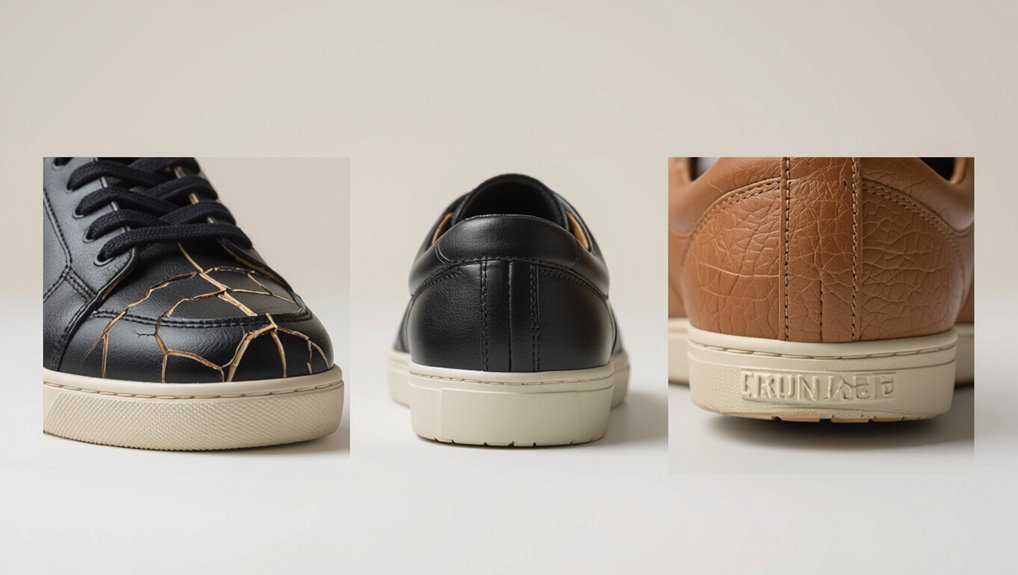
When you scan the photo series, you’ll quickly spot the most common crack patterns—hairline splits, surface crazing, flaking, and deep splits—and how each progresses through repair stages from cleaning to priming to final touch-up.
You’ll see step-by-step images: assessment, filler application, sanding, color-matching, and sealing.
Use the visuals to compare severity, choose techniques, and confirm successful before/after results.
Comparison images: quick fix vs full restoration
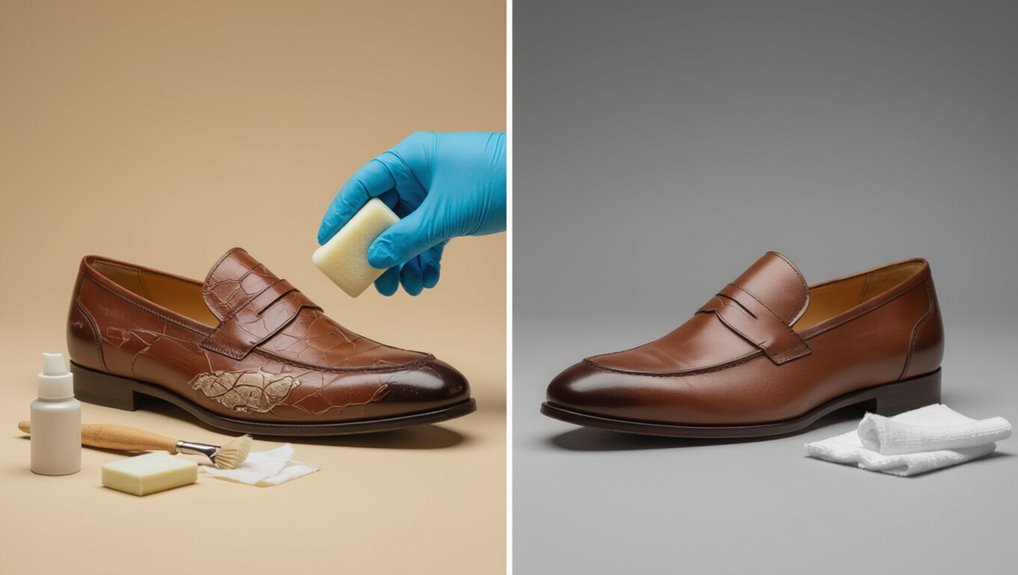
Although a quick fix can mask small chips and superficial cracks in minutes, the comparison images show how a full restoration rebuilds structure, restores color depth, and lasts much longer.
You’ll see side-by-sides: fast touch-ups smooth surface flaws but fade fast; full restorations fill gaps, prime, and repaint for uniform color and durability.
Use images to choose the right method.
