
How to Get Rid of Paint Streaks on Walls for a Flawless Result
You can get rid of paint streaks by first finding the cause, cleaning and lightly sanding the area, then priming bare or glossy spots to guarantee adhesion. Use the right roller nap and a quality brush, work to a wet edge with even pressure, and feather out overlaps while the paint’s still damp. For small flaws touch up and blend; for widespread streaking, repair and repaint systematically. Keep going to learn step-by-step fixes and prevention tips.
How to Get Rid of Paint Streaks on Walls for a Flawless Result
If you want a flawless finish, start with a quick answer: identify the streak type and choose the right fix.
For common runs or brush marks, you can often smooth them out with light sanding and a thin touch-up coat.
For stubborn streaks from uneven coverage, recoat the entire wall with proper technique to blend the repairs.
Quick Answer Fast fixes for common streak types
Anyone can tackle paint streaks quickly with the right fix, and knowing the common types—drip marks, roller lines, brush streaks, and lap marks—lets you choose the fastest solution.
For how to get rid of paint streaks on wall: sand drip marks, feather roller lines with light re-roll, smooth brush strokes with a damp brush, and blend lap marks by overlapping wet edges and working quickly.
Understanding Paint Streaks
Paint streaks are visible lines or irregularities in the finish—like brush marks, roller lines, lap marks, sagging, or flashing—that ruin an otherwise smooth wall.
They usually come from the wrong tools or technique, poor-quality or improperly mixed paint, unprepared surfaces, or unfavorable temps and humidity.
Understanding these causes and the specific type of defect helps you pick the right fix.
What paint streaks are and how they appear
Streaks are uneven lines or bands of color that show up when wall paint doesn’t lay down uniformly. They usually come from inconsistent application, drying times, or paint quality.
You’ll notice them as lighter or darker patches, gloss differences, or visible brush or roller marks. They stand out on flat surfaces, in changing light, and after drying, making finishes look uneven.
Common causes of streaks (tools, technique, paint, surface, environment)
Those visible bands come from predictable breakdowns in the painting process: the tools you use, how you apply the paint, the paint’s quality and formulation, the condition of the surface, and the room environment all play a role.
Worn brushes, overloaded rollers, uneven pressure, poor paint viscosity, dirty or glossy walls, and temperature or humidity swings each cause uneven coverage and drying, producing streaks you can prevent.
Types of streaks and defects (brush marks, roller lines, lap marks, sagging, flashing)
When you look closely, you’ll see several distinct defects—brush marks, roller lines, lap marks, sagging, and flashing—each with a different cause and fix.
Brush marks are uneven bristles; sand and repaint.
Roller lines show poor pressure or low-nap roller; re-roll wet edges.
Lap marks result from drying overlap; maintain wet edge.
Sagging needs thinning issues corrected; flashing signals uneven sheen or drying—prime and even out.
Assessing the Damage
Start by closely inspecting the wall at different angles and in good light to judge how severe the streaks are.
Decide whether a spot touch-up will hide the flaws or if the uneven finish means you’ll need to repaint the whole area.
Gather a simple checklist—matching paint, primer, sandpaper, a clean cloth, and proper brushes or rollers—before you begin.
How to inspect walls to determine severity
Before you grab any tools, take a close look at the entire wall to locate streaks, drips, texture changes, peeling, or sheen differences so you can judge how extensive the problem is.
Walk around in different light, feel for raised or rough areas, mark affected spots with small tape, and note whether streaks span seams, corners, or isolated patches for prioritized repair.
When a touch-up is enough vs. when to repaint
If the streaks are small, localized, and match the surrounding sheen, you can usually touch them up; but if they cover large areas, cross seams, show texture or adhesive residue, or the color and gloss contrast noticeably, plan on repainting the whole section for a seamless result.
Assess edge visibility, substrate damage, and whether blended feathering will hide differences before deciding.
Tools and materials checklist
Gather a concise kit of tools and materials so you can accurately assess streak damage and decide whether a touch-up or full repaint is needed.
Inspect under good light, note texture differences, and test a small patch.
- Damp sponge, microfiber cloth, mild cleaner
- Sanding block (fine grit), putty knife, spackle
- Matching paint, small brush/roller, primer
Step-by-Step Fix: Small-Area Touch-Up (Minor Streaks)
Start by clearing the area and gathering your sandpaper, tack cloth, brush or mini-roller, and matching paint.
Lightly sand and remove dust, then use a feathering technique to blend the edges before applying paint with a brush or mini-roller.
Let it dry, inspect the result, and repeat the touch-up if any streaks remain.
Step 1 Prepare the area and gather supplies
Before you touch the wall, clear a 3- to 4-foot workspace and lay down a drop cloth or old sheet to protect the floor and furniture.
Gather matching paint, a small angled brush or mini roller, painter’s tape, a damp sponge, a clean rag, a paint tray, and gloves.
Keep extra paint nearby for seamless color touch-ups.
Step 2 Light sanding and dust removal
Lightly sand the streaked area with a fine-grit (220–320) sanding block, using gentle, even strokes to feather the edges of the dried paint so the patch blends with the surrounding wall.
Wipe away dust with a damp microfiber cloth, then let it dry.
Remove loose residue with a soft brush or vacuum nozzle.
Make certain the surface is clean and smooth before touching up.
Step 3 Feathering technique for seamless blending
Blend the repaired area by feathering the paint into the surrounding wall so the touch-up disappears.
Use a slightly damp brush or sponge, working outward with light, overlapping strokes.
Soften edges by thinning the paint at the perimeter, blending until borders vanish.
Keep strokes consistent with the original texture and let the area dry fully before evaluating; repeat subtly if needed.
Step 4 Applying matching paint (brush/mini-roller use)
Grab your matched paint and choose a small, high-quality brush or a mini-roller to apply it, keeping the tool size proportional to the repair so you only cover the affected area.
Lightly load the tool, remove excess, and apply thin, even coats with short, controlled strokes.
Blend edges into surrounding paint, working outward from the center until coverage matches the finish and texture.
Step 5 Drying, inspecting, and repeating if needed
When the paint feels dry to the touch, wait the manufacturer’s recommended drying time before inspecting the repair closely.
If you still notice streaks or texture differences, apply another thin coat using the same small brush or mini-roller and let it dry again.
Check under varied lighting, feather edges to blend, and only repeat until the finish matches surrounding wall sheen and texture.
Step-by-Step Fix: Full Repaint (Widespread or Severe Streaks)
If streaks cover large areas or the surface is damaged, you’ll need a full repaint that starts with stripping loose paint and repairing imperfections.
You’ll prime the wall for even coverage, pick the right roller or brush and finish, and use painting techniques that prevent new streaks.
Finally, control drying conditions and apply a second coat when the first is fully dry.
Step 1 Strip loose paint and repair surface imperfections
Start by removing any loose or peeling paint and sanding down rough edges so the surface’s flaws don’t telegraph through the new coat.
Scrape, sand, and vacuum dust; fill holes and dents with appropriate filler, smooth with a sanding block, and wipe clean.
Make certain joints and trim are flush; if mold or mildew’s present, treat and dry before proceeding to priming and repainting.
Step 2 Proper priming for even coverage
With the surface prepped and any loose paint removed, apply a high-quality primer to seal repairs and create a uniform base that prevents old defects and stains from showing through.
Work in thin, even coats, feathering edges to avoid lap marks. Let recommended dry times and sand lightly between coats where needed.
Primer guarantees consistent adhesion and true color for your topcoat.
Step 3 Choosing the right roller/brush and paint finish
Anyone tackling a full repaint should pick tools and a finish that suit the surface and the problem—use a medium-nap roller (3/8″–1/2″) for smooth to lightly textured walls, a 3/4″–1″ nap for heavier texture, and high-quality synthetic brushes for trim and touch-ups to guarantee even laydown and fewer streaks.
Choose a satin or eggshell latex for easy touch-ups; flat hides flaws but shows application faults.
Step 4 Optimal painting technique to avoid new streaks
Work methodically to lay down paint so each pass blends into the wet edge and you avoid new streaks.
Start at a corner, maintain a wet edge, use consistent pressure, and work in overlapping “W” or vertical strokes.
Feather out edges, reload the roller before it dries, and smooth with light, even passes.
Inspect frequently and correct streaks immediately while paint remains wet.
Step 5 Drying conditions and second coat application
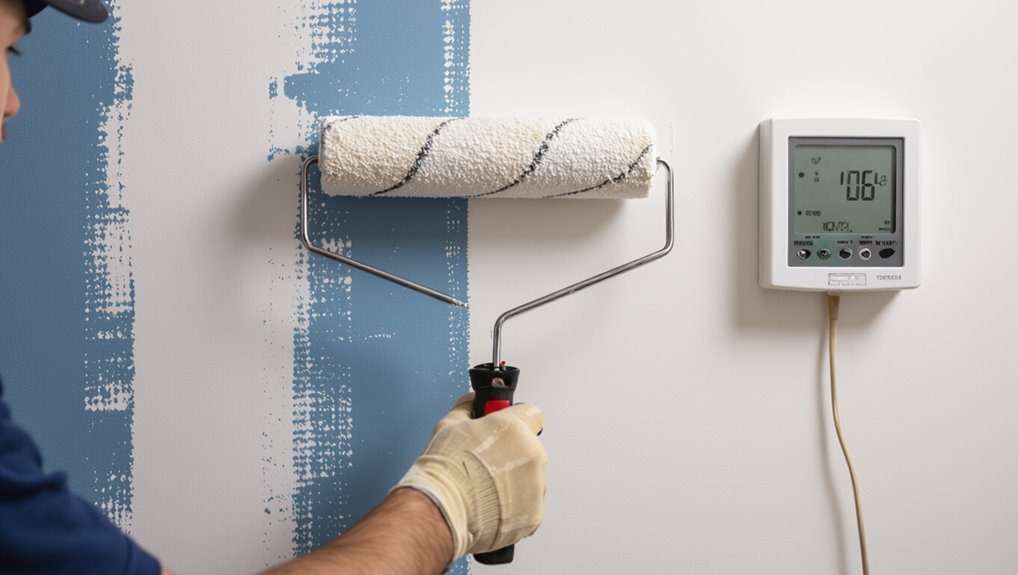
Before you apply a second coat, make sure the first coat has fully dried and the room conditions support even curing—temperature, humidity, and airflow all affect drying time and the risk of new streaks.
Check manufacturer drying times, keep windows or fans on for consistent airflow, and avoid extremes.
Lightly sand any imperfections, remove dust, then apply a thin, even second coat for uniform coverage.
Tools, Materials, and Products That Prevent or Fix Streaks
You’ll get the best results when you use the right rollers, brushes, and extension poles for your paint and surface.
Choose paints and finishes formulated to level well—like high-quality latex with a satin or eggshell finish—to minimize streaking.
Don’t forget useful accessories like trim guards, pole sanders, and tack cloths to prep surfaces and keep edges clean.
Recommended rollers, brushes, and extension poles
Choose quality rollers, brushes, and a sturdy extension pole to cut down on streaks and get an even finish—synthetic naps (3/8″–3/4″) suit most interior latex paints.
A dense angled sash brush handles cutting in cleanly, and a solid, non-wobbling extension pole keeps pressure consistent on high walls.
- Use a 3/8″–1/2″ synthetic roller for smooth coverage.
- Pick a dense angled sash brush for edges.
- Choose a locked, telescoping pole with firm grip.
Best paint types and finishes to reduce streaking
Along with the right rollers and brushes, the paint itself plays a big role in minimizing streaks—pick formulations and sheens that flow out and level well so brush and roller marks disappear as the paint dries. Choose high-quality latex or acrylic, mid-sheen for washability, and self-leveling primers.
| Type | Finish | Benefit |
|---|---|---|
| Acrylic | Eggshell | Smooth leveling |
| Latex | Satin | Durable, fewer streaks |
| Primer | Self-leveling | Uniform base |
Useful accessories (trim guards, pole sanders, tack cloths)
A few well-chosen accessories can save you time and keep paint streaks from ever forming: trim guards prevent accidental overlap when cutting in, pole sanders speed and even out prep work, and tack cloths pick up dust that causes drag and streaking.
Use a quality extension pole for rollers, soft foam edgers for crisp lines, and clean microfiber towels for final touch-ups.
Best Practices and Pro Tips to Avoid Future Streaks
Start by cleaning and prepping surfaces thoroughly so paint adheres evenly and you don’t trap dirt or grease that shows up as streaks.
Use consistent loading, pressure, overlap, and stroke rhythm, and control temperature, humidity, and ventilation to guarantee uniform drying.
Keep notes on sheen and color and test small touch-ups to match the original finish before you commit.
Surface preparation and cleaning routines
Before you paint, make certain the wall is clean, dry, and free of loose particles so your finish lays down smoothly and streak-free.
Remove dust with a microfiber cloth, wash grease with mild detergent, rinse, and let dry completely.
Fill holes, sand glossy spots lightly, and tack cloth before priming.
Use appropriate primer for stains or repairs to guarantee uniform absorption.
Painting technique tips (load, pressure, overlap, stroke consistency)
Once your surface is prepped and primed, your technique determines whether that effort shows through as a smooth, streak-free finish or visible brush and roller marks.
Load the roller evenly, avoid overloading the brush, and maintain steady, moderate pressure. Overlap each pass by about 50% and use long, consistent strokes.
Pause to smooth runs before paint skins.
Environmental controls (temperature, humidity, ventilation)
If you want streak-free walls, control the room’s temperature, humidity, and airflow so paint dries evenly; too-hot, too-cold, or overly humid conditions make solvents evaporate unevenly and leave visible marks.
Aim for manufacturer-recommended temp and 40–60% humidity, use fans or dehumidifiers for steady airflow, avoid direct drafts across wet paint, and pause painting when conditions fluctuate.
How to match sheen and color for touch-ups
When you need a touch-up that disappears, matching both color and sheen is as important as application technique; even a perfect color can stand out if the finish reflects light differently.
Test in natural and artificial light, use original paint or a matched batch, note sheen (flat, eggshell, satin), feather edges, apply thin coats, and let cures fully before judging to avoid visible streaks.
Common Mistakes That Cause or Worsen Streaks
You’ll often spot streaks that come from simple errors you can fix.
Don’t overwork wet paint, use the wrong roller nap or brush, skip primer or proper drying, or apply inconsistent pressure and overlap.
I’ll show how each of these mistakes causes or worsens streaks and how to avoid them.
Mistake 1 Overworking paint while wet
Although it seems like working a brush or roller more will smooth things out, overworking paint while it’s still wet actually causes streaks, lap marks, and uneven texture.
Stop reworking wet areas; let paint level naturally. Work in consistent, confident strokes, maintain a wet edge, and apply thin, even coats.
If you see defects, wait for drying before touching up.
Mistake 2 Using the wrong roller nap or brush
Tools matter: picking the wrong roller nap or brush will leave you with streaks, uneven coverage, and wasted time.
Match nap thickness to surface texture—short for smooth, medium or long for textured. Use a high-quality brush for trim and corners to avoid brush marks.
Replace worn rollers and keep edges light to blend. Proper tools make a noticeable, streak-free difference.
Mistake 3 Skipping primer or inadequate drying time
After choosing the right roller and brush, don’t skip primer or rush the drying process—both can undo your careful work and leave visible streaks.
Primer evens porosity and improves adhesion, preventing uneven sheen.
Wait full recommended drying times between coats, control humidity and temperature, and use thin, even coats.
Skipping these steps causes pulling, lap marks, and blotchy finish you’ll have to redo.
Mistake 4 Inconsistent pressure and poor overlap
When you vary the pressure on your roller or brush or fail to overlap each pass consistently, you’ll create visible bands of paint where coverage and sheen differ.
Keep a steady, light pressure and maintain a 50% overlap on each stroke. Reload tools frequently to avoid dry edges, work in sections, and blend wet edges to guarantee uniform color and finish without streaks.
Comparison: DIY Fix vs. Hiring a Professional
If the streaks are small and you’ve got basic tools and time, a DIY fix can save you money and be finished in an afternoon.
Call a professional when streaks cover large areas, the wall needs prep or repair, or you want guaranteed color match and a flawless finish.
Expect DIY costs to be low but time-dependent, while pros charge labor and materials—usually more upfront but faster and more reliable.
When DIY is cost-effective and feasible
Although streak repair can seem straightforward, you’ll want to weigh time, skill, and tools before deciding to tackle it yourself.
DIY makes sense when streaks are small, damage is superficial, you have proper brushes, rollers, paint, and patience, and you’re comfortable with sanding and spot priming.
Save money on labor, learn skills, and fix quickly when scope and confidence align.
When to call a professional painter
Because fixing a few streaks yourself can save money, you’ll still want to call a professional when the problem is widespread, the finish is textured or glossy, the underlying surface is damaged, or you lack time, tools, or confidence—their experience speeds up prep, guarantees even coverage, and reduces the risk of visible repairs.
| DIY | Pro |
|---|---|
| Small fixes | Large areas |
| Simple matte | Textured/glossy |
| Confident/home tools | Full prep/even finish |
Typical costs and timeframes for each option
Now that you know when a pro makes sense, let’s look at what each route typically costs and how long they take so you can pick the right option.
DIY: materials and tools $20–$150, 1–3 hours for small rooms, longer if prep’s heavy.
Pro: $200–$800+ depending on size and repairs, usually completed in a day or two with cleanup.
Preventive Maintenance and Long-Term Care
Make a simple inspection and touch-up routine so small streaks never turn into big problems.
Clean painted walls gently with the right cleaners and soft cloths to avoid causing new streaks.
Repaint whole rooms when touch-ups won’t match or when wear, fading, or multiple stains make the surface uneven.
Routine inspections and touch-up schedule
When you schedule routine inspections and a simple touch-up calendar, you’ll catch paint streaks and small blemishes before they worsen.
Aim to check high-traffic areas and sun-exposed walls every three to six months and the rest of the house at least once a year.
Note problem spots, match paint codes, keep a small kit for quick fixes, and record dates so touch-ups stay timely and consistent.
Cleaning painted walls without causing streaks
Although cleaning keeps walls looking fresh, doing it wrong can leave streaks that call attention to dirt rather than remove it.
Use a soft microfiber, mild detergent, and cool water. Test an inconspicuous spot first. Wring cloths until damp, work top-to-bottom in small sections, rinse frequently, and dry with a clean cloth to prevent soap residue and streaking on painted surfaces.
When to consider repainting whole rooms
Sometimes it’s smarter to repaint an entire room than keep patching spots, especially if you’re fighting widespread fading, multiple stains, or peeling in several areas.
Repainting gives uniform color, hides past repairs, and refreshes protective coatings. Choose quality primer and paint, address underlying moisture or damage first, and pick finishes suited to the room.
You’ll save time and prevent recurring streaks over time.
FAQ
Have questions? You’ll find answers on timing between coats, whether a damp cloth will help, and if a different sheen can hide streaks.
I’ll also cover matching paint for touch-ups and quick commercial fixes.
How long should I wait between coats to avoid streaks?
You should wait until the first coat is dry to the touch and tack-free before applying the next one—usually 2 to 4 hours for latex paints and 6 to 8 hours for oil-based paints, though cool or humid conditions can extend those times.
Test by lightly touching an inconspicuous spot; if paint doesn’t lift or feel sticky, apply the next coat.
Don’t rush; proper drying prevents streaks.
Can I fix streaks with just water or a damp cloth?
If the streaks are from latex paint that’s still slightly tacky or from water-based runs, a damp cloth can sometimes lift them—gently blot or rub a soft microfiber with light pressure to avoid removing surrounding paint.
For stubborn marks, slightly dampen with plain water, then let dry and inspect. Don’t scrub; abrasive action can roughen the finish and create more noticeable defects.
Will a different paint sheen hide existing streaks?
Wondering whether switching sheens will conceal those streaks? Changing sheen can reduce visibility because glossier finishes reflect light differently, making imperfections stand out or hide.
However, sheen won’t fix texture or paint buildup—streaks from application or drying still show under scrutiny.
If you switch, prep by sanding and cleaning, then test a small patch to confirm the result before repainting.
How do I match the original paint color for a touch-up?
How closely do you need the color to match? Determine visibility: small patches need near-perfect match. Bring a paint chip or remove a hidden trim sample for color-matching at the store. Use the same sheen and brand when possible. Test a small, primed area and let it dry under natural light. Blend edges with feathering techniques to minimize noticeable differences.
Are there quick commercial products to remove streaks?
Once you’ve matched color and sheen for touch-ups, you’ll probably want a faster fix for visible streaks—many retailers sell products aimed at that.
You can use paint refreshers, stain-blocking primers, or blending pens made for small repairs. Test first in an inconspicuous spot, follow manufacturer instructions, and remember these products often mask rather than fix underlying issues like poor prep or wrong sheen.
Visual Guide and Troubleshooting Gallery
You’ll find clear photos of common streak types paired with exact fixes so you can match what you see to the right repair.
Use the quick troubleshooting checklist for fast, on-the-spot fixes and to decide whether you need simple touch-ups or a fuller repair.
Keep this gallery handy while you work to speed up diagnosis and avoid repeat mistakes.
Common streak examples and solutions

Streaks on painted walls usually fall into a few recognizable patterns—running drips, brush marks, lap lines, and cloudy patches—and each has a specific cause and fix you can use right away.
Identify drips (thin runs) and sand/rewet then repaint; smooth brush marks with light sanding and use proper bristles; avoid lap lines by maintaining a wet edge; fix cloudy patches by correcting moisture and recoating.
Quick troubleshooting checklist for on-the-spot fixes
If you spot a flaw while the paint’s still tacky, act fast: review this quick checklist to diagnose the problem, choose the simplest on-the-spot fix, and decide whether you can finish it immediately or need to wait for a full touch-up.
Check these steps, apply fixes, and reassess.
- Identify streak cause: brush, roller, or drip.
- Lightly blend edges with a damp sponge.
- Re-roll or touch with matching paint if needed.
