
How to Keep Spray Paint From Chipping off Plastic Surfaces
You can stop spray paint from chipping on plastic by cleaning and degreasing the surface, scuffing it with fine sandpaper, and using a plastic-specific primer before painting. Hold the can 8–12 inches away and apply several thin, overlapping coats of UV-resistant acrylic or enamel, allowing proper dry and cure time between layers. Finish with a compatible clearcoat and keep temperatures and humidity moderate while it cures. Follow these steps and you’ll find more tips and troubleshooting ahead.
Who This Guide Is For and How to Use It
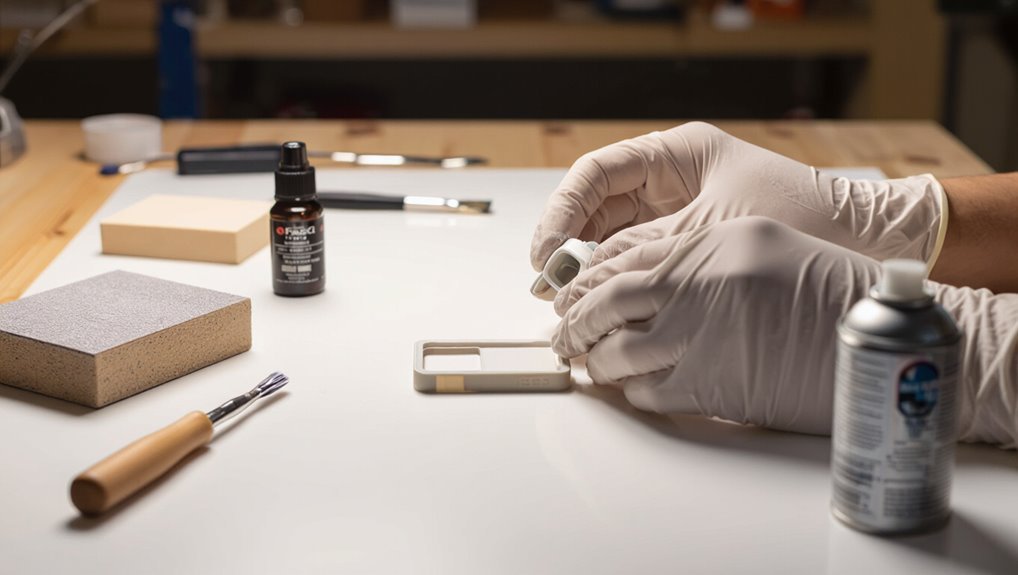
If you’re planning to paint plastic—whether it’s outdoor furniture, a bike helmet, or a small craft—you’ll find this guide practical and hands-on.
You’re likely a DIYer, hobbyist, or pro wanting durable results; this target audience benefits from stepwise tips and materials lists.
For clear guide usage, follow prep, priming, painting, and curing sections in order to minimize chipping and repeatable success.
Quick Answer: Stop Spray Paint Chipping on Plastic
Start by prepping the plastic: clean, scuff, and remove oils so the paint can stick.
Use a primer made for plastic to promote adhesion and prevent peeling.
With proper surface prep and a plastic-specific primer, sprayed paint will hold up much better.
Surface Preparation Essentials
Because plastic’s smooth surface repels paint, you need to prep it carefully to prevent chips and flakes.
First, do thorough surface cleaning with soap, degreaser, and a lint-free cloth.
Lightly sand to scuff the finish, remove dust, and mask areas.
Choose primer selection wisely to match plastic type, improving adhesion before spray painting for durable results.
Use Plastic-Specific Primers
After prepping the surface, pick a primer formulated for plastic — it bonds to slick polymers where regular primers won’t. You’ll gain clear primer benefits: adhesion, flexibility, and paint longevity. Use correct application techniques: thin coats, drying between layers, and light sanding.
| Feature | Tip |
|---|---|
| Adhesion | Thin, even coats |
| Durability | Cure fully before topcoat |
Why Paint Fails on Plastic: Common Causes
When paint flakes off plastic, it’s usually not magic—you missed one or more key steps: poor surface prep, incompatible paint chemistry, inadequate adhesion promoters, or environmental stress during curing.
You’ll also run into problems when paint adhesion clashes with specific plastic properties like low surface energy or flexible substrates.
Contaminants, oils, or rapid temperature swings during curing further undermine bonds and cause chipping.
Which Plastics Are Hardest to Paint
Although many plastics take paint just fine with the right prep, some are notoriously stubborn — low-surface-energy polymers like polyethylene and polypropylene, fluoropolymers (PTFE), and certain soft, highly flexible elastomers resist adhesion and cause paint to bead, flake, or peel unless you use specialized primers or surface treatments.
You’ll face painting challenges with these hard plastic types; pick proper primer, abrasion, or flame treatment.
How Surface Contamination Causes Failure
If you don’t remove oils and grease from the plastic, paint won’t stick and will chip quickly.
Even a thin film of dust or debris creates weak spots where the coating can lift.
Cleaning the surface thoroughly before painting prevents these common failures.
Oils And Grease
One common reason spray paint peels from plastic is oil and grease left on the surface, because those contaminants block adhesion and create weak spots where the coating can fail.
You should perform thorough oil removal with a degreaser or isopropyl alcohol, then rinse and dry.
Regular grease prevention—wear gloves, avoid touching primed areas—keeps paint bonded and reduces chipping.
Dust And Debris
When you skip a thorough wipe-down, tiny dust particles and debris act like barriers between the plastic and the paint, preventing proper wetting and bonding; as paint cures, these contaminants create micro-gaps and weak points that lead to flaking and chipping. You should use dust control and proper debris removal: wipe, vacuum, tack cloth.
| Step | Tool | Result |
|---|---|---|
| 1 | Cloth | Surface clean |
| 2 | Vacuum | Loose dust gone |
| 3 | Tack cloth | Fine debris removed |
How Plastic Flexibility Affects Adhesion
Because many plastics bend and flex during use, their movement directly challenges spray paint adhesion.
You’ll need to understand plastic flexibility and adhesion dynamics so you can choose coatings and preparation methods that accommodate strain.
Flexible substrates can crack brittle films, so apply thinner, elastic coats, allow proper curing, and avoid rigid layers.
Monitor stress points and recoat or sand lightly if small chips appear.
Tools & Materials for a Durable Finish
Before you start spraying, gather the right tools and materials so you won’t be forced to stop midway or compromise the finish.
Before you start spraying, gather the right tools and materials to avoid stopping midway or ruining the finish.
You’ll need quality spray paint formulated for plastic, fine-grit sandpaper, tack cloths, respirator, and a stable work stand.
Choosing colors early helps plan coats.
Practice consistent paint application with smooth, overlapping passes and allow recommended drying between layers.
How to Choose a Primer for Plastic
If you want a durable, chip-resistant finish on plastic, start by picking a primer made specifically for plastics or labeled “adhesion promoter.”
These formulations chemically bond to smooth, nonporous surfaces and give paint something to grip.
Choose primer types for primer compatibility with your plastic, focus on surface adhesion and plastic sealing, follow primer application and primer drying times, plan paint layering, consider color matching, texture considerations, and environmental factors.
Best Spray Paints Formulated for Plastic
When you want long-lasting coverage on plastic, pick spray paints specifically formulated for plastics—they’re engineered with adhesion promoters and flexible resins that resist chipping and peeling.
For durable results on plastic, use spray paints made for plastics—formulated with adhesion promoters and flexible resins.
You’ll choose the best spray paints by matching finish, durability, and cure time for your plastic surface.
Consider these options:
- High-adhesion plastic enamel
- Flexible acrylic spray
- Durable polyurethanebased spray
Adhesion Promoter vs. Primer: Which to Use?
You’ll want to know the difference between an adhesion promoter and a primer before you start painting plastic.
An adhesion promoter creates a microscopic bond that helps paint stick to slick plastic, while a primer builds a uniform surface, hides imperfections, and improves overall coverage.
Use an adhesion promoter when sticking power is the main issue, and add a primer if you need better coverage or a smoother finish.
Adhesion Promoter Benefits
Although both adhesion promoters and primers prep plastic for paint, they serve different jobs and choosing the right one matters for durability.
You’ll use adhesion techniques and careful promoter application to improve bond strength. Benefits include better initial grip, thinner coverage, and faster curing. Apply properly to clean plastic.
- Stronger bond
- Less peeling
- Paint longevity
Primer Purpose Explained
Because primers lay down a uniform, paint-friendly surface while adhesion promoters chemically bond to plastics, you should pick based on the job: use an adhesion promoter when you need a stronger molecular grip on slick plastics and a primer when you want a smooth, even base for color and protection.
Choose primer types for surface, follow primer application instructions, and prep the plastic to guarantee lasting adhesion.
Test Spray Paint Compatibility on Scrap Plastic
Before you paint the final piece, test the spray on a scrap of the same plastic so you know how it bonds and cures.
You’ll check paint adhesion across different plastic types and spot curing issues.
Follow a simple test routine:
- Clean and dry scrap.
- Spray thin coats, letting each cure.
- Scratch or flex to assess adhesion.
How to Clean Plastic Before Painting
Once your scrap test shows the paint bonds well, you’ll want to give the actual piece a meticulous clean so the finish sticks and looks smooth.
Check plastic types, remove loose dirt with a soft brush, then wash with mild detergent and water.
Rinse thoroughly and dry completely.
Use light scuffing with fine sandpaper to promote adhesion before priming.
Safely Remove Grease, Wax, and Residues
Starting with a clean surface, you’ll want to remove any grease, wax, or silicone residue that can prevent primer and paint from sticking.
For safe grease removal and wax elimination, do the following:
- Wipe with warm soapy water and a microfiber cloth.
- Use isopropyl alcohol or a dedicated plastic degreaser.
- Rinse, dry, and inspect before priming.
How to Scuff Plastic for Better Bonding
If you want paint to stick to plastic, lightly scuff the surface to create tiny abrasions that give primer and paint something to grip.
Use 320–400 grit sandpaper or a scuff pad, sanding evenly in one direction. Clean dust, then apply plastic primer.
These scuffing techniques improve adhesion; follow proper bonding methods and let primer cure before painting to guarantee lasting results.
Repair Cracks and Deep Scratches First
After scuffing, check the plastic closely for cracks and deep scratches, because those flaws will let paint chip or peel no matter how well you prep the surface.
You should do crack repair and scratch filling before priming.
Steps:
- Clean the area.
- Fill gaps with plastic filler or epoxy.
- Sand smooth, then re-clean and prime.
Masking Tips to Protect Unpainted Areas
When you’re ready to paint, mask off any areas you don’t want coated using low-tack painter’s tape and thin plastic or paper—press the tape edges firmly to prevent bleed-under, and overlap materials so no gaps remain.
Use precise masking techniques: cut tape to fit curves, remove dust, and secure edges.
Peel tape while paint is tacky for cleaner lines and less lifting.
Best Temperature & Humidity to Spray Plastic
Now that your unpainted areas are securely masked, focus on the environment where you’ll spray—temperature and humidity have a big impact on adhesion and drying.
With masking done, check your spray environment—steady warmth and low humidity ensure proper adhesion and drying.
Choose ideal conditions: avoid extremes, aim for steady warmth and low humidity.
Consider these environmental factors:
- Temp: 60–80°F (15–27°C)
- Humidity: under 60%
- Wind: minimal for consistent drying and adhesion
Setting Up a Safe, Ventilated Spray Area
Because spray paint gives off fumes and overspray, you’ll want to work somewhere with strong airflow and plenty of space around the piece.
Set up near open windows or outdoors, use box fans and a directional exhaust for ventilation methods, and shield nearby items.
Wear proper safety gear—respirator, goggles, gloves—and keep a fire extinguisher and clear escape path handy.
Spray Technique: Distance, Speed, and Overlap
With your workspace set and safety gear on, focus next on how you spray: distance, speed, and overlap control the finish.
With workspace prepped and safety gear on, focus on spray distance, speed, and overlap for a smooth finish.
Keep consistent spray distance, steady application speed, and proper paint overlap to avoid runs or thin spots.
Follow this quick checklist:
- Hold can 8–12 inches for even coverage.
- Move smoothly, not jerky.
- Overlap passes by ~50%.
How Many Coats and Dry Times Between Coats
Aim for thin, even coats rather than one heavy layer, and plan on applying 2–3 coats for good coverage and durability.
Let each coat dry to the touch—usually 10–15 minutes for fast-dry sprays or up to 30 minutes for regular formulas—before adding the next.
Waiting the recommended interval from the paint can guarantees proper adhesion and reduces the chance of chipping.
Number Of Coats
Start with two light coats rather than one heavy one—you’ll get smoother coverage and fewer drips. Aim for an ideal layering plan: thin, even passes build adhesion without puddles.
Decide the number of coats by surface and visibility. Follow this simple guide:
- Base: 1–2 light coats
- Coverage: 1–2 additional coats
- Finish: 1 light topcoat for durability
Dry Time Between Coats
Now that you’ve built your base and coverage layers, let the paint set before adding more coats so each one bonds instead of lifting.
Wait the manufacturer’s recommended interval—usually 5–15 minutes for tack-free, 24 hours for full cure.
Use dry time tips: thin coats, moderate temperature, low humidity.
For best drying, avoid heavy layers; inspect between coats and proceed when surface feels dry to the touch.
Avoiding Runs, Drips, and Orange Peel
When you spray too close or hold the can in one spot, paint builds up and runs—so keep the can moving with steady, overlapping passes and hold it the recommended distance from the plastic.
Control spray technique and paint consistency to prevent orange peel and drips.
Tips:
- Light, even coats
- Smooth, steady motion
- Allow flash time between passes
When to Wet‑Sand Between Coats
Don’t wet-sand until the paint has fully cured; sanding too soon can gum up the surface and ruin the finish.
When it’s cured, lightly sand between coats to knock down any dust nibs and promote adhesion.
Use a very fine grit (600–1500) and keep the surface wet to avoid scratching.
Wait For Full Cure
Although you can feel the paint dry to the touch in a few hours, you should wait for a full cure before wet-sanding between coats. Curing lets the solvents evaporate and the film harden so you won’t gum up your sandpaper or lift the finish.
Use proper curing methods and follow time recommendations. Consider:
- Manufacturer cure times
- Humidity/temperature effects
- Test spot before sanding
Lightly Sand Between
If you want a smooth, durable finish, wet‑sand lightly between coats once the paint has cured to the touch but before full hardness sets in; this removes dust nibs and flash while promoting adhesion for the next layer.
Use gentle sanding techniques with light pressure and a soft pad, rinse frequently, and dry before recoating.
Choose an ideal grit that scuffs without cutting through the film.
Use Fine Grit
When you wet‑sand between coats, use a fine grit—typically 800–1200 for most spray paints—to gently scuff the surface without cutting through the film.
You’ll remove dust nibs and improve adhesion using careful sanding techniques. Do it after the tack fades, rinse, and dry before the next coat.
- Light pressure
- Even strokes
- Clean thoroughly
Choosing a Clear Coat That Resists Chipping
Picking the right clear coat can make the difference between a durable finish and paint that flakes off after a few knocks.
How to Cure Painted Plastic for Durability
Because proper curing locks in adhesion and flexibility, you’ll want to follow a few key steps after painting so the finish resists chips and wear.
Because proper curing locks in adhesion and flexibility, follow key steps after painting so the finish resists chips and wear.
Use controlled Curing methods and monitor Temperature effects to avoid soft or brittle paint.
Follow this simple routine:
- Let paint tack-dry per label.
- Cure at recommended temperature and humidity.
- Allow full cure time before handling or clear coating.
Painting Flexible Parts That Bend and Flex
After curing, address how the paint will handle bending—flexible parts need coatings that stretch with the substrate to avoid cracking and chipping. You should choose flexible coatings and test adhesive flexibility on sample pieces. Bend slowly, inspect for microcracks, and recoat with thin flexible layers if needed. Maintain temps per product instructions to preserve elasticity and adhesion.
| Test | Result | Action |
|---|---|---|
| Bend | Pass/Fail | Recoat |
| Peel | Pass/Fail | Prep |
| Heat | Pass/Fail | Cure |
| Cold | Pass/Fail | Adjust |
| Repeat | Pass/Fail | Approve |
Painting Textured vs. Smooth Plastic Surfaces
When you’re painting plastic, surface texture changes how the paint behaves: smooth plastics need careful sanding and adhesion promotion for even coverage, while textured parts hide imperfections but require more paint buildup and possibly thicker tack coats to reach recesses.
You should note adhesion differences and choose compatible paint finishes.
Follow steps:
- Sand and prime smooth surfaces
- Apply heavier coats to textured surfaces
- Test adhesion before final coats
How UV Exposure Shortens Paint Life
When you leave painted plastic in sunlight, UV radiation breaks down binders and pigments, making the finish brittle and prone to chipping.
That same UV exposure causes colors to fade and lose vibrancy as dyes and pigments chemically degrade.
Applying a UV-resistant clear coat or protective finish will slow this process and help your paint last longer.
UV Radiation Breakdown
Ultraviolet (UV) light from the sun attacks paint molecules on plastic, breaking chemical bonds and causing colors to fade, chalk, and flake.
You’ll notice UV exposure effects weaken binders, make paint brittle, and reduce adhesion.
Protect by using UV resistant coatings and maintenance:
- Choose UV-blocking primer
- Apply UV-resistant topcoat
- Recoat periodically to restore protection
Color Fade Mechanisms
Because sunlight carries energetic UV photons that disrupt pigment and binder chemistry, you’ll see colors dull and shift faster on plastic than on many other surfaces.
You should expect polymer breakdown, pigment bleaching, and binder embrittlement to reduce color retention.
Fading factors include intensity, exposure duration, and surface additives; these accelerate microfractures and color loss, so monitor exposed items frequently.
Protective Coating Importance
If you want your spray paint to last on plastic, add a protective clear coat to block UV and moisture that otherwise break down pigments and binders.
You’ll get protective benefits immediately, slowing chalking and cracking.
Choose coating types for exposure:
- UV-resistant clear enamel
- Acrylic lacquer with UV inhibitors
- Polyurethane for heavy wear
Apply per instructions and recoat annually.
Finishes for High‑Wear Areas (Handles, Edges)
Focus on durability when finishing handles and edges, since those spots get the most friction and impacts and are where paint failures show first.
You should use durable finishes and target high wear areas with flexible topcoats, polyurethane or acrylic clear coats, and light sanding between layers.
Reinforce edges with additional thin coats, let them cure fully, and avoid thick, brittle films that crack under stress.
Low‑Heat Curing to Improve Adhesion (DIY Safe)
After the paint feels dry to the touch, you can use gentle heat—like a hair dryer or warm oven on its lowest setting—to help the coating fully cure and bond to the plastic.
Keep the temperature low and consistent and limit exposure time to avoid warping or softening the plastic.
Monitor closely and move the heat source evenly so you get improved adhesion without damage.
Gentle Heat Application
A brief, low‑heat curing step can greatly improve spray paint adhesion to plastic by helping solvents evaporate and the paint film to cross‑link without warping the substrate; you’ll want to use only gentle, controlled heat sources—like a hair dryer, heat gun on its lowest setting held at least 8–12 inches away, or warm oven—to avoid melting or deforming the plastic.
- Use gentle heat cautiously.
- Keep distance and motion.
- Check for softening before cooling.
Controlled Temperature Timing
When you use low‑heat curing to improve adhesion, timing matters as much as temperature: apply brief, gentle heat soon after the paint becomes tacky—usually within 5–15 minutes depending on the product—and hold it there just long enough to drive off solvents and promote cross‑linking without softening the plastic.
You’ll monitor temperature control closely, use practical timing strategies, and avoid overheating to preserve shape and bond.
Avoiding Incompatible Primer/Paint Pairings
Because primers and paints are formulated to bond differently, using mismatched products lets adhesion fail before the paint even cures.
Mismatched primers and paints often fail to bond, causing adhesion problems before the paint even cures.
You should check primer compatibility to avoid incompatible coatings and wasted work.
Follow these steps to guarantee a proper match:
- Read manufacturer recommendations.
- Test a small area first.
- Use a primer designed for your plastic type.
Troubleshooting Peeling, Flaking, or Lifting
If paint is peeling, flaking, or lifting, you’ll first check whether the surface was properly cleaned, sanded, and de-greased before painting.
You’ll also confirm that the primer and spray paint you used are compatible with each other and with the plastic type.
Identifying which of these issues happened will guide the right fix.
Surface Preparation Issues
Poor surface preparation is the most common reason spray paint peels, flakes, or lifts from plastic, so you’ll want to address dirt, oils, and glossy finishes before you spray.
Use proper cleaning methods, assess surface contaminants, and consider adhesion science with primer application.
Focus on preparation techniques, painting tools, surface textures, paint compatibility, environmental factors, and repair techniques.
- Clean
- Sand
- Prime
Incorrect Paint Or Primer
Once you’ve cleaned, sanded, and primed, check whether the paint and primer you chose actually bond to plastic — wrong products will still lift no matter how well you prepped the surface.
Use plastics-specific paint types and compatible primers, follow manufacturer-recommended application techniques, and test a small area first.
If peeling occurs, strip and redo with approved products to guarantee lasting adhesion.
How to Strip Failed Paint and Start Over
Start by removing all loose or flaking paint so you can assess the surface underneath; you’ll save time and get a cleaner result when you prep properly.
Remove loose or flaking paint first so you can assess the surface and prep for a cleaner finish.
Use safe removal techniques and test paint products on a small area.
Follow steps to finish:
- Sand or strip to bare plastic.
- Clean with degreaser and rinse.
- Scuff, prime with plastic primer, then repaint.
Budget Products That Still Hold Up
You don’t need expensive brands to get durable results—proper prep like cleaning and scuffing makes cheap spray paints stick.
After paint cures, lock it in with an affordable clearcoat to prevent chips.
With those two steps you can make budget products perform like pricier options.
Prep Makes Cheap Paint Last
Although cheap spray paint won’t resist wear on its own, proper prep gives it a fighting chance: you can boost durability with paint longevity strategies and effective application techniques.
Clean, sand, and prime thoroughly, then apply thin, even coats. Follow this simple checklist:
- Degrease and sand
- Use a plastic primer
- Apply thin, overlapping passes
Seal With Affordable Clearcoat
After you’ve cleaned, sanded, and primed, add a clearcoat to lock in the finish—this step makes a big difference even with bargain paints.
You should pick clear coat options labeled for plastic and UV resistance. Sprayable acrylic or polyurethane offers durable, cost effective solutions.
Apply thin, even coats, allow full curing between layers, and lightly scuff between coats for the best adhesion and chip resistance.
Professional Options for Heavy‑Duty Projects
When a chip‑resistant finish is nonnegotiable, turn to professional solutions that go beyond spray paint and basic primers.
You’ll want heavy duty techniques and clear professional recommendations for long-lasting results.
Consider:
- Industrial adhesion promoters and epoxy primers.
- Two‑component polyurethane or epoxy topcoats.
- Professional surface preparation: media blasting or chemical etch.
Hire pros for application if you lack equipment.
Project Tips: Patio Furniture, Planters, Trim
When you’re tackling patio furniture, planters, or trim, start with proper surface prep: clean, sand, and apply a plastic primer so paint will stick.
Pick a spray paint labeled for plastic and outdoor use with UV and chip resistance.
Use thin, even coats and let each layer fully dry to get a durable finish.
Surface Preparation Steps
Preparation makes the difference: clear, clean, and lightly sanded plastic gives spray paint something to grip.
You’ll focus on surface cleaning, degreasing, and deciding primer selection before painting.
Follow steps:
- Wash with mild detergent, rinse, dry.
- Lightly sand with fine grit, remove dust.
- Apply compatible primer, let cure fully.
These steps boost adhesion and reduce chipping.
Choosing Durable Spray Paint
Although prep matters most, choosing the right spray paint keeps your patio furniture, planters, and trim looking good longer.
Pick a paint formulated for plastic or outdoor use with UV resistance and a tough enamel or acrylic finish to resist chipping, fading, and weathering.
You’ll want durable finishes labeled for plastic, compare paint formulations, and test a small area to guarantee adhesion and color match.
Maintenance to Keep Painted Plastic From Chipping
If you want your painted plastic to last, commit to a simple maintenance routine: clean gently, inspect regularly, and touch up chips as soon as you spot them.
You’ll prolong finish with basic paint maintenance and quick touch up techniques. Follow these steps:
- Wash with mild soap, dry fully.
- Inspect for lifts or cracks weekly.
- Apply matching paint to small chips, seal when cured.
Small Tests and Checks Before You Start
Before you crack open the can, do a few quick tests on a hidden spot of the plastic so you know how the surface and paint will behave. Try cleaning, sanding, and spraying tiny swatches to check adhesion and paint compatibility. Use this quick reference:
| Test | Result |
|---|---|
| Clean | Pass/Fail |
| Sand | Pass/Fail |
| Spray | Pass/Fail |
Final Checklist to Ensure the Paint Will Stick
1 quick pass through this checklist will help you catch the last issues that cause paint to chip: Inspect surface for dust, grease, and missed sanding; verify primer cured; confirm temperature/humidity are suitable.
Do these final touches to boost paint longevity:
- Clean and dry surface thoroughly.
- Lightly sand glossy spots.
- Apply primer or adhesion promoter as needed.
Frequently Asked Questions
Can I Use Automotive Clear Coat Over Craft Spray Paint on Plastic?
Yes — you can use automotive clearcoat over craft spray paint on plastic if you prep properly. You’ll clean, lightly sand, use a plastic primer for spray paint adhesion, then apply the automotive clearcoat in thin, even coats.
Will Dishwasher Cycles Fade or Chip Spray Paint on Outdoor Plastics?
Sure — your paint will likely fade or chip faster if you toss painted plastic into dishwashers; they’re brutal. You’ll hurt spray paint durability, so prioritize outdoor plastic maintenance: air-dry, gentle hand-wash, UV-resistant clearcoat, avoid high heat cycles.
Are There Eco‑Friendly Primers That Work on Plastic?
Yes — you can use eco friendly options like water‑based or low‑VOC plastic primers; you’ll find primer effectiveness varies, so test adhesion first, choose primers labeled for plastic, and follow surface prep and curing instructions carefully.
How Long Before I Can Safely Gasoline‑Clean a Painted Plastic Part?
Wait at least 72 hours, but ideally 7 days, before gasoline‑cleaning painted plastic; you’ll guarantee paint adhesion cures fully and verify gasoline compatibility of the paint and primer to avoid softening, lifting, or long‑term damage.
Can I Heat a Painted Plastic Item to Accelerate Curing Without Damage?
You can, but gently: you’ll avoid “stressful surprises” by using low heat settings and monitoring curing times closely; keep temperatures below the plastic’s softening point, move heat evenly, and test a small area before proceeding.
Conclusion
You’ve learned the simple steps to stop spray paint from chipping on plastic: clean, scuff, use the right primer and paint, and seal. Stick to small sample spots, steady sanding, and sturdy primers so your patio pieces, planters, and trim stay splendid. Keep up gentle care—cleaning, checking, and touching up—to sustain a smooth, strong surface. With smart steps and steady scrutiny, you’ll save time, stress, and money.
