
How to Level Walls Before Painting for a Smooth Professional Finish
You’ll start by inspecting walls for highs, lows, cracks and dents, then clean and sand glossy areas for good adhesion. Tape and bed seams, fill holes with joint compound, and skim-coat low spots, feathering edges smooth with a wide knife. Sand evenly with 120–220 grit, use raking light to catch flaws, then prime after dust removal. For larger jobs use a laser level or pole sander; keep going and you’ll find detailed tips and tool choices ahead.
How to Level Walls Before Painting for a Smooth Professional Finish (Quick Answer)
You can get a smooth, professional finish by identifying high and low spots, filling gaps with joint compound or plaster, and sanding for an even surface.
Expect to spend a few hours on small rooms and a day or more on larger or heavily damaged walls.
Follow proper prep and sanding and you’ll save time when painting and achieve a crisp final coat.
Direct Answer Quick overview of the process and expected results
Start by inspecting the wall for dents, cracks, and high spots. Then remove loose paint and dust so you can see what needs leveling.
You’ll sand, fill, skim coat, and sand again for a flat surface. Follow steps for how to level walls before painting to get consistent results.
- Sand rough areas
- Apply patching compound
- Feather and skim coat
- Prime before paint
Basic Understanding: What “Leveling” Means and Why It Matters
Leveling means fixing unevenness, dents, seams, or inconsistent texture so the surface is flat and uniform.
You’ll want to level when flaws will telegraph through the finish or prevent primer and paint from adhering properly, but light sanding or spot priming can be enough for minor imperfections.
Knowing which approach to use saves time and gives a smooth, professional-looking paint job.
What is wall leveling? definitions (unevenness, dents, seams, texture)
Think of wall leveling as the process of making a surface flat and consistent so paint goes on smoothly and looks professional.
You remove unevenness (bulges, hollows), fill dents and nail holes, blend seams between drywall sheets, and adjust texture variations.
Leveling creates a uniform plane so primers and paint can be applied evenly, hiding imperfections and preventing visible flaws after finishing.
Why leveling matters for paint adhesion and appearance
Because paint only looks and lasts its best on an even surface, you’ll want to level walls before priming or painting so the finish adheres properly and flaws don’t telegraph through.
Leveling creates uniform porosity for primer to bond, prevents thin spots and peeling, and hides bumps or shadows that catch light. That gives you a smooth, durable finish and truer color.
When you must level vs when light prep is enough
You’ve seen why an even surface helps paint adhere and look its best, but not every wall needs the same amount of prep. You’ll decide based on damage, texture, and desired finish.
Level when structural dents, large cracks, or uneven joints exist. Light prep suits small nail holes, minor texture, or one-coat touchups.
- Deep cracks or sagging
- Multiple patched areas
- Smooth finish desired
- Small blemishes only
Tools, Materials, and Safety Preparation
Before you start leveling, make a checklist of essential tools and materials—putty knife, joint compound, sanding block, level, and primer—plus optional gear like a compound mixer or drywall sander for bigger jobs.
Don’t forget safety: respirator or dust mask, goggles, gloves, and proper ventilation.
Lay drop cloths and clear the workspace so you’ll work cleanly and safely.
Essential tools and materials checklist
A compact, well-organized kit makes leveling walls faster and reduces mistakes, so gather the key tools, materials, and safety gear before you start.
You’ll need basics to prep, patch, and smooth surfaces safely and efficiently.
- Putty knife, joint compound, sandpaper
- Trowel, drywall tape, corner tool
- Stud finder, level, straightedge
- Gloves, goggles, dust mask
Optional tools for larger or professional jobs
If you’re tackling larger rooms or working for clients, consider upgrading to pro-grade gear to save time and improve results.
You’ll want tools that boost speed, accuracy, and finish quality:
- Laser level for fast, precise alignment
- Pole sander to reach high areas without ladders
- Corner trowel for sharp joints
- Professional drywall mixer for consistent compound
Safety gear and workspace preparation (ventilation, drop cloths)
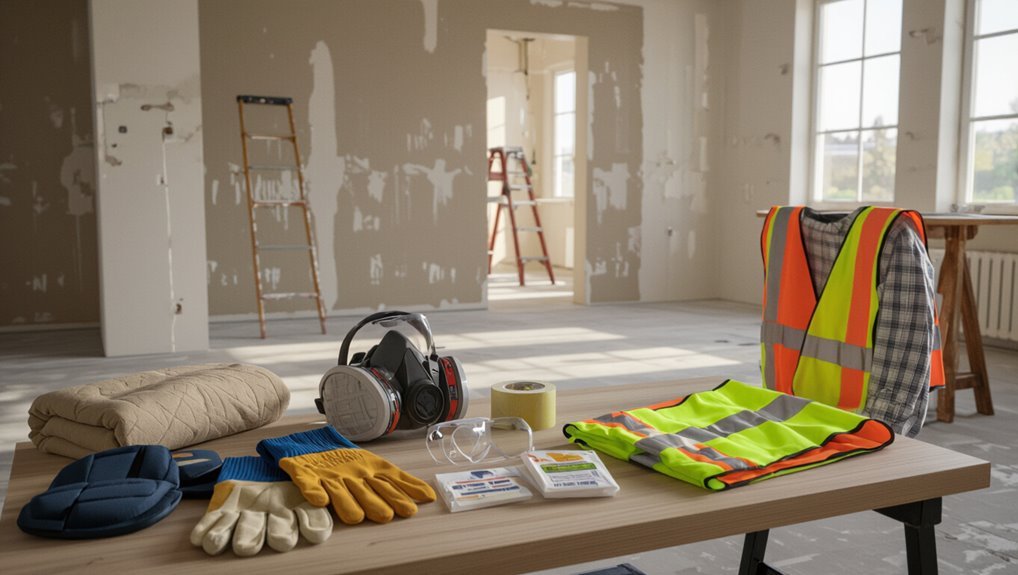
One clear rule: protect yourself and your space—wear a dust mask or respirator, safety glasses, and gloves, and set up ventilation and drop cloths to keep dust and compound off floors and furniture.
Seal vents, open windows, run a fan toward outdoors, and tape plastic over doors. Use heavy-duty drop cloths, secure edges, and keep a broom and shop vac nearby for quick cleanup.
Inspection and Assessment: Diagnose Wall Issues
Start by using strong side lighting, your hands, and a straightedge to spot and measure any unevenness.
Look for common issues like cracks, nail pops, seam gaps, texture differences, or bulges and note their size and location.
If you find large cracks, active water damage, or signs of structural movement, call a pro before you try to repair or level the wall.
How to inspect walls: light, touch, and measurement techniques
Before you mix spackle or roll on primer, walk the room with a plan: use varied light angles, feel for imperfections with your hand, and measure key planes with a straightedge and level so you know exactly what needs fixing.
Note high and low spots, map their locations, record distances from corners, and photograph issues.
Prioritize repairs by severity and accessibility before gathering materials.
Common problems to identify: cracks, nail pops, drywall seams, texture variation, bulges
With your map of highs, lows, and photos in hand, move on to identify specific defects so you know what repairs each spot needs.
You’ll check for visible issues, note severity, and plan fixes.
Common problems include:
- Hairline and long cracks needing joint compound
- Nail pops that require reset and patch
- Open drywall seams to tape and mud
- Texture variations or bulges to skim or sand
When to call a pro (structural problems, water damage)
If you spot bowed walls, wide cracks that reopen after being patched, or stains and soft spots from moisture, call a pro—these signs can point to structural issues or ongoing water damage that DIY fixes can’t safely resolve.
A contractor or structural engineer can assess foundations, framing, and leaks, recommend repairs, and prevent recurrence so your leveling and paint work won’t fail or hide bigger hazards.
Step-by-Step Wall Leveling Process
Start by removing fixtures and prepping the surface so you can work cleanly and safely.
Clean the walls, strip loose paint or wallpaper, then patch holes and cracks with the right compound—spackle for small spots, patching compound for larger repairs.
Tape and bed drywall seams, and finish with a skim coat on any large uneven areas before you prime and paint.
Step 1 Remove fixtures and prepare surface
Turn off power, remove outlet and switch covers, and take down any light fixtures or wall-mounted hardware so the surface’s edges are fully exposed.
Patch visible holes and dents with joint compound, let dry, then sand smooth.
Mask nearby trim, floors, and remaining fixed items with drop cloths and painter’s tape.
Make certain dust is brushed away before proceeding to the next step.
Step 2 Clean walls and remove loose paint or wallpaper
Scrape away loose paint and peeling wallpaper with a putty knife or scraper, then wash the walls with a mild detergent solution to remove grease, dust, and residue so new coatings will adhere properly.
Rinse, let dry, and sand any rough edges or stubborn adhesive with fine-grit sandpaper.
Vacuum or tack-cloth the surface to remove particles before priming or further leveling steps.
Step 3 Repair holes and cracks (patching compounds vs spackle)
Patch holes and cracks carefully so your finished paint job looks smooth and professional.
Choose spackle for small dents and nail holes—it dries fast and sands easily.
Use patching compound for larger gouges and deeper gaps; it’s stronger and builds up thickness without shrinking.
Apply in thin layers, let each dry fully, sand smooth, and wipe dust before priming and painting.
Step 4 Tape and bed drywall seams (joint tape, compound)
After you’ve filled and sanded holes, move on to taping and bedding the drywall seams to create a continuous surface ready for skim coat or primer.
Apply paper or mesh tape over joints, embed it with a thin layer of joint compound using a flat knife, feather edges, and let dry.
Sand lightly, apply a second thin coat, and sand smooth before priming.
Step 5 Apply skim coat for large uneven areas
Begin by mixing a thin, lump-free skim coat of joint compound or ready-mix veneer plaster to a creamy, spreadable consistency so you can cover large low spots in one pass.
Use a wide knife or trowel to pull the compound across uneven areas, filling hollows and feathering edges.
Let it firm, then recoat if needed to achieve a uniform surface before finishing.
Step 6 Sanding: tools, grits, patterns for smoothness
Grab the right sandpaper and tools so you can level the skim coat without tearing it up.
Use a sanding block or pole sander with 120–150 grit to flatten high spots, then finish with 220 grit for smoothness.
Sand in overlapping, circular and diagonal strokes, keep light pressure, clean dust frequently, and inspect with raking light to catch imperfections before priming.
Step 7 Feathering edges and blending repaired areas
When your skim coat is sanded smooth, feathering the edges will make the repaired area disappear into the surrounding wall—so work the joint between old and new compound with a clean, slightly damp knife or trowel to thin and blend the material outward.
Light, overlapping strokes taper the compound; keep pressure gentle, re-wet the blade as needed, and check from different angles until shifts vanish.
Step 8 Prime sealed and repaired surfaces
Seal the repaired area with a quality primer so paint adheres evenly and sheen doesn’t highlight patchwork.
Apply a thin, even coat over patched spots and surrounding wall to equalize porosity.
Let primer dry fully, sand lightly if needed, then inspect for imperfections.
Reprime any thin areas.
Once uniform, you’ll get consistent color and finish when you topcoat.
##
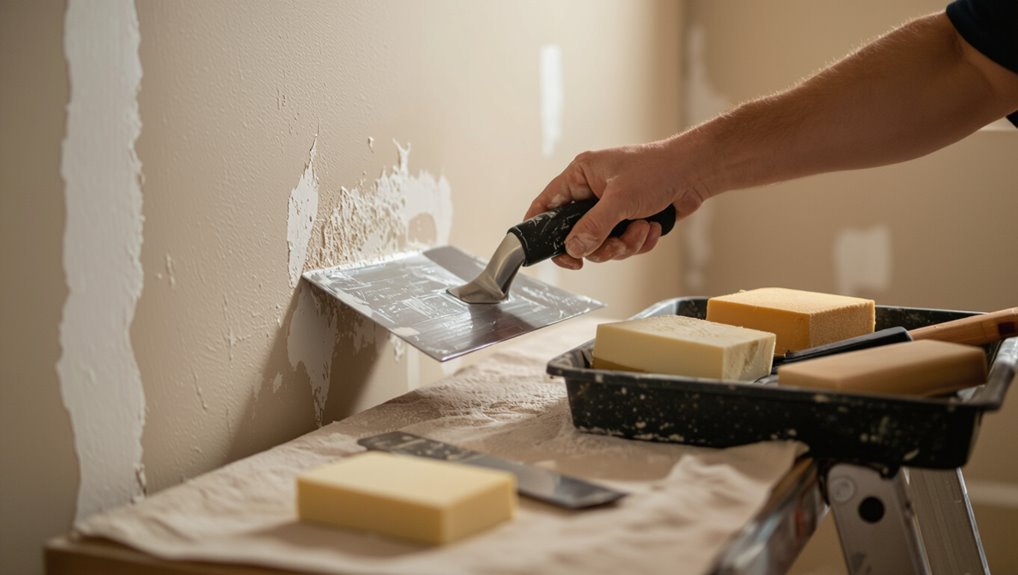
It’s essential to check the wall for imperfections before you start sanding or skim-coating, because small dents, nail holes, and uneven joints will telegraph through paint if you don’t address them.
Mark defects, remove loose debris, and sand glossy spots. Apply joint compound to gaps and dips, feather edges smoothly, let it dry fully, then sand flat for a seamless, level surface ready for priming.
Finishing Touches Before Painting
Before you paint, do a final inspection for flatness and consistent texture, then remove all dust so the primer can bond properly.
Pick a primer suited to your wall material and allow the recommended drying time before proceeding.
If you still spot imperfections, apply a second skim coat or spot-sand those areas and recheck before priming.
Final inspection checklist: flatness, texture consistency, dust removal
Once you’ve sanded and skimmed, do a careful final inspection to confirm flatness, consistent texture, and complete dust removal so your paint will lay down evenly.
Walk the room under raking light, feel for ridges or low spots, and blend any irregularities.
Vacuum and tack cloth all surfaces, wipe trims, and remove debris from floors.
Recheck before priming and painting.
Choosing the right primer and drying times
Although primers vary by surface and finish, pick one that matches the drywall, plaster, or patched areas and the type of paint you’ll use so adhesion and coverage are ideal.
Use stain-blocking primer for repairs and a high-build primer for porous patches.
Follow manufacturer drying times before sanding or topcoating—temperature and humidity affect cure—wipe dust between steps and test a small area first.
When to apply a second skim coat or spot-sand
Let the primer fully cure, then inspect the surface under raking light for low spots, hairline cracks, or areas where the texture doesn’t match;
you’ll either spot-sand to feather edges and smooth minor imperfections or apply a second skim coat to rebuild thin or uneven sections.
Spot-sand if imperfections are shallow; skim coat when large areas lack fill or texture needs consistent rebuilding before final sanding and painting.
Common Problems and How to Fix Them
You’ll sometimes run into issues like visible seams after painting, sanding or swirl marks, and inconsistent texture versus flat finish.
I’ll explain what causes each problem and the straightforward fixes—taping and proper joint finishing for seams, correct grits and techniques for sanding marks, and matching skim coat or texture to achieve a uniform finish.
Follow these tips and you’ll avoid common pitfalls before you apply the topcoat.
Problem: Visible seams after painting causes and fixes
When seams show through after painting, they jump out and make a finished wall look amateurish, but most causes are easy to diagnose and fix.
Check joint compound thickness, tape embedding, and primer coverage.
Reopen seam, remove loose tape, reapply thin even compound, feather edges, sand smooth, prime with high-hide primer, then repaint.
Proper mud technique and priming stop seams reappearing.
Problem: Sanding marks or swirl marks prevention and repair
If you sand too aggressively or use the wrong grit or motion, you’ll end up with visible scratches and swirl marks that telegraph through primer and paint. Preventing them starts with picking the right abrasive and sanding gently across the surface.
Repairing them means re-sanding with progressively finer grits, blending the edges, wiping away dust, and spot-priming before repainting. Use light pressure, consistent strokes, and finish with 220–320 grit.
Problem: Uneven texture vs flat finish solutions
Because textured walls catch light differently than a smooth surface, you can end up with a patchy, inconsistent finish even after careful priming and painting.
To fix this, assess texture depth, sand high spots, and skim-coat with joint compound for a flat base.
Feather edges, sand smoothly, prime with a bonding primer, then apply paint with even strokes for a uniform, professional look.
##
You haven’t specified a subtopic—please tell me which aspect of leveling walls you want to cover (e.g., identifying uneven areas, filling cracks and holes, skim coating, sanding and priming, or tools and materials), and I’ll write the opening paragraph.
You’ll prepare by evaluating, choosing materials, and planning steps. Focus on:
- Accurate inspection
- Proper compound selection
- Controlled application
- Final smoothing and inspection
Best Practices, Tips, and Time-Saving Strategies
Work smart by adjusting your approach for room size—tackle large rooms with sections and small rooms with focused spot repairs.
Use matched tools and techniques to replicate existing textures and feather blends so patches disappear.
Weigh DIY cost-savings against the benefit of pro-quality finishes and call a pro when texture matching or time constraints matter.
Tips for working efficiently in rooms of different sizes
When you’re tackling rooms of different sizes, plan tasks to match each space so you move efficiently from prep to finish; small rooms call for quick, focused passes while large rooms benefit from sectioned workflows and staging supplies.
Tackle high-traffic zones first, set up mobile tool stations, use measured time blocks, and batch similar tasks—sanding, patching, priming—to minimize setup and movement between areas.
Strategies for matching texture and achieving seamless blends
Although matching wall texture can seem fiddly, getting the surface right is the fastest way to make paint look professional — and you can learn a few reliable techniques that save time and headaches.
Match texture by testing patches, using the same applicator and compound consistency, and feathering edges.
Blend with light sanding, thin skim coats, and consistent drying conditions to avoid visible seams.
Cost-saving vs professional-quality trade-offs
Because you’re balancing budget and finish, decide up front which areas need pro-level results and where shortcuts won’t show.
Save money by DIYing simple repairs and using economy tools for hidden spots, but invest in quality joint compound, a good sander, or a pro for visible seams and textured matches you can’t fake.
Prioritize time, tools, and pros for focal walls; compromise elsewhere.
##
Since you’re preparing to level walls before painting, start by identifying the types of imperfections—dents, nail pops, cracks, and uneven joints—and prioritize them by size and visibility.
You’ll tackle each with appropriate techniques, focusing on surface prep, adhesion, and feathering seams.
Use this checklist to guide decisions:
- Clean and sand affected areas
- Remove loose material
- Apply suitable filler
- Feather edges smoothly
Tools and Product Comparison Table
Now let’s compare the specific joint compounds, primers, sandpapers, and tools you’ll want for leveling walls.
You’ll get clear pros, cons, and best-use tips so you can pick the right products for your job.
Use the table to match materials to surface conditions and desired finish.
Recommended joint compounds, primers, sandpapers, and tools
Choosing the right joint compound, primer, abrasive, and tools makes the difference between a glossy finish and visible flaws.
This comparison table steers you to the best options for common wall issues and budgets.
Use lightweight compound for thin skim coats, all-purpose for repairs, bond primer for glossy surfaces, 120–220 grit sandpaper, a stainless steel taping knife, sanding pole, hawk, and vacuum sander.
##
It looks like you left the current subtopic blank — please tell me which part of leveling walls you want to cover (e.g., evaluating damage, filling cracks, sanding, skim coating, or priming) and I’ll write the opening paragraph for it. Choose, then prep tools and materials.
| Item | Purpose |
|---|---|
| Trowel | Apply compound |
| Sandpaper | Smooth surface |
| Primer | Seal repairs |
Maintenance and Long-Term Care After Painting
Now that your walls are level and painted, you’ll want to control humidity and check fasteners regularly to prevent future damage.
When you spot small chips or scuffs, use targeted touch-up techniques—like feathering new paint and smoothing edges—so you don’t have to re-level or repaint the whole wall.
With routine checks and quick repairs, your finish will stay smooth and secure for years.
How to prevent future damage (humidity control, fastener maintenance)
Because moisture and loose fasteners are the two most common causes of paint failure, you’ll want a simple routine to keep them in check: control indoor humidity, ventilate wet areas, and periodically inspect and tighten or replace screws and nails.
Use dehumidifiers or exhaust fans, fix leaks promptly, and guarantee exterior drainage directs water away.
Tighten fasteners yearly and seal any exposed heads to prevent rust.
Touch-up techniques for minor wear without full re-level
Keeping humidity and fasteners in check will cut down on most damage, but small scuffs and chips still happen—so you’ll want quick touch-up techniques that stop wear from spreading without re-leveling the whole wall.
Clean area, sand feathered edges, apply lightweight filler sparingly, sand smooth, prime tiny spots, then match paint with a small brush or roller.
Blend edges for seamless repair.
FAQ
You’ve probably got a few practical questions before you start, like how much prep time a typical room needs and whether you can skip priming after a skim coat.
You’ll also want to know what grit to use for final sanding, how to match an existing texture, and if plaster can be leveled the same way as drywall.
I’ll answer each of these clearly so you can plan the job right.
How much prep time is needed before painting a typical room?
Wondering how long prep takes before you paint a typical room?
Expect 2–6 hours for a small to medium room: patching holes, sanding, dust removal, and masking trim.
Larger rooms or extensive repairs add time; allow extra for drying between repairs.
If you skim coat or replaster, plan a day or more for drying before you prime and paint.
Can I skip priming after skim coating?
Do you need to prime after skim coating? You shouldn’t skip priming.
Skim coat absorbs differently than existing paint, so a quality primer seals the surface, evens porosity, and improves adhesion. Without it, topcoat may blotch, show sheen variations, or peel.
Use a high-quality drywall or bonding primer, allow proper drying, then lightly scuff before painting for best results.
What grit sandpaper should I use for final sanding?
When you’re ready for final sanding, use a fine-grit sandpaper—usually 220 to 320 grit—for drywall skim coats or lightly sanded painted surfaces. This smooths minor imperfections without scuffing the finish or creating deep scratches that show through the topcoat.
Sand lightly with even pressure, keep a sanding block flat, vacuum dust, then wipe with a tack cloth before priming or painting for a flawless result.
How do I match an existing wall texture?
How closely do you need the texture to match? Identify the pattern—orange peel, knockdown, or stipple—by examining from arm’s length. Match materials: joint compound or texture spray. Practice on scrap drywall, adjust thinning and tool pressure, then blend edges feathering into the existing surface. Prime and paint after drying. If unsure, photograph and consult a pro for complex textures.
Can I level plaster walls the same as drywall?
Curious if you can level plaster walls the same way you’d drywall? You can, but plaster’s hardness and brittleness change the approach.
Score loose areas, remove weak plaster, and bond with a suitable primer or bonding agent.
Use setting-type joint compound or skimcoat designed for plaster, apply thinner coats, sand lightly, and let each layer cure fully for a durable, level surface.
