
How to Keep Face Paint From Cracking All Day Long
Prep your skin well—cleanse, lightly exfoliate ahead of time, and use a compatible primer or moisturizer—then pick a flexible, long-wear formula like cream-to-powder or alcohol-activated. Apply thin, warmed layers, let each dry, and avoid heavy wet-on-wet buildup. Set with translucent powder and a fixing spray, focus sealant on high-movement areas, and carry a small powder and travel spray for touch-ups. Follow best techniques and product choices below to keep paint intact all day.
Quick Answer How to Keep Face Paint from Cracking All Day Long
Want your face paint to last all day without cracking? Start with a clean, moisturized base.
Use quality water- or cream-based paints in thin layers. Set each layer with translucent powder or spray, and finish with a setting spray.
Touch up only where needed to keep the look fresh.
Short, actionable summary of the best methods
Keep your face paint from cracking all day by starting with clean, dry skin, using a primer, applying thin even layers, letting each layer fully dry, and setting the design with a translucent powder or setting spray.
You’ll master how to make face paint not crack by following this short checklist:
- Prep and prime
- Thin layers, dry between coats
- Powder or spray to seal
Basic Understanding What Causes Face Paint to Crack
To prevent cracking, you need to know how different paints behave—cream, water-based, alcohol-activated, and greasepaint each dry, flex, and adhere differently.
Cracking usually comes from skin movement, dehydration, the wrong primer or base, bad layering, or environmental stress like heat and humidity.
Your skin type (oily, dry, combination) and facial anatomy (creases, high-movement areas) also determine which products and techniques will last.
Types of face paint and their properties (cream, water-based, alcohol-activated, greasepaint)
Several common face-paint bases behave very differently on skin, and knowing their properties helps you pick one that resists cracking. You’ll choose cream for blendability, water-based for easy removal, alcohol-activated for longevity, and greasepaint for opacity. Compare textures and finishes:
| Base | Key trait |
|---|---|
| Cream | Soft, blendable |
| Water | Lightweight, dries fast |
| Alcohol | Waterproof, durable |
| Greasepaint | Opaque, heavy |
Common causes of cracking: skin movement, dryness, wrong base, layering errors, environment
Knowing the paint’s base helps you pick the right product, but even the best formula will crack if the conditions aren’t right.
Skin movement around eyes and mouth stresses paint, dry skin pulls and flakes, and the wrong primer or base won’t adhere.
Too many wet-on-wet layers trap moisture, while heat, sweat, and humidity break bonds.
Layer thin, let dry, and adjust for weather.
How skin type (oily, dry, combination) and facial anatomy affect longevity
Because your skin’s oiliness and the contours of your face change how paint behaves, you’ll need different prep and techniques for oily, dry, and combination types as well as for high-movement areas like around the mouth and eyes.
For oily skin, mattify and use primer; for dry skin, hydrate then lightly powder; for combination, target zones.
Avoid heavy layers on lips, brows, and laugh lines to reduce cracking.
Preparation Skin Prep Steps Before Applying Face Paint
Before you paint, clean and gently exfoliate so the surface’s oils and dead skin won’t cause flaking later.
Decide whether to moisturize or use a primer based on your paint type—water-based paints need a light, oil-free base while cream paints often benefit from a barrier or primer.
Don’t forget to tidy hairlines, brush brows, and manage facial hair so edges stay crisp and paint adheres evenly.
Cleaning and exfoliating: gentle options and timing
If your skin’s surface is clean and smooth, the paint will adhere better and flex with your expressions.
So start by washing with a gentle, fragrance-free cleanser to remove oil and grime.
Exfoliate lightly 24–48 hours before painting using a mild chemical exfoliant or a soft physical scrub to smooth texture.
Don’t overdo it; avoid exfoliating immediately before application.
Moisturizing vs. priming: when to use each based on paint type
When you’re prepping skin for face paint, decide whether to moisturize or prime based on the paint’s formulation and the look you want: water- and cream-based paints usually need a light, fully absorbed moisturizer to keep skin supple and prevent drying cracks, while alcohol- or spirit-based paints and glitters work best over an oil-free silicone or mattifying primer that creates a barrier and improves adhesion.
Choose moisturizer for flexible finishes; prime for long wear, sweat resistance, and smoother application.
Recommended primers and barrier products by paint type
Because different paints bond and flex in different ways, pick a primer or barrier that matches your formula:
- Water-based: use a lightweight, silicone-free primer to preserve flexibility and avoid pilling.
- Cream/grease: apply a thin layer of alcohol- or wax-based barrier to prevent transfer and improve adhesion.
- Alcohol-activated: prep with an oil-free, mattifying primer so pigment sets evenly and resists cracking.
Hairline, eyebrows, and facial hair considerations
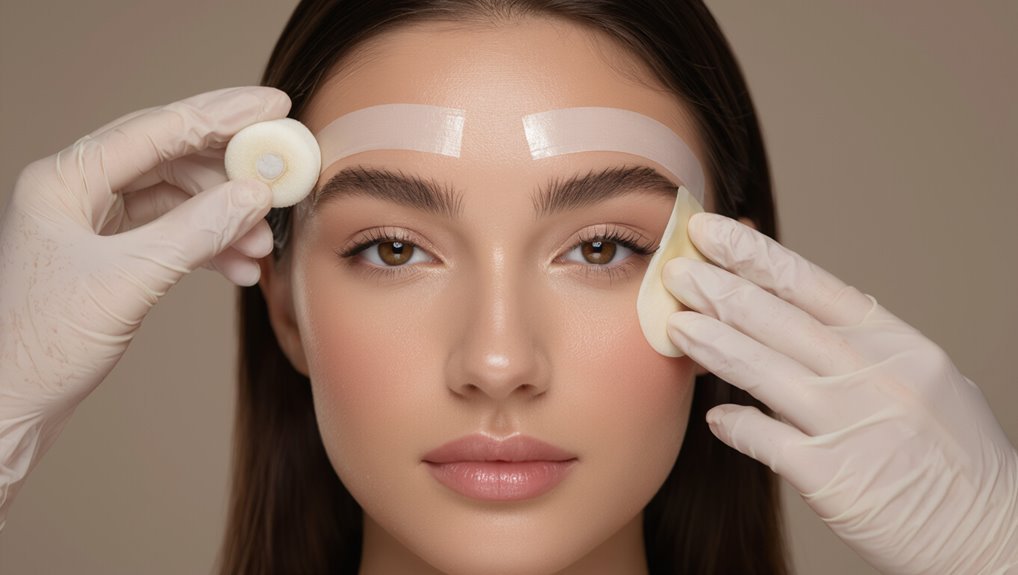
After choosing the right primer or barrier for your paint, pay close attention to hairlines, brows, and facial hair so your edges stay crisp and the paint doesn’t lift.
Tie back hair, use light adhesive or medical tape for stray hairs, and apply a thin primer around brows.
Trim or slick facial hair, and blend edges with a damp sponge for seamless adhesion.
Application Techniques to Prevent Cracking
Start by picking a long-wear formula that suits your skin and the design you want.
Thin and warm your paints so they spread smoothly, then apply thin, even layers, letting each one fully dry before adding the next.
Use blending or patting techniques as appropriate and finish by feathering and sealing edges to stop peeling and cracking.
Step 1 Choosing the right product for long wear
When you want face paint that won’t crack, pick formulas made for long wear—cream-to-powder, alcohol-activated, or professional water-activated paints are your best bets because they flex with skin and resist drying out.
Choose reputable brands, check ingredient lists for humectants and flexible binders, and opt for highly pigmented, blendable formulations so you need fewer layers and achieve durable coverage without stiffness.
Step 2 Proper thinning, mixing, and warming of product
Choosing the right long-wear paint only gets you partway; how you thin, mix, and warm it will determine whether it stays flexible on skin.
Add recommended reducer or glycerin sparingly to achieve flow without over‑diluting. Mix thoroughly for uniform elasticity.
Warm jars in your hands or with a low‑heat source to reduce stiffness before application.
Test a small patch to confirm consistency and comfort.
Step 3 Thin, even layers: how many and how long to dry between layers
Anyone can prevent cracking by applying thin, even layers instead of a single heavy coat; aim for 2–4 light passes, letting each layer set until tacky but not fully hard so the next one bonds without dragging.
Let tackiness take 30–60 seconds depending on product and humidity.
Paint thinly, watching edges for buildup, and stop when opacity is reached to avoid stiffness and cracking.
Step 4 Blending vs. patting: techniques to minimize cracking
Because face paint dries into a fragile film, how you move your brush or sponge matters—blend with gentle, short strokes or pat with a stippling motion rather than dragging heavy passes that stretch the paint.
You’ll preserve elasticity by working wet edges into each other, using a damp sponge for gradients, and tapping to build opacity.
Let layers set slightly between passes to avoid lifting.
Step 5 Edge sealing and feathering to prevent peeling
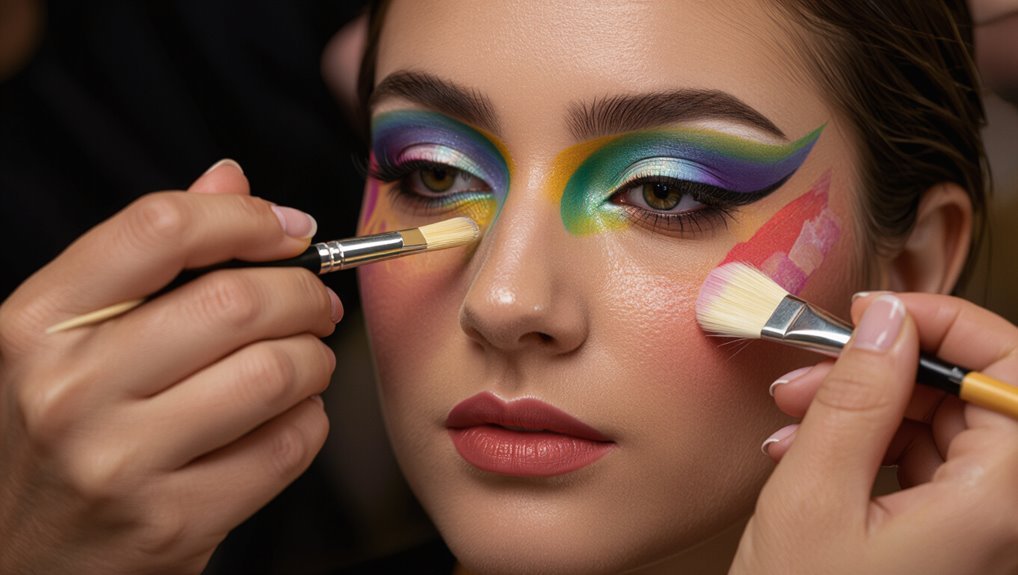
Seal and feather the paint’s edges to keep them from lifting and creating visible chips.
Use a damp sponge or soft brush to gently blur harsh lines, tapering color into skin.
Lightly apply translucent setting powder along seams, then mist with setting spray.
Press edges with a clean fingertip to bond layers.
Recheck after drying and touch up any tiny gaps for a seamless, long-lasting finish.
Setting and Sealing for All-Day Wear
After you finish painting, you’ll want to set and seal strategically to lock in color and prevent cracking.
Use translucent or color-matched powders (or baking for heavier cream work), then mist with setting sprays or fixatives and apply waterproof or alcohol-activated sealers on high-movement zones.
If you’re at a long event, carry a small powder, a travel spray, and a gentle touch to re-seal without smudging the design.
Powder setting methods: translucent, color-matched, and when to bake
Powder setting is one of the fastest ways to lock face paint and prevent cracking. Choosing between translucent, color-matched, or baking depends on your design, skin type, and how long you need it to last.
Use translucent for light, invisible hold. Color-matched powders deepen hues and hide imperfections. “Baking” with a heavy powder and brief heat seals for extended wear, especially on oily skin.
Setting sprays and fixatives: types and application tips
When you want your face paint to survive sweat, movement, and long hours, setting sprays and fixatives give you that final protective layer—choose a light mist for flexible wear, a stronger polymer fixative for stage work, or an alcohol-based spray when you need extra resistance to humidity.
Spray evenly from 8–12 inches, wait between coats, avoid over-saturating, and test on skin for sensitivity before full application.
Using waterproof / alcohol-activated sealers for high-movement areas
Setting sprays give a flexible protective layer, but for areas that stretch, sweat, or rub—like around the mouth, eyes, and jaw—you’ll want a waterproof or alcohol-activated sealer to lock paint in place.
Apply thin, even layers, letting each dry fully. These sealers resist moisture and friction better than water-based fixatives, so you’ll minimize cracking and smudging on high-movement zones.
How to re-seal during long events without ruining the design
Because you’ll likely be moving, sweating, and touching your face over the course of an event, you’ll want a gentle re-sealing routine that refreshes hold without smudging or building texture.
Blot excess oil with blotting papers, mist a light setting spray from arm’s length, then press a thin layer of translucent powder with a dry sponge on high-friction spots.
Repeat sparingly.
Product Recommendations and Combinations
You’ll get the best longevity by choosing the right paint type—cream, alcohol-activated, or hybrid—each has strengths for different looks and wear.
Pair a compatible primer with finely milled powders and a quality setting spray to lock layers without caking.
Use the right brushes, sponges, and tools to apply thin, even coats and minimize cracking.
Best face paints for durability (cream, alcohol-activated, hybrid)
When you need makeup that stays flexible and crack-free, choose paints designed for durability: cream formulas for elasticity, alcohol-activated paints for long-lasting wear, and hybrids that blend the best of both worlds.
You’ll pick based on skin type, event length, and removal needs.
- Cream: flexible, blendable
- Alcohol-activated: water-resistant, enduring
- Hybrid: balanced performance
Recommended primers, powders, and setting sprays that work together
If you want face paint to stay flexible and crack-free, start with a primer that matches your paint type—silicone-based primers smooth skin and boost cream paints’ slip, while water-based or alcohol-friendly primers help alcohol-activated and hybrid paints adhere better. Use a light translucent powder between layers and finish with a flexible setting spray for all-day wear.
| Layer | Purpose |
|---|---|
| Primer | Adhesion |
| Powder | Absorb oil |
| Spray | Seal & flex |
Tools and brushes that improve application and reduce cracking
One good set of tools makes cracking far less likely, so pick brushes and sponges that give smooth, even coverage and let you control thin, flexible layers.
You’ll want durable, soft brushes and porous sponges to press product into skin, not pile it on.
- Soft synthetic detail brushes for precise thin lines
- Dense stippling sponge for even base
- Wide fluffy brush for gentle blending
Troubleshooting Common Problems and Quick Fixes
If you spot small cracks or flaking during the day, you can quickly smooth and patch them without redoing the whole look.
For larger cracked areas I’ll walk you through ways to repair or camouflage damage so you don’t have to start over.
And if paint is separating or pilling on oily skin, you’ll learn targeted fixes to absorb oil and reblend the product.
Fixing small cracks and flaking during the day: step-by-step
When you spot small cracks or flaking in your face paint during the day, act quickly to prevent them from spreading and to restore a smooth finish.
Gently blot loose flakes with a soft brush, mist a tiny amount of setting spray, then use a damp sponge to press paint back into place.
Lightly pat translucent powder and reapply minimal color where needed.
Repairing large cracking areas without starting over
Spot large cracked sections quickly and tackle them without stripping your whole design; you can salvage most areas by softening the paint, grooming loose edges, and rebuilding layers selectively.
Dampen a sponge with setting spray, press gently to rehydrate crusts, trim lifted flakes with sanitized tweezers, then fill gaps with thin layers of matching paint.
Finish with a light seal to blend texture.
What to do when paint separates or pills on oily skin
Because oily skin breaks down water- and cream-based paints, you’ll often see the color separate into greasy beads or pill up into tiny flakes during application; act quickly to rescue the design.
Blot excess oil with a blotting sheet, dust a light translucent powder, and reapply thin layers of setting powder between coats.
Use alcohol-based products sparingly and seal with setting spray.
Mistakes to Avoid (Common Pitfalls That Cause Cracking)
Don’t overload your brush or sponge—thick globs crack just as easily as layers that are too thin.
Make sure you use a compatible primer and fresh, properly stored paints, and give each layer enough time to dry in the right conditions.
Ignoring these basics or mixing expired products is what usually causes cracking, so avoid cutting corners.
Overloading product vs. too thin layers
When you’re applying face paint, finding the sweet spot between overloading the brush and laying on layers that are too thin matters more than you might think; each extreme invites cracking in different ways.
If you load too much, paint pools, shrinks, and flakes. If you go too thin, coverage’s uneven and fragile.
Build even, moderate layers, letting each dry before adding the next.
Skipping primer or using incompatible products
If you skip a primer or mix products that weren’t designed to work together, you’ll often end up with paint that lifts, beads, or cracks as it dries.
Use a skin-safe primer to create a smooth, compatible base. Match brands or product lines when possible, and avoid layering oil-based over water-based paints.
Patch-test combinations to prevent separation and failure.
Ignoring drying times and environmental factors
Because paint needs time and the right conditions to set, rushing the process or ignoring humidity and temperature almost guarantees cracking.
Let paint dry between layers, work in a shaded, cool area, and avoid applying sealing products until fully set.
If it’s humid or windy, pause or move indoors.
Planning for conditions prevents premature drying, flaking, and patchy designs.
Using expired or improperly stored paints
One common mistake is using paints that are past their prime or haven’t been stored properly, and that’ll almost always lead to cracking.
Check expiration dates, smell, and texture before use. Dried-out cakes, separated liquids, or funky odors mean toss.
Store unopened items cool, dry, away from sunlight; seal containers tightly. Proper storage keeps flexibility and prevents flaking.
Best Practices for Different Scenarios
For long events and festivals, you’ll want stamina-focused layering and easy touch-up options to keep paint intact all day.
If you’re performing intense movement or emotions, use flexible, sweat-resistant products and secure edges to prevent cracking.
For humid or rainy conditions and for kids with lots of facial expression, pick quick-drying, water-resistant formulas and apply thin, gentle layers that move with the skin.
Long events and festivals: stamina-focused strategies
When you’ve got a full day of booths, parades, or performances ahead, plan for endurance instead of quick fixes: choose long-wear paints and sealants, build thin layered designs that won’t stiffen and crack, and schedule discreet touch-up breaks so your look stays fresh without constant reworking.
Pack blotting papers, compact sealed powders, a tiny brush, and travel-size setting spray; hydrate and avoid greasy sunscreens.
High-emotion or high-movement performances (actors, dancers)
Because high-energy performances push your makeup through sweat, rapid facial movement, and quick costume changes, you’ll need products and techniques that move with your skin instead of becoming a rigid mask.
Use flexible, cream-based paints, thin layered application, and elastic setting sprays.
Blend at joints (lips, eyes, smile lines), allow full drying between layers, and carry quick-fix cream for touchups during breaks.
Hot, humid, or rainy conditions: special precautions
If humidity’s high or rain’s likely, plan for moisture and movement by choosing breathable, sweat-resistant products and sealing them well.
Carry blotting papers and a small touch-up kit so you can manage shine and smudges between performances.
Apply thin layers, let each dry fully, and use waterproof setting sprays.
Avoid heavy creams that trap sweat, and test products beforehand for smudge resistance.
Children and facial expressions: gentle, durable application tips
Moisture and movement affect adults and kids differently, so you’ll want a gentler approach for little faces that still holds up to smiles, lip-licking, and nonstop play.
Use thin layers of hypoallergenic paint, set each layer lightly with translucent powder, and avoid tight designs over the mouth or eyes.
Finish with a skin-safe setting spray and remind kids to pat, not rub.
Aftercare and Removal Without Damaging Skin
When it’s time to remove paint, start by using the method that matches the product—oil-based removers for heavy or prosthetic paints, gentle micellar water or baby oil for water-based colors.
After you’ve cleaned your skin, apply a fragrance-free moisturizer or aloe gel to soothe and restore the barrier, and watch for any redness or lingering irritation.
Rinse and wash your brushes, sponges, and lids thoroughly before storing them dry to keep tools and leftover paints sanitary and usable.
Safe removal methods by paint type
Because different face paints react to different cleaners, you’ll want to match your removal method to the paint type to avoid irritation or residue.
Use gentle techniques and test a small area first.
- Water-based: warm water and mild cleanser, gentle wipes.
- Alcohol-based: oil cleanser or micellar oil to dissolve pigments.
- Grease/cream: balm or coconut oil, then rinse thoroughly.
Post-removal skincare to prevent irritation and dryness
After you’ve removed paint according to its type and rinsed your skin, soothe and restore the barrier to prevent irritation and tightness.
Pat skin dry, apply a gentle, fragrance-free moisturizer or barrier cream while damp, and use a calming serum with niacinamide or panthenol if needed.
Avoid harsh exfoliants for 24–48 hours, skip heavy makeup, and drink water to support recovery.
Cleaning and storing tools and leftover products
Gather your brushes, sponges, and leftover paints and clean them promptly to prevent buildup and bacteria growth.
Rinse brushes with gentle soap and lukewarm water, squeeze until water runs clear, reshape bristles, and air-dry flat.
Sanitize sponges with a mild disinfectant, let them fully dry.
Seal leftover paints in airtight containers, label with date, and store in a cool, dark place.
FAQ Common Questions About Face Paint Longevity
You’ve probably got questions about how long face paint should last, whether you can mix brands, and if sunscreen plays nice with your look.
You’ll also want tips for keeping fine details from smudging and recommendations for long-wearing products that won’t irritate sensitive skin.
Below are clear, practical answers to those common longevity concerns.
How long should properly applied face paint last?
If you apply face paint correctly and follow care tips, it should stay intact for an entire event—typically 4–8 hours for water-based paints and up to 12+ hours for professional body paints or sealant-treated looks.
How long it lasts depends on skin type, activity level, heat and humidity, and proper priming and sealing.
Touch-ups can extend wear during long events.
Can I mix different brands/types of face paint safely?
Can you mix different brands or types of face paint safely? You can, but proceed cautiously.
Test compatibility on a small patch first—different formulas (water-based, cream, alcohol-activated) dry, flex, and adhere differently.
Mixing similar water-based brands is usually fine; avoid blending alcohol-activated with water-based.
If cracking or separation appears in the patch, don’t use the mix on your face.
Is sunscreen compatible with face paint, and how to apply both?
Wondering whether sunscreen and face paint play nicely together? Yes—choose a physical (mineral) sunscreen with zinc oxide or titanium dioxide beneath water- or oil-based paints.
Apply sunscreen first, let it fully absorb and dry, then use a thin primer or setting spray if desired.
Avoid chemical sunscreens that can react with pigments, and patch-test to prevent irritation or color changes.
How can I make delicate details last longer without smudging?
After you’ve applied sunscreen and base layers, protect your fine lines with a few smart steps so they don’t blur or smudge.
Use a fast-drying, fine-tipped brush and thin paint layers; let each layer fully set.
Lightly dust translucent setting powder, then mist with a makeup setting spray.
Avoid touching painted areas and keep hair secured away from details.
What products are safe for sensitive skin and still long-wearing?
Which products will give you long wear without irritating your skin?
Choose hypoallergenic, fragrance-free cream paints and mineral-based powders labeled non-comedogenic. Test a small patch first.
Use silicone-based, sensitive-skin primers and setting sprays with minimal ingredients to lock color.
Avoid alcohol-heavy formulas and strong preservatives.
Remove gently with oil cleanser or micellar water to prevent irritation and prolong wear.
