
How to Prevent Acrylic Paint From Peeling for a Long-Lasting Finish
You can prevent acrylic paint from peeling by preparing the surface well: clean, degrease, sand to a dull profile, and fill cracks. Use compatible primer and paint, apply thin even coats, and allow proper dry and cure times between layers. Control temperature and humidity, ventilate, and seal with a compatible topcoat—consider UV protection for exteriors. Inspect and touch up minor flaws early. Follow these steps and you’ll get a durable finish; keep going to learn the detailed how-to.
Quick Answer How to Prevent Acrylic Paint from Peeling
Want a quick fix? Start by cleaning and sanding the surface.
Use a quality primer, apply thin even coats of acrylic, and seal when fully dry.
Those steps will prevent most peeling and give you long-lasting results.
One-sentence solution
Prep surfaces, use a suitable primer, apply thin even coats of high-quality acrylic paint, let each layer fully dry, and seal with a compatible topcoat to prevent peeling.
To stop peeling, you should clean, sand, and degrease surfaces, choose the right primer and paint for the substrate, avoid heavy coats, control humidity and temperature while drying, and use a proper sealer for long-term adhesion.
Summary of the most effective preventive steps
If you want paint that stays put, start by thoroughly cleaning, sanding, and degreasing the surface.
Then prime with a product matched to the substrate.
Apply thin, even coats of high‑quality acrylic, allowing full dry time between layers.
Control temperature and humidity while curing, and finish with a compatible sealer to lock in adhesion.
- Prepare surface meticulously.
- Use proper primer.
- Apply thin coats, wait to dry.
- Seal and cure under recommended conditions.
Basic Understanding What Causes Acrylic Paint to Peel?
To stop acrylic paint from peeling, you need to know what causes it: chemical breakdown or physical stress can weaken the film.
Environmental factors like moisture, extreme temperatures, and UV exposure speed deterioration.
Also check the surface—contamination, poor adhesion, or incompatible substrates are common culprits.
Chemical and physical reasons for peeling
While acrylic paint seems simple—a polymer suspended in pigment—it can fail for clear chemical and physical reasons you can understand and control.
Poor adhesion occurs when surfaces are greasy, dusty, or incompatible (like glossy plastics) and when primers or binders are weak.
Chemical incompatibility, solvent attack, or improper curing cause breakdown.
Mechanical stresses—flexing, impact, or thick, brittle layers—promote cracking and eventual peeling.
Environmental factors (moisture, temperature, UV)
Three main environmental forces—moisture, temperature swings, and UV exposure—work together to weaken acrylic paint and make it peel.
You’ll see moisture swell fibers and lift films, freeze-thaw cycles crack binders, and heat expand substrates.
UV breaks polymer chains, causing chalking and loss of flexibility.
To prevent peeling, control humidity, avoid extreme temperature changes, and use UV-resistant coatings and primers.
Surface-related causes (contamination, poor adhesion, incompatible substrates)
Surface problems are among the most common reasons acrylic paint peels because the paint needs a clean, compatible surface to grip—contaminants like grease, dust, or old flaking coatings prevent adhesion.
Improper surface preparation leaves slick or powdery layers, and some substrates (like certain plastics or glossy metal) won’t bond with standard acrylics without a proper primer.
You should clean, sand, and use the right primer for lasting adhesion.
Preparation Choosing the Right Materials and Surface Prep
Before you paint, choose materials that work together—compatible acrylic paint, the right primer, and a sealer—to prevent adhesion problems.
Check the surface (wood, metal, drywall, plastic, or old paint), clean contaminants with degreasers, sand for tooth, and remove loose flakes.
Use a primer whenever the substrate is porous, stained, or previously painted with incompatible coatings, selecting one formulated for your material and the acrylic topcoat.
Selecting compatible paint, primer, and sealers
When you pick paint, primer, and sealer that are chemically compatible and suited to your substrate, you dramatically cut the risk of peeling and adhesion problems later on.
Match oil- or water-based products, use primers formulated for your paint type, and choose sealers compatible with both.
Follow manufacturer recommendations, test a small area, and let each coat cure fully before applying the next.
Assessing and preparing common surfaces (wood, metal, drywall, plastic, previously painted surfaces)
Start by identifying the material you’re working with—wood, metal, drywall, plastic, or an existing paint layer—so you can choose the right cleaning, sanding, and primer steps for reliable adhesion.
Then assess condition and porosity to pick compatible primer and paint. Follow material-specific prep to prevent peeling:
- Wood: fill cracks, stabilize grain.
- Metal: remove rust, use metal primer.
- Drywall: skim, use drywall primer.
- Plastic/old paint: test adhesion, use specialty primer.
Cleaning methods: degreasing, sanding, and removing contaminants
Now that you’ve identified the surface and its condition, focus on cleaning: degreasing, sanding, and removing contaminants set the foundation for adhesion.
- Use a mild degreaser or trisodium phosphate substitute to remove oils and grime.
- Sand to dull glossy surfaces and feather edges of flaking paint.
- Wipe with clean, lint-free cloths or tack rags.
- Remove rust, mold, and loose debris before painting.
When to use a primer and how to choose the right one
If your surface is porous, stained, previously painted with oil-based products, or prone to rust or tannin bleed-through, you should prime before applying acrylic paint.
Choose a primer matched to substrate: masonry primer for concrete, metal primer for steel, oil-adhesion or shellac primer for glossy or stained areas, and a universal acrylic primer for drywall or wood.
Apply per instructions for adhesion.
Step-by-Step Application Process to Prevent Peeling
Before you paint, set up a stable workspace with the right temperature, humidity, and ventilation so coatings cure properly.
Repair and sand the surface, then apply the correct primer—observing dry times and coat count—before mixing and thinning your acrylic to manufacturer specs.
Use appropriate tools, control coat thickness, and wait the recommended drying intervals between layers to prevent peeling.
Step 1 Environmental and workspace setup (temperature, humidity, ventilation)
While you set up your workspace, control of temperature, humidity, and airflow is the single most important step to prevent acrylic paint from peeling.
Set conditions before painting: maintain 65–75°F, keep relative humidity 40–50%, guarantee gentle cross-ventilation, and avoid direct drafts.
Monitor with simple tools and pause if conditions fluctuate.
- Temperature
- Humidity
- Ventilation
- Monitoring
Step 2 Surface repair and smoothing (filling cracks, sanding grades)
Prep the surface carefully so your paint has a sound foundation: remove loose material, fill cracks and gouges with an appropriate filler, and sand changes smooth to a uniform profile.
- Choose compatible filler and apply in thin layers.
- Sand progressively: coarse to fine for even feathering.
- Remove dust with tack cloth or vacuum.
- Check for hollows and repeat fill/sand until surface reads consistent and solid.
Step 3 Priming: techniques, dry times, and coat count
Since a proper primer locks in adhesion and evens out porosity, you should apply it carefully—select a primer compatible with both your substrate and acrylic paint, follow the manufacturer’s recommended dry times, and plan for 1–3 thin coats rather than one heavy coat to prevent peeling.
Use light sanding between coats, apply with a brush, roller, or sprayer for even coverage, and allow full cure before painting.
Step 4 Proper paint mixing and thinning guidelines
Before you start rolling or brushing, mix and thin your acrylics exactly as the label suggests so the paint flows, levels, and bonds without sagging or lifting.
Stir thoroughly to reincorporate pigments and binders; avoid overmixing. Thin only with recommended mediums or water in small increments.
Test consistency on a scrap, ensuring adhesion and coverage remain strong before you proceed to full application.
Step 5 Applying acrylic paint: tools, coat thickness, and drying intervals
Gather the right tools and control each coat’s thickness and drying time to guarantee durable adhesion; use quality brushes or rollers suited to your paint’s viscosity, apply thin, even layers, and allow each coat to dry fully to the manufacturer’s recommended interval before adding the next.
Work methodically, sanding lightly between coats if needed, avoid overloading, and inspect for consistent coverage before proceeding.
Step 6 Curing time vs drying time: what to wait for before handling or recoating
1 key distinction to keep in mind is that drying and curing aren’t the same: drying means the surface feels dry to touch, while curing is the chemical process that gives paint its full hardness and adhesion.
Wait recommended recoat times on the label, handle gently after surface dry, and avoid heavy use until full cure (often days to weeks).
Temperature and humidity affect cure speed.
Step 7 Sealing and topcoats: types, application, and compatibility
Choose the right sealer and apply it correctly to lock your acrylic paint in place and prevent peeling.
Pick compatible topcoats—waterbased for waterbased paint, solvent for specialty finishes.
Test adhesion on scrap, apply thin even coats, sand lightly between coats if instructed, and allow full cure.
Avoid oil-based varnish over fresh acrylics; follow manufacturer drying and recoat times for durable protection.
Troubleshooting and Fixes for Existing Peeling
Start by evaluating how much paint is lifting and what’s causing it so you know whether a quick spot repair will do or if you need a full redo.
For small areas you’ll sand, feather the edges, prime, and recoat; for large failures you’ll strip, fully prep the surface, and repaint.
If the damage is extensive, recurring, or caused by structural or moisture issues, call a professional.
Identifying the extent and cause of peeling
How bad is the peeling, and what’s causing it? You’ll inspect scale, adhesion, substrate, and environment to diagnose.
Check for moisture, flaking beyond surface, chalky powder, or poor adhesion to bare material. Note timing after painting and exposure. Then decide on targeted repair or full strip.
- Moisture signs
- Adhesion extent
- Substrate condition
- Environmental triggers
Small-scale repair: spot-sanding, feathering, and recoat steps
Begin by isolating the peeled area and removing any loose paint with a putty knife or stiff brush so you’re working with a stable edge; then sand the surrounding paint back to a feathered junction about 1–2 inches beyond the damage to promote proper adhesion for the new coat.
Clean dust, apply primer to bare spots, allow to dry, lightly scuff surrounding paint, then recoat with thin, even layers, sanding between coats as needed.
Large-scale repair: stripping, full re-prep, and repainting process
If spot repairs don’t hold or the peeling covers whole walls or trim, you’ll need to strip back to sound substrate and re-prep the surface before repainting.
Remove loose paint with scrapers or chemical strippers, sand to smooth edges, clean thoroughly, repair damaged substrate, prime with a suitable bonding primer, and apply high-quality acrylic paint in correct conditions.
Allow proper cure between coats.
When to call a professional
When extensive peeling, persistent moisture, or recurring failures keep coming back despite your repairs, it’s time to call a professional.
Get an assessment for hidden issues like trapped moisture, structural decay, or substrate incompatibility.
Choose someone licensed with exterior and paint restoration experience.
Ask for written diagnostics, recommended fixes, timeline, and warranty.
That prevents wasted effort and guarantees durable results.
Comparative Guide Primers, Sealers, and Topcoats
When you’re choosing a primer, sealer, or topcoat to stop acrylic paint from peeling, it’s helpful to weigh water-based versus oil-based primers and compare varnish, polyurethane, and acrylic sealers for durability and UV resistance. Below is a quick comparison to help you pick the right system for your surface and exposure. Use the table to match performance needs to product types.
| Product Type | Strengths | Trade-offs |
|---|---|---|
| Water-based primer | Quick dry, low odor, flexible | Less stain-blocking, lower adhesion on glossy surfaces |
| Oil-based primer | Excellent adhesion and stain blocking | Longer cure, stronger odor, less flexible |
| Varnish / Polyurethane / Acrylic sealer | Varnish: warm finish; Polyurethane: high abrasion resistance; Acrylic sealer: UV resistance, flexible | Varnish may yellow; Polyurethane can amber (oil-based); Acrylic sealers may be less abrasion-resistant than polyurethane |
Water-based vs oil-based primers: pros and cons
Because primers form the foundation for any paint job, choosing between water-based and oil-based options matters for adhesion, durability, and cleanup.
Water-based primers dry fast, clean with soap and water, resist yellowing, and work well on porous surfaces.
Oil-based primers offer superior stain blocking and longer open time for slick substrates but need solvents, longer curing, and tougher cleanup.
Varnish vs polyurethane vs acrylic sealers: durability and UV resistance
After you pick the right primer, you’ll need to choose the right topcoat to protect your acrylic paint; varnishes, polyurethanes, and acrylic sealers each offer different levels of durability and UV protection.
Choose sparing glossy polyurethane for heavy wear and strong UV defense, flexible acrylic sealers for exterior fading resistance, and traditional varnish when clarity and moderate protection matter—always match finish to surface and exposure.
Common Mistakes That Lead to Peeling (and How to Avoid Them)
You’ll often see peeling when you skip primer, use the wrong one, or pair incompatible paint systems and cheap materials.
Painting in high humidity or extreme temperatures, applying coats too thick or too fast, and failing to properly clean or sand the surface all make adhesion worse.
Next, we’ll cover each mistake and the simple steps you can take to avoid them.
Skipping primer or using the wrong primer
If you skip primer or pick the wrong one, your acrylic paint won’t adhere properly and is much more likely to peel or flake over time.
Always choose a primer suited to the surface—wood, metal, plastic or previously painted areas—and make certain it’s compatible with acrylics.
Apply thin, even coats, let each cure fully, and sand lightly between coats for a strong, lasting bond.
Painting in unsuitable conditions (humidity/temperature)
When you paint in high humidity or extreme temperatures, the acrylic can’t cure properly and will be far more likely to wrinkle, tack up, or peel later on.
You should wait for moderate, dry conditions—typically 50–70°F (10–21°C) and low humidity—use climate-controlled spaces or a fan, and follow manufacturer drying-time recommendations to guarantee complete cure and long-lasting adhesion.
Applying coats too thick or too quickly
Apply acrylic in thin, even layers and resist the urge to rush—thick or wet-on-wet coats trap moisture and dry unevenly, which causes cracking, wrinkling, and eventual peeling.
Wait recommended drying times between coats, follow manufacturer guidelines, and use light, consistent brush or roller strokes.
Thinner layers bond better, cure faster, and produce a more flexible, durable finish that resists flaking.
Failing to clean or sand the surface properly
Skipping proper cleaning and sanding is one of the quickest ways to doom your paint job—dirt, grease, and loose flakes prevent acrylic from bonding and create hidden weak spots that lead to peeling.
Always degrease, remove loose paint, and sand to a dull, consistent profile. Wipe away dust, use tack cloth, and prime porous or repaired areas so new paint adheres firmly.
Using incompatible paint systems or cheap materials
Although the surface might look fine, using mismatched paint systems or cheap primers and additives will almost always shorten the life of your finish—acrylics need compatible formulation and quality undercoats to bond and flex together.
Check labels for compatibility, stick to reputable brands, and avoid solvent-based layers under waterborne acrylics.
Test a small area, follow manufacturer recommendations, and invest in proper primers and sealers to prevent peeling.
Best Practices and Long-Term Maintenance for a Lasting Finish
You should set a routine inspection and touch-up schedule to catch chips and lifting before they spread.
Clean painted surfaces gently with pH-neutral cleaners and soft cloths to avoid degrading the finish.
Use UV blockers, moisture barriers, and smart placement to shield paint from sun and dampness for a longer-lasting result.
Routine inspection and touch-up schedule
When you set a simple routine for inspecting painted surfaces, you catch small problems before they escalate into peeling, bubbling, or flaking.
Check quarterly, note damage, and plan touch-ups. Prioritize edges and high-traffic spots. Keep a small repair kit handy and schedule annual review.
- Inspect corners and seams.
- Record and photograph issues.
- Touch up within weeks.
- Reassess yearly.
Proper cleaning methods to avoid degrading the paint
Routine inspections and timely touch-ups will keep minor flaws from worsening, but how you clean painted surfaces between checks makes a big difference in whether that effort lasts.
Use a soft cloth or sponge with mild, pH-neutral soap and lukewarm water. Rinse thoroughly, blot dry, avoid abrasive pads or solvents, and test cleaners on a hidden spot before full application.
Protective measures: UV blockers, moisture barriers, and placement considerations
Because sunlight, humidity, and placement are the biggest long-term threats to acrylic paint, you should layer protection: apply UV-blocking varnishes or additives, install moisture barriers in damp areas, and position painted surfaces away from direct sun and splash zones.
Check and reapply protective coatings every few years, seal edges, use breathable barriers to prevent trapped moisture, and favor sheltered locations for vulnerable pieces.
Materials and Tool Checklist Before You Start
Before you lay brush to canvas, gather the right materials and tools so you won’t stop mid-job: quality acrylic paint, a compatible primer, a soluble or acrylic medium, clean brushes and rollers, sandpaper (fine and extra-fine), tack cloths, painter’s tape, drop cloths, and a clear sealer appropriate for your surface.
Follow this checklist:
- Surface prep tools (sandpaper, tack cloth)
- Primers and mediums
- Brushes, rollers, tape
- Sealer and protective gear
FAQ Common Questions About Acrylic Paint Peeling
You’ll want clear answers to common concerns like how long acrylic needs to cure, whether you can repaint over peeling layers, and if sanding alone will fix adhesion.
Also consider differences between exterior and interior acrylics and how temperature and humidity change bonding.
Keep these questions in mind before you start repairs or new applications.
How long should acrylic paint cure before it’s considered fully set?
How long does acrylic paint need to cure before it’s truly set?
You’ll get surface-dry paint in minutes to an hour, tack-free in a day, but full cure takes 2–4 weeks depending on thickness, humidity, and temperature.
Wait that time before heavy handling, washing, or applying final varnish to prevent imprinting, sagging, or premature peeling.
Can I repaint over peeling acrylic without stripping the old paint?
Can you repaint over peeling acrylic without stripping the old paint? You can in minor cases: remove loose flakes, clean grease and dust, apply a compatible primer, then repaint.
But if large areas lift or adhesion fails, repainting over unstable layers won’t last. For best longevity, assess damage first; stabilize or remove compromised sections to guarantee new paint bonds properly and resists future peeling.
Will sanding alone fix adhesion problems?
If you’ve cleared loose flakes and primed where needed, you might wonder whether sanding by itself will solve adhesion problems.
Sanding improves surface profile and removes glossy sheen, but it rarely fixes underlying issues like contamination, moisture, or incompatible layers.
Combine sanding with proper cleaning, primer selection, and moisture control to reliably restore adhesion—don’t rely on sanding alone.
Is exterior acrylic paint different in preparation from interior paint?
Wondering whether you need to prep exterior acrylic differently than interior? Yes.
Exterior surfaces demand tougher prep: remove dirt, mildew, flaking, and chalking; use exterior-grade primer for porous or previously painted surfaces; caulk gaps and guarantee good adhesion on trim and siding.
Interior prep focuses more on cleaning and light sanding.
Match primer and paint to environment for durable adhesion.
How do humidity and temperature specifically affect adhesion?
Because acrylics rely on water evaporation to form a continuous film, humidity and temperature directly control how well the paint adheres: high humidity slows drying, letting water sit on the surface and weakening bonding, while low humidity can make the paint skin over too fast and trap solvents underneath, causing poor cohesion and eventual peeling.
You should paint within manufacturer temperature/humidity ranges, use heaters or dehumidifiers, and allow longer cure times.
Visual Guide Key Steps and Common Problems
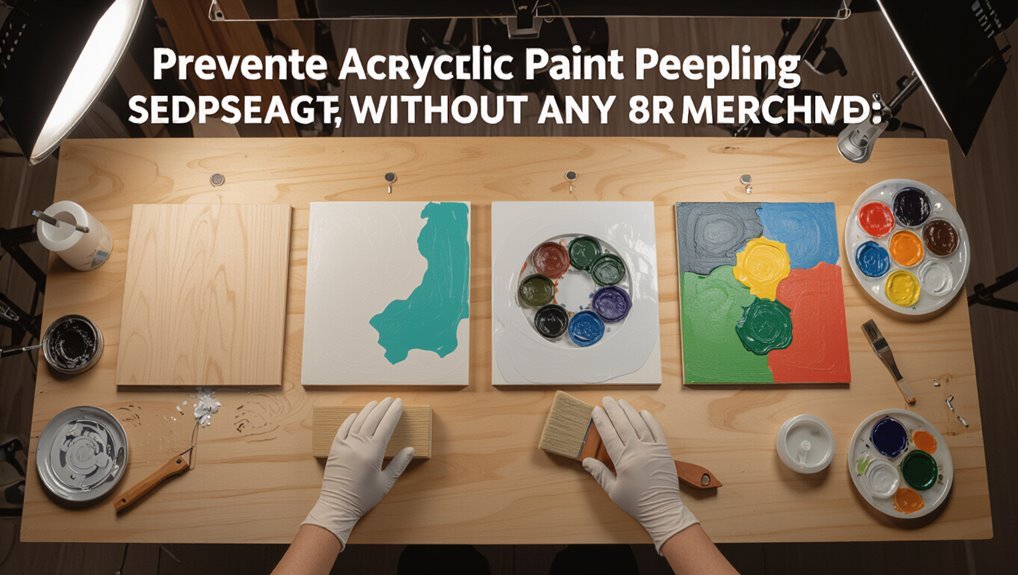
When you follow a clear visual guide, you’ll see the key steps at a glance and spot common problems before they ruin your finish.
Inspect surface prep, primer, drying times, and application technique. Look for bubbling, cracking, uneven coverage, or dust specks.
Check prep, primer, drying, and technique—watch for bubbles, cracks, uneven coverage, or dust specks.
Address issues: sand, re-prime, adjust humidity or temperature, and apply thin, even coats.
Photograph stages for reference.
