
How to Remove Peeling Deck Paint Without Destroying the Wood
You can remove peeling deck paint without ruining the wood by using gentle, tested methods: scrape loose flakes, test a low-pressure washer (500–1200 PSI) at a safe distance, or use a biodegradable chemical stripper made for wood; finish with fine-grit sanding (120–150) along the grain and vacuum the dust. Wear PPE and always test a small area first to avoid gouges or chemical damage. Keep going and you’ll find step-by-step tips, tool lists, and prevention advice.
Quick Answer How to Remove Peeling Deck Paint Without Damaging the Wood
You can remove peeling deck paint without harming the wood by using gentle methods like chemical strippers, low-pressure power washing, or careful sanding.
If the peeling is limited and the structure is sound, you can handle it yourself with the right tools and safety gear; hire a pro if the deck has extensive damage, lead paint concerns, or structural issues.
Start with a small test area to confirm your method won’t gouge or discolor the wood.
One-sentence summary
Start by gently scraping and sanding away loose paint. Then clean the deck, spot-prime bare wood, and repaint with a quality exterior deck paint—this removes peeling without harming the wood when you use low-pressure methods and appropriate protective products.
For a concise plan on how to remove peeling deck paint, prepare the surface, use gentle tools, apply primer to exposed wood, and finish with durable topcoat.
When to DIY vs hire a pro
Wondering whether to tackle peeling deck paint yourself or call a pro?
If the job is small, paint’s only flaking, and you have basic tools and time, you can DIY.
Hire a pro if rot, structural damage, lead paint, steep safety risks, or tight timelines are involved.
Pros also guarantee proper prep, finishes, and warranty for larger or complex projects.
Basic Understanding Why Deck Paint Peels and Wood Risks
You’ll usually find paint peels when moisture, poor surface prep, or incompatible coatings break the bond between paint and wood.
Common removal methods like aggressive sanding, scraping, or harsh chemical strippers can gouge, thin, or chemically damage the underlying lumber.
Also consider that softwoods, treated lumber, hardwoods, and composites respond very differently to removal, so choose methods that match the material.
Causes of peeling paint (moisture, poor prep, incompatible coatings)
When paint peels from a deck, it’s usually because one or more basic protections failed: moisture got trapped in the wood, the surface wasn’t prepped correctly, or the new coating isn’t compatible with what’s already there.
You’ll see bubbling, flaking, or delamination when water swells fibers, dirt prevents adhesion, or oil- and water-based layers clash.
Fix causes before repainting.
How common removal methods can harm wood (sanding, scraping, chemical strippers)
Knowing why paint failed helps, but removing that loose finish can create new problems if you’re not careful.
Sanding can gouge or thin boards and raise grain; aggressive scraping chips edges and splinters; heat guns scorch or darken wood and release toxic fumes; harsh chemical strippers can penetrate, stain, or weaken fibers and contaminate soil.
Use gentle, controlled methods and test a small area first.
Wood types and their sensitivity (softwood vs hardwood, composite vs treated lumber)
Because different deck materials accept paint and react to removal very differently, you should match your repair method to the wood type. You’ll treat softwoods gently to avoid gouging, use balanced sanding on hardwoods, and avoid harsh strippers on composites or pressure-treated lumber. Choose products rated for each substrate and test a small area first.
| Material | Sensitivity | Recommended action |
|---|---|---|
| Softwood | High | Gentle sanding |
| Hardwood | Medium | Moderate abrasion |
| Composite | Low | Mild cleaners only |
Safety, Tools, and Materials Checklist
Before you start stripping paint, make sure you’ve got the right PPE (gloves, respirator, eye and ear protection) and a plan for disposing old paint chips and stripper residue safely.
Gather the tools you’ll use—scrapers, wire brushes, heat guns, orbital sanders, power washers, and chemical strippers—and know why each fits the job and the surface.
Have mild detergents, wood brighteners, and a chosen preservative on hand to clean and protect the wood immediately after paint removal.
Personal protective equipment (PPE) and disposal considerations
When you tackle peeling deck paint, protecting yourself and handling waste correctly are just as important as the removal method you choose; wear a respirator rated for paint particulates and vapors, chemical-resistant gloves, eye protection, and durable clothing to prevent inhalation, skin contact, and eye injury. Dispose of debris in sealed bags; follow local hazardous-waste rules.
| PPE | Disposal |
|---|---|
| Respirator | Seal bags |
| Gloves | Local rules |
Recommended tools and why (scrapers, heat guns, orbital sander, power washer, chemical strippers, wire brushes)
Now that you’ve prepared yourself and handled disposal correctly, it’s time to gather the right tools for stripping and restoring your deck.
Use metal or plastic scrapers for flakes, a heat gun on low to soften paint, and an orbital sander with fine grit to finish.
Power washers need low pressure and distance.
Choose chemical strippers labeled for wood and wire brushes for crevices.
Materials that protect the wood (mild detergents, wood brighteners, wood preservative options)
Because clean, bright, and protected wood lasts longer, stock up on a few key materials: a mild detergent for washing away dirt and mildew, a wood brightener to restore pH and color after stripping, and a preservative or water-repellent finish to seal and guard against rot and UV damage.
Use these:
- Powdered deck cleaner
- Oxygen bleach solution
- Oxalic acid brightener
- Penetrating wood preservative
- Water-repellent sealer
Step-by-Step Safe Method to Remove Peeling Deck Paint
Start by evaluating the deck and planning for weather and containment so you know the scope and safety needs.
Clean the surface to remove dirt and loose debris, then test a small patch with your chosen removal method.
Use gentle mechanical tools like hand scrapers and wire brushes, and if you use a heat gun, operate it carefully to soften paint without scorching the wood.
Step 1 Inspect and plan: assess extent, weather, and containment
Before you pick up a scraper, take time to inspect the whole deck so you know what you’re dealing: note how much paint is peeling, check for soft or rotted boards, and identify areas near plants, doorways, or water where containment will matter.
Plan around weather—pick dry, mild days—map containment (tarps, barriers), gather protective gear, and mark repair or replacement spots before starting.
Step 2 Clean the deck to remove dirt, mildew, and loose debris
Sweep and wash the deck to remove loose dirt, mildew, and any flaking paint so the surface is ready for scraping and repairs.
Use a stiff broom, garden hose, and a deck cleaner or mild detergent.
Scrub mildew with a brush and diluted bleach solution if needed, rinse thoroughly, and let the wood dry completely before you proceed to scraping or spot repairs.
Step 3 Test a small area with preferred removal method
Now that the deck is clean and dry, pick a small, inconspicuous patch—about a 1- to 2-foot square—where you’ll try your chosen removal method.
Apply your stripper or test your heat/chemical technique per instructions, wait the recommended time, then assess paint lift, wood condition, and finish compatibility.
Note results so you can adjust method, tools, or dwell time before proceeding.
Step 4 Gentle mechanical removal: hand scraping and wire brushing technique
Start scraping and brushing in short, controlled strokes to lift loose paint without gouging the wood.
Hold the scraper at a low angle, easing under flakes. Follow grain direction.
Use a stiff wire brush for remaining edges and crevices, not aggressive scrubbing.
Sweep debris frequently, inspect for soft spots, and stop where wood fibers resist to avoid sanding damage.
Step 5 Controlled use of heat: safe heat gun practices to loosen paint
After you’ve removed loose flakes with a scraper and wire brush, consider using a heat gun to soften stubborn paint that won’t lift by hand.
Hold the gun 6–8 inches away, move constantly, and avoid lingering to prevent scorching.
Peel softened paint with a putty knife, wear heat-resistant gloves and eye protection, and ventilate the area.
Test a small spot first.
Step 6 Chemical strippers: choosing a wood-safe stripper and neutralizing procedure
Because some patches of paint won’t budge with scraping or heat, you’ll want a chemical stripper that’s safe for wood and your health.
Choose a biodegradable, low-VOC product labeled for exterior wood.
Test a small area, follow dwell times, then gently remove softened paint with a plastic scraper.
Neutralize per manufacturer instructions—usually rinse or apply recommended neutralizer—then let the wood dry completely.
Step 7 Low-pressure power washing: correct pressure, nozzle, and distance to avoid wood fiber tear
When you use a pressure washer to remove remaining paint, keep the PSI low (generally 500–800 for softwoods, up to 1200 for hardwoods).
Use a 40° or 25° fan nozzle, hold the wand at a 45° angle, and stay 12–18 inches from the surface.
Move steadily, overlap passes slightly, and test a small area to confirm you’re stripping paint without tearing wood fibers.
Step 8 Feather-sanding for smooth transitions without removing too much wood
Now that you’ve removed most of the loose paint with low-pressure washing, it’s time to feather-sand the edges so repairs blend without digging into the wood.
Use fine-grit (120–150) sandpaper or a sanding block, working with the grain and light pressure. Focus only on raised edges; stop when shifts feel smooth.
Vacuum and tack-cloth dust before priming or filling.
Step 9 Final cleaning and wood brightening to restore pH and appearance
Finish the prep by giving the deck a final clean and brightening treatment to neutralize any remaining alkalinity, lift embedded dirt, and restore the wood’s natural color so primers and stains adhere evenly.
Rinse thoroughly, let the wood dry fully, then apply a wood brightener per instructions.
Test a small area to confirm color and pH balance before priming or staining.
Step 10 Repairing minor wood damage (filling, replacing boards) before refinishing
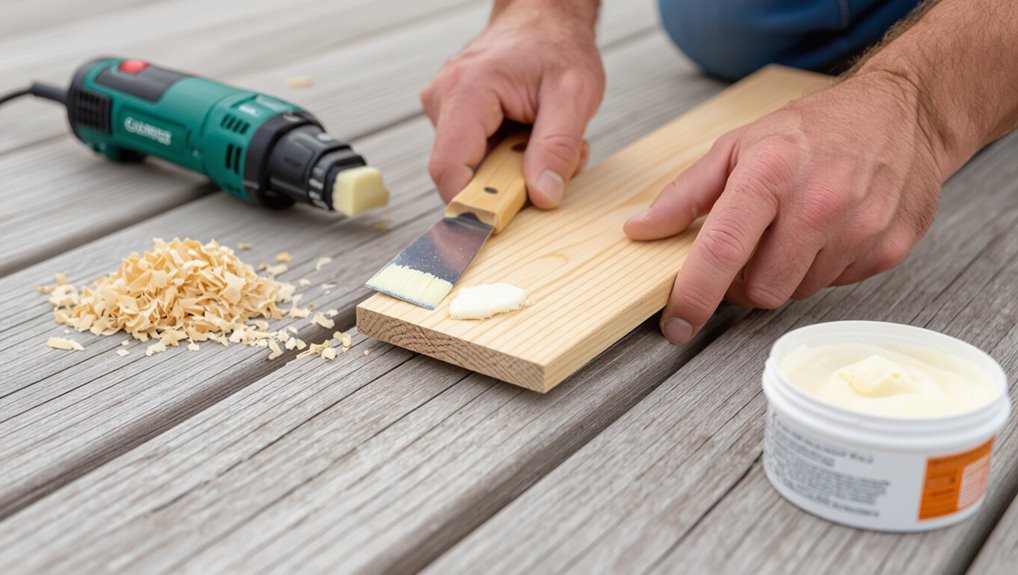
After the deck’s been rinsed and brightened and the wood has fully dried, move on to repair any minor damage so the new finish goes on smooth and lasts. You’ll fill cracks with exterior wood filler, sand, or replace rotten boards. Check fasteners and level surfaces before staining.
| Task | Tip |
|---|---|
| Fill cracks | Use epoxy |
| Replace boards | Match grain |
| Sand | Blend edges |
| Fasteners | Use stainless |
Comparison of Removal Methods Effectiveness vs Wood Impact
You’ll find a quick comparison table below that rates scraping, sanding, power washing, heat, and chemical strippers for effectiveness and wood impact.
I’ll note best use-cases for each method and the environmental and health trade-offs to help you choose. Use this to weigh faster removal against potential damage or hazards.
Table comparing scraping, sanding, power washing, heat, and chemical strippers
A clear side-by-side table helps you weigh how well each removal method strips old paint against the risk it poses to the wood beneath.
Include columns for effectiveness, wood damage risk, speed, debris/cleanup, and safety.
List scraping, sanding, power washing, heat, and chemical strippers with concise ratings and one-line notes so you can quickly compare trade-offs and make an informed choice.
Best use-cases for each method
Now that you’ve got a clear side-by-side of each removal method, you can match strengths and risks to the condition of your deck and your goals.
Scraping suits small flakes and delicate wood.
Sanding smooths edges on sound boards.
Power washing removes loose paint on durable wood.
Heat lifts stubborn layers on thick coats.
Chemical strippers handle multiple layers without aggressive abrasion.
Environmental and health trade-offs
While each removal method can strip paint effectively, they trade off environmental and health risks against how much they stress the wood:
You’ll weigh chemical strippers’ fumes and runoff versus their gentle wood impact, heat guns’ burn risks and emissions, and mechanical sanding’s dust and finish loss.
Choose methods that minimize toxins, control dust, and match wood age and fragility to preserve structure.
Common Mistakes That Damage Wood and How to Avoid Them
Don’t rush or get heavy-handed when removing paint—you can sand or pressure-wash away too much wood or fiber-check and cause lasting damage.
Use the right stripper and follow neutralization steps, test methods on small areas before scaling up, and avoid aggressive techniques if moisture or weather conditions aren’t ideal.
Taking those precautions will keep your deck structurally sound and ready for a proper refinish.
Over-sanding and removing too much wood
Sand carefully—it’s easy to take off more wood than you intend when you’re keen to get down to bare deck boards.
Work with coarse then finer grit, keep the sander moving, and check thickness frequently.
Limit passes, follow the grain, and use a depth guide or hand-sand edges.
If you spot low spots, stop and reassess instead of sanding harder; preserve structural integrity.
Using excessive pressure with power washers
A pressure washer can blast away years of grime, but using too much pressure will gouge wood fibers, leave splintered patches, and create uneven surfaces that stain and seal poorly.
You should test pressure on a scrap, use wide-angle nozzles, keep the wand moving, and hold it farther from the deck.
Aim for low PSI and adjust until paint and debris lift without tearing the wood.
Applying inappropriate chemical strippers or not neutralizing
Once you’ve stripped loose paint with gentle pressure, the chemicals you pick next matter just as much — the wrong stripper or failing to neutralize it can eat into the wood, raise the grain, or leave residues that block new finish from bonding. Choose a wood-safe stripper, follow label neutralization, rinse, and test a small area.
| Stripper | Neutralize | Result |
|---|---|---|
| Caustic | Required | Damage |
| Solvent | Often | Residue |
| Bio-based | Recommended | Safe |
Skipping tests and jumping to aggressive methods
If you skip testing and jump straight to power tools or harsh chemicals, you’ll likely cause more harm than good—dings, deep gouges, or permanent discoloration can result from one impatient move.
Always try a small, inconspicuous patch first. Start with the gentlest method—hand-scraping or mild stripper—then increase intensity only as needed.
Document results and adjust technique to protect the wood.
Ignoring weather and moisture when refinishing
Because curing, adhesion, and drying depend on temperature and humidity, ignoring weather and moisture when you refinish a deck will undo all your prep work fast.
Check forecast, avoid refinishing during rain, high humidity, or rapid temperature swings, and wait for several dry days.
Use moisture meter to confirm wood’s readiness, and store materials in stable conditions so coatings bond and cure properly.
Prevention and Best Practices to Keep Paint from Peeling Again
Before you repaint, make sure you thoroughly prep the surface, pick a paint or stain suited to your deck’s wood and local climate, and follow proper application rules like temperature limits, number of coats, and drying times.
Stick to a regular maintenance schedule for cleaning, sealing, and inspections so small issues don’t become big failures.
Watch for early warning signs—blistering, cracking, or moisture stains—and address them promptly to keep paint from peeling again.
Proper surface preparation before repainting or restaining
While you’re tackling peeled paint, take the time to prepare the surface properly so the new finish will last: clean, sand, and repair rotten spots; remove loose flakes; and let wood dry fully. Prime bare areas and feather edges for adhesion.
| Action | Feeling |
|---|---|
| Clean & sand | Relief |
| Repair & dry | Confidence |
| Prime & feather | Pride |
Choosing the right paint or stain for deck wood and climate
When you pick a finish that suits both your deck’s wood species and your local climate, the chances of peeling drop dramatically; choose a product formulated for exterior horizontal surfaces and the specific wood (softwood vs. hardwood) so it can flex, breathe, and shed moisture properly.
Match finish type—solid stain, semi-transparent, or exterior paint—to exposure, UV, and moisture levels, and prefer high-quality, elastic formulations labeled for decks.
Application tips (temperature, coats, drying time)
If you apply paint or stain at the right temperature and give each coat enough time to cure, your finish will adhere better and resist future peeling. Work between 50–85°F, apply thin even coats, and wait full drying times before recoating. Test adhesion on a small board first.
| Tip | Guideline |
|---|---|
| Temp | 50–85°F |
| Coats | 2–3 thin |
| Dry time | Per label |
| Test | Small board |
Maintenance schedule for cleaning, sealing, and inspections
Because regular upkeep keeps small problems from turning into major peeling, set a simple seasonal maintenance schedule for cleaning, sealing, and inspections.
Each spring, power-wash gently and repair loose paint; mid-summer, inspect for wear and recoat high-traffic areas; autumn, apply a breathable sealer before wet weather; winter, store furniture and check drainage.
Record dates and tasks to stay consistent.
Signs to watch that indicate early failure
Keep following your maintenance schedule and you’ll catch many problems early, but you’ll also want to watch for specific signs that paint is starting to fail so you can act before peeling spreads.
Check for bubbling, cracking, hairline splits, fading, and moisture stains.
Probe suspect areas with a fingernail, inspect joints and fasteners, and note recurring dampness or mold that undermines adhesion.
Cost, Time Estimation, and When to Hire a Professional
For a small 100–200 sq ft deck you can expect a weekend and a few hundred dollars for scraping or sanding, while larger decks or pressure-wash/chemical stripping can take several days and cost $500–$2,000 depending on materials and disposal.
If you see extensive rot, lead paint, unstable railings, or you don’t have the time and tools, those are red flags to call a pro.
When you hire a contractor, ask for itemized quotes, timelines, warranties, and proof of lead-safe certification and insurance.
Typical DIY time and cost ranges by deck size and method
Small projects—like sanding and spot-priming a 200–400 sq ft deck—usually take a weekend and cost $100–$400 in materials and tool rental, while full paint- or stripper-and-recoat jobs on 500–1,000 sq ft decks can run 2–4 days and $300–$1,200 depending on whether you rent a pressure washer, buy a chemical stripper, or need new boards; hire a pro if you lack time, the deck has significant rot or complex railings, or you want a warranty and faster, guaranteed finish.
| Deck size | Typical DIY time/cost |
|---|---|
| 200–400 sq ft | Weekend; $100–$400 |
| 500–1,000 sq ft | 2–4 days; $300–$1,200 |
| Complex/rot | Varies; higher cost or pro recommended |
Red flags that warrant professional help
If your deck shows extensive rot, widespread peeling beyond simple spots, or structural issues like spongy boards or loose railing posts, you should call a pro—these problems add time, require specialized repairs, and can hide safety hazards that DIY fixes won’t address.
Also hire professional help if lead paint is suspected, the job exceeds your available time, or quoted costs outweigh your budget.
What to expect from a contractor (quotes, warranties, lead-safe practices)
When you hire a contractor, expect clear, written quotes that break down labor, materials, and any hidden-cost contingencies so you can compare bids and avoid surprises.
Ask about timelines, payment schedules, and itemized cleanup.
Verify warranties on workmanship and materials, confirm lead-safe work practices and certification, and get proof of insurance.
Hire pros when scope, safety, or permits exceed your skills.
FAQs
Got questions? You’ll find quick answers on whether you can remove peeling paint without chemicals, if power washing will harm older soft wood, how to check for lead and what to do if it’s present, how long to wait after cleaning before repainting or sealing, and whether you can switch from paint to stain.
Read on for concise, practical guidance.
Can I remove peeling paint without any chemicals?
Wondering whether you can strip peeling deck paint without chemicals? Yes — you can.
Use scraping, sanding, and a stiff wire brush to remove loose paint. Work with the grain, keep tools sharp, and wear safety gear.
For stubborn spots, heat guns on low help lift paint without solvents.
Finish by sanding smooth and cleaning debris before repainting or sealing.
Will power washing damage older, soft wood decks?
If your deck’s boards are old, thin, or already soft, high-pressure washing can erode fibers, raise the grain, and even gouge the wood; you should use a low-pressure setting (or a fan tip) and keep the nozzle at least 12–18 inches away.
Test a small area first, and move the wand steadily to avoid concentrated damage.
Use gentle detergent, let boards dry, then sand lightly.
How do I tell if paint contains lead and what then?
Before you start stripping or sanding old paint after cleaning, check whether it contains lead—disturbing lead paint creates toxic dust and chips.
Use an EPA/OSHA-approved test kit or hire a certified inspector. If positive, follow regulations: hire a licensed lead-abatement contractor, avoid dry sanding or power tools, seal work area, and dispose of debris per local hazardous-waste rules to protect yourself and others.
How long should I wait after cleaning before repainting or sealing?
After you finish cleaning, let the deck dry completely—typically 24 to 48 hours in warm, dry weather—before repainting or sealing so coatings can adhere properly and trap no moisture.
If humidity or temperature is high, wait 72 hours or until wood feels dry throughout.
Check for damp spots, mildew, or powdery residue; only proceed when surface is uniformly dry to guarantee proper bonding and longevity.
Can I switch from paint to stain after removing old paint?
Want to switch from paint to stain? Yes — you can, but you must remove paint thoroughly to expose raw wood or consistently bare surface.
Strip or sand down to sound wood, clean and dry it, then test a small area with your chosen stain to guarantee absorption and color.
Use a bonding primer only if staining over isolated patched areas, not whole deck.
