
How to Paint a Ceiling Without Splatter: Mess-Free Techniques
You can paint a ceiling without splatter by prepping well, using low-splash paint, an appropriate nap roller, and lightly loading the roller to avoid drips. Mask trim and fixtures tightly, cover floors, and work in small 3×3-foot sections while the paint is still tacky. Wear goggles and a respirator, secure ladders, and test tools on cardboard first. Finish with evening inspection and feathered touch-ups for seamless repair, and keep going to learn pro tips and troubleshooting.
Step-by-Step: Paint a Ceiling Without Splatter
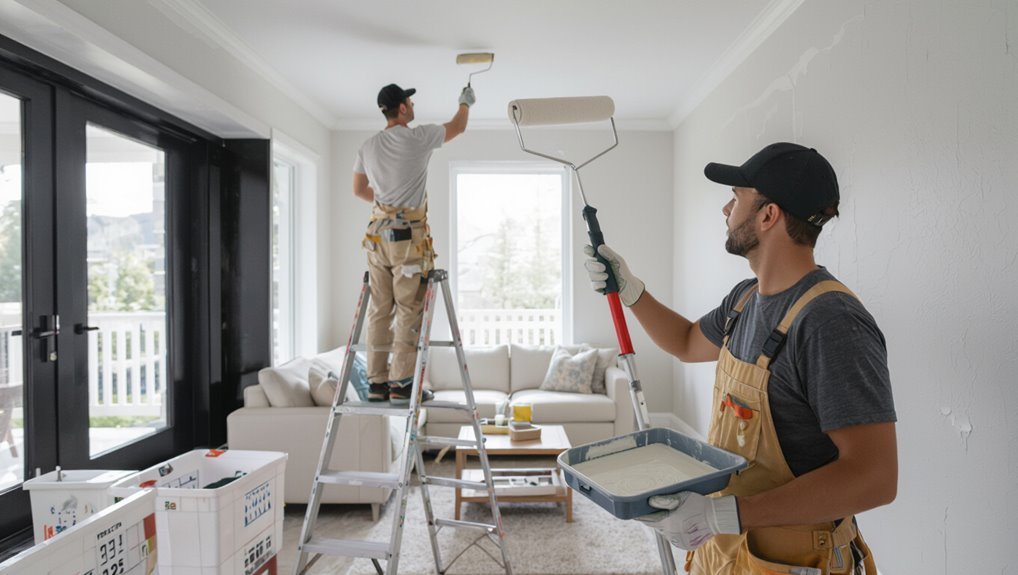
Start by prepping the room thoroughly so you can work quickly and cleanly—move furniture out or to the center, cover floors and remaining items with drop cloths, and tape off trim and light fixtures.
You’ll prioritize ceiling safety: wear goggles, secure ladders, and ventilate.
Choose paint types suited to ceilings (flat or matte) and use a quality roller with an extension pole, back-rolling edges carefully.
What “Mess-Free” Ceiling Painting Looks Like: Success Criteria
When you finish, a mess-free ceiling will show even coverage with no visible roller lines, drips, or overspray on walls, trim, or floors; edges will be crisp where you taped or cut in, and the surface will dry uniformly without texture changes or lap marks.
You’ll inspect for success indicators: consistent sheen, clean lines, no touch-up ghosts.
Good splatter prevention means minimal cleanup and confident results.
DIY vs. Pro: Cost, Time, and Risk Checklist
You can save money by doing the ceiling yourself, but factor in the time and learning curve so the savings aren’t wiped out by mistakes.
Hiring a pro costs more up front but usually finishes faster and lowers the risk of splatter, touch-ups, or damage.
Use a simple checklist—estimate materials and labor, compare schedules, and weigh the likelihood and cost of errors—to decide which option fits your situation.
Cost Comparison
Although tackling ceiling painting yourself can save money upfront, weighing cost against time and potential mistakes is essential. Consider budget considerations and material costs: paint, rollers, drop cloths, and ladders add up, but pro quotes include labor and insurance. Use this quick cost snapshot to decide.
| DIY | Pro |
|---|---|
| Lower supply cost | Higher total cost |
| Possible savings | Faster completion |
Time And Risk
Cost and materials matter, but time and risk often sway the DIY vs. pro decision.
You’ll weigh time management—prep, painting, drying—against your schedule.
Include risk assessment: ladders, neck strain, uneven finish, and potential repairs.
If you value control and savings, DIY fits; if you need speed, guaranteed results, and lower personal risk, hire a pro.
Choose Tools That Minimize Splatter
When you pick the right roller, brush, and extension, you’ll cut splatter before you even dip into paint.
Choose splash resistant tools—angled brushes for edges, a lint-free roller cover, and a quality extension pole.
Favor effective roller types that hold paint evenly and release less on impact.
Test each tool on cardboard to confirm low-splatter performance before starting the ceiling.
Choose the Best Roller Nap for Smooth Ceiling Finishes
Texture matters: pick the right roller nap and you’ll get a smooth ceiling with less splatter and fewer touch-ups.
- For smooth ceiling finishes, use a 3/8″ nap on drywall for even coverage.
- Choose 1/2″–3/4″ for slightly textured ceilings to hold paint without drips.
- Use microfiber or woven naps to reduce lint.
- Match nap to surface; a wrong roller nap causes splatter and uneven finish.
Why an Extension Pole Reduces Splatter and Fatigue
One extension pole lets you paint the entire ceiling from the floor, keeping the roller at a consistent angle and reducing the jerky wrist motions that cause splatter.
You’ll see extension pole benefits immediately: steadier strokes, fewer drips, and evenly applied paint.
Working from the floor eases posture and delivers reduced fatigue, so you’ll finish faster with cleaner results and less mess to clean.
Choose Low-Splash Paint Types and Sheens
If you want to minimize splatter from the start, pick paints formulated for low-splash application and match the sheen to your ceiling’s needs.
Choose low splash paints and consider sheen selection for durability and hide.
Use:
- Flat for flaws and low reflection.
- Matte for slight durability.
- Eggshell for washability.
- Satin sparingly where light hits.
How Paint Viscosity Affects Splatter and Drips
Because paint flows differently depending on its viscosity, you’ll see more or less splatter and drips as you work—thinner paint tends to atomize and fling from rollers and brushes, while thicker paint resists misting but can sag into drips if overloaded.
You should adjust paint thickness and consistency for splatter reduction, balance paint flow with ceiling preparation, and match application technique to avoid runs.
Select a Ceiling-Specific Roller Frame and Cover
Pick a roller cover with the right nap for your ceiling texture—short nap for smooth, medium for slight texture.
Use an angled frame so you can reach and roll flat against the ceiling without awkward wrist twists.
Match the cover material to your paint type (synthetic for latex, natural for oil) to keep application smooth and splatter-free.
Choose The Right Nap
Choosing the right nap matters more than you might expect when painting a ceiling—use a roller cover and frame designed for overhead work to reduce splatter and fatigue.
- Match roller materials to ceiling textures for proper paint absorption.
- Consider paint types and texture differences to control splatter reduction.
- Prep surface preparation to optimize paint application.
- Use specific roller techniques for consistent ceiling finishes.
Opt For Angled Frame
After matching the nap to your ceiling, move on to a roller frame designed for overhead work: an angled or offset frame keeps the roller head closer to the wall and tilts the cover so paint lifts onto the surface more smoothly with fewer flicks.
You’ll appreciate angled frame benefits when you use angled frame techniques—reduced splatter, consistent contact, and easier edge work near walls.
Match Cover To Paint
Material matters: match the roller cover to the paint’s sheen and formula so you get even coverage without extra passes that cause splatter.
Choose covers by roller selection and paint types suited to ceiling textures and paint finishes.
Consider lighting effects and color matching for uniform look, and plan surface preparation, trim painting, application techniques, and cleanup methods.
- Nap length
- Material
- Frame fit
- Load capacity
Why High-Quality Brushes Matter for Edges and Corners
Because edges and corners demand control, a high-quality brush gives you the precision and hold you need to cut in clean lines without overloading the ceiling with drips or splatter.
You’ll see brush quality affect edge precision and corner coverage, improving splatter control and paint consistency.
Smart brush selection and proper application technique deliver a smooth finish, better finish durability, and less touch-up.
Protective Gear That Keeps You Clean and Safe
When you’re painting a ceiling, wearing the right protective gear keeps you clean and prevents injuries.
You’ll follow safety measures and choose clean attire for splatter prevention, combining personal protection with practical protective equipment. Gear recommendations focus on safety essentials so you work confidently.
- Disposable coveralls
- Safety goggles
- Respirator mask
- Non-slip shoes
Prep the Room to Protect Floors and Furniture
Move furniture out of the room when you can, or group pieces in the center and cover them tightly if they must stay.
Lay down drop cloths or plastic sheeting and tape seams to protect floors and nearby surfaces from drips.
Secure edges and smooth wrinkles so the protective layers won’t shift while you work.
Clear Furniture Placement
Start by taking everything out of the room you can fit through the door: chairs, side tables, lamps, rugs, and small decor.
Then group remaining pieces for easy access, noting furniture arrangement and ensuring clear room clearance paths.
Use compact covers or moveables for bulky items you can’t remove.
- Cluster
- Label
- Shift
- Secure
Floor And Surface Protection
1. You’ll start floor preparation techniques by moving furniture and sweeping thoroughly.
Lay surface protection materials—drop cloths, rosin paper, and plastic sheeting—tightly and tape edges. Use cardboard or plywood under ladders and heavy items.
Cover vents and light fixtures. Secure rugs and cushions in sealed bags.
Check overlaps to prevent paint seepage so cleanup stays minimal and surfaces stay pristine.
Surface Protection: Drop Cloths, Plastic, and Painter’s Tape Best Practices
Because protecting floors, furniture, and trim before you paint saves time and stress later, lay out drop cloths, plastic, and painter’s tape carefully and intentionally.
Protect floors, furniture, and trim—lay drop cloths, plastic, and painter’s tape carefully to save time and stress.
- Choose drop cloths types for grip and absorbency.
- Use painter’s tape techniques to seal edges after surface preparation.
- Drape plastic coverings over items; wear protective gear.
- Plan furniture arrangement and perform a quick ceiling inspection.
How to Mask Light Fixtures, Vents, and Trim Without Gaps
Before you paint, you’ll want to cover light fixtures, vents, and trim with secure materials so paint can’t sneak underneath.
Use snug-fitting plastic or paper covers and press painter’s tape firmly along edges, smoothing as you go to seal gaps.
For vents and intricate trim, add overlapping tape or temporary caulk to stop any stray splatter.
Secure Covering Techniques
Masking light fixtures, vents, and trim so paint doesn’t creep in takes a few precise steps and the right materials.
You’ll use ceiling preparation tips and protective gear options, then cover fixtures securely so paint can’t seep under edges.
- Use painter’s plastic and blue tape.
- Wrap fixtures tightly.
- Tape trim edges flush.
- Cover vents with breathable mesh.
Seal Gaps Effectively
Now that fixtures, vents, and trim are wrapped and taped, focus on sealing every seam so paint can’t creep in.
You’ll use precise tape techniques and clean gap sealing: press edges, overlap corners, and remove loose debris.
Finish seams with thin caulk application, smooth with a wet finger, and let dry.
These paint preparation steps prevent seepage and give you a crisp, mess-free ceiling.
Inspect the Ceiling: Spot Cracks and Stains First
Because small flaws will show through fresh paint, take a careful walkaround and scan the whole ceiling for cracks, water stains, and loose texture.
You’ll perform a quick ceiling assessment and stain identification so you can prioritize repairs before painting.
- Note hairline cracks and size.
- Mark water stains and probable source.
- Check textured areas for adhesion.
- Outline loose or flaking spots.
How to Clean and Prime a Ceiling to Reduce Paint Absorption
Start by wiping the ceiling with a soft broom or dry microfiber to remove dust and loose debris so paint will adhere evenly.
If you spot stains or water marks, apply a stain‑blocking primer to stop bleed-through and seal the surface.
Let the primer dry fully before you begin painting to reduce uneven absorption.
Remove Dust And Debris
Before you paint, clear away dust and cobwebs so the surface will accept primer and paint evenly.
- Use a pole vacuum for dust removal and ceiling preparation.
- Wipe stubborn spots with a mild detergent and microfiber cloth.
- Sweep loose debris; bag it for proper debris management.
- Bring effective tools: soft brush, ladder, tack cloth — these cleaning techniques cut splatter risk.
Apply Stain-Blocking Primer
A stain-blocking primer seals old stains and evens out the ceiling’s porosity so your topcoat goes on smoothly and with less chance of seep-through; apply it after the surface is clean and dry using a roller with a 3/8″–1/2″ nap for textured ceilings or a shorter nap for smooth ones.
Check stain compatibility, follow manufacturer application techniques, work in thin even coats, and allow full cure before topcoating.
Choose a Primer to Block Stains and Smooth Texture
If your ceiling has stains, uneven texture, or patchy drywall, pick a high-quality primer that specifically blocks staining and levels surface porosity; it’ll create a uniform base so your topcoat goes on smoothly and hides imperfections.
- Do a surface inspection to spot stains and roughness.
- Use primer selection based on stain blocking needs.
- Compare texture comparison to choose consistency.
- Consider paint absorption rates for proper coverage.
Sand a Popcorn or Textured Ceiling Safely to Reduce Splatter Risk
If you need to sand a popcorn or textured ceiling, put on a proper respirator and eye protection so you don’t inhale dust.
Use wet sanding or a lightly misted sponge to keep particles from becoming airborne. That control will cut splatter risk and make cleanup much easier.
Wear Proper Respiratory Protection
Before you sand that popcorn or textured ceiling, protect your lungs—these coatings can release dust and old paint particles, including lead in older homes.
You’ll need proper respiratory masks and ventilation to avoid inhaling dust or paint fumes.
- Use N95 or P100 masks.
- Seal the room.
- Run exhaust fans.
- Replace filters often.
Wet Sanding To Reduce Dust
Wet sanding lets you knock down high spots on popcorn or textured ceilings while keeping dust to a minimum, and you’ll only need a few simple tools to do it safely. Use gentle wet sanding techniques, a damp sponge, and a pole sander. Focus on dust control, slow strokes, and frequent rinsing.
| Tool | Purpose |
|---|---|
| Sponge | Smooth |
| Pole sander | Reach |
| Bucket | Rinse |
How Humidity and Temperature Influence Splatter and Drying
Because air holds more moisture at higher temperatures, you’ll see paint take longer to dry in humid rooms. This increases the chance that drips and splatter will flatten and spread before they set.
In humid, warm rooms paint dries slowly, letting drips and splatter flatten and spread before they set.
Consider humidity effects and temperature impacts to control drying time and paint absorption for splatter reduction:
- Use dehumidifiers.
- Increase ventilation.
- Lower room temperature.
- Thin paint slightly.
Best Time of Day to Paint a Ceiling for Minimal Mess
In the morning, when temperatures are moderate and humidity tends to be lower, you’ll get the cleanest results with the least splatter—paints dry faster, drips set quickly, and air circulation from opening windows works best.
Use morning light to spot missed areas and work steadily; if evening calm suits your schedule, wait until airflow drops and surfaces feel stable before starting to avoid tacky touch-ups.
Two-Roll Technique: Load Less, Roll More for Less Splatter
When you load your roller lightly and make more passes, you control paint build-up and cut down on flicks and drips; this two-roll technique asks you to prioritize even coverage over heavy, splash-prone strokes.
- Use proper ceiling preparation to minimize texture catching.
- Load less for controlled roller coverage.
- Let paint absorption settle before second pass.
- Repeat passes for splatter reduction with a calm roller technique.
How to Load a Ceiling Roller to Avoid Over-Saturation
Start by rolling the nap through the tray until the roller has full, even coverage without visible drips.
Use the tray’s well and lip to shake off excess paint so the roller isn’t over-saturated.
Aim for a uniform coat on the roller before you lift it to the ceiling.
Proper Roller Coverage
Load your roller deliberately: dip just enough into the tray’s well, roll it up the ridged slope to remove excess, and aim for an even, slightly damp nap rather than a dripping one.
- Use proper roller technique: start with light pressure.
- Maintain even coverage with overlapping strokes.
- Reload for consistent wet edge—avoid pooling.
- Practice effective paint loading to minimize splatter and drips.
Use a Paint Tray Well
Having your roller properly loaded sets you up to use the tray well effectively: pour paint into the deep end, roll the cover into the pool, then pull it up the ridged slope to meter out excess so the nap stays damp but not saturated.
| Step | Action |
|---|---|
| 1 | Pour into deep end |
| 2 | Roll then pull |
Use paint tray techniques and effective loading to avoid drips and over-saturation.
Evenly Distribute Paint
Center the roller in the tray well and roll it up the ridged slope several times so paint soaks evenly into the nap without pooling at the ends.
You’ll control paint consistency and master roller technique to prevent drips.
Follow this quick checklist:
- Dip lightly, avoid submerging.
- Roll until color evens.
- Tap edge to remove beads.
- Re-roll on slope before use.
The Correct Roller Stroke Pattern for Even, Splash-Free Coverage
Think of your roller strokes as controlled passes rather than random swipes: work in consistent, overlapping “W” or “N” patterns and finish each section with light, even pulls that blend into the wet edge.
You’ll use a precise roller stroke and roller technique, follow coverage techniques and application methods to guarantee even paint distribution.
These painting tips and rolling strategies aid splatter prevention and clean ceiling finishing after proper ceiling preparation.
How to Use an Extension Pole Effectively Without Wobble
Make sure the extension pole is locked firmly into each section so nothing slips while you’re working.
Brace the pole with your other hand near the midpoint or rest it lightly against your shoulder to cut down on wobble. Those two steps keep your strokes steady and minimize splatter as you paint.
Secure Pole Connection
Tightening the pole connection is the single most important step to stop wobble when you’re painting a ceiling.
You’ll guarantee pole stability by using proper connection methods and checking threads, collars, and quick-locks.
Follow these steps:
- Clean threads and inspect for damage.
- Hand-tighten, then secure the locking collar.
- Test for play before loading roller.
- Recheck periodically while painting.
Stabilize With Bracing
When you brace the extension pole against your body and a steady surface, you’ll cut down wobble and paint straighter lines while using less wrist force. Use bracing techniques: tuck the pole under your forearm, press against a ladder rung or wall, and keep a relaxed grip for improved ceiling stability.
| Tip | Contact Point | Benefit |
|---|---|---|
| Forearm | Body | Control |
| Hand | Wall | Steady |
| Foot | Ladder | Balance |
Cut In the Ceiling With a Brush Without Drip Marks
Start by loading a good angled sash brush with a moderate amount of paint—too much will run, too little won’t cover—and hold the brush at a slight angle so the bristles skim the surface rather than dig in.
Load an angled sash brush with moderate paint and hold it at a slight angle so the bristles skim the surface.
- Use steady, short strokes for clean edges.
- Wipe excess on the tray for drip prevention.
- Blend into the roller-painted area while wet.
- Practice brush techniques on scrap before cutting in.
How to Work Around Ceiling Lights and Fans Without Making a Mess
Before you paint around fixtures, turn off the power and remove or loosen shades and removable trim so you can access edges without smudging paint; for fixed fixtures like fans, wrap blades and housings with painter’s plastic and secure it with low-tack tape so you can cut in and roll close without leaving splatters.
Use ceiling light masking for bulbs and sockets, employ fan protection techniques, and finish edges with a fine brush.
Safe Ladder Use and Positioning to Prevent Accidental Splatter
Start by setting your ladder on a flat, level surface and locking the spreaders so it won’t shift while you work.
Keep your feet shoulder-width apart on the rungs and move the ladder rather than overreaching to maintain balance.
Position the ladder close enough to the work area so your brush or roller stays under control and paint doesn’t flick from awkward angles.
Proper Ladder Placement
Place your ladder on a level, stable surface and position it so you can work within easy reach without leaning—this cuts down on swaying and accidental brush or roller contact with walls and fixtures.
- Check ladder stability before climbing.
- Match ladder height to ceiling—don’t overreach.
- Face your work; keep hips centered on the ladder.
- Keep tools in a belt or tray to avoid sudden shifts.
Secure Footing Techniques
With the ladder steady and at the right height, focus next on securing your footing so you won’t wobble or jostle paint tools; small shifts at the base cause most accidental splatter.
Check feet sit on firm ground, use anti-slip mats or ladder levelers, lock spreaders, and keep your weight centered.
These secure footing methods boost ladder stability and reduce sudden movements that fling paint.
Work in Small Sections to Control Drips and Splatter
Tackle the ceiling one 3×3-foot area at a time so you can keep a wet edge, spot drips quickly, and avoid splatter spreading across finished sections.
Tackle the ceiling one 3×3-foot area at a time to keep a wet edge and prevent splatter.
Work methodically for drip control and splatter prevention.
- Cut in edges first.
- Roll toward the wet edge.
- Check for drips immediately.
- Blend adjacent sections while paint’s tacky.
How to Handle Paint Overlaps to Avoid Ridges and Spatters
When you overlap passes, keep each new stroke light and feathered into the still-tacky paint so you won’t build ridges or flick off tiny spatters; work from the center of a section toward its edges, keeping your roller pressure even and your overlap about 50% to blend seams smoothly.
Use paint overlap techniques like slow, consistent rolling and occasional light back-rolling as ridge prevention methods.
When to Use a Paint Shield or Edger for Clean Lines
Want razor-sharp edges without spending extra time on touch-ups? Use a paint shield or edger when you need edge precision after ceiling preparation.
Choose edging tools based on tool selection and paint application. Benefits include paint shield benefits and splatter prevention. Apply edger techniques alongside masking methods for clean lines.
- Inspect surface
- Pick correct edger
- Steady pressure
- Light overlap
Use a Paint Guard for Wall-to-Ceiling Edges Without Tape
Pick a paint guard that fits snugly against the wall so you get a crisp line where ceiling meets wall.
Hold the shield steady with your non-dominant hand and move the roller or brush along the edge with controlled, even strokes.
With a steady hand technique and the right shield, you can skip tape and still get professional results.
Perfect Fit Shield
If you’d rather skip tape and still get a razor-sharp line where ceiling meets wall, a paint guard—also called a shield—lets you cut in cleanly by hand.
You’ll get a perfect fit edge and quick shield benefits. Use it to:
- Hold steady against the ceiling
- Guide your brush
- Block drips
- Move along seams smoothly
Steady Hand Technique
Steady your arm and let the paint guard do the work: hold the flat edge firmly against the ceiling, rest your wrist on the wall for support, and use short, controlled strokes to cut a clean line without tape.
Keep a steady hand, move deliberately, and reload your brush lightly to prevent drips. This technique boosts painting precision and speeds touch-ups while protecting adjacent walls.
Techniques for Painting Vaulted or High Ceilings Without Mess
Tackle vaulted or high ceilings by planning for height, control, and safety from the start; using the right tools and techniques keeps paint off floors, furniture, and you.
- Use extension poles and angled rollers for vaulted techniques on high ceilings.
- Wear goggles and a dust mask; secure a stable scaffold.
- Work in thin, even coats to minimize splatter.
- Keep drop cloths and painter’s tape taut and close.
How to Paint Ceilings in Large Open-Plan Rooms Cleanly
Start by planning paint zones so you work methodically across the open space and avoid backtracking that causes drips.
Use long-handled rollers and extension poles to reach farther with steady control and fewer splatters.
Protect floors and furnishings with wide drop cloths and taped edges to catch any stray paint.
Plan Your Paint Zones
Divide the room into clear, manageable zones before you open a can of paint so you can work systematically and keep splatter confined.
Plan a paint zone layout tied to furniture and traffic, and finalize color selection for each area.
Then:
- Mark zones with tape.
- Protect floors and furnishings.
- Sequence painting by adjacency.
- Clean overlaps immediately.
Use Long-Handled Tools
Once your zones are taped and protected, reach farther to keep splatter off furniture and floors by using long-handled tools designed for ceilings.
You’ll use long handled rollers with ergonomic grips on telescoping poles to adjust for varying ceiling heights.
Pair roller covers and paint trays with splatter shields, and practice consistent roller techniques so you maintain control, avoid drips, and finish cleanly.
Protect Floors And Furnishings
In a large open-plan room, protect floors and furnishings by creating clear, well-sealed work zones: move lightweight items out, cover fixed pieces with breathable drop cloths, and tape plastic or rosin paper securely along baseboards and furniture edges so paint can’t seep underneath.
- Plan furniture arrangement for clean setup and room prep.
- Use quality floor protection and furniture covers.
- Apply effective masking and surface safeguarding.
- Implement protective measures for traffic paths.
Sprayer Alternatives: When a Sprayer Saves Time but Increases Risk
Although a paint sprayer can cut your ceiling job time dramatically, it also raises the chance of overspray, drips, and ventilation problems that you’ll need to control.
You’ll weigh sprayer efficiency against safety concerns, matching paint types and coverage techniques to space.
Prioritize tool selection, overspray management, project planning, and cleanup strategies so you save time without creating a bigger mess.
How to Prep and Use an Airless Sprayer With Minimal Overspray
Choose an airless sprayer with the right tip size and pressure range for ceiling work so you won’t over-atomize the paint.
You’ll prep by sealing floors and fixtures with plastic and drop cloths, masking edges carefully to protect walls and trim.
Then adjust pressure and tip size, test on cardboard, and keep the gun moving steadily to minimize overspray.
Proper Sprayer Selection
Picking the right airless sprayer and prepping it correctly cuts overspray and saves you time and cleanup.
- Choose among sprayer types—compact for touch-ups, full-size for large ceilings.
- Match tip size to paint viscosity to control spray patterns.
- Test on cardboard to set pressure low and steady.
- Use extension poles and steady passes to reduce bounce and drips.
Prep And Masking
With the sprayer and tip dialed in, you’ll focus on prep and masking to keep paint off fixtures, walls, and floors.
For ceiling preparation, do surface cleaning and dust removal, then apply primer application where needed.
Use painter’s tape, masking techniques, protective coverings, and furniture protection.
Seal gaps with gap sealing, and guarantee ventilation importance while you spray to control fumes and particles.
Adjusting For Overspray
When you’re ready to spray, dial in pressure, tip size, and spray pattern so the atomization is efficient but the bounce-back is minimized; lower pressure and a slightly larger tip often reduce fine mist, while a tighter fan keeps paint where you want it.
- Test spray on cardboard for overspray prevention.
- Use edge guards and drop cloths.
- Keep consistent gun distance and speed.
- Adjust pressure during paint application to limit mist.
Quick Fixes for Accidental Splatter on Walls or Floors
If paint splatters on your walls or floors despite your best efforts, don’t panic—you can clean most of it quickly with the right approach.
For splatters removal on hard surfaces, blot fresh spots, scrape dried drops gently, then wipe with mild detergent.
For accidental cleanup on painted walls, test a hidden area first, use a damp sponge and light pressure to avoid damage.
How to Remove Fresh Ceiling Paint From Fabric and Carpet
Act quickly to blot fresh ceiling paint from fabric or carpet before it soaks in—use a clean, dry cloth to lift as much as you can without rubbing.
Act fast—blot fresh ceiling paint with a clean, dry cloth to lift it without rubbing.
- Scrape excess gently with a dull edge.
- Apply mild soap and water, blotting outward.
- Use a bit of rubbing alcohol for water-based paint if needed.
- Rinse and air-dry, following fabric care instructions to avoid shrinkage.
How to Clean Dried Paint Spots Without Damaging Surfaces
You moved quickly on fresh spills, but dried paint needs a different approach to avoid surface damage.
Test a hidden area first, then soften spots with warm soapy water or a gentle solvent recommended for the surface.
Use plastic scrapers, microfibre cloths, and light sanding only when safe.
These cleaning techniques prioritize controlled paint removal to protect finishes and trim.
Maintain a Tidy Work Rhythm to Reduce Cleanup Time
When you work in steady, short cycles— prepping, painting, and cleaning each small area before moving on—mess never has a chance to build up and post-job cleanup stays minimal.
- Keep an organized supplies cart to maintain a tidy workspace.
- Use efficient pacing and planned sections to stay consistent.
- Practice mindful application, focused technique, and steady hands.
- Make deliberate movements to prevent drips and speed cleanup.
Calculate How Much Paint You’ll Need to Avoid Repeated Trips and Spills
Keeping your rhythm and supplies in order also means planning how much paint you’ll need so you don’t run back to the store mid-job and risk spills. Measure room area, note coverage per gallon, and include waste for edges. Estimate paint quantity to maintain pace and splatter prevention.
| Room | Area (sq ft) | Gallons |
|---|---|---|
| A | 200 | 1 |
| B | 300 | 2 |
Best Practices for Storing Partially Used Paint Safely
If you want to keep your paint usable and your workspace tidy, seal the can tightly, label it with the color, date, and room, and store it upside down on a raised shelf to minimize air seepage and prevent rust from compromising the lid.
- Wipe rims before container sealing.
- Use original lid or airtight jar for paint storage.
- Keep cool, dry, stable-temperature area.
- Avoid freezing or direct sun; check before reuse.
Cleanup Checklist: Tools, Rollers, and Drop Cloths That Need Attention
Start by surveying every item you used—brushes, rollers, trays, poles, and drop cloths—and decide which need immediate cleaning, which can be wiped and stored, and which should be discarded. Tackling the mess in stages prevents dried-on paint and saves time later.
Then follow cleanup strategies: rinse rollers and brushes, empty and wipe trays, launder drop cloths, label stored items, and maintain tool organization for next job.
How to Inspect Your Finished Ceiling for Missed Spots or Splatter
Wondering whether you missed any spots or left splatter behind? Do a quick evening inspection under angled light and note problem areas for spot checking.
Then:
- Walk perimeter slowly, eyes level with light.
- Use a flashlight to highlight tiny specks.
- Mark splatter with painter’s tape.
- Photograph issues for reference before splatter removal or touch-up.
Touch-Up Techniques That Hide Drips and Speckles Seamlessly
Now that you’ve mapped out missed spots and marked splatter, you can fix them in ways that disappear at normal viewing distance.
Use small brushes or a mini-roller for targeted touch up techniques, feathering edges to blend.
For drips, scrape gently, sand, then recoat thinly.
Dab speckles with light stippling.
These seamless repairs preserve texture and keep touch-ups invisible from across the room.
Common Beginner Mistakes That Cause Splatter and How to Avoid Them
One of the quickest ways to end up with splatter is using the wrong tools or techniques for the job—overloaded rollers, cheap brushes, and hasty back-and-forth strokes all fling paint.
Avoid beginner errors with smart ceiling preparation, proper loading, effective tools, and correct paint selection.
- Use correct roller techniques.
- Load rollers properly.
- Choose quality brushes.
- Aim for clean edges and controlled paint application.
When to Call a Professional to Fix Major Splatter Damage
If splatter has soaked through drywall, stained trim, or left large patches that sanding and spot priming can’t fix, call a professional—especially if you’re short on time or want a flawless finish.
You should get a professional evaluation and damage assessment to determine repairs, replacement, or specialty cleaning.
They’ll estimate cost, timeline, and guarantee results so you avoid recurring problems and uneven texture.
Quick Reference: 10 Rules to Paint Any Ceiling Without Splatter
Ten simple rules will keep paint on the ceiling and off your floors, furniture, and skin—follow them in order for the cleanest, fastest results.
Ten simple rules to keep paint on the ceiling and off everything else—follow them for clean, fast results
You’ll prep, choose flat paint, use proper rollers, work wet edge to wet edge, and control speed for ceiling painting and splatter prevention.
- Tape and drop cloths
- Use extension pole
- Load roller correctly
- Maintain steady pace
Frequently Asked Questions
Will Ceiling Paint Peel if I Don’T Sand First?
Yes — it can. If you skip ceiling preparation, old flaky paint or glossy surfaces can prevent paint adhesion, so you’ll risk peeling later. You should sand, clean, and prime to guarantee a durable, long-lasting finish.
Can I Paint Over Smoke or Nicotine Stains Without Special Primers?
You shouldn’t — smoke stains and nicotine residue can bleed through regular paint. You’ll want to clean first and use a stain-blocking primer or shellac-based sealer so your new paint won’t yellow or require redoing.
How Do I Prevent Paint Odor From Lingering After Painting?
Think of your home as a garden recovering after a storm: you’ll clear the air by using odor neutralizing techniques like baking soda, activated charcoal, and vinegar bowls, ventilating constantly, using low-VOC paint, and following paint drying tips for faster airing.
Is It Safe to Sleep in a Room the Same Day I Paint the Ceiling?
You shouldn’t; paint drying emits fumes, so you’ll want strong ceiling ventilation and fresh air before sleeping. Open windows, run fans or an air purifier, and wait until the smell’s gone and paint feels fully dry.
Can I Repaint a Glossy Ceiling Without Sanding or Adhesion Issues?
Yes — you can repaint a glossy ceiling without sanding if you do proper ceiling preparation and choose the right paint selection: degloss with a liquid sandpaper, clean thoroughly, and use a bonding primer plus high-adhesion paint.
Conclusion
You’ve got this—think of painting the ceiling like steering a slow, steady ship: calm, controlled strokes keep waves (splatter) away. Use the right roller, load it lightly, stagger your passes, and check edges with a brush. Patch drips immediately and touch up with thin coats. If stains or heavy splatter show up, call a pro. Follow the rules, stay patient, and you’ll finish with a clean, professional-looking ceiling.
