
How to Remove Dried Paint From Leather Safely
You can safely remove dried paint from leather by first identifying the paint type and testing a hidden spot, then gently scraping loose flakes with a plastic tool, softening stubborn areas with low heat or a mild solvent (rubbing alcohol or leather cleaner), and lifting softened paint with cotton swabs or a microfiber cloth; finish by conditioning and, if needed, touching up dye. Take your time, work in a ventilated area, and keep going below to learn practical step‑by‑step tips.
Quick Answer: Remove Dried Paint From Leather Fast
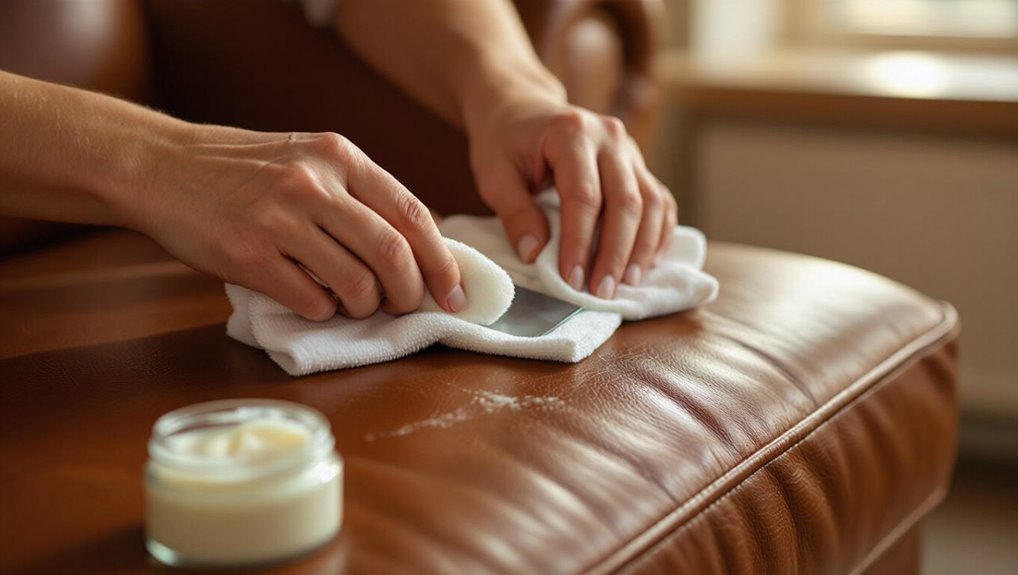
Start by scraping off any loose flakes with a plastic scraper or your fingernail. Then blot the spot with a damp cloth to soften the paint.
You’ll then test a small hidden area, use gentle solvent or leather cleaner, and work outward with a soft cloth.
These quick techniques preserve finish and color; follow leather care steps, dry slowly, and condition afterward.
Which Paint Is on Your Leather? (Types and Clues)
How can you tell what kind of paint you’re dealing with?
Use paint identification cues and consider leather types to choose safe removal steps.
Check texture, smell, and sheen; test a tiny hidden spot if unsure.
- Water-based: soft, dull
- Oil-based: glossy, greasy
- Acrylic: plastic-like film
- Spray paint: even coat
- Enamel: hard, shiny
Fresh vs. Cured Paint: Why It Matters
If the paint is still fresh, you can usually wipe it away with minimal effort before it sets.
Once paint has cured, though, it bonds to the leather and takes more time and stronger methods to remove. Knowing which state you’re dealing with will guide the safest, most effective cleanup.
Fresh Paint: Quick Removal
Because fresh paint hasn’t bonded to the leather fibers yet, you can usually lift it away with quick, gentle action before it cures.
Use fresh paint techniques and immediate action to prevent staining.
Try these steps:
- Blot excess with a damp cloth
- Dab with mild soap solution
- Gently scrape with a plastic edge
- Rinse and pat dry
- Condition the leather afterward
Cured Paint: More Effort
Fresh paint comes off with relative ease, but cured paint has bonded to the leather and demands more aggressive, careful methods to avoid damage.
You’ll face stronger paint adhesion and must use targeted solvents, gentle scraping, and iterative testing.
Respect leather sensitivity: choose mild solvent, work slowly, blot don’t rub, and condition afterward.
If unsure, consult a pro to prevent irreversible harm.
Inspect the Leather: Finish, Dye, and Fragility
Before you touch the paint, take a close look at the leather’s finish, dye, and overall fragility so you know what cleaning methods will be safe.
You’ll do a damage assessment, note surface finishes, paint types, and plan cleaning techniques that protect dye and leather protection.
Consider paint solvents, color matching, restoration methods, and cleaning frequency.
- Inspect texture
- Check dye depth
- Note finish type
- Identify solvent risk
- Plan restoration steps
Test a Hidden Spot Before You Start
Pick a small, inconspicuous area—inside a seam, under a flap, or the underside of the item—and test your chosen cleaner there first to confirm it won’t lift dye, damage the finish, or alter texture.
Work gently with a cotton swab, wait several minutes, then inspect the hidden spot for color change or finish dulling.
Only proceed if the test area shows no harm.
Tools and Supplies You’ll Need
Before you start, grab basic protective gear like gloves and eye protection so you don’t expose your skin or eyes to solvents.
You’ll want a few mild cleaning solvents (rubbing alcohol, leather cleaner, or acetone for stubborn spots) and to test them first.
Use soft tools — cotton swabs, microfiber cloths, and a soft-bristled brush — to lift paint without damaging the leather.
Essential Protective Gear
You’ll want a compact kit of the right tools and supplies to remove dried paint from leather safely and effectively.
Protect yourself and the leather while considering different paint types and leather care needs.
- Nitrile gloves
- Safety goggles
- Breathable mask (organic vapor if using strong solvents)
- Soft drop cloth
- Cotton rags and microfiber towels
Cleaning Solvents Overview
Now that you’re geared up, it helps to know which solvents and cleaners will safely loosen different paint types without harming the leather.
Identify solvent types like isopropyl alcohol for water-based paint, acetone alternatives for stubborn spots, and mild leather cleaner for finish-safe removal.
Follow precise application methods: test a hidden area, apply sparingly, blot gently, and rinse residue with a damp cloth.
Soft Tools And Cloths
When you’re ready to work, gather soft tools and lint-free cloths that won’t scratch or leave fibers on leather surfaces.
You’ll want items that lift paint gently and absorb solvents without damage.
- soft bristle brushes for loosening flakes
- microfiber cloths for blotting and wiping
- cotton swabs for precision
- soft sponge for dabbing
- small plastic scraper for careful lifting
Safety First: Ventilation, Gloves, Surface Protection
Because dried paint removal can release fumes and particles, make sure you work in a well-ventilated area—open windows, run a fan, or work outdoors if possible.
Work in a well-ventilated area—open windows, run a fan, or work outdoors to avoid fumes and particles.
You should wear appropriate glove types (nitrile or latex) to protect skin and avoid solvent contact.
Protect nearby surfaces with drop cloths to prevent surface damage.
Keep solvents sealed and dispose of waste safely.
Step 1: Loosen Flaky Paint With a Soft Brush
With ventilation set and gloves on, start by gently loosening any flaky paint with a soft-bristled brush—like a clean toothbrush or a dedicated leather brush—to avoid scratching the surface.
Use light strokes, test brush techniques on an inconspicuous spot, and consider paint types before proceeding.
- Work outward from the center
- Use short, controlled strokes
- Keep bristles angled
- Check progress often
- Avoid aggressive scrubbing
Step 2: Lift Dried Paint With a Plastic Scraper
Gently slide a plastic scraper—like a credit card or a purpose-made spatula—under the edge of the dried paint to lift it away from the leather without gouging the surface.
Work slowly, angling the tool shallowly and using light, steady pressure.
Adjust scraper techniques based on paint types and thickness; stop if the leather resists and switch to gentler methods to avoid damage.
Use Soap and Water to Remove Surface Paint
Start by mixing a mild liquid soap with warm water. Then dampen a soft cloth or sponge and wring it out so it’s just damp, not dripping.
Gently blot the paint, testing an inconspicuous spot first; adjust water temperature for sensitivity. Use light pressure and repeat until paint lifts.
- Use gentle soap types
- Test water temperature
- Blot, don’t rub
- Rinse cloth often
- Air dry afterward
Use Isopropyl Alcohol Safely on Finished Leather
One small bottle of isopropyl alcohol can be a reliable spot-treatment for dried paint on finished leather when you use it carefully and sparingly.
Dampen a cotton swab, blot the paint, and avoid soaking. Work from the outer edge toward the center, check finish compatibility, and wipe residue quickly.
Condition the area afterward to restore oils and sheen.
When to Test Acetone and Stronger Solvents
Before you reach for acetone or other strong solvents, test them on an inconspicuous spot to confirm they won’t strip the finish or discolor the leather; these chemicals can work when isopropyl alcohol fails, but they’re more likely to damage dyes, topcoats, and sealants, so you should only use them after confirming compatibility and preparing to neutralize and condition the area immediately.
- Choose a small hidden test patch
- Note reaction time and odor
- Compare to acetone alternatives first
- Wear gloves and ventilate for solvent safety
- Have leather conditioner ready to restore finish
How to Remove Oil‑Based Paint From Leather
If oil-based paint’s already dried on your leather, act carefully: these paints bond more strongly and resist water, so you’ll rely on gentle mechanical removal first (soft scraping with a plastic spatula or fingernail) and targeted solvents only when necessary.
Work in small areas, dab mineral spirits sparingly on a hidden patch, blot loosened oil paint, then condition as part of routine leather care.
How to Remove Latex and Acrylic Paint Safely
When latex or acrylic paint lands on leather, act quickly and gently: fresh paint will lift with light blotting using a damp cloth and mild soap, while dried paint often needs careful softening with a water-based cleaner or rubbing alcohol applied to a hidden spot first.
- Test cleaner on an inconspicuous area.
- Gently loosen paint with a soft cloth.
- Use mild soap and water.
- Dry and condition leather.
- Favor gentle paint removal techniques and routine leather care.
Tack Cloths & Adhesive Removers for Stubborn Paint
When paint won’t come off with soap and a cloth, you can reach for a tack cloth to lift loose particles and an adhesive remover for stubborn spots.
Pick products labeled safe for leather or test a small hidden area first so you don’t damage the finish.
After using an adhesive remover, wipe gently with a damp cloth and follow up with a leather conditioner to remove residue and restore suppleness.
Tack Cloth Basics
Although tack cloths look simple, they’re a highly effective first line of defense for removing dust, loose paint flakes, and light adhesive residue from leather before you try stronger solvents.
You’ll learn tack cloths types and proper usage to protect finishes and avoid soaking leather.
- Choose lint-free tack cloths
- Test on hidden area
- Light, single pass strokes
- Replace when dirty
- Don’t over-press
Choosing Safe Adhesives
If you need to lift stubborn paint without harming leather, pick adhesives and removers formulated for delicate surfaces and use them sparingly.
You’ll test any product on an inconspicuous area first. For safe adhesives, choose low-tack tack cloths or silicone-free removers labeled for leather.
Your adhesive selection should prioritize gentle adhesion, minimal residue, and clear manufacturer guidance to avoid damage.
Removing Residue Gently
Once you’ve loosened dried paint with gentle solvent or mechanical means, reach for a low-tack tack cloth or a leather-safe adhesive remover to lift remaining residue without abrading the surface.
- Test remover on hidden seam first.
- Blot gently; don’t rub.
- Use tack cloth in short strokes.
- Neutralize and condition afterward.
- Repeat sparingly, prioritizing gentle techniques and leather care.
Softening Paint With Heat: Safe Hair‑Dryer Technique
A hair dryer lets you soften dried paint without chemicals, giving you better control over gentle removal.
Aim low heat and keep the dryer moving to avoid leather damage. Use short bursts, testing a hidden spot first.
As paint softens, lift softened flakes with a soft cloth or blunt plastic scraper.
Finish by conditioning the leather to restore moisture.
Leather‑Safe Cleaners and Commercial Paint Removers
When choosing a product to tackle dried paint on leather, pick cleaners and removers labeled specifically for leather or for delicate upholstery—these formulas balance cleaning power with conditioners that protect the hide.
You can test small areas first, follow instructions, and prefer leather safe products over harsh solvents; commercial solutions can work but require careful use.
- Test in a hidden spot
- Use soft cloths
- Follow label directions
- Start mild, repeat as needed
- Condition after cleaning
Avoiding Mistakes That Strip Dye or Finish
If you rush or reach for strong solvents, you can easily strip dye or damage the finish, so take deliberate, gentle steps instead.
Test cleaners in an inconspicuous spot, work outward from the paint edge, and use minimal product.
Prioritize dye preservation techniques like blotting and pH‑neutral solutions, and employ finish protection methods such as soft cloths and short contact times.
Repairing Finish or Color Loss After Cleaning
After cleaning, check the leather under good light to assess any color or finish loss so you know what needs fixing.
Pick a dye or finish product that matches the leather type and color—test it on an inconspicuous spot first.
Once you’ve matched the tone, blend carefully and seal the area with a suitable conditioner or topcoat to protect the repair.
Assess Color And Finish
Once the paint’s gone, take a close look at the leather’s color and finish so you can spot any fading, discoloration, or surface dulling that cleaning might’ve caused.
Check for color variations and note original finish types before repairing.
- Inspect evenly under good light
- Compare to untouched areas
- Feel for texture changes
- Note gloss loss
- Photograph for reference
Choose Appropriate Dye
Start by matching the dye to the leather’s type and original finish so you can restore color without harming the surface. You’ll test color matching on a hidden spot, choose dye formulation, and plan dye application for even coverage. Use a small brush or sponge, apply thin layers, and let each dry before reassessing.
| Test | Dye Type | Tool |
|---|---|---|
| Hidden | Alcohol | Sponge |
| Patch | Water | Brush |
Blend And Protect Surface
Carefully blend any repaired or recolored areas into the surrounding leather so the finish looks seamless and natural. You’ll do color matching, feather edges, and apply thin coats for finish restoration.
Then seal and condition to protect.
- Match tones under good light
- Thin coats prevent buildup
- Feather edges with a sponge
- Use appropriate sealer
- Condition to restore suppleness
When to Stop and Call a Leather Pro
If the paint covers a large area, soaks into seams, or resists gentle cleaning, don’t keep going and risk further damage—call a leather pro. You’ll protect leather care investment and get expert paint identification and removal. Below is a quick decision aid.
| Situation | Action |
|---|---|
| Small spot | DIY try mild cleaner |
| Deep soak | Contact pro |
| Unknown paint | Ask specialist |
Cleaning Seams, Stitching, and Crevices Safely
Because paint often settles into seams and stitching where a cloth can’t reach, you’ll need tools and techniques that get into crevices without abrading the leather.
Use gentle seam cleaning and stitching care, focusing on crevice attention and joint maintenance to preserve seam protection and apply careful stitching techniques.
- Soft-bristled brush
- Wooden toothpick
- Microfiber swab
- Mild cleaner
- Leather conditioner
Suede and Nubuck: Different Approach Than Smooth Leather
Those same tools and gentle motions you used on seams won’t work on suede and nubuck; these leathers have a nap that traps particles and shows marks differently than smooth hides.
For suede cleaning and nubuck care, brush with a soft suede brush, lift paint gently, avoid liquids that darken, spot-test a cleaner, and finish by restoring the nap with light, consistent strokes.
Treating Very Old, Set‑In Paint Stains
When paint’s been sitting for years, it bonds deeply to the leather fibers and needs a more deliberate approach than fresh spills; you’ll work slowly with tested solvents, mechanical lift methods, and careful conditioning to avoid cracking or discoloration.
- Test solvent on hidden area for old paint
- Use cotton swabs and gentle scraping
- Apply leather-safe stain removal products
- Rinse, blot, and let air-dry
- Recondition leather after cleaning techniques
When to Retry: Timing Repeat Cleaning Attempts
If your first pass didn’t lift all the paint, wait and assess before you try again: allow the area to fully dry (usually several hours) so you can see what’s actually left, avoid overworking the leather, and only reapply solvents or mechanical action once the previous treatment’s effects are clear.
Space retry intervals based on paint adhesion — slower for stubborn, firmly bonded spots; gentler methods first.
Restoring Suppleness: Condition Leather After Cleaning
After you’ve removed the paint and let the leather dry, restore its suppleness by applying a suitable leather conditioner; you’ll want a product made for your leather type and a small, even amount to avoid over-saturating the hide.
- Test on an inconspicuous spot first.
- Use a soft cloth in circular motions.
- Let conditioner absorb fully.
- Buff lightly for shine.
- Reapply periodically for leather conditioning and paint protection.
Matching Color Touch‑Ups for Small Finish Losses
Because small finish losses can stand out even after cleaning, you’ll want to match color carefully to blend repairs invisibly.
Test dyes or creams on an inconspicuous area, then mix pigments until you achieve a close match.
Use fine brushes or cotton swabs for precise application.
Employ gentle layers, let each dry, and finish with a compatible top coat.
These color matching touch up techniques preserve appearance.
Protecting Leather Before Projects: Sprays & Covers
Before you start any painting or repair work, protect surrounding leather with masking tape and disposable covers so stray splatters won’t stick.
You can also apply a leather sealer to areas near the project to create a temporary barrier that repels paint.
Taking these simple steps saves time and prevents the need for aggressive paint removal later.
Use Protective Masking
If you’re planning any paint-related work near leather, take a few minutes to mask and shield the surface so accidental splatters don’t become permanent stains.
Use simple masking techniques and lightweight covers for reliable paint protection. You’ll protect edges, seams, and hardware.
- Painter’s tape for edges
- Plastic sheeting for large areas
- Drop cloth for floors
- Masking film for contours
- Microfiber cloth for small spots
Apply Leather Sealer
Once you’ve masked and covered nearby areas, apply a leather sealer to give the surface an added layer of protection against stray paint and spills.
You should choose a sealer aligned with leather care guidelines and check paint compatibility before spraying.
Test on an inconspicuous spot, apply thin even coats, let each dry fully, and avoid saturating seams to preserve flexibility and finish.
Care Checklist for Painted Leather Items
A simple checklist helps you keep painted leather looking its best: inspect for chips or cracking, test flexibility by gently bending the piece, check seams and edges for paint loss, and note any areas that need touch-ups or conditioning.
Use leather care and paint protection products sparingly.
Use leather care and paint protection products sparingly to preserve finish and flexibility.
- Clean gently with a soft cloth
- Condition every 3–6 months
- Avoid harsh chemicals
- Store away from sun
- Promptly address chips
Cost and Time Estimate: DIY vs. Pro Cleaning
You can save money by doing the paint removal yourself, with common supplies like rubbing alcohol, leather cleaner, soft cloths, and a gentle brush adding up to a modest DIY cost.
Expect to spend anywhere from 30 minutes to a few hours depending on the paint amount and drying level.
If you hire a pro, plan for a service fee and turnaround of a day or two, plus higher charges for extensive restoration.
DIY Cost Breakdown
Comparing DIY and professional cleanup costs helps you decide whether to tackle dried paint yourself or hire an expert.
You’ll weigh DIY Material Costs against your Time Investment to clean, test, and repair small spots.
- Cleaner/solvent cost
- Soft cloths and brushes
- Leather conditioner
- Protective gloves
- Disposal supplies
Professional Time Estimate
If the DIY material list and time you’d spend fixing paint make you hesitate, consider what a professional will charge and how long they’ll need.
You’ll get a clear estimate for labor and materials; pros streamline work with time management and efficiency strategies, often finishing in one session.
Weigh that fixed cost against your hours, tools, and risk of damaging the leather.
Choosing a Leather Specialist or Re‑Dye Service
When paint won’t budge or the finish looks uneven, hiring a leather specialist or re‑dye service can save your piece and time; you’ll want someone experienced with both color matching and structural repairs.
If paint won’t come off or the finish is uneven, hire a leather re‑dye specialist skilled in color matching and repairs.
Choose pros who know leather care and restoration techniques, verify references, and get a clear estimate.
- Ask about materials used
- Request before/after photos
- Confirm warranty
- Check reviews
- Compare quotes
Quick Fixes: Common Accident Scenarios
Because accidents happen fast, you’ll want a few reliable, low‑risk fixes ready for common scenarios—drops of water‑based craft paint, a streak from a brush, or a small splash of spray paint each call for different immediate steps.
Blot fresh accidental spills, scrape dried bits carefully, test solvents for paint transfer risks, avoid rubbing that causes cleaning mishaps, and follow prevention tips like covering work areas.
Cheat Sheet: Best Method by Paint Type
Different paints need different tactics, so you’ll want to match your approach to the type—water-based, oil-based, or acrylic/spray.
For water-based paints you can usually soften and lift with mild soap and water; oil-based ones often need a solvent or leather-safe cleaner.
Acrylic and spray paints can be stubborn, so you’ll use stronger removers but test a hidden spot first.
Water-Based Paint Removal
Water-based paints—like acrylics, latex, and tempera—are the easiest to remove from leather if you act methodically and choose the right solvent for the paint’s stage (wet vs. dried).
Use gentle water based techniques and approved paint removal products to protect finish.
- Blot excess with damp cloth
- Test cleaner invisibly
- Soft-brush dried flakes
- Use mild soap solution
- Condition leather afterward
Oil-Based Paint Solutions
1 straightforward rule: oil-based paints—like alkyds, enamel, and oil colors—need stronger solvents and more patience than water-based finishes, so pick your method based on whether the paint is still tacky or fully cured.
If tacky, blot with mineral spirits; if cured, test a solvent like acetone or citrus-based paint solvents on an inconspicuous area, then gently lift residue and condition the leather.
Acrylic And Spray Paint
When acrylic or spray paint gets on leather, act fast if it’s still tacky—dab with a damp cloth and mild soap to lift fresh spots; for dried or cured paint, use a targeted approach based on type (acrylic vs. enamel spray): gently scrape loosened flakes with a plastic scraper, test a solvent like isopropyl alcohol or a citrus-based remover in a hidden spot, then work cautiously to soften and pick away residue before conditioning the leather.
- Know acrylic characteristics: water-based, peels when brittle
- Try gentle spray paint techniques when away from seams
- Always patch-test solvents first
- Use a plastic scraper, not metal
- Condition leather after cleaning
Final Tips: Patience, Testing, and Prevention
Although removing dried paint can feel urgent, be patient and methodical—you’ll get better results and avoid damaging the leather if you test treatments first, start with the mildest options, and work slowly. Use patience techniques and simple testing methods on hidden spots. Prevent future spills, clean promptly, and condition leather regularly.
| Tip | Action | Frequency |
|---|---|---|
| Test | Hidden area | Each time |
| Clean | Mild soap | After spill |
| Condition | Leather balm | Monthly |
Frequently Asked Questions
Can Dried Paint on Vintage Leather Reduce Its Resale Value?
Yes — it can. You’ll face clear resale implications: buyers hesitate, prices drop, and vintage care concerns arise. Yet skilled restoration or transparent disclosure can salvage value if provenance’s strong and repairs are expertly documented.
Can Paint Removal Void a Manufacturer’s Warranty?
Yes — you can void warranty coverage if you ignore manufacturer guidelines; if you use unapproved solvents or alter the leather, the maker may deny claims, so check their instructions and get authorization before attempting paint removal.
Are There Pet-Safe Products for Paint Removal on Leather?
Sure — yes: you can use pet friendly options like mild soap, rubbing alcohol diluted, or veterinary-approved enzymatic cleaners for leather care; you’ll test a hidden spot first, work gently, and keep pets away until fully dry.
How to Dispose of Solvents and Contaminated Wipes Safely?
You should store solvents for disposal in labeled, sealed containers and take them to a hazardous waste facility; double-bag wipe contamination, keep bags sealed, and follow local solvent disposal guidelines to avoid environmental harm.
Can Paint Fumes Damage Nearby Artwork or Fabrics?
Yes — paint fumes can harm nearby artwork and fabrics; you’ll accelerate fading and deterioration, so prioritize artwork preservation, ventilate well, isolate pieces, and use fans or air purifiers to minimize exposure and lingering odors.
Conclusion
When paint lands on leather, act calmly and test first — measure twice, cut once. You’ll need patience: identify the paint, check the finish, and try gentle methods before stronger solvents. If doubt remains, call a pro or re‑dye service rather than risk ruining the piece. Work slowly, blot don’t rub, and always finish with a leather conditioner. With care and the right approach, you can often restore your leather without permanent damage.
