
How to Remove Dry Paint From Kitchen Sink Without Scratches
You can remove dried paint from your kitchen sink without scratching it by first identifying the material (stainless, porcelain, composite or acrylic) and testing a hidden spot with a mild cleaner. Soften paint with warm, soapy water, rubbing alcohol for latex, or mineral spirits for oil-based, then lift gently with a plastic scraper and a soft pad. Rinse and dry, avoid abrasive tools, and stop if finish dulls—keep going and you’ll find detailed tips and precautions.
Quick Answer: Remove Dried Paint From a Kitchen Sink
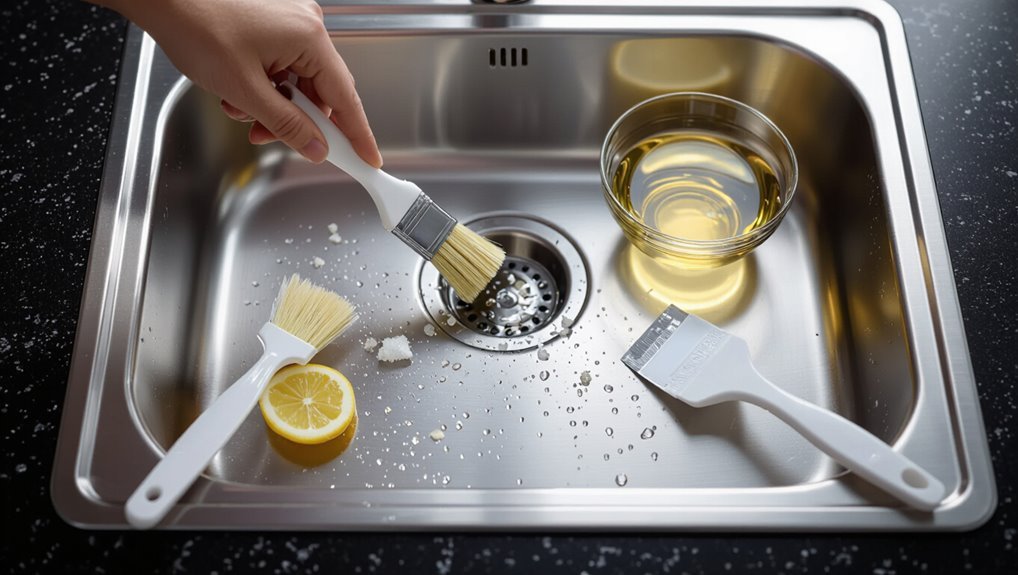
Start by scraping off any loose flakes with a plastic scraper or old credit card.
Then soften the remaining paint with an appropriate solvent—warm soapy water for latex, rubbing alcohol or acetone for small spots of oil-based paint, or a commercial paint remover for stubborn areas.
Then soften remaining paint with the right solvent—soapy water for latex, alcohol/acetone for small oil spots, or a remover.
You’ll then rinse, gently scrub with a nonabrasive pad, and dry.
These paint removal techniques double as sink maintenance tips.
Identify Your Sink Material (Stainless, Porcelain, Composite, Acrylic)
First, identify what your sink is made of—stainless steel, porcelain, composite, or acrylic—because each needs a different cleaning approach.
Look for finish clues like shine, weight, and any visible texture or seams to help you tell them apart.
If you’re unsure, test a small, hidden spot with mild cleaner to confirm the surface reacts safely before treating the paint.
Identify Sink Surface Type
Before you try any remover or scraper, determine what your sink is made of—stainless steel, porcelain, composite, or acrylic—because each material reacts differently to solvents and tools.
Check the sink surface visually and by touch: stainless feels cool and metallic, porcelain is glossy and hard, composite is matte and textured, acrylic is softer and warm.
Note material characteristics before proceeding.
Look For Finish Clues
Now that you’ve noted the basic material, check the finish to confirm it—your sink’s sheen and texture give clear clues about what you’re dealing with.
Run your fingers: stainless feels cool and smooth, porcelain is glossy and hard, composite is matte and dense, acrylic is softer.
Recognize finish types to judge surface durability and choose safe removal methods accordingly.
Test Inconspicuous Area
After you’ve identified the likely material and finish, try a discreet patch test in a hidden spot—inside the cabinet, under the lip, or behind the faucet—to confirm how the surface reacts.
Use gentle tools and minimal solvent for paint testing and sink protection.
- Test with a cotton swab and mild cleaner.
- Wait 24 hours to inspect.
- Note any discoloration or dulling.
Test a Hidden Spot for Finish Sensitivity
Want to make sure your sink’s finish won’t be damaged? Perform a quick sensitivity test on a hidden spot—inside the cabinet, under the rim, or behind the faucet.
Apply your cleaning method gently, wait, then inspect for discoloration, dulling, or scratch marks.
This finish evaluation confirms it’s safe to proceed on visible areas without risking permanent harm or unwanted finish changes.
Tools and Gentle Supplies You’ll Need
With the hidden-spot check confirming the finish is safe, gather a small kit of gentle tools and supplies before you start removing dry paint.
You’ll want items that allow gentle cleaners and safe scraping without harming the sink. Keep a towel handy for spills and protect nearby surfaces.
- Plastic scraper or old credit card
- Microfiber cloth and gentle cleaner
- Soft-bristle brush and rubber gloves
Choose Mechanical vs. Chemical Removal for Your Sink and Paint
Decide whether to tackle the paint with mechanical methods (scraping, soft-bristle brushing, gentle abrasion) or a chemical approach (solvents, paint removers) based on the sink material, paint type, and how stubborn the stain is. You’ll weigh mechanical methods against chemical solutions, prioritizing surface safety and ventilation. Choose gentler options first; escalate only if necessary.
| Option | When to use |
|---|---|
| Scrape | Thick spots |
| Brush | Light residue |
| Mild solvent | Durable sinks |
| Remover | Stubborn paint |
| Test patch | Always first |
First Step: Soften Paint With Warm Water and Time
If the paint’s already dry, start by soaking the area in warm (not hot) water and letting it sit so the film can rehydrate and loosen—this often makes scraping or wiping much easier and reduces the need for harsher treatments.
You’ll see warm water benefits quickly; combine time with gentle agitation as one of the safest paint softening methods.
- Wait 10–20 minutes
- Reapply if needed
- Pat, don’t rub
Use a Plastic Scraper Safely Without Scratching
Because even gentle scraping can nick enamel, pick a soft plastic scraper and work slowly so you don’t scratch the sink. Use light, angled strokes, keeping the blade flat and rinsing debris often.
Test on an inconspicuous spot first. These plastic scraper techniques focus on pressure control, edge orientation, and patience.
Follow safe scraping methods: steady hands, proper lighting, and frequent checks to avoid damage.
Heat Method: Hairdryer or Heat Gun Tips and Limits
Heat works well to soften dried paint so you can peel or scrape it away, but you’ll want to control temperature and distance to avoid damaging the sink or scorching nearby surfaces.
Use focused heat application and follow safety precautions to prevent glaze damage or burns.
Apply focused heat carefully and follow safety steps to avoid glaze damage or personal burns.
- Keep hairdryer on medium, 6–8 inches away.
- Use heat gun on low, short bursts.
- Wear gloves and eye protection.
Remove Latex Paint With Dish Soap and Rubbing Alcohol
Start by softening the paint with warm water and a few drops of dish soap so it loosens from the sink surface.
Apply rubbing alcohol to a cloth or cotton pad and work it onto the paint, letting it sit briefly to break down the latex.
Use a plastic scraper or a soft-bristled brush to gently scrub away loosened paint without scratching the sink.
Soap And Water Prep
Wet the stained area, then apply a few drops of dish soap and work it into a thin lather with a soft cloth or sponge.
Use mild soap types and warm water temperature to loosen paint without harming the sink. Gently scrub, rinse, and repeat until softened.
- Try non-abrasive pads
- Change water if it cools
- Pat dry with a microfiber cloth
Rubbing Alcohol Technique
Grab rubbing alcohol and a bottle of dish soap—this combo will help break down dried latex paint without harsh scrubbing.
Pour a small amount of rubbing alcohol onto a microfiber cloth, add a drop of dish soap, and blot the paint.
You’ll notice rubbing alcohol benefits like fast solvent action and improved paint removal effectiveness.
Rinse and repeat until residue lifts, then wash with water.
Gentle Scrubbing Tools
Reach for soft, nonabrasive tools—like a microfiber cloth, a soft-bristled toothbrush, or a plastic scraper—so you can work the rubbing alcohol and dish soap into dried latex paint without scratching the sink.
Use soft scrubbers and gentle sponges, apply solution, let sit briefly, then scrub gently.
- Microfiber cloth
- Soft-bristled toothbrush
- Plastic scraper
Remove Oil‑Based Paint With Mineral Spirits Safely
Start by ventilating the area and protecting surfaces.
Then test a small hidden spot to make sure mineral spirits won’t damage your sink’s finish.
Use gloves and eye protection for mineral spirits safety.
Apply a small amount on a cloth, blot gently to lift oil based paint.
Rinse residue with warm soapy water, and dry.
Dispose of rags safely.
Removing Enamel or High‑Gloss Paint: Safe Solvent Options
When you’re tackling enamel or high‑gloss paint on a sink, always test any solvent on an inconspicuous spot to check for finish damage.
Start with gentle paint removers or solvent blends formulated for glossy finishes before trying stronger chemicals.
Use gloves and good ventilation while you work, and stop immediately if the finish softens or discolors.
Test Solvent Compatibility
How will you know which solvent won’t damage your sink finish? You’ll compare solvent types and run small compatibility tests on an inconspicuous spot.
Use gloves, blot—not rub—and wait 10 minutes to spot changes. If finish softens, stop.
- Test a cotton swab with solvent first.
- Photograph the spot for reference.
- Rinse and neutralize after testing.
Use Gentle Paint Removers
After you’ve confirmed a solvent won’t harm the finish, move on to gentle paint removers designed for enamel and high‑gloss paints; these products remove stubborn spots without aggressive abrasion.
You apply a small amount, let it penetrate according to label timing, then gently wipe.
Match remover choice to paint thickness and test a hidden area.
Rinse thoroughly and repeat only as needed.
White Vinegar and Baking Soda Method for Gentle Lifting
Although it’s gentle on most sink finishes, white vinegar combined with baking soda still gives you effective lifting power for dried paint.
Although gentle on most sink finishes, a vinegar-and-baking-soda fizz effectively lifts dried paint without harsh chemicals.
You’ll wet the spot, sprinkle baking soda, pour a little vinegar, let fizz loosen paint, then wipe gently. This uses vinegar benefits and baking soda effectiveness without harsh chemicals.
- Work small areas
- Let fizz sit 5–10 minutes
- Rinse thoroughly
Which Non‑Abrasive Scrubbing Pads to Use (And Avoid)
When you’re ready to scrub, reach for soft non‑scratch pads like melamine sponges or microfiber-backed nylon pads that lift paint without harming finishes.
Avoid steel wool, metal scouring pads, and coarse abrasive pads that can scratch porcelain, stainless steel, or enamel.
Test any pad in an inconspicuous spot first to make sure it won’t damage the sink.
Soft Non-Scratch Pads
If you want to remove dry paint without scratching your sink, pick soft, non‑abrasive pads designed for delicate surfaces and steer clear of heavy-duty scouring pads or steel wool.
You’ll want reliable non scratch pads among your kitchen tools; they lift paint gently without dulling finishes.
Try these:
- Melamine sponge (light pressure)
- Microfiber scrub pad (soap + water)
- Soft nylon dish pad
Materials To Avoid
Those soft pads work well for lifting dried paint, but you still need to know which materials to avoid so you don’t damage your sink.
Avoid steel wool, metal scouring pads, coarse brushes, and abrasive powders—these scratch finishes and react with some paint types.
Choose soft nylon or microfiber non-abrasive pads for safe cleaning, matching pad softness to sink material and the specific paint type involved.
Microfiber Techniques for Rubbing Out Stubborn Spots
Grab a clean, plush microfiber cloth and work in small, circular motions to lift stubborn dried paint without scratching the sink surface.
You’ll appreciate microfiber effectiveness for gentle abrasion and targeted stubborn spot removal; dampen slightly if needed and check progress frequently so you don’t overwork one area.
- Use light pressure
- Rinse cloth often
- Switch to a fresh cloth when dirty
When to Use a Plastic Putty Knife vs. a Nylon Brush
Think about the sink material and paint type before choosing a tool: a plastic putty knife works best on hard surfaces and thicker, flaky paint, while a nylon brush suits softer finishes and thin or powdery paint.
Use the putty knife when you need precise scraping to lift stubborn spots, and reach for the brush when you need broader coverage or to scrub without scratching.
Match tool to task to protect the sink and speed the job.
Surface Material Compatibility
When removing dry paint from a sink, match your tool to the surface: use a plastic putty knife on delicate finishes like porcelain, enameled steel, and acrylic to avoid scratching.
Pick a stiff nylon brush for textured or durable surfaces such as cast iron or stone where bristles can get into crevices without harming the finish.
- Check material durability before scraping.
- Test paint compatibility on a hidden spot.
- Start gently, increase pressure as needed.
Paint Type And Thickness
If the paint’s a thin, flaky layer or water-based latex, you’ll usually make quicker progress with a stiff nylon brush that dislodges loose particles and cleans textured surfaces; for thicker, hardened globs or multiple built-up coats—especially oil-based finishes—a plastic putty knife lets you pry and lift without scoring the sink.
Assess paint characteristics and thickness variations, then choose brush for coverage or knife for controlled lifting.
Precision Versus Coverage
Although both tools remove dried paint, you’ll reach better results by matching the tool to the job: use a plastic putty knife for controlled, close-up lifting of stubborn spots or drips and a stiff nylon brush for sweeping away thin, flaky layers over larger areas.
Use precision techniques and coverage strategies to decide which tool fits.
- Small drips: putty knife
- Thin flakes: nylon brush
- Edges/details: putty knife
Removing Paint From Drains and Tight Corners
Tackle drains and tight corners with small, focused tools and the right solvent so you don’t push paint deeper into the plumbing or scratch finishes.
Use cotton swabs, nylon brushes, and a plastic scraper to lift flakes, applying solvent sparingly. These paint removal techniques protect sealants and drains.
Rinse thoroughly, check traps, and follow sink maintenance tips to prevent residue and future clogs.
Removing Fully Cured Paint (Weeks or Months Old)
Removing fully cured paint takes more elbow grease and stronger solvents than fresh drips, so start by evaluating the paint type and sink finish to choose the safest method.
Removing fully cured paint demands assessing paint and sink finish first, then choosing the safest solvent and method.
You’ll assess paint curing stage and paint thickness, then proceed carefully to avoid etching.
- Test solvent on an inconspicuous spot.
- Soften with a suitable remover and wait.
- Gently scrape with a plastic blade.
Fixing Stains and Discoloration After Paint Removal
Once you’ve softened and scraped away the bulk of cured paint, you may still see faint stains, ghosting, or a dull film on the sink surface; these are caused by pigment residue, solvent haze, or minor etching from scrapers.
Use a mild abrasive cleaner and nonabrasive pad, rinse thoroughly, then apply a gentle polish to restore shine.
For stain prevention and surface protection, seal or wax the area.
Temporary Fixes for Dull or Lightly Scratched Finishes
If your sink looks dull or has light scratches after paint removal, you can try a few temporary fixes before considering refinishing.
Make a gentle baking soda paste to lift grime, buff with a bit of mineral oil to restore shine, or use a non-abrasive magic eraser for scuffs.
These quick options won’t be permanent, but they can improve the appearance fast.
Gentle Baking Soda Paste
A simple baking soda paste can brighten a sink with dullness or light surface scratches without harsh chemicals; mix a few tablespoons of baking soda with just enough water to make a spreadable paste.
Apply it gently with a soft cloth or sponge, rub in circular motions, then rinse and dry to reveal improved sheen.
- You’ll feel the gentle abrasive lift grime.
- Work small areas.
- Rinse thoroughly and pat dry.
Mineral Oil Buffing
After brightening the sink with baking soda, minerals oils offer a quick way to camouflage dullness and light scratches for a short time.
You’ll apply a few drops, spread evenly, then use soft cloth circular motions. Focus on mineral oil benefits like moisture and temporary sheen.
Use careful buffing techniques, avoid excess residue, and reapply periodically to maintain appearance.
Non-Abrasive Magic Eraser
One simple option for quick, temporary touch-ups is a non-abrasive magic eraser, which lets you lift scuffs and dull spots without sanding.
Wet it slightly, squeeze out excess water, then gently rub the affected area in light, circular motions until the finish looks refreshed.
You’ll appreciate magic eraser effectiveness but always test first for surface safety.
- Works fast
- Gentle pressure
- Test hidden spot
When to Stop and Call a Professional Refinisher
If the paint won’t budge without damaging the sink’s finish or you spot deep scratches, chips, or underlying material exposure, stop and call a professional refinisher.
You shouldn’t risk further harm; professionals offering professional refinishing and sink restoration have proper tools, coatings, and experience.
Call them when DIY methods fail, the damage is extensive, or you want a guaranteed, long-lasting repair.
Steps to Protect Your Sink Before a Future Paint Job
Before you start painting, take a few deliberate precautions so dried paint never becomes a problem: Use proper sink protection and smart paint preparation to keep cleanup simple.
- Lay down waterproof drop cloths and tape edges securely.
- Cover the basin with a fitted plastic shield or cardboard.
- Remove or mask fixtures and seal seams with painter’s tape.
Quick Cleanup Checklist to Avoid Hardened Messes Next Time
When you’re finished painting, act fast with a short, targeted checklist so drips and spills never get a chance to harden: wipe edges with a damp cloth, rinse brushes over a bucket, blot splatters immediately, and inspect seams and hardware.
Use mild soap, a soft sponge, and a plastic scraper for spots. This quick cleaning routine is preventive maintenance that saves time and damage.
Eco‑Friendly, Low‑Toxicity Solvent Alternatives for Sinks
Though harsh paint thinners can strip grime quickly, you don’t have to reach for toxic solvents to remove dry paint from a sink; several eco-friendly, low-toxicity alternatives—like citrus-based cleaners, rubbing alcohol, white vinegar, and baking soda pastes—break down paint effectively without fouling your plumbing or indoor air.
- Use citrus-based cleaners for adhesive and latex.
- Try rubbing alcohol for small spots.
- Make a baking soda paste to scrub gently.
These eco-friendly solvents and low-toxicity options protect your sink and indoor air.
Time and Cost Estimates by Sink Material
Because different sink materials react to cleaners and scrubbing in their own ways, you’re better off estimating both time and cost by the surface type before you start. Use sink maintenance tips and paint prevention strategies to plan.
| Material | Time | Cost |
|---|---|---|
| Stainless | 30–60 min | $5–15 |
| Porcelain | 45–90 min | $10–25 |
| Composite | 60–120 min | $15–40 |
Common Mistakes That Cause Sink Scratches and How to Avoid Them
Knowing the material helped you estimate time and cost, but handling and technique determine whether you end up with scratches.
You avoid common mistakes by choosing proper cleaning techniques, testing tools, and staying patient—key to scratch prevention.
- Rubbing with metal pads
- Using harsh abrasives
- Rushing removal without softening paint
Frequently Asked Questions
Can Paint Removers Harm Nearby Countertop Materials?
Yes, they can—chemical paint remover safety matters because harsh solvents can stain or etch surfaces. You’ll check countertop compatibility first, test a hidden spot, wear gloves, ventilate, and follow manufacturer instructions closely.
Is It Safe to Use Acetone Around Sink Plumbing Seals?
No, you shouldn’t assume acetone is safe around plumbing seals; it can degrade some rubbers. Use acetone alternatives like isopropyl alcohol or citrus-based removers, and prioritize plumbing safety by testing seals first.
How Do I Dispose of Paint-Soaked Rags and Solvent Waste?
You should double-bag paint-soaked rags, label them, and follow local paint disposal rules; store solvent waste in sealed containers and take it to a hazardous waste facility—always prioritize solvent safety and avoid regular trash or drains.
Will Removing Paint Void My Sink’s Manufacturer Warranty?
It depends: you’ll check your warranty coverage and manufacturer terms, since some paint types or DIY removal methods can void claims; contact the maker before aggressive cleaning, document damage, and use recommended cleaners or professional services.
Can I Prevent Paint Splatter When Repainting Adjacent Walls?
Yes — you can prevent paint splatter when repainting adjacent walls: you’ll use drop cloths, painter’s tape, and plastic sheeting for surface protection, work with controlled brush strokes or a shield, and avoid overloaded rollers or sprayers.
Conclusion
You’ve learned to identify your sink material, to test a hidden spot, and to pick tools and solvents that match paint type and finish. You’ll start with the gentlest methods, escalate cautiously, and stop if the finish shows stress. You’ll protect edges, rinse thoroughly, and dry to prevent stains. You’ll choose eco-friendly options when possible, avoid abrasive scrubbing, and act quickly next time to keep your sink intact and looking its best.
