
How to Remove Marks From Walls Without Damaging Paint: Safe Cleaning Tips
You can remove scuffs, fingerprints, crayon and grease without stripping paint by testing a hidden spot, then using a damp microfiber or soft sponge with mild, pH-neutral detergent and circular pressure; rinse and pat dry. Use Magic Erasers sparingly and only on washable finishes, avoid abrasive pads and harsh solvents, and stop if paint dulls. For tough stains try diluted dish soap or a soft eraser, and follow up with touch-up or protection tips if you want more guidance.
Quick Method: 3 Steps to Remove Marks From Painted Walls
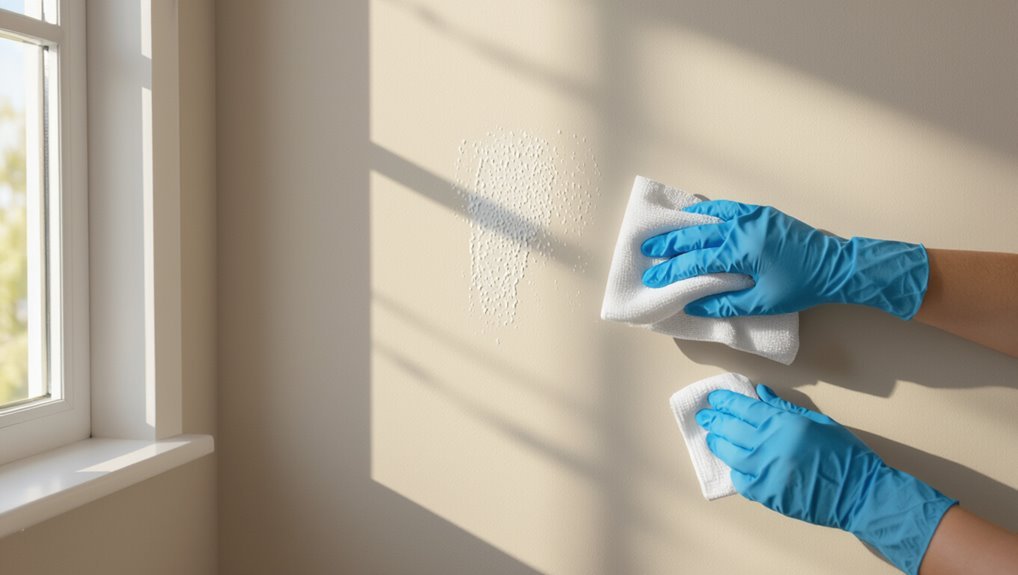
Start with one quick test: wipe a small, inconspicuous area to guarantee the paint won’t lift.
Then gather gentle wall cleaning tools — microfiber cloth, soft sponge, mild detergent.
Dampen, don’t soak, and rub marks in circular motions. Rinse with clean water and pat dry.
Finish by inspecting for damage and applying paint protection if needed to preserve finish and prevent future scuffs.
How to Test Paint Durability Before You Clean
Before you start scrubbing, test a small, hidden area with your usual cleaner to see if the finish holds up.
Try a gentle hardness check by rubbing a damp microfiber or the edge of a fingernail to make sure the paint doesn’t scuff or peel.
If the spot stays intact, you can proceed with more confidence; if it doesn’t, switch to a milder method.
Spot Clean Test
Wondering if that cleaner will strip your paint?
Do a spot cleaning test in an inconspicuous area: apply a small dab of your solution, rub gently with a soft cloth, wait five minutes, then blot dry.
Inspect for discoloration, shine change, or softening. If the finish looks unchanged, proceed—this quick check protects paint preservation and prevents wider damage.
Paint Hardness Check
If you’re unsure how tough your wall paint is, do a simple hardness check to avoid scraping or staining it during cleaning. Lightly rub a hidden area with a damp cloth, then a pencil eraser; note resistance. Consider paint types and wall textures when choosing cleaners.
| Test | Result |
|---|---|
| Cloth rub | Surface intact |
| Eraser rub | Slight scuff |
Gentle Cleaners and Tools : What to Use and Avoid
Cleaning smartly means choosing products and tools that lift marks without harming paint or finish.
Use mild, pH-neutral solutions and eco-friendly cleaners for routine spots. Soft microfiber cloths, sponge erasers made for walls, and gentle brushes are safe wall cleaning tools.
Avoid abrasive pads, harsh solvents, and concentrated bleach. Test any cleaner in an inconspicuous spot first to prevent damage.
Using Magic Erasers: When They Help and When They Hurt
A Magic Eraser can lift scuffs and crayon marks you can’t remove with soap and a sponge, but you’ll want to test it first on an inconspicuous spot.
It can thin or dull paint if you scrub too hard or use it on flat finishes, so use light pressure and keep the pad slightly damp.
Follow gentle technique tips—short strokes, rinse the pad often, and stop if the paint starts to fade.
When To Use
When stubborn scuffs or crayon marks won’t budge with soap and water, reach for a Magic Eraser—but know what surfaces can take the treatment.
You’ll use it sparingly based on cleaning frequency and paint types. Test first in an inconspicuous spot.
Use on:
- washable semi-gloss or satin walls
- painted trim with durable finishes
- stubborn marks on doors
- textured surfaces cautiously
Risks To Paint
If you reach for a Magic Eraser, know it can lift stubborn marks but also strip paint finish and dull sheen if you scrub too hard or use it too often.
Test first on hidden areas because different paint types and wall finishes react differently.
Aggressive use can remove topcoats, reveal primer, or leave matte spots, so weigh benefit versus visible damage risk.
Safe Technique Tips
Reach for a Magic Eraser cautiously: it’s great for scuffs and crayon on semi-gloss or satin finishes but can thin paint and dull sheen if overused.
You should test a hidden spot, use light pressure, prefer eco friendly products when possible, and include it in regular wall maintenance only when necessary.
- Test first
- Use gentle strokes
- Avoid flat/matte paints
- Rinse residue promptly
Cleaning Flat, Satin, and Semi-Gloss Paint (What Changes)
Because sheens affect how dirt and cleaning solutions interact with paint, you’ll want to adjust your approach for flat, satin, and semi-gloss finishes. Know flat paint characteristics to avoid scrubbing, use gentle satin finish care with mild detergent, and follow semi gloss maintenance using nonabrasive wipes.
| Sheen | Cleaning Strength | Tip |
|---|---|---|
| Flat | Low | Blot only |
| Satin | Medium | Gentle wipe |
| Semi-gloss | High | Rinse well |
Clean Painted Walls: Dirt and Fingerprints
Start by evaluating the mark: light dust and fingerprints wipe away with a damp microfiber cloth, while greasy smudges need mild detergent and a soft sponge.
You’ll protect paint longevity and practice basic wall maintenance by cleaning gently.
Tips:
- Test cleaner inconspicuously first
- Use blotting, not scrubbing
- Rinse with clean water
- Dry with a soft cloth
Remove Scuffs and Shoe Marks Safely
When you spot scuffs or shoe marks, start with a soft eraser to lift them without damaging the paint.
If the eraser misses spots, try a gentle cleaning solution on a microfiber cloth and blot carefully.
To keep marks from coming back, use door stoppers, kick plates, or teach family members to avoid brushing against walls.
Soft Eraser Technique
Grab a soft eraser and gently rub the scuff in short, light strokes to lift shoe marks without damaging paint.
You’ll test first on an inconspicuous spot to match eraser types to wall textures.
Use a clean, soft cloth to remove residue. Don’t scrub hard.
-_choose the right eraser
-test on hidden area
-work in short strokes
-wipe away crumbs
Gentle Cleaning Solutions
Although you don’t need harsh chemicals, using the right mild cleaners can lift scuffs and shoe marks without harming paint or finishes.
You can try eco-friendly solutions like diluted dish soap or a vinegar-water mix, testing a hidden spot first.
For tougher marks, make homemade cleaners with baking soda paste applied gently with a microfiber cloth, rinsing and drying promptly to avoid streaks.
Protective Preventive Measures
Before scuffs and shoe marks become permanent, take a few simple preventive steps so you don’t have to do heavy cleaning later.
You’ll extend paint life with preventive maintenance and improve wall protection by acting proactively:
- Place mats and runners near doors.
- Use chair leg caps and bumpers.
- Install a low-profile wall guard in high-traffic areas.
- Teach family to avoid leaning items against walls.
Lift Crayon, Marker, and Pencil Without Stripping Paint
1 simple trick often does the job: start with a gentle, non-abrasive cleaner and a soft cloth to lift crayon, marker, or pencil marks without stripping paint. Test hidden spot first. Gently blot, don’t rub. For stubborn crayon removal or marker stains, use a magic eraser lightly. Replace cloth and repeat until clean.
| Tool | Use |
|---|---|
| Soft cloth | Blot |
| Cleaner | Diluted |
| Eraser | Light strokes |
| Test spot | Safety |
| Repeat | As needed |
Remove Grease, Oil, and Food Stains From Painted Walls
When grease, oil, or food splatters land on painted walls, act quickly to prevent staining:
- Blot excess gently with a paper towel; don’t rub.
- Mix mild dish soap and warm water for targeted grease removal.
- Test a hidden spot, then use a soft cloth in circular motions.
- Rinse with clean water and pat dry to finish stain prevention.
Stubborn Stains, Repairs, and Preventing Future Marks
If a stain won’t budge with soap and water, grab a stronger cleaner, patch kit, or paint and tackle the problem before it gets worse; small repairs now prevent bigger, more obvious fixes later.
You should test cleaners, sand and prime patched spots, and repaint matched areas.
Regular wall maintenance and simple stain prevention—like mats, chair rails, and quick spot cleaning—keeps walls looking fresh.
Frequently Asked Questions
Can I Use Bleach to Remove Stains From Painted Walls?
You can, but you shouldn’t use straight bleach on painted walls; it can harm finish and color. You’ll want to test first, dilute carefully, and prefer gentler stain removal methods to protect paint preservation.
Will Steam Cleaners Damage Interior Paint?
Sure: Steam cleaners can sometimes damage paint—especially on delicate paint finishes. Sensible steam cleaner types, low-heat settings, and testing a small spot prevent problems. You’ll want gentle pressure, cooler steam, and cautious, controlled cleaning.
How Long Should Paint Cure Before Cleaning Newly Painted Walls?
You should wait about 2–4 weeks of curing time before cleaning newly painted walls; during that period avoid scrubbing. Afterward, use gentle wall maintenance like mild detergent and soft cloths to protect the finish.
Are There Pet-Safe Cleaners That Won’T Harm Paint?
Yes — you’ll find pet-safe solutions that’re gentle on paint; use mild, fragrance-free gentle cleaners like diluted dish soap or enzymatic pet stain sprays, spot-test first, and avoid bleach, ammonia, or abrasive scrubs to protect finishes.
Can Sunlight Fade Cleaned Areas or Change Paint Color?
Yes — sunlight effects can fade cleaned areas and alter paint color over time, so you’ll avoid uneven fading by rotating exposure, using UV-protective finishes, and maintaining paint longevity with periodic touch-ups and sun-blocking window treatments.
Conclusion
You can clean most marks without wrecking paint—start gentle, test first, then step up only if needed. If you worry scrubbing will leave a ghostly patch, picture a soft sponge gliding over paint like a fingertip wiping fog from glass: slow, light, reassuring. Follow the quick three-step routine, use mild cleaners or a magic eraser sparingly, and match technique to finish. Do small tests, repair if needed, and prevent future marks with trim and touch-ups.
