
How to Stop Spray Paint From Chipping on Any Surface
You can stop spray paint from chipping by prepping and protecting the surface: clean and degrease thoroughly, sand or scuff glossy areas, and apply a compatible primer for the material. Spray thin, even coats, allow proper drying and curing times, then seal with a durable clear coat for abrasion and UV resistance. Monitor high-wear spots and touch up chips promptly. Follow these steps and you’ll get longer-lasting results—keep going to learn the specific techniques and products that work best.
Quick Answer How to Prevent Spray Paint from Chipping
You’re looking for quick steps to stop spray paint from chipping, so start with a simple checklist.
Clean and sand the surface, apply a compatible primer, spray thin even coats, and finish with a clear sealer.
Address any chips promptly and avoid heavy use until the paint fully cures.
Short checklist of immediate actions
1 quick set of actions will stop most spray-paint chips before they spread: clean the surface, sand smooth, apply a primer, use thin even coats, let each coat cure fully, and finish with a compatible clear sealer.
To learn how to stop spray paint from chipping, act fast and follow this short checklist:
- Remove loose flakes
- Sand feathered edges
- Recoat with primer and sealer
Basic Understanding Why Spray Paint Chips
To stop spray paint from chipping, you need to understand how adhesion works and what breaks the bond between paint and surface.
Poor prep, the wrong paint for the material, rough environmental conditions, and incompatible substrates are common causes of chipping.
Metals, plastics, and worn or oily surfaces are especially prone to problems unless you clean, sand, and prime them properly.
How paint adhesion works
Adhesion is really just the grip between paint and the surface, and it depends on chemical bonds, mechanical interlocking, and surface cleanliness. If any of those are weak, the spray paint will lift and chip.
You should think about how primers form bonds, how texture gives paint something to hold, and how oils or dust interrupt contact, so you can promote durable attachment.
Common causes of chipping (surface, prep, paint type, environment)
Now that you know what makes paint stick, look at the common things that make it fail: the surface itself, how you prepare it, the paint you choose, and the environment it’s exposed to.
You can prevent chipping by addressing these predictable issues and matching methods to conditions:
- Poor cleaning or oily residue
- Wrong paint or incompatible primer
- Exposure to moisture, UV, or heavy wear
Materials and surfaces most prone to chipping
Certain materials chip more easily because their surfaces don’t let paint form a strong mechanical or chemical bond.
You’ll notice plastics (especially polyethylene, polypropylene), glossy laminates, oil-soaked woods, and oily or dirty metals resist adhesion.
Flexible rubbers and high-friction textures also peel.
Smooth, nonporous, contaminated, or moving substrates need special primers, etching, or adhesion promoters so your paint won’t lift or flake.
Tools, Materials, and Products You Need
Before you start, gather the right tools—sanders, tack cloths, a respirator, and your spray equipment—to make prep and application consistent.
Choose primers, paints, and clear coats matched to the surface (metal, wood, plastic) for proper adhesion and durability.
Consider optional adhesion promoters and specialty products when you’re working with difficult substrates or need extra longevity.
Essential tools (sanders, tack cloths, respirator, spray equipment)
You’ll need a handful of reliable tools to get spray paint to stick and stay: sanders to scuff and level surfaces, tack cloths to remove dust, a good respirator to protect your lungs, and the right spray equipment for consistent coverage.
Use quality gear and maintain it so your prep and application stay effective.
- Orbital sander, various grits
- Lint-free tack cloths
- Respirator and matched spray gun/ cans
Recommended primers, paints, and clear coats by surface type
Now that you’ve got the right tools and prep routine, pick primers, paints, and clear coats that match the surface and the wear it’ll face. Use recommended combos for metal, wood, plastic, concrete, and automotive parts to prevent chipping.
| Surface | Recommended combo |
|---|---|
| Metal | Etch primer + enamel + polyurethane |
| Wood | Oil/latex primer + acrylic latex + waterborne poly |
| Plastic | Plastic primer + acrylic paint + flexible clear |
| Concrete | Masonry primer + elastomeric paint + matte sealer |
| Auto | Epoxy primer + basecoat + clearcoat |
Optional adhesion promoters and specialty products
Although many projects stick to primer, paint, and clear coat, adding an adhesion promoter or specialty product can make the finish far more durable on tricky surfaces like slick plastics, powder-coated metal, or previously painted pieces.
You’ll want plastic adhesion promoters, etching primers, sandable fillers, and epoxy or urethane-based primers for extreme wear.
Apply per instructions, cure fully, and use compatible topcoats for best chip resistance.
Step-by-Step Guide to Stopping Spray Paint from Chipping
Before you spray, you’ll assess the surface for damage, material type, and any old coatings so you know what prep it needs.
Then you’ll clean and degrease thoroughly, sand or etch to create tooth, and pick a primer that bonds to your substrate.
Finally, you’ll use the correct spray technique—proper distance, even coats, and recommended drying times—to lock in a durable finish.
Step 1 Assess the surface (damage, material, previous coatings)
Start by inspecting the surface closely to identify the material, extent of damage, and any existing coatings that could affect adhesion.
Check for rust, flaking paint, cracks, or peeling. Note substrate type—metal, wood, plastic, or masonry—since each needs different primers.
Mark damaged areas for repair and decide if old coatings must be removed or can be sanded and feathered before priming.
Step 2 Proper cleaning and degreasing methods
1. Clean thoroughly: remove dust, dirt, and loose paint with a brush or vacuum.
Degrease using a dedicated cleaner or a 50/50 mix of isopropyl alcohol and water; wipe with lint-free cloths until no residue remains.
Rinse if product requires, then dry completely.
Proper cleaning guarantees paint adheres to the substrate and prevents early chipping.
Step 3 Surface preparation: sanding, etching, and scuffing
Three surface-prep techniques—sanding, etching, and scuffing—work together to create the right texture and chemical profile so your spray paint bonds and resists chipping.
Sand smooth or key rough surfaces with appropriate grit.
Etch bare metal or plastic to promote adhesion.
Scuff glossy finishes lightly to remove sheen.
Wipe residue away and let surfaces fully dry before you move to priming.
Step 4 Choosing the right primer and application tips
Choose a primer formulated for your substrate and paint type, because the right primer creates the chemical and mechanical bond that prevents chips.
Pick adhesion primers for metal, bonding primers for plastic, and high-build primers for repaired surfaces.
Apply thin, even coats, follow manufacturer recoat windows, and lightly scuff between layers if needed.
Allow full cure before topcoating to maximize durability.
Step 5 Correct spray painting technique (distance, coats, drying times)
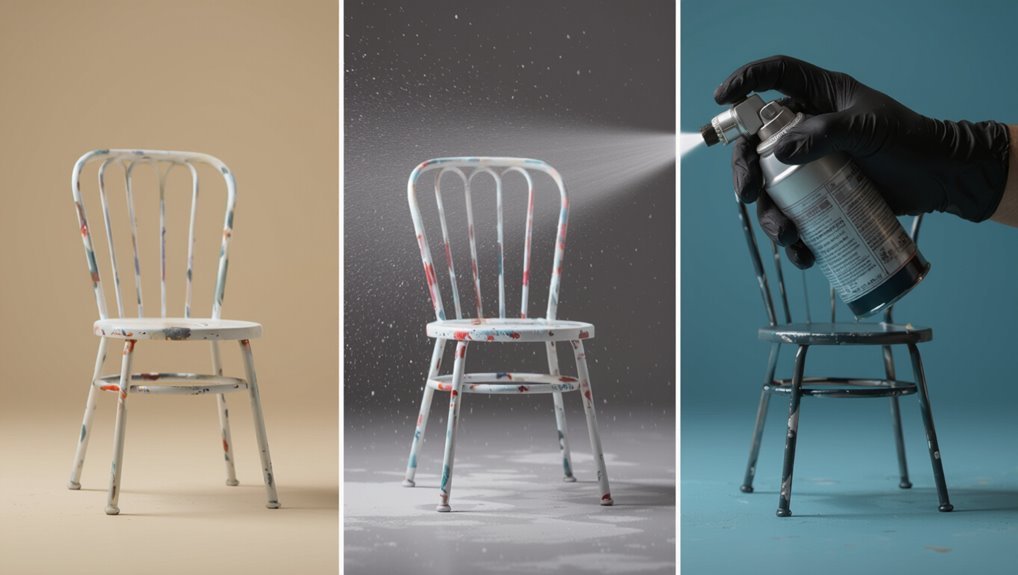
With the right primer cured, focus next on how you spray—proper distance, coat thickness, and drying times make the biggest difference in preventing chips.
Hold the can 8–12 inches away, use thin even passes, and overlap strokes by 50%.
Apply multiple light coats rather than one heavy one.
Wait recommended tack and dry times between coats to avoid trapping solvents and to guarantee adhesion.
Step 6 Applying clear coat and curing for durability
Seal the job by spraying a clear coat—this thin protective layer locks in color, adds abrasion resistance, and makes chips far less likely.
Use light, even passes with recommended distance, overlap each pass, and apply multiple thin layers rather than one heavy coat.
Allow proper flash between coats, follow manufacturer cure instructions, and avoid handling until the finish gains initial hardness for best durability.
Step 7 Post-paint handling and full cure timelines
After you’ve applied the clear coat, handle the piece as little as possible and let it cure fully according to the product’s timeline to prevent dents, scuffs, or chips.
Keep the item in a dust-free, ventilated area at recommended temperature and humidity.
Avoid stacking, touching, or using until tack-free and fully cured.
Follow manufacturer dry, tack-free, and full-cure times for best durability.
Surface-Specific Strategies
Different surfaces need different prep and products, so you’ll treat metal, wood, plastic, painted coatings, and masonry uniquely to prevent chipping.
For metal you’ll handle rust and add corrosion protection; for wood you’ll mind grain and use the right sealant; for plastic you’ll pick plastic primers or adhesion promoters.
If an item is already painted you’ll decide whether to strip or recoat, and for concrete, brick, or masonry you’ll use masonry-specific primers and flexible topcoats.
Metal surfaces (including rust treatment and corrosion protection)
When you’re spray painting metal, the key is to stop corrosion before it starts—remove rust, neutralize remaining oxidation, and create a corrosion-resistant base that the paint can bond to.
Sand to bare metal where needed, use rust converter on pitted areas, apply a primer made for metal, and finish with a suitable topcoat.
Seal seams and touch exposed edges to prevent future corrosion.
Wood surfaces (sealants, grain considerations)
Metal and wood demand different prep and protection—where metal needs rust control, wood needs moisture management and grain treatment to keep spray paint from lifting or flaking.
Sand with the grain, fill open pores, and apply a wood-appropriate primer or shellac sealer. Let moisture content stabilize, sand between coats, then finish with a polyurethane or spar varnish for flexible, chip-resistant protection.
Plastic surfaces (plastic-specific primers and adhesion promoters)
Although plastics can look smooth and nonporous, many formulations resist paint unless you prep them with the right products.
Clean with isopropyl alcohol, scuff lightly with fine sandpaper, then apply a plastic-specific primer or adhesion promoter.
Use thin, even coats and let proper flash times pass.
These steps bond paint to plastic, reducing chips and improving long-term durability.
Painted or previously coated surfaces (strip vs. recoat decision)
If your project already has paint or a coating, you’ll need to decide whether to strip it back to bare substrate or simply recoat over the existing finish; that choice hinges on the condition, adhesion, and compatibility of the current layer.
Check for flaking, blistering, or loose edges. If sound, scuff sand, clean, and use a suitable primer; if compromised, strip, repair, and prime before repainting.
Masonry, concrete, and brick considerations
When you move from painted metals or wood to masonry, concrete, or brick you’ll face different challenges: these porous, textured surfaces absorb moisture and coatings differently, and old paint failures often stem from trapped water or improper surface prep.
Clean with a stiff brush and masonry cleaner, repair cracks, apply breathable masonry primer, and use elastomeric or masonry-rated paint to prevent peeling and accommodate movement.
Common Mistakes That Cause Chipping and How to Avoid Them
You’ll see chipping when common steps are skipped—like omitting the right primer, failing to clean and prep the surface, or using the wrong spray technique.
Pay attention to thinning, gun settings, and environmental factors such as temperature, humidity, and dust.
Finally, don’t rush curing or handle the piece before the paint has fully set.
Skipping primer or using the wrong primer
Because primer creates the essential bond between surface and paint, skipping it—or picking the wrong type—almost guarantees flakes and chips down the line.
Choose a primer formulated for your material (metal, plastic, wood) and for the paint chemistry (acrylic, enamel).
Apply thin, even coats, allow full cure, and follow manufacturer instructions—this prevents adhesion failures and keeps your finish durable and chip-resistant.
Inadequate surface prep and contamination
If you skip proper surface prep or let grease, dust, or old loose paint remain, your new spray paint won’t grip and will chip quickly.
Clean thoroughly with degreaser, rinse, and dry. Sand glossy or flaking areas to create a tooth, then remove residue with a tack cloth.
Mask surrounding areas and work in a dust-free environment to guarantee lasting adhesion.
Over-thinning or improper spray technique
Once the surface is clean and prepped, how you thin and apply the paint will make or break the finish.
Don’t over-thin; too thin paint won’t build a durable film and chips easily.
Hold the can the recommended distance, use steady overlapping passes, and avoid heavy single coats.
Let each coat flash and cure between applications for a tougher, more even finish.
Poor environmental conditions (temperature, humidity, dust)
When you spray in the wrong conditions—too cold, too humid, or dusty—you won’t get a durable finish and the paint is far more likely to chip.
Check temperature and humidity ranges on the can, spray indoors or use a shelter, and avoid windy or dusty days.
Let each coat tack properly before recoating and use a clean, dust-free workspace for best adhesion.
Rushing cure times and handling too soon
Even in ideal temp and dust conditions, impatience will wreck a spray finish: touching, stacking, or recoating too soon prevents solvents from evaporating and layers from properly hardening, which leads to soft, easily chipped paint.
Wait full cure times on the can, handle minimally, and avoid pressure or stacking.
Use gentle support, allow extra time in cool or humid conditions, and test before use.
Prevention, Maintenance, and Long-Term Durability Tips
Keep an eye on your painted items with routine inspections and simple maintenance to catch wear before it spreads.
Use durable topcoats and protective finishes on high-traffic pieces, control storage conditions to limit moisture and temperature swings, and store items off the floor when possible.
When you spot a small chip, act quickly with proper touch-up techniques so it doesn’t become a bigger problem.
Routine maintenance and inspections
Routine inspections every few months help you catch chips, scratches, and wear before they worsen.
You’ll clean surfaces, touch up tiny flaws, and monitor problem areas so damage stays minimal. Small, regular efforts extend finish life and prevent costly repairs.
- Wipe down and check edges for lifting
- Touch up chips with matching paint promptly
- Note high-wear spots for closer monitoring
Protective finishes and topcoats for high-traffic items
You’ve been spotting and repairing small chips, but for items that see constant use you’ll want a tougher finish that stands up to abrasion and moisture.
Choose a durable clear coat—polyurethane, acrylic enamel, or two-part catalyzed finishes—matched to the base paint.
Apply multiple thin coats, sand between coats for adhesion, and cure fully before use.
Reapply periodically where wear shows.
Storage and environmental controls to reduce failure
Because temperature, humidity, and exposure drive most long-term failures, store painted items in a stable, dry environment and away from direct sunlight or freezing conditions.
Keep humidity below about 60%, avoid rapid temperature swings, and ventilate to prevent condensation.
Use padded racks or soft covers to prevent abrasion, and rotate stored pieces occasionally so weight or pressure doesn’t stress the finish over time.
Touch-up strategies to stop small chips from spreading
When you catch a small chip early and act quickly, you can stop it from spreading and save yourself a full repaint later.
Clean the area, remove rust, and sand feathered edges. Apply matching touch-up paint in thin layers, letting each dry.
Seal with clear coat once smooth. Monitor nearby areas and repeat touch-ups promptly to maintain adhesion and prevent wider failure.
Comparison Best Product Combinations for Durability
You’ll want to weigh budget-friendly product stacks against professional-grade systems to match cost with expected wear.
Consider whether a fast-curing kit that gets you back in use quickly is worth the trade-off versus a slower, high-durability system that lasts longer.
That choice will shape your prep, application steps, and long-term maintenance.
Budget vs. professional product stacks
Though budget-friendly kits can get you a decent finish, professional product stacks deliver noticeably better long-term durability for high-wear projects. You’ll choose primer, paint, and clearcoat combos based on use; pros use higher-solids primers and urethane clears. Budget stacks work for low-impact items, but don’t expect the same chip resistance.
| Budget | Professional |
|---|---|
| Aerosol primer | Epoxy primer |
| Consumer enamel | Acrylic urethane |
| Budget clear | Urethane clear |
| Lower solids | High solids |
| Lower cost | Longer life |
Fast-curing vs. high-durability systems and trade-offs
After choosing between budget and professional stacks, you’ll also need to pick whether speed or longevity matters more for your project.
Fast-curing systems let you handle parts quickly but usually sacrifice maximum hardness and UV resistance.
High-durability systems demand longer cure times, maybe bake cycles, and pricier primers/topcoats, yet they resist chipping far better.
Match choice to timeline and exposure.
Troubleshooting Guide Diagnosing and Fixing Chipping Problems
Start by matching the damage you see to likely causes—poor prep, wrong primer, or incompatible topcoat—and you’ll know what to fix.
For a few small chips you can spot-repair and feather in new paint, but widespread flaking usually means you need to strip and redo the finish.
I’ll walk you through simple repair steps, signs that warrant a full strip, and how to prevent the problem next time.
How to identify the root cause from symptoms
When paint starts flaking, don’t guess—inspect the symptoms to pinpoint the cause so you can fix it correctly.
Look for adhesion failure, surface contamination, or mechanical wear. Note pattern, edges, and substrate exposure to narrow causes quickly.
- Patchy edges and peeling layers → poor adhesion or wrong primer
- Powdery residue → contamination or oxidation
- Sharp chips at impact points → physical abrasion
Repair methods for localized chips vs. widespread failure
You’ve identified the likely cause from the symptoms; now decide whether you’re dealing with isolated chips or a systemic failure because the repair approach differs.
For isolated chips, sand lightly, clean, apply primer and touch-up paint, then clear coat.
For widespread failure, focus on adhesion issues: scuff, degloss, spot-prime problem areas and consider full-layer repairs rather than repeated spot fixes.
When to strip and start over
If chips keep reappearing across large areas or the paint flakes away in sheets despite spot repairs, it’s time to strip back to bare substrate and rebuild the finish.
Remove all loose coating, clean and deoxidize the surface, and address underlying issues like rust, contamination, or poor adhesion.
Reprime with the correct product, follow dry times, and apply thin, even coats for lasting durability.
FAQ Common Questions About Spray Paint Chipping
You’ll want quick answers to common concerns like how long to wait before using a painted item and whether you can paint over chips or must remove them first.
You’ll also learn when sanding is enough, which primers work best for plastic, and how temperature and humidity affect chipping.
Keep these FAQs in mind as you troubleshoot and plan fixes.
How long should I wait before using a painted item?
Because drying and curing are different, plan on more than just the paint feeling dry before you use the item: wait at least 24 hours for light handling and 48–72 hours for moderate use.
For heavy wear or outdoor exposure, cure for 7–30 days depending on paint type and temperature.
Handle gently during curing and follow the manufacturer’s recommended cure time for best chip resistance.
Can I paint over chipped spray paint or do I need to remove it?
While you can sometimes paint directly over small chips, you’ll get the best, longest-lasting results by removing loose flakes and prepping the area first.
Scrape and brush away loose paint, clean grease and dust, feather edges, and apply a compatible primer to exposed substrate.
Touch up with matching spray paint in light, even coats, then protect with a clear topcoat for durability.
Will sanding alone fix adhesion problems?
If you’ve got flaking or poorly bonded spray paint, sanding alone usually won’t fix the underlying adhesion problem because it only smooths the surface and doesn’t address issues like contamination, incompatible coatings, or poor primer.
You need to clean, degrease, remove loose paint, and assess compatibility. Sanding helps profile the surface, but combine it with proper prep, adhesion promoters, or a suitable primer for lasting results.
What primers work best for plastic?
1 good primer can make all the difference when you’re painting plastic—standard primers often won’t bond well to slick, nonporous surfaces, so you’ll want a product formulated for plastics or an adhesion-promoting primer that specifically lists plastic compatibility.
Look for plastic-specific aerosol primers, etching primers for hard plastics, or multi-surface adhesion primers.
Clean and scuff first, then apply thin, even coats per label directions.
How do temperature and humidity affect chipping?
Because spray paint cures through solvent evaporation and polymer crosslinking, temperature and humidity directly change how the coating dries and how well it bonds—cold or very humid conditions slow drying, letting solvents stay trapped and causing poor adhesion or blushing.
Meanwhile, extreme heat or low humidity can make the surface skin over too fast, leading to cracking and weak cohesion that chips more easily.
You should paint in moderate, dry conditions, allow longer cure times in cold or humid weather, and avoid direct sun or high heat immediately after spraying to prevent skinning, cracking, and premature chipping.
