
Is Exterior Painting a Capital Improvement? What Homeowners Should Know
Generally, exterior painting is treated as maintenance, not a capital improvement, because it preserves the property rather than materially increasing value or extending useful life. You’ll still need to watch for exceptions: if painting is part of structural work—replacing rotted siding, installing new trim, or sealing to prevent deterioration—the costs may need to be capitalized and added to basis. Keep clear invoices, photos, and scope notes to support your position, and keep going to learn practical steps and documentation tips.
Who This Guide Is For and What You’ll Learn

This guide is for property owners, landlords, real estate investors, and contractors who want to know whether exterior painting counts as a capital improvement for tax and accounting purposes.
You’ll get clear homeowner perspectives on when painting upgrades qualify, practical examples, documentation tips, and an overview of tax implications affecting depreciation, basis adjustments, and potential deductions.
This way, you can classify projects confidently and reduce audit risk.
Quick Answer : Is Exterior Painting a Capital Improvement?
Quick answer: usually no — exterior painting by itself is treated as a repair and maintenance expense, not a capital improvement, because it preserves rather than materially increases the property’s value or extends its useful life.
You should treat routine exterior painting as deductible or expensible for tax or accounting purposes unless you combine it with qualifying structural or lasting upgrades that meet capital improvement criteria.
What Defines a Capital Improvement for Residential Property
When you’re deciding whether a project counts as a capital improvement for residential property, focus on whether it materially adds to the home’s value, prolongs its useful life, or adapts the property to a new use—rather than merely restoring it to its previous condition.
You should evaluate capital improvement criteria: does the work go beyond routine maintenance?
Residential upgrades that increase longevity, functionality, or market value usually qualify.
Key Tax Rules That Govern Capital Improvements
To decide if exterior painting counts as a capital improvement, you need to compare the work to the IRS definition of a capital improvement.
You’ll also have to follow the IRS capitalization rules that tell you when to capitalize costs versus deduct them as repairs.
Understanding those standards will determine the tax treatment and timing of any deduction or added basis.
Capital Improvement Definition
Because tax rules treat improvements differently than ordinary repairs, you need a clear definition of what counts as a capital improvement.
You should know a capital improvement adds value, prolongs life, or adapts property for new use.
Review capital improvement examples—like a new roof or room addition—and understand tax implications, since qualifying projects are capitalized and affect basis, depreciation, and eventual gain or loss.
IRS Capitalization Rules
If you’re treating a project as a capital improvement for tax purposes, you need to follow the IRS’s capitalization rules that dictate when costs must be capitalized rather than deducted as repairs.
You should review IRS guidelines and capital improvement criteria to assess tax implications, understand homeowner responsibilities, and weigh painting benefits.
Use financial planning to document costs and support capitalization decisions.
How “Increase in Value” Is Evaluated
When you assess whether exterior painting raises a property’s value, you’ll look at two things: its immediate effect on market value and how it extends the building’s useful life.
Painting can make a home more attractive to buyers and sometimes boost resale price, but appraisers also consider whether the work meaningfully prolongs the asset’s durability.
You’ll need evidence—comparative sales, cost versus benefit, and expected life-extension—to decide if the painting qualifies as a capital improvement.
Market Value Impact
Although exterior painting might seem purely cosmetic, you’ll need clear evidence that it raises the property’s market value to treat it as a capital improvement for tax or accounting purposes. You should document market perception, comparable sales, and estimated investment return to justify capitalization.
| Evidence Type | Example |
|---|---|
| Comparable sales | Recent nearby sales |
| Appraisal notes | Value uplift estimate |
Useful Life Extension
Because exterior painting can prevent rot, moisture damage, and accelerated wear, you should evaluate whether it meaningfully extends the component’s useful life rather than merely revitalizing appearance.
Consider documented maintenance schedules, material warranties, and professional assessments to quantify useful life gains.
If painting demonstrably increases investment longevity—deferring replacement years—it more likely qualifies as a capital improvement for tax or resale purposes.
How Useful Life Affects Capital Improvement Status
If you plan to treat exterior painting as a capital improvement, you need to contemplate the painting’s useful life and whether it extends the property’s overall lifespan or simply preserves it.
Tax rules generally require a durable improvement that adds value, prolongs life, or adapts the property to new uses, so a short-lived or purely cosmetic paint job typically won’t qualify.
- Assess useful life expectancy.
- Estimate depreciation impact.
- Document materials and methods.
- Compare to replacement timelines.
When Exterior Painting Is Routine Maintenance
When does exterior painting count as routine maintenance rather than a capital improvement?
You treat painting as routine upkeep when it replaces worn or weathered finishes without changing structure, extends existing protection, or restores original appearance.
You’ll classify work as maintenance if it’s recurring, modest in scope, and focused on aesthetic enhancement and preservation rather than adding new functionality or increasing property value substantially.
When Exterior Painting Qualifies as a Capital Improvement
Although exterior painting often seems purely cosmetic, it can qualify as a capital improvement if it materially adds to the property’s value, prolongs its useful life, or permanently adapts the building for a new use.
Exterior painting can be a capital improvement when it increases value, extends lifespan, or permanently adapts the property.
You should document upgrades, costs, and intent to show exterior painting benefits and financial implications.
- Structural prep
- Weatherproofing coats
- Long-lasting materials
- Color change for new use
Clear Examples: Painting That’s Maintenance
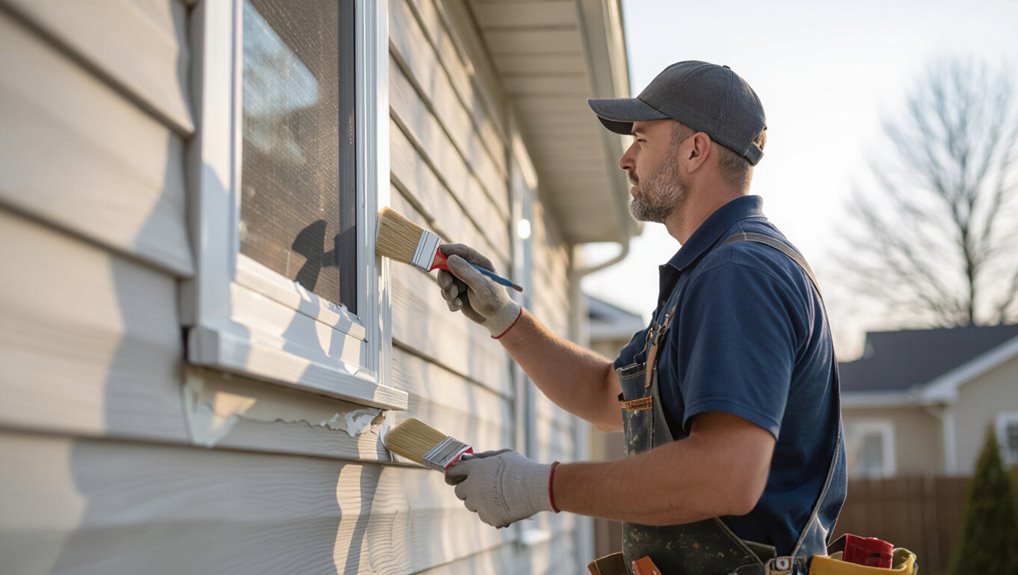
1 clear way to tell that exterior painting is maintenance is that the work only restores the surface to its original condition without adding value, extending useful life, or altering use.
You’ll recognize Maintenance vs. Upgrade when you repaint faded trim, touch up peeling spots, or match existing colors.
Focus on Cost vs. Value: routine repainting preserves appearance and prevents decay but isn’t a capital upgrade.
Clear Examples: Painting That’s a Capital Upgrade
If the exterior painting changes the building’s character, extends its useful life, or increases its market value, treat it as a capital upgrade rather than routine maintenance.
If exterior painting alters a building’s character, extends its lifespan, or boosts value, classify it as a capital upgrade.
You should document projects that clearly qualify as capital improvements and note potential tax implications.
- Full color-change and primer overhaul
- Historic restoration repainting
- Painting after structural repairs
- Durable, warranty-backed coating application
Gray-Area Scenarios and Decision Steps
The examples above show clear-cut cases where painting counts as a capital improvement, but many projects sit in a gray area where intent, scope, and documentation determine the tax treatment.
For gray area scenarios, you should assess scope, repair vs. enhancement, timing, and cost.
Follow clear decision steps: document intent, get estimates, photograph before/after, and consult tax guidance before claiming capital treatment.
Exterior Painting as Part of a Larger Renovation
When your exterior painting is tied to structural upgrades—like replacing siding or repairing trim—you’ll usually treat it as part of the capital project.
You should include the painting costs in the overall remodel budget and allocate them accordingly for tax and depreciation purposes.
Clear documentation showing the link between painting and the structural work will support that treatment.
Tied To Structural Upgrades
Because exterior painting often accompanies structural upgrades, you’ll need to contemplate whether the paint work is integral to the renovation or merely cosmetic.
If paint protects repairs and enhances structural integrity, it leans capital. Consider color longevity, substrate prep, and timing with trades.
- Paint after repairs
- Use durable coatings
- Coordinate schedules
- Document scope and purpose
Included In Remodel Costs
If your exterior painting happens as part of a larger remodel, treat it as a component of the overall project budget and scope rather than a standalone cosmetic expense.
You should include painting in remodel budgeting, coordinating schedules, materials, and contractors to avoid rework.
Because painting affects curb appeal, anticipate the aesthetic impact on finishes and fixtures, documenting costs so it contributes to the remodel’s capital improvement claim.
Painting Combined With Structural Repairs : Tax Impact
While a fresh coat of paint usually counts as routine maintenance, you’ll need to look closer when painting is done alongside structural repairs because the tax treatment can change—costs tied to fixing or replacing structural elements are more likely to be capitalized, whereas purely cosmetic painting remains deductible.
Fresh paint is simple maintenance—but when combined with structural repairs, costs may need capitalization instead of immediate deduction.
- painting types — separate cosmetic vs. structural
- tax implications — capitalize vs. expense
- contractor roles — document scopes
- financial planning — track investment value, painting frequency, property maintenance, aesthetic upgrades
Painting After Siding Replacement : Capitalization Rules
When you replace siding and then paint the exterior, the IRS will often view the painting as part of the capital improvement to the building rather than a routine repair.
So you should treat those painting costs as capitalized and added to the siding’s basis unless you can clearly separate purely cosmetic work.
Document siding prep, surface materials, color selection, paint durability, paint finishes, weather considerations, contractor selection, and environmental impact.
Painting After an Exterior Remodel or Addition
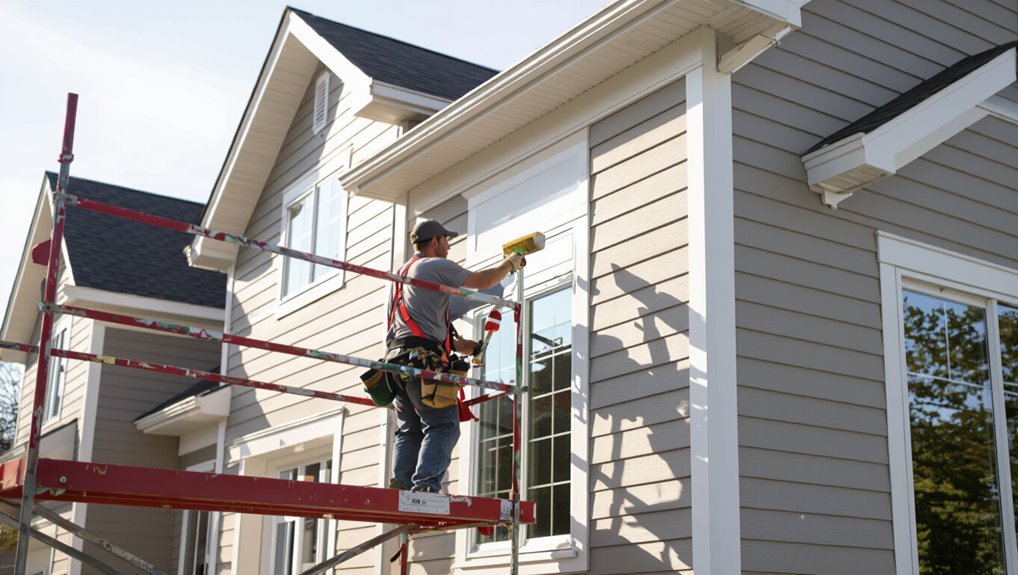
Replacing siding often means the painting gets folded into the siding’s capital cost, and you’ll see a similar treatment after exterior remodels or additions: painting that’s tied to structural changes or new construction is generally capitalized and added to the project’s basis.
You should track decisions like:
- updated color trends selection
- scope tied to the addition
- invoices showing integration
- chosen paint durability ratings
When Painting Extends Asset Life vs. Cosmetic Touch‑Up
You’ll want to tell the difference between painting that actually extends the building’s structural durability—sealing wood, preventing rot, or protecting metal from corrosion—and a purely cosmetic refresh that just improves appearance.
If the work preserves or prolongs the asset’s useful life, it leans toward a capital improvement; if it only restores color or hides wear, it’s usually a repair.
Consider the materials treated, the methods used, and whether the tasks prevent future deterioration.
Extends Structural Durability
If a paint project does more than freshen appearance and actually protects or repairs structural elements, you can treat it as a capital improvement rather than a cosmetic expense.
You’ll see durability benefits and improved weather resistance that slow decay, reduce maintenance, and extend useful life.
Consider these actions:
- Replacing rotten siding and priming repaired areas.
- Sealing gaps and flashing.
- Applying advanced protective coatings.
- Treating and restoring trim to prevent moisture intrusion.
Purely Cosmetic Refresh
When painting only refreshes appearance without addressing decay or structural issues, treat it as a cosmetic touch‑up rather than a capital improvement; you’re just restoring color and minor surface blemishes instead of extending the asset’s useful life.
You’re improving exterior aesthetics and leveraging color psychology to boost curb appeal, but because underlying materials remain unchanged, costs typically qualify as repairs, not capital investments.
When a Color Change Affects Resale Value
Although a fresh coat of paint seems cosmetic, a well-chosen exterior color can directly boost your home’s curb appeal and market value.
An ill-considered change can narrow the buyer pool and reduce offers.
- Use color psychology to evoke warmth or modernity.
- Track resale trends in your neighborhood.
- Prefer neutral palettes for broad appeal.
- Test samples on different facades and lighting.
Contractor Painting vs. DIY : Documentation Differences
Because contractor jobs and DIY projects create different paper trails, you’ll need distinct documentation strategies to protect value and verify work.
Keep contractor credentials, detailed invoices, change orders, and warranties for contractor jobs, plus copies of painting permits where required.
For DIY, keep receipts for materials, dated photos, and any neighbor or inspector approvals.
Store everything with your home records.
Documenting Painting to Support Capitalization
If you want to capitalize an exterior painting project, document it thoroughly from start to finish so you can prove the improvement and its cost basis.
You’ll focus on documenting expenses and maintaining records that show scope, dates, and value added. Keep organized files so an accountant or auditor can verify capitalization.
- Photos before/after
- Scope summaries
- Contractor agreements
- Payment logs
Receipts and Invoices You Must Keep
You should keep original receipts for paint, supplies, and any materials to prove what was purchased and when.
Also save detailed contractor invoices that break out labor, materials, and scope so you can justify capitalization versus repair.
These records make it easier to support your tax position if you’re audited.
Keep Original Receipts
When you remodel or paint the exterior of a property, keep the original receipts and invoices for every material purchase, contractor payment, and permit fee, since they prove the date, cost, and nature of the work for tax and depreciation purposes.
Keep originals safe; use receipts organization and tax documentation practices so you can substantiate improvements quickly.
- Scan originals
- Store originals securely
- Label by project/date
- Backup digital copies
Document Contractor Invoices
After scanning and securely storing receipts, focus on collecting and preserving all contractor invoices tied to the exterior painting project.
You should set up invoice tracking—chronological folders or digital logs—and record payment dates, amounts, and work descriptions.
Keep copies of change orders, warranties, and contractor communication notes.
These documents support tax treatment, future resale, and dispute resolution, so don’t discard anything.
Before-and-After Photos That Strengthen Your Case
A clear set of before-and-after photos can make your exterior painting claim far more convincing.
So gather high-resolution images that show the same angles, lighting, and distance for each stage.
Emphasize before and after impact and visual evidence importance to prove improvement, condition, and necessity.
- Capture wide shots
- Include close details
- Timestamp and label
- Store originals securely
Written Estimates and Project Scopes That Auditors Want
When you prepare estimates, make the scope of work crystal clear so auditors can see what’s being changed versus maintained.
Break costs down by labor, materials, and any contractor markups so each expense is traceable.
Include dated documentation and signatures to prove approval and link the estimate to the completed work.
Clear Scope Of Work
Because auditors look for clear, written evidence of what you’re paying for, your estimates and project scopes should spell out exact tasks, materials, timelines, and responsibilities.
You’ll include scope details and set project expectations so auditors can verify capital improvements.
- Prep and surface repairs
- Paint type and quantity
- Start/end dates
- Contractor responsibilities and warranties
Detailed Cost Breakdown
If you want auditors to approve exterior painting as a capital improvement, provide a detailed cost breakdown in your written estimates and scopes so each expense is traceable and justifiable.
Itemize labor, permits, surface prep, coatings, and waste disposal. Include cost comparison of product tiers and document material selection with quantities and unit costs, showing rationale for choices and allocation across improvement versus maintenance.
Documentation And Signatures
Start by gathering written estimates and a clear project scope that show who did what, when, and why—auditors want traceable documentation and signed approval lines.
Use documentation best practices and meet signature requirements to support capital improvement claims.
- Date-stamped estimates
- Detailed material lists
- Contractor scope of work
- Signed homeowner approval and change orders
How to Record Exterior Painting in Homeowner Accounting
When you record exterior painting in your homeowner accounting, treat it as either a maintenance expense or a capital improvement depending on its purpose and extent; routine touch-ups go to repairs while a full repaint tied to structural work or major exterior upgrades should be capitalized and added to your home’s basis. Note painting techniques and cost considerations, keep receipts, date entries, and note scope.
| Emotion | Action |
|---|---|
| Relief | File receipts |
| Pride | Track upgrades |
Capitalizing Painting on Cost Basis for Future Sale
When you decide whether exterior painting counts as a capital improvement, focus on whether it adds value, extends life, or adapts the property.
Track all painting expenses—invoices, labor, and materials—so you can document the work if it meets capital improvement criteria.
If capitalized, those costs increase your tax basis and can reduce taxable gain when you sell.
Determining Capital Improvement
How do you decide whether exterior painting is a capital improvement you can add to your property’s cost basis?
Evaluate capital improvement criteria and weigh painting investment benefits against repairs. Consider scope, longevity, and value added.
- Improves property value
- Extends useful life
- Changes structure or appearance
- Meets IRS capitalization tests
Tracking Painting Expenses
Start by setting up a clear tracking system so you can capitalize exterior painting costs into your property’s basis for a future sale.
Keep receipts, invoices, photos, and contractor agreements organized. Use spreadsheets or apps for expense tracking and note dates, scope, and materials.
Pair this with budgeting strategies to separate routine maintenance from capital work, making documentation audit-ready and helpful at sale time.
Impact On Tax Basis
Having a documented tracking system makes it far easier to capitalize exterior painting costs into your property’s tax basis for a future sale.
You should keep receipts, note dates, and classify work to support tax implications and financial strategies.
- Save invoices and contracts
- Record dates and scope
- Separate repairs from improvements
- Consult a tax pro for documentation standards
Deducting Painting as a Current Expense for Rental Property
When you own rental property, painting the exterior can often be deducted as a current repair expense rather than treated as a capital improvement—provided the work simply maintains the property’s condition without materially adding value or prolonging its useful life.
You should track painting costs, follow IRS guidelines for expense classification, and document property maintenance to maximize tax deductions on rental properties and protect your investment returns.
Depreciation Rules for Capitalized Exterior Painting
If you capitalize exterior painting, you’ll need to recover the cost over the property’s depreciation period rather than deduct it immediately.
That means you must adjust the asset’s basis and spread the expense over the appropriate recovery period under IRS rules for residential or nonresidential property.
Next, we’ll explain how to calculate the adjusted basis and apply the correct recovery period.
Depreciation Recovery Period
Because capitalized exterior painting is treated as a capital improvement, you’ll recover its cost through depreciation over the asset’s IRS-prescribed recovery period rather than deducting it immediately.
You should choose appropriate depreciation methods and recovery strategies to match property classification and useful life.
- Identify asset class and lifespan
- Use MACRS schedules
- Consider mid‑month conventions
- Track timing for annual claims
Basis Adjustment Rules
As you capitalize exterior painting, adjust the property’s tax basis to reflect the added cost so future depreciation and gain/loss calculations stay accurate.
You’ll add the painting expense to basis, apply appropriate recovery periods, and track depreciation adjustments.
Use clear basis adjustment strategies to document timing and amounts, minimizing adverse tax implications when you sell.
Keep records for audits and accurate cost basis reporting.
How Painting Affects Adjusted Basis When Selling
When you sell a property, exterior painting can change its adjusted basis by either adding to your basis as a capital improvement or being treated as a current expense that doesn’t increase basis; determining which it’s depends on whether the paint job substantially prolongs the property’s useful life, adapts it to a new use, or restores it after damage.
- Painting benefits vs maintenance costs.
- Tax implications for adjusted basis.
- Impact on resale value and investment returns.
- Homeowner responsibilities, aesthetic improvements, financial planning.
Interaction With Tax Credits and Exclusions
You’ll want to check whether exterior painting qualifies you for any tax credits, since some energy or improvement incentives can change what’s deductible.
Also consider how exclusions—like the home-sale gain exclusion—interact with changes to your adjusted basis when you sell.
Together, credits and exclusions can alter the net tax effect of a paint job, so you should review them before claiming costs.
Tax Credit Eligibility
Curious whether exterior painting can boost your tax benefits? You’ll usually find limited tax credit options for painting alone; credits target energy upgrades.
Check whether any eligible expenses (like siding or insulation added with paint) qualify. Confirm documentation and program rules.
Consider:
- Federal energy incentives
- State/local programs
- Manufacturer rebates
- Contractor certifications
Exclusion Effects on Basis
How do exclusions affect your property’s tax basis when you take credits or apply exclusions for exterior work?
You must meet exclusion criteria to reduce taxable income, but credits or excluded amounts can still require basis adjustments.
Track excluded expenses, lower your home’s adjusted basis accordingly, and keep documentation.
That prevents overstating basis when you sell and avoids unexpected tax liabilities.
State Rules: Where to Check Local Guidance
Wondering where to start when state rules might change whether exterior painting counts as a capital improvement?
Check state codes, local regulations, community guidelines, and homeowner associations for guidance.
Do these:
- Review state codes and zoning laws.
- Verify permit requirements and inspection processes.
- Scan community guidelines and HOA rules.
- Perform compliance checks with local building departments.
How Insurance Treats Exterior Painting Costs
After checking state and local rules, you’ll also want to understand how insurers treat exterior painting costs, since coverage and claims handling can affect whether you pay out of pocket or capitalize the expense.
Review your policy coverage for exclusions, deductibles, and listed causes.
For insurance claims, document damage, get contractor estimates, and ask the insurer whether they view work as maintenance or a covered repair.
When Will Insurers Reimburse Painting as Repair vs. Improvement?
When will your insurer treat exterior painting as a repair rather than an improvement? You’ll need to compare insurance coverage, painting guidelines, and maintenance distinctions against improvement definitions; insurers use repair classification and reimbursement policies plus cost analysis and policy nuances to decide.
When exterior painting fixes recent damage and meets your policy’s repair criteria, insurers may reimburse—otherwise it’s an owner-paid improvement.
- Recent damage versus routine upkeep
- Scope and materials used
- Documentation and timing
- Insurer definitions and exclusions
Working With Appraisers to Reflect Painting Value
If you want exterior painting to boost a property’s appraised value, start by coordinating with your appraiser early and providing clear documentation of the work, costs, and scope.
Appraisers will weigh whether the painting is routine maintenance or a value-enhancing improvement and need evidence to justify any upward adjustment.
Keep appraiser communication focused: supply before/after photos, receipts, contractor statements, and a concise value assessment.
How Real Estate Agents View Exterior Painting for Resale
You’ll hear agents say a fresh exterior paint job can transform curb appeal and make buyers stop and look.
They’ll argue that updated paint often raises perceived home value and can justify a higher asking price.
Timing matters too—painting before listing can boost marketability, while doing it after a contract may not influence buyer interest.
Curb Appeal Impact
Because curb appeal often makes an immediate emotional impression, real estate agents treat exterior painting as a quick, high-impact way to boost resale value and attract more buyers.
You’ll notice agents recommend painting to sharpen first impressions and draw curb appeal attention.
Consider these actions:
- Neutralize colors
- Refresh trim and doors
- Repair siding before painting
- Highlight architectural features
Perceived Home Value
When agents evaluate a property’s resale potential, they often see a freshly painted exterior as a low-cost upgrade that signals care and modernity to buyers.
You’ll find agents note improved perceived value and cleaner listing photos, which can sharpen market perception.
You should view painting as a strategic, affordable fix that helps listings stand out without major renovation costs.
Marketability And Timing
If you’re prepping a home for market, timing an exterior paint job can directly affect buyer interest and how long the listing sits. Fresh paint gives photos and curb appeal an immediate lift that attracts showings.
Agents note market trends and buyer preferences; you should act when demand is high.
- Update colors to match trends
- Repair before painting
- Schedule for prime listing weeks
- Document quality work
Cost–Benefit: Paint Now or Before Listing Your Home
Want to boost curb appeal quickly, or should you skip repainting and list as-is to save money?
You’ll weigh paint longevity against immediate aesthetic value: fresh paint can attract higher offers and faster sales, but costs may not fully convert to price.
If your exterior’s condition is minor, disclose and market honestly; major wear usually warrants repainting before listing.
Budgeting Realistic Exterior Painting Costs
To budget realistically, you’ll need accurate material estimates so you’re not caught off guard by paint, primer, and supplies.
Factor in labor rates and the crew size, since those determine most of the cost.
Also set a clear timeframe—weather delays and prep work affect both labor hours and your overall budget.
Accurate Material Estimates
Although exterior painting looks simple, getting accurate material estimates takes careful measurement and product selection; you’ll need to calculate surface area, account for porosity and trim, and choose the right primer and paint types to avoid surprises.
You should also factor in accurate color selection and paint durability when estimating gallons, primers, caulk, and drop cloths.
- Measure surfaces
- Adjust for porosity
- Count trim/details
- Select products
Labor And Timeframe
Labor and timeframe hinge on crew size, skill, and site conditions, so plan your budget around realistic labor hours rather than ideal timelines.
You should get itemized bids showing labor costs per hour or per square foot, anticipate delays from weather or repairs, and set contingency days.
Good timeline management keeps contractors accountable and helps you avoid rushed work or unexpected overtime charges.
High‑Impact Paint Choices That Raise Perceived Value
When you pick colors that complement architectural details and neighborhood style, you instantly boost curb appeal and perceived value; buyers and appraisers notice cohesive palettes, rich contrasts, and well‑chosen accents more than neutral fades.
Consider:
- High quality finishes that reflect market preferences and brand reputation.
- Color psychology for curb appeal.
- Eco friendly options and maintenance considerations.
- Texture variations and seasonal trends.
Materials and Methods That Justify Capitalization
To justify capitalizing exterior painting, you should focus on durable, long‑lasting materials like premium elastomeric coatings and fade‑resistant pigments that extend service life.
You’ll also need structural preparation methods — such as repairing rot, replacing trim, and proper surface priming — that permanently improve the asset.
Together, these choices show the work adds enduring value rather than merely restoring appearance.
Durable, Long-Lasting Materials
Because capitalizing exterior painting depends heavily on the durability of materials and methods used, you should focus on coatings and application techniques that extend useful life beyond routine maintenance.
Perform a durability assessment and rigorous material selection to show lasting improvement.
Consider:
- High-solid elastomeric coatings
- UV-resistant acrylics
- Rust-inhibiting primers
- Breathable, water-shedding finishes
Structural Preparation Methods
Durable coatings matter, but the prep work often determines whether a repaint counts as routine maintenance or a capital improvement.
You should assess and repair rot, framing, and sheathing to restore structural integrity.
Thorough surface preparation—power washing, scraping, priming, and sealing—improves paint adhesion and boosts weather resistance.
Documented, substantial repairs and prep support capitalization rather than simple cosmetic upkeep.
Common Mistakes That Trigger IRS Scrutiny
Wondering which bookkeeping habits invite extra IRS attention? You should avoid sloppy records that blur repairs versus improvements.
Skipping receipts, ignoring painting trends that affect valuation, and poor expense tracking raise red flags. Remember homeowner responsibilities for clear documentation importance and understanding tax implications to reduce IRS audits risk.
Skipping receipts and poor expense tracking invite IRS scrutiny—document repairs, improvements, and tax implications carefully to avoid audits.
- Missing receipts
- Mixing personal/home expenses
- Vague invoices
- Overclaiming labor
How to Present Painting Costs During an Audit
After avoiding the record-keeping mistakes that invite IRS scrutiny, you’ll want to know how to present painting costs clearly if you’re audited.
Gather invoices, contracts, BEFORE/AFTER photos, and payment records. Organize cost documentation by date, scope, and contractor.
Explain whether work repaired or improved property. Use concise audit strategies: a labeled binder or digital folder that lets you quickly substantiate each expense.
When to Consult a Tax Professional or CPA
When should you call in a tax professional or CPA about painting costs? You should seek professional advice when tax implications are unclear or records are incomplete.
Consider calling a pro if costs are large, improvements mix with repairs, or you’re facing an audit. A CPA can clarify deductibility, help document expenses, and recommend proper treatment to minimize risk.
- Large expenditures
- Mixed repair/improvement
- Incomplete records
- Audit risk
Sample Scenarios and Recommended Tax Treatments
If you’re unsure how the guidance from a CPA applies to real situations, the examples below show common exterior painting scenarios and the tax treatments professionals usually recommend.
You’ll see: routine repainting as repairs deductible currently; repainting after structural upgrade capitalized; paint after casualty claimed as a loss; and repaint tied to property sale potentially added to basis.
Consider tax implications and document costs.
Checklist to Decide Whether to Capitalize Exterior Painting
Wondering whether to capitalize exterior painting costs or expense them now? Use this quick checklist weighing exterior painting benefits and cost analysis to decide.
- Does it extend useful life or add value?
- Is it part of a larger improvement project?
- Can you clearly document expenses and purpose?
- Will capitalization lower current taxable income meaningfully?
Follow these steps to choose correctly.
Practical Timeline: Plan, Document, File
Now that you’ve run the checklist to determine whether exterior painting should be capitalized, set up a practical timeline so you can plan, document, and file consistently with your decision.
Schedule planning, note painting trends and color psychology influences, record quotes, contracts, start/end dates, invoices, and photos.
File documents by project phase and retain for tax records and potential sale or audit support.
Tips for Sellers vs. Long‑Term Owners
Whether you’re selling soon or planning to keep the property for years, tailor your exterior painting choices and documentation to your goals:
- For seller motivations, pick neutral, high-impact colors to boost curb appeal.
- Keep invoices and photos to support value adds at sale.
- For owner strategies, choose durable coatings to minimize maintenance.
- Document warranties and long-term maintenance plans for tax or resale clarity.
Quick Reference: 6 Questions to Ask Before Painting
Which six questions should you answer before painting your home’s exterior?
Ask about scope, budget, and timing.
Will repairs or permits affect costs?
Which painting techniques suit your siding and climate?
How will color psychology influence curb appeal and resale value?
Who’s qualified to provide estimates and warranties?
What maintenance will preserve the finish and capital-improvement status?
Resources, Forms, and Records to Keep
After you’ve answered those six questions and chosen a plan, gather the resources, forms, and records that will protect your investment and simplify tax or warranty claims.
Use clear record keeping and documentation strategies to track costs, dates, and contractors. Keep originals and digital backups.
Track costs, dates, and contractors with clear records—keep originals and digital backups for easy claims and audits.
- Contracts and invoices
- Before/after photos
- Paint labels/spec sheets
- Warranty and permit records
Frequently Asked Questions
Can Homeowners Insurance Cover Exterior Paint Damage After a Storm?
Yes — you can sometimes get coverage for exterior paint damage after a storm, but your insurer will assess storm damage, policy limits, and exclusions; file insurance claims promptly, document damage thoroughly, and expect possible depreciation or partial reimbursement.
Does Painting a Historic Home Affect Preservation Tax Incentives?
About 80% of historic homeowners report benefits: yes, if you follow historic preservation standards, painting usually preserves tax incentives; if you don’t, you risk losing eligibility, so check guidelines and get approvals first.
Are HOA Rules Relevant to Capitalizing Exterior Painting Costs?
Yes — HOA guidelines can affect whether you capitalize exterior painting costs, since mandated color or material rules may enhance property value; you’ll need documentation proving the improvement meets capitalization criteria under tax rules.
Can Painting Costs Be Financed Through a Home Equity Line and Affect Tax Reporting?
Yes — you can finance painting with a home equity line, and it can have tax implications. Think of your house as a piggy bank; you’ll need to track payments and classify costs properly for possible deduction or capitalizing.
How Do Municipal Permits for Exterior Work Influence Capitalization?
Municipal permit requirements can push you to capitalize exterior work when municipal regulations mandate substantial alterations or improvements; if permits cover structural or long‑lasting enhancements, you’ll treat costs as capitalized rather than current repairs for tax purposes.
