
Is It Better to Paint or Stain Pressure Treated Wood? Full Comparison
You’re usually better off staining pressure‑treated wood because it soaks in more reliably, dries faster, and’s easier to refresh; paint can give a more opaque, long‑lasting color but only if the wood’s thoroughly dry, primed, and prepped or you’ll get adhesion and peeling problems. Stain shows grain and needs more frequent touch‑ups but costs less over time, while paint needs more prep and higher upfront cost. Keep going to see which choice fits your project and climate.
Quick Decision: Paint vs. Stain on Pressure‑Treated Wood
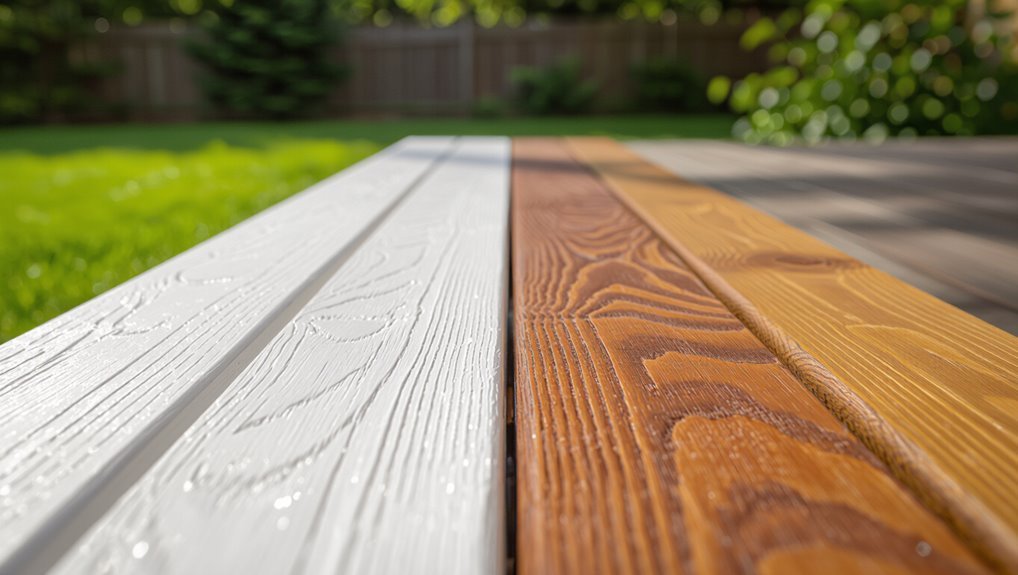
Wondering whether to paint or stain pressure‑treated wood? You’ll weigh appearance, maintenance, and drying time:
paint hides grain and needs stricter application techniques and longer wait before sealing;
stain shows grain, soaks in faster, and’s easier to refresh.
Choose paint for color durability, stain for simpler upkeep.
Pick paint for long-lasting color, or stain if you prefer easier maintenance and quicker refreshes.
Consider finish longevity versus convenience, then pick what matches your schedule and style.
What Pressure Treatment Does to Wood (And Why It Matters)
Pressure treatment forces chemical preservatives deep into the wood to resist rot, insects, and decay, and you’ll notice it changes the wood’s color and smell.
It also alters how the wood holds and releases moisture, so it can stay wetter longer after installation.
Those chemical and moisture changes affect how paints and stains adhere and cure, so you’ll need to adjust your finishing approach.
Chemical Preservation Process
Treating wood forces preservative chemicals deep into its fibers so it resists rot, insects, and decay much longer than untreated lumber.
You’ll notice chemical treatment effects that alter color, increase density, and change how finishes adhere.
These wood preservation methods matter when you choose paint or stain.
- Color shifts
- Surface residue
- Penetration depth
Effects On Moisture
Because preservative chemicals are driven deep into the wood under pressure, treated lumber holds and releases moisture differently than untreated boards.
That shift matters for any finish you apply. You’ll notice increased moisture retention, longer drying time, and altered surface integrity.
Consider application techniques that respect those long-term effects to maximize weather resistance and avoid peeling, trapping moisture, or premature failure.
How Pressure Treatment Affects Adhesion and Drying
When you work with pressure-treated lumber, its retained chemicals and higher moisture content directly change how finishes adhere and how long the wood needs to dry. You’ll notice that paints and stains often struggle to bond until the treatment leaches or the moisture level drops.
Consider practical implications:
- Adhesion challenges: coatings may peel if applied too soon.
- Extended drying times delay finishing.
- Test moisture content before painting or staining.
Paint vs. Stain: Visual Results and Color Options
You’ll notice paint gives a solid, uniform look while stain lets the grain show through with transparent or semi-transparent options.
Expect paint to hide imperfections and keep a consistent color longer, whereas stains may fade unevenly and need more frequent reapplication.
Think about how easily you want to customize or touch up—paint lets you match and cover quickly, stains require blending for seamless repairs.
Opaque Versus Transparent Finishes
Although both paint and stain protect pressure-treated wood, they give very different looks: paint creates an opaque, uniform color that hides grain and blemishes, while stain soaks in and highlights the wood’s texture with transparent or semi-transparent tones.
- Opaque finishes: bold color, hides flaws, matches strict aesthetic preferences.
- Transparent finishes: show grain, subtle tones.
- Both offer UV protection; choose based on desired look and maintenance.
Color Consistency Over Time
Over the first few years after application, paint will keep a uniform color far longer than stain, so you’ll see fewer patchy or uneven areas but may notice chalking and surface fading that require sanding and repainting.
Stain, especially transparent or semi-transparent types, will mellow and expose underlying grain variations sooner, creating a more natural, evolving look that often needs more frequent reapplication to maintain the original tint.
You’ll weigh fading effects against longevity factors, choosing between steady uniformity or gradual, wood-revealing change.
Customization And Touch-Ups
1 clear advantage of paint is the breadth of colors and finishes you can pick from, letting you match trim, siding, or any design scheme exactly; stain offers fewer solid-color options but gives you richer, wood-forward tones and easier on-the-spot blending for repairs.
You’ll prefer paint for bold custom designs; stain wins for subtle touch up techniques.
- Full repaint for palette change
- Spot paint for chips
- Blend stain for scratches
Durability Comparison: Expected Lifespan of Paint vs. Stain
When you compare expected lifespans, paint and stain perform differently on pressure-treated wood because they protect and wear in distinct ways.
Paint forms a surface barrier that can last 5–10 years under good conditions, while semi-transparent stains typically need reapplication every 1–3 years.
Solid-color stains sit between those ranges at about 3–7 years.
You’ll weigh longevity factors, maintenance frequency, and environmental impact when choosing.
Moisture and Mildew Protection on Pressure‑Treated Wood
Because pressure‑treated wood stays wetter longer than kiln‑dried lumber, you’ll need a finish that lets moisture escape while blocking mildew growth; breathable stains and paints with mildew inhibitors offer different trade‑offs.
- Breathable stain: allows vapor release, modest mildew resistance.
- Paint with inhibitor: stronger moisture barrier, higher mildew protection but can trap moisture.
- Hybrid/semi‑transparent: balances vapor transit and mildew resistance.
Surface Prep: Steps for Painting vs. Staining
Now that you’ve weighed vapor movement and mildew control, get the surface ready before you pick paint or stain. You’ll clean, sand, and remove salts; use wood brightener for stain or primer for paint. Focus on surface preparation and proper application techniques to guarantee adhesion and longevity.
| Task | Paint vs Stain |
|---|---|
| Clean | Both |
| Sand | Both |
| Prime/Brighten | Paint / Stain |
When to Coat After Treatment: Drying and Curing Times
If the lumber still feels damp or you can see surface beads of moisture, don’t coat it yet—pressure-treated wood needs time for the preservative and moisture to move out so paint or stain can bond properly.
Follow drying times and curing processes, seek ideal conditions, and adjust application techniques per weather considerations and product recommendations.
- Wait 2–6 weeks.
- Check moisture meter.
- Choose low-humidity day.
Maintenance Needs and Common Touch‑Ups
When you coat pressure‑treated wood, be ready to inspect and touch up regularly to keep the finish protective and attractive. Expect more frequent maintenance on horizontal surfaces and high‑traffic areas.
You should monitor finish wear, clean before repairs, and use appropriate touch up techniques—spot sanding, compatible primer, and feathered repainting or resealing.
Track maintenance frequency seasonally and after severe weather to prevent deterioration.
Cost Comparison: Materials and Lifetime Expenses
You’ll want to compare upfront material costs for paint, primer, or stain and the tools you’ll need.
Then consider long-term maintenance expenses like touch-ups, reapplications, and potential repairs that affect lifetime cost.
That comparison will help you decide which option gives the best value over time.
Upfront Material Costs
Upfront material costs matter because they set the budget tone for any deck or fence project—paint typically requires primer, multiple coats of exterior paint, brushes/rollers, and sometimes caulk, while staining usually needs a cleaner, stain, and fewer application tools.
Consider upfront pricing versus material longevity as you decide.
- Paint: higher upfront pricing, more items.
- Stain: lower kit cost.
- Tools: brushes, rollers, sprayers affect total.
Long-Term Maintenance Expenses
Although paint often looks cheaper at first glance, long-term maintenance tilts the true cost picture—painted pressure-treated wood typically needs repainting every 5–7 years, plus periodic spot repairs and primer touch-ups, while a quality semi-transparent stain usually lasts 2–5 years but requires simpler reapplication and less surface prep; add in labor, cleanup, and waste disposal and you’ll find paint’s recurring expenses (materials, time, and potential sanding/stripping) usually exceed stain’s over a 15–20 year span.
| Item | Paint | Stain |
|---|---|---|
| Maintenance frequency | 5–7 yrs | 2–5 yrs |
| Typical cost/year | Higher | Lower |
| Prep intensity | High | Low |
| Lifetime cost (15–20 yrs) | Greater | Lesser |
Best Finish by Use Case: Decks, Fences, Furniture, Trim
Choosing the right finish depends on how you’ll use the pressure-treated wood: heavy-traffic decks need tougher, slip-resistant coatings, while fences prioritize weather resistance and low maintenance, and furniture or trim call for smoother, more refined finishes.
- Decks: prioritize deck aesthetics, slip resistance, and durable sealers.
- Fences: choose stain or paint for fence longevity with minimal upkeep.
- Furniture/trim: focus on furniture protection and fine trim detailing with clear coats.
How Climate Affects Paint and Stain Performance and a Quick Checklist
Because climate dictates how moisture, temperature swings, and UV exposure interact with pressure-treated wood, you should match paint or stain to your local conditions: oil-based semi-transparent stains soak in and breathe better in humid, rainy areas, while high-quality acrylic paints or solid-color stains offer longer UV and color protection in hot, sunny regions.
Check local climate conditions, moisture levels, temperature extremes, UV exposure, seasonal changes, and humidity effects.
Frequently Asked Questions
Can I Paint or Stain Pressure‑Treated Wood That’s Already Been Painted Years Ago?
Yes — you can repaint or restain it, but you’ll need paint removal techniques to strip loose layers, then wood surface preparation like cleaning, sanding, and brightening; once dry and smooth, you can apply new stain or paint confidently.
Are There Health or Chemical Safety Concerns With Treated Wood Finishes?
About 30% of older treated lumber can still release preservatives; you’ll want safety precautions because chemical exposure’s possible. You should wear gloves, respirator, and ventilate, and avoid burning scraps to limit risks.
Will Primers or Sealers Void My Deck or Fence Warranty?
They usually won’t void warranty if you follow manufacturer instructions; you’ll need to check warranty implications and product compatibility. If you use incompatible primers or sealers or ignore curing times, the maker might deny coverage.
How Do Dark vs. Light Finishes Affect Wood Heat Absorption and Warping?
Dark finishes absorb more heat, so you’ll see higher heat retention and faster drying cycles causing more warping risk; light finishes reflect heat, reducing expansion. Choose coatings that boost finish durability to minimize damage over time.
Can I Change From Stain to Paint (Or Vice Versa) Later Without Stripping?
Sure — subtle switch’s possible: you can change from stain to paint or paint to stain later, but you’ll need surface prep for stain adhesion and paint compatibility; clean, sand, and use appropriate primer or bonding agent first.
Conclusion
You can paint for bold, even color or stain for natural, wood-forward look — both protect, both fail if applied too soon. Paint hides grain and lasts longer between major jobs; stain shows grain and needs fresher coats more often. Paint demands careful prep; stain forgives texture. Match finish to use and climate: choose durability over looks for high-traffic surfaces, choose beauty for low-traffic pieces. Wait for dry wood, then commit.
