
Is Mold in My Basement Dangerous? Health Risks Explained
Yes — mold in your basement can be dangerous, especially if you’re elderly, have young children, allergies, asthma, or a weakened immune system. You’ll likely notice coughing, sneezing, watery eyes, skin irritation, or musty odors; long-term exposure can worsen respiratory issues and sometimes cause chronic symptoms. Small patches you can clean safely, but large or recurring growth needs professionals. Keep humidity low and fix leaks, and keep going to learn practical prevention and remediation steps.
Search Intent And Best Content Format For This Topic
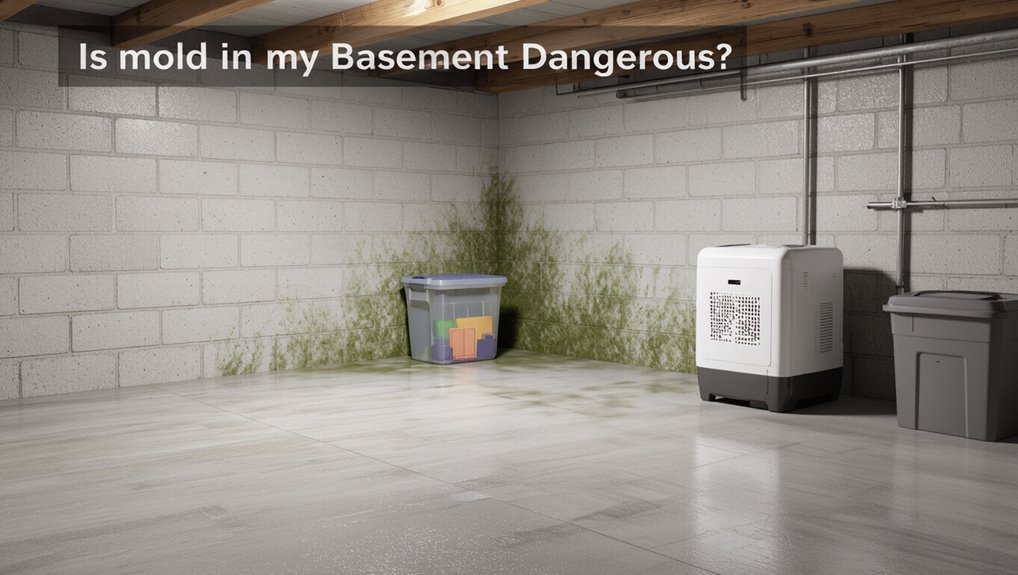
What’re people really looking for when they search “Is mold in my basement dangerous”?
You want clear, actionable info prioritizing health awareness and practical mold prevention.
Offer concise symptoms, exposure risks, when to test, and remediation steps.
Use headings, bullet lists, and brief FAQs so readers scan quickly and act, balancing scientific accuracy with homeowner-focused guidance.
Quick Answer: Is Mold In My Basement Dangerous?
Mold in your basement can trigger immediate symptoms like coughing, sneezing, or skin irritation for some people.
Those with asthma, allergies, young children, older adults, or weakened immune systems are most at risk.
If you’re having persistent symptoms, seeing visible mold patches, or suspect widespread contamination, get professional help promptly.
Immediate Health Risks
Wondering whether basement mold is an immediate danger to you or your family? You can get rapid mold exposure causing respiratory health symptoms like coughing, sneezing, or eye irritation.
Address moisture sources, use safe cleaning techniques, improve indoor air, and consider mold testing for clear risk assessment.
Act quickly with prevention strategies to limit short-term effects and stop growth.
Who’s Most Vulnerable
If you or someone in your home has asthma, allergies, a weakened immune system, or is very young or elderly, you’re more likely to have symptoms from basement mold exposure; otherwise healthy adults often tolerate low-level exposure with fewer immediate effects. Do a mold sensitivity assessment, consider environmental factors, and monitor vulnerable people closely.
| Group | Risk | Notes |
|---|---|---|
| Infants | High | developing lungs |
| Elderly | High | weakened immunity |
| Allergic | Moderate | triggers symptoms |
| Immunocompromised | High | severe reactions |
When To Seek Help
When should you call for professional help?
If you notice widespread mold, persistent dampness, or allergic symptoms that don’t improve, get expert mold detection and remediation.
Also seek help if vulnerable people live there, or if DIY fixes fail.
Professionals can perform thorough health assessments, identify hidden contamination, and recommend safe cleanup to prevent recurrence and protect your family’s health.
Assess & Act: Who Needs To Worry First
If you have infants, elderly people, pregnant women, or anyone with asthma or a weakened immune system at home, you should be concerned first.
The longer you or they’re exposed to basement mold, the greater the chance of health effects.
Start by checking who spends time in the space and how often, then prioritize cleanup or professional help.
Vulnerable Household Members
Because some people react to mold more seriously than others, you should prioritize evaluating household members who’ve respiratory conditions, immune suppression, young children, or are elderly.
Assess each person’s mold sensitivity and take health precautions immediately.
- Children: developing lungs, higher risk.
- Immunocompromised: infections escalate quickly.
- Elderly: chronic conditions worsen with exposure.
Exposure Duration Risk
Although short visits usually cause only mild irritation, the length of time you spend around basement mold greatly changes the health risk.
You should track exposure duration to guide a practical risk assessment: brief, infrequent presence usually needs cleaning and ventilation; prolonged or daily exposure—especially for kids, elderly, or immunocompromised—requires prompt remediation and medical advice to prevent worsening symptoms.
How Mold Forms In Basements: Moisture + Materials
When your basement stays damp and contains organic materials like wood, paper, or drywall, mold can take hold quickly. Spores that are everywhere in the air only need moisture and a food source to grow into visible colonies.
A damp basement with wood, paper, or drywall lets airborne mold spores rapidly grow into visible colonies.
You should identify moisture sources and assess material susceptibility to limit growth.
- Leaks and condensation
- Porous building materials
- Poor ventilation
Common Mold Types Found In Basements
You’ll often see a few predictable types in basements: black molds (including Stachybotrys-like species), common allergenic molds like Cladosporium and Aspergillus, and species that slowly eat away at wood and drywall.
Each group has different health and structural risks, so identification matters. I’ll explain how to recognize them and what to do next.
Black Mold Types
Because basements stay damp and dark, certain black or dark-colored mold species show up there more often than others.
You should learn black mold identification and basic mold prevention strategies so you can act fast.
Common basement black molds include:
- Stachybotrys chartarum — toxic strains, slimy black patches.
- Aspergillus niger — dark spots on walls.
- Cladosporium — fuzzy dark colonies.
Allergenic Mold Species
Several common allergenic molds thrive in basements and can trigger sneezing, eye irritation, or asthma attacks in sensitive people.
You’ll often find Cladosporium, Penicillium, and Aspergillus on damp walls and cardboard.
Learn basic mold identification to spot likely culprits.
If you notice persistent allergies or musty smell, address moisture and consider testing to reduce allergenic reactions and protect household health.
Structural Damage Molds
When moisture stays in a basement long enough, it feeds mold species that don’t just irritate; they eat away at wood, drywall, and insulation.
You should identify common structural molds, act fast, and use proper mold remediation techniques. Follow mold prevention strategies to limit recurrence.
- Dry rot (Serpula)
- Stachybotrys (wet cellulose)
- Chaetomium
Why Humidity And Water Cause Basement Mold
If your basement stays damp or gets wet, mold can take hold quickly because spores only need moisture, organic material, and time to grow.
You’ll see growth when poor humidity control and inadequate moisture management let condensation, leaks, or rising damp persist.
Fixing sources, improving ventilation, and using dehumidifiers stops spores from colonizing surfaces and reduces long-term mold risk.
Visible Vs Hidden Basement Mold: What To Look For
How can you tell if mold is hiding in your basement or sitting right out in the open? Look for patterns: visible mold appears as spots or discoloration on walls, floors, and belongings.
Hidden mold hides behind drywall, under carpets, and inside HVAC. Check moisture sources, inspect suspicious areas, and act quickly.
- Inspect visible mold locations.
- Probe likely hidden mold spots.
- Address moisture sources.
Smells And Sensory Clues That Indicate Mold
Notice a musty, earthy odor in your basement? You should trust mold odors as a cue and boost sensory awareness: sniff around corners, vents, and stored boxes.
Use simple detection methods like dampness meters and visual checks to trace moisture sources—leaks, condensation, or poor drainage.
If air quality feels musty or causes irritation, investigate promptly and control humidity to prevent growth.
Which Molds Are More Likely To Affect Health
You’ll most often encounter common allergenic molds like Cladosporium, Penicillium, and Aspergillus, which can trigger sneezing, runny eyes, and asthma flares.
A different concern is Stachybotrys chartarum—often called “black mold”—which some studies link to more severe respiratory symptoms and chronic irritation.
I’ll explain how to recognize these types and what to do if you find them.
Common Allergenic Molds
Because some molds release spores and proteins that commonly trigger allergic reactions, it’s helpful to know which types you’re most likely to encounter.
You should use mold detection and prevention methods early.
Common allergenic molds you may see include:
- Alternaria — often in damp walls and fabrics.
- Cladosporium — on wood and carpets.
- Penicillium — in water-damaged materials.
Toxic (Black) Mold
What makes “black mold” particularly worrying is that some species produce mycotoxins that can harm people and pets when exposure is prolonged or heavy.
You should avoid prolonged contact and limit toxic exposure; ventilate, dry wet areas, and wear protection during cleanup.
If you notice persistent health symptoms — headaches, coughing, nosebleeds, or worsening asthma — get professional testing and remediation promptly to reduce risk.
Allergic Reactions From Basement Mold Exposure
How might breathing basement mold affect you? You may develop allergy symptoms like sneezing, itchy eyes, and nasal congestion.
Early mold identification helps you act fast.
- Recognize visible spores or musty odor.
- Note recurring cold-like signs after basement time.
- See a doctor or allergist if symptoms persist despite cleaning.
Mold And Asthma: Triggers And Risks
If you have asthma, mold in your basement can trigger wheezing, coughing, or attacks by irritating your airways.
You can reduce risk by controlling moisture, removing visible mold, and using air filtration.
Talk with your doctor about action steps and when to seek urgent care.
Mold As Asthma Trigger
Because mold releases tiny spores and volatile compounds into the air, it can directly trigger asthma symptoms in people who’re sensitive or already have the condition.
You’ll notice worsening mold symptoms, coughing, wheeze, or chest tightness. For asthma management, act quickly and consult your clinician.
- Track symptoms
- Identify triggers
- Follow treatment plan
Reducing Exposure Risks
Having tracked symptoms and worked with your clinician, you can focus on practical steps to lower mold exposure and keep asthma under control.
Use mold prevention strategies: fix leaks, dry wet areas within 48 hours, clean visible mold, and use HEPA filters.
Combine moisture control techniques—dehumidifiers, proper ventilation, and sealed crawlspaces—with avoidance of basements during remediation to reduce triggers and flare-ups.
Respiratory Infections And Weakened Immune Systems
When mold spores invade your basement, they can worsen respiratory infections and strain an already weakened immune system, especially in children, the elderly, or anyone with chronic lung conditions.
- You’ll notice allergy symptoms and asthma triggers from mold exposure, worsening chronic conditions.
- Weakened immune responses make vulnerable populations more prone to serious health effects.
- Prioritize prevention strategies and prompt mold removal to protect your respiratory health.
Toxic Mold Myths Vs What Science Shows
You might’ve heard that all mold is toxic, but that’s not true — species differ and only some produce harmful toxins.
Science shows that the type of mold and the specific mycotoxins matter, and health effects depend on how much you’re exposed to.
Before you panic, focus on identifying the species and reducing your exposure.
Myth: All Mold Toxic
Although mold can cause health issues in some cases, not all mold is toxic or equally harmful. You shouldn’t assume every patch is dangerous; “toxic mold” gets overused in mold myths.
Assess risk by context and exposure, then act.
- Size and duration matter.
- Your symptoms guide urgency.
- Visible growth plus dampness increases concern.
Species And Toxin Reality
Because different mold species produce different compounds, knowing the species helps assess risk but doesn’t automatically label a patch as “toxic.”
You should use mold identification techniques—visual inspection, sampling, lab analysis—to clarify species and likely metabolites.
Science shows presence of a species doesn’t equal harm; you’ll focus on practical exposure mitigation strategies like cleanup, moisture control, and ventilation rather than panic.
Exposure Dose Matters
How much mold you encounter matters as much as what species it is: low-level, occasional exposure rarely causes the severe health effects that scare headlines suggest, while sustained, high-dose exposure—especially in sensitive people—can trigger real respiratory, allergic, or toxic responses.
- Know exposure thresholds to judge risk.
- Watch for worsening mold sensitivity signs.
- Reduce dose by improving ventilation and cleanup.
Are Mycotoxins Dangerous?
Wondering whether mycotoxins pose a real threat? You can be affected by mycotoxin exposure, especially with heavy or prolonged contact. Health implications range from irritation to more serious symptoms in vulnerable adults. Visualize risks:
| Source | Symptom | Severity |
|---|---|---|
| Airborne dust | Coughing | Low–Medium |
| Contaminated food | Nausea | Medium |
| Damp materials | Headache | Low–High |
How Mold Exposure Affects Children And Infants
If your child is exposed to mold, their developing immune and respiratory systems make them more likely to react than adults will; infants and young children commonly show increased coughing, wheezing, persistent nasal congestion, and more frequent respiratory infections.
You should watch for clear child health impacts and heightened infant sensitivity.
- Allergy-like symptoms
- Asthma development or worsening
- Recurrent infections
Risks For Older Adults And People With Chronic Illness
If you’re older or managing a chronic illness, mold in your basement can be more than a nuisance because your immune system may not fight off spores as well.
Exposure can also aggravate existing respiratory conditions like COPD or asthma, leading to increased symptoms or infections.
Plus, mold-related inflammation or medications you’re taking can interact, so you should check with your healthcare provider about specific risks and precautions.
Weakened Immune Response
Because your immune system weakens with age or chronic illness, even low levels of household mold can pose a real health risk.
You may have reduced defenses against infections or toxins from mold exposure, so take action quickly.
- Increased infection risk
- Slower recovery from illness
- Heightened sensitivity to new exposures
Worsening Respiratory Conditions
A weakened immune system also makes your lungs more vulnerable: mold spores and their microscopic fragments can trigger inflammation, bronchospasm, and infection that worsen existing respiratory conditions like COPD, asthma, or chronic bronchitis.
You’ll notice worsening symptoms such as increased coughing, breathlessness, and wheeze.
Act quickly: use prevention strategies like moisture control, improved ventilation, and prompt mold removal to reduce risks.
Medication And Treatment Interactions
When you’re older or managing chronic illness, mold exposure can interact with medications and treatments in ways that make side effects worse or reduce effectiveness; for example, mold-related inflammation can amplify steroid side effects, and certain antifungal treatments can interfere with heart or diabetes medications.
- Check medication interactions with your clinician.
- Watch for increased treatment side effects.
- Test and remove mold to protect therapy.
Short-Term Symptoms To Watch For After Exposure
Notice any sudden sneezing, coughing, or itchy eyes after spending time in a damp basement? You may experience immediate reactions from mold exposure—watery eyes, nasal congestion, skin irritation, or wheezing.
These short term impacts reflect allergy symptoms and respiratory issues influenced by environmental factors. Sensitive populations, like children, elderly, or asthmatics, can react more strongly and should avoid further exposure and seek care promptly.
Long-Term Health Effects Linked To Prolonged Exposure
If mold stays in your basement for months or years, you can develop chronic respiratory problems like asthma or bronchitis that don’t go away.
You may also get persistent allergic reactions—ongoing sneezing, congestion, or skin irritation—that interfere with daily life.
In some cases, prolonged exposure has been linked to neurological and cognitive symptoms such as headaches, memory issues, or difficulty concentrating.
Chronic Respiratory Issues
How long you breathe moldy air matters: prolonged exposure to basement mold can lead to chronic respiratory problems like persistent coughing, wheeze, and reduced lung function.
You should note mold symptoms early and discuss treatment options with a clinician to limit damage.
- Monitor breathing changes.
- Get professional air testing.
- Follow medical and remediation plans.
Persistent Allergic Reactions
Ever wondered why you keep sneezing or getting itchy eyes after spending time in the basement? You may develop persistent mold allergies as your immune response stays activated. Over months, exposure heightens symptoms, sinus problems, and skin irritation. Reduce exposure, clean mold safely, and see a doctor for testing and treatment.
| Symptom | Severity | Action |
|---|---|---|
| Sneezing | Moderate | Avoid |
| Itchy eyes | Mild | Antihistamine |
| Sinusitis | High | See doctor |
| Skin rash | Moderate | Topical care |
Neurological And Cognitive Effects
When you’re exposed to mold spores and their toxins over months or years, you may start noticing subtle but persistent changes in memory, concentration, mood, or sleep.
You might experience neurological symptoms and early cognitive decline.
Watch for:
- Persistent headaches and brain fog
- Difficulty concentrating or remembering details
- Mood swings, anxiety, or disrupted sleep patterns
Emergency Signs: When To Get Help Now
Noticing sudden or severe signs of mold means you should act immediately—don’t wait. If you have breathing trouble, intense headaches, or visible spreading patches, call emergency services and a mold remediation pro. Use basic mold detection techniques for notes, then follow emergency response strategies from professionals.
| Sign | Action |
|---|---|
| Respiratory distress | Call 911 |
| Widespread growth | Evacuate |
| Neurological symptoms | Seek urgent care |
| Visible water source | Shut off water |
When You Can Manage Basement Mold Yourself Safely
If the mold is confined to a small, non-porous area and you don’t see any structural damage, you can usually handle the cleanup yourself.
Wear gloves, eye protection, and an N95 mask, and use detergent or a commercial mold cleaner to remove the growth.
Stop and call a professional if the mold spreads, keeps returning, or you notice rot in beams or joists.
Small, Localized Areas
Because small patches of mold usually mean a limited, contained problem, you can often handle cleanup yourself with basic precautions and the right supplies.
You should still assess localized mold and health implications, wear gloves, and ventilate.
Follow steps below to stay safe and effective:
- Isolate area and ventilate well.
- Use detergent and scrub, not bleach on porous surfaces.
- Dry thoroughly and monitor.
No Structural Damage
Good news: when mold is confined to non-structural surfaces and hasn’t invaded framing, joists, or support beams, you can usually handle cleanup yourself with basic precautions.
Wear gloves, an N95 mask, and goggles; isolate the area; discard porous materials; scrub hard surfaces with detergent and dry thoroughly.
Improve basement ventilation and address moisture sources for mold prevention to stop recurrence.
How To Assess Mold Size And Severity Quickly
When you inspect mold in your basement, focus first on visible area, location, and material affected to judge size and severity quickly.
Use simple mold detection methods and basic severity assessment techniques to decide next steps.
Check these points:
- Measure patch size and note porous vs. nonporous surfaces.
- Look for spread patterns and moisture sources.
- Smell musty odors and note health symptoms.
When To Call A Certified Mold Inspector
If your quick assessment shows large patches, mold on porous materials, persistent dampness, or anyone in the home is having respiratory symptoms, call a certified mold inspector.
You should also call when DIY fixes fail, visible mold returns, or the source of moisture is unclear.
Certified professionals can perform a thorough mold inspection, identify hidden contamination, and recommend safe remediation steps.
What To Expect From A Professional Mold Inspection
When a pro comes out, they’ll check visible mold, moisture sources, ventilation, and any hidden spots behind walls or under flooring.
You can expect a walk-through, moisture and air testing if needed, and a written report with photos and recommendations.
Ask about their sampling methods and what the next steps should be based on the findings.
What Inspectors Look For
Although you might only notice musty smells or visible spots, a professional inspector will follow a systematic checklist to find both obvious and hidden mold sources.
They’ll use mold inspection techniques and moisture detection tools, then assess affected materials, ventilation, and water entry points.
- Surface and hidden growth
- Moisture sources and leaks
- HVAC and airflow issues
Typical Inspection Process
A typical professional mold inspection starts with a walkthrough where the inspector talks with you about visible concerns, recent water events, and areas you’ve noticed odors or stains. They use mold inspection techniques and mold assessment tools, sample air and surfaces, and map moisture sources. You’ll get findings, photos, and a remediation recommendation.
| Activity | Purpose |
|---|---|
| Walkthrough | Identify concerns |
| Sampling | Confirm spores |
| Moisture scan | Locate leaks |
| Report | Recommend fixes |
Mold Testing: Swabs, Air Samples, And Limits
Mermors of mold testing can feel technical, but you can get useful results by choosing the right methods: surface swabs show what’s growing on materials, air samples capture spores floating in the room, and bulk or tape lifts reveal hidden colonies.
- Swabs — cheap, direct mold detection methods for surfaces.
- Air samples — assess indoor air quality and spore levels.
- Tape/bulk — identify hidden colonies and material involvement.
Do You Need Lab Tests To Decide On Remediation?
You don’t always need lab tests to decide on mold remediation — a clear, limited patch of visible mold and a known moisture source can often be handled after a careful visual inspection.
Testing can help when mold is hidden, widespread, or when occupants have unexplained health symptoms and you need species or spore concentration data.
Balance the added cost and delay of lab work against the actionable information it will give you for cleanup.
When Lab Testing Helps
When should you bother with lab testing for basement mold? You’ll want clear answers when health risks are unclear or remediation costs are high.
Lab testing methods and mold identification techniques give species-level results and quantify spores.
- Persistent symptoms with unknown source
- Complex HVAC or hidden growth
- Dispute with landlord or insurer
When Visual Inspection Suffices
In many basement mold cases, a careful visual inspection gives you enough information to decide on remediation without lab tests.
You’ll use visual inspection techniques to map affected areas, note color, texture, and moisture sources, and assess spread.
With common inspection tools — flashlight, moisture meter, mirror, and camera — you can determine if DIY cleanup or professional remediation is needed.
Costs Versus Benefits
Although lab tests can give precise species and spore counts, they’re often unnecessary for deciding on basement mold remediation; weighing their cost against the actionable information they provide helps you choose the right path.
- Do a cost analysis: compare test fees to remediation estimates.
- Do a benefit assessment: will results change your actions?
- Skip testing if visible mold, clear source, and DIY or contractor plan suffice.
DIY Basement Mold Removal: Safe Steps
Because you can handle small, contained mold problems safely, start by evaluating the area and gathering the right protective gear and tools before you begin.
Use mold identification tips to confirm non-porous surfaces and limited spread.
Contain the area, ventilate, remove affected materials, clean with detergent and appropriate disinfectant, and dry thoroughly.
Follow safe cleanup techniques and discard contaminated items properly.
Personal Protective Equipment For DIY Mold Cleanup
Before you start cleaning mold in your basement, you should gear up with the right personal protective equipment—gloves, goggles, and coveralls—to keep spores off your skin and clothes.
You’ll also need effective respiratory protection; N95 masks can work for small, contained jobs while a half- or full-face respirator with P100 cartridges is better for larger or heavy-contamination tasks.
Pick equipment that fits well and is rated for mold work so you’re actually protected while you clean.
Personal Protective Gear
When you’re tackling mold cleanup yourself, the right personal protective equipment (PPE) matters as much as the cleaning method — it protects your lungs, eyes, and skin from spores and irritants.
Use PPE from mold removal kits and follow cleanup protocols for contamination prevention and safe disposal. Keep emergency supplies handy.
- protective masks, safety goggles
- disposable gloves, protective clothing
- respirator filters, mold removal kits
Respiratory Protection Options
You’ve already covered eye, hand, and body protection; now focus on what you’ll breathe. Use N95 or better respirators, guarantee fit, and pair with HEPA vacuums for air filtration. For serious infestations, use P100 or supplied-air. Respiratory gear supports mold prevention and limits spores.
| Mask Type | Protection | Use |
|---|---|---|
| N95 | High | Small jobs |
| P100 | Higher | Heavy mold |
| Supplied-air | Maximum | Professional remediation |
Effective Cleaners And What To Avoid
Although small patches can often be handled yourself, choosing the right cleaner and avoiding hazardous products makes remediation safer and more effective.
- Use soap, water, and vinegar for natural alternatives when cleaning effectiveness suffices on non-porous surfaces.
- Reserve diluted bleach for disinfecting hard, non-porous areas; never mix with ammonia or acids.
- Avoid untested DIY mixtures and powdered mold-killing products that can release harmful dust.
How To Remove Mold From Basement Walls And Concrete
Start by clearing loose debris and drying the area so you can see the extent of the mold and tackle it effectively.
Start by removing loose debris and drying the area to reveal and address the mold effectively.
Wear protection, scrub concrete with a stiff brush and cleaner recommended for masonry, rinse and dry thoroughly.
Use appropriate mold removal techniques, seal cracks, and apply a masonry-safe antimicrobial if needed.
Implement basement moisture management to prevent recurrence and monitor humidity regularly.
Handling Moldy Drywall, Insulation, And Wood
When drywall, insulation, or wood in your basement shows mold, act quickly to assess damage, contain the area, and decide what can be cleaned versus what must be removed.
Use proper PPE, isolate the space, and focus on moisture management to prevent recurrence. Consider professional mold removal techniques for porous materials.
- Remove heavily damaged materials
- Clean salvageable surfaces
- Fix leaks and dry thoroughly
Electronics And Stored Items: Salvage Or Discard?
After you’ve removed or cleaned moldy building materials and stopped the moisture source, check electronics and stored items next—these often suffer both visible mold and hidden moisture damage.
You’ll assess salvageability: clean non-porous electronics after drying, but avoid powering wet devices.
Porous materials and heavily contaminated goods generally need discarding.
Prioritize health over salvaging electronics; document losses for insurance.
Preventing Mold Recurrence With Moisture Control
Because mold only returns where moisture persists, you’ll prevent recurrence by keeping humidity low, fixing leaks, and ensuring proper drainage and ventilation.
Use moisture barriers, basement sealing, water resistant materials, and ventilation systems.
Schedule routine inspections and humidity monitoring; consider dehumidifier placement.
Follow drainage solutions and fix sources promptly.
- Seal and barrier check
- Ventilate and drain
- Inspect and monitor
Best Dehumidifiers And Humidity Targets For Basements
Maintaining low humidity is the most reliable way to keep mold from coming back, so choosing the right dehumidifier and target humidity level for your basement matters.
Pick units with adjustable dehumidifier features, auto-defrost, and appropriate capacity for square footage. Aim for humidity levels between 30–50% (often 40% ideal).
Empty or plumb the drain, and monitor with a hygrometer regularly.
Improving Basement Ventilation On A Budget
Want better air downstairs without spending much? Use budget-friendly DIY solutions to boost air circulation and humidity control while protecting air quality with simple moisture barriers.
Try these:
- Install inexpensive basement fans for targeted exhaust options and cross-ventilation.
- Retrofit window vents or passive ventilation systems to improve airflow.
- Add portable air cleaners and monitor humidity for consistent ventilation system performance.
Fixing Leaks, Grading, And Exterior Drainage To Stop Mold
Good ventilation helps, but you’ll only get so far if water keeps finding its way into the foundation; fixing leaks, correcting grading, and improving exterior drainage attack the root causes that feed basement mold.
You should inspect foundation cracks, seal gaps, regrade soil away from the house, and install gutters/downspouts for effective drainage solutions.
Prioritize leak prevention to stop recurring damp and mold growth.
Sump Pumps & Waterproofing: When To Install
When should you consider a sump pump or full waterproofing? You should act if you see recurrent flooding, persistent dampness, or mold growth despite fixes.
Evaluate sump pump types, floor drains, and full basement waterproofing options to stop water at the source.
Consider sump pumps, floor drains, or full basement waterproofing to stop water at its source.
- Recurrent flooding after storms.
- Chronic humidity or musty odors.
- Visible mold or wall efflorescence.
Choosing The Right Remediation Company
If recurring floods, persistent dampness, or visible mold are driving you toward larger fixes like sump pumps or full waterproofing, you’ll also need a remediation company that can handle diagnostics and long-term solutions.
Choose firms that perform thorough mold assessment, document findings, and explain remediation techniques tailored to your situation.
Verify certifications, insurance, and clear timelines so you know what to expect.
Questions To Ask Before Hiring A Mold Pro
What should you ask before hiring a mold pro? You’ll want clear hiring tips to judge credentials and scope.
Ask about certification, specific mold remediation methods, and guarantees. Verify insurance and references. Confirm timeline and containment procedures.
- Certifications and references
- Remediation approach and containment
- Insurance, warranties, timeline
Typical Costs And What Affects Pricing
Costs for mold inspection and remediation can vary widely, and you’ll want to know what drives the price before you hire anyone.
You’ll pay for inspection, testing, scope, and chosen mold remediation options. Hidden damage, accessibility, and containment needs raise costs.
Expect charges for inspection, testing, scope, plus remediation choices; hidden damage, access, and containment increase costs.
Adding basement ventilation improvements or fixing leaks increases upfront expense but reduces recurrence.
Get multiple quotes and itemized estimates to compare.
Insurance: Will Homeowner Policies Cover Mold?
Wondering whether your homeowner’s policy will help cover a basement mold problem? You’ll usually find mold coverage varies: sudden water damage is often covered, long-term neglect isn’t, and expensive remediation may hit policy limits.
Check exclusions, document timely mitigation, and ask your insurer about endorsements or separate mold riders to understand limits and avoid denied claims.
- Sudden vs. gradual
- Exclusions
- Policy limits
Documenting Mold Damage For Claims And Inspections
Photos and a clear timeline are your best evidence when filing a mold claim or preparing for an inspection.
So immediately start photographing affected areas, damaged belongings, and any visible growth from multiple angles.
Then note dates, smells, and events (like leaks or floods) that preceded the problem.
Keep organized claim documentation, label files, record communications, and bring photos to the mold inspection.
Ongoing Monitoring And Maintenance Plans
Once you’ve documented the damage and fixed immediate sources of moisture, set up a simple monitoring and maintenance plan to keep mold from returning.
You’ll track conditions, act on alerts, and follow mold prevention strategies focused on basement humidity control.
- Install a hygrometer and log readings.
- Schedule dehumidifier and fan maintenance.
- Inspect for leaks monthly and document actions.
Simple Seasonal Checks To Prevent Basement Mold
Because basements respond to seasonal shifts, you should run a few quick, regular checks each season to catch moisture issues before mold starts.
Inspect gutters, downspouts, and grading for drainage, test dehumidifier function, and check for leaks or condensation.
Log findings and act on problems promptly.
These preventive measures, part of basic seasonal maintenance, reduce mold risk and costly repairs.
Health-First Cleanup: Protecting Sensitive Household Members
When dealing with basement mold cleanup, put vulnerable household members first by isolating the affected area, running a HEPA air purifier, and keeping children, pregnant people, older adults, and anyone with asthma or immune issues well away until the space is secure.
Use targeted cleanup strategies and monitor for mold sensitivity. Follow these steps:
Use focused cleanup methods and watch for mold sensitivity; follow the outlined steps to protect your household.
- Seal and ventilate.
- Use PPE and HEPA filters.
- Limit access and document exposure.
Quick Checklist: Act Now If You See These Warning Signs
If you spot dark, fuzzy patches spreading on walls, persistent musty odors, or recurring damp spots after a leak, act immediately—these are common red flags that mold’s established and could be affecting your air and belongings.
Close off the area, wear protection, dry and clean small spots, document damage, and improve airflow.
Follow mold prevention strategies and basement ventilation tips to stop recurrence.
Resources And Where To Find Reliable Local Help
You’ve taken the right immediate steps to contain visible mold; now it helps to know where to get reliable local support for inspection, cleanup, and prevention.
Use local mold resources and tips for finding professionals you can trust.
- Contact your county health department for referrals.
- Check certified remediation companies and reviews.
- Ask neighbors or contractors for recent recommendations.
Frequently Asked Questions
Can Mold in My HVAC System Spread to the Basement?
Yes — mold in your HVAC can spread to the basement via airflow and duct leaks. You should prioritize HVAC maintenance, clean or replace filters, and control humidity to reduce mold spores and limit contamination throughout your home.
Can Pets Develop Chronic Conditions From Basement Mold Exposure?
Yes — like a slow tide eroding a shoreline, repeated basement mold exposure can cause pets to develop chronic conditions; you’ll notice worsening mold symptoms, persistent respiratory issues, skin irritations, and declining pet health needing veterinary care.
Do Plants in the Basement Increase Mold Risk?
Yes — having many plants, damp plant soil, or dense plant types can raise basement humidity and boost mold risk; you should choose low-transpiration species, avoid overwatering, use trays, and monitor humidity with a dehumidifier if needed.
Can Mold Affect Home Resale Value and Disclosure Requirements?
Yes — mold can lower curb appeal like a shadow over a listing, and you’ll likely need mold remediation before sale; disclose known issues, since property appraisal and legal rules often require reporting to protect buyers and value.
Are Over-The-Counter Mold Test Kits Accurate Enough for Legal Claims?
No — you shouldn’t rely on over-the-counter mold test kits for legal claims; mold testing accuracy is limited, results can be misleading, and legal implications demand certified lab analyses and professional documentation to support any dispute or disclosure.
Conclusion
Think of your basement like a garden shed: if you ignore a leak, weeds—here, mold—will take over and spoil what you care about. You don’t have to be a gardener to act: check for dampness, protect kids and pets, and call a pro if signs persist. By treating moisture early and cleaning safely, you’ll keep your home healthy and reclaim that lower space, turning a potential problem into a tidy, usable place.
