
What Color to Paint Bathroom Ceiling for Best Visual Effect
Pick a ceiling color based on size, light, and mood: bright white or soft neutral will open small or dim bathrooms, pale blues or greens give a calming spa feel, and deeper or glossy tones add drama in large, well-ventilated spaces. Consider matching a subtle tint of your wall color for cohesion, test samples at different times, and use moisture-resistant, low-sheen paint to avoid mold. Keep going to get practical testing, finish, and maintenance tips.
Quick Answer: Best Bathroom Ceiling Colors and When to Use Them
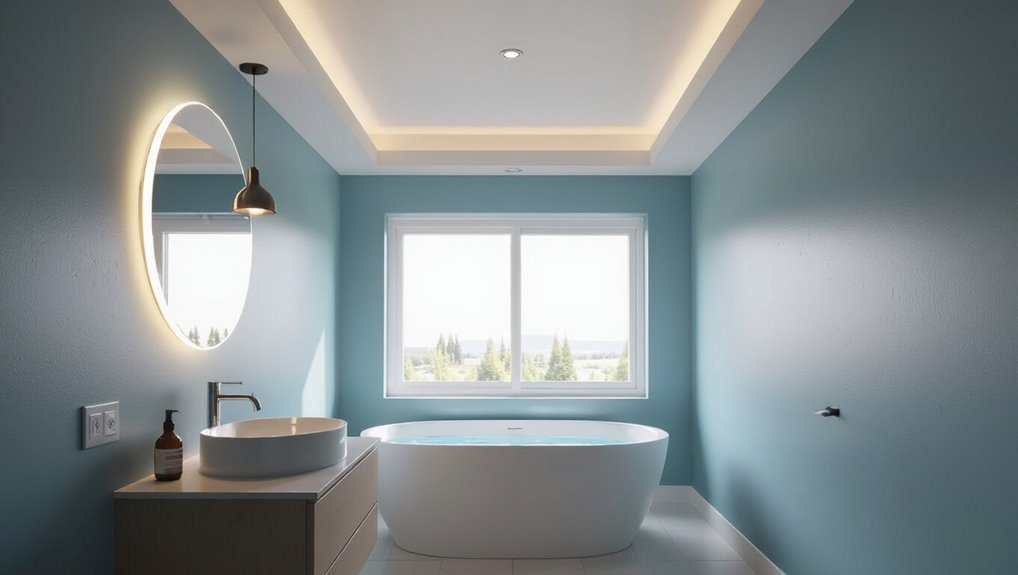
When choosing a bathroom ceiling color, pick one that complements your room’s size, lighting, and style: bright whites and soft neutrals open small or poorly lit bathrooms, pale blues and greens add a calming spa feel, and deeper tones or glossy finishes create drama in larger, well-ventilated spaces.
You’ll use ceiling color psychology to shape bathroom ambiance—choose brightness for height, cool hues for calm, bold for drama.
How to Pick a Bathroom Ceiling Color: 4-Step Checklist
Start by checking your bathroom’s lighting—natural and artificial light will change how colors read on the ceiling.
Then compare ceiling options with your wall color and finishes so everything feels intentional, not accidental.
These two quick checks will steer you toward the right shade before you test samples.
Evaluate Lighting Conditions
Because lighting changes how every color reads, assess your bathroom’s natural and artificial light before choosing a ceiling hue.
You’ll consider ceiling height, room dimensions, color temperature and light reflection to guide mood enhancement and fixture choices.
- Note natural light direction and intensity
- Evaluate artificial light types
- Test samples at different times
- Observe reflections on surfaces
- Adjust for low ceilings
Coordinate With Walls
1 clear rule: make the ceiling feel like part of the room, not an afterthought.
When you coordinate with walls, pick a ceiling shade that maintains color harmony—either a subtle tint of the wall hue or a neutral that complements.
Use wall contrast deliberately: darker walls call for a lighter ceiling to open space, while pale walls can handle a slightly richer ceiling tone.
How Ceiling Color Changes Perceived Height and Volume
Choose a light ceiling color if you want the room to feel taller and more open, since pale tones reflect light and expand perceived space.
If you prefer a cozy, intimate bathroom, a darker ceiling will visually lower the height and make the room feel snug.
Think about the mood you want and use ceiling color to shape how roomy the space feels.
Lighter Ceilings Expand Space
When you paint the ceiling a lighter shade than the walls, it visually lifts the room, making the height feel greater and the space more open.
You use color psychology to nudge perception; lighter tones expand perception and reflect light.
Try these practical cues:
- Choose soft whites or pale blues
- Keep matte or low-sheen finishes
- Contrast with warmer walls
- Use consistent trim
- Add vertical accents
Darker Ceilings Create Intimacy
Although a darker ceiling visually lowers the plane above you, it can make a bathroom feel cozier and more intentional rather than cramped. You’ll create an intimate ambiance that invites relaxation; choose deep paint to frame fixtures and guide focus, turning a small bath into a cozy retreat.
| Effect | Color | Tip |
|---|---|---|
| Depth | Charcoal | Use glossy trim |
| Warmth | Navy | Pair with warm light |
| Focus | Matte black | Keep walls lighter |
Avoiding a Cave Effect in Low Ceilings
If your bathroom has a low ceiling, paint choices can either open the space or make it feel claustrophobic; aim for light, reflective colors and satin or semi-gloss finishes to bounce light upward and create height.
- Use pale cool tones to counteract a cave effect
- Keep trim slightly lighter than walls
- Avoid heavy patterns overhead
- Use continuous wall-to-ceiling color
- Maximize natural and layered lighting
Add Intimacy to High Ceilings Without Shrinking the Space
Low ceilings need light colors to feel open, but high ceilings invite a different approach: you can make the room feel cozier without visually squashing it.
Paint the upper portion in a slightly deeper, muted tone than walls to add intimate ambiance and visual warmth.
Keep trims lighter, use vertically oriented lighting, and retain reflective surfaces to preserve openness while softening scale.
When to Paint the Ceiling White to Maximize Brightness
If your bathroom is small or gets little natural light, painting the ceiling white will make the space feel brighter and more open.
You’ll see the biggest payoff when fixtures and glossy tiles reflect that light back into the room. Opt for white if you want maximum brightness with minimal effort.
Small Bathrooms, Big Impact
When your bathroom is small, painting the ceiling white can instantly boost brightness and make the space feel taller; white reflects more light than any other color, so even modest fixtures and a tiny window will seem noticeably brighter.
- Use white for small space solutions.
- Pair with light walls.
- Keep trim crisp.
- Rely on color psychology to enhance openness.
- Choose satin finish for easy cleaning.
Low Natural Light Rooms
In rooms that get little natural light, painting the ceiling white will immediately bounce what daylight you have around the space and make it feel brighter and more open.
You’ll enhance bathroom ambiance without risking gloom; white reflects light, visually raising the ceiling.
Use warm white for cozy color psychology or cool white for a crisp, clinical feel, depending on mood.
When Fixtures Reflect Light
You’ve already seen how white ceilings help in dim spaces; you can get an even bigger boost where fixtures reflect light.
Paint the ceiling white when reflective surfaces and fixtures throw light upward, improving light diffusion and perceived height.
Consider these cues:
- Bright chrome faucets amplifying overhead glow
- Glossy tiles bouncing lamp beams
- Mirrors facing the ceiling
- Directional recessed lighting
- Small windows needing extra bounce
Use Dark Ceilings for Drama or Coziness
If you want to make a small bathroom feel intimate or give a larger space theatrical flair, painting the ceiling a deep hue is a bold, effective move.
You’ll create drama impact and draw the eye upward, grounding fixtures and tiles. Dark ceilings add a cozy atmosphere, mask imperfections, and suit layered lighting—just balance with lighter walls and reflective finishes to avoid feeling oppressive.
Soft Pastel Ceilings to Visually Expand Small Bathrooms
One soft pastel on the ceiling can make a tiny bathroom feel noticeably larger by bouncing light and reducing the stark contrast between walls and overhead plane.
You’ll pick pastel shades that lift the eye, subtly increasing perceived ceiling height and openness.
- Choose pale blue for airy calm
- Try mint for freshness
- Use blush for warmth
- Keep finishes matte
- Match trim subtly
Warm Neutrals for a Spa-Like Bathroom Ceiling
For a calm, spa-like vibe, try warm neutrals on the ceiling like soft taupe tones that add subtle depth without stealing light.
You can also choose a creamy off-white to keep the space bright while introducing warmth.
Muted warm gray works well if you want a modern, soothing backdrop that still feels cozy.
Soft Taupe Tones
While you relax in warm, natural light, a soft taupe ceiling will deepen the room’s spa-like calm without stealing focus from fixtures or tile.
You’ll appreciate taupe undertones that add soft elegance and warmth. Choose finishes and accents to complement.
- Subtle contrast with white trim
- Matte finish for coziness
- Pair with natural wood
- Warm metallic accents
- Low-gloss for depth
Creamy Off-White
Although subtle, a creamy off-white ceiling instantly warms a bathroom and makes the space feel more spa-like without competing with tile or fixtures.
You’ll create creamy warmth that lifts shadows and reflects soft light. Choose a low-sheen finish to maintain brightness and resist moisture.
The result is a soothing ambiance that feels fresh yet cozy, pairing easily with natural woods and pale metals.
Muted Warm Gray
Pick a muted warm gray if you want a spa-like ceiling that feels modern yet comforting.
You’ll create calm with muted gray tones that maintain brightness while offering warmth balance. Choose low-sheen finish to reflect light softly.
Coordinate with wood accents and greenery for organic calm. Keep trim slightly lighter for subtle contrast and a cohesive, serene bathroom atmosphere.
- Soft, calming hue
- Low-sheen finish
- Wood accents
- Greenery complement
- Lighter trim contrast
Cool Tones That Make Bathrooms Feel Fresher and Calmer
When you paint your bathroom ceiling in cool tones like pale blue, soft aqua, or muted seafoam, the room instantly feels fresher and more tranquil.
These colors reflect light and visually lift the ceiling, creating an airy, spa-like atmosphere.
Choose cool color palettes that include soft neutrals and calming hues to promote relaxation, enhance perceived space, and pair easily with white trim for crisp contrast.
Matching Ceiling Color to Tile, Vanity, and Fixtures
After choosing cool, calming ceiling tones, think about how that color will work with your tile, vanity, and fixtures to create a cohesive look.
Use ceiling color trends and color psychology to balance contrast and harmony so finishes feel intentional.
- Match undertones for seamless flow
- Accent trim to highlight fixtures
- Contrast grout for texture
- Coordinate vanity hardware
- Repeat a small accent hue
Choose Ceiling Color for Your Lighting (Natural vs. Artificial)
1 way to make your ceiling look its best is to tailor the color to the room’s lighting—natural light will wash colors differently than warm or cool artificial bulbs, so choose a tone that keeps the space feeling balanced under the light you use most.
Match color temperature to light sources, consider light reflection and brightness levels, and adjust ceiling contrast for mood setting.
Small Bathroom Color Pairings That Create Depth
Try pairing two or three complementary shades to give a small bathroom visual depth without overwhelming it.
Pair two or three complementary shades to add depth to a small bathroom without overwhelming the space.
Use color psychology and color contrast for mood setting and space enhancement; focus on light reflection to boost spatial awareness and depth perception.
Maintain design cohesion with subtle accent features that add visual interest.
- Soft warm ceiling + cool walls
- Pale blue + sandy trim
- Muted green + off-white
- Charcoal accents + cream
- Blush + slate
Large Bathroom Ideas: Bold Ceiling Colors That Still Balance
When you’ve got a large bathroom, a bold ceiling can anchor the space and make a strong style statement without crowding the room; choose saturated hues that complement fixtures and finishes so the color feels intentional rather than overwhelming.
You’ll balance drama with restraint by echoing bold accents in textiles and hardware, using color psychology to modulate mood, and keeping walls or floors neutral for visual harmony.
Ceiling Color Tips for Modern, Farmhouse, and Spa Styles
Think about how a minimalist modern ceiling uses crisp neutrals or matte blacks to keep lines clean and uncluttered.
For a cozy farmhouse vibe, you’ll want warm creams, soft grays, or pale wood tones that feel inviting.
And for a spa-inspired bath, choose soothing pastels or muted greens and blues to promote calm.
Modern Minimalist Ceilings
Although modern minimalist ceilings favor clean, understated hues, your choice should reinforce the room’s calm geometry and natural light.
Use subtle modern texture and minimalist patterns to add depth without clutter. Choose matte whites, soft greys, or pale taupes to keep focus on form.
Consider these practical tips:
- Match ceiling tone to trims
- Use recessed lighting
- Keep finishes matte
- Add narrow molding
- Emphasize daylight
Farmhouse Warm Finishes
If you want a cozy, lived-in vibe, farmhouse warm finishes bring soft warmth and approachable texture to bathroom ceilings.
Choose creamy off-whites, warm beiges, or pale taupes that complement farmhouse wood beams and shiplap. You’ll highlight rustic accents without darkening the room.
Use matte or eggshell finishes to hide imperfections and keep light diffusion gentle, preserving that inviting, lived-in charm.
Spa-Inspired Soft Hues
When you want your bathroom to feel like a calm retreat, spa-inspired soft hues on the ceiling set a soothing tone without overpowering the space.
You’ll choose spa color palettes that enhance natural light and create a serene ambiance, making the room feel larger and more restful.
- Pale seafoam
- Warm dove gray
- Muted lavender
- Soft sand beige
- Cloudy white
How Wall-Ceiling Contrast Affects Visual Flow
Because your eye naturally follows lines and contrasts, the color difference between walls and the ceiling guides how you perceive the room’s flow and height.
You’ll use contrast techniques and color theory to tweak spatial perception, applying ceiling texture and color psychology to soften shifts.
Follow design principles for aesthetic balance so visual harmony feels intentional, controlled, and tailored to your bathroom’s proportions.
Accent Bathroom Ceilings: When to Use a Statement Color or Pattern
If your bathroom is small or has simple finishes, you can go bold with a statement ceiling to add personality without overwhelming the space.
Choose a pattern or color that complements your wall tones, and confine busy prints to the ceiling or a single accent band to keep the look intentional.
For large or high-ceiling bathrooms, you can stretch the pattern across the whole ceiling or frame it with trim for a more dramatic effect.
When To Go Bold
Want to make a dramatic impression? You should go bold when you want contrast, energy, or personality; bold color psychology and bold design trends support confident ceilings.
Consider these cues:
- Small bathroom needing depth
- High ceilings that handle contrast
- Neutral fixtures for balance
- Natural light to soften intensity
- You love vivid accents and risk-taking
Pattern Placement Tips
You’ve decided to go bold—now think about where that color or pattern will do the most good.
Place patterns above focal areas like the vanity or tub to draw the eye, and keep borders narrow in small rooms.
For pattern selection, pick scale that matches ceiling height; include texture considerations to balance shine and matte finishes for depth without overwhelming the space.
Trim and Crown Molding Color Choices That Tie It Together
Choosing the right trim and crown molding colors pulls your bathroom scheme together and gives the ceiling choice a clear role in the room.
You’ll use trim styles and crown molding to create color harmony, design cohesion, visual balance, texture contrast, style continuity, and thoughtful finish options.
Consider these approaches:
- Match ceiling tint to trim accents
- Contrast trim with walls
- Highlight crown profiles
- Use subtle texture shifts
- Repeat a single accent color
Paint Sheen and Moisture Resistance: What Finish to Use
Because bathroom ceilings face high humidity and occasional splashes, pick a finish that resists moisture and cleans easily while still looking right with your trim and wall colors.
You’ll want a sheen that balances subtle reflection and easy wiping for paint durability and moisture prevention. Choose a washable, low-porosity finish so regular cleaning won’t dull the color or invite staining.
Best Paint Types and Mildew-Resistant Additives for Bathrooms
Anyone renovating a bathroom should pick paint formulated for high-humidity spaces—acrylic latex paints with built-in mildew resistance give you durability, easy cleaning, and good adhesion on ceilings, while oil-based options are less common now due to fumes and yellowing.
You’ll also consider mildew resistant paints and eco friendly additives to boost protection.
- Use acrylic latex
- Choose low-VOC formulas
- Add eco friendly additives
- Prefer semi-gloss for trim
- Recoat after proper priming
How to Test Ceiling Paint: Swatches, Samples, and Viewing Tips
Start by taping paint swatches to different ceiling spots and near walls so you can see how placement changes the look.
Then roll or brush full-size sample patches on the ceiling to check texture and coverage in real conditions.
Finally, view those samples under your bathroom’s lights and natural light at different times of day to confirm the color reads the way you want.
Paint Swatch Placement
When you’re testing ceiling paint, place swatches directly on the ceiling and at eye level on the wall to see how color and light interact from different viewpoints.
Use paint swatch placement tips and ideal swatch sizes to judge coverage and hue. Then check under varied lighting and angles.
- Use 4×4″ and 8×8″ swatches
- Test near fixtures
- View from doorway
- Check at night
- Note reflections
Sample Patch Testing
Before you roll the whole ceiling, apply a few sample patches so you can see how each color actually reads in the room.
Place swatches near corners and over fixtures, labeled by hue.
Live with them for days, note how popular color trends and your chosen texture options interact with wall tones, then decide which sample holds up before committing to a full paint job.
Viewing Under Lighting
How do the lights in your bathroom change a paint color?
Test swatches at different times and inspect how lighting textures and color reflections shift. Move samples around, view from below, and try wet and dry finishes. Note tones under warm and cool bulbs.
- Place swatch near fixture
- Check natural daylight
- View from doorway
- Look with mirror
- Photograph under each bulb
Lighting Upgrades That Change How Your Ceiling Color Reads
Because light changes color and direction, swapping fixtures or bulbs will often make a ceiling shade read warmer, cooler, brighter, or duller than you expect.
When you change lighting types—recessed, pendant, or vanity—you alter shadows and highlights. Match fixtures to desired color temperature and brightness.
Test bulbs before repainting so the ceiling hue behaves as planned under real bathroom lighting.
Common Bathroom Ceiling Painting Mistakes (And How to Fix Them)
You’ll run into a few predictable mistakes when painting a bathroom ceiling—wrong sheen, poor prep, and inadequate ventilation are the big ones—and each has a straightforward fix.
Address ceiling height and color psychology to avoid visual errors. Use proper primer, ventilation, and suitable sheen.
- Skipping primer
- Choosing too glossy
- Ignoring mold risk
- Misjudging ceiling height
- Poor lighting choice
Cleaning and Repainting Bathroom Ceilings: Maintenance Guide
Those common painting mistakes often show up over time as stains, peeling, or mold on your bathroom ceiling, so it’s wise to include regular cleaning and repainting in your maintenance plan.
Wipe mildew with a mild bleach solution, repair damaged drywall, prime stained areas, then follow repainting tips: use mold-resistant paint, proper ventilation, and a quality roller.
Schedule ceiling maintenance every 1–3 years.
Budget-Friendly Ways to Update Your Ceiling Color
If you’re looking to refresh your bathroom without a big budget, small ceiling updates deliver noticeable impact: a fresh coat of paint, a textured finish, or even adhesive tiles can brighten the room and hide imperfections for far less than a full renovation.
- Use paint samples to test color
- Try inexpensive options like peel-and-stick tiles
- Employ DIY techniques for trim detail
- Add washable semi-gloss paint
- Lighten with a pale accent shade
Final Decision Checklist: Pick the Right Ceiling Color for Your Goal
Anyone choosing a bathroom ceiling color should run through a quick checklist to make certain the choice matches your goals—whether that’s making the room feel larger, adding drama, or hiding flaws.
Confirm desired mood via color psychology, assess lighting, ventilation, and scale, test samples in different light, consider paint sheen versus ceiling textures, and verify maintenance needs, budget, and harmony with walls and fixtures.
Frequently Asked Questions
Can I Use Wallpaper on a Bathroom Ceiling Instead of Paint?
Yes—you can use wallpaper on a bathroom ceiling, but choose moisture-resistant vinyl or non-woven wallpaper types, guarantee proper ventilation, seal seams and edges, and avoid paper-backed varieties that’ll peel in high humidity and steam.
Will Ceiling Color Choice Affect Resale Value of My Home?
Yes—you’ll influence resale value: subtle ceiling choices can sway resale trends and buyer preferences. Use neutral, light tones to broaden appeal; bold or unusual colors risk narrowing interest and could deter buyers looking for move-in-ready simplicity.
Can I Mix Different Ceiling Finishes in Connected Bathrooms?
Yes — you can mix ceiling finish types in connected bathrooms; you’ll create interest while maintaining bathroom design cohesion if you align colors, textures, and changes, and guarantee consistent lighting, moisture resistance, and clear visual flow between spaces.
How Do Vents, Fans, or Recessed Fixtures Affect Color Durability?
They’ll shorten paint life: vent placement and fan efficiency affect humidity, while recessed lighting adds heat; you’ll see faster color fading near vents or fixtures, so use moisture-resistant paint and position vents and lights wisely.
Is It Safe to Paint Over Water Stains Without Priming?
No, you shouldn’t — you’ll need water stain treatment first, then a stain-blocking primer before ceiling paint options to prevent bleed-through. Skipping primer risks stains reappearing and reduces long-term finish durability and adhesion.
Conclusion
You’ve got the tools to pick a bathroom ceiling color that works for your space and goals. Like a hat that finishes an outfit, the ceiling ties the room together—lift it with pale hues, cozy up tall spaces with deeper tones, or keep it practical with mildew-resistant whites. Trust your checklist, avoid common mistakes, and pick a finish that’s easy to maintain so your choice looks fresh for years.
