
What Is the Best Paint for Bathroom Walls? Expert Picks
You should pick a semi-gloss latex paint with a mildew-resistant, low‑VOC formula for bathroom walls because it handles moisture, cleans easily, and stays durable under humidity. Satin works if you want a softer look with decent washability, and eggshell can suit low-splash areas. Flat finishes hide flaws but won’t resist stains. Use quality primer, two thin coats, and good ventilation to prevent mold; keep going to learn practical brands, tools, and troubleshooting tips.
Quick Answer: Which Paint to Pick for Your Bathroom
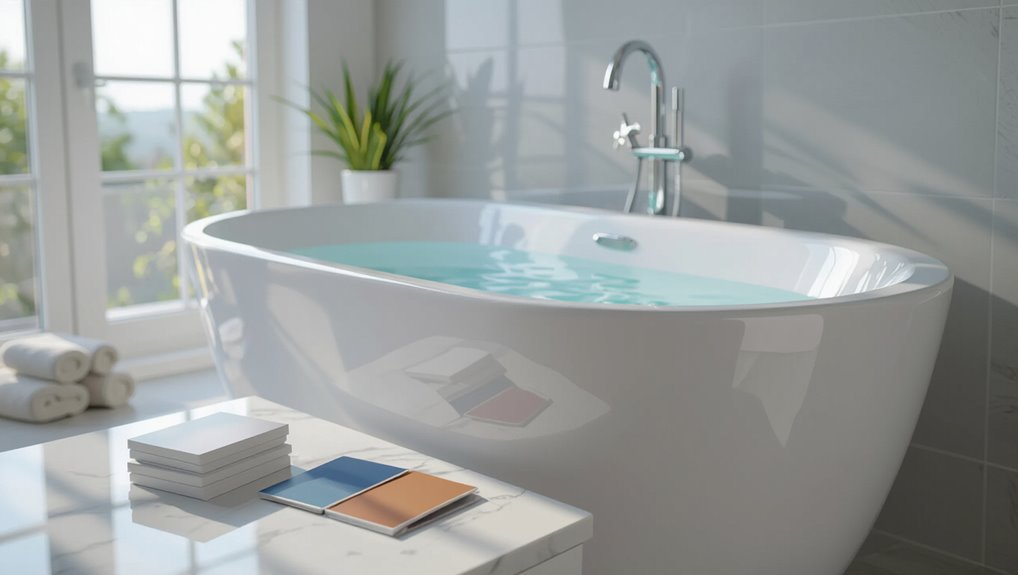
Which paint should you pick for your bathroom?
You’ll want a durable, washable finish that aids moisture control and resists mildew. Choose a paint combining practical resilience with color psychology — cool, calming hues expand space and reduce stress, while warm tones add coziness.
Prioritize easy-clean formulations and proper ventilation so your chosen color stays vibrant and your walls stay protected.
Best Overall Paint: Why Semi-Gloss Latex Wins
Because bathrooms demand moisture resistance, easy cleaning, and a finish that reflects light without shouting, semi-gloss latex is the best overall choice.
You’ll get durable moisture control, simple wipe-down maintenance, and a slight sheen that brightens tight spaces.
It supports color psychology by keeping hues vivid and stable under humidity, so your chosen tone stays true while resisting mildew and wear.
Satin vs Eggshell vs Semi-Gloss: When to Pick Each
When choosing between satin, eggshell, and semi-gloss, think about where the paint will need to stand up to moisture, cleaning, and how much sheen you want to show.
You’ll pick satin for satin finish benefits and balanced moisture resistance;
eggshell for eggshell durability and subtle texture considerations;
semi-gloss for pronounced semi gloss sheen, easy cleaning, better light reflection, paint longevity, and informed color selection.
Finish Guide: How Finishes Affect Cleaning & Durability
When choosing a finish for your bathroom, remember that sheen levels matter because they change how the paint resists moisture and scuffs.
Compare stain resistance—higher sheens like semi-gloss wipe cleaner but show imperfections more than eggshell or satin.
I’ll give simple cleaning tips so you can pick a finish that balances durability and upkeep.
Sheen Levels Matter
Although it might seem like a small detail, the paint sheen you choose has a big impact on how easy your bathroom walls are to clean and how long they’ll last.
You’ll find different sheen levels—from flat to high-gloss—work with various paint types. Use satin or semi-gloss where moisture and scuffs occur; flat hides flaws but won’t resist cleaning as well.
Stain Resistance Comparison
Curious how different paint finishes stand up to toothpaste splatters, soap scum, and mildew?
You’ll pick finishes based on stain resistance and finish durability to aid mold prevention.
Consider these traits:
- Gloss: highest stain resistance, easy to wipe
- Semi-gloss: durable, bathroom-friendly
- Satin: moderate resistance, softer look
- Matte: least resistant, more prone to staining
Cleaning Ease Tips
Cleaning your bathroom walls becomes much quicker when you pick the right finish, because some paints resist grime and wipe down without streaks while others soak up stains and show wear. You should choose semi-gloss or satin for easy cleaning, use mild cleaning products, and set simple maintenance routines to prevent buildup and prolong finish life.
| Finish | Cleaning Ease |
|---|---|
| Semi-gloss | High |
| Satin | Moderate |
Best Paints for Steam Showers and High Humidity
When you’re dealing with steam showers and constant humidity, pick paints formulated for high moisture and frequent condensation so they resist mildew, peeling, and blistering.
For steam showers and constant humidity, use paints made for high moisture to resist mildew, peeling, and blistering.
Choose steam resistant formulations with moisture blocking technology to protect surfaces and finish longevity.
Consider:
- High-humidity-rated semi-gloss or satin
- Mildew-resistant additives
- Alkyd or advanced acrylic blends
- Professional waterproof primers
Budget Bathroom Paints That Resist Mold
You don’t need to spend a lot to keep mold at bay—there are affordable paints with built-in mold resistance that work well in bathrooms.
Choose an easy-clean semi-gloss for wet areas so you can wipe away soap scum and mildew without damaging the finish.
For extra protection, add a budget-friendly mildew inhibitor to standard paint before rolling it on.
Affordable Mold-Resistant Options
If you’re on a tight budget but need paint that fights mold and mildew, several affordable options deliver durable, moisture-resistant finishes without breaking the bank.
- Look for paints labeled mold prevention and mildew-resistant.
- Choose water-based acrylics with anti-microbial additives.
- Opt for primer-plus-paint combos for better adhesion.
- Check user reviews for real-world bathroom performance.
You’ll protect walls affordably and effectively.
Easy-Clean Semi-Gloss Paints
Semi-gloss paints offer an easy-clean surface that stands up to steam, splashes, and frequent wiping, so you’ll keep bathroom walls looking fresh without constant touch-ups.
Choose easy clean options with mildew-resistant formulations and durable binders to improve paint longevity.
You’ll clean grime with a damp cloth, maintain sheen, and avoid frequent repainting, making semi-gloss a practical, budget-friendly bathroom choice.
Budget-Friendly Mildew Inhibitors
While semi-gloss finishes make cleaning easier, you’ll also want paint formulas that actively resist mold without blowing your budget.
Choose mildew prevention techniques and budget friendly brands that add antimicrobial agents.
Consider these options:
- Affordable paints with built-in mildew inhibitors
- Low-VOC, moisture-resistant options
- Primer-plus-sealer combos for wet areas
- Regular ventilation and quick-dry coatings to prevent growth
Premium Long-Lasting Bathroom Paints Worth the Cost
Because bathrooms demand paint that can stand up to moisture and frequent cleaning, investing in premium, long-lasting formulas pays off over time.
You’ll notice premium quality finishes resist stains, scuffs, and fading better than standard options.
Look for high-sheen, mold-resistant formulations and read durability comparison reviews to justify cost.
Spending more now means fewer repaints and less maintenance down the line.
Low-VOC and Zero-VOC Bathroom Paint Options
Investing in premium, durable paint often means better moisture and stain resistance, but you can still choose formulations that minimize indoor air pollution.
You’ll find low-VOC and zero-VOC choices that offer eco friendly options and clear health benefits without sacrificing finish.
Consider:
- Water-based low-VOC eggshell
- Zero-VOC matte for low-traffic walls
- Low-VOC semi-gloss for trim
- Certified green brands
How Mildew- and Mold-Resistant Paints Work
When you pick mildew- and mold-resistant paint, you’re choosing formulations that actively inhibit fungal growth by altering the paint’s surface chemistry and incorporating biocides or antimicrobial agents.
You’ll benefit from paint technology advancements—improved binders, moisture-blocking sheens, and microencapsulated additives—that support mildew prevention strategies.
Apply proper surface prep and ventilation so the coatings perform as designed and resist recurring mold in humid bathrooms.
Choosing Colors That Make Small Bathrooms Feel Bigger
You can make a small bathroom feel larger by choosing light, reflective neutrals that bounce natural and artificial light around the room.
Use slightly warmer or cooler tones within that neutral palette to add depth without shrinking the space.
Add strategic accents—like a darker trim or a bold towel color—to create focal points that draw the eye and suggest more dimension.
Light, Reflective Neutrals
Although small bathrooms can feel cramped, choosing light, reflective neutrals will open the space visually and bounce more light around the room.
You’ll use color psychology and light reflection to expand sightlines, calm the space, and highlight finishes:
- Pale warm beige for subtle warmth
- Soft gray for modern serenity
- Creamy off-white for softness
- Muted greige for versatility
Strategic Accent Placement
Pick one or two well-placed accent colors to lift a small bathroom without overwhelming it.
You’ll use color psychology to choose hues that offer mood enhancement and create visual balance via an accent wall or trim.
Combine texture contrast and layering techniques — tiles, paint sheens, or textiles — to boost design cohesion.
Subtle light manipulation keeps the space airy and proportionate.
Prep to Prevent Peeling, Blistering, and Mold
Before you roll on fresh paint, prep the surfaces so moisture, old finishes, and poor adhesion don’t turn your work into peeling, blistering, or mold down the line.
Prep surfaces first—clean, prime, and control moisture to prevent peeling, blistering, and mold.
Use focused surface preparation:
- Clean with proper cleaning techniques to remove soap scum and mildew
- Choose primer selection for improved paint adhesion
- Implement ventilation strategies and humidity control
- Follow mold prevention steps and fix leaks promptly
Application Tips: Tools, Coats, and Dry Times
Grab a good roller, angled brush, and a quality tray to make painting faster and smoother.
You’ll usually need two thin coats for even coverage, letting each coat dry fully before applying the next.
Check the paint can for recommended dry and recoat times so you don’t trap moisture or smear your finish.
Tools You Need
You’ll need a few reliable tools to get a smooth, durable finish:
- Quality brushes (varying brush types for trim and corners)
- Roller options: 3/8″ nap for smooth walls, 1/2″ for slight texture
- Painter’s tape, drop cloths, and a sanding block
- A good tray, extension pole, and utility knife for cutting in and cleanup
Coats And Drying
Apply two thin, even coats for the best durability and appearance, letting the first dry fully before adding the second. You’ll choose coats types based on sheen and moisture resistance, and monitor drying times—humidity affects cure. Use a quality brush for edges, roller for flats, and wait manufacturer-specified intervals to avoid tackiness.
| Coat | Typical drying times |
|---|---|
| Primer | 1–4 hours |
| Finish | 2–6 hours |
Maintenance Routines to Keep Paint Looking New
Because bathrooms see constant moisture and daily use, keeping paint looking new means adopting a few simple, regular habits.
Because bathrooms face constant moisture and use, keeping paint fresh requires simple, regular care and proper prep.
You’ll protect your investment from day one by focusing on color selection and proper wall preparation before finishing.
Follow these routines:
- Wipe splashes with a soft cloth weekly.
- Use a mild cleaner monthly.
- Ventilate during and after showers.
- Touch up chips promptly.
Troubleshooting Stains, Peeling, and Cracks
Keeping up weekly wipes and monthly cleaning helps, but stains, peeling, and cracks can still appear—especially in high-moisture spots or where prep was limited.
For stain removal, blot and use a mild cleaner, then repaint with mold-resistant primer if needed.
For crack repair, scrape loose paint, fill with flexible caulk or spackle, sand, prime, and touch up with matching semi-gloss paint.
Quick Shopping Checklist for Bathroom Paint
When you head to the store, bring a short checklist so you grab the right paint and supplies:
- Choose moisture-resistant paint types (eggshell, satin, semi-gloss)
- Pick a mildew-resistant primer and caulk
- Test swatches under bathroom lighting for color psychology effects
- Grab proper rollers, brushes, tape, and a small fan for ventilation
This helps you buy smart and avoid costly returns.
Frequently Asked Questions
How Do I Paint Over Wallpaper in a Bathroom?
You can paint over wallpaper, but you’ll need thorough wall prep: clean, repair seams, sand, prime with an adhesion primer, then use proper paint techniques like rolling thin coats and cutting in for even coverage and moisture resistance.
Can I Use Exterior Paint for Bathroom Ceilings?
Yes — you can use exterior paint for bathroom ceilings, but it’s like wearing a raincoat indoors: exterior paint benefits include durability and moisture resistance, yet weigh ceiling paint options too — choose low-odour, mold-resistant formulas for comfort.
Will Paint Colors Change Under LED Bathroom Lighting?
Yes — you’ll notice color shifts under LED bathroom lighting; color perception varies with bulb temperature and CRI, so lighting effects change how hues appear. Test swatches under your LED fixtures before committing to a final color choice.
Are There Paint Additives to Make Walls Waterproof?
Like a raincoat for your walls, yes — you can add waterproofing additives to paint; they’ll boost water repellency and some formulas are mold resistant, but you should also use proper primers and ventilation for lasting protection.
How Long Before Rehanging Towels and Accessories?
You can rehang towels and accessories after paint feels dry to the touch and cured to handle contact—typically 24–48 hours for latex; towel drying and accessory placement are gentler after 72 hours to guarantee no marks or adhesion issues.
Conclusion
You’ve got the tools to choose the right bathroom paint, so don’t leave it to chance. For most rooms, semi-gloss latex gives you the best mix of durability and easy cleaning, while satin or eggshell can work in lower-moisture spaces. For steam showers, pick a high-quality, mildew-resistant formulation. Follow proper prep, apply thin coats, and keep up with simple maintenance — a stitch in time saves nine when preventing bigger repairs.
