
What Paint to Use in Bathroom Ceiling to Prevent Mold
Use a high-quality mildew-resistant latex paint in an eggshell or satin finish so it dries fast, handles humidity, and wipes clean to deter mold on your bathroom ceiling. Prep thoroughly: fix leaks, dry the surface, remove loose paint, then prime with a mold-resistant or stain-blocking primer. Satin or semi-gloss gives better scrubbability than flat. Keep ventilation and dry between coats. Keep this approach in mind and you’ll learn practical tips to extend results.
Best Paint for Bathroom Ceilings : Quick Recommendation
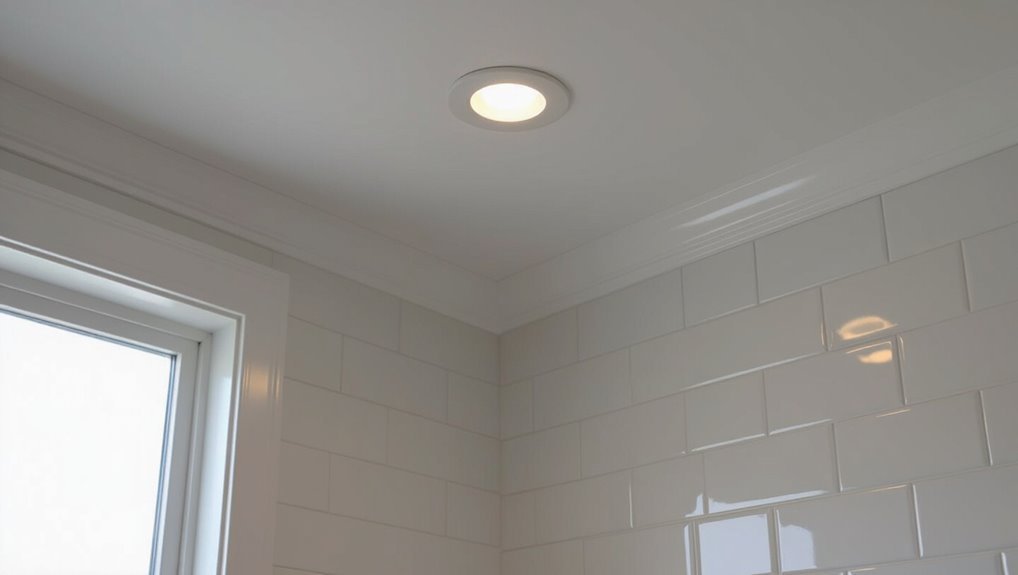
For a quick recommendation, choose a high-quality eggshell or satin latex paint labeled “mildew-resistant” or “bathroom/trim.”
It dries quickly, handles moisture better than flat finishes, and resists mold growth. You’ll pick a hue mindful of color psychology to make the room feel airy; coordinate finish with existing ceiling textures, guarantee proper ventilation, and apply paint per manufacturer instructions for lasting protection.
Why Mildew‑Resistant and Mold‑Inhibiting Paints Work
Because bathrooms stay humid, mildew‑resistant and mold‑inhibiting paints add both chemical and physical defenses that stop spores from colonizing your ceiling.
You’ll get biocides that disrupt mold growth and breathable binders that reduce trapped moisture.
Proper paint application guarantees even coverage and treated layers contact spores.
Follow surface prep and drying guidelines so the coating can perform and delay recurrence effectively.
What Finish to Choose: Flat, Satin, or Semi‑Gloss
When you pick a finish for your bathroom ceiling, think about durability versus moisture resistance: flat hides imperfections but won’t stand up to scrubbing, while satin and semi‑gloss resist moisture and clean easily.
You’ll sacrifice some hide for a tougher, washable surface with satin or semi‑gloss. Decide whether ease of cleaning or a perfectly smooth look matters more for your space.
Durability Vs. Moisture Resistance
Finish choice matters: you’ll balance durability against moisture resistance to pick the right ceiling paint for a bathroom.
Check durability ratings—semi‑gloss resists scrubbing and stains, satin offers moderate toughness, flat scores lowest.
Match finish to moisture levels: high‑humidity ceilings benefit from higher‑sheen, mold‑resistant formulas even if they’re shinier.
Prioritize moisture protection over appearance for long‑term performance.
Ease Of Cleaning
Although you’ll want a ceiling that looks smooth, you’ll likely need a finish that’s easy to wipe down—bathroom ceilings attract steam, splashes, and dust, so choose a paint sheen that balances cleanability with appearance.
You’ll prefer satin or semi‑gloss for simple cleaning techniques; flat hides flaws but stains.
Follow maintenance tips: gentle detergent, soft cloth, and spot‑treat mildew promptly to prevent buildup.
Water‑Based (Latex) vs. Oil‑Based Paints for Bathrooms
Picking the right paint for a bathroom means balancing moisture resistance, durability, and ease of upkeep, and the main choice you’ll face is between water‑based (latex) and oil‑based formulations. You’ll favor latex advantages like quick drying, low odor, and better mold resistance; note oil based drawbacks: longer cure, stronger fumes.
| Feature | Note |
|---|---|
| Drying | Latex wins |
| Odor | Oil stronger |
| Durability | Oil tougher |
| Mold resistance | Latex better |
Which Finishes Resist Stains and Are Washable
You’ll find semi-gloss offers the best durability against stains and scrubbing, so it’s a strong choice for bathroom ceilings prone to splashes.
Satin gives you good washability with a softer sheen if you want less shine but still need to clean mold-prone spots.
Consider where moisture and cleaning will be most frequent to pick the right balance.
Semi-Gloss Durability
Durability matters in a humid bathroom, and semi-gloss finishes deliver a hard, washable surface that resists stains and repeated scrubbing.
You’ll appreciate semi-gloss benefits when steam and mess meet easy cleanup; the sheen comparison favors semi-gloss for ceilings needing durability.
- Confidence
- Cleanability
- Stain resistance
- Longevity
Satin Washability
A satin finish strikes a balance between the hard-sheen of semi-gloss and the low-reflective look of flat, giving you a smooth, easy-to-wipe surface that still hides minor imperfections.
You’ll appreciate the satin sheen’s washability benefits: it resists stains, lets you scrub mildew-prone spots gently, and keeps the ceiling looking clean without highlighting texture.
It’s practical and attractive.
How to Read Paint Labels for Mildew Resistance
Wondering how to tell if a paint will resist mildew before you buy it? You’ll learn to read labels fast: check mildew resistance claims, compare paint formulas, and note performance ratings.
Trust certifications and manufacturer test notes. Scan for application tips and warranty. Follow this checklist to choose confidently:
- Claim clarity
- Formula details
- Certification presence
- Usage instructions
Active Ingredients to Look For That Inhibit Mold
When you’re choosing bathroom ceiling paint, check for mildewcide and fungicide additives that actively stop mold growth on the surface.
Also look for paints with antimicrobial binders that make the film itself resistant to spores and staining.
These ingredients won’t replace ventilation and cleaning, but they give your paint an important layer of protection.
Mildewcide And Fungicide Additives
If you want bathroom paint that actually fights mold, look for mildewcide and fungicide additives—these active ingredients stop spores from taking hold on painted surfaces.
You’ll get better mildew prevention strategies and measurable fungicide effectiveness.
Consider options that match your needs:
- Broad-spectrum mildewcide
- Low-VOC formula
- Long-lasting residual action
- Professional-grade concentration
Antimicrobial Paint Binders
Because the binder is the matrix that holds pigments and additives together, choosing one with built-in antimicrobial properties gives you continuous protection against mold growth on the film itself.
You should look for binders labeled antimicrobial in paint formulations; they embed active agents that inhibit spores and biofilm formation.
These binders work alongside mildewcides, boosting long-term resistance in humid bathroom ceilings.
Top Paint Brands and Product Lines for Bathroom Ceilings
Although selecting the right paint can feel overwhelming, choosing a reputable brand and the proper product line makes preventing bathroom ceiling mold much easier.
You’ll want bathroom paint brands with mildew-resistant formulas.
Product recommendations include:
- Benjamin Moore Aura Bath & Spa
- Sherwin-Williams Duration Home
- Behr Premium Plus Ultra
- Zinsser Perma-White
Pick one that fits your surface and ventilation.
Budget‑Friendly Paints That Still Prevent Mold
You don’t need to spend a lot to keep mold off your bathroom ceiling—affordable mildew-resistant paints can do the job.
Look for paints labeled “mildew-resistant” or with antimicrobial additives and pair them with tight seals and good ventilation.
Simple budget-friendly steps—proper surface prep, using a mold-inhibiting primer, and rolling evenly—will stretch your dollars and boost performance.
Affordable Mildew-Resistant Paints
When you’re working on a tight budget, choosing a mildew-resistant paint doesn’t mean you have to sacrifice performance; many affordable formulas now include effective mold inhibitors and easy-to-clean finishes.
You’ll find affordable options through simple paint comparisons and reviews.
Consider these emotional, practical picks:
- Relief — budget latex with mildew additive
- Confidence — semi-gloss enamel
- Pride — stain-blocking primer
- Calm — low-VOC choice
Budget-Friendly Application Tips
If you’re trying to prevent mold without spending much, smart prep and the right tools make all the difference: clean thoroughly with a mildew cleaner, patch cracks, and sand glossy spots.
Use budget friendly supplies like mildew-resistant primer and semi-gloss paint plus quality rollers.
Follow simple DIY techniques — two thin coats, proper drying time, and good ventilation — to get lasting, mold-resistant results.
When to Choose Specialty Bathroom Paint (Is It Worth It?)
Because bathrooms face constant moisture and frequent temperature swings, choosing specialty paint can be worth the extra cost in many situations.
You’ll appreciate specialty benefits like mildew resistance and longer durability.
Consider these reasons to invest:
- Peace of mind
- Fewer repaint cycles
- Better long-term savings
- Easier application with proper application techniques
Preparing a Damp Bathroom Ceiling for Painting
Start by evaluating and drying the ceiling thoroughly—paint won’t stick to damp surfaces and trapped moisture leads to peeling and mold.
Begin by inspecting and fully drying the ceiling—paint fails on damp surfaces and trapped moisture causes peeling and mold.
You’ll check for leaks, improve ventilation, and use a dehumidifier or fans until fully dry.
For proper surface preparation, remove loose paint and sand glossy spots.
Prime with a moisture control primer before applying the mold-resistant topcoat.
Cleaning and Killing Existing Mold Before You Paint
Before you paint, you should assess the severity of any mold on the ceiling to decide whether you can clean it yourself or need a pro.
Use appropriate cleaning solutions—such as diluted bleach, hydrogen peroxide, or commercial mold removers—following label instructions and safety precautions.
Wear gloves, eye protection, and a mask while cleaning and make sure the area is well ventilated.
Assess Mold Severity
How bad is the mold you’re looking at?
You should evaluate spread, color, and texture, and consider mold testing if health concerns arise.
Check nearby moisture sources and ventilation.
Decide whether you can handle cleanup or need a pro.
- Small patch — manageable
- Widespread — stressful
- Discolored — alarming
- Recurrent — urgent
Proper Cleaning Solutions
Tackle mold with the right cleaner and a clear plan: you’ll want an EPA-registered mold-killing product or a homemade solution (bleach diluted 1:10 with water, or white vinegar for porous surfaces) and the correct protective gear—gloves, goggles, and an N95 respirator.
Scrub affected areas, rinse, and dry thoroughly. Track cleaning frequency to prevent recurrence, and test solution effectiveness on a small patch before full application.
Best Primers for Stained or Mold‑Affected Ceilings
When you’re dealing with stains or past mold growth on a bathroom ceiling, choosing the right primer is essential because it locks in stains, seals porous surfaces, and creates a mold-resistant base coat for your paint.
Use primers offering stain blocking and mildew prevention. Consider:
- Shellac-based for stubborn stains.
- Oil-based for deep sealing.
- Mold-resistant latex for bathrooms.
- High-adhesion bonding primer for damaged surfaces.
Application Techniques to Prevent Mold Later
Start by preparing the surface and the room so moisture won’t undo your work: clean any residue with a mildew cleaner, dry the ceiling thoroughly, and run a fan or dehumidifier while you work. Use proper application methods: roll thin coats, back-roll cut edges, and allow full drying between coats for mold prevention.
| Tool | Technique | Benefit |
|---|---|---|
| Roller | Thin coats | Even coverage |
| Brush | Back-roll | Edge sealing |
| Timer | Dry intervals | Cure assurance |
Ventilation and Exhaust Fans: Reducing Ceiling Mold
Because moist air is the main driver of bathroom ceiling mold, you should focus on ventilation that expels humidity quickly:
- Install ventilation systems sized for your bathroom to remove dampness fast.
- Prioritize exhaust fan placement near the shower for immediate extraction.
- Run the fan during and 10–20 minutes after showers to cut condensation.
- Use timers or humidity sensors so you don’t forget—protect your paint and ceiling.
Routine Maintenance: Cleaning and Repainting Schedules
If you want paint to keep mold at bay, inspect and clean your ceiling regularly and repaint on a predictable schedule.
You should set a cleaning frequency—wipe down every 1–3 months depending on humidity—and use mild detergent.
Follow repainting tips: choose mold-resistant paint, prep surfaces, prime if needed, and plan a full repaint every 3–5 years or sooner if moisture demands.
Signs Your Bathroom Ceiling Paint Failed and When to Repaint
Wondering whether your bathroom ceiling paint has failed? You’ll spot mold indicators like black spots, peeling, bubbling, or a musty smell.
Act sooner rather than later to protect surfaces and health. Consider repaint timing when humidity control won’t improve.
Act quickly to safeguard surfaces and health; only repaint if humidity control won’t improve.
- Black spots
- Paint peeling
- Bubbling texture
- Persistent musty odor
Cost vs. Longevity: Choosing the Right Investment
Now that you can spot a failing ceiling paint, you’ll want to weigh how much to spend for longer-lasting protection. You’ll run a cost analysis: cheap paint saves now but needs repainting sooner; premium mold-resistant paint costs more upfront but boosts investment return via fewer treatments and repairs. Picture choices:
| Option | Lifespan | Upfront Cost |
|---|---|---|
| Economy | 2–3 yrs | Low |
| Mid | 4–6 yrs | Medium |
| Premium | 8–12 yrs | High |
Frequently Asked Questions
Can Bathroom Ceiling Paint Cause Allergies or Respiratory Issues?
Yes — you can experience symptoms; paint fumes and additives can be allergy triggers and harm respiratory health. Choose low-VOC or zero-VOC paints, guarantee ventilation, and avoid strong odors to reduce reactions and irritation.
Is Mold-Resistant Paint Safe for Homes With Children or Pets?
Yes — mold-resistant paint’s generally safe for homes with children and pets when you follow product instructions, ventilate during application, use low-VOC formulas, and keep kids and animals away until paint fully cures for child safety and pet safety.
How Long After Painting Can I Use the Shower Normally?
About 24 hours is typical; studies show 90% of DIY paints reach surface dryness within a day. You should wait for paint drying, then resume shower usage gently after ventilation, avoiding steam for 24–48 hours for full cure.
Will Paint Color Affect Perceived Mold Visibility Over Time?
Yes — color affects mold perception: using color psychology, you’ll find dark or warm tones hide stains while light, cool hues make mold perception sharper; choose contrasts and finishes that minimize visible spots and aid cleaning.
Can Mold-Resistant Paint Be Used on Walls and Trim Too?
Absolutely — you can slather mold-resistant paint on walls and trim like it’s armor; it boosts mold prevention when combined with proper paint application, ventilation, and moisture control, though it’s not a total substitute for fixing leaks.
Conclusion
Pick a mildew‑resistant, water‑based paint with a satin or semi‑gloss finish and you’ll be ahead of the game. Keep things ventilated, clean regularly, and touch up sooner rather than later to avoid bigger headaches down the road. You’ll save time and money by choosing quality now, because an ounce of prevention is worth a pound of cure — and when you notice peeling or stains, act fast to stop mold before it takes hold.
