
What to Do With Dried Paint (Simple Solutions)
First check if the paint’s salvageable—look for skinning, smell, and separation, and note oil vs. water-based. For water-based paints, soften with warm water, stir in conditioner, and strain; for acrylics add tiny drops of water or medium. For oil paints, use mineral spirits with gloves and a respirator and scrape gently. Clean tools with appropriate solvent, and recycle or donate unusable paint per local rules. Keep going to learn simple step-by-step fixes.
Check Whether Dried Paint Is Salvageable
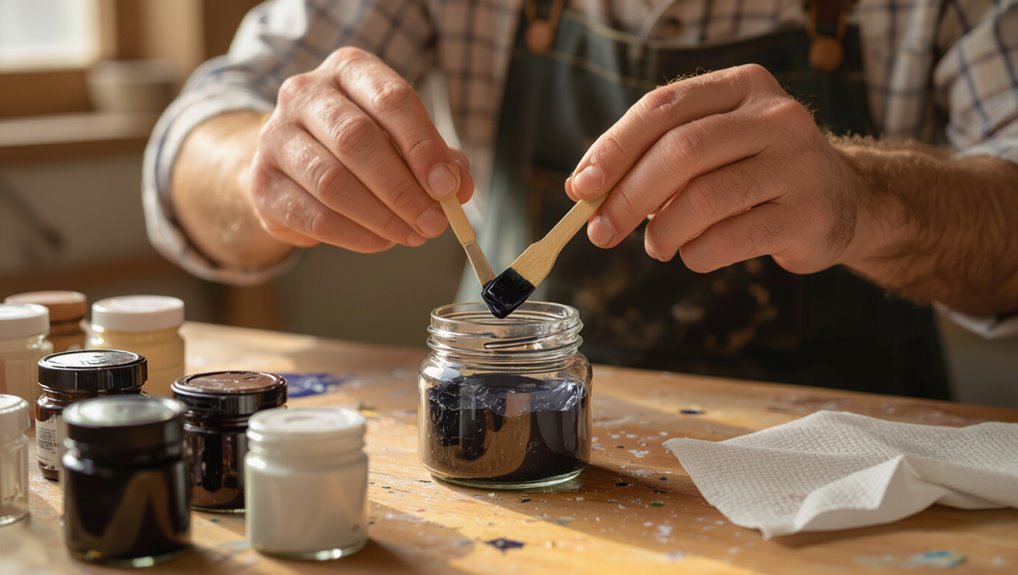
Wondering if that old can of paint is worth saving? You’ll inspect skinning, smell, and separation, using basic paint restoration techniques to test consistency.
You’ll check the label and perform small trials for identifying paint types—oil, latex, or acrylic—so you know compatible solvents. If it reconstitutes smoothly and passes a adhesion spot test, you can salvage it; otherwise dispose responsibly.
Quick Fixes: Revive Water‑Based Paint Now
If the water‑based paint’s skin is thin, you can soften it with warm water and let it sit until it loosens.
Stir in a paint conditioner a little at a time to restore flow and consistency.
Finally, strain the paint to remove lumps before using it.
Soften With Warm Water
Warm water can quickly loosen the skin that forms on water‑based paint, making it one of the easiest fixes you can try at home.
Pour warm water into the can, let it sit 10–15 minutes, then skim off softened film. Swirl and test paint consistency; repeat brief soaks if needed.
Don’t overfill—work gradually to avoid diluting the color or texture.
Stir In Paint Conditioner
When water-based paint feels gummy or resists stirring, add a small amount of paint conditioner and mix thoroughly to restore flow and leveling.
You’ll improve paint quality and regain brushability without overthinning. Follow label directions for ratio, stir slowly to incorporate paint additives evenly, test on a scrap, and use promptly—conditioned paint won’t keep indefinitely but often saves a nearly lost can.
Strain Out Lumps
Stirring in conditioner can soften gummy paint, but you’ll still run into bits and skin that won’t mix away.
Strain the paint through a fine mesh or nylon stocking into a clean container to remove debris and restore a uniform paint consistency.
Work slowly, scraping solids from the strainer, and discard trapped lumps. This prevents brush clogs and smooths a lumpy texture before use.
Loosen Dried Oil‑Based Paint Safely
Before you start, put on gloves, eye protection, and a respirator to keep fumes and skin contact to a minimum.
Choose the right solvent for the paint type—mineral spirits or paint thinner for oil‑based coatings—and test it on a small area.
Then work the softened paint gently with a plastic scraper or nylon brush to avoid damaging the surface.
Safety Gear First
Start by suiting up: wear chemical-resistant gloves, eye protection, and a respirator rated for organic vapors so you don’t inhale solvents or get splashed while you loosen dried oil-based paint.
Use protective goggles and latex gloves beneath solvent-resistant gloves for extra safety.
Stay calm, work slowly, and keep fresh air flowing.
- Relief
- Confidence
- Safety
Solvent Selection Guide
When you’re choosing a solvent to loosen dried oil-based paint, match the solvent’s strength and hazards to the paint’s age and surface: pick milder options (mineral spirits) for recent drips, stronger ones (paint stripper) for older, stubborn layers.
Consider solvent types and application methods—brush, rag, or poultice.
Ventilate, wear gloves and respirator, and test a small area first.
Gentle Mechanical Loosening
If the paint’s only lightly adhered, you can often lift flakes and thin films with gentle mechanical action rather than stronger solvents.
Use tools that give control (plastic scrapers, nylon brushes, or a razor held at a low angle) and work slowly to avoid gouging the substrate.
Use scraping techniques and gentle tools, stay patient, and finish with light sanding.
- Relief
- Satisfaction
- Calm
Restore Stiff Acrylics and Craft Paints
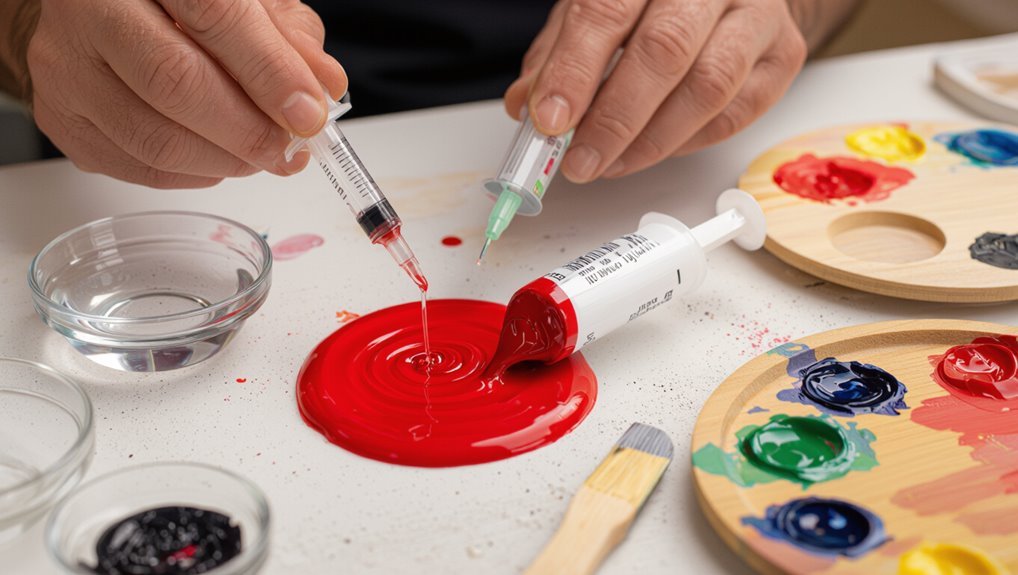
Revive stiff acrylics and craft paints by rehydrating them gently so you don’t ruin color or finish.
Add small drops of water or recommended acrylic medium, stir slowly, and test texture. For effective acrylic paint restoration, work incrementally and avoid overwatering.
Use proven craft paint techniques: cover containers airtight after adjusting, label dates, and discard if separation or odor indicates spoilage.
Rescue Brushes and Rollers With Household Solvents
Reach for common household solvents to loosen dried paint from brushes and rollers without shredding bristles or ruining nap. You can revive tools with safe solvent types and gentle agitation; this saves time and supports good brush maintenance.
Rinse, reshape, and dry thoroughly to prevent future damage.
- Soap + warm water: relief and reassurance
- Isopropyl alcohol: decisive, quick
- Mineral spirits: steady, reliable
When to Replace a Paint Can
If you open a can and the paint is hard and won’t mix smoothly, it’s time to contemplate replacing it.
You can try stirring thoroughly, but if chunks remain or the texture stays grainy, the finish will suffer.
Don’t keep using compromised paint—discard the can and get a fresh batch for reliable results.
When Paint Is Hard
When paint feels solid or has lost its smooth, pourable consistency, it’s time to assess whether the can can be salvaged or should be replaced.
Check label dates for paint expiration and review your paint storage habits. If stirring, straining, or thinning won’t restore it, don’t gamble—dispose and replace.
- Sad: ruined project
- Frustrated: wasted money
- Relieved: fresh start
Can’t Be Mixed Smoothly
Although you might still stir and strain, you should replace a paint can if the color won’t emulsify back into a smooth, even consistency; don’t keep chasing poor paint consistency.
If lumps, separation, or graininess persist after filtering, the drying factors—age, contamination, or improper storage—have ruined the binder.
Toss it and buy fresh paint for reliable coverage and finish.
Strain and Filter Lumpy Paint for Reuse
You can salvage lumpy, semi-dry paint by straining and filtering it to remove clumps and debris so it flows smoothly again.
Use a fine mesh strainer or paint filter, stir gently, discard solids, and repeat until consistent.
These paint filtering techniques offer practical lumpy paint solutions and satisfaction as you rescue usable paint.
- Relief
- Pride
- Savings
Repurpose Dried or Semi‑Dry Paint for Crafts
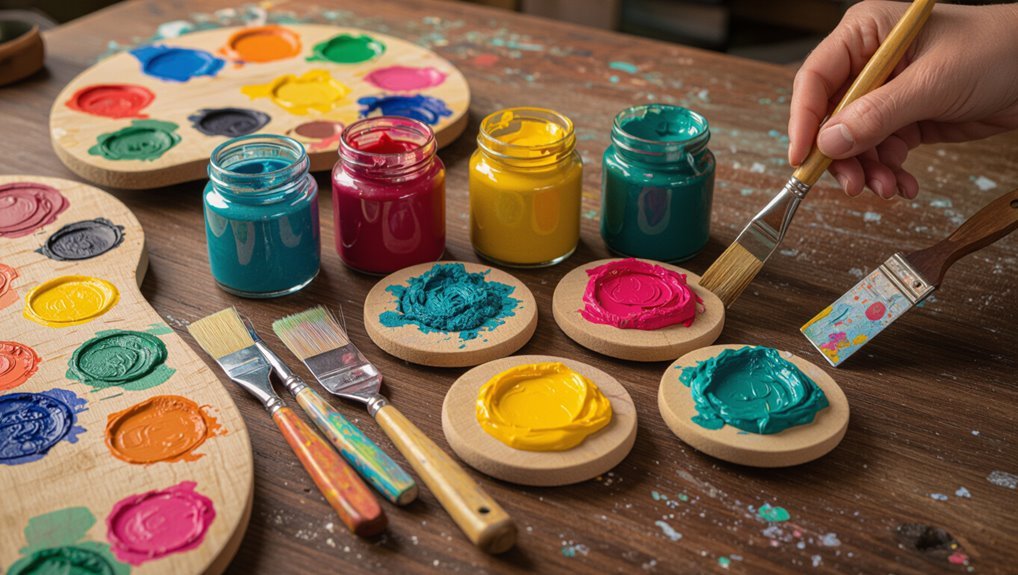
Give old, tacky paint a new life by using it for small crafts and mixed-media projects instead of tossing it out.
You can scrape semi-dry paint into palettes, thin thick bits for texture, or embed chips in resin for unique accents.
Use it for craft projects like coasters, collages, or decorative jars.
Embrace creative reuse to cut waste and spark DIY ideas.
Use Leftover Paint for Touch‑Ups and Color Testing
After you’ve repurposed tacky paint for crafts, keep the remaining usable jars handy for touch-ups and color testing around the home. You’ll avoid mismatched patches and save trips to the store by labeling jars with color matching notes and practicing on scrap boards.
Store lids tight for good paint storage.
- Relief — quick fixes feel satisfying.
- Confidence — test before committing.
- Pride — small repairs restore beauty.
Upcycle Crusty Paint Cans and Tubes for Storage and Projects
A handful of crusty paint cans and squeezed tubes can become practical storage and quirky project materials with a little prep and imagination. You can clean rims, seal tubes, and repurpose cans as organizers or planters for creative storage and DIY projects. Use labels and liners to protect contents and decorate surfaces to match your space.
| Item | Use |
|---|---|
| Small can | Desk organizer |
| Tube stub | Paint mixing kit |
| Large can | Plant pot |
PPE and Safe Cleanup Steps for Dried Paint
Before you handle dried paint, put on gloves, a dust mask or respirator, and eye protection to avoid skin contact and inhaling particles.
Use a stiff brush or scraper to remove flaky paint, sweeping or vacuuming with a HEPA filter to collect dust.
Dispose of debris and used PPE in sealed bags and follow local hazardous-waste guidelines for paint chips and contaminated materials.
Wear Proper Protective Gear
1 essential step when dealing with dried paint is to suit up in proper protective gear—gloves, eye protection, and a respirator—so you cut exposure to dust and fumes while you clean.
You should wear protective gloves and safety goggles, choose a fitted N95 or respirator, and don long sleeves.
- Protect yourself—stay calm.
- Feel safer—stay focused.
- Act confidently—finish safely.
Safe Dry Paint Cleanup
Start by putting on the right PPE—chemical-resistant gloves, safety goggles, and an N95 or respirator—so you limit exposure to dust and fumes while you work.
Scrape or sand dried paint outdoors or in a ventilated area, contain debris, and wipe surfaces with damp cloths.
Bag waste for proper paint disposal or take usable remnants to paint recycling centers to minimize hazards.
Eco‑Friendly Disposal Options for Dried Paint
When your paint has fully dried, you’ve got several eco-friendly options that keep waste out of landfills and protect waterways.
You can choose sustainable practices and tap community resources to do the right thing. Feel empowered, relieved, and proud.
- Donate usable dried paint for creative projects.
- Turn tiny amounts into compostable filler.
- Share leftover cans with neighbors.
Where to Check Local Paint Recycling and Hazardous‑Waste Rules
Because rules and services vary by city and county, check your local government’s website or call the public works department to learn how to recycle or dispose of dried paint safely.
Look for recycling programs, hazardous‑waste collection events, and guidance on curbside pickup.
Follow local regulations for labeling, containment, and drop‑off locations, and ask about approved facilities or contractor referrals when in doubt.
Cost, Time, Quality: Compare Revive vs Replace vs Recycle
If you’re weighing whether to revive old paint, replace it, or recycle the leftovers, focus on three core trade‑offs: cost, time, and final quality.
You’ll use cost analysis and a quick quality assessment to choose.
Consider emotions: relief, frustration, pride.
Consider emotions: relief, frustration, pride — the subtle guides steering every paint‑choice we make.
- Relief — low cost, moderate time.
- Frustration — high cost, fast swap.
- Pride — eco gain, careful effort.
Quick Troubleshooting: Common Problems and Fixes
Before you toss dried paint or call a pro, try a few quick checks to identify the issue: inspect texture (clumpy, rubbery, or powdery), smell (sour or solvent-heavy), and separation (clear liquid on top).
If clumpy, strain and remix for small jobs; rubbery usually means ruined—consider dried paint disposal.
Prevent future waste with airtight lids and cool, stable paint storage solutions.
Frequently Asked Questions
Can Dried Paint Be Used as an Adhesive or Filler?
No, dried paint usually won’t serve well as an adhesive or filler; you’ll notice paint properties limit bond strength and gap-filling, so you should consider adhesive alternatives like epoxy, wood filler, or construction adhesive for reliable results.
Will Dried Paint Emit Harmful Fumes Indoors Over Time?
No, fully cured dried paint won’t emit harmful fumes indoors over time, but you should still follow proper paint disposal methods to protect indoor air quality and avoid storing wet or partially dried paint inside.
Can Pets Be Harmed by Old, Dried Paint Remnants?
A curious cat ate paint flakes after a garage cleanup; you should worry—paint toxicity can harm pets. You’ll prevent poisoning by removing debris, keeping areas sealed, and calling a vet if ingestion or illness occurs.
Is It Safe to Mix Different Brands of Revived Paint?
You can, but you shouldn’t assume paint brand compatibility; test small batches first. Use proper mixing techniques—stir thoroughly, match base types (water or oil), and try a patch to verify color, adhesion, and finish won’t react or separate.
How Long Does Opened but Not Fully Dried Paint Remain Usable?
Imagine a paint jar in sunglasses lounging three to five years—you’re usually fine with latex that long unopened; once opened but not fully dried, expect usable paint 1–2 years if you follow storage tips: airtight lids, cool dark place, label date.
Conclusion
So, you’ve got dried paint—don’t toss it on a whim. If it’s salvageable, coax water‑based paints back to life with water and patience; loosen oil‑based with approved solvents; soften acrylics with retarders or gentle thinning; rescue brushes and rollers with household cleaners or mineral spirits. For truly dried leftovers, choose eco‑friendly disposal or local hazardous‑waste options. Weigh time, cost, and finish quality—revive when practical, replace when ruin beats rescue, recycle when possible.
