
What Type of Paint Goes on Walls and Why It Actually Matters
You should pick paint by finish and room use because the right type—flat, eggshell, satin, semi-gloss, or high-gloss—controls cleanability, moisture resistance, and how well imperfections hide. Flat suits low-traffic ceilings and cozy bedrooms; eggshell works for living rooms; satin or semi-gloss handle kitchens, bathrooms, and hallways where scuffs and cleaners are common; high-gloss highlights trim and accents. Also choose low-VOC options for health, and follow prep guidelines; keep going to get practical testing and buying tips.
What This Guide Covers and How to Use It

Before you start choosing paint, this guide maps out the essentials you need to know—types of paints, finishes, where to use them, and quick tips for prepping and application.
You’ll get clear paint selection strategies tied to room function and maintenance, plus color psychology insights to match mood and light.
Use it to compare options, plan prep, and make confident decisions fast.
Quick Answer: Best Paint Types for Interior Walls
For most rooms you’ll pick between flat/matte for hiding imperfections, eggshell or satin for living areas that need a little durability, and semi-gloss for trim and high-moisture spots.
You’ll want flat or matte on ceilings and low-traffic walls, eggshell or satin on walls you clean occasionally, and semi-gloss where scuffs and moisture are likely.
Consider sheen alongside color and room use to get the best result.
Flat/Matte Finish Benefits
If you want a smooth, non-reflective look that hides wall flaws, choose a flat or matte finish; it offers deep color and a velvety appearance that softens imperfections and reduces glare. You’ll enjoy flat finish advantages and matte paint benefits: subdued elegance, touch-up ease, less shine, cozy mood, and textured masking.
| Feature | Benefit | Use |
|---|---|---|
| Low sheen | Hides flaws | Bedrooms |
| Rich color | Deep tones | Living rooms |
| Easy touch-up | Seamless repairs | Hallways |
| Low glare | Soft light | Galleries |
| Matte feel | Velvety look | Dining rooms |
Eggshell And Satin Uses
While flat and matte hide imperfections and give rooms a cozy, velvety feel, eggshell and satin bring a bit more durability and subtle sheen where you need it without becoming glossy.
You’ll pick eggshell for living rooms and bedrooms for eggshell benefits like mild scuff resistance and easy cleaning.
Choose satin in kitchens, bathrooms, or hallways when you want a slightly higher satin sheen and durability.
Semi-Gloss And Trim
Semi-gloss paint gives you the toughest, most washable finish for trim, doors, and high-traffic areas, so choose it when you want crisp lines and easy cleaning without worrying about frequent touch-ups. You’ll enjoy semi gloss advantages for durability and trim aesthetics that pop. Use it on moldings, cabinets, and door frames for lasting, sharp contrast.
| Use | Benefit | Tip |
|---|---|---|
| Trim | Easy cleaning | Cut in first |
| Doors | Durable | Two coats |
| Cabinets | Smooth shine | Sand lightly |
Simple Decision Checklist: Pick Paint by Room, Traffic, and Moisture
Start by matching paint type to the room’s function, expected foot traffic, and moisture levels so you get durable, easy-to-clean walls without sacrificing finish.
Use paint color psychology and note wall texture considerations when deciding.
- Bedrooms: low traffic, cozy hues.
- Kitchens/Baths: moisture resistance, washable.
- Hallways/Playrooms: scuff-resistant, easy-clean surfaces.
Paint Finishes Explained: Flat, Eggshell, Satin, Semi-Gloss, High-Gloss
Now that you’ve picked a color, you’ll want to think about matte versus sheen because finish affects both look and performance.
Lower-sheen finishes like flat and eggshell hide imperfections but need gentler care, while satin to high-gloss options stand up better to scrubbing and wear.
Pick the sheen that balances the room’s traffic and how much maintenance you’re willing to do.
Matte Vs. Sheen
Although both matte and sheen finishes cover your walls, they behave and wear very differently, so choosing between them depends on the room’s traffic, lighting, and the look you want.
You’ll weigh matte benefits against sheen comparisons. Consider:
- Matte hides flaws, softens light.
- Sheen reflects light, sharpens color.
- Pick matte for cozy, sheen for accents or trim.
Durability And Maintenance
Because durability shapes how often you’ll touch up or clean a wall, understanding each finish—flat, eggshell, satin, semi-gloss, and high-gloss—helps you match performance to the room, traffic, and cleaning needs. Know durability factors and follow maintenance tips: wipe glossy surfaces, spot-clean eggshell, repaint flats in high-traffic areas, and choose semi-gloss for trim.
| Finish | Durability | Maintenance |
|---|---|---|
| Flat | Low | Repaint |
| Eggshell | Medium | Spot-clean |
| Satin | Medium-High | Wipe |
| Semi-Gloss | High | Clean |
| High-Gloss | Very High | Wipe |
Why Finish Matters More Than Color for Durability
When you choose paint, the finish often determines how well it holds up to daily wear and cleaning more than the color does.
You’ll focus on finish durability and sheen impact to pick a practical coating. Consider:
- Satin: good balance of durability and subtle shine.
- Semi-gloss: higher durability, easier cleaning.
- Matte: hides flaws but less scrubbable; use where traffic is low.
How Paint Formulation Affects Washability and Stain Resistance
Finish affects how easy a wall is to clean, but the paint’s formulation ultimately governs washability and stain resistance.
You should look at binder quality, pigment load, and additives since paint composition effects determine how dirt repels, stains set, and scrubbing tolerates.
Choosing formulations with durable binders and stain-blocking agents maximizes longevity while wall finish impact still guides appearance and maintenance needs.
Interior Latex vs Oil-Based Paint: Key Performance Differences
When choosing between interior latex and oil-based paint, you’ll notice big differences in drying time that affect how quickly you can recoat and finish a room.
You’ll also weigh durability and maintenance—oil-based tends to be tougher and more resistant to scuffs, while latex is more flexible and less prone to yellowing.
Finally, consider clean-up and safety: latex cleans with soap and water and has lower VOCs, whereas oil-based requires solvents and more ventilation.
Drying Time Differences
Wondering how long you’ll wait between coats? Latex dries faster; oil takes longer to cure. Consider drying time and environmental factors like humidity and temperature.
- Latex: touch dry in 1 hour, recoat 4–6 hours.
- Oil-based: touch dry 6–8 hours, recoat 24 hours.
- Cold or humid conditions slow both, extend recoat times accordingly.
Durability And Maintenance
Drying time affects more than scheduling—how a paint wears and how you care for it ties directly to its chemistry.
You’ll weigh durability factors like abrasion resistance and yellowing: oil resists scuffs but can yellow, latex flexes and resists cracking.
For maintenance tips, wipe latex with mild soap and water; use gentle cleaners on oil finishes and touch up promptly to prevent deterioration.
Clean-Up And Safety
Cleaning up and staying safe after painting depends a lot on whether you used interior latex or oil-based paint.
You’ll choose cleaning supplies, follow safety precautions, and heed ventilation tips.
- Follow disposal guidelines and limit chemical exposure.
- Manage paint storage and label cans.
- Prioritize child safety and pet considerations; keep areas off-limits until fully cured.
Waterborne Alkyds & Hybrids: Modern Alternatives You Should Know
While waterborne alkyds keep the classic toughness of oil-based paints, they use water as the carrier so you get easier cleanup and lower VOCs without sacrificing durability.
You’ll find waterborne alkyds and hybrid paints blend oil-like hardness with waterborne convenience, resist yellowing, and level well.
Choose them when you want durable, low-odor finishes for trim, doors, or high-traffic walls.
Primer & Paint: How Choices Interact
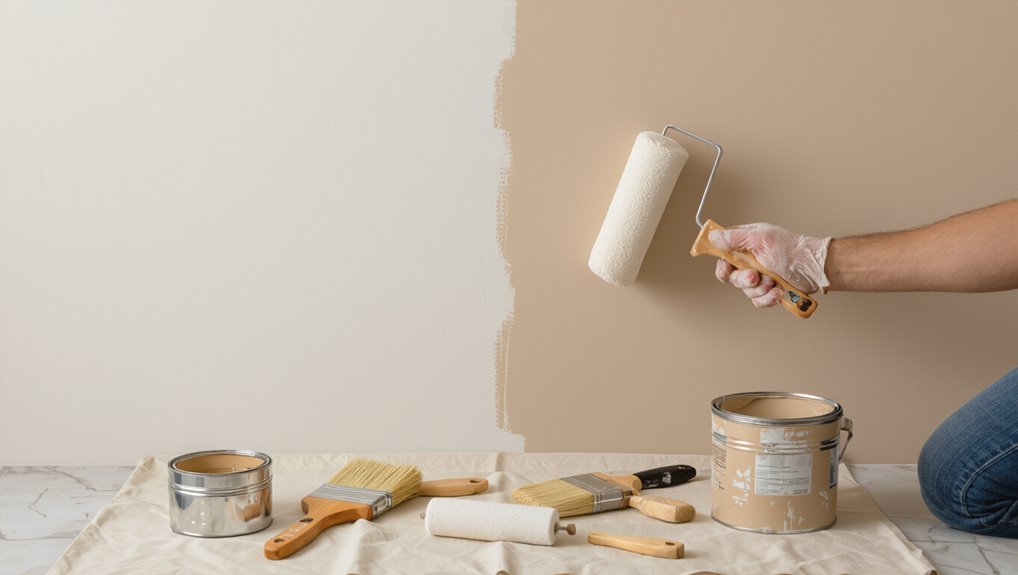
When you pick a primer, match it to the paint type to guarantee proper adhesion and prevent issues like peeling or staining.
You’ll need to prepare the surface—cleaning, sanding, and repairing—to help both primer and paint perform as designed.
Also remember that finish choice (flat, eggshell, satin, gloss) changes coverage and may require different primer or application techniques.
Primer And Paint Compatibility
Because the right primer sets the stage, choosing primer and paint that work together prevents adhesion failures, uneven sheen, and color shifts.
You’ll match primer types to paint base—oil with oil or bonding primer for tricky substrates—to guarantee paint adhesion. Follow manufacturer guidance and test a small patch.
- Match chemistry
- Check sheen compatibility
- Test before full coat
Surface Prep Importance
If you want paint to last and look right, you’ve got to prep the surface so primer and paint can bond properly.
You should use surface cleaning techniques—degreasing, sanding, mildew removal—then apply appropriate patching methods for holes and cracks.
Proper prep prevents adhesion failure, guarantees uniform coverage, and reduces peeling.
Pick primers compatible with your paint and substrate before you start.
Finishes Affect Coverage
Although finish choice might seem cosmetic, it directly changes how much primer and paint you’ll need and how they’ll perform on the wall.
You’ll adjust coverage techniques and consider finish implications when planning coats. Use a simple checklist to decide:
- Matte hides flaws but needs more primer.
- Satin balances durability and coverage.
- Semi-gloss requires fewer coats but highlights imperfections.
When to Use Stain-Blocking or Tinted Primers
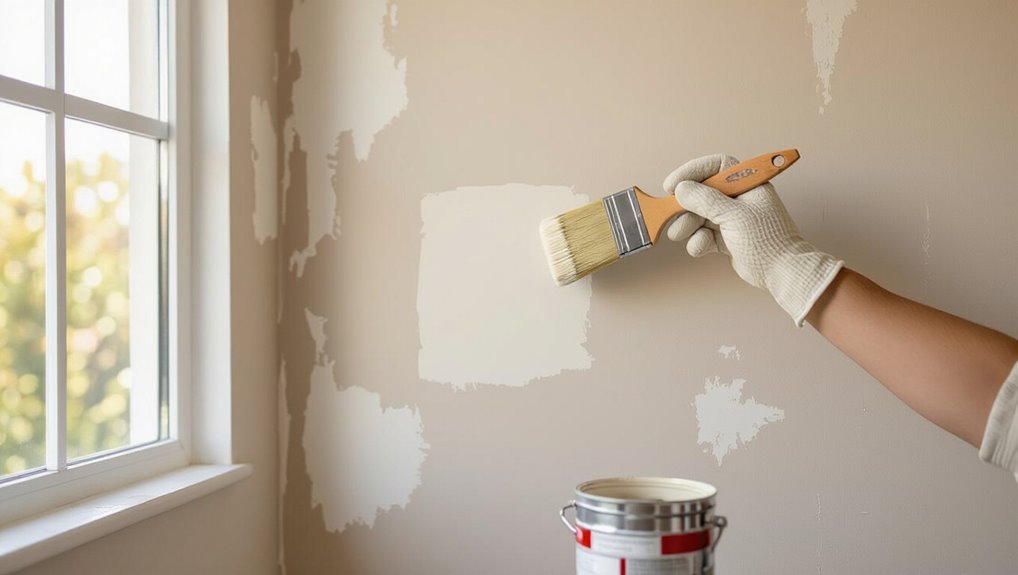
When you’re dealing with stains, strong colors, or drastic color changes, choose a stain-blocking or tinted primer to prevent bleed-through and reduce the number of topcoats you’ll need.
You’ll get stain blocking benefits that seal tannins, smoke, and water marks.
Use tinted primer uses to neutralize bold hues, improve coverage, and speed painting, so you save time and paint without extra coats.
Surface Types: Drywall, Plaster, Masonry, and Wood Considerations
For drywall, you’ll almost always need a drywall-specific primer to seal joints and even out porosity before paint.
For plaster, you’ll want to address texture—fill cracks and use a bonding primer so paint lays smooth.
For masonry and wood, apply a breathable masonry sealer or a wood primer respectively to prevent moisture and adhesion problems.
Drywall Primer Need
Because different wall materials absorb and bond with paint differently, you need to choose primers based on the surface—drywall, plaster, masonry, or wood—to guarantee even coverage, adhesion, and durability.
You’ll focus on drywall texture and primer application: moisture resistance, sealing imperfections, paint absorption, surface compatibility, adhesion importance, color uniformity, drying conditions, and primer types.
- Use a drywall-specific primer.
- Check drying conditions.
- Seal seams and dents.
Plaster Texture Tips
After you’ve prepped drywall and sealed seams, shift focus to plaster’s unique texture and how it affects paint choice and application.
You’ll assess plaster types, repair cracks, and choose texture techniques that match original character.
Use slower application methods, appropriate brushes or rollers, and test samples.
Finish with careful finishing touches to preserve detail and guarantee uniform sheen without overworking the surface.
Masonry And Sealer
When you’re working with masonry—brick, concrete, or stone—you’ll need a sealer that bonds to porous, uneven surfaces and blocks moisture and efflorescence; choose a breathable, masonry-specific primer or silane/siloxane sealer so trapped vapor can escape without peeling the paint.
Follow these masonry types and sealer application tips:
- Clean and repair mortar joints.
- Test absorbency, dilute sealer if needed.
- Apply two thin coats, allow full cure.
Preparing Surfaces: Cleaning, Patching, Sanding, and Priming
Start by thoroughly preparing the surface: clean away dust, grease, and loose paint, patch holes and cracks, sand smooth, and prime where needed to make certain paint adheres evenly and lasts.
You’ll perform surface cleaning and contamination removal, use patching techniques and sanding methods, follow priming essentials, conduct surface assessments, account for texture considerations, and enhance adhesion improvement before painting.
Flat vs Eggshell: When to Choose Low-Sheen Paint
You’ll notice flat finishes hide imperfections better, while eggshell gives a soft, subtle sheen that’s slightly more reflective.
Eggshell is tougher to clean and resists scuffs more than flat, so it’s a smarter pick for higher-traffic rooms.
Choose flat for low-traffic spaces like adult bedrooms and eggshell for living areas, hallways, and kid-friendly rooms.
Appearance Differences
Although both flat and eggshell paints look subdued compared to glossy finishes, they deliver different textures and practical benefits you’ll want to weigh when choosing paint for a room.
You’ll notice subtle shifts in color psychology and texture perception that affect mood and depth.
- Flat: hides flaws, mutes light.
- Eggshell: soft sheen, slight warmth.
- Choose by atmosphere desired.
Durability And Cleaning
After considering how flat and eggshell finishes affect a room’s look and mood, think about how they’ll stand up to everyday life.
You’ll weigh durability factors like scuff resistance and stain hiding. Eggshell is easier to clean; flat hides imperfections but needs gentler cleaning techniques to avoid sheen loss.
Match finish to traffic and your willingness to touch up or scrub.
Best Room Uses
When choosing between flat and eggshell, think about how the room’s function and traffic will affect wear and appearance.
You’ll use flat for calm, low-traffic spaces and eggshell where durability helps maintain finish.
Consider color psychology and room atmosphere as you decide.
- Flat: bedrooms, low light
- Eggshell: living rooms, hallways
- Avoid flat in kitchens/baths
Satin vs Semi-Gloss: Choosing Mid- to High-Sheen for Durability
Pick satin if you want a soft, versatile sheen that hides minor wall flaws while standing up to regular cleaning; choose semi-gloss where durability and moisture resistance matter more, like trim, bathrooms, and kitchens.
You’ll prefer satin durability on living areas and hallways for subtle reflection and easy maintenance, while semi-gloss sheen suits high-traffic, wet-prone spots for tougher scuff and moisture resistance.
High-Gloss Walls: Practical Uses and Visual Effects
Because high-gloss paint reflects light strongly, it makes surfaces look sharper and colors more vivid.
So you’d use it where you want drama, contrast, or easy cleanup.
You’ll weigh high gloss benefits against high gloss drawbacks: durability and washability versus surface imperfections and fingerprinting.
Choose locations carefully.
- Trim and doors
- Accent walls
- Kitchens and mudrooms
Paint for Ceilings: Best Choices and Why
Ceilings need paint that hides imperfections, resists splatters, and keeps color consistent from different angles, so you’ll usually choose flat or matte finishes in a bright, neutral white to minimize glare and visual distraction. Consider ceiling paint types, ceiling color choices, texture finishes, ceiling height considerations, primer necessity, moisture resistant ceilings, acoustic ceiling options, light reflection impact, matte ceiling paint, and ceiling maintenance tips.
| Feature | Benefit | Note |
|---|---|---|
| Matte | Hides flaws | Low sheen |
| Primer | Adhesion | Necessary |
| Moisture resistant | Bathrooms | Prevents mold |
| Acoustic | Sound control | Specialized panels |
Accent Walls: Recommended Finishes and Sheens
For an accent wall, you’ll usually want a finish that creates contrast—eggshell or satin gives depth without too much shine, while semi-gloss makes colors pop for a bolder look.
Consider how sheen highlights texture: higher sheens accentuate bumps and brushstrokes, while flatter sheens smooth them visually.
Pick the finish based on whether you want the wall to stand out by color alone or by both color and surface detail.
Best Finish For Contrast
1 smart way to make an accent wall pop is to choose a finish that contrasts with the surrounding surfaces; satin or eggshell on the main walls paired with a low-luster or semi-gloss accent creates clear visual separation without clashing.
Use contrast techniques and deliberate finish selection to guide focus.
- Semi-gloss for drama
- Low-luster for subtlety
- Satin/eggshell balance
Sheen Effects On Texture
Contrast in finish sets the stage, but how a sheen interacts with wall texture determines whether an accent feels crisp or muddled. You’ll use sheen impact to sharpen detail or soften flaws; texture perception shifts with light interaction. Choose sheen contrast carefully to highlight or hide texture and create the mood you want.
| Finish | Effect |
|---|---|
| Matte | Subtle |
| Eggshell | Soft |
| Satin | Sheen-highlight |
| Semi-gloss | Sharp |
| Gloss | Reflective |
Trim and Baseboards: Why Semi-Gloss Is Often Preferred
When you want trim and baseboards that stand out and resist scuffs, semi-gloss is a smart choice: it dries to a durable, easy-to-clean finish that highlights edges without overwhelming the room.
You’ll appreciate its durability factors and sheen variations for design cohesion and visual impact.
Consider:
- trim materials and finish selection
- color contrast and aesthetic preferences
- application techniques and maintenance tips
Paint for High-Traffic Rooms (Hallways, Kitchens)
High-traffic areas like hallways and kitchens need paint that stands up to constant use, so choose durable, washable finishes—typically satin or semi-gloss—paired with a high-quality, scrubbable latex formula that resists stains and holds up to frequent cleaning.
You’ll want high traffic durability to prevent scuffs, and plan simple maintenance solutions: gentle cleaners, touch-up kits, and periodic recoating to keep walls fresh.
Best Paint Types for Bathrooms and Moisture-Prone Areas
In bathrooms and other moisture-prone areas, you’ll want paints labeled mold- and mildew-resistant to keep surfaces healthy.
Choose semi-gloss for easy cleaning and moisture protection or satin for a softer look with decent durability.
Before painting, you should clean, dry, and prime surfaces to guarantee the finish bonds and resists damp conditions.
Mold-Resistant Paint Options
Because bathrooms and other damp spaces invite mold, choosing the right paint can prevent stains, odors, and recurring maintenance.
You’ll want options that aid mold prevention and may include paint additives for extra protection. Consider:
- Mildew-resistant latex for walls.
- Anti-microbial coatings for high humidity.
- Specialty primers that block moisture and spores.
Choose products labeled for bathrooms and follow prep instructions.
Semi-Gloss Vs. Satin
When you need a finish that stands up to steam and frequent cleaning, semi-gloss and satin are the top choices for bathrooms and other moisture-prone areas.
You’ll prefer semi-gloss benefits like easy wiping and moisture resistance, while satin durability offers a softer sheen that hides imperfections.
Choose based on look: semi-gloss for trim and high-contact spots, satin for walls needing subtle resilience.
Proper Surface Preparation
Start by stripping away old loose paint, grime, and mildew so the new finish can adhere and perform.
You’ll focus on surface cleaning, patching techniques, and sanding methods, using proper painting tools for each surface type.
Follow priming essentials, consider texture considerations, and check paint compatibility with finish selection.
Effective wall preparation prevents failures and boosts moisture-prone durability.
- Clean
- Patch
- Prime
Paint for Kids’ Rooms and Play Areas
Choosing paint for kids’ rooms and play areas means balancing safety, durability, and easy cleanup, so focus on low- or zero-VOC formulas with a washable, scrubbable finish like satin or semi-gloss. You’ll pick kid friendly colors and playful patterns that withstand scuffs. Table for quick tips:
| Feature | Benefit | Tip |
|---|---|---|
| Low-VOC | Safer air | Air out room |
| Washable | Removes marks | Use soft sponge |
Paint Options for Living Rooms and Formal Spaces
Living rooms and formal spaces call for paints that balance elegance with resilience, so you’ll want a finish that looks polished but still stands up to daily use—think eggshell or satin for walls and semi-gloss for trim and doors.
- Choose warm neutrals to anchor a living room.
- Use deeper tones for a formal dining accent wall.
- Pick a durable satin for guest traffic and light cleaning.
Matching Paint to Household Lifestyle and Pets
If your household sees kids, pets, or frequent guests, pick paint sheens and formulations that tolerate scuffs and cleaning without sacrificing style.
You’ll want durable, washable formulas and pet friendly options that resist stains and odors.
Consider your daily traffic, activity zones, and cleaning habits—these lifestyle considerations guide color durability and finish choices so maintenance stays manageable and rooms remain attractive.
Paint Sheen and How It Affects Light Reflection
Sheen refers to how shiny a paint is, from flat to high-gloss, and each level reflects light differently.
You’ll notice flat hides imperfections and soaks up light, while glossier finishes bounce light and look brighter.
Pick a sheen based on the room’s lighting and use—low sheen for cozy, high-traffic spaces and higher gloss where you want more shine or easy cleaning.
Sheen Levels Explained
1 key choice you make when picking paint is the sheen level, because it controls how much light the surface reflects and how visible imperfections will be.
You’ll weigh sheen varieties and consider sheen impact on durability and cleaning.
Pick based on room use:
- Flat — hides flaws
- Satin — durable, slight sheen
- Semi-gloss — high durability, shows texture
Light Reflection Differences
Now that you’ve matched sheen to room use and durability, consider how each finish changes light behavior on the wall.
You’ll notice matte sheens increase light diffusion, softening glare and hiding imperfections.
Satin and eggshell boost reflective properties slightly, brightening spaces and enhancing color depth.
High gloss maximizes reflection, emphasizing texture and making surfaces appear more vivid and polished.
Choosing Based On Room
Want rooms to feel cozy, bright, or polished? You choose sheen by room to control light and color psychology, shaping room atmosphere.
Consider:
- Flat for cozy, hides flaws, mutes light.
- Satin for living areas, slight glow, easy clean.
- Semi-gloss for trim/bath, reflects more light, boosts perceived brightness.
Concealing Imperfections: Which Paints Hide Flaws Best
Looking for a paint that minimizes bumps, hairline cracks, and uneven texture? You’ll want flat or matte finishes, which use concealment techniques to mask flaws.
Consider texture options like eggshell for mild hiding or knockdown for heavy imperfections.
Account for lighting considerations—bright light reveals flaws—so choose warmer, mid-tone color selection to further disguise irregularities without adding sheen.
Cleaning and Maintenance: Paints That Stand Up to Scrubbing
Because high-traffic walls take abuse, you’ll want a paint that tolerates frequent scrubbing without losing color or finish.
You’ll consider scrubbing techniques, maintenance schedules, wall materials, paint brands, cleaning solutions, surface finishes, durability tests, and paint formulations.
- Pick washable formulations rated in durability tests.
- Match cleaning solutions to surface finishes.
- Follow maintenance schedules and proper scrubbing techniques.
Repair and Touch-Up: Matching Finish and Sheen for Seamless Fixes
After you’ve scrubbed and maintained high-traffic walls, you’ll eventually face nicks and scuffs that need quick fixes to keep the space looking uniform.
You’ll use color matching and sheen selection to pick paint, apply touch up techniques and blending methods, and follow patching advice.
Focus on finish variations and repair strategies for seamless application so repairs disappear into the surrounding surface.
Color Depth and Formulation: Why Some Paints Show Brush Marks
Paint formulation and color depth directly affect whether brush marks show up on your walls. You’ll notice darker, heavily tinted paints reveal texture more; pigment load changes paint viscosity and highlights brush mark causes.
Consider:
- High pigment paints: show strokes.
- Thicker formulation: holds brush texture.
- Lighter, translucent colors: hide flaws.
Choose formulation to match surface and desired look.
Tools and Techniques That Affect Final Finish Quality
Knowing how pigment and formulation affect brush marks helps you choose materials, but the tools and techniques you use ultimately determine whether that chosen paint looks smooth or streaky.
Choose quality rollers and brushes, match nap length to texture, and practice application techniques like consistent pressure and wet edges.
Thorough surface preparation—cleaning, sanding, priming—prevents defects and guarantees an even, durable finish.
When to Recoat: Recommended Dry Times by Paint Type
When you’re planning your next coat, timing matters: different paint types need specific dry and recoat windows to avoid tackiness, brush marks, or poor adhesion.
When planning your next coat, timing matters: different paints need specific dry and recoat windows to prevent tackiness and poor adhesion
Follow these dry time recommendations and paint application tips:
- Latex: recoat in 2–4 hours for light coats, 24 for full cure.
- Oil: wait 24–48 hours.
- Enamel: 8–12 hours, longer in cool/humid conditions.
Common Mistakes When Choosing Wall Paint and How to Avoid Them
Although it’s tempting to pick a color or finish on impulse, choosing the wrong wall paint can cost you time, money, and a disappointing result—so learn the common pitfalls and how to avoid them before you buy.
Don’t chase paint trends without testing samples, ignore color psychology, or skip proper application techniques.
Consider finish maintenance and room use, read labels, and prep surfaces for lasting results.
Quick Decision Checklist by Room (One-Line Picks)
For living areas and hallways, pick an eggshell or satin finish for durability and easy cleaning.
For kitchens and bathrooms, choose a semi-gloss or satin that’s mildew-resistant and wipes clean.
Use these one-line picks to make fast, practical decisions room by room.
Living Areas & Hallways
Since living rooms and hallways get the most foot traffic and guest impressions, pick a durable, easy-to-clean paint—an eggshell or satin finish in a low-VOC latex formula will hide minor scuffs while still looking inviting.
You’ll balance living space aesthetics and practical hallway color schemes.
- Neutral eggshell for cohesion
- Satin for durability in busy spots
- Accent wall for personality
Kitchens & Bathrooms
When you’re choosing paint for kitchens and bathrooms, prioritize moisture resistance and cleanability—use semi-gloss or satin latex in low-VOC formulas for walls and high-gloss for trim and cabinetry where frequent wiping’s required.
Pick kitchen colors and color schemes that suit appliance compatibility and lighting effects; select bathroom textures for moisture protection, match cabinet finishes to tile choices, plan ventilation solutions, and use removable wall decals.
Cost Differences Between Paint Types and Where to Save
1 major factor that affects your painting budget is the type of paint you choose — premium acrylic latex costs more per gallon than budget latex, and 100% acrylic or oil-based specialty paints run higher still.
You’ll want a clear cost comparison and budget considerations. Use these savings strategies:
- Buy mid-grade for most rooms.
- Save on primer where possible.
- Shop sales for paint quality upgrades.
Professional-Grade vs Retail Paints: What You Get for the Price
Beyond choosing mid-grade or saving on primer, you’ll also want to weigh whether to buy retail-brand paint from a big box store or spring for professional-grade products.
Do a clear price comparison and quality evaluation: retail options save upfront, while pro paints often give better hide, durability, and tint consistency, reducing coats and touch-ups.
Decide based on long-term needs and budget.
How to Read Paint Labels: VOCs, Solids, Sheen, and Coverage
Because paint labels pack a lot of technical info into a small space, you’ll want to know what each term actually means before you buy.
Read VOC regulations, paint toxicity, and eco friendly options. Note paint additives, solids percentage, finish durability, sheen levels, color matching, surface compatibility, application techniques, and maintenance tips.
- Coverage
- Dry time
- Finish
Testing Paint Samples: A Simple Method for Real-Room Results
Now that you know how to read labels and compare VOCs, solids, sheen, and coverage, you’ll want to see how a color actually behaves in your room.
Tape paint swatches on different walls, observe them at morning, midday, and evening to note lighting effects, and view from varied positions.
Live with samples for a few days before committing to a full paint purchase.
VOCs and Indoor Air Quality: Choosing Low-Emission Paints
When you pick paint, consider its impact on the air you and your family breathe: volatile organic compounds (VOCs) off-gas after application and can aggravate allergies, headaches, and respiratory issues.
You should weigh VOCs impact, Indoor pollutants, Health considerations, Air quality, and Emission regulations when choosing Eco friendly options.
- Check labels for low-VOC or zero-VOC.
- Ventilate during and after painting.
- Allow full cure before occupying.
Eco-Friendly Paint Choices and Trade-Offs
If you want to reduce your home’s environmental and health impact, pick paints labeled low- or zero-VOC, natural or plant-based, or those certified by credible third parties. Each option cuts emissions but brings trade-offs in cost, coverage, durability, and color range.
You’ll weigh eco friendly certifications, sustainable sourcing, natural pigments, low VOC options and biodegradable additives against lifespan and total environmental impact.
When to Hire a Pro vs Paint Yourself; Next Steps and Buying Plan
Decide whether to DIY or hire a pro by matching the job’s scope, your skills, and your schedule: small rooms, simple prep, and straightforward trims are excellent for DIY, while extensive surface repairs, high ceilings, complex color techniques, or tight timelines call for a pro.
Match the job to your skills and schedule: DIY for simple rooms, hire a pro for repairs, height, or tight deadlines
- Assess project timeline, cost analysis, and your skills.
- Match surface types, paint brands, and preparation essentials.
- Use painting tips and planning resources to decide pro vs DIY.
Frequently Asked Questions
Can Paint Color Affect Perceived Room Temperature or Mood Long-Term?
Like a sunlit memory, yes — you’ll feel hues emotionally. You’ll use color psychology to shape mood and influence temperature perception; warm tones can cozy you, cool tones calm you, affecting feelings over time.
How Do Pigments Influence Paint Durability and UV Resistance?
Pigments influence durability and UV resistance by their chemical stability and lightfastness; you’ll choose pigment types that resist fading, and adjust paint formulation—binders and UV stabilizers—to lock pigments in and boost long-term performance.
Will Paint Ingredients Trigger Allergies Beyond VOC Concerns?
Right off the bat, yes — paint ingredients can trigger paint allergies beyond VOC concerns; you’ll want ingredient safety checks, since pigments, binders, preservatives, and additives can set off reactions, so don’t throw caution to the wind.
How Long Should Painted Rooms Be Ventilated After Application?
You should ventilate painted rooms for at least 24–72 hours, monitoring ventilation duration and air quality; keep windows open and fans running, and extend fresh-air flow longer if odors persist, sensitive occupants are present, or paints were high-VOC.
Can Antimicrobial or Mold-Resistant Paints Be Relied on Alone?
An ounce of prevention: you shouldn’t rely solely on antimicrobial or mold-resistant paints; they’ll help mold prevention and paint longevity, but you should also control moisture, ventilate, clean regularly, and address leaks for lasting protection.
