
Will a Hair Dryer Make Acrylic Paint Dry Faster? Truth
Yes — a hair dryer can make acrylic paint dry faster, but you’ve got to be careful. Use low heat, keep the nozzle 6–12 inches away, and move it continuously in short bursts so the surface doesn’t dry into a brittle skin over wetter layers. High heat or focused airflow can cause cracking, blistering, or poor adhesion, especially on thick or glossy paints. Follow safe settings and you’ll speed surface drying without damage — keep going and you’ll learn how to do it right.
Who This Guide Is For and What You’ll Learn
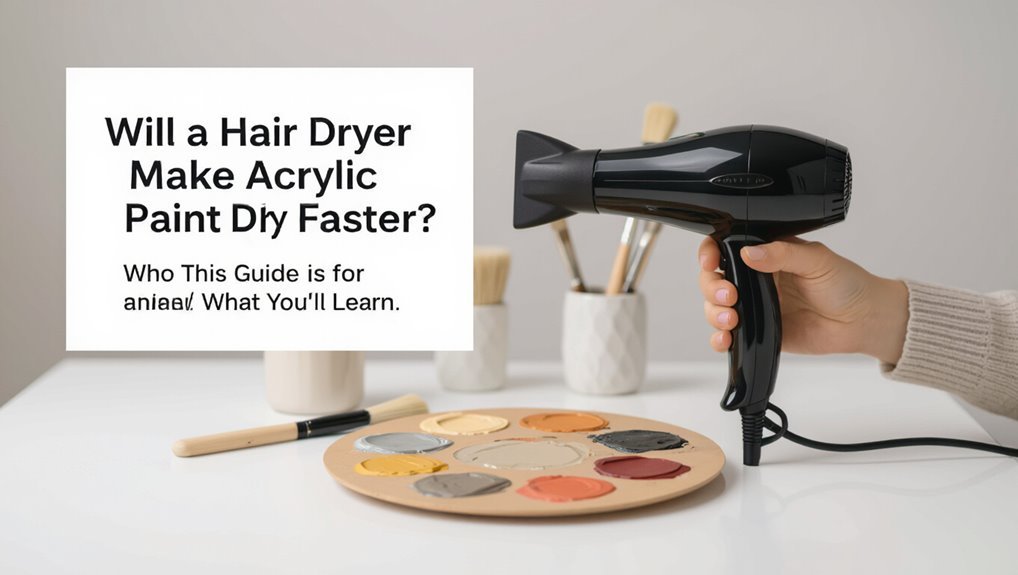
This guide is for anyone who wants faster, cleaner acrylic paint drying—whether you’re a hobbyist, student, or pro—and it shows when and how to safely use a hair dryer, what settings and distances work best, and which paints, surfaces, and techniques to avoid.
You’ll learn practical Acrylic techniques and Drying methods, safety tips, troubleshooting, and when air-drying remains the better choice.
Quick Answer : Does a Hair Dryer Make Acrylic Paint Dry Faster?
Yes — a hair dryer will make the surface of acrylic paint dry faster by applying heat and moving air.
But if you blast paint with high heat or hold the dryer too close, you risk cracking or blistering the film.
Use low heat and keep the dryer moving to speed curing while minimizing damage.
Heat Speeds Surface Cure
If you aim to speed up acrylic paint’s surface cure, blowing warm air from a hair dryer can help by evaporating water from the top layer more quickly—however, it mainly affects the surface, not the deeper film.
You’ll control surface temperature and combine drying techniques for best results.
- Warm, gentle airflow
- Short bursts, moving constantly
- Moderate distance (6–12 inches)
- Thin layers first
- Monitor tackiness
Risks: Cracking & Blistering
Although a hair dryer can speed surface drying by evaporating water, using it too aggressively can cause cracking and blistering because the top layer skins over while the lower paint remains wet and continues to shrink.
You’ll risk cracking causes like rapid moisture loss and thermal stress.
To minimize damage, use low heat, greater distance, intermittent blasts, and controlled ventilation for effective blistering prevention.
How Acrylic Paint Dries: Evaporation and Polymer Coalescence
When you apply acrylic paint, water and solvents start evaporating almost immediately while tiny polymer particles draw together. This dual action—evaporation removing the carrier and polymer coalescence forming a continuous film—turns wet paint into a durable, dry layer.
You’ll notice the evaporation process and polymer interaction control tack, sheen, and strength.
- Surface moisture leaves first
- Particles pack tighter
- Film forms and clarifies
- Tackiness decreases
- Final hardness develops
Why Temperature Matters More Than Fan Speed
You’ll find that heat speeds evaporation throughout the film, while airflow mostly moves moisture off the surface.
Relying on fan speed alone can leave deeper layers wet and slow overall drying.
Just be careful—too much heat can warp or crack acrylics, so balance temperature with gentle airflow.
Heat Accelerates Evaporation
Turn up the temperature and water molecules flee faster: heat speeds the chemical process of evaporation far more effectively than simply blowing air across wet acrylic.
You’ll notice higher evaporation rates lower moisture levels throughout the film, speeding cure and reducing tackiness.
Apply gentle, even warmth; avoid overheating.
- warmer environment
- consistent heat
- deeper drying
- reduced tack
- faster cure
Airflow Affects Surface Only
Heating speeds evaporation throughout the acrylic film, but airflow mainly alters only the surface layer.
You’ll notice a fan or hair dryer’s airflow impact dries the top quicker, leaving deeper layers wet.
For effective drying techniques, focus on gentle warmth and controlled airflow to avoid trapping moisture below.
Use low heat and intermittent bursts to promote even curing without forcing surface skinning.
Risks Of Overheating
Although airflow can speed surface drying, excessive heat does far more damage to acrylic paint, so you should prioritize temperature control over fan strength.
You risk cracking, discoloration, and weakened adhesion if you ignore overheating risks; protect paint integrity by using low heat, distance, and patience.
- Cracking
- Softening
- Uneven gloss
- Color shift
- Poor adhesion
How Heat and Airflow Affect Surface Versus Through Drying
When you aim a hair dryer at a fresh acrylic layer, the warm, moving air speeds evaporation at the surface far more than it speeds polymerization deeper in the film.
So you’ll often get a dry-to-the-touch skin while the interior remains soft or tacky.
You should know surface drying can mask incomplete through drying; controlled airflow and moderate heat reduce crusting, curling, and trapped moisture.
When to Use a Hair Dryer (And When Not To)
Now that you know how surface drying can outpace the film’s interior, you can decide whether a hair dryer will help—or hurt—your acrylic piece.
Now that surface drying can outpace the interior, use a hair dryer wisely—it can help or harm your acrylic piece.
Use hair dryer benefits selectively and combine with proven drying techniques. Avoid heat on thick layers or textured impasto.
Consider humidity, substrate, and timing to prevent skinning or cracking.
- thin layers
- small details
- quick touch-ups
- sensitive surfaces
- long pours
When a Hair Dryer Helps: Thin Washes, Glazes, and Edges
When you thin acrylics for washes or glazes, a hair dryer can speed up drying so you can layer more quickly without lifting underlying paint.
Use short bursts at low heat to control edges and prevent hard lines from forming where you want soft shifts.
With practice you’ll learn the distance and timing that give consistent glazes and clean edges.
Thin Layer Speed-Up
If you’re working with thin washes, glazes, or feathered edges, a hair dryer can shave minutes off drying time and help you control blending more predictably; aim for short bursts on a low heat setting and keep the nozzle at least 8–12 inches away to avoid disturbing the pigment.
Use it to refine color blending and preserve layer texture.
- soft wash shifts
- glazed luminosity
- subtle edge fades
- quick tack drying
- controlled layering
Edge And Glaze Control
Although delicate glazing and feathered edges demand patience, a hair dryer gives you precise control over how paint skins and tacks up—use short, cool bursts to firm a thin wash without blowing pigment, and you can stop blending at the exact moment a soft edge becomes stable.
You’ll refine glaze techniques, protect transparency, and time edge blending so glazes layer cleanly without muddy shifts.
When a Hair Dryer Hurts: Thick Layers and Heavy Impasto
Because thick impasto traps heat and air, using a hair dryer on heavy acrylic layers can do more harm than good.
You’ll face impasto techniques’ drying challenges: surface hardens while interior stays wet, causing stress. You should let thick passages dry slowly and evenly.
- Bubbling under heavy ridges
- Soft centers, hard crusts
- Distorted texture
- Uneven color shift
- Longer cure times
Common Problems From Over‑Speeding Drying: Cracking and Skinning
If you blast acrylic with a hair dryer, you’ll risk surface cracking as the top skin forms faster than the layers beneath.
That uneven skin formation can trap solvents and cause flakes or patchy texture.
Over time, those stressed areas become brittle and more likely to fail.
Surface Cracking Risk
When you blast acrylic paint with a hair dryer to speed drying, you risk creating a dry skin on the surface that traps wet layers underneath.
This then contracts and cracks as they cure. This accelerates cracking causes and undermines paint integrity, leaving visible fractures and weakened adhesion.
- Surface tension shifts
- Hidden wet pockets
- Microfractures
- Flaking edges
- Compromised longevity
Uneven Skin Formation
1 common problem you’ll see from over-speeding acrylic paint drying is uneven skin formation, where the surface hardens irregularly and leaves soft, tacky areas beneath or around tougher patches.
You’ll notice uneven drying alters surface texture, trapping moisture under a brittle layer.
If you keep blasting with heat, you risk puckering and poor adhesion, so slow, even airflow works better.
Long-Term Brittleness
Because forcing acrylics to dry too fast breaks down their flexible binder, you’ll often find paint that looks fine at first but becomes brittle and prone to cracking over weeks or months.
You risk long term effects that compromise paint integrity and appearance. Watch for:
- Hairline cracks across gloss layers
- Flaking at edges
- Powdery, weak film
- Loss of adhesion
- Reduced flexibility overall
How Humidity Changes a Hair Dryer’s Effectiveness
Although a hair dryer can speed acrylic paint drying, high humidity slows that effect by keeping moisture in the air and on the paint’s surface.
Safe Hair Dryer Settings for Acrylic Paint
Knowing how humidity affects drying helps you choose safer hair dryer settings for acrylics.
Knowing humidity guides safer hair-dryer choices for acrylics — use gentle settings and brief bursts to prevent damage.
You’ll use low heat, low airflow, and short bursts, combining safe settings with gentle drying techniques to avoid cracking or lifting paint.
- low heat
- low airflow
- short bursts
- 12–18 inches distance
- cool-down pauses
How to Hold and Angle a Hair Dryer for Even Drying
Keep the dryer 6–12 inches from the paint so you get steady drying without overheating the surface.
Tilt the nozzle to sweep airflow along the paint rather than blasting one spot, and hold it at a shallow angle to encourage even evaporation.
Move continuously around the piece to prevent pooling or rapid crusting in any one area.
Hold Distance Matters
Hold the dryer about 6–8 inches from the painted surface and angle the airflow so it skims across the paint rather than blasting directly into one spot.
You’ll maintain proper hold distance and use simple drying techniques to avoid soft spots, cracking, or texture changes.
- Move in steady passes
- Keep a consistent gap
- Shift direction periodically
- Use low heat
- Let layers cool between passes
Angle For Airflow
Once you’ve got the distance right, angle the dryer so the airflow skims across the paint surface at roughly a 30–45° tilt instead of blasting straight on; that gentle sweep helps evaporate solvents evenly and prevents thin spots or raised texture. You’ll control airflow direction and use precise drying techniques for uniform results.
| Angle | Effect |
|---|---|
| 30° | Gentle sweep |
| 45° | Even drying |
Move Continuously Around
Sweep the dryer in steady, overlapping passes so the heat never stays on one spot long enough to soften or lift the paint. You’ll move continuously around the piece, keeping the nozzle 6–12 inches away, varying angle and speed for even heat distribution.
Use low heat and short bursts to control drying techniques and prevent texture changes.
- slow circular motion
- angled sweeping strokes
- alternating sides
- periodic pauses
- check cool-touch areas
How Far From the Canvas Should a Hair Dryer Be?
How close should you hold the hair dryer to the canvas? Keep it about 6–12 inches away so heat distribution is even and you avoid softening or blistering paint.
Move steadily, altering angle and distance as needed for different areas. These drying techniques reduce localized overheating and promote uniform curing; back off if paint becomes glossy or the canvas warps.
Using Pulses Versus Continuous Blowing: Which to Choose?
You’ll usually get better control with short pulses of air, which let the surface skin while avoiding bloom or uneven drying.
Constant blowing can overheat and thin paint, causing edges to feather or lift.
Try alternating pulses and steady blasts for thicker areas or when you need both quick drying and smooth blending.
Pulse Air Advantages
Though a steady blast can speed drying, pulsing the air from your hair dryer gives you finer control over heat and airflow, letting you target wet spots without overheating surrounding paint.
You’ll use pulse air benefits to boost airflow efficiency, reduce brush marks, and limit gloss shifts while keeping edges crisp.
- Spot dries
- Less heat buildup
- Controlled evaporation
- Preserve texture
- Faster layering
Continuous Heat Drawbacks
While constant heat might seem like the quickest way to dry acrylics, it can easily cause problems you don’t want—softening edges, raising the gloss unevenly, and trapping solvents that lead to cracking or fish-eyes.
You should avoid nonstop blowing because heat retention in thicker areas distorts texture and pigments.
Choose measured drying techniques instead, since steady heat often worsens defects and reduces long-term adhesion.
When To Alternate
If you’re deciding whether to pulse a hair dryer or keep it on steady, think about what the paint layer needs: use short, cool bursts to move moisture out of thicker passages without overheating edges.
Pick continuous, gentle airflow only for very thin washes that need a uniform finish. You’ll balance Acrylic techniques and Drying alternatives to protect texture and sheen.
- Thick impasto sections
- Thin washes
- Edge detail
- Blended gradients
- Layered glazing
Avoiding Color Shifts and Pigment Migration With Heat
Because heat can both speed drying and destabilize pigments, you need to control how and when you apply warm air to acrylics to prevent color shifts and migration. You’ll use low heat, keep distance, and test swatches to protect color stability and pigment integrity.
| Action | Effect |
|---|---|
| Low heat | Slower stress |
| Distance | Even drying |
| Test swatch | Predict shifts |
| Short bursts | Reduce migration |
Preventing Tacky Skin and Trapped Moisture Layers
Don’t overheat the paint or you’ll form a tacky skin that traps moisture underneath.
Keep the hair dryer moving and use moderate heat so airflow is even across the surface.
If you notice soft spots, back off the heat and let the piece dry naturally until the layers feel fully set.
Avoid Overheating Paint
When you speed up drying with a hair dryer, watch the surface closely so you don’t create a tacky skin while trapping moisture underneath; that skin can seal in solvents and water, leading to bubbles, bloom, or adhesion problems later.
Control paint temperature and vary drying techniques to avoid overheating; keep distance, low heat, short bursts, and test a small area first.
- low heat
- short bursts
- 6–12 inch distance
- thin layers
- test patch
Ensure Even Airflow
If you want consistent drying without a tacky skin, keep airflow even across the whole surface so no spots seal over while moisture stays trapped underneath; hold the dryer at a steady distance and sweep it smoothly rather than blasting one area.
Use gentle, continuous motion and moderate heat, alternating directions to prevent ridges.
These drying techniques guarantee even airflow and reduce trapped moisture.
Drying Multilayer Paintings Without Intercoat Failure
Control the drying environment to prevent intercoat failure in multilayer acrylic paintings.
You’ll manage temperature, humidity, and drying speed to protect layer adhesion and paint integrity. Don’t rush layers; allow touch-dry before next coat.
Use gentle airflow and moderate heat. Monitor edges and avoid solvent-based accelerants.
- steady temperature
- 40–50% humidity
- low direct heat
- gradual layering
- test small areas
Tips for Drying Edges, Corners, and Textured Areas
Because edges, corners, and textured areas dry differently than flat surfaces, you’ll need to adjust airflow, heat, and timing to avoid tackiness, curling, or uneven gloss. Use low heat, angled airflow, and pauses for texture techniques and edge management. Aim for gradual drying to preserve relief and prevent cracking.
| Action | Setting | Tip |
|---|---|---|
| Airflow | Low | Angle |
| Heat | Warm | Short |
| Pause | 30s | Rotate |
Drying Acrylic on Different Surfaces: Canvas, Wood, and Paper
When you dry acrylic on different supports—canvas, wood, or paper—you’ll need to adjust airflow, heat, and timing to match each material’s absorption and flexibility so you avoid warping, bleed-through, or brittleness.
You’ll monitor canvas drying slowly, respect wood absorption to prevent cracking, and protect paper texture from buckling.
- Thin coats on canvas
- Gentle heat for wood
- Low airflow on paper
- Test surface differences
- Even layering and patience
How Gels, Mediums, and Retarders Change Acrylic Drying Time
Gels can thicken your acrylics and either speed surface skinning or slow overall curing depending on their formulation, so you’ll want to test each type first.
Retarders extend open time, letting you blend longer but increasing tackiness and drying time.
Mediums alter viscosity and finish, so use them deliberately to control how quickly your layers set.
Gel Effects On Drying
Although acrylics dry quickly by nature, adding gels, mediums, or retarders changes that timeline and how the paint behaves on your surface.
You’ll notice texture, sheen, and open time shifts when you use gel medium, so adjust your drying techniques accordingly.
- Thicker body, slower surface skin
- Increased transparency and gloss
- Extended blending window
- More texture retention
- Longer tacky phase
Retarders And Mediums
Because retarders and medium additives change the chemistry of acrylics, you’ll notice paint stays workable longer and behaves differently on the surface.
You can use retarders benefits to extend open time for blending and glazing, while different gels and mediums impact flow, sheen, and thickness.
Don’t overuse additives; they alter curing and adhesion, so test mixes before committing to a final layer.
Tools That Outperform a Hair Dryer for Studio Use
Several studio tools beat a hair dryer for working with acrylics, and knowing when to use them will save you time and protect your paint.
You’ll want studio alternatives and varied drying techniques depending on layer thickness and finish. Choose tools that control temperature and airflow gently to avoid cracking or bloom.
- Heat gun (low setting)
- Infrared lamp
- Dedicated paint dryer cabinet
- Drying rack with ventilation
- Humidity-controlled room
Using a Fan, Heat Lamp, or Space Heater Safely
When you speed up drying with a fan, heat lamp, or space heater, pay close attention to distance, temperature, and airflow so you don’t damage the paint or canvas.
Position fans to circulate air gently, follow fan safety for stable mounts, and keep heat lamps at a safe distance. Use low, even heat, monitor for cracking, and never leave equipment unattended—follow heat lamp precautions.
Pros and Cons of Accelerated Drying Additives (Air‑Dry Additives)
If you want paint to dry faster without heat, air‑dry additives (also called alkyd modifiers or drying accelerators) can speed curing and thin films so you can recoat sooner, but they change working properties and long‑term behavior.
- Faster drying efficiency for thin layers
- Improved additive benefits for recoat times
- Reduced open time and blending
- Potential yellowing or hardness changes
- Varying compatibility with pigments and varnishes
How to Thin Paint and Speed Natural Drying Without Heat
Although you can’t use heat, you can still thin acrylic paint and speed its natural drying by controlling solvent content, film thickness, airflow, and environment; choose the right thinner or extender, work in thin layers, increase ventilation and humidity management, and avoid overworking the surface so coats set more quickly and evenly.
Adjust paint viscosity with medium, use efficient drying techniques like thin glazing and brisk airflow for steady cure.
Troubleshooting Common Drying Problems After Using a Hair Dryer
You’ve learned how to speed natural drying without heat, but using a hair dryer introduces different risks and quirks you’ll need to manage.
You’ll troubleshoot issues by checking paint thickness, adjusting airflow, and monitoring drying conditions to prevent cracking, skinning, or uneven gloss.
Check coat thickness, tweak airflow, and watch conditions to avoid cracking, skinning, or uneven gloss.
- Too thick layers
- Hot, focused airflow
- Cold, humid room
- Rapid surface cure
- Uneven strokes
When to Wait: How Long to Let Layers Rest Before Reheating?
Because acrylics keep curing beneath the surface, you should let each layer rest long enough to firm up before reheating with a hair dryer; that waiting time prevents trapping solvents, reduces cracking risk, and helps you get even gloss between passes.
Aim for a sensible layer duration—typically 10–30 minutes for thin layers, longer for thicker ones—and use a controlled reheating strategy to avoid overheating.
How to Test Drying Techniques on a Sample Panel
After letting your layers firm up as recommended, try the same heating and drying steps on a small sample panel before working on your final piece.
Before tackling your final piece, test the same heating and drying steps on a small sample panel first.
Use testing methods to record timing, surface feel, and gloss. Note any edge lifting or color shift on sample panels so you can tweak heat, distance, and duration.
- room temp baseline
- low heat pass
- high heat burst
- intermittent blows
- extended cool-down
Studio Setup to Control Temperature and Humidity Reliably
When you want consistent drying results with a hair dryer and acrylics, set up your studio to keep temperature and humidity steady so nothing surprises your paint.
Use a digital thermostat and humidistat for precise temperature control and humidity regulation.
Arrange airflow to avoid direct blasts, insulate against drafts, and monitor conditions while testing small panels so you can replicate ideal settings reliably.
Safety Tips: Fire, Fumes, and Equipment Care When Using Heat
While you speed up drying with a hair dryer, keep safety front and center: heat can ignite materials, concentrate fumes, and stress equipment, so always work with good ventilation, a clear workspace free of flammables, and a functioning smoke detector nearby.
- Watch for fire hazards near canvases and solvents.
- Use fume precautions: ventilate and mask.
- Check dryer cords and vents for debris.
- Cool equipment between uses.
- Follow basic safety practices and emergency plans.
Final Decision Guide: Use a Hair Dryer, Use Alternatives, or Wait
Now that you’ve addressed fire, fume, and equipment risks, you need a clear way to choose whether to use a hair dryer, opt for alternatives, or just let paint dry naturally.
If speed matters and thin layers are used, a hair dryer helps.
For texture, delicate work, or solvent-free safety, pick hair dryer alternatives like fans, dehumidifiers, or improved ventilation.
Balance drying techniques with finish needs.
Frequently Asked Questions
Can a Hair Dryer Cause Permanent Color Fading Over Months or Years?
Yes — if you overuse a hair dryer you can accelerate color fading: heat effects break pigments and binders, reducing color longevity over months or years. You should moderate heat and test on a small sample first.
Will Heated Drying Affect Archival Lifespan or Museum Conservation Standards?
Like rushing a marathon, you risk strain: you shouldn’t rely on heated drying for archival quality. Museums avoid it; controlled drying techniques preserve binders and pigments, so use moderate conditions and proven conservation methods instead.
Can Using a Hair Dryer Release Harmful VOCS From Acrylic Mediums?
Yes — you can increase VOCs exposure by heating acrylic mediums with a hair dryer, which can worsen air quality; you should ventilate well, use low‑VOC products, and avoid prolonged direct heat to reduce emissions.
Is It Safe to Dry Acrylics Indoors With Pets or Small Children Nearby?
Yes — but don’t celebrate yet: you’ll need ventilation, keep pets away, and maintain child supervision while paints and mediums dry; avoid heat guns, store supplies inaccessible to kids, and monitor air quality for pet safety.
Can Rapid Surface Drying From a Hair Dryer Alter Varnish Adhesion Later?
Yes — if you rush layers, you’ll risk poor varnish adhesion because rapid surface drying traps internal moisture. Use gradual drying techniques, letting paint cure fully before varnishing to guarantee stable bonding and avoid future lifting or clouding.
Conclusion
Short answer: yes — but don’t expect miracles. A hair dryer will speed surface evaporation and can make paint feel dry fast, but it won’t magically cure thick layers or replace proper heat, humidity control, or patience. Use low heat, keep the dryer moving, test first, and avoid overheating your paint, canvas, or lungs. Treat the dryer as a quick trick, not a miracle cure, and you’ll still need time for true through-dry and durability.
