
How Long Does Garage Floor Paint Take to Dry
You can usually walk on garage floor paint within 12–24 hours, but full hardness and chemical resistance take longer. Water-based paints dry faster (surface dry in 1–4 hours, recoat in 4–24), while oil-based or epoxies may need 24–72 hours for light use and up to 7 days or more for heavy traffic; some systems reach full cure in 7–30 days. Follow manufacturer instructions for safe use, and keep reading to learn practical tests and tips.
Quick Answer: When Will My Garage Floor Paint Be Dry?
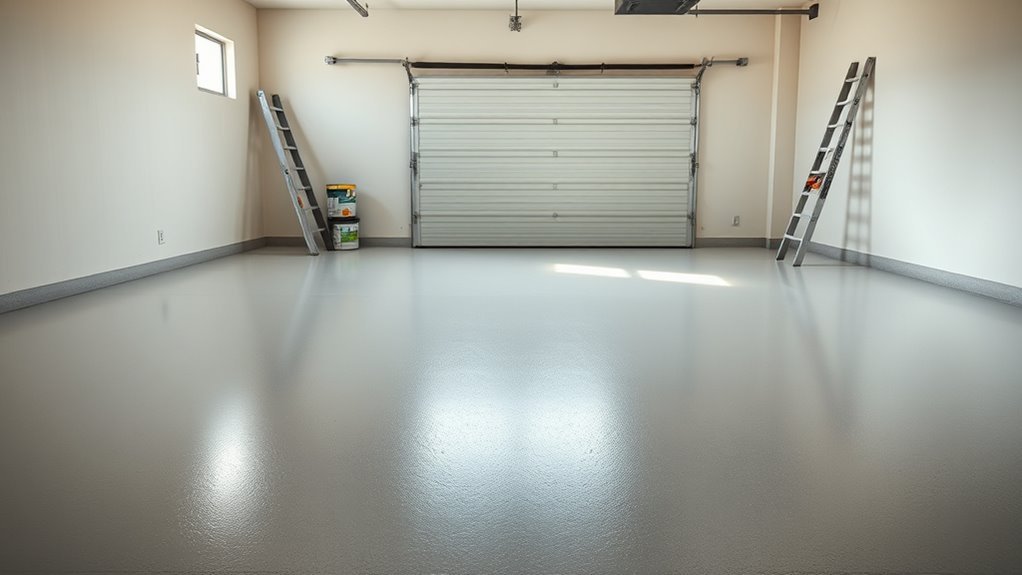
If you’re wondering when your garage floor paint will be dry, expect surface dry in 1–2 hours for water-based paints and 6–8 hours for oil-based.
However, full cure usually takes 24–72 hours for water-based coatings and up to 7 days for oil-based or epoxy systems, depending on temperature, humidity, and coating thickness.
You’ll want to allow curing before heavy use to protect your investment and simplify garage maintenance.
Choose paint color selection wisely—lighter tones show stains less, darker ones hide imperfections.
Monitor conditions: warmer, drier air speeds drying; cold or humid slows it, so plan accordingly.
Dry vs Fully Cured: What’s the Difference for Garage Floor Paint?
Knowing a surface is dry doesn’t mean it’s ready for heavy use—you’ll notice dry feels like it won’t stick to your finger, while cured means the coating has reached full hardness and chemical resistance.
This matters because driving a car or placing heavy equipment on a merely dry floor can cause chips, tackiness, or uneven wear.
Always follow the manufacturer’s cure time for best durability and easy maintenance.
Dry Versus Cured
Though a coat of garage floor paint feels dry to the touch within hours, it’s not fully cured and ready for heavy use. Drying means the solvent evaporated, while curing means the paint’s chemical bonds have completed, giving you full hardness and chemical resistance.
You’ll notice surface tack goes away quickly, improving garage aesthetics, but underlying polymers still crosslink for days to weeks. Temperature, humidity, and product type control cure time.
Epoxy and polyaspartic systems cure differently than latex, so follow manufacturer timelines. Don’t confuse a dry surface with finished strength—only a fully cured floor delivers long-term paint durability and protection.
Practical Implications
You’ll see the immediate difference between a surface that’s merely dry and one that’s fully cured when you start using the garage: a dry coat looks fine and resists light foot traffic, but a not-yet-cured coating can still scratch, stain, or soften under vehicle weight, oil drips, and chemicals.
Practically, wait for full cure before parking or storing solvents; that avoids costly touch-ups and odors. Cured floors hold decorative flakes and non-slip textures better, preserving garage aesthetics.
Also, delay final paint color selection until curing finishes—wet films can mislead you about sheen and true hue.
Typical Drying and Curing Timelines for Garage Floor Paint
When you paint a garage floor, the surface may feel dry to the touch within a few hours but it’s not ready for everything yet. Most products allow light foot traffic and recoating after 12–24 hours, depending on temperature and humidity.
Expect a full cure—where the coating reaches maximum hardness and chemical resistance—to take 3 days to 7 days (or longer for some epoxy systems).
Surface Drying Time
Because garage floor paint goes through distinct stages—tack-free, surface dry, and full cure—you should know what each timeline means for use and care.
Surface dry usually occurs within 1–4 hours for water-based and 6–24 hours for oil-based formulas, depending on temperature, humidity, and garage ventilation.
At this stage, the paint feels dry to touch and resists light dust, but it’s not fully hardened. You should avoid heavy items and moisture; light walking may be acceptable after confirming tack-free status.
Proper ventilation speeds solvent evaporation and improves paint durability as the coating progresses toward full cure.
Recoat And Foot Traffic
Although paint may feel dry to the touch within hours, you should wait the manufacturer’s recommended recoat time—usually 4–24 hours for water-based and 24–48 hours for oil-based products—before applying a second coat to avoid lifting or poor adhesion.
After recoating, you should limit foot traffic for the specified time—often 24–72 hours—so impressions or grit don’t mar the finish. For light use, wear clean socks or soft-soled shoes; for heavier traffic, wait longer.
Proper timing preserves Garage aesthetics and helps finishes bond correctly.
Also, clean tools promptly for effective Tool maintenance and to avoid contaminating your fresh coats.
Full Cure Duration
If you want a durable, chemical- and abrasion-resistant garage floor, plan on waiting more than just the initial dry or recoat times—full cure usually takes 7–30 days depending on the product, temperature, humidity, and coat thickness.
You’ll need to limit traffic and spills during curing to protect paint durability and simplify future garage maintenance. Epoxy formulas often cure toward the shorter end in warm, dry conditions; solvent-based or high-build polyurethanes can take longer. Thicker coats extend cure time.
Check the manufacturer’s specific cure chart, keep ventilation steady, and avoid chemical exposure until the floor reaches its rated hardness for reliable long-term performance.
Fastest Coatings-Epoxy vs Polyurethane: Realistic Timelines
When you’re choosing between epoxy and polyurethane for a quick garage-floor turnaround, the key is understanding how chemistry and curing conditions drive real-world timelines. You’ll find fast-setting two-part epoxy can be walkable in 12–24 hours and traffic-ready in 48–72 hours under good garage ventilation and proper temperature, especially when applied over a recommended paint primer.
Fast polyurethane coatings often cure to touch in 6–12 hours and reach light-traffic readiness in 24–48 hours, but full chemical resistance can take several days. Always follow manufacturer temp/humidity specs, mix ratios, and allow extra time if ventilation or substrate prep was imperfect.
Standard Latex and Acrylic Garage Floor Paint Drying Times
Since latex and acrylic garage floor paints rely on water evaporation rather than chemical curing, you’ll typically see them dry to the touch within 1–2 hours in warm, well-ventilated conditions and be ready for light foot traffic in 4–6 hours; heavier traffic or vehicle use usually requires 24–48 hours. You should plan projects around painting, letting shelves and Garage decor remain off the fresh surface while you add storage solutions afterward. Expect recoat times of 2–4 hours for thin coats, longer for thicker layers. Use ventilation and low humidity to speed drying. Monitor tackiness before returning items.
| Coat Thickness | Touch Dry | Recoat Time |
|---|---|---|
| Thin | 1–2 hrs | 2–4 hrs |
| Medium | 2–4 hrs | 4–8 hrs |
| Thick | 6–12 hrs | 12–24 hrs |
How Temperature Affects Garage Floor Paint Drying Time
You’ll get the best results when you paint within the ideal temperature range listed on the can, since too-hot or too-cold conditions change how the paint cures.
Also watch humidity because high moisture slows drying and low humidity can cause skinning or cracking.
In cold weather you’ll face longer dry times and may need heat or longer cure periods to avoid tacky, soft finishes.
Ideal Temperature Range
How cool or warm your garage should be for paint to dry properly? Aim for 50–85°F (10–29°C) as the ideal range; most epoxy and latex floor paints cure best here.
If it’s colder, drying slows and tackiness can persist. If it’s hotter, solvents evaporate too fast, risking cracks or uneven sheen.
Keep temperature steady during application and initial 24–48 hours. Use heaters or fans to control conditions, and avoid direct heat that creates hot spots.
Maintain typical garage décor and storage solutions placement so airflow isn’t blocked, ensuring even temperature and consistent drying across the floor.
Humidity And Drying
Temperature sets the stage, but humidity tells the paint how fast it can actually dry. You’ll notice high humidity slows solvent and water evaporation, stretching tack-free and recoat times.
Low humidity speeds curing but can cause surface skinning before underlying layers cure.
Match your schedule to the paint formulation—waterborne coats react differently than solvent-based ones.
Use good garage ventilation to lower moisture and equalize conditions; fans and dehumidifiers help.
Monitor relative humidity and avoid painting during spikes after rain or overnight condensation.
Adjust drying expectations based on readings, and follow manufacturer recommendations for best results.
Cold Weather Challenges
Ever wondered why paint seems to take forever to dry when it’s chilly? Cold slows chemical reactions, so epoxy and latex cures drag out; you’ll see longer tack and extended recoat windows.
Aim for at least the manufacturer’s minimum temperature, and use space heaters and good ventilation to keep temps steady without creating drafts.
Monitor concrete temperature too—cold slabs zap cure rates.
Delaying projects until milder days avoids wasted coats and adhesion issues.
Proper timing protects your investment in garage organization and lets painted floors handle tool maintenance without trapping solvents or failing prematurely.
Plan, control temperature, and follow specs.
How Humidity and Ventilation Change Drying and Curing Speeds
Because moisture in the air slows solvent evaporation and chemical cross-linking, high humidity can considerably extend both drying and curing times for garage floor paint. You’ll want to manage humidity and boost garage ventilation to keep schedules predictable; active air exchange speeds solvent loss and helps coatings reach tack-free and full cure faster.
Use dehumidifiers, fans, and open doors when possible, but avoid dust. Monitor conditions and adjust timelines rather than guessing.
- Run fans toward exits to pull moist air out.
- Use a dehumidifier to maintain humidity control.
- Check paint manufacturer’s recommended RH range.
- Delay foot traffic until curing specs are met.
How Coat Thickness Alters Drying and Cure Schedules
When you apply a thin coat it dries and re-coats much faster, while a thick coat holds solvents longer and needs extra cure time.
If you build multiple thin coats you’ll reach full coverage sooner and reduce the risk of surface tackiness or solvent entrapment.
Plan longer wait times between thick coats and consider additional ventilation or lower film builds to guarantee a proper cure.
Thin Vs. Thick Coats
If you apply thin coats, the paint will dry faster and cure more evenly. Thicker layers trap solvents and slow both surface dry and full cure. You’ll notice thin coats let you control garage aesthetics and paint color selection without runs or bubbles.
Thin coats reduce tack time and promote adhesion. Thick layers can stay soft for days.
- Thin coats dry to touch sooner.
- Thin coats cure uniformly, resisting peeling.
- Thick coats extend recoat and cure windows.
- Thick coats risk solvent entrapment and uneven finish.
Choose thin, measured passes for predictable drying and a durable, attractive floor.
Multiple Coat Builds
As you build multiple coats, remember that each layer changes how the next one dries and ultimately how long the floor takes to fully cure; you’ll need to space coats, monitor tackiness, and adjust for humidity so your garage decor and storage solutions won’t stick or scuff.
| Coat Number | Typical Wait | Effect on Finish |
|---|---|---|
| 1 (primer) | 4–8 hours | Bonds, soaks into concrete |
| 2 (mid) | 8–12 hours | Builds thickness, raises cure time |
| 3 (top) | 24+ hours | Final hardness, affects long-term cure |
Thicker builds extend full cure by days to weeks.
Why Concrete Prep Changes Paint Drying and Adhesion
Because concrete’s surface and chemistry directly affect how paint soaks in and cures, prepping the slab changes both drying time and adhesion. You’ll see faster, more even drying when you remove laitance, oil, and loose particles so coatings bond instead of just sitting on top. Proper prep also protects your Garage aesthetics and keeps Budget considerations realistic by reducing recoat or repair needs.
- Etch or grind to open the pore structure
- Degrease to prevent fisheyes and soft spots
- Repair cracks to eliminate voids under paint
- Dry the slab fully before applying any coating
Primer and Sealer Drying Times to Include in Your Schedule
When you factor primers and sealers into your timeline, plan for both surface tack-free times and full cure windows so you don’t rush subsequent coats or traffic.
Primer tack-free time typically runs 1–4 hours depending on product and humidity; allow 24 hours before sanding or applying sealer.
Sealers often feel dry in 2–6 hours but need 24–72 hours to cure enough for light use and up to 7 days for full chemical resistance.
Include these windows when scheduling Garage decor placement and Tool maintenance to avoid sticking or contamination.
Always follow manufacturer cure charts for best adhesion and longevity.
How to Tell When Your Garage Floor Is Safe for Foot Traffic
Check the paint’s recommended cure time and make sure it’s reached before you walk on the surface.
Perform a simple surface hardness test by pressing a fingernail or a coin into an inconspicuous spot to confirm the coating isn’t tacky.
If the paint resists indentation and matches the specified cure window, it’s safe for foot traffic.
Cure Time Check
Although the surface may look dry in just a few hours, you shouldn’t walk on the floor until it’s truly cured—tap and smell tests and the manufacturer’s recommended cure time will tell you when it’s safe for foot traffic.
For proper garage maintenance, keep tools off the floor and use correct tool selection when moving equipment until cure completes.
Check manufacturer’s label for full cure hours, not just tack-free times.
Perform a gentle tap: no stickiness or denting.
Smell test: no strong solvent odor.
Walk slowly at first; if you notice marks, wait longer before regular use.
Surface Hardness Test
After you’ve confirmed cure with the tap and smell checks, you’ll want to verify the floor’s surface hardness before putting weight on it. Gently press a coin or fingernail into an inconspicuous spot; a cured coating resists indentation and won’t tack.
For a more precise check, use a handheld pendulum or Shore durometer if you have one—compare readings to the product’s specifications.
Walk slowly in socks to sense softness versus firmness. Only reintroduce tools and cars once the surface consistently resists marking.
Proper hardness preserves garage aesthetics and protects your chosen paint color options from scuffing and premature wear.
When Can I Park a Car After Painting the Garage Floor?
When you’re wondering how soon you can park on a freshly painted garage floor, the answer depends on the paint type, ambient conditions, and how long you let it cure rather than just dry. You’ll usually wait 24–72 hours for light use and 7 days for full cure with some epoxies.
Consider vehicle weight, tire chemicals, and garage storage placements that might trap moisture. Also note that a cured floor improves noise reduction and resists scuffs better.
- Check manufacturer cure times on the can.
- Inspect tackiness before moving the car.
- Move vehicles gently after initial cure.
- Avoid heavy loads until fully cured.
How to Accelerate Garage Floor Paint Drying Safely
If you need your garage back sooner than the paint’s recommended cure window, there are safe steps you can take to speed drying without compromising the finish. Open doors and windows to improve airflow, and run box or oscillating fans to move air across the surface.
Use a dehumidifier or heater on low to lower humidity and raise temperature within the paint’s safe range. Avoid heavy traffic until tack-free.
Protect newly dried areas with temporary garage decor or lightweight storage solutions to prevent scuffs. Check the paint manufacturer’s guidelines before altering conditions to keep the warranty intact.
Common Mistakes That Slow Garage Floor Paint Drying
Because climate control and prep matter, you’ll slow drying if you skip key steps or change conditions mid-cure. You’ll also unintentionally create problems by rushing projects or using wrong products. Avoid these common mistakes to keep drying times predictable and surfaces durable.
- Painting over dirty or oily concrete
- Applying thick coats or re-coating too soon
- Using low-quality paint not meant for garage floors
- Blocking vents or crowding the space with Garage decor and Storage solutions
Follow instructions, maintain steady temperature and humidity, and let each coat fully cure before adding weight or traffic.
Seasonal Timing: Best Months and Temps for Painting Your Garage Floor
Choose months with steady, mild conditions—typically spring and fall—so paint can cure without temperature or humidity swings that slow drying or cause finish problems.
Aim for daytime temps between 50–85°F (10–29°C) and relative humidity under 70% for predictable curing. If nights dip below recommended limits, delay the job.
You’ll also want good garage ventilation to exhaust moisture and fumes; use fans or open doors to maintain air movement.
Monitor surface and air temps, and avoid painting before rain if your garage is attached and porous.
Proper timing preserves adhesion, uniform paint sheen, and long-lasting results.
Choosing the Right Garage Floor Paint for Faster Drying
Now that you’ve picked the right season and conditions, pick a paint that cures quickly under those temperatures and humidity levels. You want a formula that balances fast dry time with long-term paint durability so routine garage maintenance stays easy. Consider resin type, solids content, and manufacturer cure specs. Match primer and topcoat chemistry for quicker crosslinking.
Choose a fast-curing paint matched to primer chemistry—balance quick dry times with durable resins for easy maintenance.
- Water-based acrylics: faster recoat, lower odor.
- Epoxy: excellent durability, choose rapid-cure versions.
- Polyurethane: good wear, faster cure when catalyzed.
- Hybrid fast-cure systems: engineered for quick return-to-service.
Follow label instructions precisely for best results.
Repairing Scuffs and Tacky Spots During the Cure Period
While the finish is still curing, you can fix scuffs and tacky spots quickly to prevent permanent marks and uneven gloss.
Gently press a clean, lint-free cloth dampened with warm water and mild soap to remove surface residue; don’t rub hard.
For tacky patches, lightly abrade with fine-grit sandpaper, then wipe away dust and apply a thin touch-up of the original paint or clear sealer.
Choose DIY maintenance products labeled low-VOC or water-based for eco-friendly options.
Let repaired areas cure undisturbed per manufacturer guidance, and avoid heavy traffic until the floor regains full hardness.
Tests to Check Cure Progress (Tape, Solvent, Hardness)
After fixing scuffs or tacky spots, you’ll want to verify how the coating is curing before allowing normal use. You can run simple tests to assess cure progress and protect your garage cleaning efforts and tool maintenance routines.
Start with gentler checks, progress to tougher ones, and stop if you risk damage.
- Tape test: press and rip a small strip to see if paint lifts.
- Solvent test: dab a cotton swab with solvent; wipe an inconspicuous spot.
- Hardness check: press with a fingernail for indentation.
- Visual/feel: look for uniform sheen and no tackiness before returning items.
Cleaning, Weight Limits, and Care While Paint Cures
Even as the finish hardens, you should limit traffic and avoid heavy loads on the floor—keep foot traffic light, don’t roll or park vehicles, and move toolboxes or shelving with caution—so the coating can cure evenly and resist damage. Clean spills gently with a soft broom and pH-neutral cleaner; avoid harsh scrubbing until full cure. Check weight limits in product specs before placing heavy equipment. Maintain tools off the floor and perform regular tool maintenance to prevent rust stains. Monitor humidity and temperature with weather forecasting to plan safe re-entry times.
| Action | Timing |
|---|---|
| Light cleaning | After tack-free |
| Heavy loads | After full cure |
| Tool storage | Immediately off floor |
When to Call a Pro for Persistent Tackiness or Adhesion Failures
If you’ve followed the care steps but the coating still feels tacky or starts peeling, it’s time to contemplate professional help. Persistent stickiness or adhesion failure often signals surface, mixing, or environmental problems that basic fixes won’t address.
You should call a pro when DIY attempts fail, odors persist, or large areas lift. A contractor will diagnose substrates, moisture, wrong primer, or improper cure conditions, and recommend repair or removal. They’ll also advise on integrating Garage decor and storage solutions without harming the finish.
Typical triggers to seek help:
- Widespread peeling or blisters
- Strong, lasting solvent smell
- Failed spot repairs
- Visible moisture through epoxy
Frequently Asked Questions
Can Additives or Accelerators Void My Paint Warranty?
Yes — you can void it. You’ll risk warranty coverage if additives alter paint chemistry or ignore paint compatibility. During garage preparation you should follow manufacturer guidelines and test products, or they’ll likely refuse claims.
How Do Oil or Chemical Spills Affect Curing Time?
Like a sponge, oil or chemical spills slow curing: you’ll see chemical interactions that prevent proper bonding and require spill absorption or cleaning, or you’ll extend cure times, risk tacky finishes, and possibly need reapplication.
Will Radiant Floor Heating Change Paint Curing Dynamics?
Yes — radiant heating speeds and stabilizes curing, so you’ll need a paint adjustment: lower application temperature tolerance and slower initial heat ramp. Test a small area, follow manufacturer guidelines, and monitor for blistering.
Can Painted Garage Floors Be Recoated Later Without Full Cure?
Yes — you can recoat before full cure if the previous layer’s tackiness’s minimal; you’ll still need proper garage floor prep, and you’ll consider paint color options to guarantee uniform coverage and adhesion for the new coat.
Are VOC Levels Different During Drying Versus Full Cure?
Yes — you’ll see higher VOC emissions during the drying process as solvents evaporate, then lower VOC levels as the paint cures and emissions taper off; full cure may still release trace VOCs for some time.
Conclusion
You’ve waited through tacky mornings and cautious footsteps, and now you’re almost there—just don’t rush it. Know the difference between “dry to the touch” and truly cured, follow simple tests, and respect the manufacturer’s window. If scuffs or stickiness linger past the expected cure, get help before redoing the whole floor. Be patient a little longer; your floor’s strength and finish depend on it—and the payoff will be worth the wait.
