
How to Paint a Patch on the Wall for a Seamless Finish
Decide whether you need a quick fix or a full repair, then clean and sand the area so filler will stick. Fill dents or holes with appropriate spackle or drywall patch in thin, feathered layers, let each coat dry, and sand smooth. Prime the patch to seal differences, block-sand for uniform sheen, then paint in thin, overlapping coats that match color and finish. Follow the next steps for tools, timing, and texture tricks to disappear the patch.
Quick Repair or Full Wall Repair: Decide
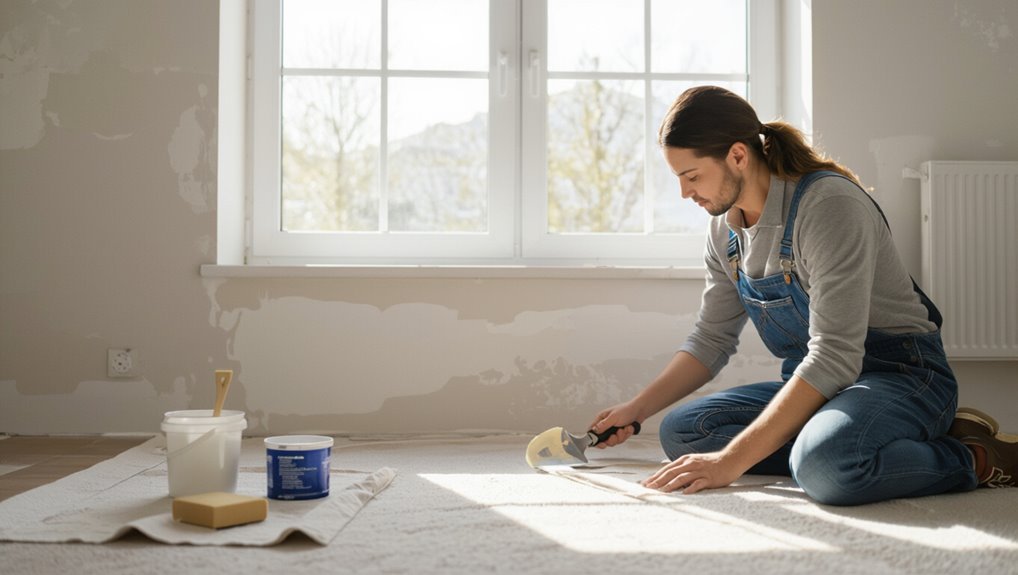
Not sure whether to patch one spot or redo the whole wall? You’ll weigh quick vs. thorough choices: small dents suit spot fixes, widespread damage needs full repaint.
Inspect finish, texture, and color fade; choose repair methods that match scale and skill. If seams or patterning matter, favor thorough work; otherwise, a targeted patch saves time and materials.
How This Guide Works: Quick Steps + Details
You’ll get a quick overview first so you can see the whole process at a glance.
Then you’ll follow clear step-by-step details that walk you through each task.
This structure helps you move fast or pause for specifics as needed.
Quick Overview
Since a patch job involves a few distinct steps, this quick overview gives you the essentials first—followed by detailed guidance for each step.
You’ll learn basic patching techniques: clean, fill, sand, prime, and paint. Prep and drying times matter. Use simple tools, test color matching on a scrap, and plan coats.
The step-by-step section spells out timing and tips.
Step-By-Step Details
Now that you’ve seen the basics, we’ll walk through each step in order so you can tackle the patch with confidence.
| Step | Action |
|---|---|
| 1 | Prep: sand, clean, match wall textures. |
| 2 | Fill: apply compound, feather edges. |
| 3 | Paint: prime, choose matching paint finishes; blend edges smoothly. |
Follow sequence, check drying times, and touch up until seamless.
Identify the Damage: Nail Hole, Ding, Gouge, or Drywall Hole
Before you grab tools or filler, take a close look and decide what you’re dealing with: a tiny nail hole, a shallow ding, a deeper gouge, or a true drywall hole.
You perform hole identification and damage assessment, note surface preparation needs, choose patch materials and filler selection, consider repair techniques and texture matching, plan paint application, evaluate the finish, and record maintenance tips.
Pick the Right Filler for Size and Surface
Choose a filler that matches both the size of the damage and the surface you’re working on—small nail holes need a different product than large drywall gaps or plaster cracks.
You’ll pick from filler types like lightweight spackle, joint compound, or epoxy-based fillers.
Check surface compatibility for smooth adhesion and drying time, ensuring the chosen filler bonds, sands well, and won’t shrink or crack later.
Gather Tools for a Seamless Patch and Paint
A handful of well-chosen tools will make the patching and painting process faster and give you a professional finish, so gather them before you start.
Choose scrapers, putty knives, sanding blocks, a utility knife, paintbrushes, and a small roller. Your tool selection should match the patch materials and filler type.
Keep a damp cloth and mixing tray handy for tidy, efficient work.
Protect Floors, Furniture, and Trim
Start by moving small furniture out of the work area and covering remaining pieces and trim with drop cloths or plastic sheeting so dust and paint can’t settle on them.
You’ll focus on floor protection, furniture covering, trim safeguarding, and dust control.
Use:
- Heavy canvas drop cloth
- Painter’s tape along trim
- Plastic sheeting over furniture
- Cardboard for high-traffic paths
- Weights to secure edges
Clean the Damaged Area for Better Adhesion
Before you apply any patching compound, make sure you remove loose debris and dust so the repair will bond properly.
Wipe the area with a solvent or degreaser to get rid of oils and grime.
Lightly sand the surface to give the patch something to grip.
Remove Loose Debris
Scrape away any loose paint and crumbling drywall so the patch will stick properly; use a putty knife or stiff brush to knock off flakes, then vacuum or wipe the area to remove dust.
You’ll focus on debris removal and surface preparation before patching.
Visualize the clean spot:
- Flakes lifted
- Dust cleared
- Crisp edges
- Smooth perimeter
- Ready substrate
Degrease With Solvent
Although the area may look clean after you remove loose debris, grease, oils, and grime can still prevent patching compounds and paint from bonding properly.
Choose appropriate solvent types (isopropyl, mineral spirits, or trisodium phosphate alternatives) and test a small spot.
Use degreasing techniques: apply with a rag, work in one direction, rinse and dry thoroughly.
Wear gloves and ventilate the room.
Sand For Better Grip
Start with a medium-grit sandpaper (120–150) to scuff the damaged area so patching compounds and paint will bite; sand in a circular or back-and-forth motion until the surface feels slightly rough and any loose material is removed.
Use proper sanding techniques and grit selection to prep.
Visual cues:
- Slightly dull surface
- No loose flakes
- Smooth feathered edges
- Even texture
- Clean dust-free surface
Remove Loose Paint Without Widening the Hole
Before you tackle the edges, tap around the damaged area to find any loose paint that could flake off later; remove only the unstable bits with a putty knife or stiff brush so you don’t widen the hole.
Work gently, focusing on loose paint and using careful patch techniques.
Clean debris, dust the area, and inspect for remaining instability before you apply filler.
Undercut Small Holes So Patches Hold Better
Before you patch, undercut the edges of small holes so the filler has something to grip and won’t pop out later.
I’ll show how to undercut neatly, which tools to use, and simple safety tips to keep you protected.
With the right technique and gear, your patch will bond stronger and finish smoother.
Why Undercut Matters
When you undercut a small hole, you create a slight bevel that gives joint compound something to grip, so your patch won’t pop out later.
You’ll see why the importance of undercut matters and learn techniques for undercut without tools listed here:
- beveled edge for adhesion
- increased surface area
- cleaner feathering
- reduced cracking
- stronger mechanical bond
How To Undercut
Now that you know why undercutting helps the patch grip, here’s how to do it on small holes so your repair holds.
Cut the hole edge slightly inward to create a beveled pocket, remove loose debris, and fit the patch snugly.
Use undercut techniques that increase surface area and bonding.
Finish with appropriate filler so patch durability and a smooth finish are achieved.
Tools And Safety Tips
Grab the right tools and suit up so you can undercut small holes safely and accurately: a utility knife or oscillating tool for beveling edges, a hand rasp or sanding sponge to clean and shape the pocket, a vacuum or brush to remove dust, and a small putty knife for applying filler.
Wear safety gear, follow ventilation tips, use dust control and protective measures.
- Utility knife or oscillating tool
- Rasp or sanding sponge
- Vacuum/brush for dust control
- Small putty knife
- Gloves, mask, eye protection
Use Mesh Tape or Backing for Holes Over 1.5
Because larger holes need more support, you’ll want to use mesh tape or a backing for any opening over 1.5 inches to keep the patch from sagging or cracking. Use fiber mesh to bridge the gap and improve patch adhesion. Apply backing, then tape, then compound smoothly.
| Material | Purpose | Tip |
|---|---|---|
| Mesh | Support | Center |
| Backing | Strength | Secure |
| Compound | Finish | Feather |
Spackle Small Holes: Patch-and-Paint Tips
Start by cleaning and widening the small hole so the spackle will adhere.
Apply spackle smoothly with a putty knife, feathering the edges to match the wall surface.
Once it’s dry, sand flush and paint to blend the repair with the surrounding wall.
Prep The Hole
Before you reach for paint, clear loose debris and dust from the hole so the spackle can bond properly; use a putty knife or a stiff brush to remove crumbling drywall and widen tiny openings slightly so the filler seats well.
- Assess hole size.
- Choose appropriate filler types.
- Remove dust thoroughly.
- Create a slightly rough edge.
- Test fit any backing.
Now apply spackle per instructions.
Apply Spackle Smoothly
Now that the hole’s clean and any backing’s in place, you’ll spread spackle so it fills the cavity and lays flush with the wall.
Use a flexible putty knife, press firmly, and pull at a shallow angle.
Employ spackle techniques like thin layers and feathering.
For smoothing tips, wipe excess with a damp cloth before it skins and let each thin coat set fully.
Sand And Paint
Grab a sanding block and lightly smooth the dried spackle until it’s flush with the wall—use fine-grit (120–220) paper and gentle, circular motions to avoid gouging.
You’ll follow proper sanding techniques, wipe dust, prime, then match paint types.
- Sand edges feathered
- Remove dust with tack cloth
- Use appropriate primer
- Match sheen and base
- Apply thin coats
Use Joint Compound for Medium and Large Repairs
For medium and large drywall repairs, you’ll use joint compound to build up, smooth, and blend the patch so it becomes invisible once painted.
Apply compound in thin layers, feather edges, and let each coat dry before sanding.
Use joint compound techniques like layering and skim-coating, and follow repair strategies that control drying, minimize ridges, and create a seamless surface ready for primer and paint.
Install a Drywall Patch for Large or Irregular Holes
For large or irregular holes, you’ll first square the opening and clear away loose drywall so the patch sits flush.
Cut a replacement piece to fit and screw it to backing or furring strips behind the wall to secure it.
Once the patch is tight and fastened, you can tape and finish the seams before painting.
Preparing The Opening
Before you install a patch, clean and square the opening so the new piece will sit flush with the surrounding drywall.
You’ll do a quick wall inspection and finish surface preparation before fitting. Visualize the cut edges and backing.
Use tools and notes:
- mark tidy, square cuts
- remove loose paper and dust
- measure patch precisely
- check for wiring/plumbing
- choose matching thickness
Securing The Patch
Now that the opening’s squared and clean, it’s time to secure the patch so it sits flush and won’t sag or crack later.
Fit the patch snugly, screw a backing plate if needed, and use proper adhesive techniques—construction adhesive or drywall compound—to bond edges.
Tape seams, feather compound, and clamp briefly.
These steps maximize patch durability and prevent future movement or cracking.
Apply Filler in Thin Layers and Let Dry
Press the filler into the hole in thin, even layers so each coat bonds well and dries fully before you add the next.
You’ll use a careful filler technique and respect drying time to avoid cracks. Apply, wait, repeat until slightly proud of the surface.
- small trowel
- smooth strokes
- thin coats
- check drying time
- patience before next coat
Sand Between Coats to Feather the Edges
Once each filler coat has dried, sand the patch lightly between layers to feather the edges so the repair blends with the surrounding wall.
You’ll remove high spots, smooth gradients, and prepare for the next coat. Use careful sanding techniques and light pressure, checking edge blending frequently.
Wipe dust away, inspect for low areas, and repeat until the patch is uniformly flush.
Choose Sandpaper Grit and Sanding Technique
After you’ve feathered the edges, pick sandpaper grit that matches the job: start with 120–150 grit to knock down high spots on thicker filler, then move to 180–220 grit to smooth shifts before priming.
Use proper sanding techniques and smart sandpaper selection:
- Sand with the grain
- Keep light, even pressure
- Use a sanding block
- Clean dust frequently
- Replace worn grit
Check for Level and Smoothness Before Priming
Before you prime, check that the patched area is level with the surrounding wall by running a straightedge across it.
Then feel the surface with your hand to catch any small bumps or low spots you might miss visually.
Hold a bright light at a low angle to reveal subtle imperfections so you can sand or fill them before priming.
Check Surface Levelness
Take a close look and run your hand over the patched area to confirm it’s level and smooth; any ridges, dips, or rough spots will show through primer and paint.
Use surface imperfections as your guide and apply leveling techniques if needed. Check for evenness visually and by touch.
- light across surface
- fingertip sweep
- straightedge test
- fill low spots
- sand high spots
Feel For Imperfections
Once the patch looks even, run your fingertips across the surface to feel for any remaining bumps, ridges, or low spots that will show through primer and paint.
If you detect flaws, sand lightly, reapply joint compound, and refine texture techniques to match surrounding wall.
Work small, test with touch, and consider paint blending only after the surface is uniformly smooth and level.
Use Straightedge And Light
Grab a straightedge and hold it flat against the patched area, then tilt a portable light across the surface so you can spot low spots, high ridges, and subtle waves that your fingertips might miss.
Use straightedge techniques and lighting effects to assess level and smoothness before priming.
- Run the straightedge corner-to-corner
- Shift light angle slowly
- Mark dips with pencil
- Sand high ridges
- Recheck until flush
Prime Patched Areas: When and Which Primer to Use
Before you paint, prime every patched area so the repair blends with the surrounding wall and the topcoat adheres properly.
Choose primer types based on patch size and surface—latex for drywall, oil or shellac for stains or heavy repairs.
Apply thin, even coats using proper application techniques: brush edges, roll centers, and allow full drying between coats before sanding or painting for a seamless finish.
Block-Sand Primer for an Ultra-Smooth Base
Block-sand the primer to create an ultra-smooth base that hides brush marks, feathered edges, and minor imperfections so your topcoat looks factory-fresh.
You’ll use block sanding techniques to level the surface and enjoy primer benefits like better adhesion and uniform sheen. Work light, check edges, and wipe dust.
- 120–220 grit block
- Cross-hatch strokes
- Even pressure
- Tack cloth finish
- Inspect under light
Match Paint Color: Swatches, Samples, and Testing
When matching paint color, start by collecting swatches and small samples so you can test how light and texture change the hue on your wall.
Try color matching techniques like side-by-side swatch comparison and digital matching at stores.
Use paint sampling methods: brush small patches, let them cure, and view at different times.
Pick the best match before painting the repaired area.
Deal With Sheen: Why Gloss Reveals Repairs
Sheen can make even small bumps and feathered edges stand out, so you’ll notice repairs more on glossier finishes.
Gloss paints reflect light differently across textures, which highlights any mismatch between the patch and surrounding wall.
Match the original sheen when you paint the patch to help it blend seamlessly.
Sheen Amplifies Imperfections
Because gloss reflects light more sharply than flat finishes, it highlights every ridge, dent, and feathered edge around a patch, so you’ll see flaws that would vanish under matte paint.
You should anticipate sheen effects and address surface imperfections before topcoating.
Visualize common issues:
- raised edges
- visible sanding lines
- uneven texture
- tiny dimples
- patch contours
Gloss Light Reflects
A small amount of gloss can make every ridge, dent, and imperfect feathering leap out because it throws direct highlights back at your eye, so you’ll notice repairs that disappear under a flat finish.
You’ll see the gloss impact immediately on reflective surfaces; so sand smooth, thin coats, and feather edges carefully to minimize light-catching irregularities that give away patchwork.
Match Sheen For Blend
Match the surrounding paint’s sheen before you blend a patch, because even tiny differences in gloss will jump out under normal room lighting.
You should match sheen types and aim for sheen consistency to hide repairs. Check light angles, test on a scrap, and feather edges.
- soft matte
- eggshell glow
- satin smooth
- semi-gloss shine
- high-gloss mirror
Feather Paint Edges to Blend the Patch
Start by loading a small amount of paint onto a brush or roller and lightly tapping the wet edge so it thins out toward the surrounding wall; this feathering technique softens the blend and helps the patch disappear once the paint dries.
Work outward with light, overlapping taps, adjusting pressure to control coverage.
Practice feathering technique and blending colors until changes look seamless and natural.
Pick Brush, Roller, or Spray for Texture and Sheen
Once you’ve feathered the edges to blend the patch, pick the tool that best recreates the surrounding texture and sheen:
brushes give visible strokes and work well for rough or trim-like surfaces,
rollers produce a uniform finish suited to most walls,
and sprayers deliver the most even, low-texture coat for large areas.
- brush types: angled, sash, filbert
- roller benefits: nap choices
- spray advantages: atomization control
- texture options: stipple, smooth
- sheen levels and finish choices
Apply Paint Coats: Timing, Thickness, Overlap
Start by letting each coat dry fully—follow the paint can’s recommended drying time so you don’t trap moisture or cause bubbling.
Apply thin, even coats rather than one thick layer to get smooth coverage and faster curing.
Overlap each pass slightly so the edges feather into the existing wall for an invisible repair.
Drying Time Between Coats
Although the exact wait depends on paint type and room conditions, you should let each coat dry fully before applying the next to avoid lifting, streaks, or trapped solvent.
Typically, latex needs 1–2 hours while oil-based can take 6–24 hours, and higher humidity or lower temps will extend those times.
Use drying techniques and aim for ideal conditions.
- warm, ventilated room
- low humidity
- mild temperature
- gentle airflow
- avoid direct heat sources
Proper Coat Thickness
Apply each coat with a steady hand so you get an even, moderate film rather than thick globs or barely there streaks.
Keep coats thin enough for proper application but thick enough to hide the patch.
Wait recommended time for ideal drying between layers, typically 1–2 hours for latex.
Overlap edges slightly and feather out to blend with surrounding wall for a seamless finish.
Recreate Texture: Knockdown, Orange Peel, Stipple
When you’re repairing a patch, matching the surrounding texture—knockdown, orange peel, or stipple—makes the fix disappear; each texture uses a different spray pattern and finishing stroke, so you’ll want to identify the original and prep accordingly.
Use correct knockdown technique and stipple application; practice orange peel spray distance.
Master knockdown and stipple techniques, and refine your orange-peel spray distance through steady practice.
Recreate by:
- observing scale
- testing spray
- adjusting pressure
- timing knockdown
- feathering edges
Touch Up Patterned or Faux Finishes
Few repairs are as visually tricky as touching up patterned or faux finishes, because you’re trying to match not just color but brushstrokes, glazing, and layered effects.
You’ll study the existing pattern, blend base coat edges, and recreate texture with the right tools.
Practice faux techniques on scrap, use feathered strokes for pattern matching, and work in thin layers until seamless.
When Should You Repaint the Whole Wall?
How do you know it’s time to repaint the whole wall instead of just touching up spots? You should weigh reasons repaint against the wall condition; if texture, fading, or patch density makes touchups obvious, repainting is wiser.
Consider:
- Multiple patched areas
- Faded or uneven color
- Different sheens across wall
- Damage beyond small spots
- Upcoming resale or renovation
Fix Visible Seams After Painting
If seams between patches or drywall sheets are still visible after painting, don’t assume you’ll need a complete repaint—start by identifying whether the issue is joint compound ridges, tape lines, or uneven sheen.
Then address it directly with light sanding, a thin skim coat, and feathered blending of primer and paint so the repaired area matches the surrounding wall.
Use seam concealment techniques and careful paint color matching to finish.
Solve Color Mismatch After Paint Dries
When paint looks different after it dries, don’t panic—you can usually fix the mismatch without repainting the whole wall.
When paint dries differently, don’t panic—small fixes usually restore a seamless match without repainting the entire wall.
Assess lighting, sheen, and drying. Try gentle adjustments with color blending and small paint samples.
Steps to try:
- Compare in natural light
- Feather edges with a damp sponge
- Test tiny paint samples
- Thin glaze over patch
- Recoat surrounding area
Remove Sheen Halo or Flash From Repaired Spots
Although the patched area may look brighter or glossier than the surrounding wall, you can usually blend that sheen back in without repainting the whole surface. Use gentle scuffing, matte clear coat, or spot-satin glazing for sheen reduction techniques and paint finish matching. Follow steps below:
| Method | Tool | Result |
|---|---|---|
| Scuff | Fine pad | Dulls gloss |
| Glaze | Brush | Softens sheen |
| Clear coat | Rag | Uniform finish |
| Blend | Feather brush | Smooth shift |
Repair Sanding Scratches or Dust Nibs in Finish
Check the repaired area under good light to identify sanding scratches or tiny dust nibs that interrupt the finish.
Gently sand out shallow scratches with fine-grit paper and pick or brush away any dust nibs that are stuck in the paint.
Feather and recoat the spot so the surface sits smooth and blends with the surrounding finish.
Identify Sanding Imperfections
Before you call the job done, inspect the patched area under good light and at a shallow angle to spot sanding scratches or dust nibs that can show up once paint dries.
You’ll evaluate sanding techniques and surface preparation; look for these signs:
- Tiny raised bumps
- Fine linear scratches
- Matte versus glossy spots
- Visible grit specks
- Uneven texture near edges
Remove Dust Nibs
If you spot dust nibs or sanding scratches after the finish dries, don’t panic—you can fix them quickly with a few careful steps.
Lightly sand the affected area using fine-grit paper and proper sanding techniques, keeping pressure even.
Wipe away particles with a tack cloth, inspect for smoothness, and repeat very gently if needed.
This dust nib removal prevents visible flaws before final touch-up.
Refinish For Smoothness
Now that you’ve removed dust nibs and smoothed the surface, it’s time to refinish the area so the patch blends seamlessly.
Use precise smoothing techniques and match finish to the patch types you’ve used.
Then:
- Lightly sand scratches
- Wipe with tack cloth
- Apply thin primer coat
- Feather paint outward
- Inspect under angled light
Finish, let cure, and reassess any remaining imperfections.
Prevent Cracking and Hairline Shrinkage
When you want a seamless repair, control moisture and material movement so the patch doesn’t crack as it cures.
Use compatible patching compound, apply thin layers, and let each dry fully to aid cracking prevention.
Maintain consistent room humidity and avoid rapid temperature changes.
Sand gently between coats and finish with a flexible primer to minimize hairline shrinkage and stress.
Special Cases: Plaster, Vintage Walls, and Paneling
Even with proper drying and flexible primer, some surfaces call for different techniques, so you’ll need to adjust your approach for plaster, vintage walls, and paneling.
Use appropriate plaster techniques, match vintage texture, choose repair materials, and know paneling types.
Consider:
- Feathered skim coats
- Texture matching tools
- Adhesive backing
- Compatible primers
- Paint compatibility checks
Safety: Ventilation, Dust Control, and PPE
Because sanding, patching, and painting stir up dust and fumes, you’ll want to control air and particles before you start work. Open windows, use fans and HEPA filters—ventilation tips that move contaminants outside.
Employ dust control: vacuum often, seal off the area, and wet-sand when possible.
Follow safety guidelines and wear PPE essentials: N95 respirator, goggles, gloves, and disposable coveralls to protect yourself.
Time and Cost Estimates for Common Repairs
If you’re planning repairs, estimate both time and cost up front so you can schedule work and budget accurately.
You’ll use basic cost analysis and time management to choose DIY or pro help. Consider materials, drying, and labor to avoid surprises.
- Small nail holes: 15–30 min, low cost
- Medium patch: 1–3 hours, moderate
- Large repair: half–day, higher cost
- Texture match: extra time
- Paint touch-up: 1–2 hours
Maintenance: Keep Patched Areas Invisible
To keep patched areas invisible, you’ll need a brief routine of inspection and touch-ups that prevents small flaws from becoming obvious.
Check patches monthly for cracks, paint wear, or texture differences. Lightly sand and reapply thin coats where needed. Use matching finish and feather edges to blend.
Regular patch maintenance guarantees invisible repairs and extends the seamless look.
Quick Checklist: Step-by-Step Patch-and-Paint
Gather your tools, clear the area, and follow a simple, step-by-step checklist so you can patch and paint the wall with confidence and minimal fuss.
You’ll address different patch types, sand smooth, prime, and guarantee color matching before finish coats.
Do these steps in order:
- Clean and prep
- Choose patch type
- Apply filler
- Sand and prime
- Paint and blend
Frequently Asked Questions
How Do I Repair Hairline Cracks That Reappear After Drying?
You should identify hairline crack causes, then stabilize substrate and use proper repair techniques: clean, widen slightly, apply flexible filler or epoxy, embed fiberglass tape if needed, sand, prime, and paint once fully cured to prevent reappearing.
Can I Patch and Paint Over Wallpaper Without Removing It?
Yes — but proceed cautiously. You can patch and paint over wallpaper, though wallpaper removal is usually better; use proper patching techniques, seal seams, prime well, and test adhesion so paint won’t crack or peel later.
Will Patching Affect Electrical Outlets or Switches Nearby?
Yes — patching can affect nearby outlets or switches, but you’ll maintain outlet safety and switch accessibility by turning power off, removing covers, masking edges, and avoiding plaster or paint inside boxes so wiring stays reachable and undamaged.
How Do I Match Texture on Ceilings Versus Walls?
Like matching a song, you’ll copy texture types: ceilings often need lighter nap and ceiling paint with spray application for stipple, popcorn, or knockdown; walls use firmer wall finish and brush/roller techniques to blend seams.
Can Repairs Be Done in High-Humidity Rooms Like Bathrooms?
Yes — you can repair patches in high-humidity rooms, but you’ll want moisture resistance and proper paint selection; prime with a mildew-resistant sealer, use mold-resistant joint compound, and choose a high-quality semi-gloss or satin bathroom paint.
Conclusion
You’ve learned how to choose the right repair, pick the right filler, and gather the right tools; now apply the steps, sand smooth, and feather paint for a flawless match. Work safely, control dust, and allow proper drying; take your time, check your work, and touch up as needed. With patience, the right materials, and careful technique, you’ll hide the damage, restore the surface, and enjoy a seamless, like-new wall.
