
Should I Paint All My Bedroom Walls the Same Color
You should paint all your bedroom walls the same color when you want a calm, cohesive backdrop that makes a small room feel larger and lets bedding, lighting, and art take center stage. It saves time choosing shades, reduces visual clutter, and gives a polished, low-maintenance look with minimal fuss. Opt for lighter hues in dim rooms and balance dark furniture with contrast. Keep going and you’ll find when a single hue beats an accent wall and which palettes work best.
Quick Decision: Paint All Bedroom Walls the Same Color or Not?
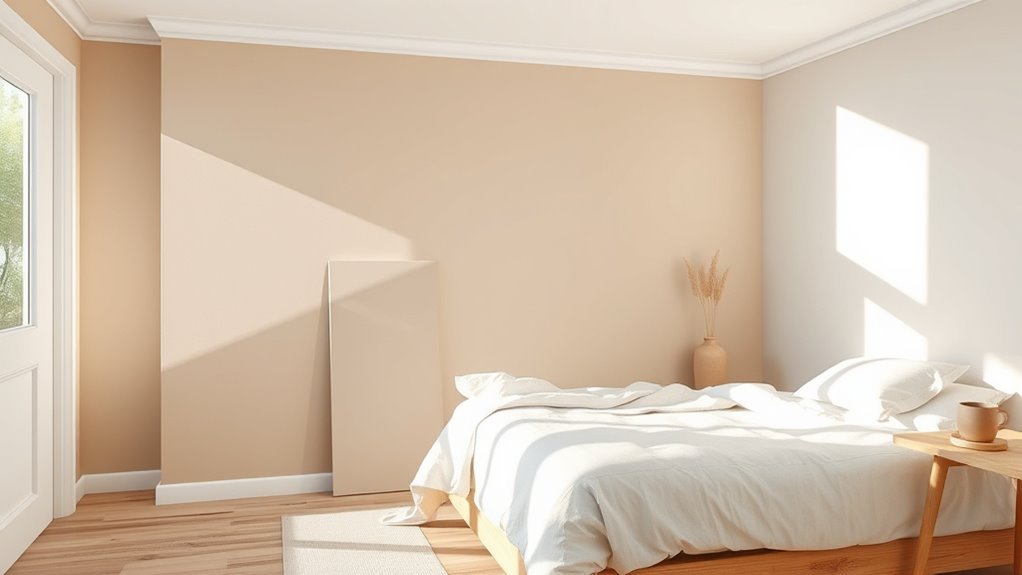
If you want a fast, cohesive look with minimal fuss, painting all bedroom walls the same color is a smart choice—you’ll create a calm, unified backdrop that makes furniture and bedding stand out. You’ll save time choosing shades and reduce visual clutter, letting you focus on textiles and lighting.
Consider color psychology—soft neutrals soothe, while saturated hues energize—so pick a tone that matches how you want to feel. Also weigh paint durability: choose a finish and quality that resists scuffs and cleans easily.
If you prefer simplicity, uniform walls deliver a polished, low-maintenance result without much trial.
How Light, Room Size, and Furniture Should Steer Your Choice
Because natural light, room size, and your furniture interact to shape how a color reads, you should let those factors guide whether to paint every wall the same shade. Assess light: warm, ample light will reveal undertones; dim rooms benefit from lighter hues.
Let light, size, and furniture guide your paint choices—brighten dim rooms, reveal undertones, balance contrast.
Measure scale: small rooms can feel larger with uniform color; large rooms tolerate variation.
Consider furniture: heavy, dark pieces need contrast or complementary tones.
Think about color psychology—calming blues, energizing yellows—and practical concerns like paint durability for high-traffic areas.
Balance emotion and function so your choice feels intentional and lasts.
- Cozy reassurance
- Fresh openness
- Confident cohesion
When to Use a Single Color : and When to Add an Accent Wall
Now that you’ve weighed light, scale, and furniture, decide whether a single color or an accent wall will best support the room’s mood and function. You’ll use color psychology for mood enhancement: choose a single color to create calm, continuity, and visual rest, especially in small or sleep-focused spaces. Add an accent wall to highlight architecture, create depth, or energize a focal point without overwhelming the room. Test samples, consider textiles, and keep contrast balanced so the accent reads intentional rather than jarring.
| Use single color | Use accent wall |
|---|---|
| Small rooms | Large rooms |
| Sleep focus | Focal emphasis |
| Minimal decor | Bold art |
| Continuity | Depth |
| Low contrast | High contrast |
Color Schemes by Bedroom Style (Examples You Can Copy)

When you pick a bedroom style, matching a clear color scheme makes decorating faster and more cohesive; below are ready-made palettes you can copy or tweak to fit your space. Use color psychology to set mood, and combine simple paint techniques like ombre or matte accents to add depth without clutter.
- Scandinavian calm: soft gray walls, warm white trim, muted blue accents — peaceful, airy, restorative.
- Moody modern: deep charcoal main wall, muted plum accents, satin finish — intimate, dramatic, cozy.
- Coastal retreat: seafoam green, sandy beige, crisp white trim — invigorating, uplifting, relaxed.
Test Samples, Paint Smart, and Fix Mistakes Without Redoing Everything
If you want the right color without costly surprises, start by testing samples on multiple walls and viewing them at different times of day; light and adjacent colors change how paint reads.
Apply large swatches, note how Color psychology affects mood in morning versus evening, and imagine how different Paint finishing options reflect light.
Use peel-and-stick testers or quart samples to avoid full cans.
If a shade feels off, repaint just an accent wall or trim instead of the whole room.
For small errors, use touch-up kits and feather edges; strategic placement and finishes often fix mistakes without redoing everything.
Frequently Asked Questions
Can Wall Texture Affect Whether You Should Paint All Walls the Same Color?
Yes—you should consider texture contrast because it changes how paint reads; you’ll use texture contrast to emphasize features while keeping color harmony, so varying finishes or accent walls can enhance depth without breaking overall harmony.
Will Painting Ceilings the Same Color as Walls Change the Room’s Feel?
Studies show 73% of people feel cozier with uniform ceilings; yes, painting ceilings the same color as walls can lower perceived height and make spaces intimate. You’ll use color psychology while considering paint durability for maintenance.
How Does Paint Finish Choice Impact Using One Color Versus Multiple?
Your finish choice shapes mood and wear: matte softens color psychology while satin/semi-gloss highlights hues and boosts paint durability. Mixing finishes lets you use one color yet create contrast, depth, and easier-clean surfaces.
Can Wall Color Choices Influence Resale Value of My Home?
Yes — your wall colors can affect resale value: you’ll use color psychology to appeal broadly, pick neutral tones with good paint durability, and avoid bold choices that alienate buyers while ensuring finishes hold up during showings.
Is It Okay to Match Wall Color to Existing Built-Ins or Trim?
Picture your room’s built-ins flowing like a river; yes, you can match wall color to them. By prioritizing color coordination and design consistency, you’ll create a cohesive, polished space that feels intentional and professionally styled.
Conclusion
You don’t have to paint every wall the same to make your bedroom feel cohesive—use one color when you want calm, an accent wall when you want personality. Let light, size, and furniture guide you; test samples and paint smart to avoid costly mistakes. Trust your instincts, but remember: a room’s color should hug you, not shout at you—so pick what makes you relax, then tweak it until it feels like home.
