
How to Wash Dark Painted Walls Without Streaking
You can wash dark painted walls streak-free by prepping the area, testing a small spot, and using a mild pH-neutral detergent mixed with warm water. Work top to bottom in small sections with a well-wrung microfiber cloth or sponge, rinse often, then immediately dry with a clean lint-free towel. Avoid harsh solvents, abrasive pads, and excess water that dulls sheen. Follow a gentle spot-clean and touch-up routine and you’ll keep color and gloss consistent—more practical tips follow.
Quick Checklist: Before Cleaning Dark Walls
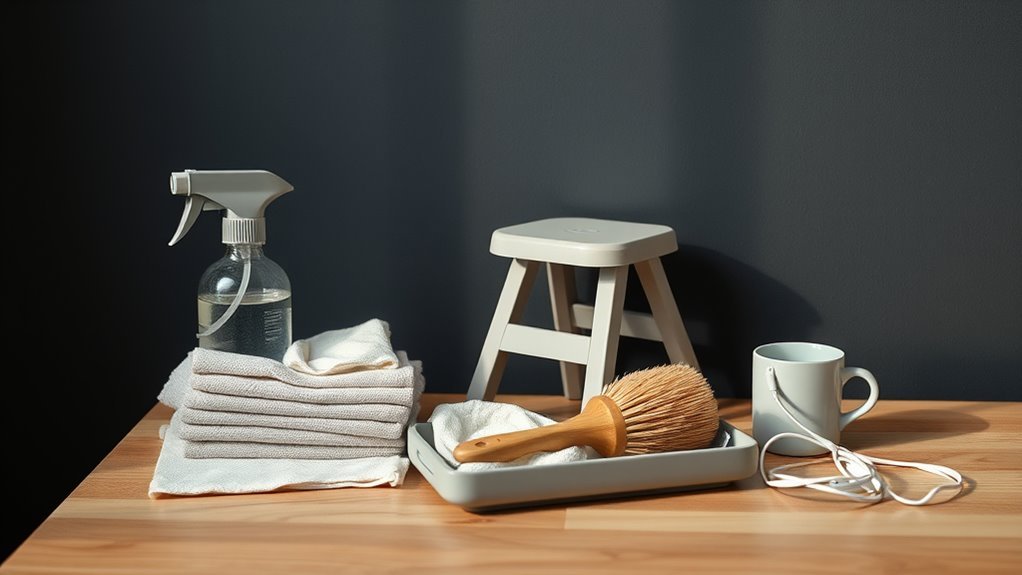
Before you begin, take a quick inventory of the room: note the paint finish, check for loose dust or cobwebs, move or cover furniture and floors, and have appropriate cleaning supplies on hand. You’ll want tack cloths or a microfiber duster, mild detergent, buckets, soft sponges, and clean microfiber towels.
Test a small, inconspicuous area to confirm product compatibility and assess wall textures so you choose the right tool. If touch-ups might be needed, have paint handy and confirm color matching beforehand.
Work top to bottom, section by section, and replace outlet covers after walls are fully dry.
Why Dark Paint Shows Streaks, Smudges, and Uneven Gloss
You’ve prepped the room and tested a spot, so now consider why dark paint makes every imperfection more visible: dark colors absorb light and highlight sheen variations, so even small differences in drying, application, or residue show up as streaks or uneven gloss.
You’ll notice lighting effects amplify smudges and streaks from certain angles, while overhead or directional light can expose patchy cleaning. Residue from cleaners, uneven pressure, or partial rinsing alters reflectivity.
Also remember paint durability varies; older or low-quality dark paints may thin or discolor with cleaning, making streaks harder to remove without damaging the finish.
Identify Your Paint Finish: Matte, Eggshell, Satin, Semi-Gloss
Because the way a wall reflects light determines how cleaning shows up, start by identifying your paint finish—matte, eggshell, satin, or semi-gloss—so you can choose the right method. You’ll inspect sheen by tilting a flashlight; matte hides imperfections, eggshell gives low luster, satin adds subtle glow, and semi-gloss is reflective. Knowing the finish helps avoid streaks and guides touch-up choices for color matching. Use the table below to quickly compare.
| Finish | Quick ID |
|---|---|
| Matte | Flat, little reflection |
| Eggshell | Soft sheen, subtle depth |
| Satin | Noticeable glow |
| Semi-gloss | Bright, reflective surface |
Which Cleaners Are Safe for Dark Walls
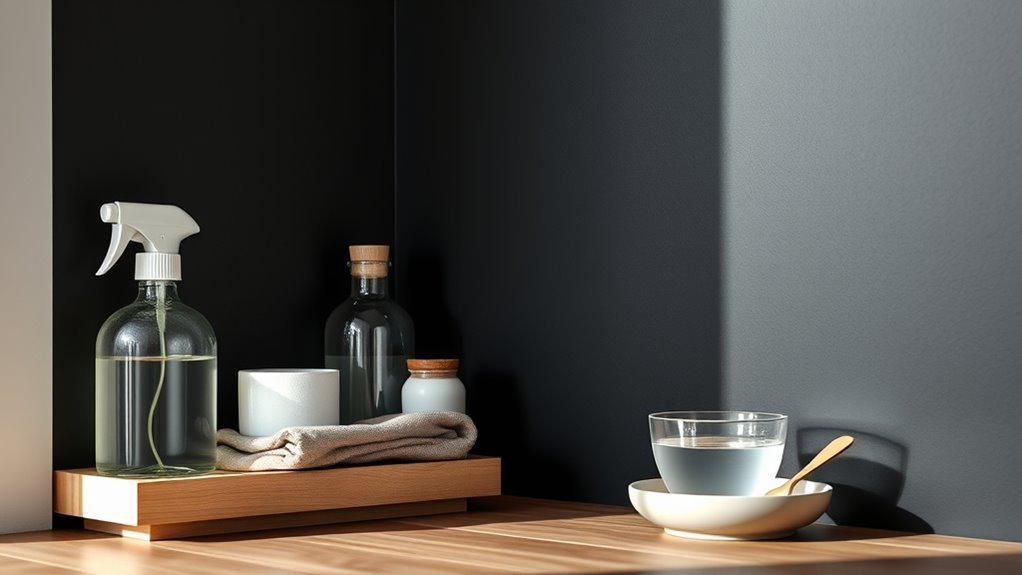
Before you start scrubbing, test any cleaner in an inconspicuous spot to make sure it won’t lift color or finish.
Start with a mild dish detergent mixed with water and only move to stronger options if stains persist.
Avoid harsh solvents like acetone or paint thinners that can damage dark paint.
Test Cleaner Inconspicuously
Want to avoid ruined paint and streaks? Test cleaner in an inconspicuous spot before tackling the whole wall. Dab a cotton swab or soft cloth with your chosen solution, blot a hidden corner or behind furniture, and wait five minutes to check for color loss, sheen change, or bubbling.
Rinse that small area with plain water and dry with a microfiber cloth to see if streaks appear. If the finish looks unchanged, you can proceed confidently.
If you notice any damage or residue, stop and try a gentler product or consult the paint manufacturer for recommended cleaners.
Mild Detergents First
Now that you’ve confirmed a cleaner won’t harm the finish, start with the gentlest option: a mild, pH-neutral detergent diluted in warm water. Use a soft microfiber cloth, wrung damp, and work top to bottom in small sections to prevent streaks.
Rinse the cloth frequently and change the solution if it looks dirty. For stubborn marks, try a slightly stronger mix but test again first.
Keep an eye on areas needing color matching after cleaning; dry fully before evaluating.
If you spot chips or scuffs, address them with paint touch ups matched to the original sheen and hue.
Avoid Harsh Solvents
Although strong solvents can strip paint and leave pale, blotchy patches on dark walls, you don’t need aggressive products to get them clean. You should avoid harsh solvents because they accelerate paint deterioration and dull finish. Use mild dish soap, diluted vinegar, or a pH-neutral cleaner applied with a soft cloth. Test a hidden spot first, rinse with clean water, and dry immediately to prevent streaks. For stubborn marks, gently rub with a melamine sponge moistened and not soaked. Below is a quick cleaner guide:
| Cleaner | Use |
|---|---|
| Mild soap | Routine cleaning |
| Vinegar solution | Grease spots |
| pH-neutral | Paint-safe |
| Melamine sponge | Stubborn scuffs |
Cleaners and Tools to Avoid (What Causes Streaking)
Because dark paint shows every mark, the wrong cleaner or tool will leave streaks, film, or uneven sheen that’s hard to fix.
Dark paint reveals every mark—use the right cleaner and tools or you’ll end up with streaks and uneven sheen
Don’t rely on cleaning myths like “more soap equals cleaner”; residue causes ghosting and dulls paint durability.
Avoid bleach, ammonia, and citrus degreasers—they strip protective finishes.
Steer clear of abrasive pads, rough sponges, and gritty brushes that scratch and create highlights.
High‑pH cleaners can alter sheen; test first.
Don’t use excessive water that soaks seams or causes drip marks.
Stick to gentle, pH‑neutral solutions and soft microfiber cloths instead to prevent streaking.
Tools and Materials for Streak‑Free Results
When you want streak‑free dark walls, pick tools and materials that clean without altering the finish. Use a microfiber cloth or mop with a flat, lint‑free head to lift dirt without leaving fibers.
Choose a mild, pH‑neutral cleaner diluted per instructions; test in an inconspicuous spot to guarantee it won’t affect color — especially important if you’ve recently done color matching or changed tones.
Keep a spray bottle for spot cleaning and a bucket with clean water for rinsing. Have spare cloths, a soft sponge, and gloves ready.
Avoid abrasive pads or strong solvents that can strip primer selection or finish.
Prep Walls and Protect Floors & Trim
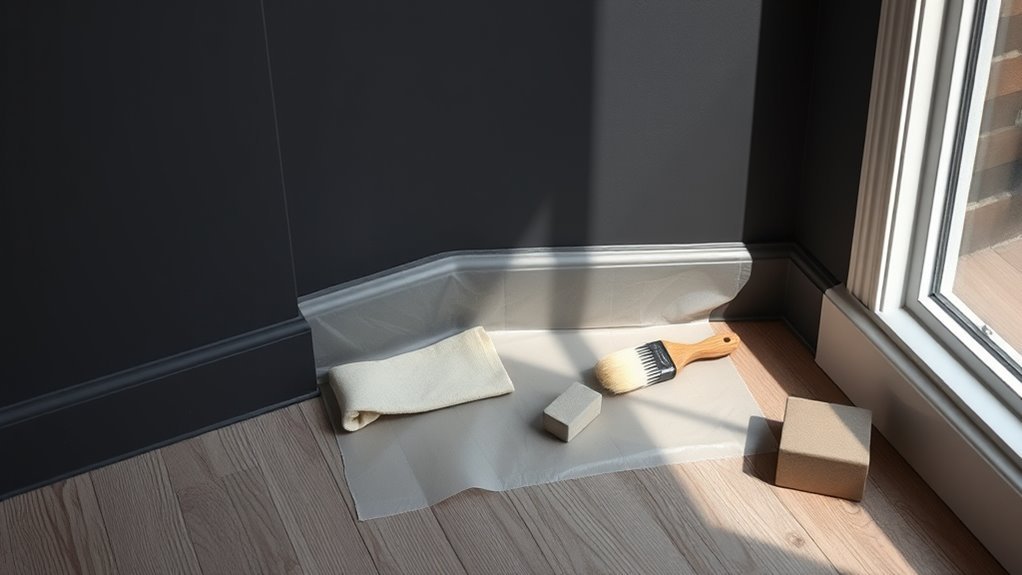
Before you start washing, clear the area and protect surfaces so you don’t trade clean walls for stained trim or ruined floors. Move furniture away, tape a runner along the floor, and apply painter’s tape to baseboards and trim. Use drop cloths secured with weights so they don’t shift.
Inspect wall texture for loose paint or rough spots; sanding or spot repairs will prevent pulling and streaks. Choose gentle tools to match paint durability—softer sponges for less durable finishes, firmer pads for hardy enamel.
Keep a bucket for dirty water so you’re not reintroducing grime to cleaned areas.
Test a Hidden Spot for Cleaner Compatibility
Now that the area’s prepped and protected, pick a discreet spot—inside a closet, behind a piece of furniture, or at the base of the wall—to check cleaner compatibility.
Dampen a soft cloth with your chosen solution and blot an inconspicuous square about two inches wide. Wait five minutes, then inspect for discoloration, sheen change, or paint lift.
Try a second pass with a mild rinse to verify residue won’t alter the finish. Hidden spot testing prevents surprises and confirms the product is safe for dark paint.
If you see damage, switch to a gentler cleaner and retest before proceeding.
Quick Step‑By‑Step Washing Method (Streak‑Free)
Start by clearing dust and surface grime so your cleaner can work on the paint, not debris.
Mix a mild, pH‑neutral solution and wipe in small sections from top to bottom.
Finish each section by drying immediately with a clean microfiber cloth to prevent streaks.
Prep The Surface
Once you’ve cleared furniture and covered floors, take a quick walk‑around to spot scuffs, cobwebs, and areas with heavy grime so you can target them during washing.
Check wall texture closely—smooth, eggshell, or textured surfaces clean differently—so note rough spots and crevices.
Test a small hidden area to confirm paint durability before applying moisture broadly.
Remove loose dust with a dry microfiber or soft brush, then gently scrape away stuck debris or paint chips.
Tape delicate trim and outlets.
Having these prep steps done ensures you won’t overwork spots, reduces streaking, and protects finishes during the cleaning stage.
Use Gentle Cleaning Solution
Because dark paint shows streaks and residue quickly, mix a gentle cleaning solution that lifts soil without stripping finish: combine warm water with a few drops of dish soap or a capful of mild all‑purpose cleaner, or for tougher grime use one part white vinegar to four parts water. Test a small inconspicuous spot first so you won’t affect color matching or reveal patchy texture repair. Use a soft sponge, wring thoroughly, and work top to bottom in overlapping passes. Rinse the sponge often and change solution when cloudy to avoid redepositing dirt.
| Solution | Use |
|---|---|
| Dish soap | Light soil |
| All‑purpose | General |
| Vinegar mix | Grease |
| Rinse water | Final pass |
| Spot test | Color/texture |
Dry With Microfiber
After rinsing, grab a clean, dry microfiber cloth to remove remaining moisture without streaks. Work top to bottom in overlapping vertical strokes, changing cloth sections as they get damp.
Use multiple microfiber cloths so you’re always drying with a dry one; wringing a wet cloth spreads moisture and can cause streaks.
For corners and trim, fold the cloth to a flat edge for precision.
If paint feels tacky, wait a few minutes and pat again.
Finish with a quick inspection under different light.
Treat this as dry cleaning: gentle, rapid drying prevents streaks and preserves the finish.
Dry Dark Walls Streak‑Free
When you dry dark painted walls, use a clean, lint-free microfiber cloth and move in long, even strokes to prevent streaks and uneven sheen. Work top to bottom, overlapping each pass slightly so moisture evaporates uniformly.
Check wall texture as you go; textured surfaces trap water and need firmer, consistent pressure. Change cloths when damp to avoid re-depositing residue.
Check texture as you dry—textured walls hold water, use firmer, consistent pressure and fresh cloths when damp.
For best results, coordinate drying with room light and color coordination—dry under the same lighting you’ll use daily to spot sheen shifts.
Finish by stepping back and scanning from different angles to catch any missed streaks.
Remove Fingerprints, Grease, and Hand Scuffs
When you need to remove fingerprints, grease, or hand scuffs, start with a gentle cleaning solution so you don’t strip the paint.
Use a soft cloth and target each spot individually, working from the edges toward the center.
For tougher marks, repeat the treatment or use a slightly stronger spot-specific cleaner without soaking the wall.
Gentle Cleaning Solution
Although dark paint hides a lot, fingerprints, grease, and hand scuffs still show up quickly, so you’ll want a gentle, effective solution that lifts grime without dulling the finish.
Mix warm water with a few drops of mild dish soap or a pH-neutral cleaner in a bucket; that balance removes oils while preserving color contrast and respecting wall texture.
Test a small, inconspicuous area first.
Use a soft microfiber cloth, wrung until damp, and wipe in even strokes.
Rinse the cloth frequently and finish with a clean, damp pass to avoid soap residue.
Let the wall air-dry fully.
Targeted Spot Treatment
If a smudge or fingerprint pops up, treat it promptly so oils don’t set into the paint. You’ll dab a microfiber with mild cleaner, test a hidden spot, and work from edges inward. For greasy marks, use a degreasing mix sparingly; rinse and dry to prevent streaks. For stubborn scuffs, gently rub a magic eraser—don’t scrub hard to avoid paint peeling. If removal alters finish, consider subtle color matching before touching up. Keep supplies handy and spot-clean regularly to avoid heavy scrubbing later.
| Tool | Cleaner | Tip |
|---|---|---|
| Microfiber | Mild soap | Blot, don’t rub |
| Eraser | Water only | Test first |
| Touch-up | Matched paint | Feather edges |
Remove Stubborn Stains Without Harming Paint
Because some stains grip dark paint tightly, you’ll need to treat them gently but effectively to avoid dulling or stripping the finish.
Start with mild soap and water on a microfiber cloth, blotting rather than rubbing.
For grease or crayon, apply a paste of baking soda and water, test inconspicuously, then wipe clean.
Use a diluted vinegar solution for watermarks, again spot-test first.
For ink or tougher marks, try a small amount of rubbing alcohol on a cotton swab, working outward.
Rinse each treated area with plain water and dry immediately.
These steps balance stain removal with paint preservation.
How Often to Clean Dark Walls: Routine and Frequency
How often you clean dark walls depends on traffic and exposure. High-traffic rooms or walls near cooking areas need weekly to biweekly gentle wiping to prevent buildup that exaggerates color contrast.
Low-traffic bedrooms and halls can go every three months. If sunlight constantly hits a wall, check monthly for dust and fading.
Pay attention to wall texture: smoother finishes show streaks and smudges sooner, while textured surfaces hide light grime but trap dirt in crevices and need more thorough quarterly cleaning.
Adjust frequency if you notice fingerprints, pet marks, or visible dulling; inspect rather than over-clean.
Quick Fixes for Small Streaks or Uneven Patches
After you establish a cleaning schedule, you’ll still run into small streaks or uneven patches that need quick attention. For fast streak removal and spot correction, keep a soft microfiber, diluted gentle cleaner, a spray bottle of plain water, and a dry microfiber towel handy.
After establishing a cleaning routine, keep microfiber, diluted cleaner, and water nearby for quick streak and spot fixes.
Focus on targeted action to avoid rewetting surrounding paint.
- Lightly mist the area, blot with a damp microfiber, then wipe vertically.
- Use a clean damp sponge for scuffs, rinse often.
- Buff dry immediately with a soft towel to prevent halos.
- For persistent spots, repeat once; don’t overwork the paint.
Pro Maintenance Tips to Keep Dark Walls Deep and Even
To keep dark walls looking rich, you’ll want to dust them gently on a regular schedule to prevent buildup that dulls the finish.
When you spot smudges or marks, use targeted spot-cleaning techniques so you don’t over-wash the whole wall.
Don’t forget to maintain any protective finish—reapply or touch up sealers as recommended to preserve an even, deep appearance.
Regular Gentle Dusting
Because dust shows up quickly on dark paint, you should make gentle dusting part of your routine to keep walls looking deep and even. Use a soft microfiber duster or vacuum brush to remove particles without abrading finish.
Include ceiling maintenance when dusting crown moldings and light fixtures so grime doesn’t fall onto walls. Take care around wall decoration—frames and shelves trap dust that can smear when wiped.
Dust regularly to reduce need for wet cleaning.
- Use a long-handled microfiber duster
- Dust top-to-bottom in overlapping strokes
- Clean dusters frequently
- Avoid abrasive cloths or scrubbing
Spot Cleaning Techniques
When a smudge or mark appears on your dark wall, tackle it quickly with targeted spot-cleaning so the surrounding finish stays pristine. Use a soft microfiber cloth dampened with mild, eco-friendly cleaning solution to blot—don’t rub—and rinse with plain water. Test any cleaner in an inconspicuous area first.
For grease, try a gentle mix of dish soap and water. For crayon or scuff marks, a magic eraser used lightly can work.
If paint chips or deeper damage shows, perform simple DIY wall repairs: sand minimally, apply matching touch-up paint, and feather edges so the spot blends seamlessly.
Protective Finish Maintenance
Spot-cleaning keeps small marks from spreading, but maintaining the protective finish preserves the overall depth and uniformity of dark walls. You should rinse with mild detergent, dry promptly, and avoid abrasive pads that dull sheen.
Inspect regularly for scuffs and fading so you can address issues before they spread. Keep a small can of your wall finish for spot repairs and practice color matching for invisible paint touch ups.
- Clean with pH-neutral cleaner and soft cloths
- Reapply compatible protective topcoat every few years
- Test products in an inconspicuous area first
- Store leftover paint and document finish sheen for repairs
Frequently Asked Questions
Can Sunlight Fading Affect Dark Painted Walls’ Appearance Over Time?
Yes — sunlight fading will gradually alter dark painted walls‘ appearance; you’ll notice dulled hues and uneven patches. You should choose UV-resistant finishes and minimize direct exposure to improve color retention and prolong consistent, vibrant surfaces.
Is It Safe to Use a Steam Cleaner on Dark Painted Walls?
Like wiping a fogged mirror, you can use steam cleaning cautiously; you’ll protect paint safety by testing a small area, keeping steam low, holding the nozzle back, and drying promptly to avoid softening or blistering the finish.
Will Touching up Paint With a Brush Blend Seamlessly on Dark Walls?
You can get a paint touch up to blend well, but it won’t always be seamless blending unless you feather edges, match finish and sheen, use thin coats, and work quickly while the surrounding paint’s still fresh.
How Do Humidity and Temperature Impact Streaking When Washing Walls?
Slow and steady wins the race: you’ll avoid streaking by using humidity control and temperature regulation; higher humidity or cold slows drying, causing drips, while low humidity and warm temps speed drying, risking visible brush marks.
Can Scented Cleaning Products Alter Paint Color or Finish?
Yes — scented cleaners can cause paint discoloration or dulling if they contain strong solvents or dyes. You’ll avoid problems by testing a hidden spot first and using mild, pH-neutral cleaners without heavy fragrances.
Conclusion
Think of your dark walls like a well-tended garden: a little regular care keeps blooms deep and uniform, while neglect lets patchy weeds of streaks and smudges show. You’ll pick the right tools and gentle cleaners, test first, and wipe with steady, even strokes—so your walls stay rich and even like midnight silk. With simple routines and quick fixes, your painted garden will always look deliberate, not accidental.
