
Can You Paint Polyurethane Over Latex Paint
Yes — you can put polyurethane over fully cured latex paint, but you’ll need to prep properly for adhesion and a smooth finish. Clean and dry the surface, scuff glossy areas with 220‑grit sandpaper, wipe off dust, and repair or prime any bare spots. Choose water‑based for clarity and quick drying or oil‑based for extra durability and warmth. Apply thin, even coats with a good brush, sanding lightly between coats, and follow drying times — keep going to learn tips and troubleshooting.
Short Answer: Can You Put Polyurethane Over Latex Paint? (Quick Checklist)
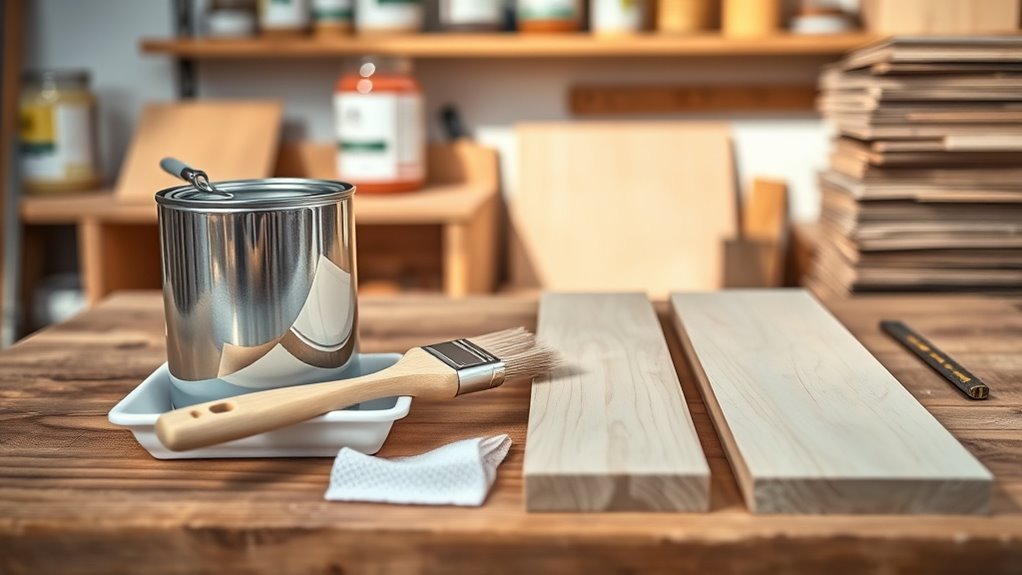
Yes—you can put polyurethane over latex paint, but you need to follow a few simple steps to guarantee proper adhesion and a smooth finish.
First, confirm the latex is fully cured (usually 2–3 weeks). Lightly sand gloss to dull the surface and remove dust. Wipe with a tack cloth and check color matching if you want sheen differences to blend—test a small area.
Use quality brush techniques: long, even strokes, avoid overworking, and maintain a wet edge. Apply thin, even coats, sanding between coats as directed.
Allow full drying time before heavy use.
Water‑ vs Oil‑Based Polyurethane: Which to Use Over Latex
When choosing between water‑ and oil‑based polyurethane over latex paint, consider drying time, durability, and appearance.
You’ll find water‑based dries fast, keeps true color matching, and offers a clear, non‑yellowing coat with low odor—good for light colors and quick projects.
Oil‑based cures slower, adds warmth and slight ambering that can help darken or enrich tones, and usually yields a tougher surface for high‑traffic areas.
Decide by the painted color, desired finish sheen (matte to high gloss options exist for both), and room use.
Pick water for speed and clarity, oil for hardness and subtle warmth.
Prep Latex Paint for Polyurethane (Step‑by‑Step)
Before applying polyurethane, you’ll prep the latex-painted surface to guarantee adhesion and a smooth finish. First, clean thoroughly with mild soap and water, then rinse and dry.
Lightly scuff the paint with 220-grit sandpaper to remove gloss; wipe dust with a tack cloth.
Repair chips or imperfections with matching latex filler, sand smooth, and touch up paint for accurate color matching before sealant.
Mask adjacent areas and make certain good ventilation.
If the existing finish sheen varies, sand until uniform.
Prime bare spots with a bonding primer.
Allow full cure time for paint before proceeding to polyurethane.
Applying Polyurethane Over Latex Paint: Coats, Tools, and Drying Times
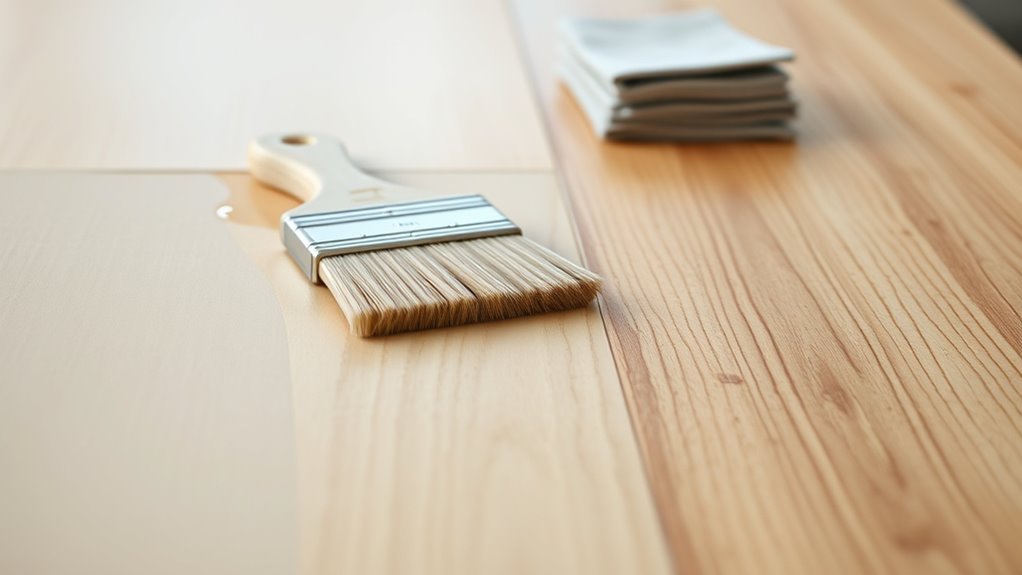
Although latex paint provides a stable base, applying polyurethane requires you to choose the right type, tools, and timing to get a durable, even finish.
Pick water‑based polyurethane for clarity and oil‑based for warmth; consider color matching if sheen shifts affect appearance.
Use high‑quality synthetic brushes or foam applicators; practice brush techniques like long, even strokes and light pressure to avoid lap marks.
Apply thin coats—two to three is typical—sanding lightly between coats with fine grit.
Allow manufacturer‑recommended drying times, usually 2–6 hours for water‑based and 8–24 for oil‑based, before recoating or light sanding.
Troubleshooting: Prevent and Fix Peeling, Bubbling, Cloudy Finishes
Even with the right polyurethane, problems like peeling, bubbling, and cloudiness can still pop up if surface prep, application technique, or drying conditions weren’t ideal.
To prevent issues, guarantee clean, sanded latex for good surface adhesion and confirm paint compatibility—alkyd-based poly over cured latex or use a bonding primer.
Apply thin, even coats; avoid high humidity and low temperatures.
If peeling occurs, strip to sound paint, sand to feather edges, prime, and recoat.
For bubbles, sand smooth and apply slower strokes.
For cloudiness, let longer cure or remove and reapply with proper ventilation and temperature control.
Frequently Asked Questions
Can You Apply Polyurethane Over Glossy Latex Without Sanding?
No, you shouldn’t; glossy latex needs surface preparation first. You’ll scuff or sand lightly to promote adhesion, clean thoroughly, then use proper application techniques—thin, even coats with a quality brush or foam applicator for best results.
Will Polyurethane Yellow Over White Latex Paint?
Yes — oil-based polyurethane can yellow over white latex paint, but water-based polyurethanes typically won’t. You’ll want to verify latex compatibility and proper surface prep so polyurethane adhesion stays strong and color stays true.
Is Polyurethane Safe for Children’s Furniture Painted With Latex?
Yes — you can, but you’ll want to test first like a Victorian tinkerer: verify paint compatibility, use water-based, low-VOC polyurethane, and let it cure fully for maximum child safety; sand and prime if adhesion’s uncertain.
How Long Before You Can Use a Surface Sealed With Polyurethane?
You can usually use a surface sealed with polyurethane after 24–48 hours; depending on surface preparation and drying time, lighter use at 24 hours and full use after 48–72 hours guarantees durability and prevents fingerprints or damage.
Can You Mix Polyurethane Into Latex Paint for Added Durability?
Like mixing oil and water, you shouldn’t mix polyurethane into latex paint; it harms adhesion and finish. You’ll avoid problems by keeping polyurethane mixing separate and testing latex paint compatibility with proper primers and products designed to blend.
Conclusion
Yes — you can put polyurethane over latex paint if you prep properly. Think of it like sealing a scrapbook: when I missed sanding one glossy panel, the first coat slid off like a sticker — lesson learned. Sand, clean, use a water‑based poly for flexibility (or oil‑based for heat resistance), apply thin coats, and wait full dry times. Do that, and your painted piece will stay protected and look professional for years.
